In Switzerland, synthetic lash extensions still dominate 78% of the market, yet 62% of surveyed consumers in Zurich and Geneva say they’re actively seeking natural lash enhancements, while only 12% can find certified options according to the 2025 Swiss market report on lash demand. For a pharmacy, spa, or premium retail counter, that gap changes the conversation.
Natural eyelashes extension isn’t just a beauty treatment category. In the Swiss clean beauty market, it’s a sourcing, compliance, and trust problem disguised as a trend. Most existing guidance still revolves around technique, dramatic styling, or generic application advice. What partners need is a clear framework for deciding which products belong in a premium assortment, which supplier claims hold up under scrutiny, and how to offer a service that fits Swiss expectations for safety, ethics, and ingredient transparency.
The Untapped Opportunity in Swiss Clean Beauty
Synthetic extensions still hold most of the Swiss lash market, yet certified natural options remain hard to find. For a pharmacy or spa, that gap is less a passing trend than a buying opportunity that rewards careful curation.

In the Swiss premium channel, clients already ask sharper questions than many suppliers are prepared to answer. They want to know where fibres come from, whether adhesive claims hold up, how irritation risk is managed, and whether the full offer can stand up to Swiss product and service scrutiny under Ordinance SR 817.023.21. That shifts natural eyelashes extension from a simple merchandising decision to a sourcing and compliance exercise.
I see this clearly with partner pharmacies and spas. Demand exists, but the winning assortment is rarely the broadest one. It is the one with traceable sourcing, credible certification, defensible claims, and service protocols that staff can explain without hesitation.
Why the gap matters commercially
A synthetic-led lash category usually sells on speed, volume, and visual impact. A natural position sells on trust, comfort, and claim discipline.
That difference affects margin structure as much as client acquisition. Premium Swiss customers often accept a higher price point if the offer feels coherent from formula to packaging to aftercare. They are less tolerant of vague “clean” language, especially in pharmacies, where advisory credibility carries commercial value of its own.
For partners, the opportunity breaks down in practical terms:
- Pharmacies can serve clients who want a beauty result with ingredient transparency, lower-fragrance positioning, and documentation that supports staff recommendations.
- Spas can add a premium lash service that fits wellness expectations and avoids the discount logic common in high-turnover lash studios.
- Selective retailers and treatment spaces can build repeat business through refill visits, aftercare sales, and stronger client retention, provided the original product selection is well controlled.
Poor product selection creates expensive friction. If a “natural” lash line lacks supplier paperwork, clear INCI support for adhesives, or evidence behind ethical sourcing claims, the problem shows up quickly in returns, complaints, staff uncertainty, and reputational drag.
Broader category direction also matters. Retail buyers reviewing the top trends in vegan lashes can see how texture, lighter materials, and ethical positioning are starting to influence purchase decisions beyond niche vegan shoppers. In Switzerland, those signals matter most when they are backed by documentation, not marketing language alone.
Decoding Natural Eyelash Extensions
“Natural” means very different things depending on who’s selling the lashes. In practice, a credible natural eyelashes extension offer stands on three pillars: the fibre itself, the adhesive system, and the application method.
If one of those pillars falls apart, the whole claim weakens. A plant-derived fibre paired with a harsh adhesive won’t feel natural to a sensitive client. A beautifully formulated adhesive attached to heavy fibres still won’t support lash health.
Materials that support the claim
The first question is simple. What exactly is the extension made from?
In trade conversations, I treat lash fibres like fabrics. Some wear like a breathable cotton shirt. Others wear like stiff plastic outerwear. Both can look polished at a glance, but comfort and repeat wear are the true measure.
A stronger natural positioning usually includes fibres described in one of these ways:
- Plant-derived or bio-based fibres that reduce reliance on conventional synthetic polymer language
- Ethically sourced silk-style fibres marketed for a softer finish and lighter feel
- Ingredient narratives tied to responsible harvesting or lower-impact production, not just appearance claims
That doesn’t mean every “natural” lash is fully non-synthetic. Many aren’t. What matters is whether the supplier explains the composition clearly and avoids fuzzy language.
Adhesives are where many ranges fail
A natural eyelashes extension assortment often succeeds or fails on adhesive choices, not the visible lash tray.
Clients may never ask about cyanoacrylate by name, but they do ask for lower fumes, better tolerance, and formulas that avoid substances they associate with irritation. A responsible buyer should ask suppliers for full ingredient disclosure, safety documentation, and explicit confirmation when they market an adhesive as formaldehyde-free.
Practical rule: If your team can’t explain the adhesive in plain language at the counter, the product isn’t ready for a Swiss premium launch.
A useful internal test is whether a pharmacist or spa manager can answer three questions without improvising:
- What’s in it?
- Why is it positioned as gentler?
- Which client should avoid it anyway?
If those answers aren’t available, “natural” is functioning as packaging copy, not product truth.
Technique affects whether the result feels natural
Even excellent materials can produce a poor natural result when application priorities are wrong.
For a natural finish, technicians usually need to favour restraint over spectacle. That means respecting the client’s own lash strength, avoiding overload, and designing for softness around the eye rather than maximum density. The service should leave the client looking refined, not obviously “done”.
A simple comparison helps:
| Focus area | Natural-led service approach | Conventional dramatic approach |
|---|---|---|
| Fibre feel | Lightweight and flexible | Often denser and more rigid |
| Adhesive choice | Low-fume, ingredient-conscious | Retention-first positioning |
| Design goal | Subtle enhancement | Immediate volume impact |
| Client message | Lash health and comfort | Bold visual transformation |
Natural doesn’t mean invisible. It means the service respects the biology of the lash line, the comfort of the wearer, and the expectations of a client who reads labels.
The Business Case A Balanced View for Partners
A natural lash category can strengthen a premium business. It can also become expensive theatre if the offer isn’t structured carefully.
The upside is straightforward. A curated natural eyelashes extension menu gives pharmacies and spas a way to stand apart from mass beauty operators. It also gives staff a more intelligent story to sell, one based on sourcing, skin tolerance, and aftercare rather than on length and drama alone.
Where the margin can come from
Premium clients usually don’t object to paying more when the offer is organised properly. They want to understand why the price is higher.
That “why” often comes from a bundle of factors rather than a single product feature:
- Curated sourcing that screens out weak supplier claims
- Better consultation time with ingredients and aftercare discussed properly
- Treatment pairing with cleansers, conditioning oils, or lash-support products
- Retail presentation that feels closer to skincare than novelty beauty
Service design matters. A lash appointment sold as a luxury add-on tends to underperform. A lash health and enhancement consultation is easier to justify in a pharmacy treatment room or a hotel spa.
For operators refining the broader client journey, the Ultimate Guide to Beauty Salons and Spas is a useful outside reference because it highlights how service environment, menu clarity, and customer experience shape premium retention beyond the treatment itself.
What partners often underestimate
The difficult part isn’t interest. It’s operational discipline.
Natural-led lash ranges often come with more complicated buying decisions. Supply chains can be narrower. Documentation takes longer to verify. Team training takes more effort because staff need to explain claims precisely, not just repeat brand wording.
A few trade-offs show up quickly:
- Cost of goods is usually higher when materials, certifications, and smaller-batch sourcing are involved.
- Retention expectations can be harder to standardise because gentler systems may not satisfy clients who want maximum wear above all else.
- Merchandising needs more education at shelf and online because the value isn’t always obvious in a quick visual comparison.
- Weak positioning invites disappointment if a client expects dramatic, synthetic-style impact from a natural-led service.
Don’t sell “natural” as a miracle category. Sell it as a better fit for a specific client profile.
That client profile is often profitable. But only if the business accepts that this category works best with selective intake, strong consultation, and a disciplined claims policy.
Navigating Sourcing and Certification Standards
In Switzerland, trust sits at the centre of premium beauty. If a lash supplier can’t prove sourcing and certification logic, their product shouldn’t enter a pharmacy or spa assortment.
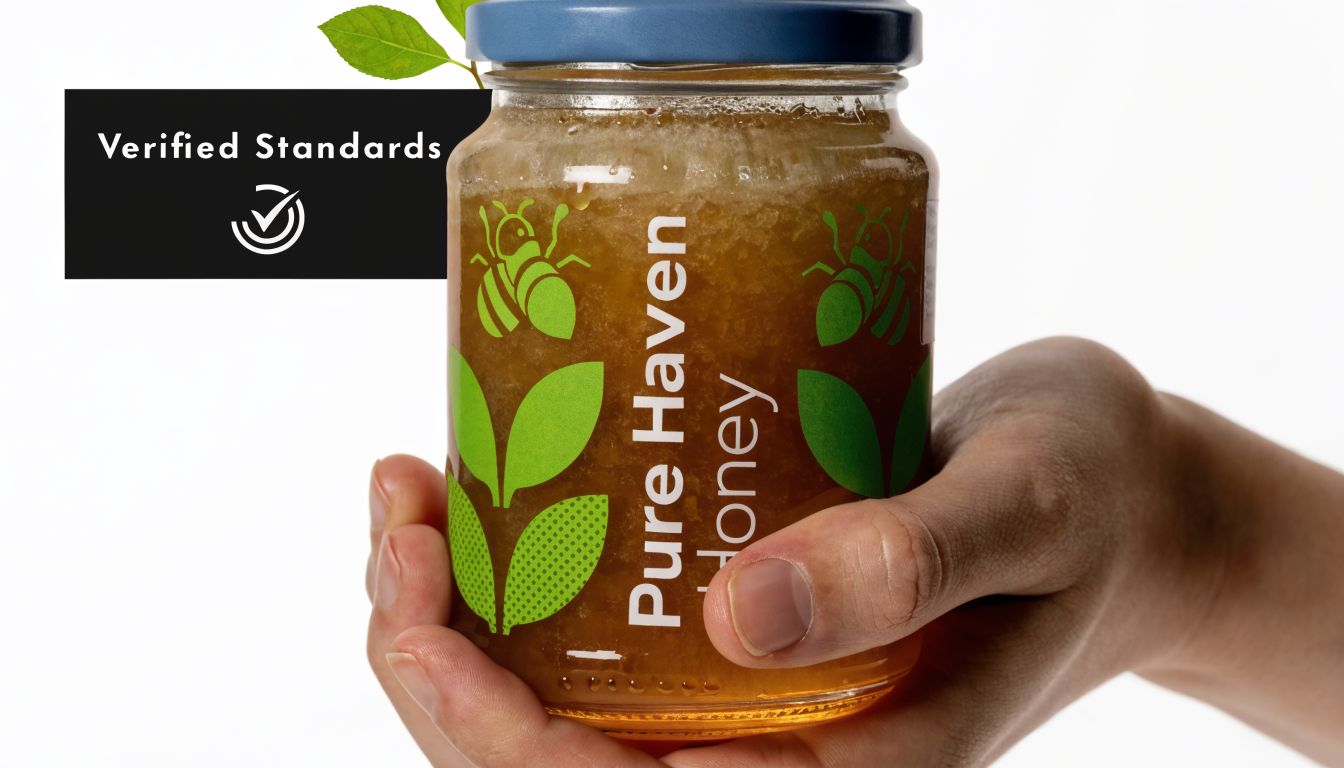
Many otherwise attractive ranges collapse. They use the right language on packaging, but once you ask for certification details, traceability, or ingredient substantiation, the file becomes thin very quickly.
What to verify before listing a brand
For natural eyelashes extension, certification isn’t a decorative extra. It’s a filter. It helps a buyer separate genuine formulation discipline from lifestyle branding.
I look at supplier evaluation in layers:
Ingredient credibility
If a brand claims botanical, organic, marine-based, or naturally derived inputs, it should be able to explain what that means in product terms. Broad claims without ingredient-level detail aren’t enough.Recognised certification logic
For ranges aligned with the Swiss clean beauty customer, standards such as ECOCERT often matter because they signal a more formal approach to ingredient and processing expectations. Cruelty-free commitments aligned with bodies such as PETA or Cruelty Free International also matter when ethical sourcing is part of the commercial positioning.Supply chain transparency
Buyers should know who manufactures the product, where relevant raw materials come from, and how batch consistency is controlled.Claim discipline
“Natural”, “clean”, “green”, and “hypoallergenic” should never appear without documentation that supports the wording and defines its limits.
The supplier who answers difficult sourcing questions quickly is usually safer than the supplier with the prettier mood board.
A practical screening framework
A supplier review doesn’t need to be bureaucratic, but it does need structure. A short internal checklist protects the buyer and sharpens the assortment.
Use a pass-or-pause approach:
| Screening point | What a strong supplier provides | Warning sign |
|---|---|---|
| Fibre composition | Clear material description | Vague terms with no specification |
| Adhesive documentation | Full INCI and safety files | Marketing sheet only |
| Certification support | Valid, current proof | “Certification pending” language |
| Ethical sourcing | Named policy and process | Unverifiable claims |
| Retail readiness | Training and claim guidance | Leaves your team to interpret everything |
Swiss clients don’t reward ambiguity. They ask follow-up questions. Pharmacists do too. So do spa managers who’ve spent years protecting a carefully built wellness positioning.
A useful benchmark for how modern consumers increasingly evaluate ingredient-led beauty can be seen in this video, especially where proof and perception start to diverge:
Why certification supports margin
Premium pricing holds when the client believes the product is difficult to substitute. Certification helps create that defensibility.
Without it, the offer starts to resemble generic lash stock with premium packaging. With it, the business can justify why the assortment sits in a pharmacy, luxury spa, or selective e-commerce environment rather than on a discount marketplace.
Certification also improves internal consistency. Teams find it easier to sell products when they know the claims have already been pressure-tested before launch.
Swiss Compliance and Salon Service Protocols
A premium lash service in Switzerland succeeds or fails on process. Product selection matters, but the service model carries the primary risk. For pharmacies and spas, that means building the treatment around Swiss Ordinance SR 817.023.21 from day one, with clear records, controlled claims, and staff who know when to decline a booking.
In practice, compliance sits in four places at once. Purchasing sets the baseline. Consultation determines suitability. Application controls hygiene and exposure. Aftercare reduces preventable complaints. If one part is weak, the entire category becomes harder to defend in a premium setting.
What disciplined operators standardise
The partners who run this category well usually formalise the same core procedures:
Product file access
Keep INCI lists, supplier declarations, batch references, and safety documents available to the team at the point of use. If a client reports irritation, staff should not need to chase a distributor for basic traceability.Pre-service screening
Ask about prior adhesive reactions, eye sensitivity, current periocular skincare, contact lens habits, and recent aesthetic treatments. This protects the client and helps the practitioner decide whether the service fits at all.Patch-test rules
Patch-testing should be built into the protocol for first-time adhesive users, clients with a reactive history, and any case where sensitivity is unclear. Busy appointment books are not a reason to skip it.Hygiene controls
Tool disinfection, single-use disposables where appropriate, clean workstation handling, and disciplined adhesive management should reflect healthcare-adjacent expectations. Swiss clients notice these details immediately.Written aftercare
Verbal advice is not enough. Clients need concise written guidance on cleansing, rubbing, oil exposure, follow-up timing, and what to do if discomfort appears.
Training has to cover refusal, not just application
Application skill alone does not protect the business. Staff also need to recognise contraindications, explain realistic wear, and avoid language that turns a cosmetic service into an unsupported claim.
I advise partners to train for decision quality, not only treatment speed. A beautiful result on the wrong client is still a service failure.
Best practice: Treat each lash booking as a suitability assessment with a treatment option attached.
That changes staff behaviour in useful ways. The consultation becomes more precise. Consent improves. Complaint handling becomes faster because the record already exists.
Documentation is part of the premium experience
In the Swiss clean beauty channel, documentation supports trust as much as design or ambiance. A pharmacy client expects traceability. A spa client expects discretion and competence. Both expect the business to know exactly which adhesive was used, what advice was given, and how to respond if the eye area reacts badly.
A workable protocol usually includes:
- Signed consultation and consent records
- Patch-test results where relevant
- Batch logging for adhesive and lash products
- Documented contraindications or service refusal
- Written aftercare instructions
- A clear internal pathway for incidents, complaints, and supplier escalation
This level of control does not make the service feel cold. It makes it credible. In the Swiss premium market, credibility protects margin, reputation, and regulatory peace of mind.
Marketing and Retailing for a Premium Clientele
In premium Swiss beauty retail, the sale is usually won before the treatment starts. Clients in pharmacies and high-end spas assess the offer through language, proof, and presentation. If the service description is vague, price resistance appears early.
“Natural” is not a selling point on its own. In Switzerland, it needs support from sourcing clarity, service discipline, and claims that stay within cosmetic and retail rules under Ordinance SR 817.023.21. That is the standard serious partners should apply across brochures, menus, consultation scripts, and e-commerce copy.
Position the service with criteria a client can assess
Premium clients respond to specifics they can compare. Good wording gives them a reason to trust both the product selection and the operator behind it.
Use phrasing such as:
- sustainably sourced fibres
- lightweight wear for daily comfort
- ingredient-conscious adhesive selection
- low-odour or low-fume profile, where accurately documented
- aftercare chosen to support lash condition
- traceable sourcing and batch-led stock control
This approach also serves the business case. It reduces vague promises, helps staff explain price differences, and gives pharmacy teams a cleaner route to recommendation.
What strong premium marketing sounds like
The tone should be controlled and specific. A pharmacy should sound evidence-aware. A spa should sound refined and well trained. Both should avoid the language of trend-led lash pages.
Useful service copy includes:
- designed for a softer, natural-looking finish
- selected for comfort, wear balance, and ingredient transparency
- paired with aftercare that supports the condition of the natural lash
- offered following a suitability-led consultation
- sourced to meet premium clean beauty expectations
Avoid unsupported purity claims, broad statements about suitability, or dramatic before-and-after messaging that suggests a different service category. Those shortcuts may attract attention, but they create compliance and complaint risk in a market that expects precision.
Trust is built with precise language, not with hype.
Merchandise the category as specialist beauty, not impulse retail
Placement matters. Natural eyelash extensions and their aftercare products perform better when presented beside premium eye care, treatment-led cosmetics, or curated clean beauty ranges. That signals a considered service with higher standards for sourcing and application.
A useful retail setup looks like this:
| Retail element | Better approach |
|---|---|
| Shelf language | Sourcing, fibre type, adhesive profile, aftercare purpose |
| Packaging emphasis | Clean design, readable claims, certification cues where relevant |
| Consultation aids | Ingredient cards, sourcing notes, suitability guidance |
| Service menu | Enhancement, comfort, maintenance, and realistic wear expectations |
Online, the same rules apply. Product and service pages should explain what the fibres are, how the adhesive has been selected, what aftercare is needed, and which client profile the service suits best. For Swiss partners, this is not only a conversion tool. It is part of responsible retailing.
Build the retail basket around lash condition, not only the appointment
Extensions should not stand alone as the only hero offer. A stronger model combines service revenue with well-chosen retail that supports lash condition before and after treatment. That gives the team more than one ethical recommendation path.
In practice, this means offering:
- pre-service conditioning for clients with weak or stressed lashes
- maintenance retail that supports day-to-day care
- an alternative plan for clients who are poor extension candidates
- seasonal treatment menus focused on repair, recovery, and lighter enhancement cycles
I advise partners to treat this as range architecture, not as an upsell script. A client who is advised to delay extensions and start with conditioning often becomes a better long-term customer. In the Swiss premium channel, that decision protects credibility and usually improves retention.
The Future of Natural Lash Enhancements
Natural eyelash extensions are entering a stricter phase in Switzerland. Growth will come from documented sourcing, better-tolerated adhesive systems, and service concepts that fit clean beauty expectations under Ordinance SR 817.023.21, not from trend-led styling alone.
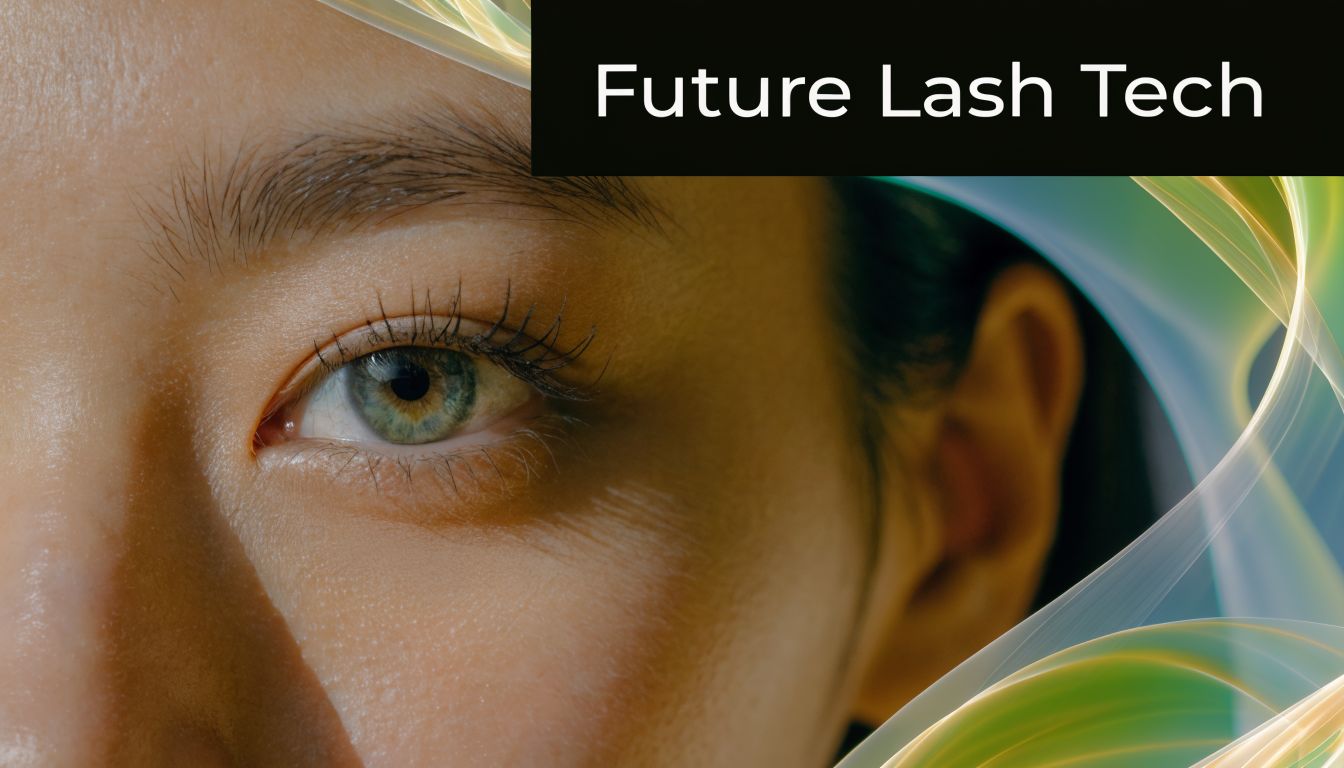
From a distributor’s perspective, the next product wave will separate credible premium offers from attractive stories with weak files behind them. Partners are already asking sharper questions about fibre origin, processing methods, allergen profile, packaging recyclability, and claim support. That is a healthy change for the category.
Some material directions will keep attracting interest. Plant-derived fibres, bio-based inputs, and lash care products built around conditioning oils or fermentation-derived actives fit the preferences of many Swiss pharmacies and spas. Still, novelty is not enough. If a supplier cannot provide clear INCI information, safety documentation, traceable sourcing, and compliant product communication, I do not advise listing the range in a premium Swiss channel.
Search interest and client questions have clearly increased, but the stronger signal is commercial behaviour at the counter and in treatment rooms. Clients ask who made the fibres, what makes the service more natural, whether the adhesive is suitable for sensitive eyes, and how the product sits within a clean beauty routine. Partners who answer those questions precisely are more likely to keep trust and justify premium pricing.
What forward-looking partners should do now
Future-ready operators tend to make four disciplined choices:
- Reduce assortment noise and keep only lines with a clear sourcing file, justified positioning, and clean claim structure
- Train teams on consultation and contraindications so recommendations are based on suitability, not only margin
- Set written service protocols covering patch testing policy, hygiene, aftercare, complaint handling, and product traceability
- Review every launch against Swiss compliance requirements before it reaches shelf, treatment menu, or e-commerce copy
There is a real business opportunity here, but only for partners who treat natural lash enhancement as a regulated premium category. In Switzerland, the strongest brands and service providers will be the ones that combine aesthetics with documentation, ethical sourcing, and disciplined retail execution.
If you’re building a compliant, premium lash or eye-area assortment for a Swiss pharmacy, spa, clinic, or e-commerce channel, beautysecrets.agency can help you evaluate certified natural formulations, ethical sourcing standards, and retail-ready product combinations that fit the expectations of the Swiss clean beauty market.