The first glimpse stays with you. After the speedboat cuts across the bay and the shoreline sharpens into focus, Santhiya's carved teak roofs appear out of the greenery like a film set, except the salt in the air and the damp heat make it clear this place is very real.
That arrival matters, because Santhiya Koh Yao Yai Resort & Spa sells more than seclusion. It sells an eco-luxury idea, and the important question for any discerning traveller is whether that promise survives contact with the actual stay.
An Eco-Luxury Escape in Phang Nga Bay
Santhiya doesn't read like a polished, placeless luxury resort. It feels designed to insist on its own identity. The architecture leans heavily into carved wood, pitched roofs, and a sense of Thai ornamental craft that's far removed from the pale-stone minimalism dominating so many luxury beach hotels.
What makes the eco-luxury positioning more credible is that some of it shows up in concrete operating details, not just adjectives. The resort describes itself as an eco-luxury and 5-star island resort, notes that most rooms have panoramic sea views, and highlights private villa pools filled with purified seawater aligned with international saltwater pool standards on its official resort page. That last point matters. It's the sort of detail that suggests design choices were made at a systems level, not only at the marketing level.
Where the concept feels tangible
In practice, eco-luxury here isn't about roughing it with better linens. It's about keeping the experience indulgent while making the resort feel tied to place.
A few things support that impression:
- Material identity: Teakwood architecture gives the property a recognisable visual language. You're not waking up in a room that could be in Dubai, the Maldives, or Bali.
- Natural integration: The resort sits within dense tropical greenery rather than flattening the setting into a generic beachfront strip.
- Water detail that means something: Purified seawater villa pools are more specific than the usual “nature-inspired” branding.
Practical rule: At resorts that market sustainability, look for operational specifics. Water systems, refillable amenities, and material choices tell you far more than mood-board language.
That said, eco-luxury at a large resort is always a balancing act. You can admire the craftsmanship and the greener touches while still recognising the footprint of a full-service island property with extensive infrastructure, guest transport, dining operations, and private villas. Santhiya works best when you approach it as a serious hospitality product trying to build a stronger relationship with its setting, not as an off-grid retreat.
What the atmosphere is actually like
The strongest quality of the hotel Santhiya Koh Yao Yai Resort is mood. It has drama, but not nightclub drama. The drama comes from layered timber details, jungle-backed hillsides, and sea-facing outlooks that make the property feel theatrical in the best way.
Luxury travellers often say they want “sense of place”, but many really mean they want local design cues without sacrificing comfort. Santhiya gets closer than most. It is decorative. It is stylised. At moments, it can feel almost excessive in its carved-wood romanticism. Yet that's also why it's memorable.
The trade-off is simple. If you prefer sleek contemporary resorts with silent lines, muted palettes, and barely-there interiors, this won't be your hotel. If you want a property that embraces Thai visual identity and connects its luxury pitch to tangible details, Santhiya begins to justify itself.
Location and Getting to the Resort
Reaching Koh Yao Yai is part of the appeal. The island sits away from the harder-edged tourism rhythm of Phuket, and that slight extra effort helps preserve the feeling that you've gone somewhere rather than merely checked into a resort compound.
Independent travel specialists note that Koh Yao Yai is about 17 miles long and that the resort is reached by about 30 minutes by speedboat from Phuket in their Santhiya Koh Yao Yai accommodation overview. That combination matters more than it first appears. A larger island can support a resort stay that still feels tied to a living destination rather than a tiny sandbank built around tourism alone.
The journey in practical terms
For most travellers, the smoothest route is through Phuket. The journey usually feels straightforward when it's pre-arranged properly and much more irritating when it isn't.
The basic flow is:
Fly into Phuket
Most international and regional visitors will find Phuket the easiest entry point.Transfer to the marina
From there, you continue by road to the departure point for the boat transfer.Take the speedboat
The final leg is the scenic one, and it's the part that makes the arrival feel earned.
What works and what doesn't
What works is obvious. The transfer reinforces the resort's castaway glamour, and the bay approach sets the tone before you've even reached reception.
What doesn't always work is assuming island access is as frictionless as a city hotel arrival. It isn't. You need to think about luggage, connection timing, weather tolerance, and whether you want the reassurance of a coordinated transfer or the lower-control patchwork of doing each leg independently.
A useful way to consider this is:
| Travel factor | Best approach |
|---|---|
| Late arrival into Phuket | Build in slack time or stay overnight on the mainland first |
| Heavy luggage | Use the resort's coordinated transfer rather than improvising |
| Low stress priority | Keep all legs booked through one channel if possible |
| Adventure mindset | Independent routing can be fine, but it requires patience |
Arrivals shape your opinion of an island resort more than people admit. Start tired and disjointed, and even a beautiful room has to work harder to win you over.
Koh Yao Yai's quiet is one of the main reasons to come, but that quiet comes with logistics. For most guests, that's a fair trade. The journey isn't difficult. It just isn't urban.
The Santhiya Accommodation Experience
The rooms and villas do most of the heavy lifting at Santhiya. If the transfer creates anticipation, the accommodation is where the resort either converts you or loses you.
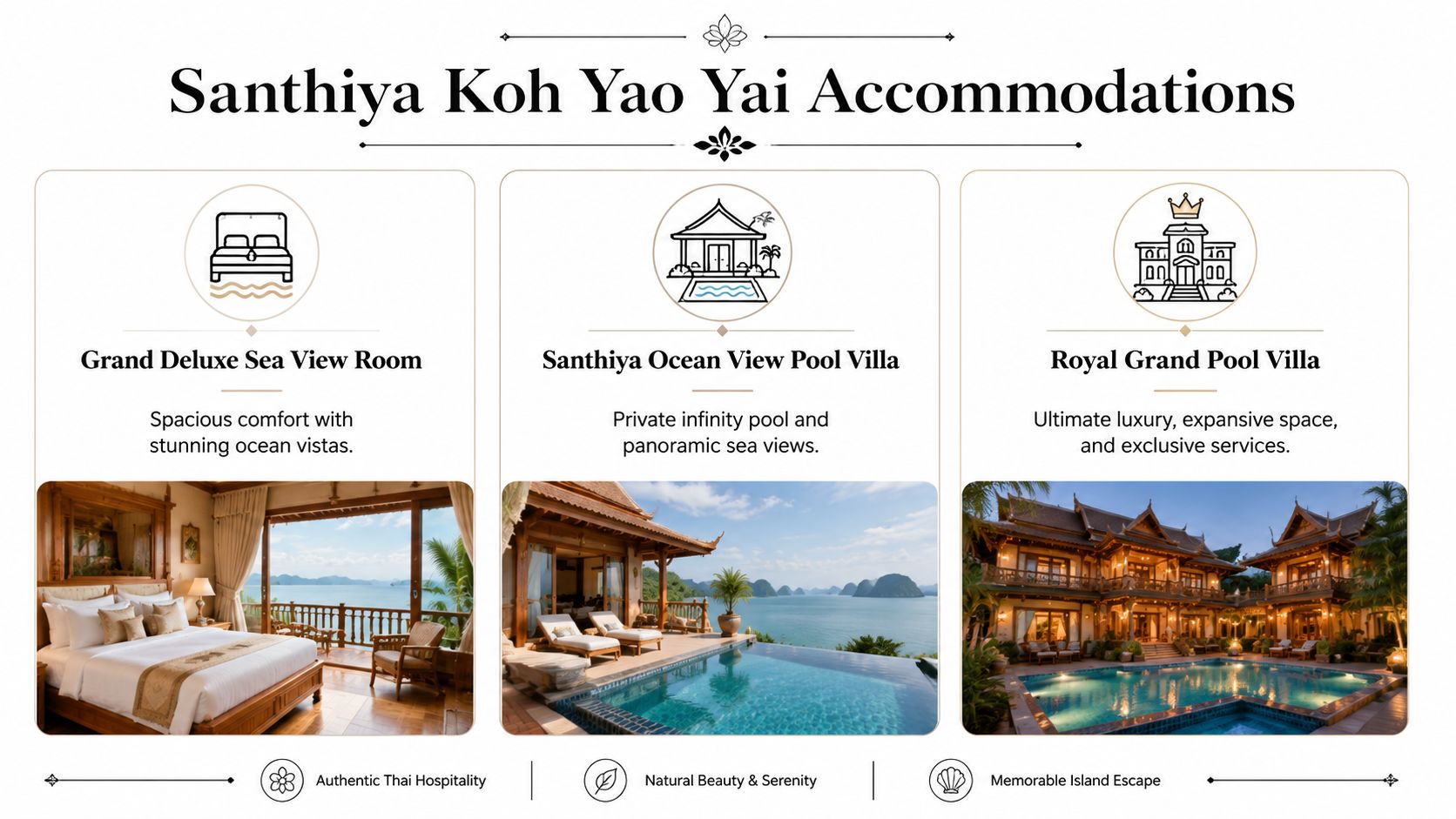
Third-party inventory listings describe the resort as having 148 guestrooms, including 39 teakwood pool villas and 109 deluxe rooms, and note top-end villa formats such as a two-bedroom seawater pool villa spanning 265 sq. m. in this Santhiya room inventory listing. For a traveller deciding whether to book, that mix is important. This isn't a tiny hideaway with only one room type done in slightly different sizes. It's a broad accommodation ecosystem.
How to choose the right category
The mistake many guests make is booking only by headline prestige. At this resort, category names matter less than your actual holiday style.
If you care most about scenery and value, a deluxe sea-view room is often the sensible sweet spot. You still get the carved-wood atmosphere and the bay-facing orientation that defines the property, without paying villa-level rates for privacy you may barely use if you spend the day at the beach or spa.
If privacy is the whole point of the trip, then the villa categories start to make more sense. The appeal isn't just extra square metreage. It's the emotional shift that comes from having your own outdoor zone, your own plunge or swimming area, and a more secluded rhythm.
The experience by travel type
- Couples on a shorter stay: A sea-view room often gives enough theatre for a romantic break, especially if you plan to use the shared facilities heavily.
- Honeymooners: A pool villa earns its keep when you want long, unhurried mornings and a more self-contained feel.
- Families or groups: Larger villa formats work because the resort can combine spectacle with space, rather than forcing everyone into one oversized bedroom.
What I like here is that the teakwood styling doesn't stop at the public areas. In the accommodation, it becomes immersive. Doors, furnishings, carved panels, and rooflines all reinforce the sense that you are staying somewhere intentionally designed, not merely fitted out.
The real trade-offs
In this context, practical judgment is essential. Bigger isn't always better at hillside resorts.
A few considerations are worth weighing before booking:
- View versus convenience: Higher or more secluded units can feel more private, but they may involve more reliance on internal transport.
- Private pool romance versus actual use: A villa pool sounds irresistible, but some travellers end up preferring a well-positioned shared pool with more sun and easier service access.
- Decorative richness versus visual calm: Santhiya's interiors have personality. If you want minimalist serenity, the heavy carved style may feel busy rather than soothing.
Book the room for how you live on holiday, not for how you imagine yourself living in the brochure version of holiday life.
The hotel Santhiya Koh Yao Yai Resort is at its strongest when guests choose accommodation that matches their habits. For many, that means resisting the reflex to overbook. For others, especially those celebrating something, the private seawater-pool villa concept is precisely the point.
A quick decision guide
| If you prioritise | Best fit |
|---|---|
| Value with signature views | Deluxe sea-view room |
| Seclusion and outdoor lounging | Ocean-view pool villa |
| Space for a special trip | Larger premium villa formats |
The headline impression is this: the rooms are not a neutral backdrop. They are the resort's identity made habitable.
Resort Amenities and World-Class Dining
A full day at Santhiya tends to unfold in layers. Morning light suits the panoramic settings, midday pushes most guests towards water or shade, and the late afternoon belongs to the beach and the shifting colours over the bay.
Shared spaces that justify leaving your room
The best resorts know that private accommodation can't do all the work. Santhiya's shared areas matter because they prevent the stay from shrinking into a villa-only experience.
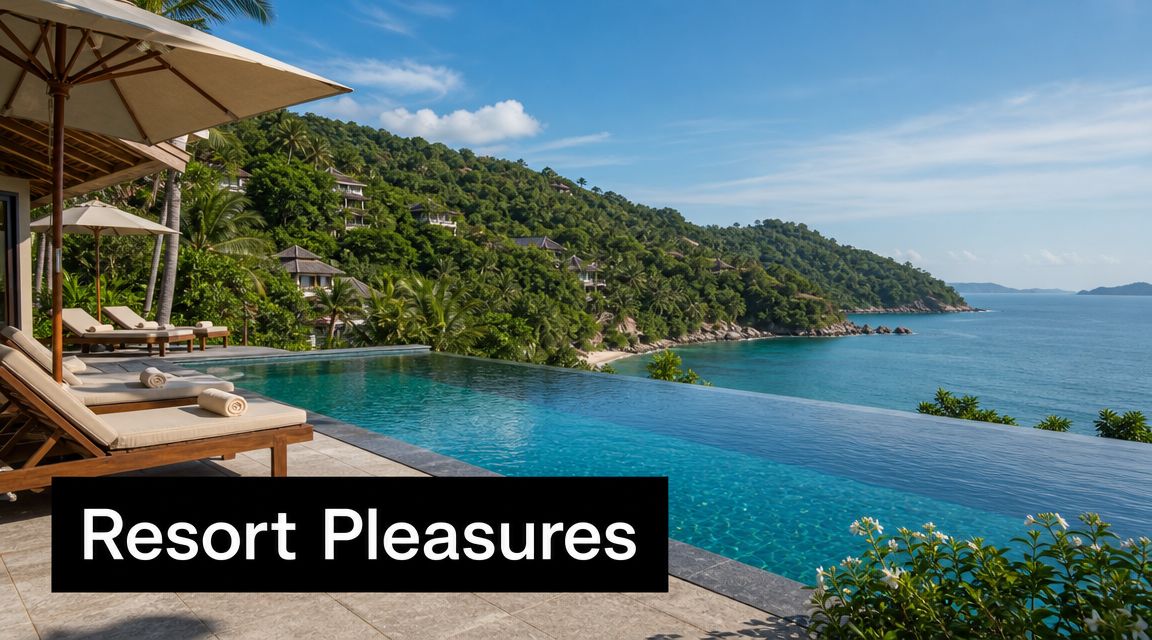
The main appeal lies in contrast. You have the beach for a softer, feet-in-the-sand pace, then raised pool settings that frame the hillside and sea in a more cinematic way. Public spaces seem designed for lingering rather than merely passing through on the way to somewhere else.
Amenities that shape the stay include:
- The beachfront setting: Useful for travellers who want direct sea access without planning an outing.
- Pool variety: Different communal swimming spaces create different moods, which is more valuable than one oversized pool trying to serve everyone.
- Hillside circulation: The resort's internal movement system is part charm, part practicality. It adds character, but it can also add waiting time.
The final point is worth stating plainly. On a steep, spread-out resort, mobility affects the experience. If you dislike relying on resort transport or walking gradients in humidity, layout becomes more than a minor detail.
Dining is where luxury and value diverge
Breakfast is typically the easiest meal for a resort of this type to get right. The setting does much of the work. Morning views over the bay, coffee, fruit, and a broad spread of familiar and regional dishes can make a strong start to the day feel almost automatic.
Dinner is more complicated. At a self-contained island resort, convenience raises expectations. Guests don't want to pay premium resort prices for food that feels generic, safe, or overly adapted. They want cooking with enough confidence to justify staying on property rather than wandering elsewhere.
That's the central trade-off at Santhiya. Dining on site can be atmospheric and effortless. It can also feel like the part of the luxury proposition that requires the most selective planning from guests.
A practical approach is to mix it up:
- Breakfast on site: Usually the obvious choice.
- One or two destination dinners: Best for the setting and mood.
- Some meals beyond the resort: Often a smart move if you value variety and local flavour.
For hotel operators and procurement-minded readers, soft details also shape perceived luxury. The tactile side of hospitality matters, especially around pools and spa-adjacent spaces. If you're interested in how premium bath textiles influence guest impression, this wholesale hotel bathrobes guide offers useful context on what separates standard robe programmes from markedly upscale ones.
A short visual look at the resort helps capture the atmosphere better than any amenities list can.
The most successful days here mix privacy with participation. Stay hidden in your room all day and you miss the property. Stay in the public areas all day and you miss why the room mattered.
Wellness at the Ayurvana Spa
At many luxury resorts, the spa is a side department. At Santhiya, it should be treated as part of the core stay. That's not because every guest needs a treatment booked daily. It's because the whole property leans on a slower, sensory, nature-facing rhythm, and the spa is where that rhythm becomes explicit.

Why the spa belongs in your plan
The case for booking Ayurvana Spa isn't indulgence. It's coherence. If you choose this resort because you want carved timber architecture, tropical vegetation, sea air, and a sense of retreat, then skipping the wellness component can leave the stay feeling oddly incomplete.
A good spa at a place like this does three things:
- It slows the pace down: Treatments create a clearer break from transfer logistics, screens, and itinerary-thinking.
- It deepens the setting: Jungle-framed treatment spaces and natural materials can make relaxation feel site-specific rather than generic.
- It reinforces the resort's promise: The eco-luxury concept needs a bodily expression, not just visual beauty.
What tends to work best
Traditional Thai-influenced therapies make the most sense in this environment. They align with the destination and avoid the interchangeable “global spa menu” problem that plagues too many resort wellness programmes.
The strongest spa experiences usually combine:
| Wellness priority | Best approach |
|---|---|
| Physical reset | Choose massage-led treatments early in the stay |
| Mental decompression | Book during the hottest, slowest part of the day |
| Romantic trip | Use the spa as a centrepiece rather than an add-on |
There's also a practical argument for not leaving spa decisions until the final day. Guests often postpone treatments in favour of beach time, then discover too late that the body responds differently to travel fatigue, sun exposure, and island humidity than expected. An early treatment can improve the rest of the trip.
A resort spa earns its place when it changes the pace of the stay, not merely when it perfumes it.
The right expectation
Don't approach Ayurvana Spa expecting a clinical medi-spa or a hyper-technical urban wellness lab. That's not the point here. The value lies in atmosphere, touch, and release. It's about letting the setting do part of the therapeutic work.
For travellers who already know they relax badly, this is exactly why the spa should be booked deliberately. A treatment slot creates permission to stop striving for the “best use” of a luxury holiday. At Santhiya, that shift matters. The resort is at its best when you surrender to it a little.
Activities and Exploring Koh Yao Yai
A stay at Santhiya works best when you don't treat the property as a sealed bubble. The resort gives you enough to do on site, but Koh Yao Yai itself is part of the value. The island's pace, village life, and stretches of quieter coastline give the stay texture that no resort programme can fully replicate.
Resort-led ways to see more
For many guests, organised excursions are the easiest entry point. They remove the friction of figuring out boats, timings, and local coordination, which matters if your holiday goal is ease rather than improvisation.
Commonly appealing options include:
- Bay exploration: Boat trips out into the wider Phang Nga Bay scenery make sense if you want the iconic limestone-island backdrop.
- Gentler water activities: Kayaking or similar sea-based options suit guests who want movement without turning the day into a mission.
- Cultural activities on site: Cooking classes and wellness sessions can be worthwhile when you want some structure without leaving the resort ecosystem.
What works about resort-arranged outings is predictability. What doesn't always work is depth. Curated experiences are smooth, but they can flatten the destination into highlights rather than encounters.
Independent island time has its own rewards
The richer counterbalance is to spend at least some time beyond the resort's choreography. Koh Yao Yai lends itself to unhurried exploration. The point isn't to race between landmarks. It's to notice village rhythms, roadside greenery, local beaches, and the fact that the island still feels lived in.
A practical independent plan usually looks like this:
Go out with a loose half-day plan
Leave room for detours, pauses, and beach stops.Dress and behave with respect
You're moving through local communities, not a resort extension.Keep your expectations small
This is not about a checklist of attractions. It's about atmosphere.
How to balance both styles
The smartest version of a Santhiya holiday usually combines one or two organised experiences with one slower day of local island exploration. That gives you both convenience and perspective.
Here's the distinction that matters:
| Style | Best for |
|---|---|
| Resort excursions | Ease, scenery, and low-planning days |
| Independent exploring | Local character and a stronger sense of place |
The hotel Santhiya Koh Yao Yai Resort becomes more convincing when it's used as a base, not only a backdrop. The resort gives you comfort and visual drama. The island gives the stay authenticity.
Booking Your Stay and Final Verdict
Santhiya is worth booking for the right traveller. It suits guests who want atmosphere, distinctive Thai design, and a softer island tempo more than those chasing flawless contemporary efficiency.
The key is to book with clear priorities. If your trip depends on sunbathing from a private pool terrace all day, ask detailed questions about villa position and exposure. If your priority is scenery and character, a sea-view room may offer the better overall value. If ease matters most, coordinate transfers carefully and keep the island journey as simple as possible.
What to check before confirming
A few booking habits can improve the odds of a strong stay:
- Match the room to your routine: Don't pay for villa privacy if you know you'll spend most hours in shared spaces.
- Scrutinise package inclusions: Transfers, meals, or spa elements can matter more here than at a city hotel.
- Preview the property layout: A good visual sense of the resort helps you understand distance, elevation, and room positioning. This VirtualTourEasy guide for hotels is a useful reminder of how virtual hotel walkthroughs can sharpen booking decisions before arrival.
Final assessment
Santhiya's strengths are easy to identify. The carved teakwood identity is memorable. The eco-luxury proposition has at least some real substance behind it. The scenery does its part. So do the seawater-pool concept, the hillside drama, and the feeling of entering a resort that doesn't look like everyone else's.
Its weaknesses are also clear. This is not frictionless modern luxury. Large hillside resorts come with operational compromises. Dining value may not satisfy every guest. And the property works best when approached with a little planning rather than blind surrender to brochure fantasy.
For honeymooners, design-led travellers, and guests who care about mood as much as facilities, Santhiya Koh Yao Yai Resort & Spa can be a memorable choice. For travellers who prize sleek simplicity and ultra-streamlined service above all else, it may feel too ornate and too logistically involved.
The verdict is simple. Book it for character, setting, and the way its eco-luxury promise shows up in tangible details. Don't book it if you want anonymous perfection.
If you curate wellness, spa, pharmacy, or premium retail experiences in Switzerland, beautysecrets.agency is worth knowing. The agency connects trade partners with natural, ethically sourced beauty and wellness brands that fit modern luxury expectations around quality, transparency, and sensorial care.