The surprising truth in Swiss retinol retail is that the best retinol serum is no longer the strongest bottle on the shelf. Since June 2024, facial products are capped at 0.3% retinol under the EU framework that Switzerland aligns with through its cosmetics rules, which means the old shortcut of “higher percentage equals better product” has become commercially clumsy and, in many cases, irrelevant for compliant over-the-counter assortment planning (SkinCeuticals on retinol stages and the new cap).
That sounds restrictive. In practice, it creates a cleaner category. Buyers can now build around what matters in daily retail performance: tolerability, delivery system, repeat purchase potential, staff confidence, and a clear point of difference between clinical formulas and clean-beauty alternatives. For Swiss pharmacies, spas, and premium retailers, that shift is useful. It rewards curation, not noise.
| Assortment lens | What to prioritise | What to avoid | Why it matters in Switzerland |
|---|---|---|---|
| Compliance | Facial retinol at or below the legal cap, clear INCI review, supplier documentation | Legacy over-the-counter high-strength stock without updated positioning | Protects the business and supports trust |
| Efficacy | Stable formulas, smart delivery systems, sensible support ingredients | Judging by percentage alone | A capped market demands better formulation reading |
| Client fit | Beginner, sensitive, experienced, clinical-minded, natural-minded pathways | One-size-fits-all recommendations | Swiss shoppers expect tailored guidance |
| Differentiation | Certified-natural alternatives, ethical sourcing, premium packaging, staff education | Generic “anti-ageing serum” merchandising | Helps a retailer stand out beyond price |
| Commercial value | Routine bundles, consultation-led selling, clear signage | Isolated hero SKU strategy | Retinol sells best as a guided regimen |
Navigating the New Retinol Landscape in Switzerland
For years, many retailers stocked retinol like a potency ladder. The strongest percentage looked the most credible, and the sales conversation often stopped there. That approach now underperforms in Switzerland.
The category has changed because the rules have changed, and because the Swiss shopper has changed with them. A premium pharmacy chain can’t treat retinol as a single hero SKU any more. It needs a managed category with clinical options, sensitive-skin options, and clean-beauty alternatives that still make sense in a results-led environment.
Three practical realities define the category now.
- Compliance comes first: Buyers need products that fit the current Swiss-aligned framework and can be defended during supplier review.
- Tolerance drives retention: A serum that causes irritation too quickly may sell once and lose the customer.
- Brand ethos influences conversion: Swiss retail has strong appetite for certified, cruelty-free, ethically positioned beauty, especially when the efficacy story is still credible.
The strongest operators in this category don't ask only, “What percentage is it?” They ask better questions:
- How is the retinol delivered?
- Who is the formula for?
- What support ingredients reduce friction in use?
- Can staff explain the trade-off clearly?
- Does the brand fit Swiss expectations around quality and sustainability?
Commercial insight: In a regulated market, expert guidance becomes part of the product. The shelf alone no longer closes the sale.
That creates an opening for pharmacies and spas that want authority rather than commodity traffic. A compliant retinol assortment can still feel advanced, but the intelligence has to sit in the formulation and in the recommendation process. The retailers that win this category are the ones that turn a technical regulation into a trust advantage.
Understanding the New Rules of Retinol Compliance
The retinol category in Switzerland is now governed by assortment discipline before it is governed by brand appeal. For pharmacy buyers, spa operators, and premium retailers, the commercial risk sits upstream. It starts with formula status, product classification, claims language, and supplier paperwork.

What changed
The current EU direction, mirrored in Swiss practice under the Ordinance on Cosmetic Products (KVO; SR 817.023.31) and aligned with Regulation (EC) No 1223/2009, sets a clear ceiling for cosmetic retinol use: 0.3% for facial products and 0.05% for body products. For trade partners, that closes the door on the old OTC “1% retinol” story and puts much more pressure on technical due diligence.
The practical consequence is straightforward. Buyers can no longer treat legacy prestige positioning as evidence that a product still belongs on a compliant shelf. Pack copy, PIF support, market-specific labeling, and intended area of use now matter as much as the active itself.
This is a regulatory issue, but it is also a margin issue.
A pharmacy chain that keeps non-compliant assumptions in circulation creates avoidable cost in returns, staff confusion, weak recommendation quality, and reputational friction with informed clients who expect Swiss standards to be applied consistently.
How to review current and incoming stock
A workable review process should be operational, not theoretical. In practice, I would expect buying and quality teams to check five points before approving reorder or launch:
- Confirm facial concentration and intended use: A face serum above the current cap needs immediate review before any repeat purchase.
- Check face versus body positioning: Dual-use messaging creates risk if the pack, claims, or training material are vague.
- Request updated supplier dossiers: Historical sales material is not enough for ranges that built their identity around higher strengths.
- Audit claims language on shelf and online: Remove “maximum strength” or similar wording if it implies a compliance problem or an outdated superiority claim.
- Retrain frontline teams: Staff should explain tolerance profile, delivery system, and user suitability. Percentage alone is no longer an adequate selling script.
Swiss operators should also be stricter with international brands that use one global narrative across different regulatory markets. That approach may be efficient for the brand, but it often creates unnecessary clean-up work for the retailer.
The retinoid naming problem at shelf level
One of the most common category mistakes is treating every vitamin A derivative as if it were interchangeable with retinol. It is not. Staff who blur those distinctions make the category harder to trust, especially in pharmacy where customers expect technical accuracy.
| Retinoid type | Retail relevance | Main consideration |
|---|---|---|
| Retinol | Core cosmetic anti-ageing active | Subject to the clearest concentration limits in facial products |
| Retinal or retinaldehyde | Often presented as a higher-performance cosmetic option | Requires precise explanation so staff do not overstate equivalence or medical status |
| Retinyl esters such as retinyl palmitate | Lower-intensity option for cautious starters or sensitive-skin users | Useful in gentle and natural-leaning assortments, but should not be merchandised as direct substitutes for stronger retinoid results |
| Prescription retinoids | Medical route, not standard cosmetic retail | Must stay outside cosmetic merchandising and routine shelf comparison |
For Swiss trade partners, this distinction affects more than education. It shapes assortment architecture. A well-built category separates entry, progression, and clinically oriented options with language that is accurate enough for a pharmacist and clear enough for a first-time user.
A compliant retinol category signals control, not compromise.
Compliance as part of premium positioning
The strongest stores treat compliance as evidence of curation quality. That approach works particularly well in Switzerland, where customers often reward retailers that combine efficacy, safety, and transparent standards. It also creates room for differentiated ranging. A clinical serum can sit beside a cleaner, barrier-supportive option without weakening the category, provided both products are compliant and staff can explain the trade-off in plain language.
That is a significant shift. The cap reduces lazy merchandising and rewards informed buying. Premium pharmacies and spas that build their retinol selection around documentation, formula logic, and recommendation quality will look more credible than retailers still relying on old strength cues.
Decoding Efficacy Beyond Percentage
A capped market forces better product literacy. That’s good news for serious retailers because percentage was always an incomplete way to assess a serum.
One of the most useful pieces of evidence for buyers is that 0.4% retinol, applied three times weekly for 24 weeks, significantly improved wrinkles, supporting the case that well-made formulas around the compliant range can still deliver meaningful anti-ageing results (retinol percentage analysis referencing the 0.4% study).
That matters because it shifts the buying question from “Is this strong enough?” to “Is this formula engineered well enough to succeed in real use?”
What makes a compliant serum perform
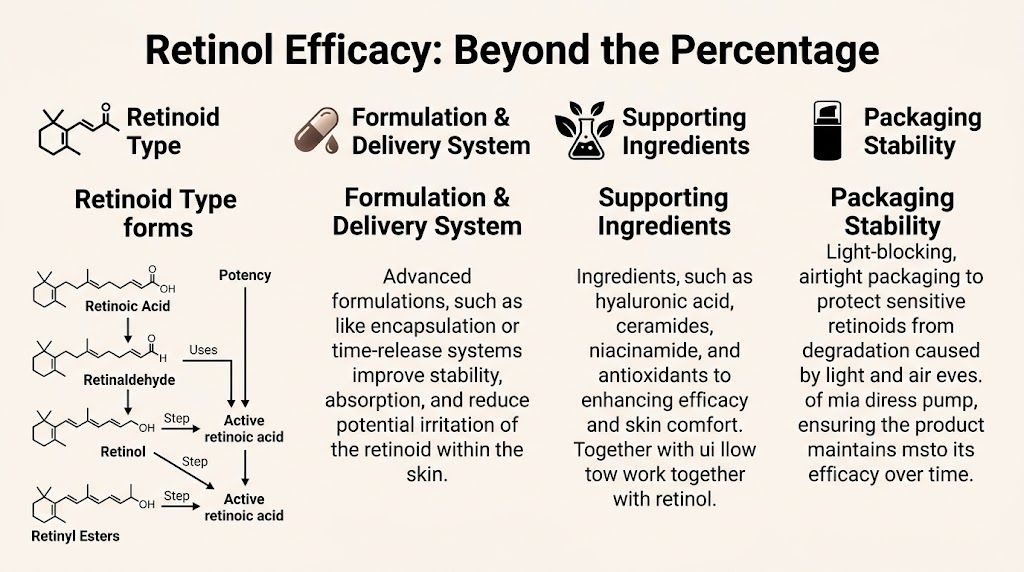
The best retinol serum in retail isn’t automatically the one with the highest allowable percentage. It’s the one that survives storage, stays stable in use, reaches the skin in a controlled way, and doesn’t push the client into early abandonment.
Look at four variables together.
| Factor | What good looks like | Why it matters |
|---|---|---|
| Retinoid form | Clear, intelligible positioning on-pack and in training material | Staff can recommend with confidence |
| Delivery system | Encapsulation, time-release, or other controlled delivery approaches | Supports tolerability and steadier use |
| Support ingredients | Hydrators and barrier-supportive companions such as hyaluronic acid or soothing partners | Lowers friction around dryness |
| Packaging | Opaque, airtight, preferably low-exposure dispensing | Helps protect a light- and air-sensitive ingredient |
Delivery systems often decide the winner
Premium buyers should exercise greater discernment regarding product formulation. A mediocre formula at the legal maximum can still disappoint if it oxidises quickly, feels harsh, or lacks any buffering support. By contrast, a controlled-delivery product can feel markedly more elegant on the skin and produce fewer complaints.
Encapsulation deserves special attention in Swiss retail because climate and consumer profile both push in that direction. Winter dryness, barrier disruption, and overtreated skin are common realities in pharmacy consultations. A release system that moderates irritation isn’t a nice extra. It’s often the difference between a repeat user and a refund request.
Here is useful supporting media for team education during training or internal category reviews:
Supporting ingredients aren’t filler
Retailers often underestimate how much the “rest of the formula” affects customer success. In practice, support ingredients shape the first month of use, and the first month often determines whether the client stays with the product.
Useful support systems commonly include:
- Hydration partners: These help offset the dry, tight feel that makes many users quit early.
- Barrier-supportive ingredients: These are valuable in pharmacy channels where many clients already report sensitivity.
- Simple formula architecture: A cleaner night routine around retinol usually performs better than an overloaded one.
Shelf test: If your team can only describe a serum by its retinol percentage, they don't yet know enough to sell it properly.
What doesn’t work
Several assortment mistakes repeat across premium retail.
- Overbuying on a single “hero strength” story: That was easier to market before the cap. It’s much less persuasive now.
- Ignoring packaging format: A strong formula in weak packaging can lose credibility fast.
- Stocking formulas with no clear user pathway: If nobody knows whether the serum is for beginners, experienced users, or sensitive clients, conversion suffers.
- Mixing clinical and natural propositions without clear separation: The customer ends up confused about expected speed, texture, and tolerance.
A good buyer treats efficacy as a combination of chemistry, delivery, and user adherence. In the Swiss context, the best retinol serum is the one that performs inside the rules and inside normal customer behaviour.
Curating Your Assortment for the Swiss Market
A profitable Swiss retinol category is usually built with six to eight SKUs, not fifteen. Margin improves when each product has a clear commercial role, a clear user profile, and a clear compliance position under the 0.3% cap.
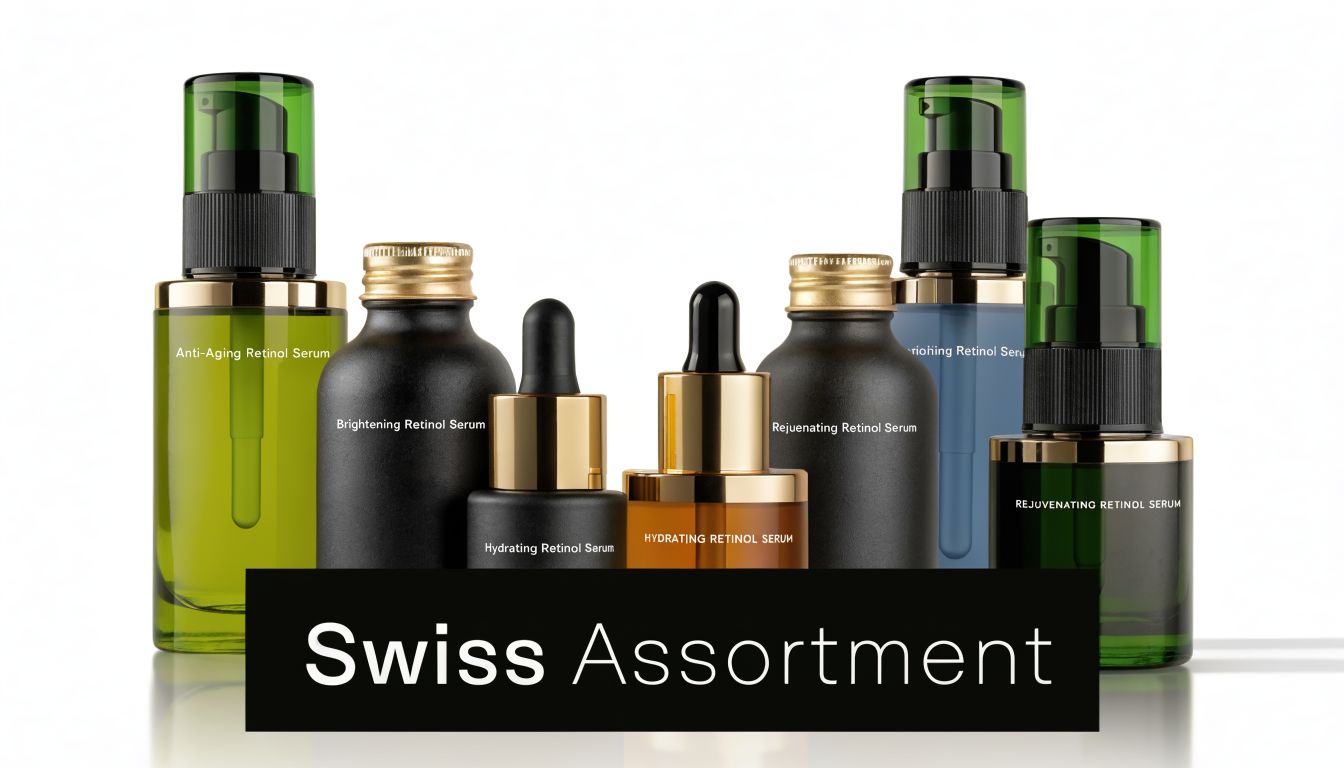
For Swiss pharmacies, spas, and selective retailers, the simplest way to build that structure is around three pillars. The range stays easy to train, easier to merchandise, and less exposed to duplication after the new concentration limit narrowed the old “stronger equals better” story.
The compliant powerhouse
Every premium pharmacy group should carry at least one clinical retinol serum that uses the full room the rules allow, without drifting into an irritation-first proposition. This is the anchor SKU for clients who expect visible anti-ageing performance, ask informed questions, and compare formulation quality rather than marketing language alone.
Look for products with:
- Delivery systems that control exposure over time
- Protective packaging, ideally airless and opaque
- Clear positioning for experienced active-skincare users
- Claims language that can stand up in a regulated pharmacy setting
This product earns trust when staff present it as precise, stable, and professionally selected. “Strongest on the shelf” is a weaker sales message now, and in Swiss pharmacy it can create the wrong expectation.
The certified-natural alternative
Swiss demand for clean beauty is real, but buyers should stay disciplined about what “natural” means in a retinol fixture. If a formula uses a gentler vitamin A derivative, plant-origin inputs, or a certification framework such as COSMOS or ECOCERT, say so plainly. If it does not, do not blur the line.
This pillar serves clients who care about provenance, texture, and ingredient philosophy as much as speed of visible change. In practice, that includes many spa customers, younger premium shoppers, and sensitive-skin clients who still want a credible age-management step. The trade-off is straightforward. These formulas often sell on comfort, routine fit, and brand values more than on aggressive before-and-after expectations.
For retailers, this lane does more than fill a “natural” slot. It protects differentiation against mass dermocosmetic assortments and opens room for higher attachment sales in oils, masks, and barrier-support products.
The gentle introduction
The third pillar should remove friction from first purchase. This is the SKU for cautious beginners, post-irritation clients, and customers who ask for vitamin A but describe a history of redness, seasonal sensitivity, or inconsistent routine habits.
Good options include buffered formulas, gentler retinoid derivatives, or low-intensity night serums positioned around gradual adaptation. They tend to produce fewer returns, better repeat rates, and stronger pharmacist confidence at the point of recommendation.
Do not let this pillar read like the weak option. It is the retention product.
A practical tiering model
| Pillar | Best fit customer | Product style | Retail role |
|---|---|---|---|
| Compliant powerhouse | Results-focused, experienced skincare user | Advanced, controlled-delivery retinol serum | Anchor prestige and authority |
| Certified-natural alternative | Clean-beauty shopper, sensitive user, ethics-led buyer | Certified or plant-origin vitamin A pathway | Differentiate the category |
| Gentle introduction | Beginner, cautious user, seasonal sensitivity | Mild retinoid or buffered formula | Reduce drop-off and widen entry |
The merchandising rule is simple. Separate these pillars on shelf and in staff language. A shelf that labels every SKU “anti-ageing serum” forces the customer to guess. A shelf that clearly distinguishes clinical performance, certified-natural positioning, and beginner-friendly entry points gives the team a faster consultation path and a better chance of building a two-product basket.
For campaign support, retailers using digital ads or social creatives can keep pillar messaging consistent with tools such as ShortGenius AI ad creative tool. That matters most when the same assortment is sold across pharmacy, spa, and ecommerce channels, where mixed messages quickly erode trust.
Matching Serums to Client Profiles and Concerns
Frontline teams don’t need a dermatology lecture. They need decision rules that hold up in real consultations. The most useful approach is to match the formula style to the customer’s history, concern, and tolerance pattern.
The first fine lines client
This shopper is often motivated but inconsistent. They want visible change, but they also want a product that fits into a simple routine and doesn’t create a rough adjustment period.
A gentle or mid-level option usually performs best here. If the retailer pushes an advanced formula too early, the client often interprets normal adaptation as product failure. For this profile, success means keeping the routine stable and making the serum feel easy to continue.
Recommended pathway:
- Choose a mild or buffered retinoid product
- Advise night use only
- Pair with a straightforward moisturiser
- Keep the routine uncluttered for the first weeks
The established wrinkle client
This customer is often less interested in novelty and more interested in credibility. They may have used actives before and are usually comfortable with a more structured consultation.
For this profile, the best retinol serum is often the retailer’s compliant powerhouse. The pitch should focus on formulation quality, controlled delivery, and consistency. Avoid overpromising speed. Strong anti-ageing customers tend to stay loyal when expectations are realistic and the product feels deliberate rather than aggressive.
The Alpine-sensitive client
Swiss conditions create a familiar profile in pharmacy and spa channels. Skin may be dry, reactive, wind-exposed, or overworked from exfoliants and indoor heating. For these customers, encapsulated retinol variants matter because they release the active gradually, reducing the incidence of retinoid dermatitis to less than 5%, compared with over 20% for non-encapsulated forms (Medik8 on retinoid strength charts and encapsulated tolerability).
That single distinction should shape recommendations. If a customer reports stinging, barrier fragility, or fear of peeling, don’t start with a conventional “strong” serum.
Instead:
- Lead with encapsulated delivery
- Use the sandwich method if needed
- Reduce frequency before changing category
- Switch to a natural alternative if tolerance remains poor
If the barrier is already compromised, the right answer usually isn’t “less product”. It’s “a better vehicle”.
The blemish-and-marks client
Some customers come in asking for anti-ageing support but are really bothered by texture, uneven tone, or post-breakout marks. These shoppers need a retinoid recommendation that won’t collide with an already aggressive routine.
The safest retail advice is usually to simplify. Don’t stack too many exfoliating or sensitising products around the serum at the start. Recommend one active night product, one barrier-supportive moisturiser, and clear sunscreen advice during the day. The point isn’t to build the most exciting routine. It’s to build one the customer can follow.
A quick matching grid
| Client profile | Better choice | Avoid |
|---|---|---|
| First-time user with light fine lines | Gentle introduction serum | Performance-led hero formula on night one |
| Experienced anti-ageing shopper | Compliant powerhouse | Overly mild formula that feels ineffective |
| Sensitive winter skin | Encapsulated or natural-leaning option | Fast-acting, unbuffered formulas |
| Texture and post-breakout concerns | Simplified retinoid-centred routine | Layering too many actives at once |
Merchandising and Marketing Your Retinol Selection
Most retinol categories are badly merchandised. They’re organised by brand, not by decision logic, and they force the customer to decode technical skincare language alone.
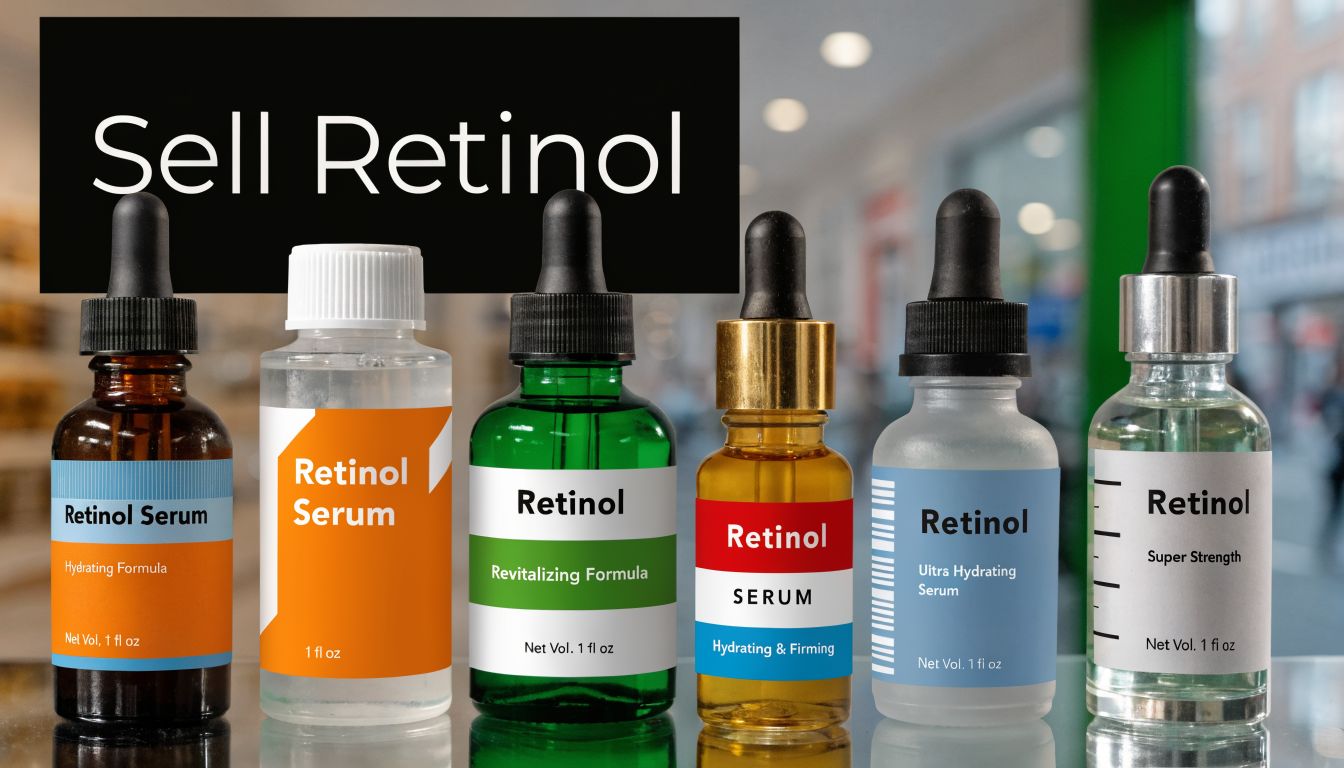
A better Swiss approach is to merchandise by use case. Group the shelf into clear lanes such as “first retinol”, “advanced but compliant”, and “natural alternative”. That makes the category immediately more navigable and lowers the intimidation factor that often suppresses conversion.
In-store tactics that help sell
Retailers do better when they make the regulation legible to the customer without making it sound bureaucratic.
Use shelf talkers and tester-area messaging built around points like these:
- Swiss-aligned compliant formulas: Position the category as carefully selected for safe, modern use.
- Choose by skin tolerance, not hype: This gives staff a natural consultation opening.
- Build a complete evening routine: Retinol works better commercially when sold with support products.
Bundling is especially effective here. A retinol serum should rarely sit alone in the basket. Pair it with a barrier-focused moisturiser and a daily SPF recommendation. That raises average order value and reduces the chance of user error.
Digital merchandising needs education, not just product tiles
On e-commerce, the best retinol serum page shouldn’t look like a generic serum collection page. It should answer the customer’s main anxieties before they abandon the category. Typical questions are simple: which one suits sensitive skin, what makes one formula stronger in practice, and how to start without overdoing it.
Useful content formats include:
- A starter guide: “Your Swiss-approved retinol journey”
- A short quiz: Match the shopper to clinical, gentle, or natural route
- Routine pages: Retinol plus moisturiser plus SPF
- Short paid social explainers: Focus on differences in texture, tolerance, and who each option is for
For retail teams building those creative assets quickly, the ShortGenius AI ad creative tool can be useful for turning product education into short-form video and ad variants without forcing staff to build every visual manually.
Messaging that works better than percentage-led marketing
| Weak message | Stronger message |
|---|---|
| Highest strength retinol | Controlled, compliant retinol for regular use |
| Powerful anti-ageing serum | Clinical night serum matched to your tolerance level |
| Retinol for everyone | Three ways to start retinoid care based on skin needs |
Retailers who teach the customer how to choose usually sell more than retailers who simply present more choice.
The strongest category pages and in-store displays don’t make retinol look dramatic. They make it look understandable.
Frequently Asked Questions for Swiss Retail Partners
Operational friction usually comes from the same small set of questions. Clear answers help buyers, store managers, and advisors keep the category consistent across channels.
How should staff explain the difference between retinol and gentler alternatives
Train staff to explain function, not chemistry textbooks. Retinol should be described as the more classic, performance-oriented vitamin A route. Gentler alternatives should be framed as better suited to cautious, sensitive, or clean-beauty-led customers who still want renewal support.
What matters in-store is clarity of expectation. The customer should understand that different options may vary in speed, comfort, and ritual fit.
What should a pharmacy do when a customer says retinol “didn’t work” before
Usually, the prior match was wrong. Either the formula was too strong, the routine was too crowded, or the customer stopped too early because of discomfort.
The most effective response is to reset the decision:
- Ask what happened previously
- Identify irritation versus lack of visible change
- Recommend a better-matched format
- Simplify the surrounding routine
- Give precise usage guidance at the point of sale
Should online and in-store retinol ranges be identical
Not always. In-store teams can support more nuanced products because they can explain them live. Online, the category often performs better when the selection is edited more tightly and supported by strong educational content.
For teams refining that broader channel strategy, this guide to beauty products ecommerce is a useful reference because it focuses on how beauty shoppers move through digital decision-making rather than treating skincare like general merchandise.
How many retinol SKUs does a premium retailer actually need
Fewer than many buyers think. If multiple products solve the same problem in almost the same way, the range becomes harder to sell and easier to discount.
A tight architecture usually works better than an inflated one. Keep enough depth to cover the three main pathways, then expand only when a new SKU adds a distinctly different consultation answer.
FAQ Quick Reference
| Question | Answer Summary |
|---|---|
| How should staff explain retinol versus alternatives? | Focus on expected experience, tolerance, and user profile rather than technical detail |
| What if a customer had a bad retinol experience before? | Reassess the formula, frequency, and routine simplicity before abandoning the category |
| Should online and store assortments match exactly? | Not necessarily. Online often benefits from a tighter edit and stronger guidance content |
| How many SKUs are enough? | Keep the range tight and role-based rather than broad and repetitive |
The best retinol serum category is rarely the biggest one. It’s the one a store team can explain clearly, merchandise confidently, and adapt to different customer profiles without confusion.
Swiss retailers that want a cleaner, more differentiated retinol category don’t need more noise. They need better curation, compliant brand selection, and support that fits the realities of pharmacy, spa, and premium e-commerce. If that’s the direction you’re building towards, beautysecrets.agency can help you shape an assortment around ethical sourcing, Swiss market fit, and premium skincare positioning that feels both commercial and credible.