
A customer walks into your pharmacy in Zürich, picks up two vitamin C serums, and asks a fair question that many teams still struggle to answer clearly.
One says pure vitamin C. The other says a natural derivative. Which one works better, and how do I know it won’t oxidise before I finish it?
If your team hesitates, the sale often slows down. If your team answers with confidence, the conversation changes. The customer stops comparing labels and starts trusting your judgement.
That’s why the best vitamin c serum isn’t just a consumer search term. In Switzerland, it’s a retail training issue, a curation issue, and a credibility issue. Pharmacies, spas, premium boutiques, and e-commerce partners all face the same challenge. Customers arrive informed, sceptical, and often sensitive to irritation, clean beauty claims, and packaging quality.
A strong answer needs more than “this one is popular”. It needs formulation logic. It needs practical language. It needs staff who can explain why one serum suits pigmentation, another suits reactive skin, and a third fits a natural certified assortment better.
Why Your Customers Are Asking About Vitamin C Serums
The demand is easy to recognise on the shop floor. A customer doesn’t ask for “an antioxidant serum”. They ask for help with dark spots, dullness, firmness, or skin that looks tired after winter, city stress, or mountain sun. Vitamin C sits at the centre of all those concerns, so customers treat it as a staple rather than an optional add-on.
In Swiss retail, the conversation is often more advanced than teams expect. Customers don’t just ask what vitamin C does. They ask whether the formula is stable, whether the concentration is too strong, whether a natural version is still effective, and whether they can use it with the rest of their routine.
The commercial moment happens in one question
A common pharmacy scenario looks like this. A customer has read online that pure L-ascorbic acid is the “gold standard”, but she’s also had irritation before. She sees an ECOCERT-style natural line beside a stronger cosmeceutical line. Now she wants a decision, not a lecture.
If the answer is vague, she keeps browsing.
If the answer is specific, she buys with confidence.
Here’s the practical difference skilled advice makes:
- Trust grows faster when staff can explain why packaging matters, why one form of vitamin C is gentler, and why the routine around the serum affects results.
- Returns and dissatisfaction drop when the recommendation matches the customer’s skin tolerance and expectations.
- Premium positioning becomes easier because you’re selling expertise, not just a bottle.
Customers rarely want the strongest serum. They want the one that makes sense for their skin and feels worth the price.
Why this category matters in Switzerland
Swiss consumers often combine high product expectations with strong interest in ingredient transparency, ethical sourcing, and clinical logic. That creates a useful retail opportunity. Teams that understand both the science and the language of clean beauty can guide customers far more effectively than teams that rely on front-label claims alone.
Vitamin C also lends itself to repeat purchasing. When customers understand how to use it, how to store it, and what signs tell them a formula is still in good condition, they’re more likely to stay loyal to the category and to your store.
So the actual task isn’t just choosing the best vitamin c serum. It’s learning how to choose the best version for the customer standing in front of you.
The Core Science Behind Vitamin C Skincare
Vitamin C earns its reputation because it does two jobs that customers immediately care about. It helps defend skin from daily environmental stress, and it supports the processes that keep skin looking firmer and more even.
That sounds technical, but it’s easy to explain well once you use the right mental model.

Vitamin C as a bodyguard for skin cells
The first role is antioxidant protection. In retail language, vitamin C acts like a bodyguard for skin cells. Throughout the day, skin faces stress from ultraviolet light and other environmental triggers. That stress creates unstable molecules called free radicals.
Those free radicals aren’t something customers can see directly, but they can understand the effect. Skin starts to look less bright. Tone looks less even. It can appear more fatigued over time.
Vitamin C helps by neutralising those reactive molecules before they contribute to visible damage. That’s why customers often hear about vitamin C in the context of brightness and daily protection. It isn’t sunscreen, and it doesn’t replace SPF. But it works well as a support player in a daytime routine.
A simple way to explain it on the sales floor is this:
- Sunscreen blocks and filters exposure
- Vitamin C helps manage the oxidative stress that still occurs
- Used together, they support a more complete morning routine
Vitamin C as a foreman for collagen work
Its second role is often even more commercially important. Vitamin C supports collagen synthesis. If you want a plain-language analogy, think of collagen as the structural framework that helps skin feel firm and look resilient. Fibroblasts are the cells involved in building that framework.
Vitamin C behaves like a foreman on a construction site. It helps signal and support the work that needs to happen for collagen production to proceed properly. When retailers explain this clearly, customers understand why vitamin C is discussed not only for glow, but also for firmness and smoother-looking skin.
That’s especially useful when speaking with customers who say things like:
- “My skin just looks flat”
- “I’m seeing more visible lines”
- “I want brightness, but I also want something for firmness”
Why the science matters in product selection
Once staff understand these two roles, product recommendations become more precise. A serum can be assessed not just by how strong it sounds, but by whether the formula is likely to deliver the antioxidant support and collagen-related benefits the customer expects.
Practical rule: If your team can explain antioxidant protection and collagen support in one minute, they can handle most first-line vitamin C questions with authority.
A customer doesn’t need a chemistry seminar. They need clear translation. Your team’s job is to make the science feel useful, not intimidating.
Here’s a short training table that helps staff keep the explanation straight:
| Function | Plain-language explanation | Customer-facing benefit |
|---|---|---|
| Antioxidant support | Acts like a bodyguard against daily oxidative stress | Helps skin look brighter and less tired |
| Collagen support | Works like a foreman helping structural skin work happen | Supports firmer-looking skin |
| Routine role | Fits best in a broader daytime protection strategy | Pairs well with moisturiser and SPF |
When teams can explain these basics cleanly, the next questions become easier. Which form of vitamin C is in the bottle? How stable is it? Is a natural formula enough? Those are formulation questions, and that’s where many assortments either stand out or fall apart.
Decoding Vitamin C Formulations and Stability
The best vitamin c serum on paper can become a disappointing product in practice if the formulation is unstable. That’s the first rule retail teams need to remember. A brilliant active that oxidises too quickly won’t perform the way the customer expects.
Many shoppers get confused. They assume “vitamin C” is one thing. It isn’t. There are different forms, and each comes with trade-offs in potency, stability, and skin tolerance.
Pure L-ascorbic acid versus derivatives
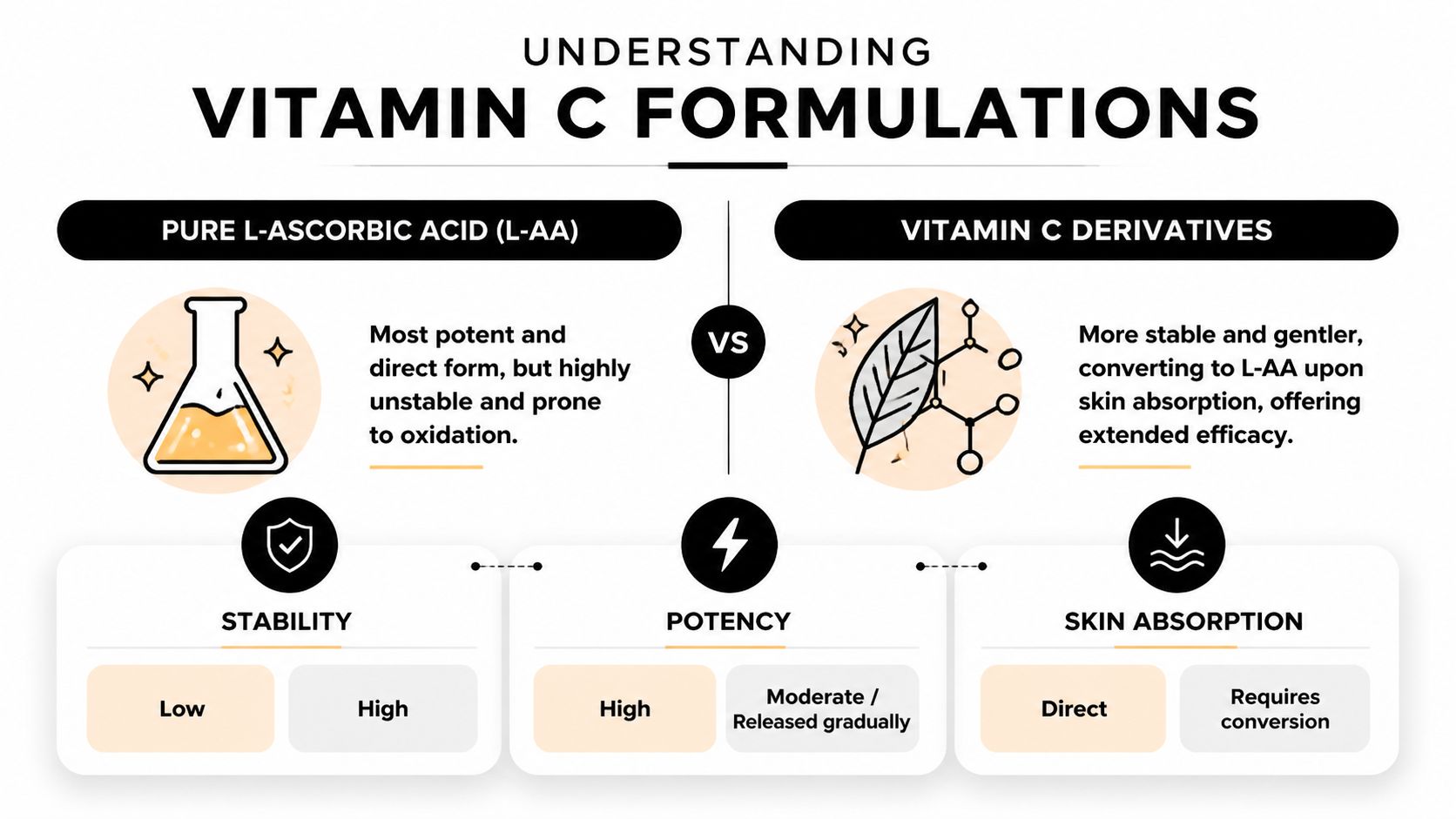
L-ascorbic acid is the pure form. It’s the version most closely associated with high performance skincare because it acts directly. The strength of that direct action is why it gets so much attention.
But there’s a catch. Pure L-ascorbic acid is also the form most likely to create formulation headaches. It’s sensitive to air, light, and storage conditions. If the packaging or stabilisation system is poor, oxidation can reduce product quality before the bottle is finished.
Vitamin C derivatives take a different route. These include forms that are generally chosen because they’re more stable and often gentler on skin. In customer language, they are usually easier to live with. In retailer language, they can be easier to stock confidently in natural and sensitive-skin assortments.
A quick comparison helps:
| Form type | Main strength | Main weakness | Best retail use case |
|---|---|---|---|
| Pure L-ascorbic acid | Direct activity and strong performance positioning | More fragile and more likely to irritate | Customers seeking classic high-performance vitamin C |
| Derivatives | Better stability and often better tolerance | May feel less immediate in positioning because conversion is required | Sensitive skin, natural assortments, long-wear shelf confidence |
Why pH matters more than many labels suggest
For pure L-ascorbic acid, pH is not a minor detail. It affects how well the serum can penetrate and function. In the Swiss market, the clinically validated range for L-ascorbic acid concentration is 10 to 20%, and at a pH of around 3.5 serums can achieve up to 8-fold higher dermal delivery. The same guidance notes that opaque, airless pumps can extend the active’s half-life more than 40-fold, helping preserve 90-day efficacy post-opening in retail use, according to clinical guidance on effective vitamin C serum concentration and packaging.
That gives retail partners three concrete checks before they even discuss brand story:
- Check the form of vitamin C in the INCI list.
- Check the delivery environment, especially for pure L-ascorbic acid.
- Check the pack, because bad packaging can undermine a good formula.
Packaging is not decoration
Customers often judge a serum by texture, scent, or price. Retailers need to judge it by container design as well. Opaque, airless systems are not luxury theatre. They are part of the preservation strategy.
A helpful analogy is coffee. Fresh beans kept sealed stay fresher longer than beans left open on a counter. Vitamin C behaves similarly. Exposure matters. Every unnecessary contact with light and air works against the active.
If a brand sells a highly active vitamin C in packaging that invites oxidation, the formula and the commercial promise are pulling in opposite directions.
What this means for natural and certified ranges
Natural assortments add another layer of complexity. Customers often prefer them because they align with values around sourcing, certification, and skin comfort. That can be a strong category advantage. But “natural” doesn’t automatically mean “stable”, and it certainly doesn’t mean every derivative performs equally well in every system.
For buyers and trainers, the practical lesson is simple. Don’t judge a vitamin C serum by the front label alone. Read the INCI, assess the pack, ask how the brand protects the active, and think about the actual customer profile the product serves.
If a serum claims purity, potency, and natural credentials all at once, your team should know how those claims are being supported in the formula itself.
Choosing the Right Concentration and Key Actives
Concentration is where many vitamin C conversations go wrong. Customers often assume the highest percentage must be the best. Retail teams sometimes repeat that assumption because it sounds intuitive.
It isn’t always true.
In practice, the best vitamin c serum is the one that delivers strong results without pushing the customer into unnecessary irritation. That balance matters even more in Switzerland, where UV exposure, winter dryness, and skin sensitivity often collide.

Why more isn’t always better
A 2023 ETH Zurich study found that 10% L-ascorbic acid serums achieved a 78% reduction in hyperpigmentation after 12 weeks among Swiss participants, while 20% achieved 68%, with the higher concentration underperforming because of greater irritation. The same study found that 10% boosted fibroblast activity by 35%, supporting its use as a strong balance of efficacy and tolerability for Swiss consumers. You can review that data in the ETH Zurich vitamin C concentration summary.
That finding is commercially useful because it gives staff permission to stop overselling strength. A customer with visible pigmentation doesn’t automatically need the highest concentration on the shelf. Often, she needs the one she can use consistently.
A simple way to explain concentration
Use this on the sales floor:
- Low strength can feel too mild for customers expecting visible brightening.
- Mid-range strength often gives the best balance between performance and comfort.
- High strength can sound impressive but may create more complaints if the skin barrier is easily disturbed.
That’s why a carefully built 10% serum often deserves stronger placement than a louder 20% product. It’s easier to recommend, easier to integrate into routines, and easier for customers to finish without abandoning it halfway through.
Key pairings that improve the formula
Concentration is only one part of the story. The support system around vitamin C matters as well. In stronger cosmeceutical formulas, vitamin E and ferulic acid are especially important companions because they help strengthen the antioxidant network and improve overall photoprotective performance.
For staff training, it helps to frame these pairings as teamwork rather than chemistry trivia.
- Vitamin C is the lead active.
- Vitamin E supports the antioxidant system.
- Ferulic acid helps reinforce the formula’s protective performance.
A serum with thoughtful support actives often makes more sense than a serum that only pushes a bigger number on the carton.
One useful training aid for teams is a short visual explanation like the one below.
How to merchandise concentration intelligently
Don’t arrange the shelf as if every customer should “trade up” to the strongest bottle. Arrange it by need state and tolerance level.
For example:
| Customer concern | Better starting point | What staff should say |
|---|---|---|
| Uneven tone with no major sensitivity | Mid-strength pure vitamin C | “This gives strong brightening support without jumping straight to an aggressive level.” |
| First-time user | Moderate concentration or gentle derivative | “Start where your skin can stay consistent.” |
| Concerned about irritation | Stable derivative or lower-intensity active system | “Tolerance matters more than chasing the biggest number.” |
A serum only works if the customer keeps using it. Concentration should support adherence, not sabotage it.
This is the point many teams miss. A number is not a recommendation. A formula is a recommendation. The concentration, supporting antioxidants, texture, and skin profile all need to line up.
Navigating Claims Certifications and Natural Lines
Natural vitamin C serums are one of the most promising parts of the Swiss skincare category, but they’re also one of the easiest areas to merchandise poorly. The issue isn’t lack of demand. The issue is that “natural”, “certified”, and “effective” are often treated as if they’re interchangeable.
They aren’t.
A retailer needs to know how to connect certification language with formulation reality. That means checking what the front of pack promises, what the INCI list confirms, and how the product is meant to be paired in use.
What certifications can and cannot tell you
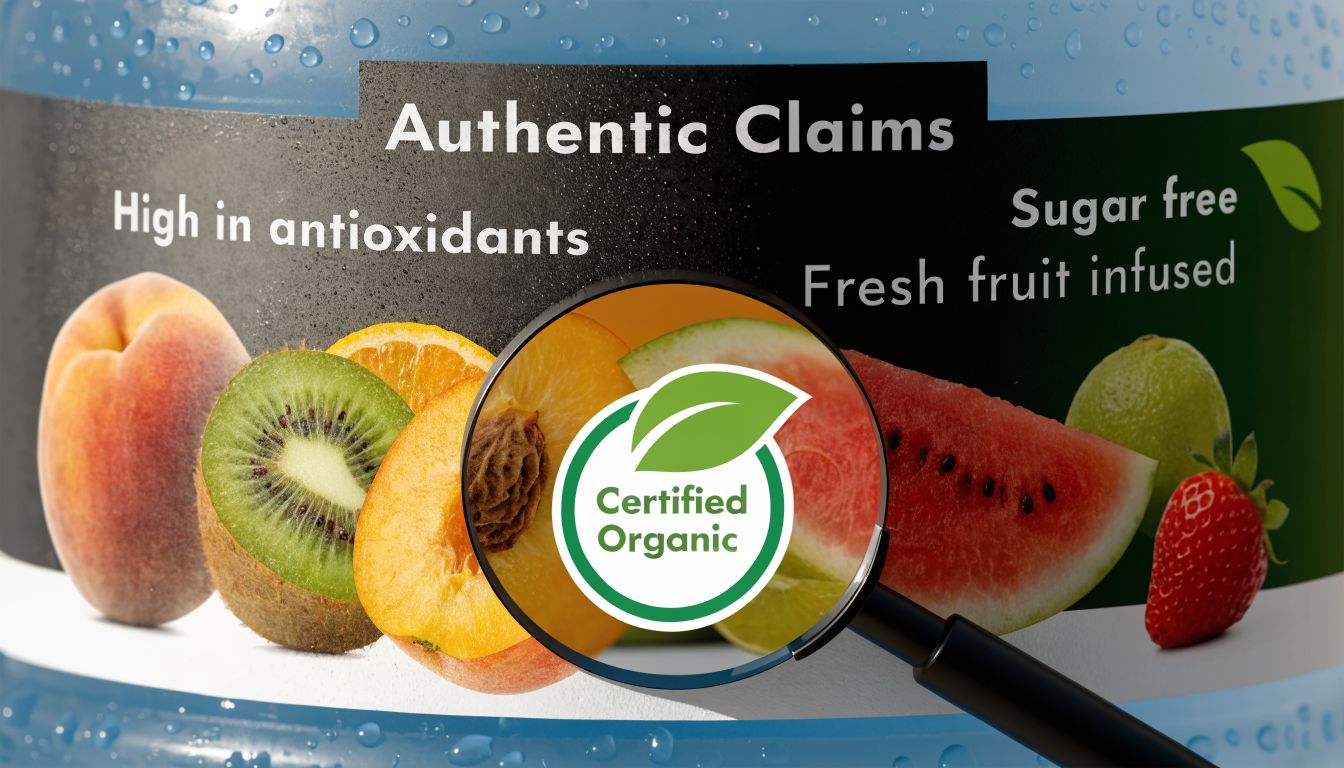
Certifications such as ECOCERT can be highly valuable in Swiss retail because they help customers identify products aligned with natural sourcing and recognised processing standards. Cruelty-free commitments also matter, especially in premium and ethically led assortments.
But certification is not a shortcut for efficacy assessment. A certified product may be ethically strong and still be poorly explained, badly paired, or positioned for the wrong customer.
That’s why teams should ask three separate questions:
- Is the product aligned with natural or ethical standards?
- Which form of vitamin C is being used?
- What routine does this formula need around it to perform well?
Read the INCI before repeating the claim
A natural vitamin C serum may use derivatives such as ascorbyl glucoside or botanical sources positioned around vitamin C activity. That doesn’t make it inferior by default, but it does mean staff should avoid oversimplified promises.
When reading an INCI list, train teams to look for:
- The actual vitamin C form rather than assuming the front label tells the full story
- Its position in the ingredient list, which helps indicate formulation emphasis
- Supportive oils, balms, or barrier-friendly companions that affect real-world use
Effective pairing strongly influences customer satisfaction. In Switzerland, there is an underserved need for guidance on how to pair vitamin C with natural certified formulations. Many retailers stock these lines, but 42% report customer complaints on efficacy and 68% stock natural lines, with instability and poor pairing as recurring issues. The same guidance notes that pH-balanced layering in the 3.5 to 4.5 range is important for these systems, according to retail guidance on pairing natural vitamin C lines.
Why natural lines need stronger education, not softer selling
Natural vitamin C often performs best when the retailer actively teaches the routine. That might mean explaining why a balm can help support comfort after application, or why a customer should avoid mixing too many competing actives into the same routine.
A useful in-store script sounds like this:
“This serum fits customers who want a certified natural approach, but it works best when the rest of the routine supports it. Let’s keep the layering simple and balanced.”
That approach protects both the customer and the category. It also prevents a common mistake. A customer buys a natural serum, mixes it with an incompatible or overly aggressive routine, sees poor results, and decides the serum “did nothing”.
A better way to build the natural shelf
Instead of grouping natural vitamin C products as a single block, create internal distinctions such as:
- Daily glow and prevention for uncomplicated users
- Barrier-conscious brightening for dry or reactive customers
- Certified premium ritual for spa and gift-oriented shoppers
This gives the team a selling structure that reflects how people buy. Customers don’t buy “natural” in the abstract. They buy a solution that fits their skin, their values, and the rest of their routine.
How to Advise Swiss Consumers on Their Ideal Serum
Personalised advice beats generic category talk every time. A shelf full of vitamin C products can either confuse a customer or reassure them. The difference usually comes down to whether staff can connect one serum to one real lifestyle.
That matters in Switzerland because the customer context varies so sharply. Urban pollution, alpine UV exposure, low-humidity winters, and reactive skin patterns all shape what “best vitamin c serum” means in practice.
The Zürich professional
This customer works indoors, commutes in the city, and wants skin that looks brighter and less fatigued. She often asks for prevention and radiance in the same sentence. She doesn’t want a complicated routine, and she may layer makeup on top.
A good recommendation is often a well-formulated vitamin C serum with a comfortable cosmetic finish and a clear role in the morning routine. Keep the explanation focused on consistency and daily defence.
Try this script:
- “You’ll probably do best with a formula that layers cleanly under moisturiser and SPF.”
- “If you want brightness and a fresher look, consistency matters more than choosing the most aggressive serum.”
- “Use it in the morning, then protect the result with sunscreen.”
The alpine enthusiast
This customer skis, hikes, cycles, or spends frequent time at elevation. He or she often shows visible dryness, uneven tone, or concern about the long-term effects of repeated UV exposure. These shoppers may be drawn to stronger products, but that isn’t always the most comfortable route.
Advice should focus on visible support plus barrier awareness. Pair brightening language with skin comfort and routine discipline.
Suggested language:
“Because your skin deals with repeated environmental stress, I’d look at a vitamin C serum that supports brightness and firmness, then make sure the rest of the routine cushions the barrier.”
You don’t need to overcomplicate it. Link the recommendation to lived experience. Mountain air, cold temperatures, and regular UV exposure create a context where a technically strong but poorly tolerated serum may fail commercially.
The Geneva sensitive-skin customer
This is the profile many stores under-serve. The customer wants vitamin C because she knows the category is effective, but she’s nervous because she’s reacted before. She may mention flushing, stinging, or rosacea-prone skin. If your team only knows how to sell classic pure L-ascorbic acid, this customer often leaves empty-handed.
That’s a problem because Switzerland is seeing stronger demand for low-irritation derivatives. One reported driver is a 15% increase in allergy cases, and 55% of alpine residents experience irritation from L-ascorbic acid concentrations below 15%. The same market view also notes that 73% of Swiss beauty forum users asking about rosacea-prone and sensitive-skin vitamin C still lack clear answers, while oil-soluble derivatives such as ascorbyl tetraisopalmitate are positioned as better-penetrating and more oxidation-resistant options, according to Swiss-sensitive-skin vitamin C trend reporting.
That gives retailers a strong advisory opening.
Use wording like this:
- “You don’t need to give up on vitamin C. You may need a different form.”
- “A stable derivative can be a smarter choice when your skin reacts easily.”
- “Let’s choose a serum that respects your barrier first, then build performance from there.”
Questions staff should ask before recommending
Not every customer needs a long consultation. They do need a few sharp questions.
- What are you trying to improve first? Brightness, dark spots, firmness, or prevention?
- How reactive is your skin usually? Have previous active serums stung or caused redness?
- What else are you using? The serum must fit the wider routine.
- Do you prefer natural certified products, or are you open to classic cosmeceutical formulas?
How to manage expectations without losing the sale
Confidence matters, but so does honesty. Don’t promise instant transformation. Promise a well-matched formula and a routine the customer can realistically maintain.
A strong close sounds like this:
| Customer type | Best advisory angle | Closing phrase |
|---|---|---|
| City professional | Daily antioxidant support and brightening | “This is the one you’ll actually use every morning.” |
| Alpine enthusiast | Support against visible UV-related stress with comfort in mind | “This fits your environment and won’t make the rest of your routine harder.” |
| Sensitive skin customer | Gentle derivative and barrier-first logic | “This keeps you in the category without repeating the irritation problem.” |
Retailers who personalise the recommendation don’t just sell more effectively. They reduce confusion, improve compliance, and create a reason for the customer to return and ask for advice again.
A Merchandising Checklist for Your Pharmacy or Boutique
A vitamin C category rarely improves because one good serum arrives. It improves because the store makes better decisions in buying, shelf structure, and team training. Treat the next quarter as a focused reset rather than a random assortment update.
Here’s a practical 90-day plan you can adapt for a pharmacy, spa boutique, or premium skincare counter.
Buying priorities for the next assortment review
Start with the formulas, not the brand deck. For each serum under review, check the vitamin C form, the packaging logic, and the intended skin profile.
Use this shortlist when evaluating additions:
- Form first: Is it pure L-ascorbic acid or a derivative, and is that choice consistent with the target customer?
- Pack integrity: Does the packaging protect the formula properly, especially if the serum makes a high-performance claim?
- Routine fit: Can staff easily explain what the serum should be paired with?
- Certification clarity: If it’s positioned as natural or certified, is that meaningful in the full formula and not just in the marketing?
- Assortment role: Does it fill a gap such as first-time users, pigmentation-focused shoppers, or reactive skin customers?
Merchandising changes that improve decision-making
A vitamin C shelf should help customers self-identify before staff step in. Don’t line products up only by brand. Organise the display around needs customers already recognise.
A practical structure looks like this:
| Shelf zone | Customer need | Product type |
|---|---|---|
| Brightening daily essentials | Dullness and first-time use | Moderate-strength or comfortable daily formulas |
| Targeted correction | Uneven tone and visible sun impact | More active treatment serums |
| Sensitive and natural options | Reactive skin and certified-preference shoppers | Stable derivatives and natural-led formulas |
Add shelf talkers that explain terms like pure vitamin C, derivative, airless pump, and barrier-friendly in plain language. If your team also sells online, the same logic should carry into category pages, filters, and product comparison content. For digital execution, NanoPIM e-commerce growth strategies offer useful merchandising ideas that translate well from physical shelf planning to structured online discovery.
Training points for every team member
Staff don’t need to memorise every chemistry term. They do need a common script.
Train every advisor to handle these five moments:
- Explain what vitamin C does in clear, customer-safe language.
- Distinguish pure vitamin C from derivatives without sounding dismissive about either.
- Recommend by skin profile, not by the loudest percentage.
- Set routine expectations, especially around layering and daily SPF.
- Spot warning signs when a sensitive customer needs a gentler route.
The strongest category teams don’t sound scripted. They sound aligned.
Your 90-day action sequence
To keep the upgrade manageable, phase it.
- First month: Audit current SKUs and remove weak fits or confusing duplicates.
- Second month: Rebuild the shelf by need state and update all staff talking points.
- Third month: Review customer questions, objections, and repeat-purchase patterns, then refine the range again.
That process turns vitamin C from a crowded shelf into a teachable category. And that’s where margin, trust, and repeat business usually improve together.
If you’re building a stronger Swiss assortment in natural, premium, and ethically sourced skincare, beautysecrets.agency can help you curate vitamin C options that are easier to explain, easier to merchandise, and better aligned with what today’s pharmacy, spa, and boutique customers are requesting.