Social media has made gua sha look like a shortcut to lift, contour, and drain the face. That framing overpromises. In practice, gua sha massage is a heritage-based ritual from Traditional Chinese Medicine, with roots described in the literature as reaching back to a Chinese medical text dated to about 220 BC and historical records that go back even further according to China's Ministry of Culture and Tourism, while the facial version is a later, gentler adaptation of a body therapy into skincare and spa use (history and technique overview).
For Swiss buyers and spa teams, that matters. The value is not miracle-level transformation, but a repeatable, premium ritual with clear technique, visible skin feedback, and a real need for better safety guidance. The visible redness or purple marks that can appear during treatment are part of the method's physical response, not proof that the session was “better”, and too much pressure can cause bruising, capillary damage, skin injury, or infection risk if tools are poorly sanitised (skin effects and side effects, medical-style safety guidance).
What Gua Sha Massage Actually Delivers
The loudest gua sha claims usually miss the point. Facial gua sha is not a cosmetic reset button, and it's not a substitute for clinical skin treatments. What it does offer is a structured, low-risk self-care ritual with a heritage story, visible technique, and a tactile experience that many consumers find satisfying when it's performed lightly and consistently.
Heritage matters more than hype
Gua sha is tied to Traditional Chinese Medicine, not contemporary cosmetic invention. The name itself is transparent, “gua” means scrape and “sha” is commonly explained as redness or a sand-like rash, which fits the skin response people see during treatment (historical and naming context). That background is one reason the method has travelled so well into premium European wellness channels, including Swiss spas and pharmacies. It carries a sense of lineage, not just trend.
The shift from full-body scraping to gentler facial gliding is also important. It explains why modern facial gua sha feels more controlled, softer, and more aligned with skincare than the original body-focused practice. For retail teams, this distinction is useful because customers often buy the ritual, not just the tool.
Practical rule: sell gua sha as a heritage-led ritual with a cosmetic feel, not as a guaranteed de-puffing cure.
What consumers can realistically expect
The most honest positioning is simple. Facial gua sha may support a short-term de-puffed look for some users, but the evidence gap is real, and exaggerated promises will backfire with informed Swiss shoppers. Independent commentary has also questioned how much the soft facial version popularised on social media changes puffiness, and notes that the evidence is hard to test cleanly with placebo controls (critical commentary on efficacy limits).
That does not make the ritual useless. It means the category should be presented without misleading claims. In a spa or pharmacy setting, the strongest message is that gua sha is a repeatable self-care practice, best used for the experience, the routine, and the temporary cosmetic effect, not as a replacement for dermocosmetic or medical care.
Choosing the Right Tools and Oils
A gua sha routine fails quickly when the tool is uncomfortable or the skin is dragged instead of glided. Tool shape, edge finish, and slip are not cosmetic details, they determine whether the massage feels polished or abrasive. Retailers should treat this as a category built on materials, hygiene, and product pairing, not just on pretty stone shapes.
Tool material and shape should match the zone
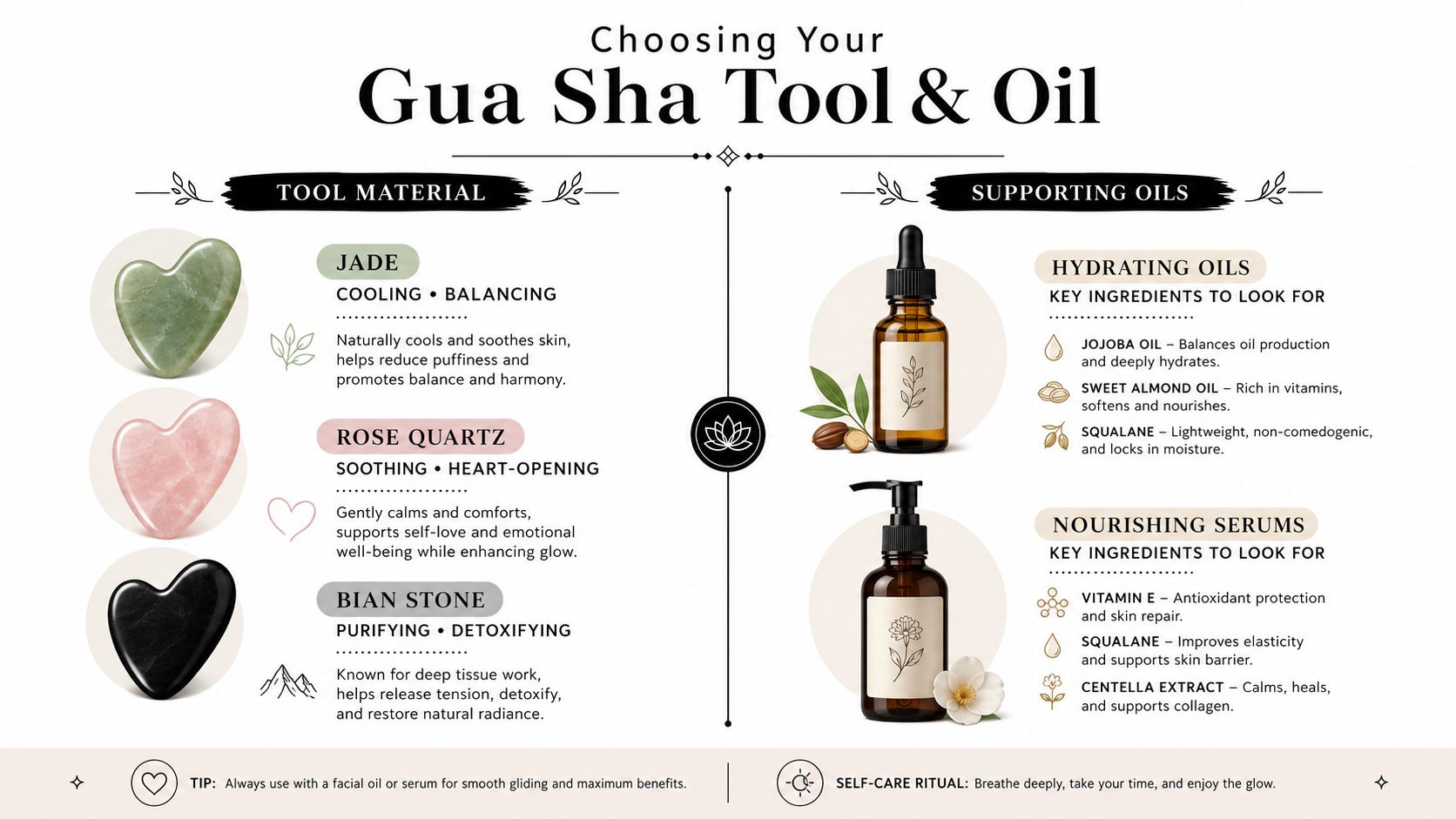
Jade, rose quartz, and bian stone are the names most shoppers recognise, but the buying conversation should go beyond crystal language. What matters in practice is whether the tool has a smooth edge, enough surface area for the jaw or cheeks, and a shape that lets the user keep the angle shallow without poking the skin. Broader curves usually make more sense for the face than sharp, narrow edges.
For Swiss shelves, that means curating a tight assortment rather than a crowded one. One heart-shaped or wing-shaped face tool is often enough for entry-level users, while a second, slightly different profile can suit clients who want firmer control around the jawline and neck. Beautysecrets.agency also works with fresh-pressed organic oils and multi-purpose balms, which can sit naturally beside gua sha tools in a premium Swiss assortment when the retailer wants a cleaner, ingredient-led selection.
Slip is not optional
A dry tool is a bad tool. Facial skin needs enough slip to reduce friction, especially on thinner areas like the cheeks and under the eyes. Facial oils or balms are the practical answer, and the product should feel nourishing without turning greasy or clogging for the user's skin type.
For staff training, keep the guidance simple.
- Choose a smooth, non-porous tool: It should glide without snagging or catching on fine vellus hair.
- Match the oil to skin feel: Lighter oils suit shoppers who dislike residue, richer balms suit drier skin or evening use.
- Keep the layer thin: Too much product causes sliding without control.
- Clean after every use: Reused tools can spread microorganisms if they are not sanitised properly (medical-style caution on reused tools).
If you need a practical ingredient explainer for consultations, Jojoba and Rosehip carrier oils explained is useful background because it helps staff speak clearly about slip, feel, and finish without overcomplicating the conversation.
Hygiene is part of the selling story
Tool sanitation should be visible in-store and strictly enforced in treatment rooms. A clean cloth, a dedicated disinfecting process, and a policy that no shared tool goes back into a drawer uncleaned all signal professionalism. That is especially important in Swiss pharmacy settings, where consumers expect premium standards and clear handling practices.
Facial Gua Sha Technique and Sequence
The most common mistake is simple, people press too hard. Facial skin is thinner than body skin, so the method has to stay light, controlled, and slow enough to avoid bruising or sore capillaries. Done properly, the tool should feel like a guided glide, not a scrape.
Start with the neck
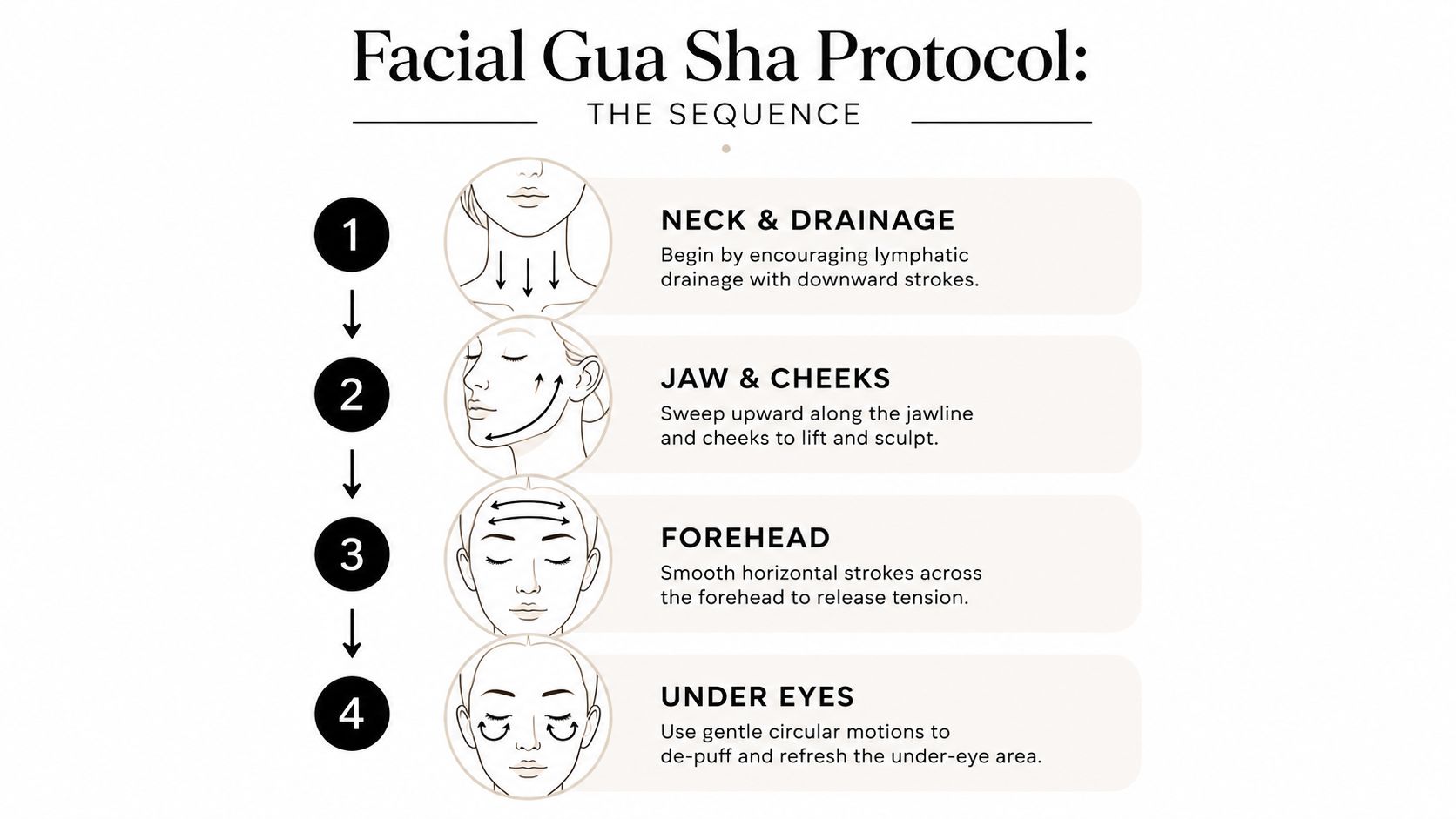
Use a tool held at roughly a 15-degree angle, with light to moderate pressure and 3 to 5 long, smooth strokes per area (Boots technique guidance). Begin at the neck first. That sequence matters because it sets the tone for the rest of the face and keeps the session orderly, which is how trained staff avoid the rushed, random movements that cause redness in the wrong places.
Move from the base of the neck upward with smooth strokes that stay close to the skin. The aim is not force. It is to prepare the area before moving to the jawline and cheeks. If the tool catches, the pressure is too high or the skin does not have enough slip.
Work the jaw, cheeks, and forehead in order
After the neck, sweep along the jawline, then the cheeks, then the forehead. Keep the motion deliberate and repeat each zone only a few times, rather than grinding over one area. That protects the skin and keeps the ritual looking refined, which matters in a spa or retail demo.
Keep the rhythm slow enough that a client can breathe through it. If the face tenses, the pressure is already too much.
The under-eye area needs the lightest touch of all. I'd train staff to treat it as a feather-light pass rather than a true sculpting zone. If the skin looks pink fast, or if the client reports stinging, stop and reduce pressure.
Common mistakes to correct fast
The three big failures are pressing too hard, moving too quickly, and skipping the oil layer. A fourth is repeating strokes until the skin is hot or blotchy. Those are not signs of good technique, they are signs the session has gone past facial comfort into irritation.
For spa staff, the standard should be boring in the best way. Same angle, same order, same light pressure, and a clean tool every time. That consistency is what makes gua sha teachable in a professional setting.
Body Gua Sha for Tension and Recovery
Facial gua sha gets the attention, but the original practice was a body therapy. On shoulders, back, arms, and legs, the work can be firmer and more direct because the target tissue is thicker and the goal is different. The visible sha response, the redness or marking that can appear, is part of the technique's traditional body application (history and visible response).
Where body work belongs
Body gua sha suits broad areas with stubborn tension, such as the upper back, trapezius, calves, or forearms. It can also sit naturally inside a massage menu where clients already book for muscular tightness and recovery. That makes it more relevant to spas, physio-adjacent wellness studios, and bodywork practices than a purely facial ritual.
The tool choice should change too. Broader edges and sturdier shapes make more sense here than delicate facial curves. Pressure can be firmer, but it still needs intention. This is not a license to dig into the skin.
For practitioners who want a broader muscle-recovery reference, the MEDISTIK guide to healing muscle is a helpful companion piece because it sits in the same recovery conversation without turning gua sha into an overclaimed medical intervention.
What it can and cannot do
Body gua sha may feel useful for tight, dense, overworked tissue, and some clients prefer it because the touch is more targeted than a full massage. It also gives visible feedback, which many users interpret as “something happened”, and in a bodywork context that can be part of the appeal.
But it should not be oversold. If the client expects deep structural change from a single session, the treatment will disappoint. If the client wants a focused, tool-assisted ritual that feels precise and pairs well with heat, massage, or stretching, it fits much better.
That distinction matters commercially. Body gua sha is not just a facial add-on moved to the back. It's a separate service logic, with different pressure, different expectations, and a different retail conversation.
Safety Guidelines and Skin Contraindications
This is the gap most gua sha content skips. People do not only want to know how to use the tool, they want to know whether they should use it at all. In Swiss pharmacies and dermocosmetic counters, that question comes up early, especially for sensitive, acne-prone, rosacea-prone, or recently treated skin.
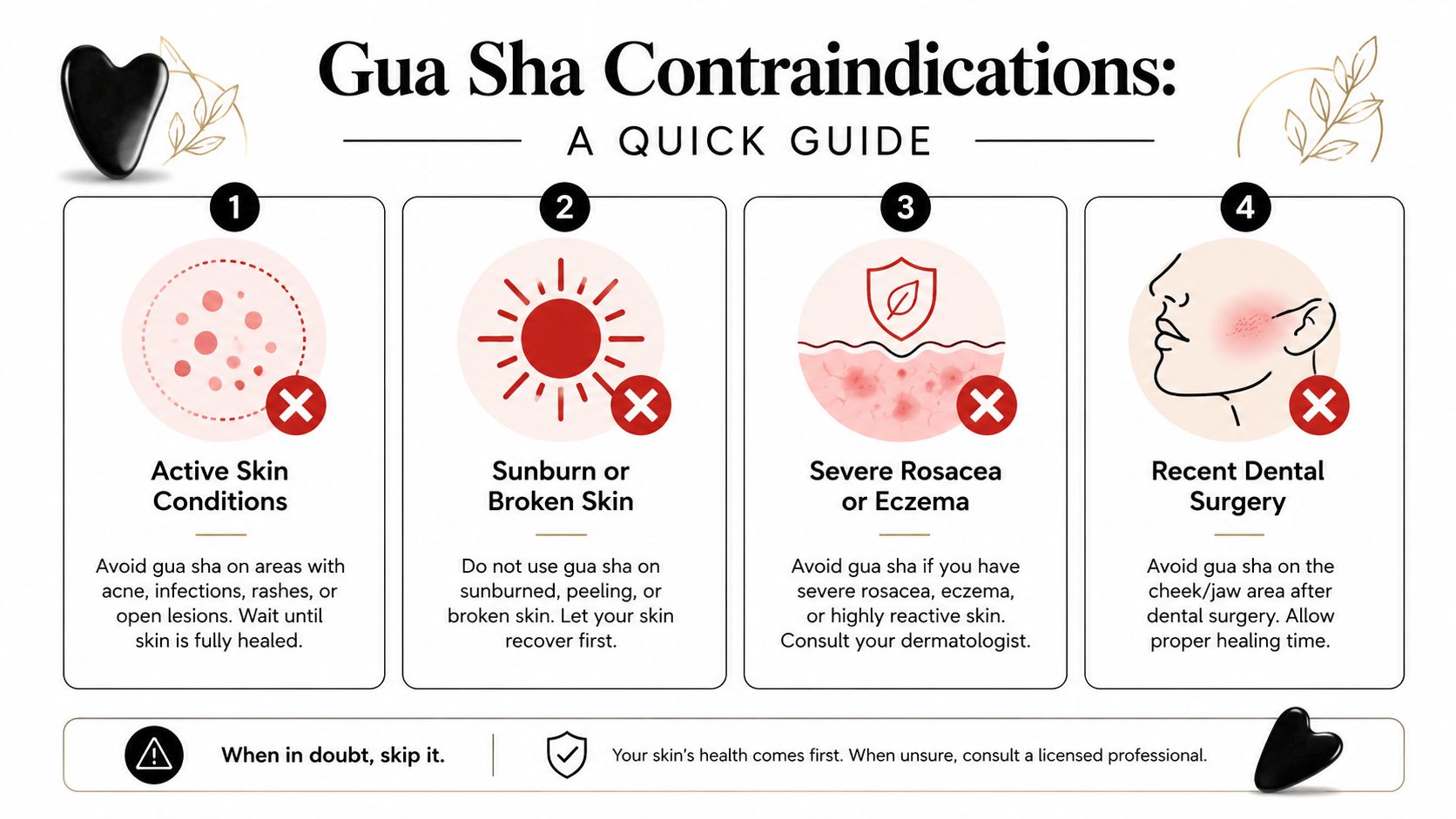
When to stop or avoid the session
Skip gua sha on broken skin, actively inflamed acne, sunburn, or any area that is already irritated. Guidance from WebMD safety overview and technique and side effects summary also points to bruising, skin damage, and hygiene lapses as real risks when pressure is too high or tools are not cleaned properly. That makes post-procedure skin a poor candidate too, especially after resurfacing or other treatments where the skin barrier is still recovering.
Rosacea-prone and eczema-prone skin need cautious individual assessment, not blanket promises. A little redness from gua sha is expected, but persistent stinging, heat, or patchy inflammation means the skin is not tolerating the session. For pharmacies, the safest advice is to position gua sha as something to discuss with a clinician or therapist if the skin is reactive.
Hygiene has to be visible
Professional settings need a strict sanitation routine. A shared tool should be cleaned immediately after each client, dried properly, and stored away from contaminated surfaces. If the tool has been dropped or touched with unwashed hands, it should not go straight back onto the face.
Stop the session if the skin looks increasingly hot, the client feels pain, or the tool starts snagging. Those are not normal signs of effectiveness.
For retail staff, the practical script is better than jargon. Ask whether the customer has broken skin, recent treatments, active inflammation, or a history of easy bruising. If the answer raises doubt, recommend a gentler skincare option instead of pushing the ritual.
Retail and Spa Strategies for the Swiss Market
Swiss buyers need gua sha to behave like a category, not a novelty. That means assortment, training, and merchandising have to work together. A lone stone tool on a shelf rarely converts as well as a small, well-labeled ritual set with clear usage and safety cues.
Build the offer around use cases
A pharmacy or spa counter should group gua sha with facial oils, balms, and cleansing products, not leave it stranded as a random accessory. That helps the customer understand that slip, prep, and aftercare are part of the ritual. For premium assortments, beautysecrets.agency supplies natural, ethically sourced brands that can support this kind of curated shelf story, including oil and balm-led products suited to clean-beauty positioning.
The merchandising language should stay honest. Use phrases like daily self-care, facial ritual, or massage tool for glide, not medical-style promises. That protects trust and helps staff explain why the product belongs next to skincare rather than gadgetry.
Train staff to sell safety first
Counter teams should be able to answer three questions without hesitation, what is it, how is it used, and who should avoid it. If they can't speak clearly about pressure, angle, sanitation, and contraindications, the customer experience falls apart fast.
A simple training checklist works well:
- Demonstrate the angle: Show how shallow the tool sits against the skin.
- Explain the slip product: Make it clear that oil or balm reduces friction.
- State the limits: Mention broken skin, active inflammation, and post-procedure caution.
- Model sanitation: Show the cleaning step, don't hide it.
Merchandise for education, not impulse alone
A demo station with a mirror, a clean sample tool, and QR-linked instructions can do more than a stack of boxes. It turns gua sha into a guided ritual, which is how many Swiss customers prefer premium skincare to be sold. Spas can go further by pairing a short in-treatment explanation with a retail follow-up, so clients leave with the exact tool and support product they used.
The right commercial angle is calm and precise. Sell gua sha as a controlled, heritage-led self-care format, and the category becomes easier to trust, easier to train, and easier to repeat.
Key Takeaways and Quick Reference
Keep the technique simple. For the face, use a 15-degree angle, light to moderate pressure, and 3 to 5 smooth strokes per area, starting with the neck and moving to the jawline, cheeks, and forehead (Boots guidance). For the body, choose broader tools and firmer pressure only where the tissue can tolerate it, and expect the visible skin response that comes with traditional body gua sha (historical context).
Use a clean, smooth tool and enough oil or balm for slip. If the tool drags, the session is wrong. If the skin is broken, inflamed, sunburnt, or very reactive, stop and choose something gentler instead.
For Swiss buyers, the winning assortment is not the biggest one. It is the most legible one, a tool, a compatible oil, and a clear safety message. That is what turns gua sha from a trend item into a repeatable ritual customers can trust.
If you're a Swiss retailer, spa, or pharmacy buyer looking to build a cleaner, better-explained gua sha offer, beautysecrets.agency can help you curate the right tools, oils, and bodycare pairings for your shelves and treatment rooms. Visit beautysecrets.agency to explore assortments that fit premium Swiss skincare standards and support informed staff recommendations.