A guest stepped out of the steam room, paused at the window, and said the room finally matched the promise on the brochure. The air smelled of fir and warm stone, the lighting was low without feeling dim, and the treatment that followed didn't feel imported from another spa concept with a forest name added on top.
The Essence of a Black Forest Spa Experience
A Black Forest spa isn't a décor package. It's a combination of forest atmosphere, bathing ritual, and thermal heritage that needs to feel coherent from arrival to retail shelf. If the guest walks into pine-panelling, then gets handed a generic menu of hot-stone massage, anti-stress facial, and “detox body wrap”, the concept falls apart immediately.
What guests are actually buying
Guests don't book this kind of spa for access to a treatment room alone. They book for a mood. They want warmth, mineral water, timber, silence, and a sense that the place belongs to a landscape with memory. That's why the Black Forest remains such a powerful reference point. Its spa culture is tied to Baden-Baden, recognised as a UNESCO Great Spa Town, where thermal waters have been celebrated for 2,000 years, and the region's tourism economy accounts for 300,000 jobs according to the Black Forest spa history referenced by Mokni's.
For a Swiss operator, that matters commercially. The concept already carries recognisable prestige across the German-speaking market, but it still leaves room for localisation. Swiss guests generally respond well when the experience feels organised, premium, natural, and credible. They're less forgiving when a spa leans too theatrical or too rustic.
Practical rule: Build the concept around how the guest should feel in the first five minutes, not around what the designer wants photographed.
Why Swiss hotels should treat this as a business model
The strongest Black Forest-inspired projects in Switzerland don't copy a destination hotel in Germany. They translate the emotional code into Swiss operating reality. That means better zoning, cleaner service choreography, and more disciplined product choices.
Water quality is one of those details guests notice without naming it. If you're developing hydro experiences, thermal-style bathing rituals, or herbal infusion stations, it's worth reviewing specialist systems such as Discover Living Water purification early in planning, because poor-tasting or hard-feeling water can undermine an otherwise premium experience.
Three commercial advantages make this concept work well in Switzerland:
- It supports premium pricing: Guests understand the difference between a generic hotel spa and one with a clear narrative.
- It creates retail logic: Forest-inspired rituals naturally extend into oils, balms, bath products, and recovery products for home use.
- It strengthens destination appeal: A well-built thematic spa can carry shoulder-season demand when room-only positioning is too weak.
A Black Forest spa works when every detail tells the same story. Warmth. Depth. Water. Wood. Recovery. If one of those is missing, the concept starts to feel staged.
Crafting Your Authentic Black Forest Story
Most operators start with materials and moodboards. That's usually backwards. The story comes first, because it determines the names, rituals, uniforms, wording, music, product pairings, and even how reception staff describe the menu.
Start with two roots, not one
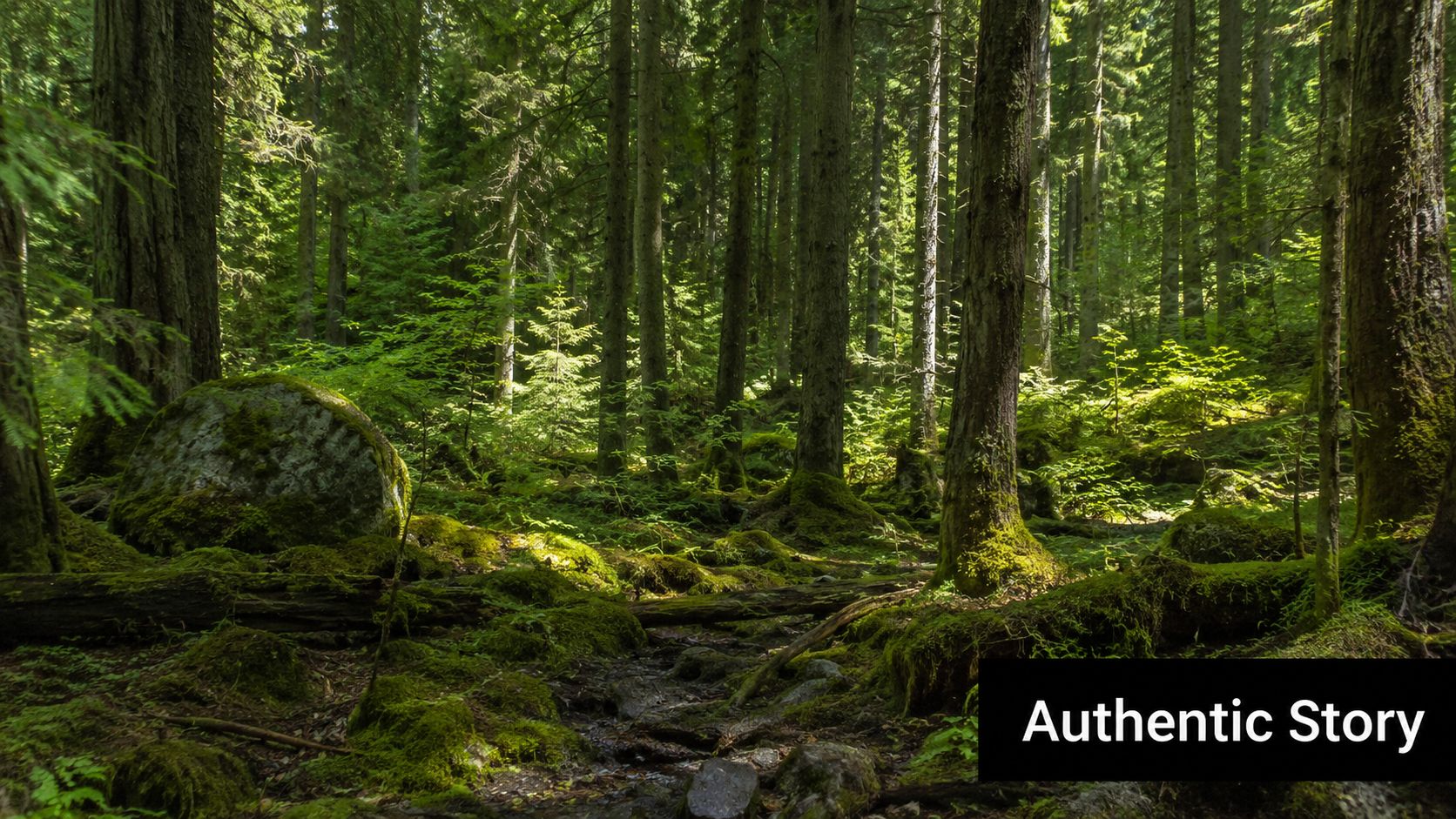
The most usable Black Forest narrative has two anchors. One is the forest itself. Dense woods, moss, fir, mineral earth, cool air, quiet trails. The other is the region's bathing lineage. The historic bathhouse tradition in the region began when Count Eberhard commissioned a bathhouse in the 14th century, and it evolved into a temple of bathing by 1847. Baden-Baden alone sees 210,000 gallons of thermal water rise daily at up to 150 degrees Fahrenheit from a depth of 6,000 meters, as summarised in the Black Forest historical record on Wikipedia.
That second anchor prevents the concept from becoming just “forest wellness”. It gives it social history, ritual structure, and sophistication.
Build a brand language guests can repeat
A story is working when the guest can repeat it in one sentence. Not your full concept deck. One sentence.
Good examples:
- A thermal forest retreat inspired by Central European bathing culture
- A contemporary alpine-forest spa rooted in old bathing rituals
- A mineral and botanical sanctuary shaped by Black Forest traditions
Weak examples:
- “Luxury wellness destination”
- “Integrated wellbeing journey”
- “Nature-inspired relaxation experience”
Those phrases say nothing distinctive. If the concept could belong to a beach resort, an urban medi-spa, and a mountain hotel at the same time, it isn't specific enough.
For operators refining tone and message across touchpoints, a useful outside reference is how to craft your brand's narrative. Not because a hotel spa should sound poetic for its own sake, but because consistency is what turns a theme into a brand.
Translate the story into operating decisions
It is at this stage that most projects either become believable or decorative.
Use the narrative to decide:
Treatment naming
Don't call everything “signature”. Use names tied to place, element, or ritual structure. “Fir Steam Recovery” works better than “Deep Relax Massage” in this setting.Menu writing
Replace beauty copy with sensory and procedural clarity. Guests want to know whether a ritual includes exfoliation, steam, bathing, body oiling, scalp work, or rest time.Spatial sequencing
A Black Forest spa should feel like moving through a varied environment. Darker arrival. Warm humid zone. Quiet mineral rest zone. Brighter recovery lounge. The story should shape circulation.Uniform and service style
Too clinical and the concept loses warmth. Too bohemian and it loses trust. Swiss premium guests usually prefer restraint, neat tailoring, and calm, informed language.
The story should guide what the guest smells, hears, touches, and takes home. If it only appears in the brochure, it isn't doing any work.
Common narrative mistakes
A few traps show up repeatedly in concept reviews:
- Overusing clichés: cuckoo clocks, antlers, and heavy folklore styling can turn elegant heritage into themed hospitality.
- Ignoring bathing culture: if the concept mentions only trees and herbs, it misses half of what makes the Black Forest reference commercially strong.
- Mixing too many geographies: Japanese rituals, Nordic saunas, Moroccan hammam, and Black Forest botanicals in one menu usually create confusion, not richness.
The best narrative is narrow enough to feel deliberate and broad enough to support years of programming. That's the balance.
Designing Signature Treatments and Rituals
Operators often ask what should go on the menu first. My answer is always the same. Don't start with isolated treatments. Start with ritual architecture. A strong Black Forest spa needs anchor rituals that express the concept fully, shorter treatments that feed occupancy, and a retail follow-through that keeps the experience alive after checkout.
Build rituals, not disconnected services
A ritual gives you more than a treatment. It gives you pacing, memorability, and price justification. The guest doesn't just receive a body scrub. They move through a sequence with anticipation, contrast, and rest.
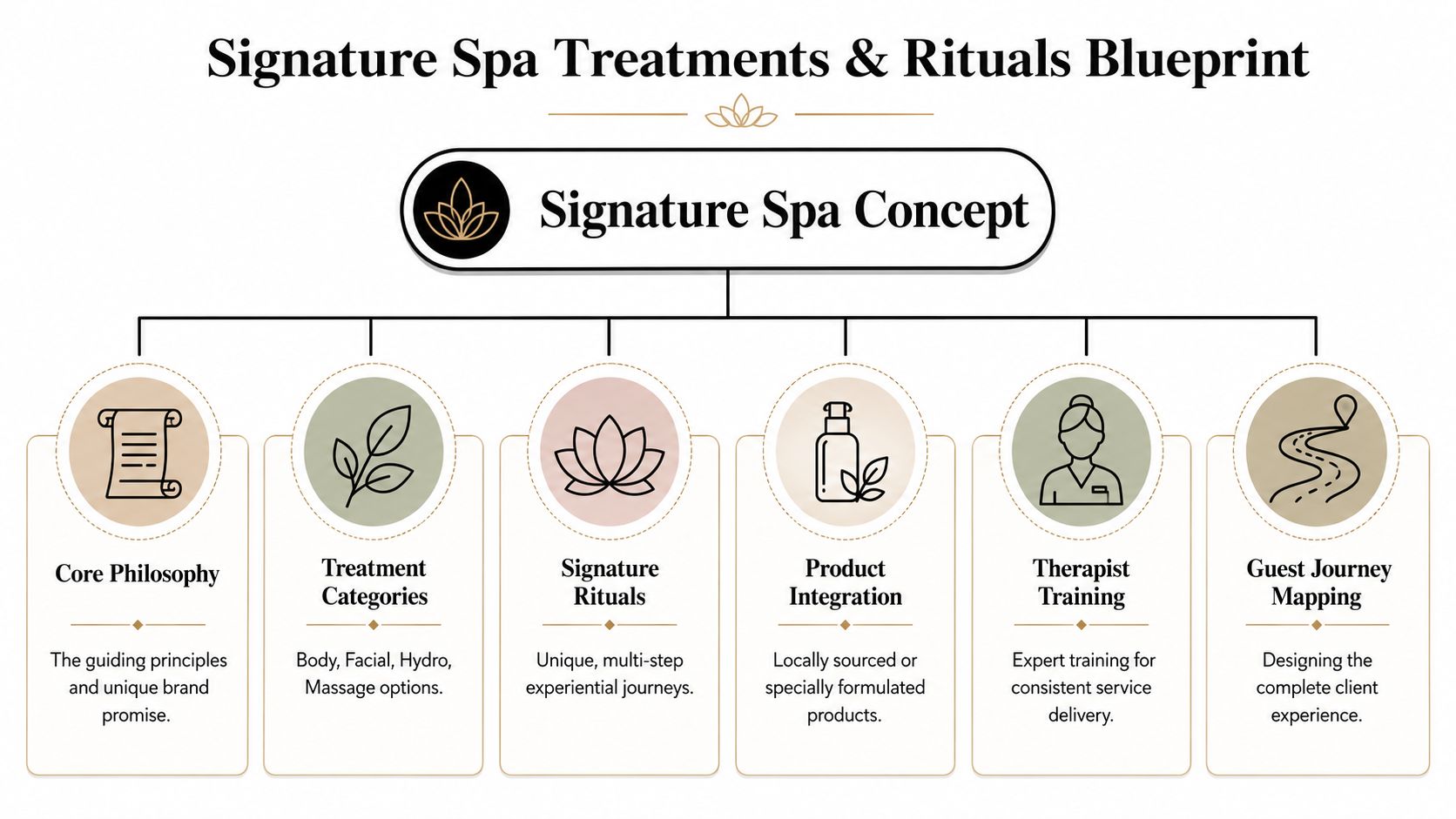
A workable ritual structure for this theme usually includes:
- Thermal preparation: warm foot bath, inhalation towel, or steam entry
- Botanical activation: scrub, compress, or body brushing using forest-led ingredients
- Hands-on treatment: massage, wrap, or facial with a clear treatment intention
- Quiet integration: tea, rest pod, relaxation room, or guided breathing
- Home recommendation: one or two certified products that fit the guest's concern and recall the experience
That last step matters more than many spa teams realise. A 2025 ECOCERT survey found that 78% of Swiss spa-goers want to extend their wellness experience at home with eco-certified products, yet most spa content still ignores this post-visit opportunity, according to American Express Switzerland's wellness feature.
Choose ingredients that fit the concept and survive operations
Ingredient choice shouldn't be based on trend alone. It needs to satisfy four tests. Does it fit the story? Does it smell right in room conditions? Can therapists work with it cleanly? Can you retail it afterwards without confusion?
For a Black Forest spa, these categories perform well:
| Ritual Name | Duration | Key Ingredients | Treatment Focus |
|---|---|---|---|
| Forest Vapour Reset | 60 minutes | Fir, pine, mineral salt | Respiratory comfort and muscular ease |
| Thermal Clay Recovery | 90 minutes | Mineral-rich clay, elderflower, herbal oil | Warming body renewal and skin softening |
| Moss and Stone Grounding Ritual | 120 minutes | Botanical exfoliant, pine balm, warm stones | Deep rest and full-body reset |
| Baden Bathing Ceremony | 90 minutes | Mineral bath blend, floral compress, body oil | Hydrothermal relaxation and ritual bathing |
| Alpine-Forest Facial | 75 minutes | Gentle botanical cleanser, floral essence, nourishing oil | Comfort, glow, and barrier support |
The exact product line can vary, but the logic should stay consistent. Silver fir and pine work well in steam and body rituals because guests immediately associate them with clean forest air and warmth. Elderflower softens the profile for facials and lighter body treatments. Mineral clays help bridge the forest story with the bathing story.
Retail should be designed into the ritual
Swiss guests don't want to be hard-sold in the relaxation lounge. They do want useful recommendations that make sense. That means the therapist must connect product advice to what happened in the room.
Examples:
- After a warming body ritual, recommend a body oil or balm for evening use.
- After a steam-led treatment, suggest a gentle home bath or shower ritual.
- After a facial, recommend a simple two-product continuation, not a seven-step regimen.
The best performing certified lines in this setting are usually the ones with a clear sensory identity and a compliance profile your buyers can defend. Fushi is strong when you want fresh-pressed oils, herbal credibility, and a grounded natural story. JULISIS suits a more elevated, ritualistic positioning where the language of transformation and precious formulation fits the rest of the spa.
Commercial view: If the therapist can't explain in plain language why the guest should use the product at home, the retail assortment is too complicated.
What works and what doesn't
A few treatment design choices consistently separate strong menus from weak ones.
What works
- Signature rituals with a beginning, middle, and recovery phase
- Product texture progression, such as dry brush, warm oil, then balm
- Distinct menu tiers, so guests can choose between express, standard, and immersive
- Retail products matched to treatment memory, not just skin category
What doesn't
- Overlong menus with too many near-identical massages
- Generic aromatherapy under a forest label
- Treatments with no recovery time built in
- Retail shelves filled with brands that don't match the in-room experience
A Black Forest spa should feel composed. Not busy. Every ritual should answer a simple question for the guest. Why this, here?
The Sensory Blueprint for Total Immersion
You can't talk your way into immersion. The space has to carry it. In a Black Forest spa, the sensory layer does most of the heavy lifting before a therapist says a word.
Materials that support both mood and maintenance
Natural materials are the right instinct, but they need discipline. Timber should feel warm, not chalet-heavy. Stone should read as grounded, not cold. Textiles should soften the scheme without introducing visual clutter.
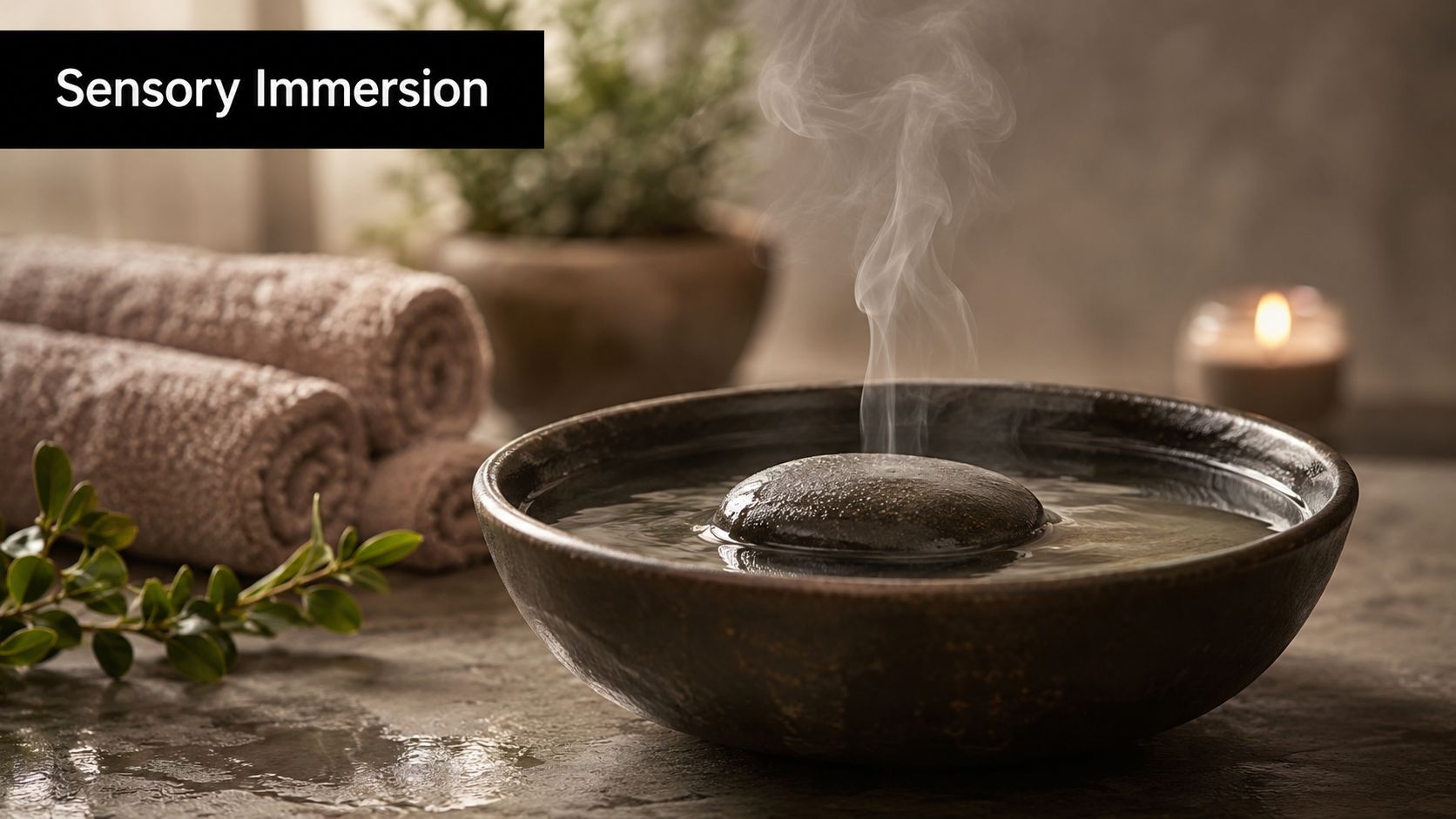
In Swiss operations, material selection also has to survive humidity, cleaning chemistry, and constant guest circulation. According to the Global Wellness Institute hydrothermal guidance, Swiss spas are expected to maintain 60–65% ambient humidity, and 89% of top-tier Black Forest facilities achieve that benchmark. The same source notes that success also depends on materials chosen to avoid the 35% of structural moisture failures common in CH-region wellness centres.
That's why I usually advise:
- Non-porous surfaces in wet zones: easier to clean, less vulnerable to long-term moisture damage
- Textured stone underfoot: enough grip without looking commercial
- Controlled timber use: feature walls, joinery, and benches rather than unchecked full-envelope wood
Scent, sound, and light need zoning
A common mistake is using one signature scent everywhere. It quickly becomes oppressive. Better to create a scent map.
Three zones usually work well:
- Arrival and transition: dry woody notes, subtle fir, very low diffusion
- Steam and thermal areas: fresher pine, mineral air impression, cleaner lift
- Deep relaxation: softer resinous blends, gentle floral support, almost no top note
Sound should follow the same logic. Water sounds belong near hydro zones. Quiet ambient beds suit rest rooms. Treatment rooms need less “forest soundtrack” than many designers think. Guests tend to relax better when the room is calm enough for therapist pacing, breath, and fabric movement to become part of the sound environment.
Too much theme becomes noise. Guests should notice the atmosphere, not the production.
Small sensory details that change the result
The details guests remember are often simple:
- Warm, dry towels after hydro time
- Tea that matches the concept rather than standard mint
- Ceramics, glass, and trays that feel weighty in the hand
- Lighting that shifts from filtered woodland softness to clearer task lighting where needed
I also advise operators to test the full experience at different times of day. Morning light can make a moody room feel gloomy. Evening steam can make an under-ventilated corridor feel stale. Concepts should be reviewed in operation, not only in renderings.
Swiss Operations and Compliance Mastery
Inspiration sells the project internally. Operations protect the investment. Yet, many attractive spa concepts struggle at this juncture, especially when thermal, steam, and aroma systems are specified without enough respect for Swiss maintenance standards.
Steam and brine systems are a technical decision, not a decorative one
Aroma steam baths often look straightforward on the plan. In reality, they're one of the first places where weak specification shows up. The critical issue is brine and mineral management. Inadequate brine-salt filtration causes 28% of mineral buildup failures in CH-region spas, while facilities using closed-loop salt recovery systems achieve 98% operational continuity, according to Schlehdorn's wellness technical reference.
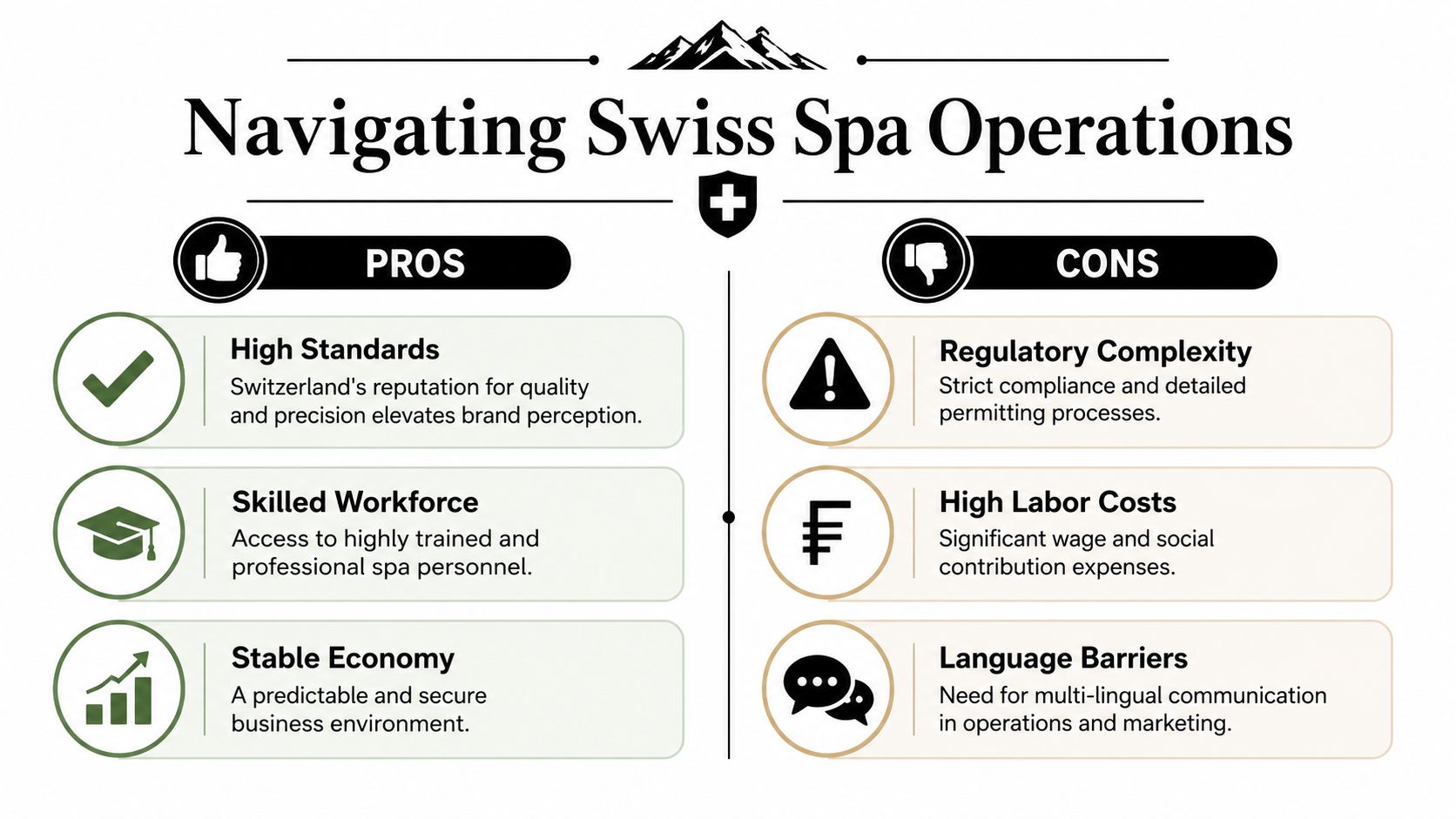
That should shape procurement from day one. If the concept includes salt vapour, brine inhalation, or mineral steam, insist on serviceability and closed-loop logic before approving finishes. A beautiful steam room with recurring mineral deposits becomes an expensive disappointment fast.
Product compliance needs commercial discipline
Swiss operators serving premium guests can't afford vagueness around certification. If you position the spa around natural care, the procurement file needs to back it up. That applies to treatment room stock, tester presentation, staff scripts, and retail signage.
When evaluating product partners, I'd check these points in order:
Certification clarity
Can your team clearly document ECOCERT status or cruelty-free alignment where claimed?Professional cabin suitability
Some natural products retail beautifully but don't perform well in treatment protocols because texture, slip, absorption, or pump format isn't right.Language and labelling
Swiss retail environments often need clear multilingual communication. If the product story can't be translated cleanly, conversion suffers.Reorder stability
A spa menu can't rely on products with inconsistent availability. Signature rituals need dependable continuity.
Hydro zones need operating rules, not just ambience
Hydrothermal areas fail when they're treated as self-running amenities. They need exact routines. Temperature consistency, reset timing, cleaning windows, and staff checks all affect guest trust.
Practical operating decisions matter:
- Define who checks thermal zones at opening, mid-shift, and close.
- Write a simple escalation path for odour, mineral residue, or uneven heat.
- Train front-of-house staff to explain thermal circuits clearly and briefly.
- Limit the number of sensory variables introduced at once. Heat, humidity, scent, and lighting all compound each other.
A premium spa doesn't feel premium because everything is luxurious. It feels premium because nothing feels neglected.
Train therapists to protect the concept
A Black Forest spa isn't delivered by interiors alone. Therapists and attendants hold the concept together every day. Training should cover more than protocol timing.
The team should know:
- Why fir, pine, mineral, and floral notes were chosen
- Which products are suitable for sensitive or scent-averse guests
- How to recommend home care without sounding scripted
- How to adapt pressure, pace, and room atmosphere to guest feedback
- How to reset a ritual if a hydro step has been delayed or skipped
Service language matters as much as touch. “I'm applying the oil now” is functional. “This blend is used as the warming stage after exfoliation, so the body holds heat for longer” gives the guest confidence.
Where Swiss operators usually go wrong
I see five recurring issues:
- Design over maintenance: too many difficult surfaces and inaccessible technical areas
- Loose supplier claims: certification language used in marketing but not documented in operations
- Weak steam specification: brine and aroma systems not engineered for actual use
- No retail bridge: excellent treatment, then no credible home continuation
- Inconsistent team language: each therapist describes the concept differently
Swiss compliance doesn't reward improvisation. The operators who do well build precision into the concept early, then make it feel effortless to the guest.
Your Launch Plan and Pricing Strategy
If you launch a Black Forest spa as a discounted amenity, you'll train the market to treat it like one. Premium thematic spas should price from value, not from fear. Guests will pay for a distinct experience if the story is clear, the service is polished, and the menu is built around rituals rather than commodity treatments.
Price the experience, not the treatment minute
A standard massage comparison is the fastest way to erode margin. Once the guest starts comparing your signature ritual to a basic massage elsewhere, you've lost the frame.
Better pricing strategy looks like this:
- Lead with immersive rituals: place your strongest concept treatments at the top of the menu and give them the clearest descriptions
- Keep a concise entry layer: offer a few shorter services for hotel guests who book spontaneously, but don't let the menu be dominated by them
- Bundle recovery elements: tea ritual, thermal access, or post-treatment rest should feel intentionally included where operationally possible
- Use retail as continuation, not discounting: avoid “free product” logic that cheapens the treatment. Recommend a matching home product as the next step
Build the launch around story proof
The market doesn't need another spa opening announcement. It needs evidence that your concept is specific and worth travelling for.
A good launch sequence usually has three phases.
Pre-launch
Before opening, prepare assets that show coherence:
- Treatment photography with real textures, not generic stock imagery
- Short therapist-led videos explaining one ritual step
- Menu copy that sounds like your spa and no one else's
- Retail edit built around continuation, gifting, and ritual at home
Invite a small set of partners who care about quality. Travel editors, wellness writers, selected creators, and local premium community contacts can all help, but only if the experience is operationally ready. Soft openings should test flow, timing, product handling, and guest comprehension.
Launch period
At launch, focus on one story repeatedly instead of five stories once.
Useful campaign angles include:
- The meeting point of forest botanicals and bathing ritual
- A Swiss interpretation of Black Forest wellness heritage
- Signature treatments with certified natural homecare continuation
The strongest marketing materials usually show sequence. Steam. scrub. oil. rest. tea. product. That tells a more persuasive story than static room photography alone.
Guests don't book because the spa is beautiful. They book because they can already imagine themselves inside the experience.
After opening
Post-launch success depends on whether the concept keeps converting after curiosity fades.
Track these operationally:
- Which rituals are easiest for reception to explain
- Which products therapists recommend most naturally
- Which treatment names guests remember
- Where timing drifts under real occupancy pressure
- Whether room guests convert into spa guests before arrival or only on site
Refine quickly. Rename unclear treatments. Remove weak menu duplicates. Tighten retail adjacencies. Keep the story sharp.
A Black Forest spa earns its margin when the guest feels they couldn't have had that experience in a generic hotel wellness centre. That's the benchmark worth protecting.
If you're building a Swiss spa offer around certified natural skincare, credible retail, and treatment-ready premium brands, beautysecrets.agency is a practical partner to review. Their portfolio is relevant for operators, pharmacies, retailers, and wellness businesses that need clean formulation standards, ethical sourcing, and a stronger bridge between in-spa ritual and at-home care.