You're probably looking at Beldi Country Club from behind a spreadsheet, not from a sun lounger. One tab has your premium treatment lines. Another has margin assumptions, import questions, and a shortlist of hotel targets that might justify the effort of entering or expanding in Morocco. The usual problem isn't finding attractive properties. It's finding one where the brand fit is real, the guest profile is concentrated, and the partnership can move beyond shelf placement.
Beldi Country Club deserves attention for exactly that reason. On the surface, it looks like a dream setting. Gardens, privacy, a village-style layout, spa appeal, and the kind of visual identity that sells itself. For a Swiss beauty or wellness supplier, though, the more useful question is whether the property can support a disciplined, commercially sound partnership built around treatment protocols, retail, staff training, and event-led activation.
That's where many supplier conversations go wrong. Teams pitch products when they should be pitching operational relevance. They lead with ingredient romance when the hotel needs a clearer guest proposition, easier therapist adoption, dependable replenishment, and a wellness story that stands up to scrutiny from European buyers. If you need a useful benchmark for how partnerships create value beyond simple supply agreements, these examples of strategic alliances help frame the difference between transactional vendor relationships and deeper brand collaborations.
An Introduction for Strategic Partners
Beldi Country Club isn't interesting because it's fashionable. It's interesting because it sits at the intersection of hospitality identity and underdeveloped wellness proof.
For Swiss brands, that matters. A property can have beautiful architecture and strong guest sentiment, yet still remain a poor partner if the spa model is generic, the retail opportunity is weak, or the operations team can't absorb a more premium protocol. Beldi appears stronger than average on the first point and less defined on the second and third. That's often where the opening lies.
What a strategic partner should see
A disciplined supplier looks at four things first:
- Brand coherence: Does the hotel's aesthetic and atmosphere support natural, premium, ethically positioned products?
- Guest concentration: Is the audience broad and price-led, or selective enough for high-touch conversion?
- Operational pathways: Can the partnership extend into treatments, room amenities, retail, and events?
- Credibility gap: Is there space to improve the property's wellness proposition with clearer standards and better product architecture?
Beldi stands out because the answer appears promising on all four, though not automatically.
A beautiful spa isn't the same thing as a commercially mature spa.
That distinction is where many international suppliers either win the account properly or get reduced to a replaceable vendor. At Beldi, the right move isn't to mimic a large chain-hotel proposal. It's to treat the property like a brand ecosystem that may respond best to a smaller, more curated partnership model.
The Beldi Country Club Ethos and Positioning
A Swiss brand team assessing Beldi should read the property less as a hotel prospect and more as a controlled brand environment. The commercial question is not whether it looks attractive. It does. The question is whether its identity supports high-margin wellness rituals, disciplined retail, and a partnership model built on curation rather than volume.
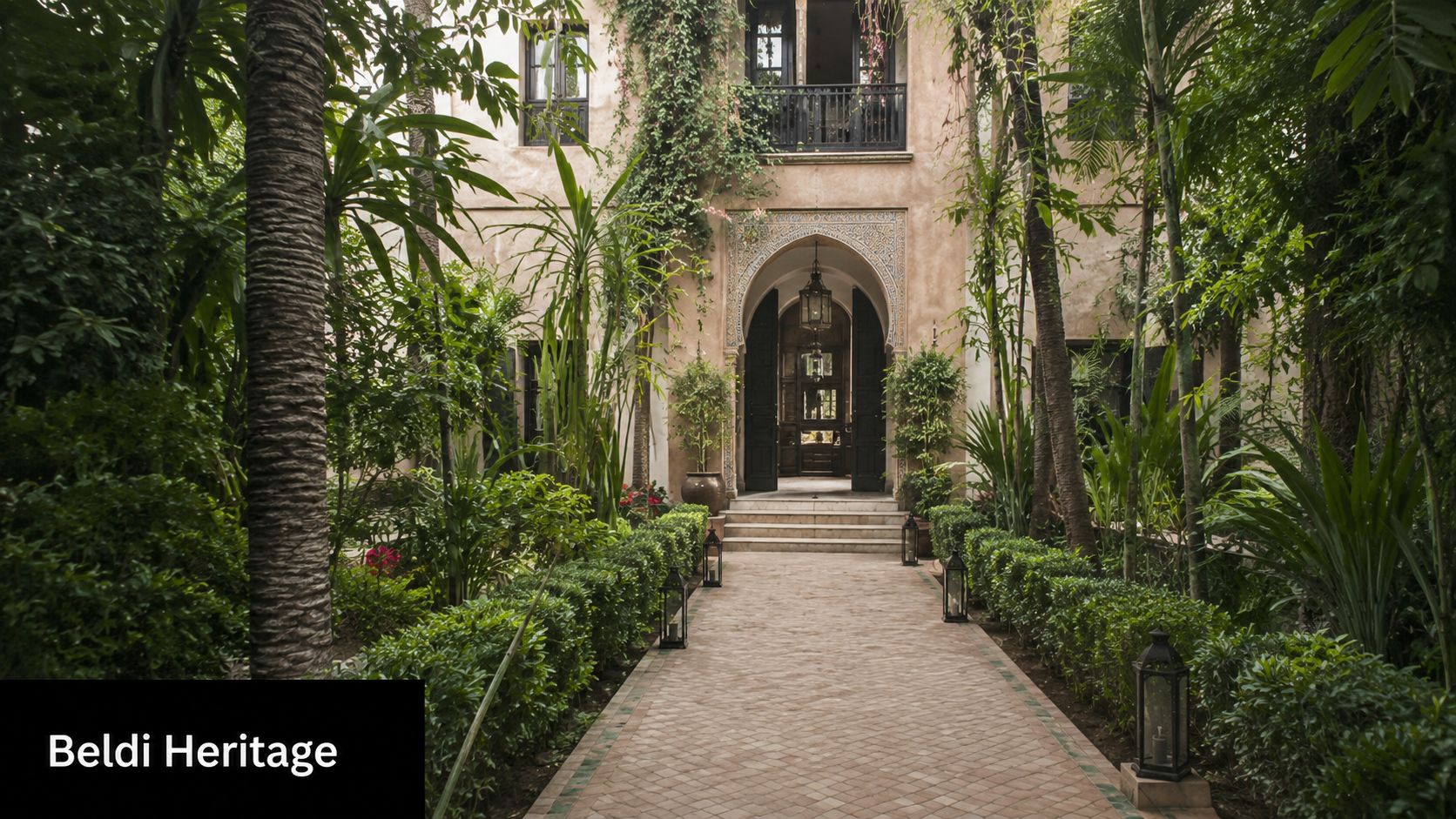
Beldi's story helps answer that. The property was developed from a 15-acre site, as referenced in this account of the property's beginnings, and its hospitality concept appears rooted in private hosting, gardens, and domestic-scale atmosphere rather than chain-style standardisation. That matters because owner-led properties often buy differently. They respond to fit, discretion, and aesthetic coherence faster than they respond to a broad catalogue or aggressive clinical claims.
Why the ethos matters commercially
A former agricultural setting converted into hospitality creates a specific operating context. Guests expect space, quiet, texture, and a sense that the experience belongs to Marrakech rather than to an international template. For a Swiss supplier, that changes the sales approach.
Product fit has to support the property's atmosphere in practical ways:
- Natural surroundings need product language that feels grounded, not overly technical
- Low-density hospitality supports fewer, better-defined treatment journeys
- A strong sense of place rewards brands that can explain origin, formulation, and ritual use clearly
- Boutique operations usually perform better with a tight SKU structure and simpler staff training
I have seen this pattern repeatedly in independent luxury hospitality. Teams often say they want innovation, but on site they need clarity, low training friction, and products that photograph well, perform consistently, and do not disturb the property's visual identity.
Low-density luxury changes the proposal
Public profiles describe Beldi as a 38-room resort in a village-style layout, including Condé Nast Traveller's overview of the property. That format has direct implications for revenue design and supplier expectations.
A 38-room estate is rarely the right account for a wide product rollout. It is a better fit for a narrow treatment menu, one or two strong retail stories, selective room placement, and occasional high-value activations. Swiss brands that are used to structured sell-in should see the upside clearly. Smaller room inventory can still justify premium positioning if guest spend per stay is high and the product story feels native to the setting.
That also affects outreach materials. A generic spa deck will underperform here. A sharper route is a concise partnership concept that shows treatment logic, merchandising restraint, and how the brand could support post-stay conversion through content or retail follow-up, especially for teams already thinking about strategies for beauty ecommerce success.
What the positioning suggests about guest expectations
Beldi appears to attract guests who buy atmosphere with intention. They are likely to notice scent, texture, design consistency, and whether the treatment experience feels integrated with the property. They are less likely to respond to loud performance messaging that belongs in a medical spa or urban skin clinic.
For Swiss wellness and beauty suppliers, that creates a clear trade-off. Highly clinical brands may bring efficacy and credibility, but they risk visual and emotional mismatch if the presentation is too hard-edged. Natural brands with weak proof points may fit the setting aesthetically, yet struggle to justify premium pricing or long-term trust. The strongest candidates sit in the middle. They combine formulation discipline, traceability, and sensory quality with a ritual structure that staff can deliver consistently.
That is Beldi's real positioning value. It offers a brand environment where restraint, coherence, and operational simplicity are likely to outperform scale.
A Deep Dive into the Spa and Wellness Offerings
The spa opportunity at Beldi is attractive precisely because the public-facing story looks stronger aesthetically than operationally. That isn't a criticism. It's a common pattern in boutique luxury hospitality, especially where ambience does a lot of the heavy lifting.
What the current spa signal says
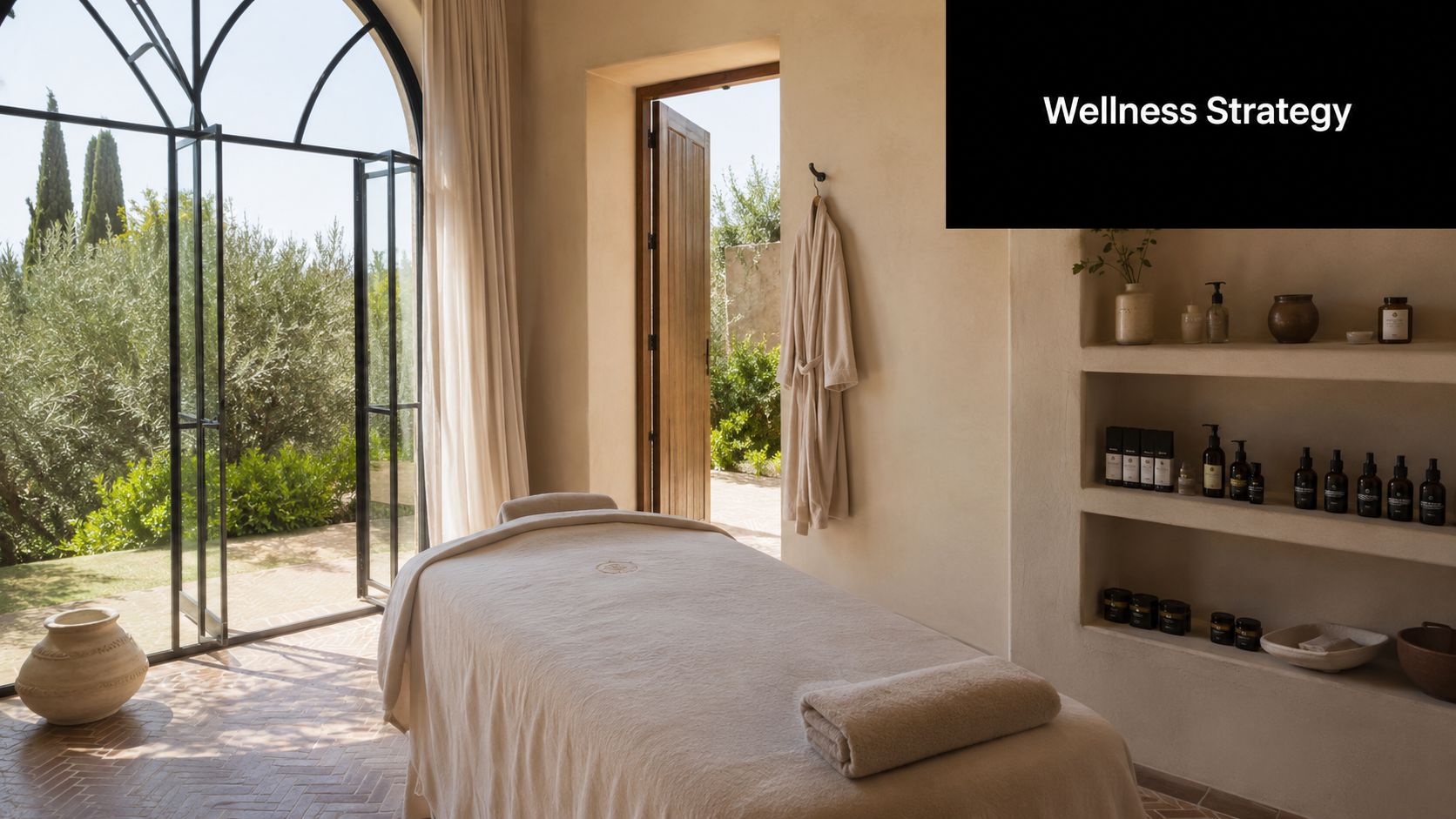
The available information clearly places wellness inside the property's identity. There is a spa. There are gardens. There is a boutique feel. The visual cues suggest calm, escapism, and a natural rhythm rather than a medicalised or performance-driven wellness concept.
That positioning works well for guest appeal, but it also creates a familiar challenge for buyers from Switzerland and neighbouring European markets. They increasingly want proof, not just atmosphere. Public information on Beldi doesn't specify product certifications, therapist qualifications, or verifiable sustainability practices, which leaves a credibility gap around measurable wellness standards, as noted in the property's publicly available positioning and related assessment.
Suppliers often misread the opportunity. They assume the gap is only about replacing existing products. It isn't. The stronger opening is to help the property convert spa ambience into wellness credibility.
What Swiss buyers will ask that public materials don't answer
A commercially serious buyer won't stop at “beautiful spa”. They'll ask:
- What product standards are used in treatments
- Whether formulations carry recognised natural or ethical credentials
- How therapists are trained and assessed
- How the property communicates sustainability without vague language
- Whether retail can support repeat purchase after the guest leaves
Those questions matter because premium wellness now sits between hospitality, skincare, and trust. If a property can answer them clearly, conversion improves. If it can't, even a strong-looking spa can remain under-monetised.
If the hotel's wellness promise is emotional but not evidenced, the supplier who brings structure becomes more valuable than the supplier who brings products.
Treatment strategy should match the setting
At Beldi, the ideal treatment direction is likely a blend rather than an extreme. Purely traditional rituals may feel authentic but can limit retail conversion if the products aren't clearly portable into the guest's home routine. Purely clinical protocols may feel out of character with the environment.
The better model is usually:
- Signature body rituals tied to relaxation and sensory immersion
- Results-oriented facials with a soft, non-clinical presentation
- Hammam-compatible protocols if operationally relevant
- Compact retail editing that mirrors treatment touchpoints
A brand entering this setting should think in terms of “ritual with proof”. That means sensoriality, but also transparent ingredients, recognisable standards, and training that gives therapists clear language.
A good parallel exists online. Brands that perform well digitally in beauty usually combine storytelling with conversion logic, which is why these strategies for beauty ecommerce success are useful to review when planning the retail side of a hotel spa partnership. The same principle applies on property. Seduction gets attention. Structure gets reorders.
A short visual reference helps when assessing the property's style and guest-facing atmosphere in more practical terms.
What works and what usually doesn't
What tends to work in a setting like this:
- A hero line with a clear point of view: one face story, one body story, one ritual story.
- Cabin-first implementation: therapists adopt faster when treatment logic is simple.
- Retail linked to treatment steps: guests buy what they've just experienced.
What usually doesn't:
- Over-technical launches: too much science language can feel imported and disconnected.
- Large SKU drops: they confuse teams and dilute reorder discipline.
- Unverified sustainability messaging: Swiss buyers are quick to spot it.
The key commercial insight is simple. Beldi doesn't need a louder spa story. It needs a more defensible one.
The Strategic Opportunity for Swiss Natural Brands
A Swiss brand evaluating Beldi should not judge the account by room volume alone. The commercial question is whether the property can support a disciplined, high-margin spa partnership with visible brand impact. At Beldi, the answer is often yes, provided the offer is tightly edited and operationally realistic.
The resort's low-density format matters because it changes the economics of the partnership. Fewer rooms usually mean lower raw throughput. They can also mean better treatment conversion, more attentive retail presentation, and stronger brand recall if the guest experience is coherent from cabin to boutique. For a Swiss supplier, that is often more useful than entering a larger hotel where the spa menu is generic and the brand disappears into a multi-supplier shelf.
Why this account can outperform larger hotels
Big properties can produce volume, but they often dilute brand control. Procurement cycles are slower, treatment menus get standardised across sites, and local teams have limited freedom to adapt protocols. Beldi presents a different kind of opportunity. It allows a supplier to influence how the wellness story is built, not just which products sit in the back bar.
That creates room for higher-value contributions:
- Treatment protocol development tied to the property's existing rituals and guest expectations
- Therapist training that improves consistency and gives staff language they can use in the room
- Retail editing built around a few credible heroes rather than a crowded assortment
- Brand placement in a recognised Marrakech luxury setting that can support regional business development
The reference value is real. A hotel account like this can strengthen distributor discussions, support GCC outreach, and give the brand hospitality imagery that feels earned rather than staged.
Which Swiss brands are most likely to fit
Beldi is not the right target for every natural brand with premium packaging. The strongest candidates tend to be operators, not just storytellers. They can document standards clearly, train mixed-experience therapist teams, and adapt treatment design to a property that balances spa use with leisure, family stays, and short luxury breaks.
Four traits usually separate a viable partner from a beautiful but impractical one:
- Clear proof standards: certification, ingredient traceability, and compliance language that holds up under buyer scrutiny
- Cabin usability: textures, treatment timings, and application steps that therapists can deliver consistently
- Retail discipline: packaging and merchandising that feel premium without requiring a large shelf footprint
- Cultural and commercial flexibility: the ability to respect local codes while keeping the brand's point of view intact
I would add a fifth. Margin realism matters. If the supplier cannot support professional cabin sizes, tester strategy, training time, and workable resale economics, the partnership will look attractive on paper and underperform on site.
A strong proposal for Beldi says, “we can help you run a clearer, more profitable spa offer,” not simply, “we make attractive natural products.”
Where the mutual upside sits
For Beldi, the gain is a sharper wellness proposition with European and international guests who respond to proven quality, not vague natural claims. For the Swiss supplier, the gain is selective visibility in a property where atmosphere, design, and treatment culture already support premium positioning.
The opportunity usually sits in four areas:
Signature rituals
One or two branded treatments can give the spa a more distinctive facial or body offer without overcomplicating therapist execution.Focused retail
A small shelf linked to treatment experience usually sells better than a broad beauty display assembled from catalogue logic.Seasonal or event-based activations
Limited menus, short residencies, or founder-led wellness moments can test demand before a wider rollout.Regional credibility
A successful launch at Beldi can serve as a proof point for other luxury hospitality accounts in Morocco and nearby markets.
Swiss brands hold a practical advantage here. They often arrive with stronger discipline around formulation standards, claims language, and premium understatement. In Marrakech, where many wellness environments already deliver atmosphere well, that extra layer of operational credibility can make the partnership commercially stronger.
Partnership Checklist Product and Service Fit
A proposal for Beldi should feel edited and site-specific. Broad catalogues weaken confidence. A compact fit map is more persuasive because it shows you understand how the property operates and how guests are likely to engage with treatments and retail.
Beldi Country Club Partnership Opportunity Checklist
| Opportunity Area | Suited Product/Service Type | Key Selling Point for Beldi |
|---|---|---|
| Signature face treatments | High-performance natural facial line | Gives the spa a results-led facial menu without pushing the property into an overly clinical identity |
| Hammam and body rituals | Professional body oils, scrubs, cleansing treatments | Aligns with a sensory, place-driven guest experience and supports memorable ritual design |
| Mother and family wellness | Certified-organic mother and baby range | Fits a family-friendly resort environment and adds a thoughtful, premium layer to the wellness offer |
| Boutique retail | Edited hero-product assortment | Works better than a large shelf. Guests can understand it quickly and buy with confidence |
| In-room wellness touches | Small-format balms, bath products, sleep or body-care items | Extends the spa story into the room and creates trial before purchase |
| Seasonal activations | Limited treatment menus or pop-up wellness residencies | Keeps the offer fresh without rebuilding the full spa menu each time |
| Therapist capability building | Staff training and treatment scripting | Improves consistency, guest confidence, and retail recommendation quality |
| Sustainability communication | Documentation pack for standards and ingredient transparency | Helps Beldi answer harder guest questions with substance rather than broad lifestyle wording |
| Private events and retreats | Bespoke wellness workshop formats | Supports small group programming that feels curated rather than corporate |
| Gifting and departure retail | Travel-friendly curated sets | Makes post-stay purchase more likely and suits an international guest profile |
How to use this checklist well
Don't present every line item at once. Prioritise the parts that solve the hotel's most visible problem first.
A sharper opening sequence would be:
- Start with one treatment family: face or body, not both at full scale.
- Add a retail mirror: hero products linked to the cabin experience.
- Propose training early: this reassures management that implementation won't be chaotic.
- Hold events for phase two: useful, but only after operational trust exists.
What a tailored proposal should avoid
Some product categories may be excellent in retail but weak in hotel use. Others may look premium but create therapist friction because they're difficult to work with in volume or require too much explanation.
A sound checklist filters for three tests:
- Can therapists adopt it quickly?
- Can guests understand it quickly?
- Can management reorder it predictably?
If one of those answers is no, the category probably belongs later, or not at all.
Logistics Contracting and Outreach Strategy
At Beldi, attractive ideas either become a workable account or stall in polite email exchanges. Beldi's format suggests a partnership model that should stay flexible at the start and tighten only once treatment uptake, retail response, and team adoption are visible.
The property is reported to have 6 meeting rooms and a 35 m² conference centre, which points to capacity for small-to-mid-size event business alongside leisure stays, according to this listing and related property overview. For suppliers, that expands the opportunity beyond spa cabins into launches, retreats, hosted education, and curated guest programming.
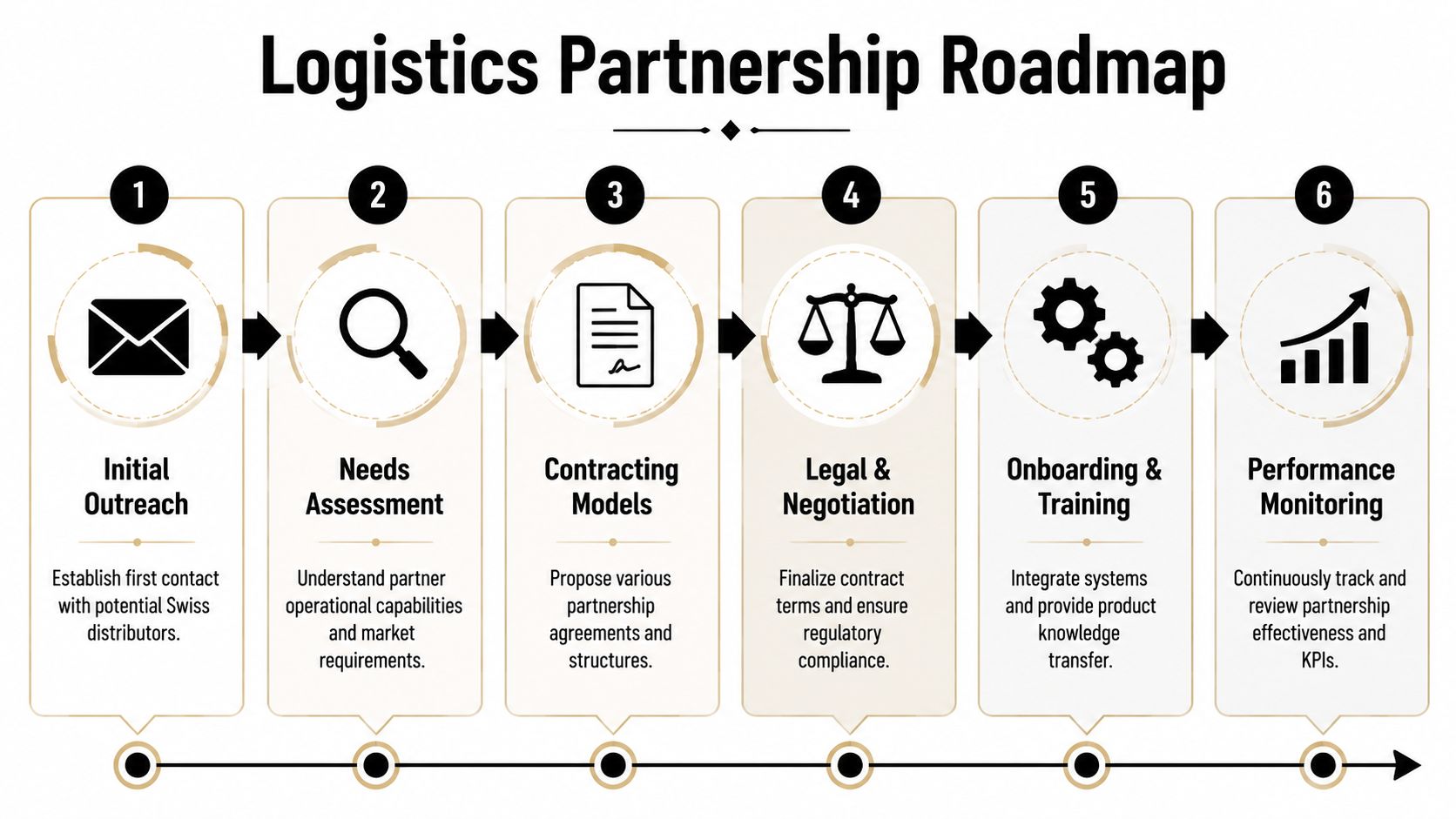
Contract models worth considering
A boutique resort usually doesn't need the heaviest commercial structure first. Better options include:
Wholesale for treatment stock and retail core lines
Cleanest model if demand is easy to forecast and the hotel already buys confidently.Starter consignment for selective retail
Useful when management wants to test sell-through before committing more cash.Service-led partnership with training embedded
Strong option when core value comes from protocol design and therapist adoption, not only supply.Event-based commercial layer
Relevant if the collaboration includes retreats, wellness weekends, or launch moments in the meeting spaces.
Different categories can sit under different models. Back-bar might be wholesale. Boutique retail might begin on a more cautious structure. That's often more realistic than forcing one contract framework across everything.
Logistics and operational discipline
Cross-border supply into Morocco needs caution, especially for premium beauty and wellness lines. The right approach is to reduce operational strain from day one.
Prioritise:
- A narrow initial assortment so forecasting errors stay manageable.
- Clear documentation packs covering product standards, use protocols, and shelf-life handling.
- Named ownership on both sides for ordering, training, and replenishment.
- Simple launch timing aligned with staff readiness, not only shipping readiness.
If the partnership includes event activation, physical presentation matters too. Suppliers planning a more immersive launch can borrow ideas from specialist exhibition stand contractors to think through branded setups, flow, and spatial storytelling, even at a small hospitality scale.
Small luxury properties don't forgive messy onboarding. If the first delivery confuses the team, the second order gets harder.
A concise outreach template
Initial contact should show that you understand the property's identity and aren't sending a generic hotel pitch.
Subject: Wellness partnership proposal for Beldi Country Club
Dear [Name],
I'm reaching out regarding a potential spa and wellness partnership aligned with Beldi Country Club's garden-resort identity and curated guest experience.
We believe there is strong potential to support your wellness offer with a focused treatment and retail concept built around natural premium formulations, therapist training, and guest-facing product storytelling. Our interest is not in presenting a broad catalogue, but in developing a concise proposal suited to your spa environment, guest profile, and event capabilities.
If relevant, I'd welcome a short conversation to understand your current treatment structure, product approach, and priorities for spa development or wellness-led activations.
Kind regards,
[Name]
Use the event spaces intelligently
The meeting rooms create a useful secondary route into the account. Instead of treating them as unrelated MICE infrastructure, think of them as controlled environments for:
- Press or buyer previews
- Wellness retreats
- Private training sessions
- Small brand storytelling events
That matters because partnerships often start outside the treatment room. A strong event can build internal confidence with management before the full spa conversion happens.
Final Analysis and Digital Strategy Takeaways
Beldi Country Club looks compelling for Swiss beauty and wellness suppliers because the property already has what many brands can't manufacture. Atmosphere, identity, and a guest setting that supports premium storytelling. The missing piece appears to be stronger wellness substantiation and a more explicit framework around products, standards, and therapist-facing delivery.
That's why the opportunity isn't simple distribution. It's brand shaping. The right partner can help Beldi sharpen treatment architecture, retail relevance, and guest trust without flattening the property's character.
Digitally, the smartest approach is co-marketing with restraint. Use shared imagery, treatment narratives, and post-stay retail pathways that feel consistent with the hotel's tone. Avoid loud performance language. Focus on ritual, proof, and continuity from spa experience to at-home use. In search and brand discovery terms, association with a recognisable Marrakech property can also strengthen authority, especially when the collaboration is specific, visible, and operationally real.
If you're assessing how to position a premium natural beauty portfolio for hotels, spas, pharmacies, or curated retail in Switzerland, beautysecrets.agency offers a focused distribution approach built around ethically sourced formulations, recognised standards, and brands that suit both treatment rooms and discerning end consumers.