Swiss retailers often treat the silky sleep mask as a giftable extra. That misses the bigger opportunity. In Switzerland, 25 to 30% of adults suffer from sleep disturbances according to the sleep-mask market analysis cited by Grand View Research, and that matters far beyond comfort. Poor sleep affects recovery, daily function, and the visible condition of the skin.
For a pharmacy, spa, hotel, dermatology clinic, or premium e-commerce partner, that changes how the product should be positioned. A silky sleep mask belongs in the same conversation as evening skincare, stress-reduction rituals, and non-pharmacological sleep support. It sits at the intersection of wellness, beauty, and retail practicality.
Introducing the Ultimate Wellness Accessory
A silky sleep mask deserves to be sold as a sleep-and-skin tool, not as a travel afterthought. That distinction matters in the Swiss market, where customers often look for products that feel refined, align with natural routines, and fit neatly into a premium wellness assortment.
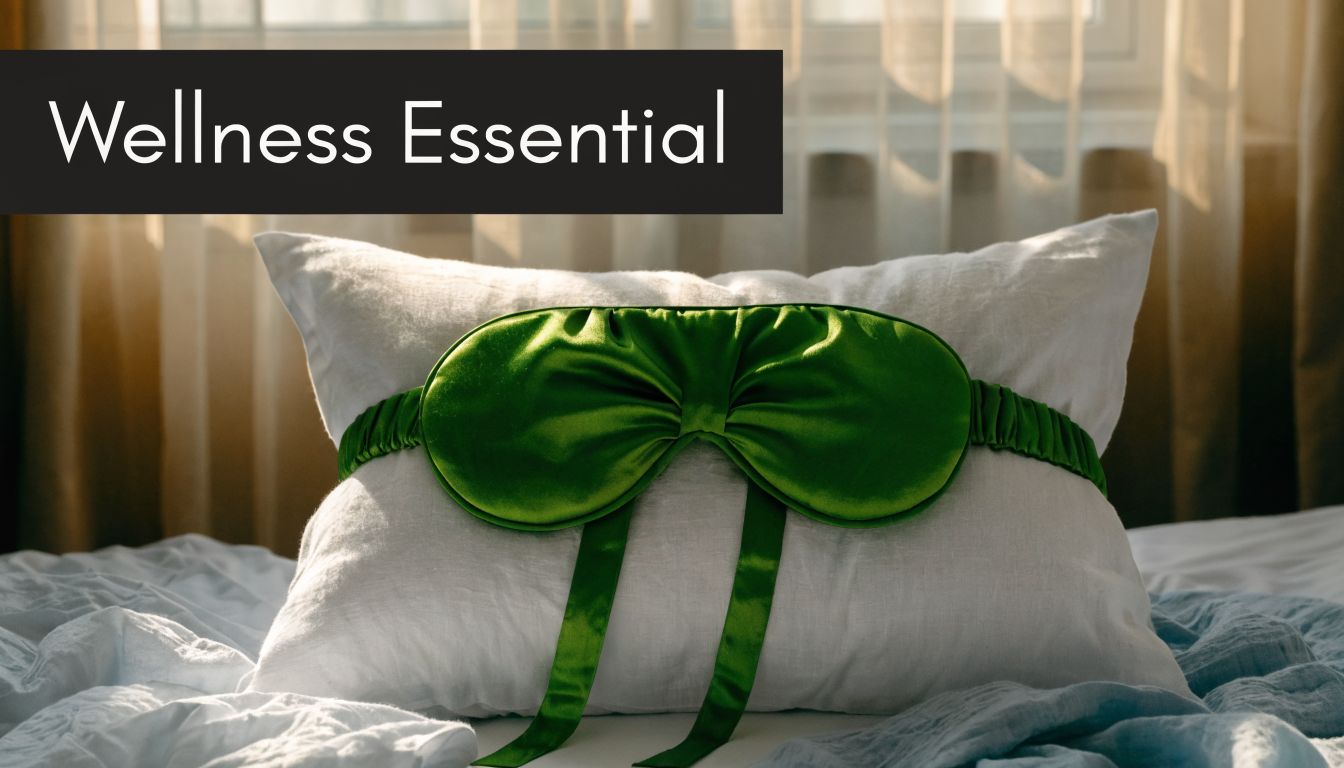
A good buyer already knows that consumers are moving toward simpler, multi-benefit products. The silky sleep mask fits that shift well. It supports darkness during sleep, feels luxurious in the hand, pairs naturally with night creams and oils, and gives staff an easy story to tell at the point of sale.
That combination is why the category travels well across channels:
- In pharmacies, it complements evening routines and sleep-support merchandising.
- In spas, it works as a take-home extension of a treatment.
- In hotels, it adds a visible sense of care to turndown or wellness packages.
- In boutiques, it performs as both self-care and gifting.
A premium accessory becomes commercially stronger when staff can explain what it does in practical terms.
Many retailers also benefit from seeing how adjacent markets educate consumers. A useful example is this overview of best sleep masks, which shows how sleep masks are increasingly framed around sleep environment and nightly routine rather than only travel convenience.
Swiss partners tend to ask tougher questions than average. Is the material premium quality? Does it fit with natural skincare? Can it sit credibly beside certified beauty lines? Can staff explain why silk costs more than satin? Those are the right questions, because this product sells best when it is curated, not merely stocked.
The Science of Restorative Beauty Sleep
Even low evening light can push the body away from its natural night setting. For a retailer, that point matters because a silky sleep mask is easier to sell when staff can explain the mechanism, not just the feel.
The easiest way to describe it is with a room analogy. Skincare works like a skilled night team in a hotel. It can only do its best work once the lights are lowered, the doors are closed, and the environment is calm. A sleep mask helps create that darker setting around the eyes, which supports rest first and beauty benefits second.
Why darkness affects skin as well as sleep
During sleep, the body shifts into repair mode. That includes processes linked to overnight recovery, skin comfort, and the fresher appearance customers notice in the morning. If light keeps the brain in a more alert state, that recovery window can become less efficient.
For Swiss pharmacies, this creates a credible non-medicinal story. The product does not claim to treat insomnia. It supports sleep hygiene by reducing one practical source of disruption, ambient light from street lamps, hallways, digital displays, or early summer sunrise. That distinction matters in Switzerland, where careful wording and restrained claims protect both trust and compliance.
Spas and hotels can use the same logic. In those channels, the mask becomes part of the sleep environment, much like blackout curtains, quiet bedding, or a calming herbal infusion. It is a physical cue that tells the guest, “night has started.”
What the evidence supports
Researchers have reported that sleep masks can improve next-day alertness and aspects of memory by helping the sleeper stay in darker conditions through the night. For trade partners, the practical takeaway is straightforward. Better darkness can support better sleep quality, and better sleep quality supports how skin looks and feels by morning.
That is a strong position for a natural and ethical beauty portfolio because it starts with environment, not intervention. The product supports the conditions around rest, then sits naturally beside evening cleansers, barrier creams, facial oils, magnesium bath products, or certified aromatherapy lines.
Practical rule: Staff do not need a lesson in sleep physiology. They need one clear sentence: reducing light helps the body stay in sleep mode for longer.
How to explain this simply to customers
The clearest explanation usually follows a short chain of cause and effect:
- Light signals alertness.
- A mask reduces that signal.
- A darker sleep setting supports deeper overnight recovery.
That sequence works well at the pharmacy counter, in a spa retail area, or inside a hotel wellness card left at turndown.
Why this matters in the Swiss B2B market
Swiss buyers usually ask whether a product fits a disciplined assortment. A silky sleep mask can, if it is positioned correctly. It belongs with products that support rest, skin comfort, and low-friction routines, especially where the assortment already values certified ingredients, ethical sourcing, and premium tactile experience.
For pharmacies, it supports the evening ritual category without drifting into drug claims. For spas, it extends the treatment experience into the guest’s home. For hotels, it adds a visible premium detail that guests understand immediately and remember easily.
The commercial logic is simple. A customer who buys night care is already investing in what happens during sleep. A well-made sleep mask helps protect that investment by improving the conditions in which those products are used.
Decoding the Materials Silk Versus Satin
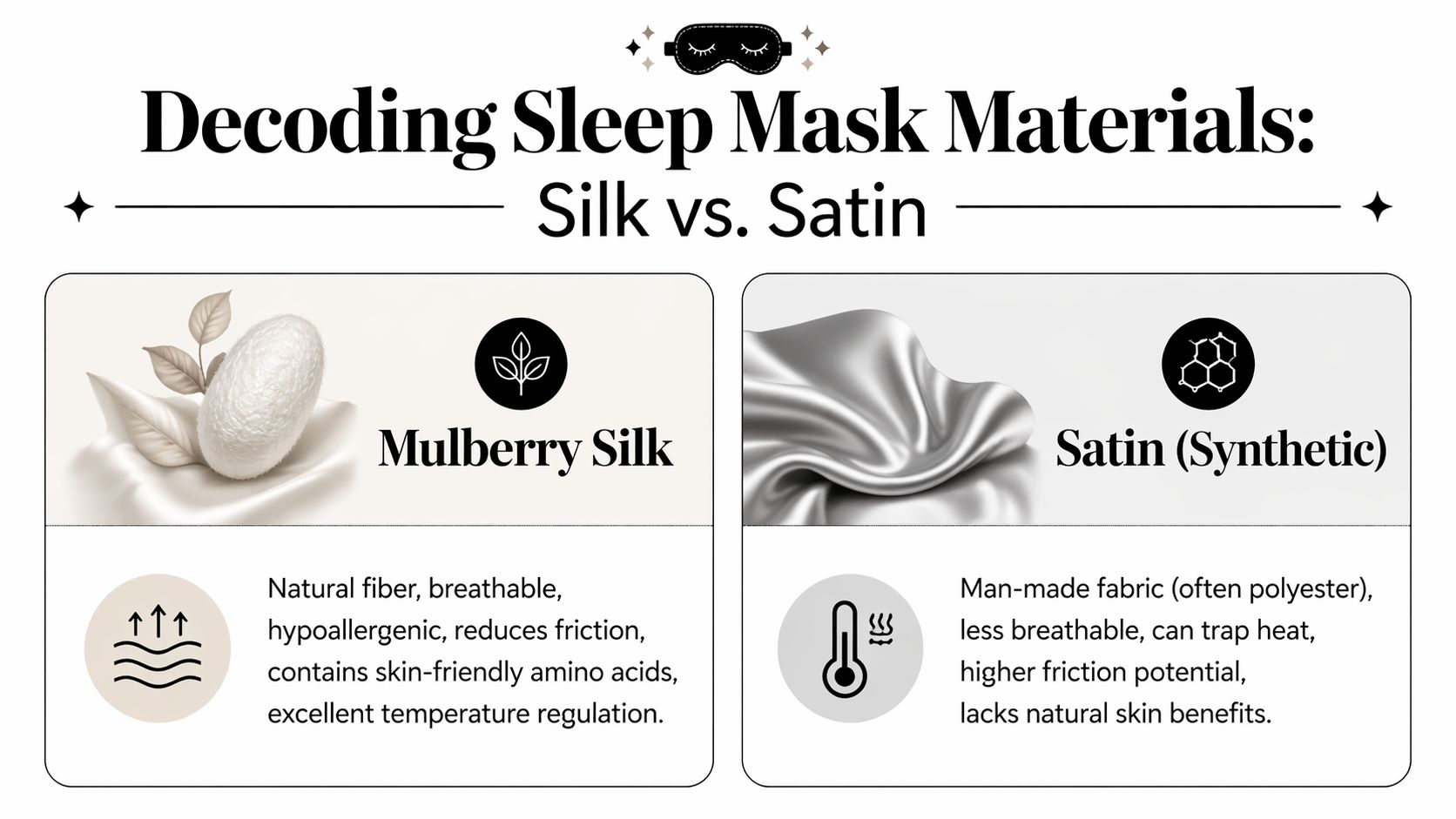
Most customers use “silk” and “satin” as if they mean the same thing. They don’t. Silk is a fibre. Satin is a weave or finish. In practice, many satin sleep masks are polyester-based, which means they may look glossy on display while performing very differently during use.
That difference is where premium margin is justified.
What makes mulberry silk premium
High-grade 6A mulberry silk is the benchmark to look for when a supplier claims genuine quality. According to the product data from SILKSILKY, high-grade mulberry silk has a friction coefficient of around 0.2 to 0.3, compared with 0.4 to 0.6 for cotton, and that lower friction can reduce sleep-induced wrinkles by up to 30%. The same source states that silk contains 18 to 22% sericin protein, with an amino acid profile that naturally moisturises the skin and inhibits collagen degradation.
For a retailer, those details do two jobs. They explain the sensory difference a customer feels, and they support the premium skincare story attached to the product.
Why satin often disappoints at premium level
Polyester satin can still feel smooth at first touch. That’s why it often performs well in low-information retail environments. But discerning shoppers, especially in Swiss pharmacies and spas, tend to notice the trade-offs quickly.
Common issues with synthetic satin include:
- Less breathable feel, especially in warmer bedrooms or heated indoor environments
- A more decorative than functional finish, which can look premium but not behave like a natural fibre
- Weaker alignment with natural and ethical beauty assortments
A satin mask may be suitable for entry-level gifting. It is usually harder to defend beside ECOCERT-led skincare, natural oils, or treatment-led spa retail.
Material comparison at a glance
| Attribute | 100% Mulberry Silk | Polyester Satin |
|---|---|---|
| Fibre origin | Natural silk fibre | Synthetic fibre in most cases |
| Skin feel | Smooth, soft, low-friction | Smooth to the touch, but often less refined over long wear |
| Breathability | Generally better suited to overnight comfort | Can feel less breathable |
| Premium positioning | Strong fit for clean beauty and elevated wellness | Better suited to lower-price fashion accessory positioning |
| Compatibility with natural assortments | Strong narrative fit | Often weaker |
| Price defence | Easier to justify with technical and sensory markers | Often price-led |
The language staff should use
Retailers often lose the sale by being too abstract. “Better quality” isn’t enough. Better wording sounds like this:
- Silk reduces friction on delicate facial skin.
- Silk is a natural material, while many satin masks are synthetic.
- Silk sits more credibly beside premium night care and sensitive-skin routines.
Customers rarely object to the higher price of silk when the comparison is framed around material truth rather than surface shine.
A smart buying shortcut
When a supplier says “silky” or “satin-like”, ask whether the mask is 100% mulberry silk, whether the grade is specified, and whether the silk content applies only to the outer layer or to the full area touching the face. Ambiguous wording usually hides a compromise.
For Swiss B2B buyers, the material story isn’t a nice extra. It is the core of the product’s value.
Key Benefits for Skin Health and Deeper Sleep
The strongest sales argument for a silky sleep mask is that it delivers more than one benefit at once. Customers don’t buy it only because it’s soft. They buy it because it supports a better night and a better morning.

Better darkness and deeper rest
The sleep performance story becomes much stronger with contoured designs. According to benchmark data presented by ZLEEPY, 3D contoured silk sleep masks can achieve 100% blackout, allow unrestricted REM eye movement, and may increase melatonin production by 30 to 50%. The same source reports measurable outcomes of 20 extra minutes of total sleep time and a 7% boost in morning refreshment.
That gives spas, pharmacies, and hotels a clear reason to trade customers up from a flat, generic mask to a better-engineered one.
Skin-facing benefits customers understand quickly
The clearest benefit messages usually fall into four retail-friendly groups.
Anti-ageing comfort
A silky sleep mask reduces rubbing around the delicate eye area. That makes the product easy to position near eye treatments, overnight creams, and anti-ageing lines.
Skincare stays where it belongs
A premium customer often applies serum, balm, or cream before bed. The right silky sleep mask supports that ritual rather than disrupting it. This is one reason the product cross-sells well with night care.
For retailers who educate around sleep textiles more broadly, these silk pillowcase benefits provide a helpful parallel. The customer logic is similar. Lower friction and a gentler surface support overnight skin and hair care.
Sensitive-skin appeal
Natural-fibre positioning matters in premium channels. Customers who react badly to rougher or more occlusive materials often respond well to the feel and finish of silk, especially when the assortment already includes gentle skincare.
A useful way to phrase this in-store is simple: a silky sleep mask can feel less abrasive and more compatible with a comfort-first bedtime routine.
Here is a short visual explainer you can also use for staff training or customer education:
A stronger ritual, not just a product
The best retailers don’t sell the mask as an isolated item. They connect it to a bedtime sequence:
- Cleanse well
- Apply night care
- Dim the room
- Use the silky sleep mask
- Wake with less disruption from ambient light
In premium retail, the ritual sells the object. The object then earns repeat purchase through use.
That approach is especially effective in spas and hotels, where demonstration and atmosphere already shape customer expectations.
Navigating Sourcing and Certifications in Switzerland
A silky sleep mask can look premium and still fail a Swiss buyer’s ultimate test. That ultimate test is whether the product is documented well enough to sit beside a natural, certified, and ethically minded beauty portfolio.
What buyers should verify first
Start with evidence, not brand language. If a supplier uses words like “luxury”, “clean”, “natural”, or “ethical”, ask what documents support those claims.
For Swiss trade buyers, the basic sourcing checklist should include:
- Fibre declaration that confirms whether the product is mulberry silk
- Certification documents where claims such as OEKO-TEX® are used
- Country-of-origin clarity for both manufacturing and finishing
- Written statements on animal welfare or cruelty-free positioning, if that is part of the sales narrative
- Packaging and labelling review so the product can be sold without confusion in premium channels
Why certification language matters
OEKO-TEX® style claims are useful because they give retailers a clearer basis for discussing material safety and quality control. They don’t replace a full ethical review, but they can strengthen trust when the product is placed next to clean beauty, family care, or sensitive-skin assortments.
Cruelty-free positioning needs even more care. Buyers should distinguish between a brand that uses ethical language in general and a supplier that can explain its silk sourcing approach in detail. If a retailer wants alignment with a PETA-led or similar cruelty-free framework, that question needs to be asked before range approval, not after launch.
Swiss positioning requires supply-chain discipline
Swiss customers often read packaging carefully. They also tend to notice when a product claims natural alignment but gives little traceability. That is why procurement and merchandising should work together. A product that cannot be explained clearly by staff rarely performs well for long.
A practical background read for buyers comparing production regions is this silk manufacturer comparison between China and Europe. It’s useful because it sharpens the sourcing questions a retailer should ask, even if the final decision depends on supplier documentation rather than geography alone.
The best premium assortment is not the broadest one. It is the one your staff can defend with confidence.
How to screen a supplier conversation
A strong supplier will answer these questions directly:
| Question | What a useful answer looks like |
|---|---|
| Is it real mulberry silk? | Clear fibre description, not “silky feel” wording |
| Are certifications current? | Named documentation, available for review |
| Is the silk claim for the outer shell only? | Full explanation of all face-contact surfaces |
| How is the ethical claim supported? | Specific sourcing statement, not vague values language |
| Is the packaging premium enough for Swiss retail? | Giftable, shelf-ready, and clearly labelled |
When buyers ask these questions early, the category becomes much easier to scale across pharmacies, spas, hotels, and premium e-commerce.
Effective Merchandising and Marketing Strategies
The silky sleep mask sells best when retailers stop treating it like an accessory peg item. It needs context. The stronger the context, the easier it becomes to justify premium pricing and generate repeat demand.
That matters in physical retail. In Europe’s beauty market, offline distribution via pharmacies and wellness centres accounted for USD 13.38 million globally in 2024, and in Switzerland, sales of natural sleep aids in pharmacies rose 15% year over year from 2024 to 2025, according to the market report published via GlobeNewswire.
Pharmacy merchandising that feels clinical but inviting
In pharmacies, location matters more than volume. Place the silky sleep mask near products that already frame the evening routine.
Strong adjacency options include:
- Eye care and night creams, where the anti-friction story makes immediate sense
- Natural sleep-support products, for customers building a full bedtime ritual
- Sensitive-skin or gentle-care zones, where silk’s feel can be compared favourably with harsher materials
Use simple shelf language. “Blocks light” is useful. “Supports a calmer night routine and protects the eye area from friction” is stronger.
Spa retail that extends treatment value
Spas have an advantage other channels don’t. Staff can create emotional relevance in real time. A silky sleep mask works particularly well as a retail extension after treatments focused on relaxation, hydration, or visible fatigue.
Good spa uses include:
Post-facial homecare add-on
Position the mask as the final step in an overnight recovery routine.Part of a sleep-themed gift set
Combine it with evening skincare, bath products, or body oil.Treatment room introduction
Let clients touch the fabric before they see the price. Texture closes many premium sales.
If a customer touches genuine silk after a calming treatment, the product often needs less explanation.
Hotel and wellness-suite applications
Hotels can use a silky sleep mask in a more service-led way. The product suits premium turndown, wellness packages, and spa-suite retail. It also gives hotels a practical bridge between hospitality and wellbeing.
The most effective hotel positioning is understated. Present it as part of sleep comfort, room experience, and thoughtful design. Avoid overloading the guest with too many claims.
Digital marketing angles that actually convert
Online, the mask needs a story richer than “luxury sleep accessory”. Three content angles usually work well:
Sleep sanctuary content
Show how the mask fits into a dim-light, evening wind-down routine.Skin and sleep crossover content
Explain why overnight comfort matters for the eye area and morning appearance.Giftable self-care content
Present the mask as a practical indulgence rather than a novelty.
Display tactics for premium sell-through
Retailers often under-merchandise fabric products. Don’t keep every unit hidden in a box.
Try this:
- Display one unpacked sample so customers can assess hand feel
- Use a concise material card with “100% mulberry silk” if verified
- Pair with one hero product, not six. Too many companions dilute the message
- Train staff on one comparison line between silk and synthetic satin
A silky sleep mask is a small object, but it can create a surprisingly large basket when merchandised as part of a credible nightly ritual.
A Purchasing Guide for Trade Partners
Buying a silky sleep mask well means looking past the front-of-pack claim. “100% silk” on its own isn’t enough. Trade buyers need to understand the specifications that affect feel, fit, durability, and retail credibility.
Start with fibre grade and construction
If a supplier offers 6A mulberry silk, that is a meaningful quality marker because it signals a higher-grade long-strand silk specification. It gives the buyer a stronger basis for premium positioning than generic “silk” language.
Then ask a more practical question. Which parts of the mask touch the face, and what are they made from? Some masks use silk on the exterior but rely on less premium materials in the lining, side panels, or internal structure.
Understand momme without overcomplicating it
Momme is the weight and density measure buyers most often hear about with silk. In practical retail terms, higher momme usually signals a more substantial hand feel and a more premium impression.
For sleep masks, many premium buyers prefer the conversation to stay simple:
- Lighter silk can feel delicate and elegant
- Heavier silk can feel richer and more durable
- The right choice depends on the design, not only on the number
If a supplier mentions 22 momme or 30 momme, ask how that affects softness, structure, and long-term performance in actual use.
Choose the right shape for the channel
Not every retail channel needs the same mask format.
| Design choice | Best use case | Buyer consideration |
|---|---|---|
| Flat traditional mask | Gift sets, entry premium, broad appeal | Easier to merchandise, but may place more pressure on the eye area |
| 3D contoured mask | Sleep-focused retail, hotels, premium wellness | Better for blackout and eye-space comfort |
| Wide-band or adjustable fit | Pharmacies, e-commerce, mixed demographics | Reduces fit complaints and simplifies range decisions |
Small details that prevent big returns
Returns often happen because of avoidable specification issues. Ask suppliers about the details customers notice after the first night, not during the first minute of unboxing.
Look closely at:
Strap adjustability
A rigid fit creates problems across different head sizes and hairstyles.Nose-bridge light control
Gaps can reduce the perceived performance of the mask.Packaging quality
Premium channels need packaging that looks giftable and protects the fabric.Care instructions
If care guidance is vague, customer satisfaction usually drops.
Good procurement means buying for night two, not just for shelf appeal on day one.
Questions worth sending before you place an order
A serious supplier should be able to answer these directly:
- Is the silk grade specified in writing?
- Which components are silk and which are not?
- Is the design contoured or flat?
- How is the strap adjusted?
- What care guidance is provided for the end customer?
- Which certifications or material assurances can be documented?
A premium silky sleep mask doesn’t have to be complicated. It does need to be transparent.
Frequently Asked Questions for Swiss Retailers
How do we justify the price difference between silk and satin?
Start with fibre truth. A premium customer in a Swiss pharmacy, spa, or hotel is rarely paying only for shine. They are paying for the material itself, how it feels against treated or sensitive skin, and how well it fits beside certified skincare, natural body care, and ethical gifting lines.
That is why genuine mulberry silk is easier to position than polyester satin in a high-trust retail setting. Silk supports a clearer story around lower friction, comfort, and premium care. Satin can still have a place in entry-price assortments, but it usually needs more explanation because the visual similarity can hide a major difference in fibre content.
A simple staff line works well. Silk refers to the fibre. Satin refers to the weave or finish.
What care instructions should we give customers?
Keep the message practical. Customers should follow the care label, wash gently if advised by the supplier, and treat the mask like a fine textile rather than a basic sleep accessory.
Good care guidance works like dosage instructions in a pharmacy. It reduces misuse, protects the product, and lowers avoidable complaints.
A printed care card, bilingual shelf note, or concise e-commerce care block is often enough. If store staff need to explain maintenance from memory on every sale, the retail setup is too dependent on individual training.
Are there Swiss labelling points to watch?
Yes. Check fibre disclosure, country-of-origin details, and the wording behind any ethical, organic, or certification claim shown on pack, swing tags, or product pages.
This matters more in Switzerland because the sleep mask may sit next to COSMOS-certified skincare, natural supplements, or wellness gifts with strong compliance expectations. If the textile language is vague, the whole presentation can feel less credible.
A useful buying rule is simple. If a sales adviser cannot explain a claim in one clear sentence, procurement should verify it before that claim appears on shelf material.
How should we handle skincare compatibility concerns?
Answer this early, especially in pharmacies and spas where customers often combine sleep products with night creams, facial oils, or richer balms. The issue is straightforward. Any fabric that rests on the face can interact with product texture, absorption time, and skin sensitivity.
The best guidance is clear and modest:
- Advise lighter application of heavy balms in the contact zone
- Suggest letting skincare absorb before the mask is worn
- Ask sensitive-skin customers whether they use active treatments or occlusive products at night
- Train staff to mention that fabric performance can change if the surface becomes oily
This protects margin, but it also protects trust. A customer who understands how to pair the mask with their evening routine is less likely to blame the product for slippage, marks, or discomfort that come from product overload.
What makes a silky sleep mask commercially relevant in Swiss B2B channels?
It fits several roles at once. Pharmacies can position it as a sleep-support accessory beside gentle evening care. Spas can add it to treatment retail or recovery rituals. Hotels can use it in premium room amenities, seasonal packages, or wellness suites.
That versatility matters because one small accessory can serve as a bridge product between beauty, sleep, gifting, and hospitality. In commercial terms, it behaves less like a novelty item and more like a compact wellness add-on with cross-category value.
What should we ask suppliers before listing a new line?
Ask for written clarity on five points. Fibre composition, silk grade, certifications or testing, care guidance, and packaging details.
Then look at one commercial point that is often missed. Can the supplier provide merchandising language that fits a Swiss premium environment without making claims that your team cannot support?
Good suppliers make retail easier. They give your buyers proof, your staff simple explanations, and your customers realistic expectations.
For Swiss retailers building a premium, natural, and ethically minded wellness assortment, beautysecrets.agency can help identify products and brand combinations that make commercial sense across pharmacies, spas, hotels, and selective e-commerce. If you're reviewing how sleep-adjacent accessories can sit alongside certified skincare and clean beauty lines, it's worth starting a conversation with a distributor that understands both formulation standards and retail positioning.