
Is IT CC Cream a foundation, a sunscreen, or a skincare product? In a Swiss pharmacy, that question matters more than the branding. Buyers are not choosing a slogan, they're deciding whether a hybrid complexion SKU earns space beside tinted moisturisers, daily SPF, and premium foundations.
The short answer is that IT Cosmetics CC+ Cream sits between categories on purpose. It combines mineral UV filters, colour coverage, and skincare ingredients, so it behaves like a hybrid SPF-makeup-skincare product, not a standard base. That distinction matters in Switzerland because customers don't buy for one use case only, they buy for commuter wear, winter dryness, alpine weekends, and the expectation that one product should do several jobs reasonably well.
What IT CC Cream Actually Is
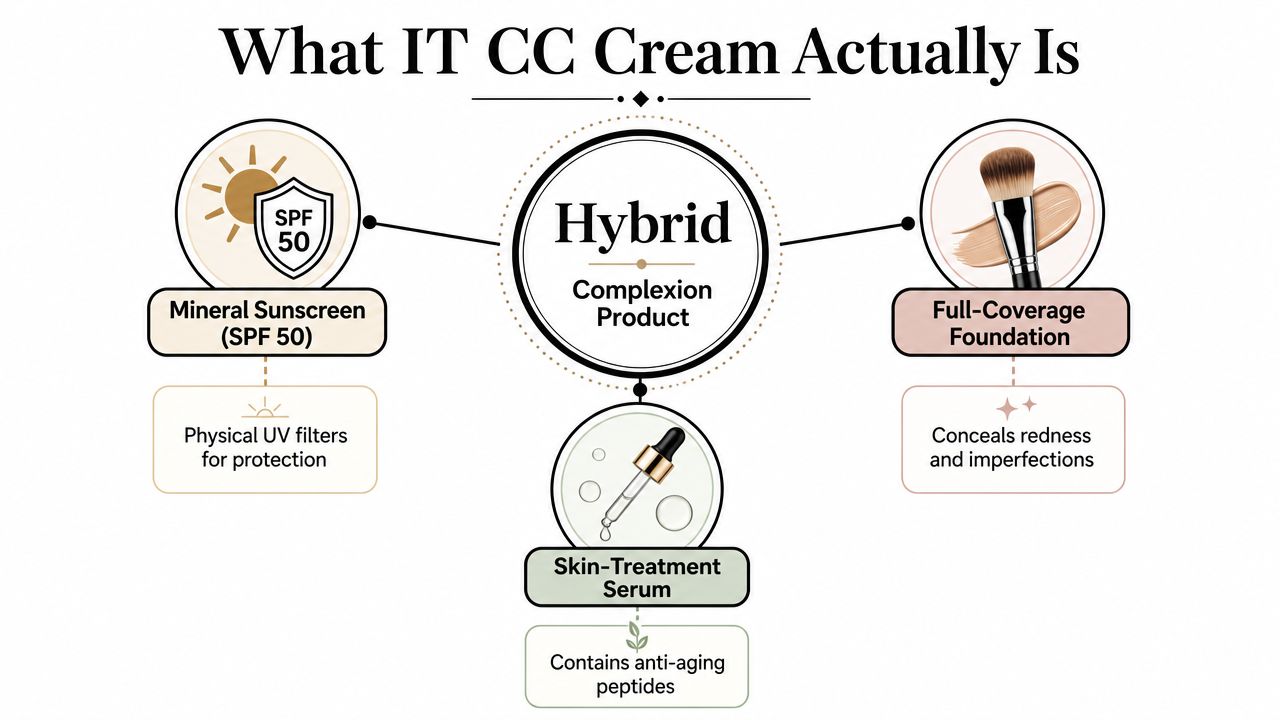
The cleanest way to describe IT CC Cream is this, it's a hybrid complexion product that blends sun protection, coverage, and skincare support in one tube. The formula is anchored by mineral UV filters, specifically titanium dioxide (9.0%) and zinc oxide (6.3%), which makes it different from a typical tinted foundation that only pretends to behave like skincare. That mineral base is why the product belongs in a hybrid merchandising strategy, not just in the foundation bay. IT CC Cream formula details
Why the category label matters
A buyer who calls it “just a foundation” misses the point. IT CC Cream carries a 58-ingredient deck and includes niacinamide, hyaluronic acid, peptides, snail mucin, and vitamin E, so the product is designed to do more than conceal redness or even out tone. That makes it useful for customers who want coverage, but also want a formula that feels closer to skin care under make-up. Ingredient overview and actives
Practical rule: if a customer asks for “something lighter than foundation but more functional than a tinted moisturiser”, this is the kind of SKU they mean.
The brand positioning also matters commercially. In 2024, IT Cosmetics was estimated at about 11.7% of the global CC cream market and reportedly sold 8.4 million units through U.S. sales channels, which shows category scale rather than local Swiss demand. For a Swiss buyer, that is a benchmark for how established the format has become, not proof of domestic sell-through. Global CC cream market estimate
One-sentence buyer summary
If you need a shelf-ready description, use this, IT CC Cream is a mineral SPF 50 complexion product that gives coverage while adding skincare-style ingredients. That's the accurate framing for staff training, shelf talkers, and customer service.
The SPF 50 Mineral Filter System
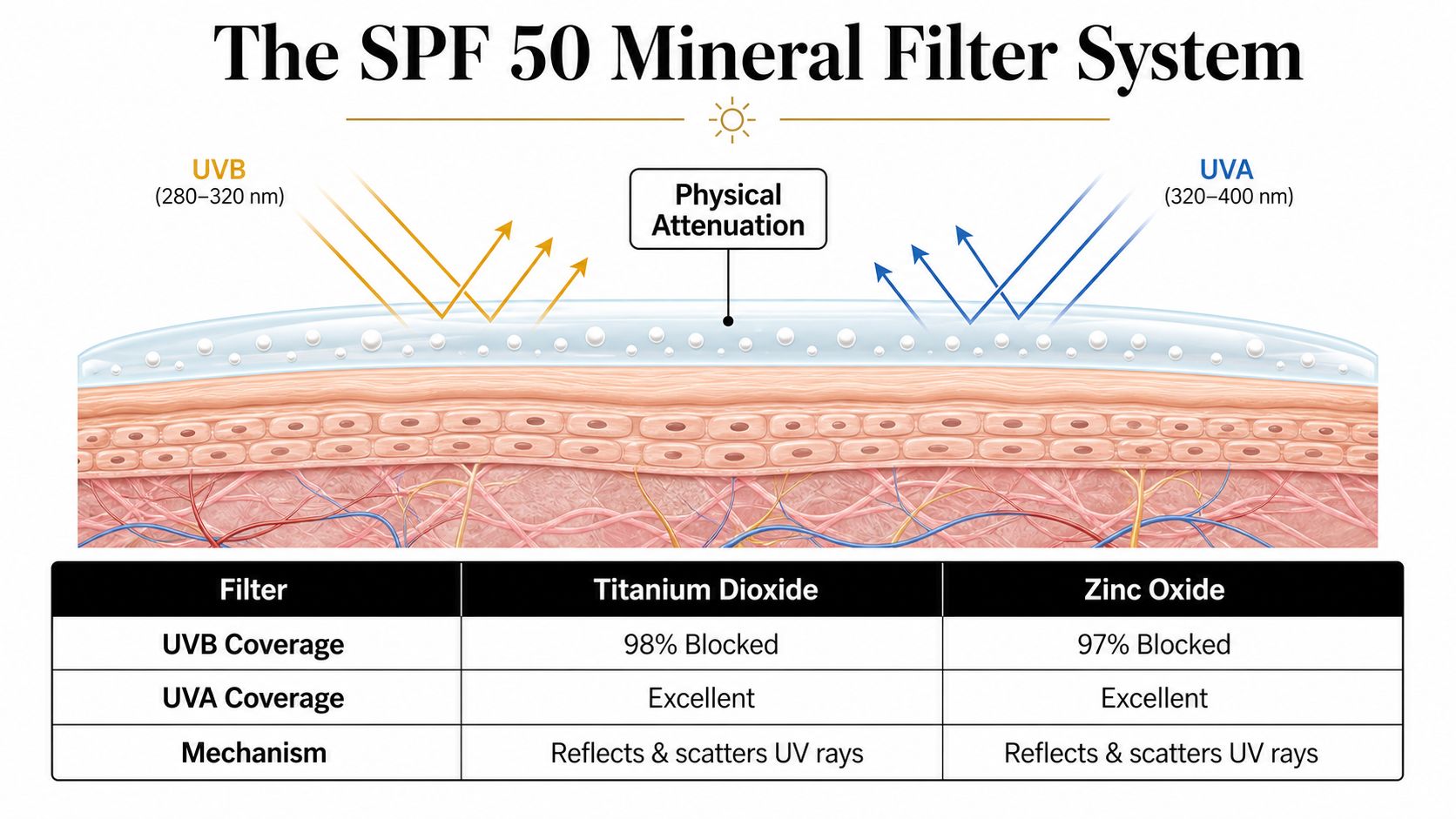
The SPF story is what separates this product from ordinary complexion make-up. IT CC Cream uses titanium dioxide and zinc oxide, two mineral filters that protect by reflecting and scattering UV radiation rather than relying on chemical absorption. For a buyer, that means the protection system is built around a physical filter base, which many customers associate with a steadier feel in daily wear than a purely chemical approach. Mineral filter breakdown
What SPF 50 means in real terms
The SPF 50 claim corresponds to blocking about 98% of UVB rays. That is strong daily photoprotection, but it does not turn a complexion product into a full replacement for dedicated sunscreen during outdoor exposure. The retail message should stay precise, this is a high-protection base, not a permission slip to ignore proper sun habits. SPF 50 and filter system
For Swiss customers, the context is easy to explain. Alpine light, reflective surfaces, commuting, and long daylight hours all raise exposure. A mineral product like this makes sense for people who want broad-spectrum protection built into make-up, especially if they dislike the feel of many chemical UV filters or want a formula that behaves predictably under foundation-like wear.
Where it fits in a Swiss routine
Use it as daily incidental protection when a customer is mostly indoors, commuting, or moving between short outdoor exposures. Do not position it as the only sun defence for hiking, terrace lunches that run long, or mountain trips. The difference is straightforward. A base layer can cover routine city life, but a day with sustained sun needs a dedicated sunscreen strategy.
Bottom line: SPF in make-up helps, but it is not the same as a deliberate sunscreen routine.
A helpful practical resource on reapplying sunscreen correctly makes the same point clearly, especially for people wearing make-up during the day, and it is worth keeping on hand for staff education and customer advice. reapplying sunscreen correctly
Ingredient Breakdown and What the Actives Do
The formula is busy, and that is deliberate. A 58-ingredient complexion product gives the brand room to build hydration, slip, coverage, and a skin-care feel rather than a bare-minimum pigment base. That level of complexity is one reason the product sits in the premium hybrid category instead of the minimalist one. Ingredient list analysis
For a Swiss buyer, that matters because this is not just a tinted base with sunscreen attached. It behaves more like a hybrid SKU, part SPF, part complexion product, part day cream substitute for shoppers who want fewer steps in the morning.
What the main actives are doing
Niacinamide supports the barrier and helps the skin look more even over time. Hyaluronic acid adds hydration and improves how the formula sits on the skin under make-up. The peptide pair identified in ingredient analysis, Palmitoyl Tripeptide-1 and Palmitoyl Tetrapeptide-7, gives the formula a more treatment-led profile than a simple colour corrector would have. Vitamin E contributes antioxidant support, while snail mucin pushes the product further into skin-treatment territory.
Ingredient breakdown and actives
That combination is useful to explain in plain language. The actives do not replace a serum or a proper treatment routine, but they do change how the product wears. Skin feels less stripped, the finish looks less flat, and dryness is less likely to show through makeup. In cold, dry weather, that practical difference can matter more than a long ingredient story.
How to explain it at the counter
A buyer or advisor does not need to recite every ingredient. A clearer explanation is straightforward:
- Hydration support: hyaluronic acid helps the skin feel less parched under make-up.
- Tone and barrier support: niacinamide suits customers who want a more balanced look.
- Anti-ageing positioning: the peptide pair gives the formula a more treatment-led profile.
- Comfort and finish: vitamin E and snail mucin round out the skin-feel story.
Practical rule: if a customer wants coverage but says foundation makes skin look flat, this ingredient profile explains part of the appeal.
Sensitive-skin shoppers may read the dense formula in different ways. Some will value the multi-functional design, while others will prefer a shorter, more minimalist INCI. For a Swiss assortment, that is a useful retail judgement call, not an automatic win for every shopper.
Shade Range, Coverage, and Finish
Coverage is where CC creams usually overpromise, then disappoint. IT CC Cream does better than most because the range expanded into original, illuminating, and matte variants, with a 12-shade matte version and 14 shades across the broader lineup. That gives a buyer enough range to merchandise by skin type rather than treating the product as a one-look wonder. Video review of the range
Which variant suits which customer
The formula is described as offering medium-to-full coverage, which is exactly where it becomes commercially useful. It can camouflage redness and uneven tone without forcing everyone into the visual weight of a classic foundation. That makes it especially relevant for customers who want one product for school-run mornings, office days, and travel. Coverage and shade range video review
| IT CC Cream Variant Comparison | Coverage | Finish | Shade Count | Best For |
|---|---|---|---|---|
| Original | Medium-to-full | Natural | Part of the 14-shade range | General everyday wear |
| Illuminating | Medium-to-full | Radiant | Part of the 14-shade range | Dry or mature skin |
| Matte | Medium-to-full | Matte | 12 shades | Oily or combination skin |
How to match the right customer
Swiss skin tones are not one-size-fits-all. Very fair complexions often want a shade that doesn't oxidise into orange. Deeper tones, especially in more mixed urban and Ticino-facing retail catchments, need enough depth in the range to avoid a chalky mismatch. The practical advice is to treat undertone as seriously as depth.
For dry or mature skin, the illuminating version is usually the better first recommendation because it softens the look of flatness. For oily or combination skin, the matte version is the more credible shelf option, especially in warmer months. If a customer wants the safest all-purpose pick, the original sits in the middle.
Counter reality: shade match matters more than the claim on the front of the box. A good CC cream still gets rejected fast if the undertone is wrong.
Application Routine That Actually Works
Online advice on whether to moisturise first is messy because different creators are trying to fix different problems. Some want better adhesion, others want comfort. The practical Swiss answer is balanced, use a lightweight moisturiser, let it absorb, then apply IT CC Cream in thin layers. That gives the product a smooth base without drowning the mineral film.
A routine that holds up
Start with a clean face. Apply a light moisturiser if your skin needs it, then wait two to three minutes so it can settle before make-up goes on. Use fingertips for speed or a damp sponge for a softer finish, then build coverage in thin layers rather than one thick application. That reduces streaking and keeps the surface from looking overworked.
A slightly damp sponge helps blend the product, but very wet skin can push the formula around and trigger pilling. That matters in winter, when heated indoor air and dry outdoor air can make the complexion feel tight by midday. In summer, the same routine stays useful, but a lighter hand is usually enough.
Small changes that improve wear
- Layer lightly first: one thin pass often looks more natural than a heavy initial application.
- Let moisturiser settle: rushing the base invites separation.
- Set selectively: a translucent mineral powder can reduce shine without flattening the finish.
- Avoid over-rubbing: pressing the product in preserves the coverage better than dragging it.
The formula also behaves differently depending on what the customer is wearing over and under it. Scarf friction, mask contact, and heated indoor air can all affect how long the finish stays pristine. A buyer should frame this as a wear product that benefits from a sensible prep step, not as a slap-it-on-and-forget-it cream.
Best advice for the counter: tell customers to treat it like a skin-tinting base with SPF, not like a thick foundation they can smear on in one move.
Does IT CC Cream Replace Your Daily Sunscreen
Can IT CC Cream with SPF 50 stand in for your daily sunscreen? In a Swiss retail setting, the honest answer is no, at least not as the only line of defence. It works as a hybrid complexion product, and that makes it useful, but alpine commutes, terrace lunches, bright reflective snow, and longer outdoor days still call for a dedicated broad-spectrum sunscreen underneath.
The rule Swiss customers need
Make-up with SPF should be treated as a support layer, not the whole sun routine. That matters whenever the customer is outside for long periods, sweating, touching the face, or moving between strong daylight and reflected UV. The first SPF application can help, but ongoing exposure still requires reapplying sunscreen correctly if the wearer expects real protection through the day.
The cleanest counter explanation is simple, use a dedicated sunscreen first, then apply IT CC Cream if the customer wants coverage on top. That sequence keeps the sun step clear and puts the complexion product where it belongs, as the finishing layer. If a shopper plans to stay outdoors, staff should frame the make-up as part of the routine, not as a replacement for it. That is easier to explain and easier to defend.
How to layer without making a mess
Let the sunscreen settle before the CC cream goes on. Thin layers work better than heavy rubbing, because friction can move both the base SPF and the complexion formula. If pilling is a concern, the first fixes are usually a lighter moisturiser underneath and enough drying time before the next step.
Daywear advice should stay practical. A make-up SPF product can support the routine, but it does not change the need for sensible sun behaviour outdoors, especially where UV exposure is stronger or lasts longer. For a Swiss buyer, the right shelf message is clear. This product can simplify a morning routine, but it does not replace the separate sunscreen step when the customer needs serious daytime protection.
Positioning IT CC Cream in a Swiss Clean-Beauty Assortment
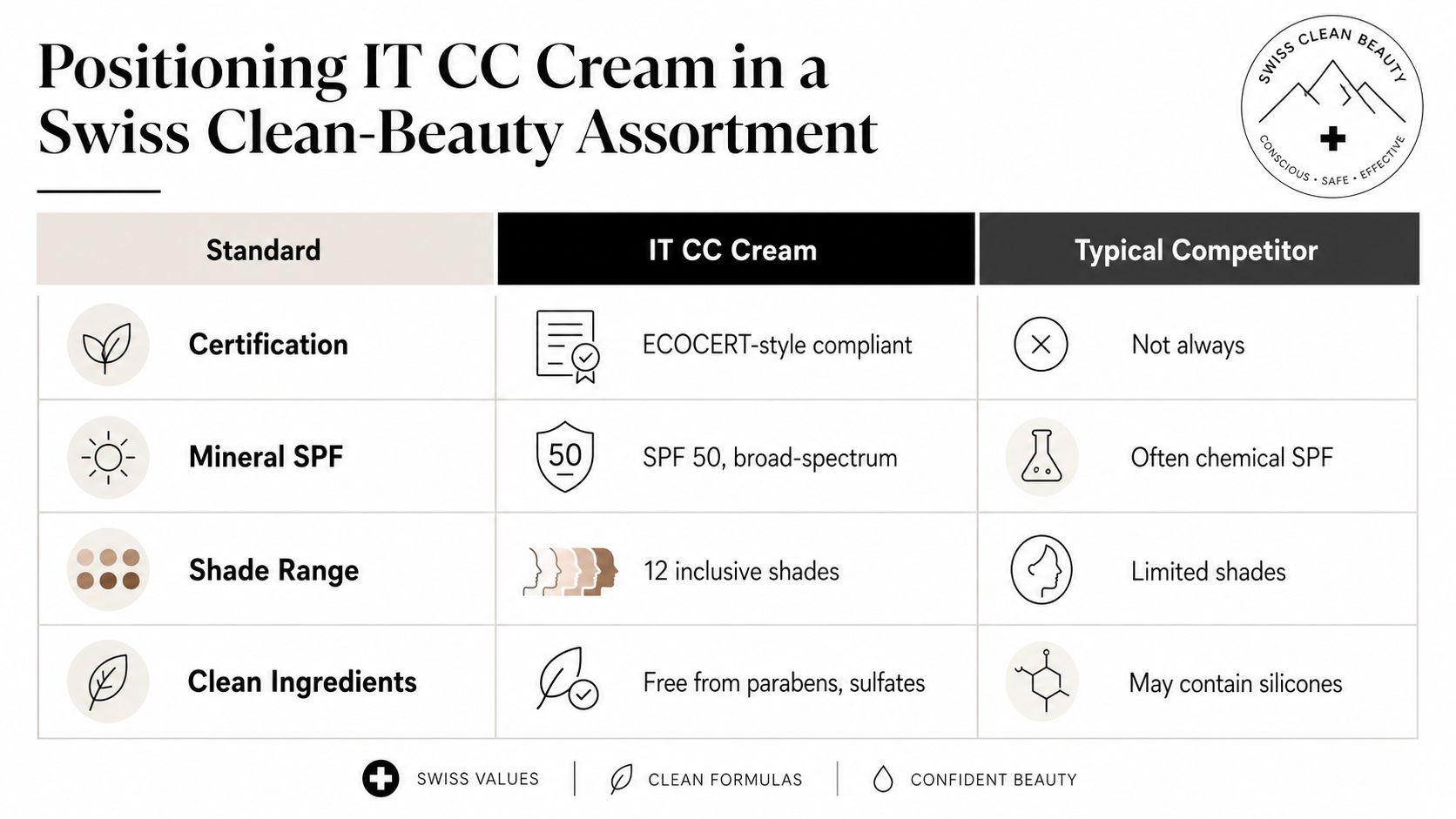
This product can earn shelf space, but not for the same reason a certified natural balm does. IT CC Cream is a performance-led hybrid, while Swiss clean-beauty assortments often lean on ingredient transparency, ethical sourcing, and certified natural positioning. Those are different purchase triggers, and a good buyer should know which lane each SKU occupies.
Where it fits beside natural and ethical brands
A clean-beauty assortment built around brands such as Fushi, JULISIS, Abahna, Little Butterfly London, Les Thermes Marins de Saint-Malo, and Egyptian Magic tends to emphasise botanical credibility, spa sensoriality, and ethical sourcing. IT CC Cream sits beside that mix as the specialist complexion SKU for customers who want coverage plus SPF plus treatment ingredients in one product. That makes it complementary, not redundant.
The decision is less about whether it is “clean” in a generic sense and more about whether it solves a retail problem. Does the customer need a hybrid base that reduces steps? Does your counter need a premium make-up-SPF crossover to widen basket size? If yes, it has a clear role.
What to check before listing it
- Customer demand: do shoppers ask for high-coverage base products with SPF built in?
- Shade breadth: can your catchment support a range that includes different undertones?
- Merchandising logic: does it sit near complexion care, not just foundation?
- Staff confidence: can advisors explain why it is not a replacement for all sunscreen use?
For stores that also need trade support around premium skincare assortments, this is the kind of product where category advice matters as much as the SKU itself. If your team wants practical help with assortment planning and retail presentation, customer support for skincare stores is the kind of resource that can make the hybrid category easier to manage.
Buyer Takeaways and Practical FAQs
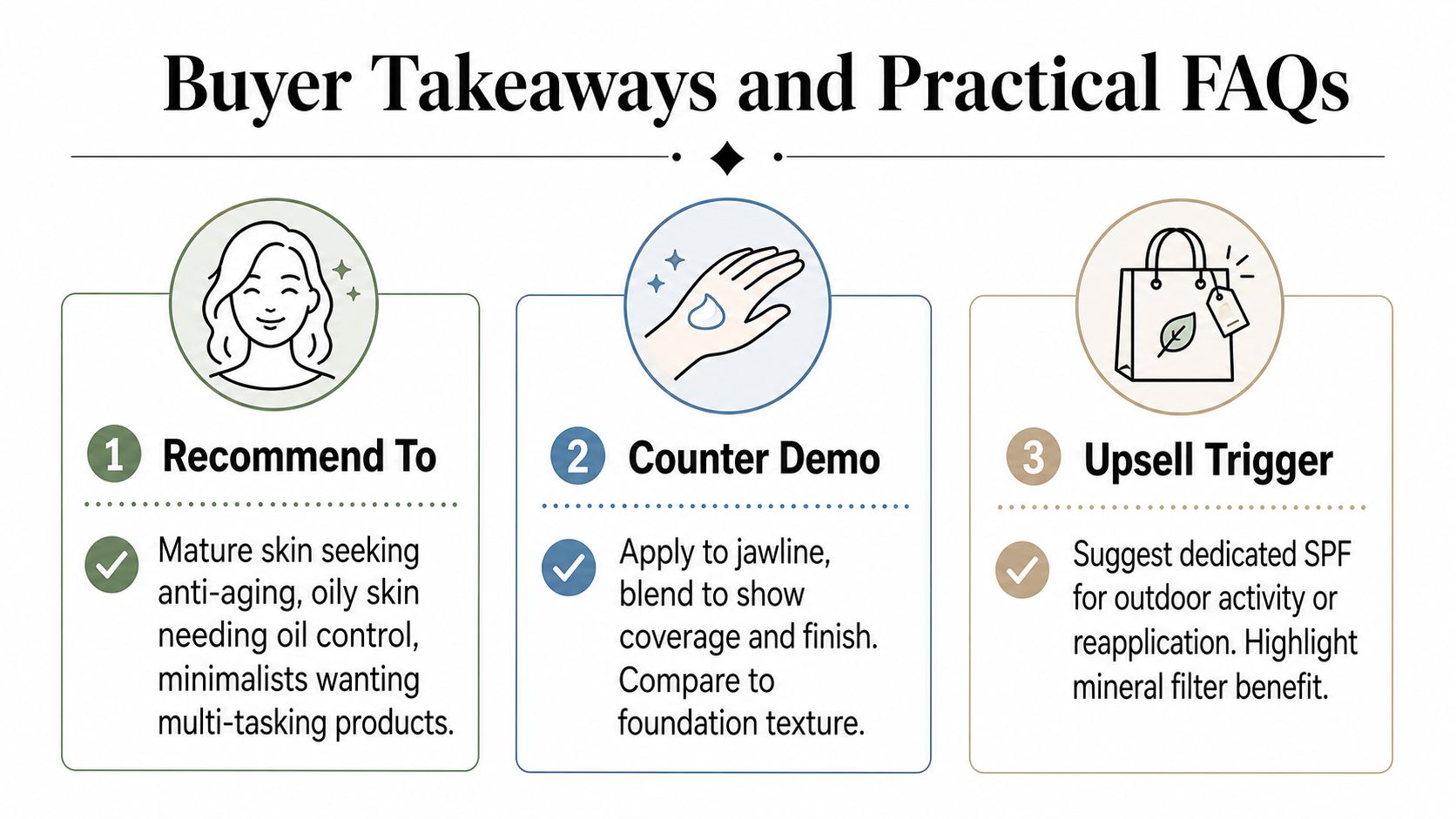
IT CC Cream makes sense for three retail reasons. First, it gives you a hybrid SPF-makeup-skin-care SKU that answers the customer who wants less routine friction. Second, it offers enough shade and finish variation to serve different skin profiles. Third, it gives staff a credible story for customers who care about both coverage and daily sun protection.
Three questions a buyer should answer
- Who is it for? Customers who want multi-tasking complexion care, especially mature, dry, or make-up-minimalist shoppers.
- How should it be demonstrated? Apply it on the jawline, blend it into the neck, and show the finish against a regular foundation.
- When should you upsell sunscreen? Any time the customer mentions outdoor activity, all-day wear, or wants reliable reapplication.
Two FAQs that matter
Is it suitable for sensitive or rosacea-prone skin? Not automatically. The formula is feature-rich and may suit some customers well, but sensitive-skin shoppers usually need a cautious patch test and a frank discussion about ingredient tolerance.
How does it compare cost-per-wear with separate SPF and foundation? It can be efficient for people who use one product most days, because it consolidates steps. It's less compelling for customers who need different products for different occasions, especially if they already own a dedicated SPF and a foundation they love.
If you're reviewing hybrid complexion products for your next assortment meeting, visit beautysecrets.agency to see how a Swiss-focused clean-beauty partner frames premium skincare and make-up for retail. For a fast category decision, use IT CC Cream as the test case for whether your shelves can support performance-driven hybrids alongside natural and ethically sourced staples.