
A Swiss spa owner usually reaches this point in the season at the same time each year. The treatment menu is polished, retail shelves are curated, and the guest journey works. Yet something still feels too familiar. Clients want luxury, but they also want proof of values, a stronger sense of place, and wellness that feels integrated rather than added on.
That's where Aleenta Phuket Resort & Spa becomes useful. Not just as a holiday property, but as a live business case for where premium wellness hospitality is heading. It shows what happens when architecture, service design, food, spa programming, and sustainability are organised around one coherent idea instead of operating as separate departments.
For Swiss spa operators, beauty buyers, and wellness consultants, the property matters because it solves a tension many upscale businesses still struggle with. Guests want indulgence without wasteful excess. They want privacy without feeling disconnected. They want health, but not in a clinical way that strips out pleasure. Aleenta handles those trade-offs with more discipline than most resort brands.
An Introduction to Conscious Luxury
A lot of luxury properties still split themselves in two. One half sells aspiration through visuals. The other half delivers wellness through a treatment list, a yoga timetable, and a few sustainability statements. Guests notice the gap immediately. The room feels one way, the restaurant another, and the spa another again.
Aleenta Phuket Resort & Spa is interesting because it doesn't rely on that fragmented model. The concept reads as conscious luxury in operational terms. The environment is calm, beachfront, and high-end, but the value proposition also leans on wellness, sustainability, and a sense of measured restraint. That's a different proposition from loud, status-first hospitality.
Why this matters to Swiss operators
In the Swiss market, premium wellness businesses are under pressure from both sides. Clients expect stronger treatment outcomes and better ingredient stories. At the same time, they're more alert to waste, sourcing, and whether a brand's ethical claims hold up in practice.
Aleenta offers a useful lens because it doesn't treat these as separate messages. It packages them into one guest promise. Luxury is present in the setting, space, and service rhythm. Responsibility is present in the philosophy. The result is a model spa owners can study with clear commercial questions in mind:
- How does a property make sustainability feel premium rather than restrictive?
- How does wellness move beyond the treatment room and into accommodation, food, and pace of stay?
- How do you communicate privacy accurately, especially when guest expectations are high?
Practical rule: The strongest wellness brands don't add meaning after the product is built. They build the product so meaning is obvious on arrival.
What Aleenta gets right as a benchmark
The property's relevance isn't just aesthetic. It sits in a part of the market where guest trust matters. If a resort claims tranquillity, privacy, and wellness, every operational detail has to support that promise. Room configuration, transfer expectations, culinary positioning, and therapist delivery all become brand signals.
For anyone advising spas, hotels, pharmacies, or beauty retailers, Aleenta is worth studying because it shows how a luxury business can be selective rather than maximalist. That restraint often reads better to affluent wellness consumers than feature overload.
The Aleenta Phuket Property and Philosophy
A guest books “Phuket” expecting island buzz, beach clubs, and easy movement between hotspots. Then the transfer heads north, crosses into Phang Nga, and the whole stay is judged through a different lens. For operators, that gap between label and lived experience matters because expectation management starts before check-in.
Aleenta's address is part of its positioning. The resort sits on Natai Beach in Phang Nga rather than on Phuket island itself, and the quieter setting supports the brand promise far better than a busier west-coast Phuket location would. For Swiss wellness professionals, this is a useful case study in honest premiumisation. A property can use destination recognition to attract demand, but the on-site experience has to justify the choice with calm, space, and a clear sense of retreat.
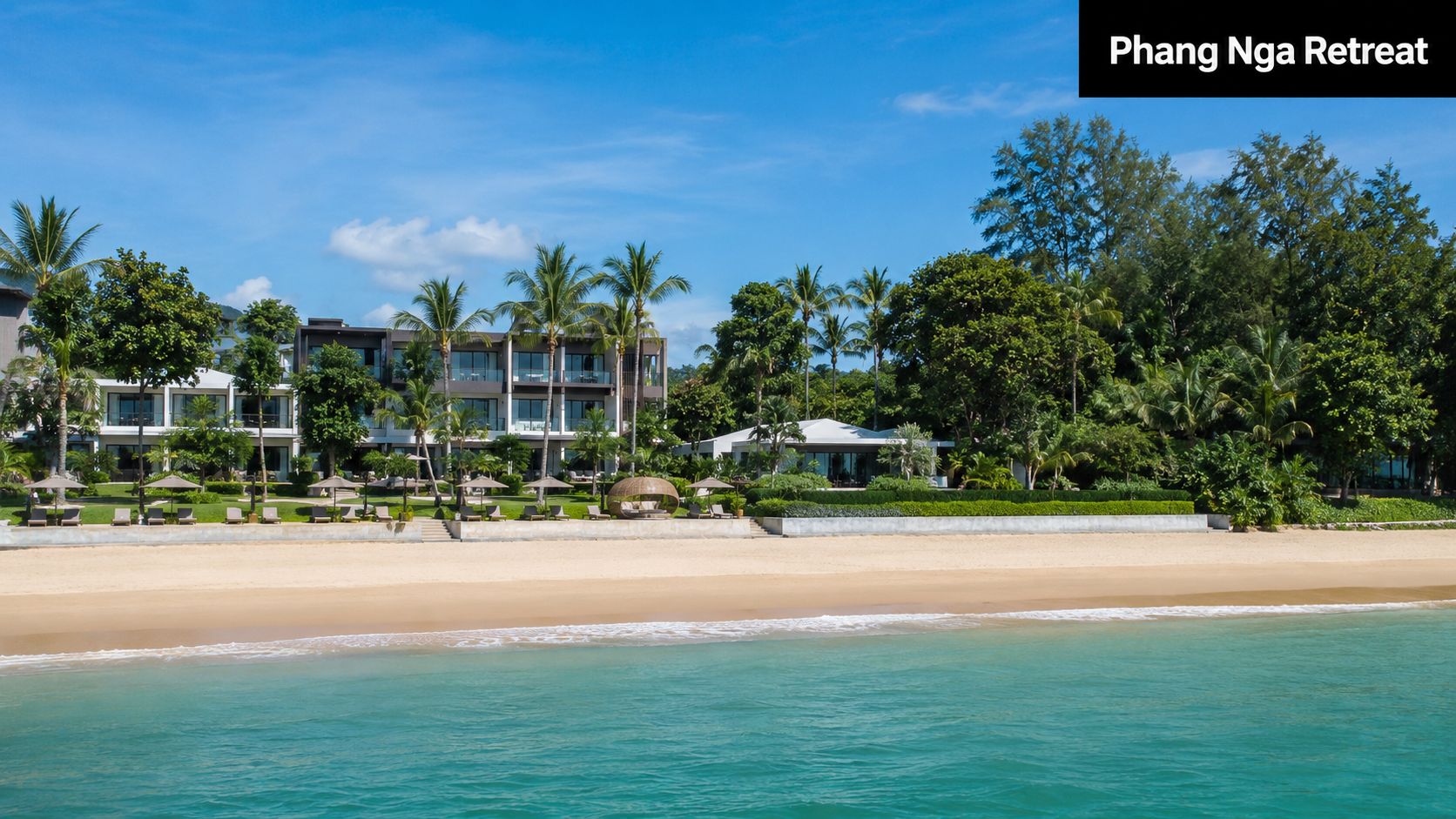
Boutique scale with operational upside
The property's relatively contained size is one of its strongest commercial decisions. Smaller luxury resorts can personalise effectively, but only if they resist the temptation to overprogram the guest journey. Aleenta appears to use scale well. The atmosphere stays controlled, service can remain attentive, and wellness does not feel bolted onto a conventional beach holiday format.
That matters because high-value wellness guests buy rhythm as much as facilities. They notice whether arrival feels calm, whether public areas stay quiet enough to support recovery, and whether teams can adapt service without turning every request into a process. Larger resorts often struggle here. They may offer more outlets, but the sense of restoration weakens once logistics start to dominate the stay.
The presence of private spa residences adds another layer to the model. For consultants and retail buyers, this is more interesting than a standard room inventory extension because it shifts wellness from a bookable treatment into a living environment. That distinction has partnership relevance. It suggests opportunities for longer-stay programmes, in-room wellness rituals, targeted retail, and practitioner-led residencies rather than one-off spa transactions.
| Element | What it signals |
|---|---|
| Natai Beach setting | Quiet positioning and lower environmental noise |
| Leading Hotels of the World membership | Alignment with international luxury service standards |
| Boutique room count | Better odds of tailored pacing and guest recognition |
| Private spa residences | Wellness built into the accommodation strategy |
Design that supports behaviour
Aleenta's physical planning does useful work for the brand. According to Leading Hotels of the World's Aleenta Phuket listing, the resort is set directly on Natai Beach and includes suites, villas, and residences designed around space, light, and coastal views. For a wellness-led property, that is not just aesthetic packaging. It changes how guests use time.
Rooms with strong natural light, open sightlines, and direct visual contact with the sea tend to slow guest behaviour without staff intervention. People stay in the room longer, protect downtime more carefully, and arrive at treatments in a better state. Good wellness design reduces operational strain because the environment does part of the regulation work that some brands try to force through scripted service language.
Many luxury wellness concepts fail. They spend heavily on spa fit-out, then leave accommodation emotionally neutral. Aleenta's stronger move is to make the room part of the recovery setting.
Philosophy only works when operations carry it
The Ayurah philosophy is credible because it appears across the property rather than sitting in brand copy alone. That is the main lesson here. A wellness concept gains commercial value when architecture, service style, food, and accommodation all point in the same direction.
For Swiss operators, the transferable insight is restraint. Aleenta does not need to signal wellness through excess. It uses place, privacy, and consistency to make the promise believable. That approach travels well. A medical spa, alpine retreat, urban day spa, or premium beauty retailer can all apply the same principle. Build the concept into the environment, the service sequence, and the product mix. Do not rely on messaging to do work the operation has not already done.
Decoding the Accommodation Private Pools and Ocean Views
A couple books a “pool suite” expecting total seclusion, then discovers on arrival that the water is shared with the next unit. In luxury wellness, that single mismatch can undo trust faster than any weak treatment menu. At Aleenta Phuket Resort & Spa, the accommodation story is strong, but it only works when advisors and partners describe the inventory with precision.
The key distinction is simple. Not every category associated with a pool delivers full private-pool use. Some room types, including the Ocean View Loft, may involve shared pool access rather than a completely self-contained pool, as noted in Tripadvisor's room feature information for Aleenta Phuket.

That detail matters commercially.
For a general leisure guest, semi-private pool access may be acceptable if the architecture still feels quiet and visually open. For wellness-led clients, honeymooners, founders on retreat, or guests booking recovery time with minimal social contact, the difference between shared and private is part of the product itself. Swiss spa operators should pay attention here, because the lesson is transferable far beyond resort sales. Premium clients rarely object to trade-offs when the trade-off is clearly explained. They object to ambiguity.
I assess room categories by behavioural fit, not brochure language. A large room with a beautiful outlook can still underperform if the guest expected silence, full visual privacy, or the option to receive in-room treatments without feeling observed. Aleenta's stronger categories solve that well. The weaker point is naming clarity, because pool-oriented terminology can compress very different privacy levels into similar-sounding offers.
A more useful advisory framework is to sort the inventory into privacy tiers.
Privacy-first stays
Recommend categories with clearly self-contained pools and stronger separation from neighbouring units. This is the safest option for romance-led bookings, discreet VIP travel, or wellness guests who plan to spend meaningful daytime hours in-room.View-first stays
Ocean-facing categories can still perform well for guests who prioritise architecture, light, and the emotional effect of the sea over complete seclusion.Shared-experience stays
Larger residences make sense for families, friend groups, or hosted retreats where communal space matters more than individual withdrawal.
For spa consultants and retail partners, this is more than a reservation detail. It is a positioning exercise. If a property sells restoration, sleep quality, intimacy, or personalised care, the room category has to support that promise in practical terms.
These are the questions worth asking before recommending a booking:
| Question | Why it matters |
|---|---|
| Is the pool fully private or shared? | It prevents the clearest expectation gap in the booking journey |
| How exposed is the outdoor area to neighbouring sightlines? | Visual privacy often matters as much as physical exclusivity |
| Is the outlook truly ocean-facing, or more partial than direct? | View quality changes the perceived value of the rate |
| Will the guest spend active daytime hours in the room? | Longer in-room use increases the importance of privacy and layout |
| Is the stay built around romance, recovery, work, or family time? | The booking purpose should determine the room type |
This level of specificity also affects online reputation. Properties that sell room categories accurately tend to generate fewer preventable complaints and stronger post-stay sentiment, which aligns with wider strategies to boost guest reviews.
The business case is clear. Aleenta's room mix gives the resort range, and range is commercially useful. But range only creates value when the sales story is as disciplined as the design story. For Swiss wellness professionals, that is the key takeaway from the accommodation model. Define privacy in operational terms, map each category to a guest use case, and train every sales or front-desk team member to describe the difference without softening it.
The Ayurah Wellness and Spa Experience
The wellness value at Aleenta makes the most sense when viewed as a system, not a spa menu. The Ayurah concept ties together accommodation, treatment, rest, movement, and the overall emotional pace of the stay. That's more advanced than many resort spas that still operate as a stand-alone revenue centre attached to a hotel.
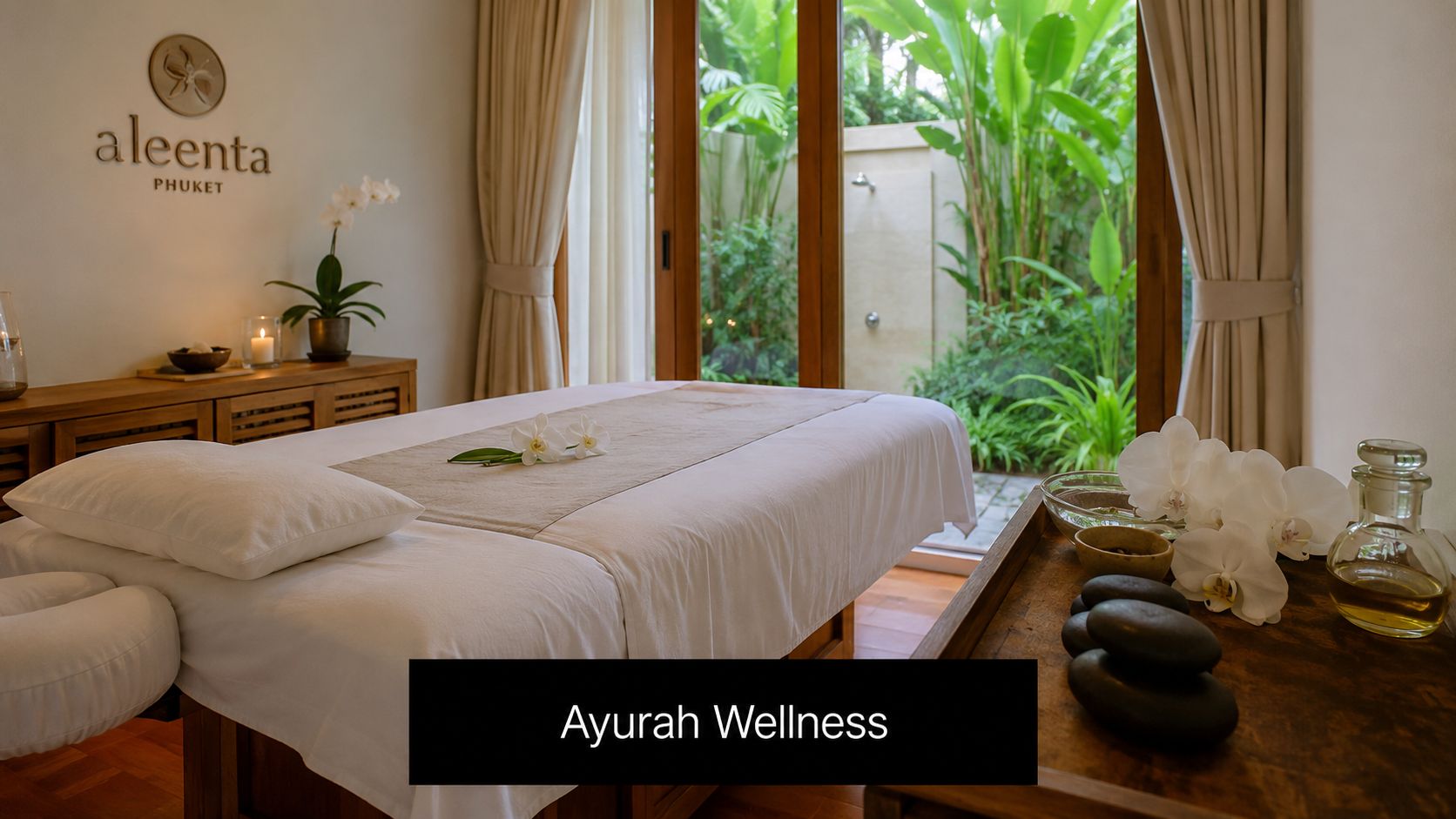
For wellness professionals, that distinction matters. A treatment can be excellent and still feel isolated from the rest of the guest journey. Aleenta's stronger move is to frame wellness as the organising logic of the stay.
Wellness that extends beyond the treatment room
The presence of private spa residences is especially relevant here. It suggests a model where guests can sleep, move, and receive personalised pampering within a more secluded environment. That's valuable because many high-end clients don't want to “go to the spa” in the traditional sense every time. They want wellness to come to them, both physically and psychologically.
This is the same shift many top European spas are now trying to achieve. The future isn't only more cabins or more devices. It's better integration between hospitality and treatment delivery.
A few operational ideas stand out:
- Residential wellness creates emotional ease. Guests don't have to keep switching contexts between private recovery and public service areas.
- Personalisation works better when practitioners understand how the guest is living during the stay, not only how they present for one appointment.
- Wellness becomes habit-forming when it shapes the day's rhythm, not only a booked hour.
What Swiss spa operators can borrow
Swiss spa owners don't need a beach resort to apply this logic. They can adapt the same structure in smaller ways.
One route is to design in-suite ritual extensions. That might mean preparing a post-treatment bathing sequence, a sleep ritual, or a quiet movement practice that the guest continues privately. Another is to tighten the relationship between treatment outcomes and retail recommendation, so the guest leaves with a credible continuation plan rather than a generic product push.
Guest perception also depends heavily on consistency. Teams that want stronger sentiment after treatment should study practical service systems such as strategies to boost guest reviews, particularly where feedback loops and expectation management affect premium hospitality.
Luxury wellness fails when the treatment is memorable but the surrounding details feel improvised.
Programming and the role of atmosphere
At Aleenta, the Ayurah philosophy gives the spa narrative a broader frame. That matters because affluent guests increasingly respond to philosophies that are visible in action. They don't want abstract language. They want to feel that the setting, service style, and treatment journey belong to the same world.
For a quick sense of the property atmosphere, this video helps contextualise the resort's tone and guest environment:
For product-driven businesses, the biggest lesson is curation. The spa experience works best when the textures, scents, ingredients, and protocols support one coherent mood. That's where many otherwise strong operations still lose precision.
A Commitment to Sustainability and Ethical Sourcing
A luxury wellness resort reveals its standards fastest in the details guests do not always photograph. Ingredient provenance, waste discipline, transfer logic, and sourcing choices shape trust long before anyone asks about ESG language. Aleenta is useful as a case study because its sustainability position is presented as part of operating quality, not as a side claim attached to marketing.
The property ties this stance to the Ayurah philosophy, which connects personal wellbeing with environmental responsibility. For spa operators and beauty buyers, that matters. A named philosophy gives procurement, menu design, and guest communication one consistent frame, which is often where premium wellness brands either gain credibility or lose it.
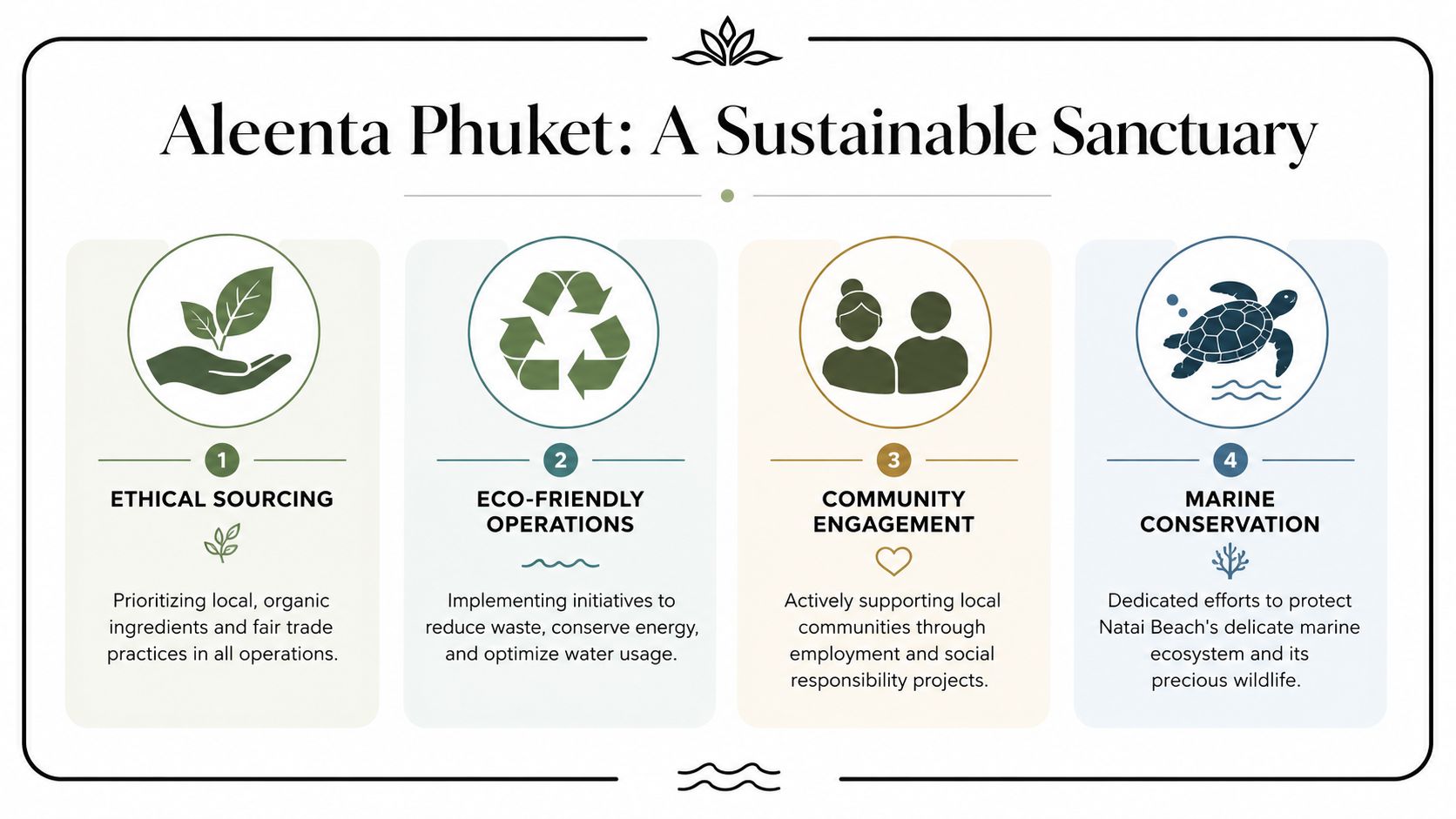
Why this strengthens the luxury proposition
In the upper tier of hospitality, sustainability only adds value when it improves the guest's reading of quality. Aleenta largely succeeds on that point because the ethical layer supports the wider promise of restoration, privacy, and considered living. Guests who pay for a wellness stay increasingly expect the brand's food, treatments, amenities, and environmental choices to point in the same direction.
That is especially relevant for Swiss businesses. Clients in Switzerland tend to examine origin, formulation standards, and supplier ethics with more scrutiny than many operators assume. A property like Aleenta shows that sustainability can strengthen desire if it is expressed through better materials, better curation, and less visible waste.
What wellness operators should study
Several operational lessons stand out:
Philosophy needs operational proof
A sustainability narrative only holds if it shows up in supplier selection, amenity choices, housekeeping practices, and treatment materials.Recognition helps after the fundamentals are in place
Third-party visibility can reinforce credibility, but it does not replace disciplined execution on property.Food sourcing affects spa credibility
Guests do not separate the restaurant from the wellness proposition as neatly as operators do. If the culinary offer feels disconnected from the health message, the brand story weakens.Ethics must still feel pleasurable
The trade-off is real. If sustainable choices make the stay feel austere, premium guests notice immediately. The better model is restraint without deprivation.
Sustainability works best in luxury hospitality when guests experience higher standards, not lower comfort.
Transport deserves more attention than many wellness properties give it. A retreat can speak persuasively about ecological integrity and still ignore one of the most visible parts of the guest journey. Teams reviewing their arrival experience should examine innovative green travel alternatives as part of transfer planning, local mobility, and partner selection.
For Swiss wellness professionals, the practical takeaway is straightforward. Treat sustainability as an operating system. It should shape sourcing, staff language, retail logic, and service design. Aleenta offers a strong reference point because its ethical choices appear to support the premium experience rather than dilute it.
Partnership Angles for Swiss Wellness Professionals
Aleenta Phuket Resort & Spa offers more than inspiration. It provides a framework that Swiss wellness businesses can adapt without trying to imitate the property directly. The value lies in the underlying mechanics: integrated wellness, place-sensitive luxury, and careful expectation design.
Where the model translates well
The most transferable idea is wellness as an environment, not just a service. Swiss spas can interpret that in ways that fit an urban hotel, alpine retreat, pharmacy concept room, or medical aesthetics practice.
A few partnership-style applications stand out:
Residential ritual thinking
Create in-room or at-home continuation rituals tied to treatment outcomes. A guest facial shouldn't end at checkout. It should move into a guided home protocol with clear sensory continuity.Destination-led treatment curation
Build seasonal menus inspired by one coherent place or philosophy rather than offering a generic list of massages, facials, and scrubs. This gives the treatment menu stronger identity.Private wellness formats
Aleenta's private spa residence concept translates well into Swiss settings through exclusive treatment suites, half-day private recovery spaces, or couple-focused rituals with extended dwell time.
Useful concepts for product alignment
For beauty retailers and spa buyers, Aleenta's case suggests a stronger way to merchandise premium wellness. Don't group products only by category. Group them by ritual logic.
That could mean:
| Concept | Commercial use |
|---|---|
| Bathing ritual | Pair aromatic body care with home relaxation accessories |
| Fresh oil nourishment | Position pressed oils and herbal blends as part of recovery and massage extension |
| Marine sensoriality | Build body and facial experiences around sea-derived textures and spa ambience |
| Mother and baby calm | Create a protected niche with certified, trust-led premium care |
What works and what doesn't
What works is borrowing Aleenta's coherence. A Swiss operator can build a cleaner, more premium guest journey by linking treatment, retail, and relaxation spaces under one disciplined concept.
What doesn't work is copying “wellness luxury” as a visual style while keeping disconnected operations behind the scenes. If the therapist language, product assortment, scent identity, and relaxation area all tell different stories, guests feel the mismatch immediately.
The partnership lesson is straightforward. Strong wellness brands don't just distribute products or sell treatments. They create an immersive logic that clients can understand, trust, and re-enter.
Your Practical Planning Guide to Aleenta Phuket
A booking call for Aleenta usually succeeds or fails in the first two minutes. If the advisor presents it as “Phuket with spa added on,” expectation drift starts immediately. If they present it as a quiet wellness-led retreat near Phuket airport, but outside Phuket's busier tourism circuits, the fit becomes much clearer.
That distinction matters for guest satisfaction, and it also matters for operators studying the property as a luxury wellness case. Aleenta sells deliberate distance, controlled atmosphere, and privacy. Those are operating choices, not incidental features.
Where exactly is Aleenta Phuket Resort & Spa
Aleenta sits in Phang Nga province rather than Phuket, a detail that should be stated early in any sales conversation. The property is still close to the airport, with transfer timing generally manageable for short-haul wellness stays or long-haul guests who want to get into recovery mode quickly after landing, based on this Roomer Travel overview of Aleenta's location and transfer expectations.
For Swiss advisors and wellness buyers, this is a useful positioning lesson. Proximity and remoteness can coexist commercially if the brand frames them properly. Aleenta benefits from airport convenience while protecting the sense of retreat that many luxury wellness properties lose.
Who is it best suited to
The strongest fit is clear. Couples, solo wellness travellers, and privacy-oriented guests tend to value the setting most, especially when the trip objective is rest, treatments, sleep quality, or a short beachfront reset.
Guests looking for nightlife, frequent off-property dining, or dense retail activity may find the location too restrained.
That is not a weakness. It is a filter.
What should advisors clarify before booking
A short pre-booking checklist reduces avoidable disappointment:
Pool privacy expectations
Confirm the exact pool setup attached to the booked category. At this level of pricing, guests often hear “private pool” and assume full visual seclusion.Transfer mindset
Explain that the property prioritises calm over immediate access to central Phuket activity.Stay purpose
Match the booking to the reason for travel. Recovery, reconnection, and low-stimulation downtime fit well. High-energy island itineraries fit less well.
This is one of the clearer business lessons Aleenta offers the wellness sector. Luxury performance does not come from saying yes to every use case. It comes from screening for the right one.
What operational details matter on arrival
Arrival standards shape the first emotional impression of any wellness stay. Guests should know the published check-in and check-out timings before they travel, and advisors should prepare them for a premium boutique rate structure with meaningful differences between room categories, as noted earlier in the article.
For spa operators and hospitality partners, the practical takeaway is broader than rate transparency. Category clarity matters because privacy, view, and pool configuration are not minor details in a wellness booking. They are part of the treatment promise, even before a guest enters the spa.
The strongest bookings happen when tranquillity is sold as a deliberate product choice.
What is the strongest booking advice
Position Aleenta as a refined coastal retreat with a disciplined wellness identity. That attracts the right guest and lowers the risk of post-arrival mismatch.
For Swiss wellness professionals, that is the core case-study value here. The property shows how location, room design, treatment positioning, and atmosphere can support one coherent commercial story. Brands that want stronger guest loyalty should study that coherence closely, then apply it to their own retail mix, spa programming, and pre-arrival communication.
If you're building a more distinctive wellness offer for Swiss retail, spa, pharmacy, or hospitality clients, beautysecrets.agency is a strong partner to know. The agency curates natural, ethically sourced premium beauty and wellness brands that can help turn treatment concepts, clean-beauty positioning, and refined guest rituals into a commercially credible assortment.