You’re probably weighing the same trade-off many Swiss spas, pharmacies, and premium retailers face right now. Clients want results they can see, but they’re also asking harder questions about ingredient origin, skin tolerance, and whether a treatment fits a clean, ethical positioning.
That’s where the hydroxy acid peel becomes more than a treatment menu add-on. Used well, it can anchor a serious skin-renewal category. Used badly, it becomes another overpromised exfoliant with patchy staff confidence and inconsistent outcomes.
I advise businesses on both formulation and compliance, and this is the point I keep returning to. A peel line only works commercially when three things line up at once: the chemistry is sound, the treatment protocol is controlled, and the retail story is credible. In Switzerland, that means translating peel science into a service model that feels precise, safe, and aligned with natural and ethically sourced product curation.
The Evolving Landscape of Professional Skincare
A buyer in Genève reviews two peel ranges that look similar on paper. One offers a long list of acids and bold marketing claims. The other comes with clear consultation logic, treatment steps, recovery guidance, and aftercare that fits a natural, ethically sourced assortment. In practice, the second range is usually the better commercial choice.
For Swiss spas, pharmacies, and premium retailers, a hydroxy acid peel category works best when it is built as a service model, not only a product range. Clients want visible results, but they also ask precise questions about tolerance, ingredient origin, downtime, and whether a treatment belongs in a clean, credible retail environment. Your selection has to answer all of those points at once.
Why this category matters now
Hydroxy acid peels help businesses organise skin renewal in a way that staff can explain and clients can follow. That matters in settings where trust drives repeat visits. A well-curated peel line can support introductory resurfacing, course-based corrective treatments, and home maintenance without turning the shelf into a collection of disconnected exfoliants.
The business value is practical. Peels create a clearer boundary between professional treatment and retail support. They also give teams a more precise language for recommendation, which is often what separates a premium service from a generic facial menu.
Practical rule: The most successful approach treats peels as a complete system of consultation, protocol, aftercare, and merchandising.
What strong operators check before they buy
An acid percentage on the front label tells only part of the story. I advise Swiss partners to assess a peel line the way they would assess a treatment device. Start with control, indication, and support products, then look at brand claims and merchandising.
Ask these questions:
- Who is the line built for? Photoageing, congestion, uneven tone, post-blemish marks, and reactive skin do not need the same peel profile.
- How easy is it to control in cabin? Staff need clear application times, progression steps, and visible stopping points.
- What surrounds the peel? Barrier-supporting aftercare, sun protection, and calming retail products are part of the commercial model.
- Can the team explain the choice clearly? If an adviser cannot explain why one peel suits one client and not another, conversion and compliance both suffer.
At this point, many assortments fail. The products may be acceptable, but the system around them is weak.
Where confusion starts
Terms such as fruit acids, resurfacing acids, clean peels, and medical peels are often used loosely in sales material. For a retailer or spa, that creates buying mistakes. These labels describe very different things. Some refer to chemistry. Some refer to strength. Some are only marketing language.
A useful way to train staff is to separate three layers. First, the acid family. Second, the formulation details such as pH and buffering. Third, the treatment context, meaning whether the product is intended for professional use, home use, or both. Once a team understands those layers, curation becomes more disciplined and safer.
That clarity also helps beautysecrets.agency position peel lines in a way that suits the Swiss market. The strongest offer is not the loudest peel. It is the peel range that fits regulatory expectations, aligns with an ethical sourcing story, and gives businesses a reliable path from consultation to treatment to retail aftercare.
How Hydroxy Acid Peels Renew the Skin
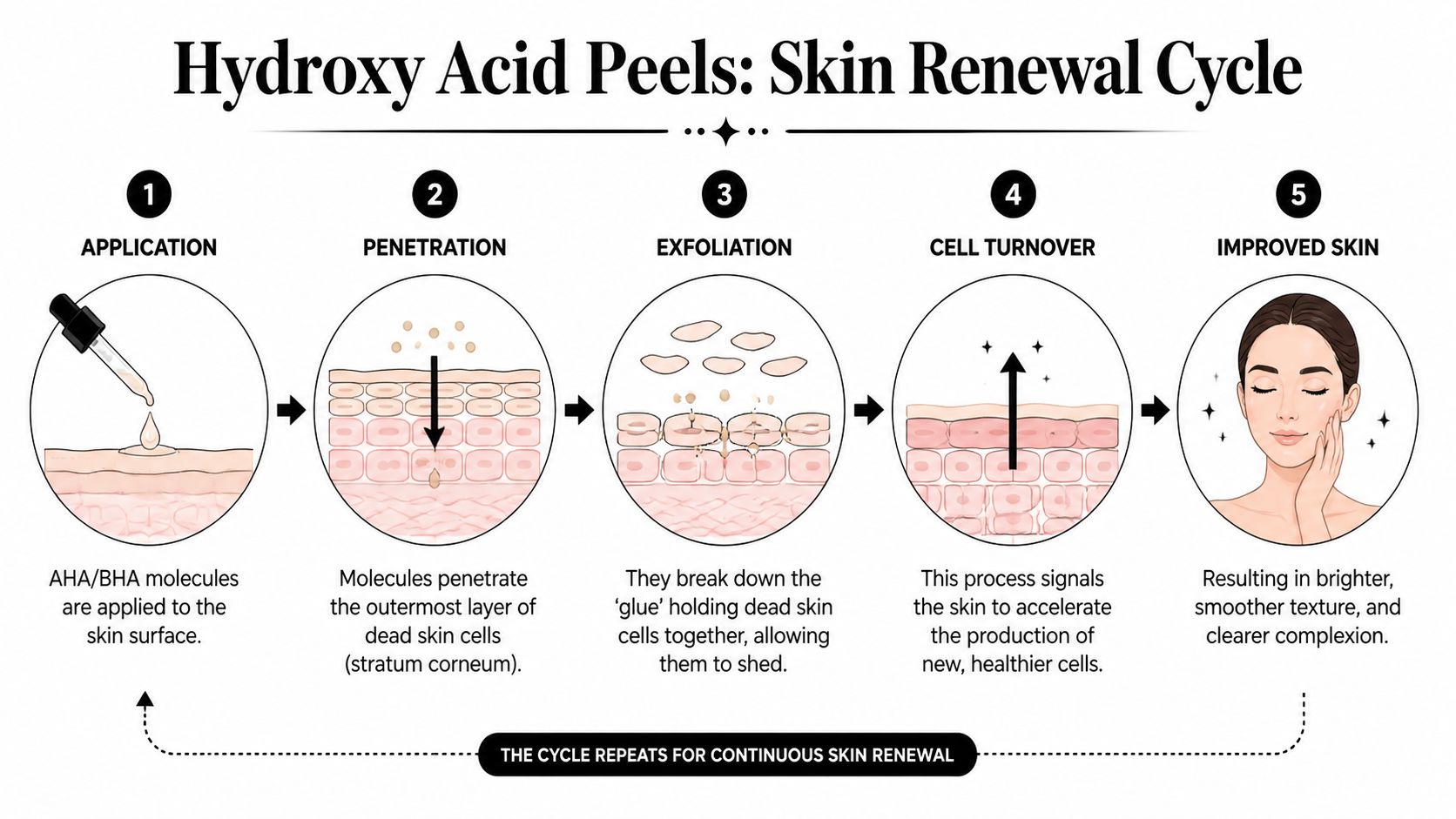
At its simplest, a hydroxy acid peel loosens and removes built-up surface cells. But that simple description hides a useful piece of chemistry.
Think of the outermost skin layer as a wall made of bricks and mortar. The bricks are dead skin cells called corneocytes. The mortar is the material holding them together. A hydroxy acid peel helps dissolve parts of that “mortar”, so the old cells shed more evenly and newer skin can come through with a smoother look.
The three families you need to know
Retailers and spas often bundle all peeling acids together. That creates poor recommendations. The main families behave differently.
| Acid Family | Key Examples | Solubility | Primary Action | Best For |
|---|---|---|---|---|
| AHA | Glycolic acid, lactic acid, mandelic acid | Water-soluble | Surface exfoliation and visible renewal of dull, uneven skin | Texture, pigmentation, photoageing |
| BHA | Salicylic acid | Oil-soluble | Moves into oily areas more easily and helps clear congestion | Oily, blemish-prone skin |
| PHA | Gluconolactone | Generally gentler, slower-penetrating profile | Mild resurfacing with a more comfort-focused approach | Sensitive or reactive skin clients |
Why molecular size changes behaviour
Many practitioners get tripped up here. Two acids can both exfoliate, but they won’t penetrate the same way.
A useful example is glycolic acid versus salicylic acid. Glycolic acid peels demonstrate superior efficacy over salicylic acid for post-acne hyperpigmentation, largely due to glycolic acid’s smaller molecular size, 76 Da versus 138 Da. That smaller size supports deeper epidermal penetration and stratum corneum turnover up to 25% faster, with significantly higher pigmentation reduction (p<0.05) in the cited study (clinical comparison of glycolic and salicylic acid).
That doesn’t make salicylic acid “worse”. It makes it different. Salicylic acid remains useful when oil solubility is the advantage. Glycolic acid becomes especially interesting when surface pigmentation and textural irregularity are the priority.
How this plays out in treatment selection
If a client presents with rough, tired-looking skin and patchy tone after repeated sun exposure, an AHA-led approach often makes intuitive sense because the target sits near the surface. If the same client’s main issue is visibly congested pores and oilier skin behaviour, a BHA may be a more logical first choice.
Mandelic acid often sits in the middle of these conversations because it’s commonly chosen when professionals want a gentler-feeling AHA route. PHAs add another option for clients who want resurfacing but have a lower tolerance for aggressive exfoliation.
Skin renewal isn’t just “peeling”. It’s controlled corneocyte release, followed by a more orderly-looking surface.
The part clients often misunderstand
Clients often assume that visible flaking equals effectiveness. That isn’t always true. A peel can be active without dramatic shedding. In fact, many well-run superficial protocols aim for controlled renewal, not theatrical peeling.
For a Swiss spa or pharmacy, that’s commercially useful. It supports the kind of treatment story many clients prefer: visible refinement, modest downtime, and a professional rationale that sounds measured rather than extreme.
What this means for curation
When choosing a line, don’t just sort by acid name. Sort by:
- Treatment goal: Pigment, congestion, roughness, fine lines, sensitivity
- Client tolerance: First-time peel client versus experienced user
- Service setting: Pharmacy cabin, hotel spa, aesthetics room, clinic support
- Aftercare fit: Whether your assortment includes suitable calming and barrier-support products
That framework prevents the most common merchandising mistake, which is stocking a peel because the acid is fashionable rather than because the portfolio can support it.
Matching Peels to Client Needs and Skin Goals
A client sits down in a Zürich treatment room and asks for “something for glow before Saturday.” That sounds simple until you look closer. The underlying concern may be post-acne marks, early photoageing, congestion around the nose, or irritation from an overused home exfoliant. Matching the peel to the goal starts with translating vague beauty language into a precise skin story.
Photoageing and fine surface change
Swiss clients often present with a mixed exposure pattern. City pollution, reflected UV from snow, dry indoor heating, and frequent travel can all show up as dullness, rough texture, and an uneven light reflection across the face.
For that profile, an AHA-led hydroxy acid peel is often the clearest treatment category to present. The logic is easy to explain. You are improving the outermost layer so the skin surface looks smoother and reflects light more evenly. Glycolic and lactic acid peels are usually easier to position here than acne-focused salicylic systems because the client’s priority is visible surface refinement.
That wording matters in retail and spa settings. It keeps the consultation grounded in the client’s actual complaint instead of in ingredient jargon.
Acne and congested pores
Breakout-prone clients need more sorting than many menus allow. Oily congestion, inflammatory lesions, post-blemish marks, and barrier disruption can all appear in the same face, but they do not call for the same peel plan.
Salicylic acid is often chosen when sebum-heavy pores are the main issue because it works well in oil-rich environments. Glycolic acid can also be useful in acne programmes, particularly where rough texture and residual marking sit alongside congestion. A review in The Journal of Clinical and Aesthetic Dermatology describes superficial chemical peels, including glycolic and salicylic acid, as options used in acne management and post-inflammatory hyperpigmentation, while stressing careful patient selection and protocol control (review of chemical peels in darker and acne-prone skin).
For Swiss spas and retailers, the business lesson is straightforward. Do not stock one “acne peel” and assume it covers every blemish-prone client. Curate by presentation type, tolerance, and aftercare needs.
Hyperpigmentation and post-acne marks
Pigmentation complaints demand accurate language. Clients often group melasma, lentigines, and post-inflammatory marks under “spots,” but the risk profile and expected response are different.
A hydroxy acid peel may suit clients whose main concern is leftover post-acne discoloration or a generally uneven tone. These cases often benefit from gradual, repeated surface-focused correction supported by strict daily photoprotection and a calm home routine. Melasma needs more caution. It can improve, but it can also rebound if the treatment is too aggressive or the client is poorly selected.
This is one area where business differentiation becomes obvious. Swiss buyers who choose ethically sourced peel lines with clear usage guidance, barrier-support products, and realistic education materials will usually get better long-term results than businesses selling “brightening” as a generic promise.
A request for “radiance” often points to pigment irregularity, not simple dullness.
Texture and post-acne surface irregularity
Some clients are no longer breaking out. They are frustrated by skin that feels uneven and looks less polished under makeup or daylight. That is a different conversation from active acne management.
Here, position the peel as a controlled resurfacing service. Sanding is a useful comparison, but at cosmetic level and with far more precision. The goal is not to strip the skin. The goal is to smooth the superficial irregularities that interrupt how the surface feels and reflects light.
That shift in language improves consultation quality. It also helps staff recommend the right support products instead of defaulting to anti-blemish lines that no longer match the client’s main concern.
A practical matching framework for consultations
A good intake process works like triage. Start with the leading complaint, then screen for sensitivity history, recent retinoid use, barrier status, Fitzpatrick type, season, and willingness to follow aftercare.
Use this quick framework:
- Choose AHA-led options for dullness, rough texture, superficial pigment irregularity, and fine surface lines.
- Choose BHA-led options for oilier skin, congestion, and pores where sebum is a clear driver.
- Choose gentler peel systems for first-time clients, reactive skin, and businesses that want lower-downtime services in pharmacy cabins or hotel spas.
- Choose combined treatment plans carefully when the visible issue is mixed, such as congestion plus post-acne marks, and keep home care simple enough that clients will follow it.
- Choose education-led retail support so staff can explain why one acid is being recommended over another. Partner resources such as expert advice on skincare acids can help teams sharpen that conversation.
The strongest recommendation is usually the most specific one. “We are treating post-breakout discoloration with a peel that your skin can tolerate, then supporting recovery with barrier care and daily SPF” builds more trust than offering a fashionable acid without a clinical reason.
Evaluating Formulations Concentration pH and Buffers
The label may say 30% acid, 50% acid, or professional strength. That still doesn’t tell you enough to judge whether the product is well designed.
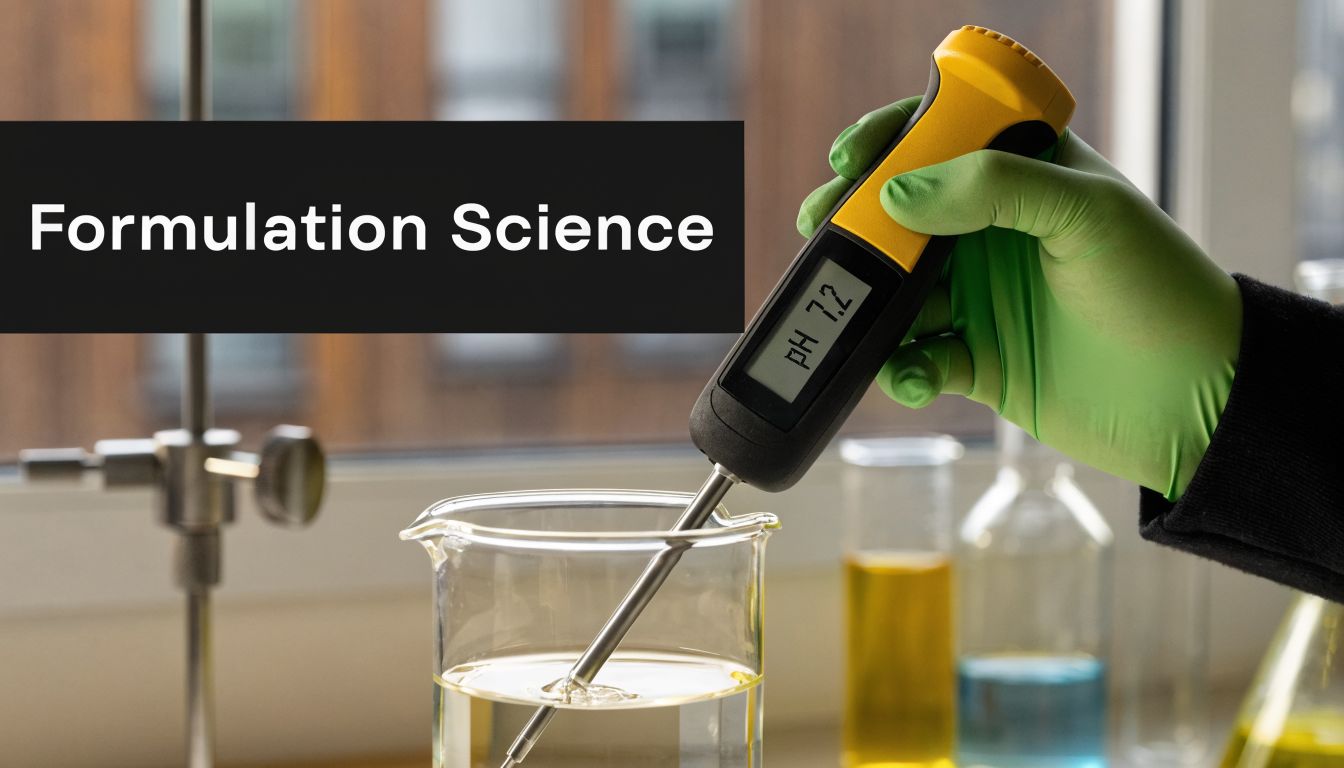
For peel buyers, the more important question is how much acid is available to work on the skin in a controlled way. That’s where pH and buffering matter.
Why percentage can mislead you
Two products can list the same acid percentage and behave very differently. One may act quickly and predictably. The other may feel surprisingly mild or uneven. The difference often comes down to pH and the extent to which the formula is buffered.
A practical example makes this clear. The pH of a hydroxy acid product is more critical than its percentage. A 3% lactic acid product at pH 3 increased skin firmness by 35% and reduced wrinkles by 55%, while at pH 7 its primary benefit was only 18% hydration. Professional peels often use 50–70% concentrations, while consumer products are capped much lower (analysis of percentages and pH in acid products).
That’s a powerful reminder for retail buyers. A higher percentage isn’t automatically a stronger real-world treatment. If the chemistry limits bioavailable acid, the formula may not perform the way the headline suggests.
What buffers do in practice
Buffers can make a peel more manageable, but they can also change how quickly the acid works. That isn’t necessarily a problem. In fact, it can be an advantage in settings where staff need a wider margin of control.
The mistake is assuming a buffered peel is always weaker or that an unbuffered peel is always better. Better for whom? In what protocol? With what staff training? Those are the right questions.
How to read a peel line like a professional buyer
When you review a supplier’s peel assortment, ask for these details:
- Actual pH range: Without this, the acid percentage tells only part of the story.
- Buffering approach: Ask whether the peel is aggressively active on contact or intentionally moderated.
- Neutralisation instructions: A serious professional line should have this clearly defined.
- Progression logic: The range should allow sensible stepping up, not random leaps in strength.
- Companion care: Post-peel support should be as carefully formulated as the peel itself.
A useful external primer for teams comparing acid categories is this expert advice on skincare acids from Skinsation Aesthetics Inc., especially for staff who need a clearer feel for how glycolic and salicylic choices differ in practice.
Buyer’s lens: If a brand markets percentage loudly but avoids discussing pH, ask harder questions before ranging it.
What this means for Swiss curation
In Switzerland, the best assortment usually isn’t the harshest. It’s the one your staff can deliver consistently. That means prioritising formulas with understandable performance, controlled application windows, and aftercare compatibility with premium natural products already in your business.
For spas, this reduces service variability. For pharmacies, it improves recommendation quality. For retailers building authority, it shifts the conversation from marketing language to formulation literacy.
Professional Application Protocols vs At-Home Use
A professional hydroxy acid peel and an at-home exfoliating acid aren’t the same category, even when they share familiar ingredients. The chemistry may overlap. The responsibility does not.
What belongs in a professional protocol
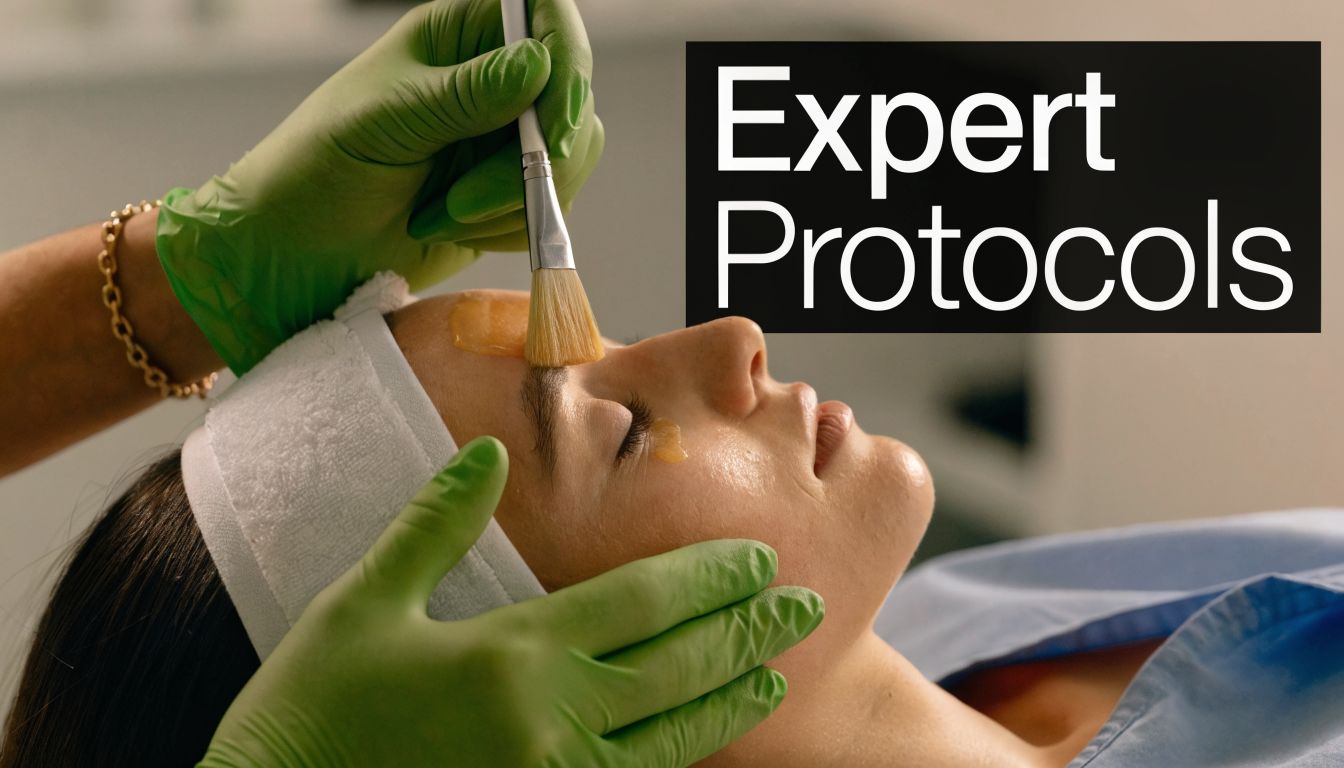
Professional peels demand structured screening before a single drop touches the skin. That includes treatment history, recent use of retinoids, current irritation, barrier status, and realistic discussion of what the client can tolerate socially and practically.
For free glycolic acid peels, professional protocols describe a pH 0.6–1.7 range, a 15–20 minute application window, a visible endpoint of even erythema, and recovery of about 1–2 days. Retinoids should be discontinued 7 days beforehand, and after 4–6 sessions these treatments stimulated a 20–30% increase in collagen synthesis (professional guidance on alpha hydroxy acid facial treatments).
That one sentence captures why these peels shouldn’t be treated casually. Timing, endpoint recognition, and pre-treatment instruction all matter.
The treatment sequence that keeps clients safe
A strong in-room protocol usually follows a disciplined order:
Screen properly
Check contraindications, actives already in use, and whether the client understands recovery expectations.Prepare the skin
Degrease and prep evenly. Uneven prep often leads to uneven penetration.Apply methodically
Work in an organised pattern and watch the skin, not the clock alone.Observe the endpoint
Even erythema is a clinical cue. Chasing excessive visible reaction is poor practice.Neutralise when required
Staff should know exactly when and how to stop peel activity.Set aftercare clearly
Clients need simple written guidance, especially around irritation avoidance and sun behaviour.
Where at-home use fits
At-home products are best framed as maintenance, not substitutes for cabin or clinic peels. They can extend results between professional treatments or provide a lower-intensity entry point for cautious clients.
If your retail staff need a consumer-facing reference on sensible self-use habits, this guide on how to perform an at home peel safely gives a practical starting point. It’s useful for setting expectations around caution rather than encouraging DIY escalation.
A short demonstration can help teams visualise professional handling and pacing:
How to explain the difference to clients
Clients sometimes say, “Can’t I just buy the stronger one and do it at home?” Your answer should be calm and specific.
- Professional peels require assessment: not every skin barrier is ready for the same level of exfoliation.
- Application endpoints matter: trained staff stop based on skin response, not confidence alone.
- Aftercare is part of treatment: the peel is only one part of the service. Recovery support matters just as much.
- Home products serve a different role: they help maintain progress with a lower risk profile.
Professional peels are controlled procedures. Home acids are maintenance tools.
That distinction protects the client, the therapist, and the business.
Curating Compliant Peel Lines for the Swiss Market
The Swiss opportunity isn’t just to offer peels. It’s to offer peels that feel credible in a market that pays attention to origin, ethics, and formulation quality.
That means your hydroxy acid peel strategy should sit inside a wider assortment logic. The peel can be the performance step. The surrounding products need to reinforce comfort, trust, and premium positioning.
What Swiss buyers and clients tend to value
In practice, Swiss retail and spa clients often reward restraint and clarity. They respond well to treatments that are technically strong but not theatrically aggressive. They also notice whether your supporting products feel aligned with the rest of the business.
That’s where natural and ethically sourced aftercare becomes commercially important. A peel alone may bring the client in. The supporting products are often what make the programme feel complete and worth repeating.
A notable market gap sits here. Guidance for Swiss retailers on integrating peels with certified natural ingredients remains limited, even though 68% of Swiss consumers prefer certified natural skincare. Gentler mandelic acid paired with ecologically sourced Fushi oils is highlighted as one way to reduce irritation while supporting low-downtime peels aligned with ECOCERT and PETA standards (discussion of natural integration in peel strategies).
Building a peel menu around compatibility
The easiest curation mistake is to combine an active peel with aftercare that’s too fragranced, too stimulating, or unrelated to post-peel needs. Better operators curate in layers.
Consider a simple compatibility model:
Treatment layer
Choose the peel according to skin goal and staff capability.Recovery layer
Pair with calming, replenishing support that fits your brand position.Retail layer
Offer home products that maintain renewal without stacking too many aggressive actives.
Marine-based soothing products can sit particularly well after resurfacing services in spa settings because they support a sensorial treatment journey. Fresh-pressed oils can be useful when selected carefully for barrier support and client tolerance. The key is not to force a “natural” story onto a poorly matched protocol. The pairing has to make formulation sense.
Compliance and positioning go together
Swiss businesses must also look past clinical efficacy. Discipline is required regarding claims, usage guidance, and product classification. If a peel line is presented as refined but sold with loose instructions, that undermines trust and creates avoidable risk.
Use this checklist when reviewing a line:
- Clear professional versus retail separation: Don’t blur the use case.
- Support materials for staff: Protocol cards, contraindication guidance, and aftercare instructions should be available.
- Claim discipline: Brands should describe benefits accurately, without promising unrealistic transformation.
- Certification coherence: If your wider assortment values ECOCERT or cruelty-free positioning, the peel-adjacent range should support that story.
Where PHAs and gentler concepts fit
Some Swiss businesses are especially well placed to succeed with peel concepts that prioritise comfort. Hotel spas, sensitive-skin pharmacies, and premium wellness centres often benefit from a “measured resurfacing” message rather than an intensive corrective one.
That creates room for gentler acid categories, including mandelic acid or PHA-led options, especially when alpine exposure or visible sensitivity shapes the client profile. The business advantage is differentiation. You’re not just offering a peel. You’re offering a peel programme that feels customized to Swiss expectations around efficacy, ethics, and composure.
FAQs for Spa and Retail Partners
How much staff training is enough before launching a hydroxy acid peel service
A useful test is simple. Can each team member explain, without guessing, who can be treated, who should be deferred, what normal post-treatment responses look like, and what action to take if the skin becomes more reactive than expected?
For a Swiss retailer or spa, training should cover five areas: skin assessment, contraindications, product selection, application timing, and aftercare advice. That matters because hydroxy acid peels are not sold like a standard cream. They behave more like a controlled skin-renewal tool. If staff only know the marketing story, they can easily place the wrong formula in the wrong hands.
Pharmacies often need a narrower protocol than treatment rooms. In that setting, the safer commercial model is usually guided retail, clear referral boundaries, and written home-use instructions. Spas and clinics need documented treatment steps, supervised model sessions, and a clear process for incident reporting. From a business perspective, that discipline improves consistency across cabins, reduces avoidable complaints, and makes the peel category easier to scale.
How should we market peels without overpromising
Start with outcomes clients can observe in the mirror. Brighter-looking skin, smoother texture, more even-looking tone, and a more refined surface are easier to defend than dramatic claims about transformation.
A hydroxy acid peel is closer to a training programme than a single workout. One session may improve radiance. A well-planned series, paired with the right home care, is what usually improves texture and visible unevenness more reliably. That explanation protects trust and supports retail sales because clients understand why recovery care and maintenance products belong in the plan.
Swiss buyers also respond to restraint. Clean positioning, ethically sourced supporting ingredients, and careful language often perform better than aggressive before-and-after promises, especially in premium spas, pharmacies, and wellness-led retail.
The strongest peel marketing sounds like a qualified consultation, with clear boundaries, expected benefits, and honest recovery guidance.
What downtime should we tell clients to expect
Downtime is not a fixed category. It depends on the acid family, free acid availability, contact time, layering, skin barrier status, and whether the client is using retinoids or other active products at home.
Clients often judge success by visible shedding because social media has trained them to look for dramatic peeling. In practice, visible flaking is only one possible response. Mild redness, temporary tightness, a slightly rough feel, or a short phase of dryness can all occur even with well-chosen formulations.
Set expectations like you would for weather in the Alps. You can forecast the range, but you still need to prepare the client for variation. That approach reduces unnecessary alarm calls and helps your team distinguish normal recovery from a reaction that needs review.
Are PHAs worth adding, or are they just a trend
PHAs are commercially and technically useful for many Swiss businesses because they widen your entry point into peel services. They are often better suited to clients who want renewal with less sting, less visible disruption, or a more comfort-led treatment story.
That makes them relevant for hotel spas, sensitive-skin focused pharmacies, and retailers whose assortment already emphasises natural positioning, barrier support, and ethically sourced actives. In curation terms, PHAs can fill the space between a basic exfoliating product and a more corrective AHA-led protocol. They help you serve cautious first-time users without diluting your professional credibility.
The regulatory advantage is practical as well. Gentler peel concepts are often easier to position with disciplined claims, clearer aftercare, and lower misuse risk in retail-adjacent settings. For beautysecrets.agency portfolios, that creates a useful commercial bridge between clinical logic and clean-beauty expectations in the Swiss market.
What operational risks should we prepare for
Operational risk usually appears in ordinary moments. A missing consent form. An unclear home-care instruction. A client who used a retinoid two nights earlier and forgot to mention it.
The risk categories are straightforward:
- Documentation: Consent records, treatment notes, product batch tracking where relevant, and written aftercare instructions.
- Scope of practice: Products, strengths, and treatment steps matched to staff competence and treatment setting.
- Insurance: Confirmation that your policy covers the specific peel category and treatment method you offer.
- Retail control: Clear rules that prevent consumers from combining stronger acids with other high-activity products without guidance.
- Complaint handling: A defined process for triage, follow-up, and escalation if a reaction falls outside expected recovery.
Well-run operators treat this like stock control. Small gaps create larger problems later.
How do we build retail sales around a peel service without sounding pushy
Build the basket around function. Clients usually need three things. A gentle cleanser, a recovery-support product, and one maintenance item selected to match the treatment plan.
This works because each product has a job. One prepares. One supports barrier comfort. One helps maintain results between appointments. That logic feels professional, not sales-driven, and it gives staff a clear script they can repeat consistently.
For Swiss premium retail, fewer products often create a stronger impression than a crowded routine. A short, well-reasoned regimen also aligns better with compliance, because the advice is easier to document and the risk of conflicting actives is lower.
If you’re building a Swiss peel category that needs to balance efficacy, natural positioning, and compliance, beautysecrets.agency can help you curate a coherent assortment for spas, pharmacies, retailers, and premium e-commerce. The value isn’t just access to brands. It’s building a peel-adjacent portfolio that makes technical sense, supports client safety, and strengthens your clean-beauty differentiation.