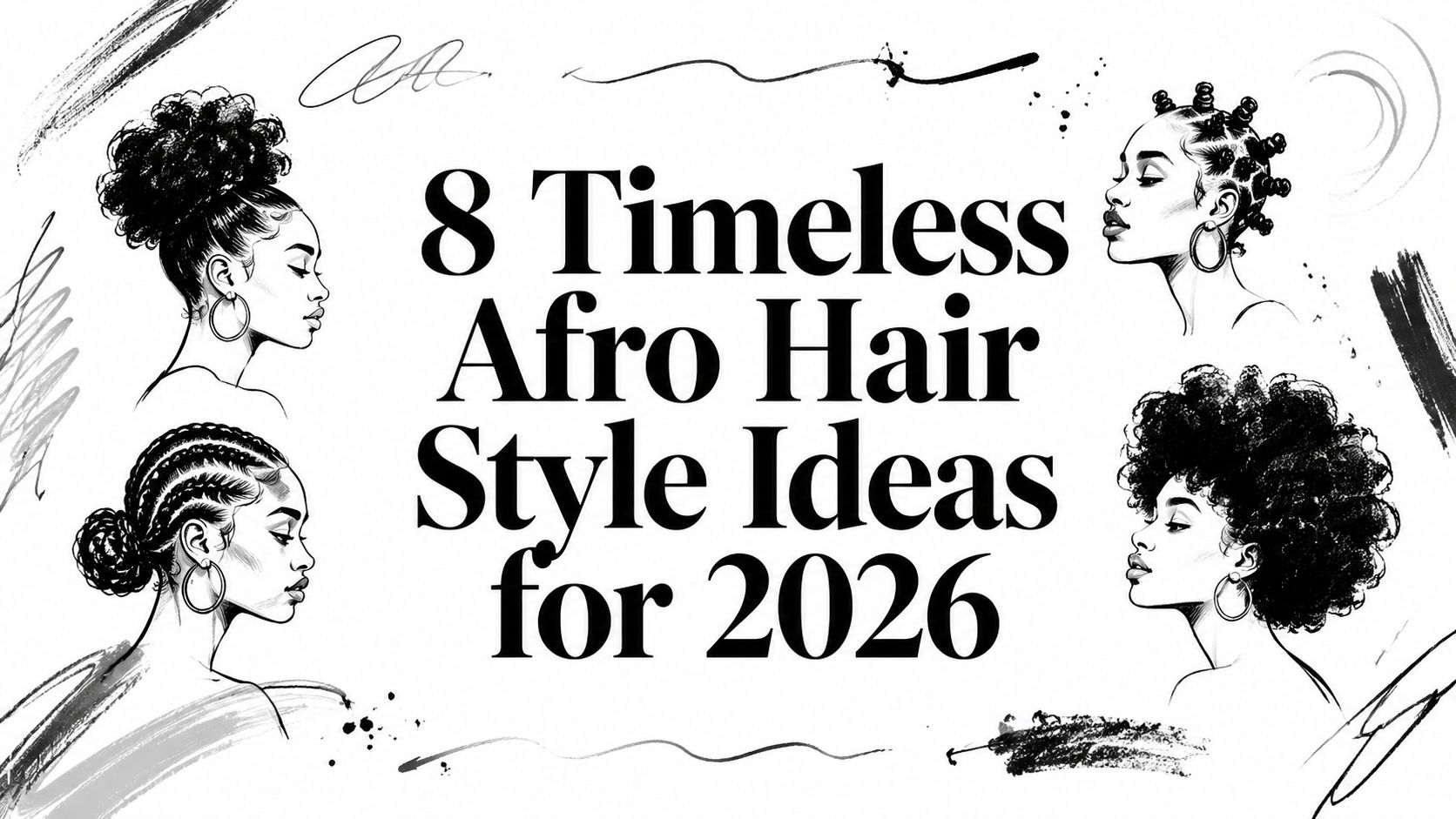
Are you treating your afro hair style as only a shape, when the crucial difference comes from how the hair is fed, sealed, and protected between styling days? That's the gap I see most often. People focus on the finished look, then ignore moisture retention, scalp comfort, ingredient quality, and whether the products sitting on the shelf support textured hair.
An afro hair style carries cultural weight as well as visual presence. The afro emerged prominently in the 1960s during the U.S. Civil Rights Movement as a symbol of rebellion, pride, and resistance against racial discrimination, and it became a defining visual of that era's activism, especially through figures such as Angela Davis and members of the Black Panther Party historical context. That history still matters. Wearing natural texture can be profoundly personal, and care routines should respect that rather than forcing hair into someone else's beauty standard.
This guide keeps it practical. You'll find eight timeless styles, real maintenance trade-offs, and a clean-beauty approach built around nourishing oils, botanical balms, and smart technique. Products like Fushi fresh-pressed oils and Egyptian Magic can support softness, shine, and scalp comfort, but only when they're used in the right amount, in the right order, for the right style.
1. Natural Afro with Oil Treatment
The classic natural afro is still one of the strongest choices if you want volume, softness, and full visibility of your texture. It's also the style that exposes every weak habit. If your hair is under-moisturised, over-cleansed, or roughly detangled, a natural afro will show it quickly through dullness, tangling, and uneven fullness.
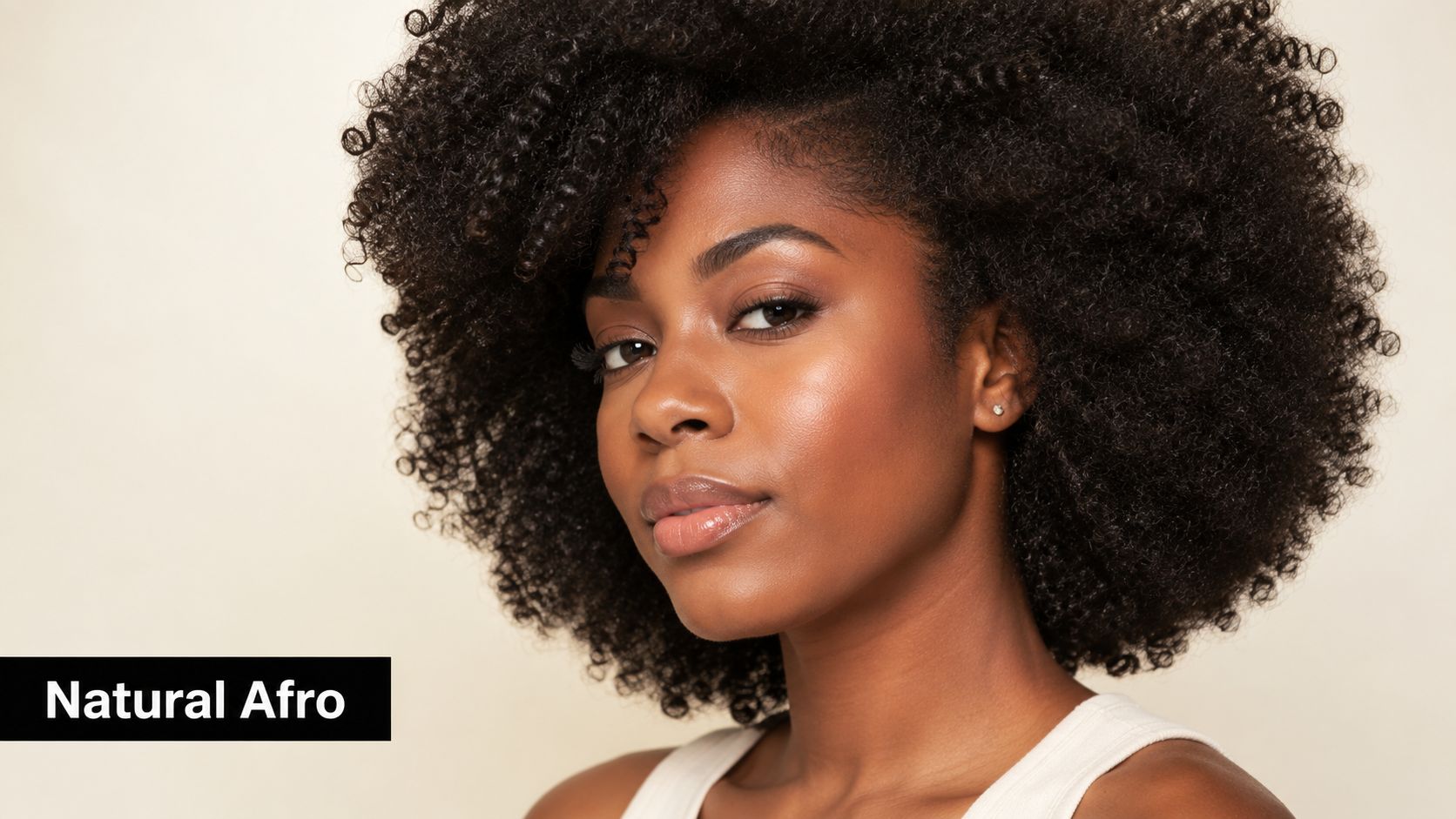
Think of this look as a care-first style, not a low-effort one. The best afros tend to come from consistent routines rather than heavy styling. Tracee Ellis Ross and Zendaya are good public examples of how powerful natural texture looks when hair health is prioritised over forced sleekness.
Build the oil ritual properly
Apply oil to damp, not dripping-wet, hair after washing or misting. That timing matters because oils help seal in existing moisture. They don't replace water. Fushi Argan Oil, Fushi Jojoba Oil, and Fushi Virgin Coconut Oil all work well depending on how dense or fine your strands feel.
A simple pattern works better than a complicated one you won't maintain:
- Cleanse gently: Use a sulfate-free cleanser so your scalp is clean without stripping the hair shaft.
- Condition with slip: Detangle during conditioning, ideally with fingers first and then a wide-tooth comb.
- Seal in layers: Apply leave-in, then a small amount of oil, focusing on the ends and drier crown sections.
- Protect overnight: Sleep on satin or silk so the hair doesn't lose moisture to cotton.
Practical rule: If your afro feels greasy but still dry, you're using oil without enough water-based moisture underneath.
For deeper nourishment, warm a small amount of oil between your palms and work it through sections before washing. This softens shed hair, reduces breakage during detangling, and leaves the finished shape fuller. If you like ingredient-led routines, this guide on natural coconut oil for health offers good context for why coconut oil remains a staple in many natural hair routines.
2. Locs and Dreadlocks with Botanical Care
Locs reward patience and punish shortcuts. They can look effortless from the outside, but healthy locs depend on clean sectioning, consistent drying, and a light hand with product. If you overload them with waxes, dense creams, or sticky gels, the hair may hold style for a moment but feel heavy and collect residue over time.
Bob Marley and Whoopi Goldberg remain instantly recognisable examples of locs as identity, presence, and long-term commitment. In everyday practice, modern wellness professionals and creatives often choose locs because they reduce daily manipulation without disconnecting from natural texture.
What keeps locs healthy
Start with consistent parting size if you're beginning a set. Uneven sections often lead to uneven weight distribution later. During the starter phase, scalp care matters as much as the loc shaft itself.
Use light botanical oils on the scalp, not thick layers on the locs. Fushi Jojoba Oil is useful for scalp comfort because it's lightweight, while Egyptian Magic can work as a targeted balm on dry perimeter areas if you warm a very small amount between your fingers first. Keep it away from the full length of the loc unless you're spot-treating frayed ends.
A solid maintenance routine usually includes:
- Regular cleansing: A clean scalp supports better comfort and less itch.
- Complete drying: Never leave damp locs bundled or tied up.
- Measured retwisting: Retwist only when needed. Too much manipulation can thin the roots.
- Product restraint: If the product leaves a coating on your fingers, it's probably too heavy for frequent use.
Locs should feel clean, flexible, and dry between wash days, not sticky, coated, or perfumed to hide buildup.
One more trade-off is worth noting. Fresh retwists look neat, but constantly chasing a crisp root can create tension. A slightly lived-in root often means less stress on the scalp and a stronger foundation over time.
3. Twisted Styles and Two-Strand Twists
Two-strand twists are one of the most useful styles in the natural hair rotation because they can be neat, soft, protective, and versatile at once. They can also fail fast if the hair isn't properly detangled before you start. Twisting over knots and dryness usually creates frizz instead of definition.
Alicia Keys and Lupita Nyong'o have both worn twist variations that show how adaptable this look can be. Short twists, chunky twists, mini twists, pinned twists, and a twist-out all come from the same basic method.
For definition, prep matters more than product quantity
Work in sections. On each section, apply a water-based leave-in first, then a small amount of oil to smooth the cuticle and reduce friction as you twist. Fushi's lighter oils are especially useful here because twists need lubrication without collapse.
If you want twists that last, focus on these details:
- Detangle fully first: Twists don't fix tangles. They hide them until take-down day.
- Choose the right size: Larger twists install faster, but smaller twists usually hold definition longer.
- Twist with even tension: Pulling too tightly at the root can stress the hairline.
- Rehydrate lightly: A fine mist and a few drops of oil every few days is usually enough.
Mini twists are often the better choice for people who want longevity. Chunky twists are faster and fuller, but they frizz sooner, especially around the nape and edges. If you're planning to unravel them later for a twist-out, let them set completely and separate with oiled fingertips.
When twists work best
Twists suit people who want access to the scalp and flexibility in styling. You can wear them loose, pin them into buns, or gather them into an updo without disturbing the base. They're also easier to refresh than many braid styles because you can redo only the front or top row rather than the entire head.
What doesn't work is piling on heavy butter every day. That often turns a clean twist set into a tacky one, especially in dense hair that already holds onto product.
4. Braids and Cornrows with Scalp Care Focus
Braids and cornrows are protective only when the scalp stays calm and the roots aren't under strain. That's the trade-off many people miss. A neat install can still be a damaging install if the tension is too high.
Beyoncé and Rihanna have both worn braided styles in ways that show just how elegant, architectural, and versatile they can be. Traditional African and Caribbean braiding practices also remind us that braids are not a trend detached from culture. They're part of a long styling heritage.
A useful visual reference can help when you're planning shape and maintenance:
Protect the scalp first
Before braiding, make sure the hair is clean, conditioned, and gently stretched if that makes sectioning easier. During wear, keep the scalp fresh with a light cleanser or carefully applied scalp rinse, then follow with a few drops of oil along the parts. Fushi oils work well for this because they can be applied precisely without turning the roots greasy. Egyptian Magic is better reserved for dry edges or irritated-looking perimeter skin, used sparingly.
Watch for these signs that a braided afro hair style is going wrong:
- Pain beyond the first days: Discomfort that lingers usually means the style is too tight.
- Small bumps at the hairline: This often signals tension and inflammation.
- Dry, flaky parts: Product buildup and poor cleansing can sit on the scalp for weeks.
- Thinning edges after take-down: The style stayed in too long or was too heavy.
If you can't sleep comfortably after the install, the braids are too tight. No styling result is worth sacrificing the hairline.
For product-minded retailers and stylists in Switzerland, textured-hair consumers tend to over-index on conditioning, leave-ins, detangling, and protective-style maintenance products rather than basic shampoo alone, and performance language around slip, combability, and curl-definition retention often matters more at the point of sale than broad “natural” claims, according to this Swiss market inference on black hair care. That lines up with what helps braids last. Smooth application, low friction, and scalp comfort.
If scalp support is part of your concern, these natural ways to boost hair growth can complement a braid routine, especially during removal and recovery.
5. Bantu Knots and Styled Updos
Bantu knots are sculptural, protective, and rooted in African hairstyling tradition. They're one of the few looks that function equally well as a finished style and as a setting method for a later knot-out. That dual purpose makes them especially useful when you want shape now and stretched definition later.
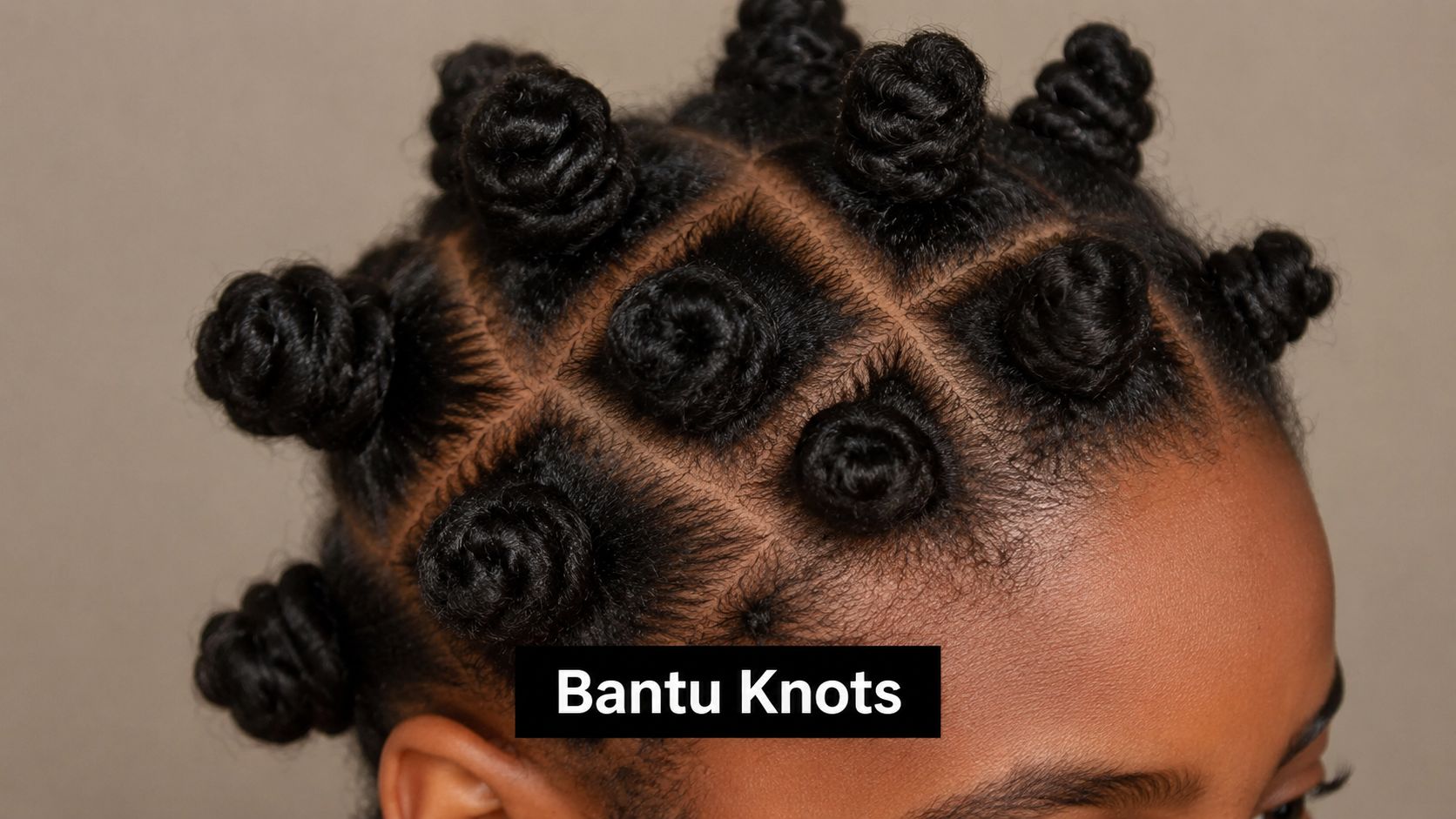
This style works best when the hair is soft, moisturised, and not overloaded. If the strands are too wet, the knots can stay damp too long. If they're too dry, the sections may puff up and lose the clean coiled shape.
Keep them neat without stiffness
Start on stretched or semi-stretched hair if you want uniform knots. Apply a light leave-in, then smooth a few drops of Fushi oil through each section before twisting and wrapping. The oil helps reduce friction and gives the surface a cleaner finish without the crunchy feel that strong gels sometimes create.
Try this sequence:
- Part with intention: Clean sections make the style look polished.
- Twist before wrapping: Pre-twisting each section gives the knot more hold.
- Tuck the ends carefully: Exposed ends can frizz quickly.
- Maintain with light moisture: Mist lightly and reapply only a touch of oil as needed.
Egyptian Magic can be useful on the exposed scalp between knots, especially if you're wearing the style for several days and the air feels dry. Use very little. A visible greasy film takes away from the sculptural look.
Knots as a style and a set
If you plan to unravel the knots later, don't rush the take-down. Make sure the hair is fully dry, coat your fingertips with oil, and separate each section slowly. The resulting knot-out often gives more volume and a more stretched pattern than a twist-out.
Viola Davis and many natural hair educators have helped keep this look visible as both an expressive style and a cultural one. It isn't just eye-catching. It's practical when done with balanced moisture and clean sectioning.
6. Coils and Coil-Outs with Hydration Emphasis
Coils are for people who want definition first and volume second. That order matters. If you separate them too early or style them before they're fully dry, the result often turns into frizz, not fullness.
This afro hair style suits curl patterns that shrink significantly and benefit from guided definition. It's also a favourite among natural hair educators and stylists because the finished shape can be customised section by section.
Moisture first, then hold
Use a leave-in with slip on damp hair, then apply a small amount of oil to each section before coiling around your finger or a styling tool. Fushi oils can help keep the strand pliable while adding shine. Egyptian Magic is better used after the set is dry, and only on selected areas where you want a soft sheen or to tame flyaways.
The common mistake is using too much oil too early. That slows drying and can make the coil collapse. Better results usually come from moderate product and patient setting time.
The best coil-outs are built the night before. Rushing the drying stage is the fastest way to lose definition.
How to keep a coil-out looking fresh
Once the set is dry, separate gently with oiled hands. Pulling the hair apart too aggressively breaks up the pattern and causes fuzz at the ends. In dry weather, refresh with a water-based mist followed by a drop or two of oil pressed over the surface rather than worked through every strand.
What works:
- Smaller sections for definition
- Complete drying before separating
- Minimal daily handling
- Night protection with satin
What usually doesn't:
- Rewetting the whole head every morning
- Heavy creams layered over a finished set
- Separating with dry hands
- Sleeping uncovered
Humidity can help coils stay springy, but dry indoor air often roughens the outer layer of the hair. That's when a very light sealant step makes the biggest difference.
7. Wash-and-Go Styles with Lightweight Organic Products
A wash-and-go sounds simple, but it's not the same as wash and hope for the best. For textured hair, this style depends on clean hair, enough water, and product restraint. If your hair likes definition but hates buildup, this can become one of the most freeing routines in your rotation.
The best wash-and-go results usually come from people who stop trying to force every section to match. Natural texture variation is normal. The front may curl differently from the crown, and the nape may need different product amounts.
Keep it light and technical
Use a sulfate-free cleanser, then condition generously on soaking wet hair. Apply leave-in while the hair is still very wet, then smooth in a small amount of Fushi oil to seal. If you want extra definition at the perimeter or on stubborn sections, use a trace of Egyptian Magic only where needed, not across the full head.
This style benefits from technical performance claims more than vague clean-beauty language. Slip, combability, softness after drying, and curl-definition retention are what matter when the hair is loose and exposed day after day.
A clean wash-and-go routine often looks like this:
- Soaking-wet application: Product spreads better and clumps curls more evenly.
- Hands over brushes first: Finger-raking or smoothing often gives a softer, less disrupted result.
- Air-dry or diffuse gently: Too much touching during drying creates frizz.
- Refresh selectively: Mist only the areas that need help.
A note on expression and context
Loose natural styles can still trigger bias in professional and school settings, which is why textured-hair visibility matters beyond aesthetics. Research discussing natural hair discrimination describes bias against styles such as afros, braids, bantu knots, and locs, tied to stereotypes that natural hair is “unattractive” or “unmanageable”, and it highlights an important content gap around workplace and school expectations in Switzerland in this discussion of hair discrimination and textured styles. A wash-and-go can be beautiful and practical, but it can also be an act of self-definition.
8. Protective Styling Rotation with Scalp Recovery Cycles
The healthiest routine often isn't one signature style. It's rotation. Hair and scalp respond well when tension, product load, and manipulation levels change over time instead of staying fixed for months.
That's especially relevant in an industry where Black consumers drive culture and demand, yet Black entrepreneurs account for only 3% of total industry ownership in a global black hair industry valued conservatively at approximately $2.5 billion, a gap that highlights deeper barriers in capital, distribution, and representation industry ownership context. For anyone building a clean textured-hair routine, where you spend matters alongside what you apply.
Recovery is part of the style plan
A strong rotation might move from braids to loose hair, from twists to a wash-and-go, or from a coil set to a rest week focused on cleansing and scalp care. Recovery periods allow you to inspect the hairline, trim knots, rebalance moisture, and use richer treatments that don't fit well under long-wear styles.
Fushi fresh-pressed oils are especially useful during these intervals because you can tailor them. Jojoba for scalp comfort, argan for softness and shine, coconut for pre-wash support on drier lengths. Egyptian Magic fits best as a targeted balm during recovery, especially around exposed edges, dry nape areas, or irritated skin near parts.
A practical rotation includes:
- One period of protection: Braids, twists, or pinned styles to reduce daily handling.
- One period of release: Loose hair so you can cleanse thoroughly and assess breakage.
- One treatment window: Oil pre-washes, masks, and low-tension styling.
- One review point: Check whether your last style helped or harmed your scalp.
Hair grows best in routines that are consistent and calm. Constant “protective” styling without recovery often protects the look more than it protects the hair.
Athletes and busy professionals often do well with rotation because it matches real life. Some weeks need longevity. Other weeks need scalp access. The right afro hair style isn't only the one that looks best on day one. It's the one your hair still thanks you for after take-down.
8-Style Afro Haircare Comparison
| Style | Implementation Complexity 🔄 | Resource Requirements ⚡ | Expected Outcomes ⭐📊 | Ideal Use Cases 💡 | Key Advantages ⭐ |
|---|---|---|---|---|---|
| Natural Afro with Oil Treatment | Low–Moderate, simple styling, consistent oil/conditioning routine | Moderate, organic oils, sulfate-free cleansers, occasional pro guidance | Healthy, voluminous natural texture; improved scalp hydration | Everyday wear; low-manipulation lifestyles; identity expression | Celebrates natural texture; reduced chemical damage; sustainable |
| Locs and Dreadlocks with Botanical Care | High, technical installation and 6–18 month locking phase; low daily effort after | Moderate, regular retwists, organic oils, occasional professional maintenance | Long-term protective style; low daily manipulation; strong cultural statement | Long-term commitment; protective styling seekers; cultural expression | Durable, low-breakage, highly personalizable |
| Twisted Styles and Two-Strand Twists | Moderate, 3–6 hr install; achievable at home with practice | Low–Moderate, oils, leave-ins, time for installation | Versatile protective look; defined twists or voluminous curl-outs | DIY stylists; transitioners; those wanting versatility | Versatile wear (twist or unravel); protective and accessible |
| Braids and Cornrows with Scalp Care Focus | High, professional techniques and careful tension management required | High, skilled stylist, added hair options, scalp care products | Extended wear (2–8 wks); protective with scalp recovery potential | Athletes, long-wear needs, intricate aesthetic requests | Long wear, customizable patterns, excellent protection |
| Bantu Knots and Styled Updos | Moderate, 2–4 hr install; careful unraveling for coil-outs | Low–Moderate, oils, silk/satin bonnet, occasional pro help | Sculptural knots or defined curls when undone; good scalp access | Cultural styling, creative updos, moisture-locking protective sets | Versatile styling; cultural authenticity; easy scalp treatment access |
| Coils and Coil-Outs with Hydration Emphasis | Moderate, overnight drying and strict moisture routine | Low, coil tools, leave-in conditioner, organic oils, time to dry | Ultra-defined, springy coils with high volume and definition | Definition-focused styling; curl enthusiasts; DIY curl sculpting | Exceptional curl definition; customizable size; no heat needed |
| Wash-and-Go Styles with Lightweight Organic Products | Low, minimal manipulation; depends on established curl health | Low, lightweight organic cleansers, leave-ins, light oils | Natural curl expression; quick routine; variable longevity | Busy professionals, active lifestyles, minimalists | Time-efficient; low maintenance; highlights natural pattern |
| Protective Styling Rotation with Scalp Recovery Cycles | High, planning and executing multiple styles with recovery windows | High, varied styles, pro appointments, targeted treatment products | Optimized long-term scalp and hair health; reduced follicle stress | Long-term health optimization; hair-loss prevention; professionals | Holistic, preventative strategy; reduces traction and overuse |
Your Hair Journey, Your Natural Expression
Choosing an afro hair style is never just about appearance. It's about how you want your hair to feel in your hands, how much time you can realistically give it each week, and how your scalp responds to the products and tension you put it through. That's why the best routine is rarely the trendiest one. It's the one that stays sustainable.
Some people thrive with a full natural afro because they enjoy shaping, fluffing, and maintaining moisture day by day. Others do better with twists, braids, or locs because reduced manipulation keeps breakage down. Neither approach is automatically healthier. Technique, tension, cleansing habits, and product choice decide that.
Clean, ethically sourced formulas make a real difference when they're chosen with purpose. A fresh-pressed oil from Fushi can support softness, lubrication, and moisture sealing without overwhelming the hair. Egyptian Magic can serve as a useful multipurpose balm for edges, dry skin around the scalp, and small finishing touches. But even the best product won't correct rough detangling, over-tight installs, or a style left in too long.
That's the trade-off worth remembering. Styling gives shape. Care gives longevity.
If you want stronger results, simplify your routine first. Keep a gentle cleanser, a conditioner with slip, a dependable leave-in, one or two quality oils, and a satin night routine. Then match your products to your style. Use lighter layers for wash-and-gos and coils. Use scalp-friendly, precise applications for braids and locs. Use richer pre-wash nourishment during recovery phases.
There's also value in paying attention to where your products come from. Ethically sourced ingredients, transparent processing, cruelty-free standards, and thoughtful formulation aren't just branding language. They support a more respectful beauty system and often lead to products that feel better to use over time. For textured hair, that matters because consistency matters. You're not styling once. You're caring repeatedly.
Start with one style that fits your current routine instead of trying all eight at once. Learn how your hair behaves with moisture, humidity, and different levels of manipulation. Adjust based on what your strands show you, not on what looks perfect on someone else. Healthy natural hair rarely comes from copying blindly. It comes from observation, patience, and better choices made consistently.
Your crown doesn't need to be forced into uniformity. It needs support, nourishment, and room to express its own pattern.
If you're a Swiss retailer, pharmacy, spa, or premium e-commerce partner looking to bring more thoughtful textured-hair and clean-beauty options to your customers, beautysecrets.agency offers a curated portfolio of natural, ethically sourced formulations, including Fushi and Egyptian Magic. Their Swiss distribution focus, compliance mindset, and premium brand selection make them a strong partner for businesses that want high-quality beauty and wellness ranges with transparency, performance, and sustainability at the centre.