You've invested in better formulations, tighter sourcing standards, cleaner ingredient stories, and packaging that looks right on a premium shelf. Then the online results disappoint. Search traffic is patchy. Social campaigns bring attention but not enough qualified buyers. Retail partners ask for support, yet every advertising decision feels like a compromise between growth and brand integrity.
That tension is normal in Swiss beauty.
Premium skincare, wellness, and pharmacy-led beauty don't win by shouting the loudest. They win by looking credible, feeling considered, and staying consistent across every click, landing page, and follow-up. That's why online advertising services matter here. Not as a shortcut, but as a controlled way to put the right message in front of the right buyer without diluting what makes the brand valuable in the first place.
An Introduction to Digital Growth for Swiss Beauty
Swiss beauty brands and retailers operate in a market that rewards discernment. Buyers compare ingredients, certifications, origin stories, texture, efficacy claims, and pricing before they commit. A premium serum or wellness treatment doesn't sell like an impulse accessory. It needs context, reassurance, and a buying experience that feels trustworthy from first impression to checkout.
That's where many teams get stuck. They know they need visibility, but they don't want to flood Instagram with discount-led creative or buy traffic that doesn't convert. They want growth that still feels premium.
The commercial case for getting this right is clear. In Switzerland, digital advertising accounted for 59.7% of total ad spending in 2024, and Swiss digital ad spending reached US$1.65 billion in 2024, up 6.8% year over year, according to DataReportal's digital advertising trends report. Online channels aren't a side option any more. They sit at the centre of how brands and retailers compete for attention.
Why premium brands need a different playbook
Mass-market tactics often damage premium perception. Aggressive urgency, broad targeting, and exaggerated claims can generate clicks, but they also attract the wrong audience and train buyers to wait for promotions. That's a poor trade if your margin depends on trust, repeat purchase, and specialist positioning.
For Swiss clean-beauty and wellness brands, effective online advertising services usually rest on three principles:
- Controlled visibility that puts products in front of relevant buyers instead of chasing scale for its own sake
- Message discipline that supports efficacy, sourcing, safety, and brand tone without drifting into hype
- Measurable commercial outcomes so spend is tied to sales quality, not vanity metrics
Premium advertising works best when it feels like an extension of the brand, not a separate performance machine.
A pharmacy group, boutique retailer, spa operator, or clean-beauty e-commerce team doesn't need more generic advice about “running ads”. They need a practical operating model for Swiss conditions: multilingual audiences, privacy-conscious users, selective buyers, and channels that reward consistency more than noise.
Understanding Online Advertising Services
Online advertising services are the paid systems brands use to place messages in front of a defined audience on platforms such as Google, Instagram, Pinterest, retail marketplaces, and publisher networks. The simplest way to think about them is this: you're renting visibility, but with far more control than traditional media ever allowed.
Instead of buying space in a broad newspaper and hoping the right people see it, you can choose the platform, the audience, the creative, the timing, and the bid. That's the appeal. It's precise when used well, and expensive when used badly.

The four parts that actually matter
Most campaigns become easier to manage when you separate them into four moving parts.
Platform
Google Ads captures intent. Meta reaches people while they browse. Pinterest often catches planning behaviour. Retail media appears closer to purchase. Each channel shapes what kind of response you can expect.Audience
This is who sees the advert. It might be people searching for a category, browsing a premium skincare interest, visiting a product page, or matching a first-party customer list.Creative
The advert itself. Copy, image, video, product feed, headline, offer, and landing-page connection all sit here. Premium beauty usually needs creative that educates and reassures, not just interrupts.Bidding
You're competing for attention. Platforms decide which advert appears based on your bid, relevance, and expected performance. Cheap clicks aren't automatically good clicks.
Paid reach versus organic presence
Paid advertising and organic marketing do different jobs. Organic social, SEO, editorial content, and email build long-term authority and owned demand. Paid ads buy immediate reach and controlled testing.
That distinction matters. If a new body oil, certified-organic mother-and-baby line, or spa ritual collection needs launch support now, paid channels can create visibility quickly. Organic channels usually can't move at that speed.
A good rule is simple:
Practical rule: Use organic content to deepen trust. Use paid media to distribute that trust to people who haven't met the brand yet.
For teams producing more visual assets, short-form explainers and product education can strengthen ad performance when they're adapted properly for placement. The AI video creation blog is useful if you want ideas for turning brand stories and product benefits into ad-friendly video formats without defaulting to generic trend content.
Key Advertising Channels for Swiss Beauty Brands
No single platform is “best” for all premium beauty businesses. The right channel depends on buyer intent, product complexity, retail model, and how much brand control you need. A pharmacy-led skincare range, a luxury spa package, and a clean-beauty boutique won't distribute budget the same way.
Google Ads for active demand
Google works best when someone already wants a solution. Searches around anti-ageing care, sensitive skin support, clean cleansing oil, or spa bookings signal intent. That makes search one of the most commercially efficient channels for many Swiss beauty advertisers.
For premium brands, the advantage isn't just volume. It's proximity to decision-making. Buyers who search with category or product terms are already narrowing options. Your advert and landing page need to meet that moment with clarity, not theatre.
Google Shopping can also matter for product-led retail. For teams refining feeds, titles, and product visibility, this guide on how to appear on Google Shopping gives a useful operational view of what has to be clean behind the scenes.
Meta Ads for visual persuasion
Instagram and Facebook remain strong when the product benefits from demonstration, texture, ritual, or before-and-after context that stays credible. Meta is especially useful for retargeting, new product drops, founder-led storytelling, and nurturing consideration after an initial site visit.
The risk is overexposure to broad audiences. Premium brands often weaken performance when they chase scale through generic interest stacks and polished but interchangeable creative. Meta tends to reward advertisers who know exactly what emotional and functional promise they're making.
Pinterest for planning and aspiration
Pinterest suits categories where buyers save ideas before purchase. Skincare routines, bathroom styling, self-care rituals, maternity care, giftable beauty, and wellness inspiration all fit well here. The traffic often needs more nurturing, but the mindset is valuable.
This channel can be especially helpful for brands with strong imagery and a clear aesthetic language. If your packaging, rituals, and product textures photograph well, Pinterest can support brand discovery without the same pressure to entertain as Instagram.
Retail media for proximity to transaction
Retail media matters more than many beauty brands realise. When products appear within marketplace, pharmacy, or retailer environments, the advert sits closer to purchase. That can improve efficiency, but it also limits how much storytelling space you have.
This channel works well for brands that already have distribution and want to support sell-through. It's less forgiving if the product page, reviews, or assortment logic aren't strong.
Online Advertising Channel Comparison for Swiss Beauty Brands
| Channel | Primary Goal | Best For | Brand Safety Control |
|---|---|---|---|
| Google Ads | Capture intent | Search-led e-commerce, pharmacy demand, treatment enquiries | High |
| Meta Ads | Build consideration and retarget interest | Visual storytelling, launches, audience nurturing | Medium to high |
| Pinterest Ads | Inspire planned purchases | Ritual-led products, gifting, aesthetic discovery | High |
| Retail Media | Support conversion near point of sale | Marketplace sell-through, retailer support, pharmacy environments | Medium |
What tends to work and what usually doesn't
Works well
Tight channel roles: Search for demand capture, Meta for persuasion, retail media for sell-through.
Localised creative: Messaging adapted for language and cultural context, not just translated.
Landing-page continuity: The advert promise matches the page experience.Usually fails
One creative across all channels: A product demo for Meta rarely performs like a search advert.
Broad targeting with premium pricing: You pay for attention from people who were never likely to buy.
Retail push without brand support: Marketplace visibility alone won't fix weak product presentation.
Advertising Strategies for Ethical and Premium Brands
Premium beauty brands often assume restraint makes them less competitive in paid media. In practice, restraint is often the advantage. A disciplined campaign attracts better-fit customers, protects margin, and keeps the brand coherent across channels.
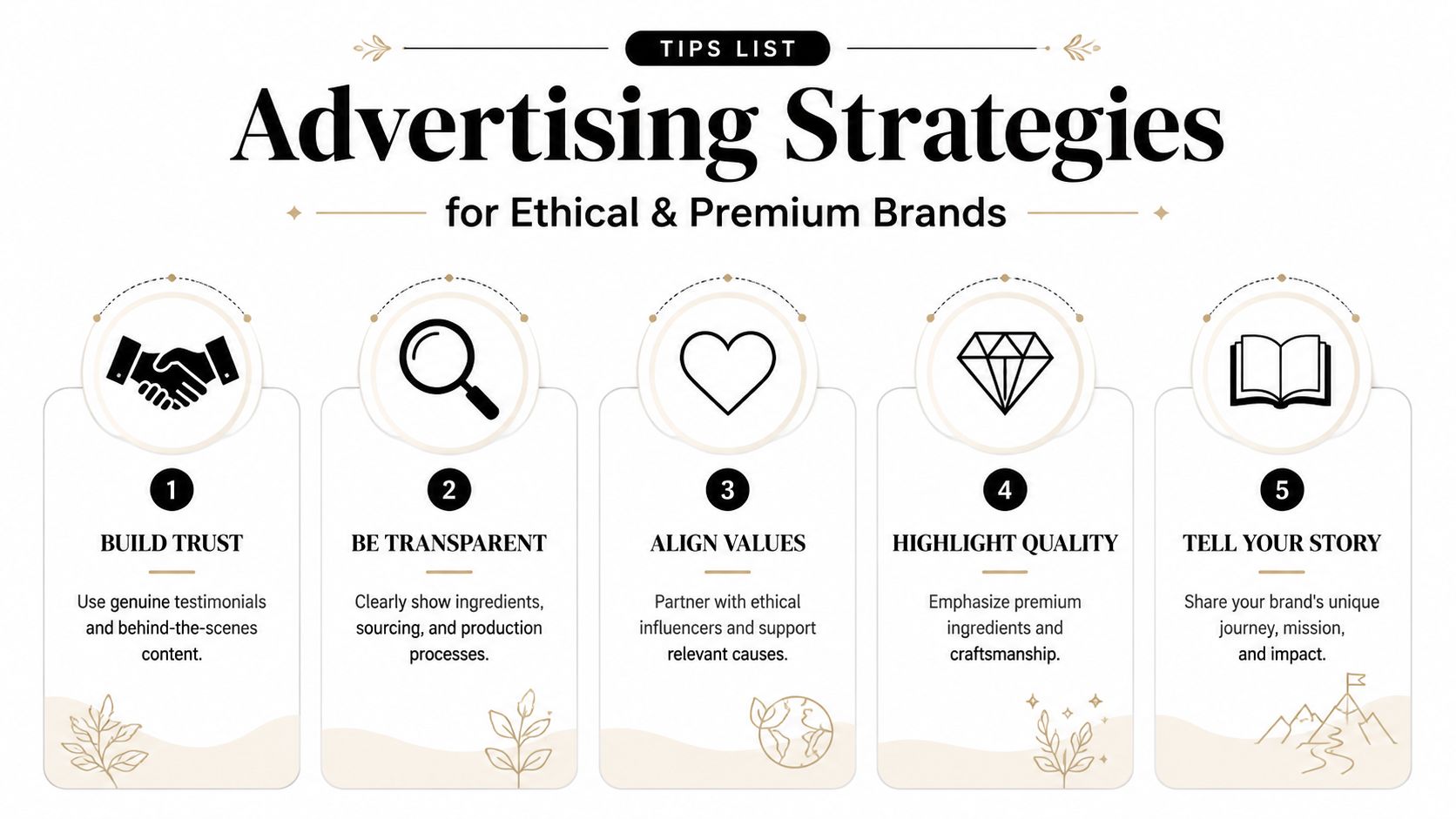
Swiss premium beauty sits in a demanding position. Buyers want quality, but they also question whether the quality justifies the price. That pressure has increased as consumer expectations around value-for-money have become more pronounced. PwC Switzerland's 2024 study found that Swiss consumers are increasingly price sensitive, which raises the importance of precise targeting and message discipline for premium categories, as discussed in this Swiss consumer behaviour reference.
Trust-first targeting beats broad reach
A common mistake is building audiences that are technically large but commercially loose. Premium skincare doesn't need everyone interested in beauty. It needs the subset who care about ingredient quality, skin concerns, safety, or treatment experience enough to pay for a better option.
That changes targeting decisions. Instead of broad demographics, focus on narrower commercial contexts. Think concern-led search terms, product-specific retargeting, spa service pages, or first-party audiences built from past purchasers and qualified leads.
Brand-safe targeting isn't restrictive. It removes people who were unlikely to become profitable customers anyway.
Creative should reassure before it sells
Ethical and premium beauty buyers respond well to detail. They want to know what the product is, why it exists, how it's made, and whether the claims hold up. Overdesigned ads with vague luxury language often underperform because they hide the actual reason to trust the product.
Use creative that communicates substance:
- Ingredient clarity with plain-language benefit framing
- Certification and sourcing context where relevant and supportable
- Ritual and usage guidance that reduces uncertainty
- Texture, packaging, and application visuals that justify premium positioning
A short explainer can help when a product needs more than a headline to earn consideration. Video also works well for treatment-led or sensorial brands when it shows real product use rather than generic lifestyle footage.
The landing page carries the sale
Many premium campaigns fail after the click. The advert feels considered, but the page looks generic, cluttered, or too promotional. For Swiss beauty, the landing page should confirm the buyer's instincts immediately.
A strong page usually does three things well:
- States the product promise clearly without inflated claims
- Provides proof through ingredients, usage detail, certifications, or treatment logic
- Reduces risk with coherent navigation, visible trust signals, and consistent visual tone
The best campaigns don't push harder. They remove doubt faster.
Setting Budgets and Measuring Real Performance
Budgeting for online advertising services gets easier when you stop asking, “How much should we spend?” and start asking, “What level of spend can we measure confidently, fulfil profitably, and scale without weakening the brand?” The right answer depends on your margins, repeat-purchase pattern, and channel mix.
That's why smart teams set budgets around learning and profitability, not platform recommendations. Platforms will always encourage more spend. Your finance view has to be stricter.
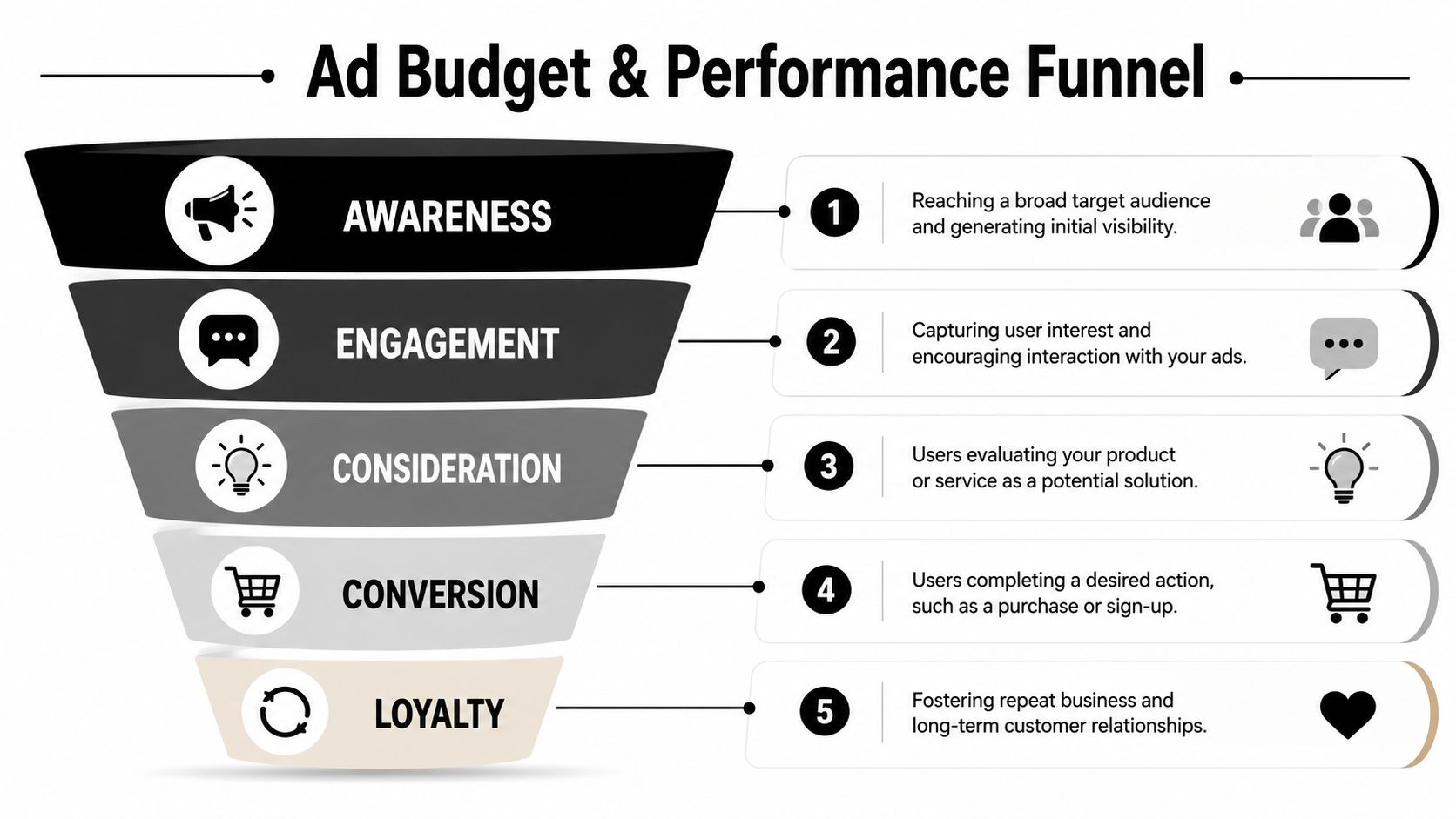
What to measure at each stage
Not every metric belongs to the same business question. Awareness metrics tell you whether you're getting seen. They don't tell you whether you're acquiring profitable customers.
For effective optimisation, ad-platform data should be joined with web analytics via UTM parameters so teams can calculate CTR, conversion rate, CPA, and ROAS at the campaign and audience-segment level. Decisions should be based on these revenue-linked KPIs, not impressions alone, as explained in this advertising analytics guide from Improvado.
A practical funnel looks like this:
Top of funnel
Focus on reach quality, click-through behaviour, and whether the creative attracts the intended audience.Mid funnel
Watch landing-page engagement, product page progression, and audience-level conversion behaviour.Bottom of funnel
Judge campaigns on conversion rate, CPA, and ROAS. Weak traffic quality usually becomes obvious at this stage.
A budget model that avoids false confidence
Early on, split budget by role rather than by platform preference. Keep one portion for demand capture, another for consideration, and a smaller test allocation for new creative or new audiences. That structure prevents a common mistake: overspending on easy impressions while underfunding the channels that close sales.
A few operating habits help:
- Review weekly for tactical adjustments such as pausing weak placements or replacing poor creative
- Review monthly for strategic decisions such as shifting spend across channel roles
- Separate testing from scaling so experiments don't distort your core performance view
If you can't connect the click to downstream sales quality, you're not measuring performance. You're measuring activity.
For teams tightening tracking discipline and trying to maximize advertising ROI, the biggest contributor is usually consistency. UTM naming, campaign taxonomy, and landing-page governance aren't glamorous, but they make every optimisation decision more credible.
Don't let impressions make the budget look healthier than it is
A beauty advert can gather plenty of engagement from curious browsers who love the visual but will never buy a premium product. That's why impressions, video views, and even clicks need context. The test isn't whether the campaign looks busy. The test is whether the audience and the message produce commercially sound sales.
When a team treats ROAS or CPA as the only numbers that matter, that can also create problems. Some campaigns support assisted conversions or retail sell-through in ways that aren't obvious in-platform. The answer isn't to ignore accountability. It's to build a cleaner measurement system so the budget reflects reality rather than platform bias.
Navigating Swiss Compliance and Brand Messaging
In Switzerland, privacy and credibility aren't separate topics. They shape the same customer impression. If your advert promises care and transparency, but your tracking setup or consent experience feels opaque, buyers notice the contradiction.
Switzerland's revised Federal Act on Data Protection, revFADP, has been in force since September 2023 and requires businesses to align tracking and profiling practices with stricter transparency and consent rules. For premium brands, the challenge isn't only compliance. It's building credible attribution with first-party data in a privacy-first environment, as noted in this revFADP and attribution reference.

What this means in practice
Privacy changes don't make advertising impossible. They do force better discipline. Teams need to accept that some tracking will be incomplete and design measurement accordingly.
That usually means leaning harder on:
- First-party data from customer accounts, purchase history, email engagement, and lead forms
- Consent-aware tracking so reported results aren't treated as perfectly complete
- Server-side and offline-informed thinking where appropriate, especially for spa bookings, consultations, or retailer support activity
Messaging dos and don'ts for premium beauty
Ad copy for skincare and wellness products needs a careful balance. It should be persuasive without becoming inflated. Premium buyers are often more sceptical, not less.
A few practical rules help:
- Do state what the product is for in clear language buyers can understand quickly.
- Do support premium positioning with origin, formulation, texture, or ritual detail.
- Do localise by region and language because Swiss audiences respond to relevance, not generic translation.
Avoid these habits:
- Don't imply miracle outcomes that the product page can't support.
- Don't crowd the advert with every possible claim just because the space is available.
- Don't treat compliance text as a footnote if the claim itself needs clarification.
Transparency in beauty advertising isn't legal decoration. It's part of the product experience.
Localisation matters more than many teams expect
Swiss campaigns often underperform because the language is technically correct but commercially wrong. A translated headline can miss local tone, category vocabulary, or the level of formality buyers expect. This is especially important for pharmacies, premium boutiques, and wellness settings where trust is built through precision.
Good localisation affects more than copy. It shapes imagery, offer framing, proof points, and even which benefits lead the message. That's one reason a campaign can look polished and still fail to convert.
Choosing Your Path Agency vs In-House Team
The agency versus in-house decision usually gets framed around control and cost. The more useful question is capability. Can your team run, measure, and improve online advertising services at the level your business needs?
The practical benchmark for performance management is a cross-channel data architecture that combines advertising platforms, analytics, CRM, and finance data. That structure is necessary to attribute revenue accurately because the same ad click can produce very different CPA outcomes depending on downstream behaviour, as outlined in this cross-channel advertising analytics guide.
When in-house makes sense
An internal team can work well if you already have strong brand stewardship, regular creative production, stable channel operations, and someone who can own reporting quality. This setup often suits businesses with enough scale to justify dedicated specialists.
It's especially effective when product education is nuanced and close collaboration with sales, trade marketing, or category teams matters daily.
When an agency is the better choice
A specialist agency is often the stronger option when your internal team is lean, your channel mix is growing, or your measurement setup is still fragmented. An experienced partner can bring structure faster, challenge weak assumptions, and spot waste across campaigns that look acceptable on the surface.
Use this checklist:
- Do we have clear attribution between ad spend and revenue quality?
- Can we produce channel-specific creative consistently?
- Do we have time to test, analyse, and adjust every week?
- Can we manage compliance, localisation, and reporting without shortcuts?
If several answers are no, external support usually pays for itself in clarity before it pays for itself in scale.
The next step is simple. Audit your current measurement setup, define channel roles before changing budget, and decide who will own performance across creative, analytics, and compliance.
If you're building a premium beauty or pharmacy assortment in Switzerland and want practical support that respects brand quality, compliance, and commercial reality, beautysecrets.agency is a strong partner to explore. Their focus on natural and ethically sourced cosmetics, pharmacy-relevant positioning, and premium clean-beauty curation fits the needs of retailers, spas, clinics, and e-commerce teams that want growth without compromising credibility.