A pharmacy counter in Switzerland is a good place to spot a category shift early. One customer asks for a shampoo “without sulfates” because her scalp feels tight after washing. The next wants something gentler for coloured hair. Then a hotel spa buyer asks whether a sulphate-free line will still satisfy guests who expect foam, fragrance, and a premium feel.
That pattern matters because shampoo ohne sodium laureth sulfate is no longer a niche request from a small clean-beauty audience. It has become a practical retail question. Customers ask for it in plain language. Staff need to answer it clearly. Buyers need to know which formulas deserve shelf space and which only borrow the language.
For Swiss pharmacies and beauty retailers, the challenge isn’t to just repeat “SLES is harsh”. The actual job is harder and more commercial. You need to know how to explain SLES versus SLS, how to read an INCI list, how to handle transition complaints, and how to choose products that meet Swiss expectations for both compliance and performance.
The Customer Question Every Swiss Retailer Hears
The question usually arrives in imperfect wording. “Do you have a shampoo ohne sulfate?” “I need something for an itchy scalp.” “My old shampoo suddenly feels too aggressive.” Customers don’t walk in asking for surfactant chemistry. They describe symptoms, frustration, and trial-and-error.
In practice, that puts the retailer in the role of interpreter. The customer says “gentle”. You need to decide whether that means scalp comfort, colour preservation, reduced fragrance sensitivity, or a preference for natural formulations.
What customers usually mean
When someone asks for shampoo ohne sodium laureth sulfate, they’re often trying to solve one of these problems:
- Scalp discomfort: tightness, itchiness, dryness, or a feeling that hair is “too clean” right after washing.
- Hair colour care: fear that strong cleansers will dull a salon treatment faster.
- Ingredient concerns: they’ve started reading labels and want fewer aggressive surfactants.
- Lifestyle fit: they want a formula that feels more aligned with clean beauty and sustainability.
The wording may be vague, but the buying intent is strong. People are actively trying to trade out of a category they no longer trust.
Retail staff don’t need to sound like chemists. They need to translate symptoms into the right product choice.
Why this matters commercially
A weak answer loses the sale twice. First, the customer leaves without buying. Second, they stop seeing the pharmacy as the place for informed haircare advice.
A strong answer does the opposite. It turns a basic stock query into a professional recommendation. That’s especially important in Swiss retail, where trust, formulation quality, and label clarity shape repeat business.
This category rewards retailers who can separate marketing claims from formulation reality. The shelves are full of products that say “gentle”, “sensitive”, or “natural”. Not all of them are suitable for sensitive scalps. The pharmacy that knows the difference can build loyalty fast.
Decoding the Lather SLES versus SLS
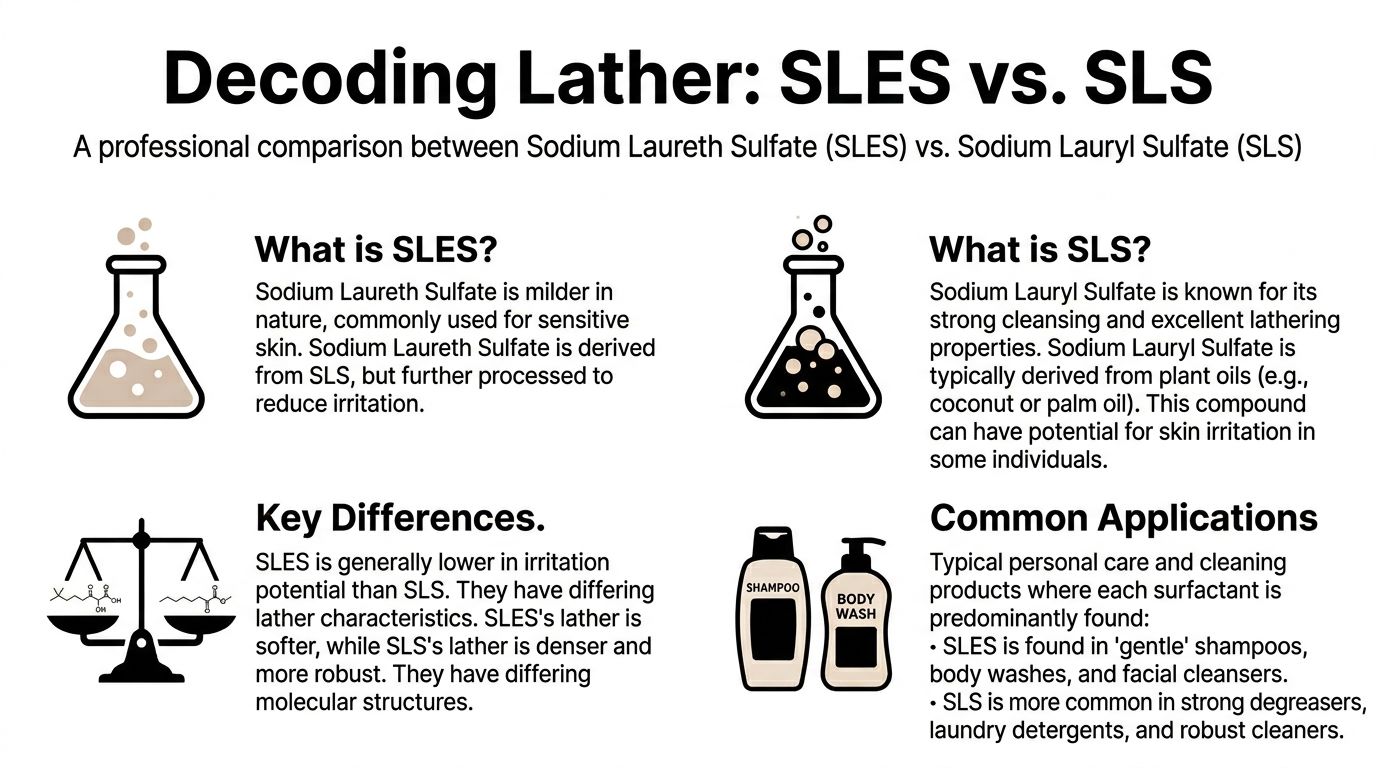
Foam creates confidence. Customers often equate abundant lather with cleanliness. That’s why surfactants like Sodium Laureth Sulfate (SLES) and Sodium Lauryl Sulfate (SLS) became so common in shampoos. They cleanse efficiently and create that familiar, satisfying wash experience.
The problem is that the same cleansing strength that removes oil and residue can also feel too aggressive on a vulnerable scalp.
The practical difference
Think of SLS as the stronger degreaser. It cuts through oil quickly and foams readily. SLES is related, but generally used as the milder option in mainstream cleansing products. Many consumers confuse the two, and many sales teams blur them together. That’s a mistake.
SLES isn’t identical to SLS. But for customers with sensitive scalps, both can still be problematic depending on formula design, concentration, and how often the product is used.
Why sensitive scalps react
A shampoo doesn’t know the difference between “bad” residue and the scalp lipids that help maintain comfort. When a surfactant strips too much, customers often notice the after-effect before they understand the mechanism. Hair may feel squeaky. The scalp may feel exposed or dry. In some users, that can trigger a cycle of irritation and compensatory oiliness.
The issue in retail is expectation management. Customers often think “gentle shampoo” means weak cleansing. That isn’t accurate. Gentle cleansing and effective cleansing can coexist, but the formula has to rely on a different surfactant system.
Side-by-side comparison
| Surfactant | Common Acronym | Primary Function | Pros | Cons for Sensitive Scalps |
|---|---|---|---|---|
| Sodium Laureth Sulfate | SLES | Strong cleansing and foam | Familiar lather, widely used, effective at removing oil and buildup | Can feel stripping and may be poorly tolerated by reactive scalps |
| Sodium Lauryl Sulfate | SLS | Very strong cleansing and foam | Powerful cleansing, dense foam | Generally more aggressive and more likely to cause dryness or irritation |
| Glucosides, glutamates, sulfosuccinates and similar mild surfactants | None or ingredient-specific names | Gentle cleansing with lower irritation potential | Better suited to frequent washing and sensitive scalp routines | Often produce softer foam and may require customer education |
Practical rule: Don’t train staff to say “sulfates are bad”. Train them to say “some surfactants cleanse more aggressively than this customer’s scalp can comfortably tolerate”.
That answer is more accurate and more useful at the shelf.
The Swiss Consumer Shift to Gentle Hair Care
Swiss demand has moved well beyond curiosity. By 2023, over 35% of Swiss consumers actively sought sulfate-free hair care products, up from 12% in 2018, and that shift coincided with a 28% increase in ECOCERT-certified natural shampoos imported and sold locally, according to the reporting summarised by Typology’s overview of sulfate-free shampoo demand in Switzerland.
That kind of movement changes buying strategy. It means a retailer can no longer treat sulphate-free as a token sub-segment with a couple of niche SKUs hidden on the bottom shelf.
What’s driving the shift
The demand comes from several overlapping motivations.
- Scalp comfort: customers who’ve had repeated dryness or irritation are actively looking for gentler wash routines.
- Ingredient transparency: Swiss shoppers increasingly read labels, compare products, and question broad “sensitive” claims.
- Natural positioning: the move toward clean beauty often starts with shampoo because it’s a frequent-use product.
- Premium routine building: once customers switch one category successfully, they often expand into matching conditioners, masks, and scalp care.
Why pharmacies are well placed
Pharmacies and drugstores have one advantage that general retail doesn’t. Customers already expect informed advice there. When haircare becomes a problem-solving purchase instead of a convenience purchase, that trust matters.
A customer choosing between two body creams may browse. A customer whose scalp is flaring wants reassurance. They want someone to explain why one formula is less risky than another, and whether a low-foam shampoo is still doing its job.
The category is no longer optional
For a Swiss retailer, the decision now isn’t whether to stock this segment. It’s whether to stock it well.
That means:
- carrying more than one texture and price level
- distinguishing between “free from SLES” and products with verified gentleness
- training staff to explain why foam volume isn’t the best measure of performance
The strongest assortments don’t present sulphate-free shampoo as a compromise. They present it as the modern answer for customers who want effective cleansing with better tolerance.
Beyond Sulfates Understanding Gentle Cleansing Alternatives
Once you remove SLES, the formula has to do real work elsewhere. The good products don’t just take something out. They replace it with a surfactant system that cleanses well, rinses cleanly, and still leaves the scalp barrier in better condition.
In the Swiss market, SLES-free shampoos use milder plant-based surfactants such as glucoside and glutamate tensides, and these alternatives are associated with up to 40 to 50% lower scalp irritation. Glucoside-based options also tend to maintain a pH of 5.5 to 6.0, with reported outcomes including 25% improved hair manageability and 30% reduced breakage under Curly Girl Method protocols, as outlined in Hairlust’s discussion of sulfate-free shampoo benefits.
The families worth knowing
You don’t need to memorise every ingredient name. You do need to recognise the main families.
Glucosides
These are often derived from plant sources such as coconut and sugars. In retail terms, they’re useful because they signal a gentler cleansing style.
They usually produce a softer foam than SLES. That can worry first-time buyers, but the lower flashiness of the lather is often exactly why the scalp tolerates them better.
Glutamates
Glutamate-based surfactants are another good sign in a mild formulation. They’re often used where a brand wants a more skin-friendly profile and a less stripped after-feel.
For sensitive-scalp customers, that’s often more important than maximal degreasing.
Sulfosuccinates and amphoteric support surfactants
Some formulas combine mild primary surfactants with supporting cleansers to improve rinse-off, combability, or foam feel. That blend matters. A single ingredient doesn’t tell the whole story.
A good buyer looks at the total cleansing system, not one hero ingredient.
What works in practice
The best-performing SLES-free shampoos usually have a clear identity. They are designed either for scalp comfort, curl care, colour care, or frequent washing. Problems start when a formula tries to imitate a harsh clarifying shampoo while claiming to be ultra-gentle.
A useful way to train staff is to focus on performance language:
- For sensitive scalps: softer cleanse, less stripped feel
- For curls and waves: better moisture balance, less roughness after rinsing
- For colour-treated hair: gentler wash routine that supports longevity
- For daily or frequent washing: more suitable than aggressive cleansers
If your team wants a broader frame for discussing salon and premium haircare positioning, this comparison of Redken vs Pureology haircare brands is a helpful outside reference because it shows how brand philosophy, hair goals, and formula style affect recommendation quality.
The better sales conversation starts with “what kind of wash experience does your hair and scalp need?” not “do you want sulphate-free?”
That shift moves the discussion from fear to fit.
How to Master the INCI List and Spot True SLES-Free Formulas
A customer is standing at the pharmacy shelf with two bottles in hand. Both say “gentle.” Both say “for sensitive scalp.” One is free from Sodium Laureth Sulfate. The other only changed the front-label language. Your team needs to spot the difference in seconds, because that decision affects trust, repeat purchase, and complaint handling.
The INCI list is the working document. Front-of-pack claims help sell the product, but the ingredient list tells your buyer and your staff what is in the bottle. In Switzerland, where pharmacy customers often ask precise questions about tolerability, that skill is part of category credibility.
A practical three-step scan
Step one: identify the primary surfactants
Start near the top of the INCI list, where the main cleansing agents usually appear. If Sodium Laureth Sulfate is listed, the product is not SLES-free. If the first surfactants are milder systems, the product may fit the category. “May” matters here, because one missing ingredient does not make a formula well built.
This first check should become routine at buying stage, not only after a customer challenge at shelf.
Step two: catch the close substitutes and naming traps
Staff often miss formulas that avoid SLES but still rely on stronger sulfate-family surfactants or similarly positioned detergents. A product can be legally marketed with soft wording while still delivering a wash profile that some sensitive-scalp customers find too aggressive.
That is why I advise pharmacy partners to train teams on ingredient recognition, not just claim recognition. A staff member who can spot Sodium Laureth Sulfate, Sodium Lauryl Sulfate, and other similar names will give better guidance than a staff member repeating “sulfate-free” from the packaging.
Step three: read the formula as a system
A true SLES-free shampoo still has to work. Check whether the rest of the formula supports the promise. Humectants, conditioning polymers, scalp-soothing agents, perfume load, and preservative choice all shape the user experience. A shampoo can pass the narrow SLES-free test and still be a poor recommendation for reactive scalps.
In pharmacy retail, poor assortment decisions often become evident at this stage. The product meets the claim, but customers report tightness, rough hair feel, or weak performance. The fix is better formula screening before launch.
What good category control looks like
For Swiss retailers, the safer standard is simple. Do not approve a product into your SLES-free assortment based only on front-label language or supplier sales sheets. Review the full INCI, document the main surfactants, and keep an internal short list of products your team can recommend with confidence.
That also protects you from loose use of terms like “sensitive,” “clean,” or “free from,” which are merchandising tools, not formal proof of mildness.
A quick explainer can help staff sharpen their eye for labels and formulation language:
What to tell your team
- Start with the INCI list: confirm the cleansing system before repeating any shelf claim.
- Watch similar ingredient names carefully: customers ask about scalp comfort, not technical wording alone.
- Record approved formulas internally: keep a simple buyer or staff reference with the key surfactants and best-fit customer profile.
- Treat “sensitive” as a marketing term: only the formula review tells you whether the product belongs in your SLES-free set.
Retailers who read labels well build stronger trust, cleaner assortments, and fewer disappointing recommendations.
Matching SLES-Free Shampoos to Every Customer Need
One reason this category gets mishandled is that retailers treat all sulphate-free shampoos as interchangeable. They aren’t. A customer with an itchy scalp, a customer with fine hair, and a customer with heavy styling buildup don’t need the same wash profile.
Sensitive scalp and eczema-prone customers
This is the most obvious fit for shampoo ohne sodium laureth sulfate. The recommendation should focus on comfort, wash frequency, and avoidance of overly aggressive cleansers.
Keep the language grounded. Don’t promise a medical outcome. Explain that a milder surfactant system is often a better starting point when the scalp reacts easily.
Colour-treated and dry hair
These customers usually respond well to gentler cleansers because they want less roughness after washing and less colour fade. They often notice texture first. Hair feels less stripped, easier to detangle, and more manageable over time.
That makes premium positioning easier. You aren’t selling absence. You’re selling a better wash experience.
Fine hair and oily scalps
Many retailers get nervous about this. They assume SLES-free equals too soft, too rich, or not cleansing enough. That’s only partly true.
A 2025 University of Zurich dermatology study found that 37% of Swiss consumers with fine, Alpine-exposed hair experienced a 2 to 3 week period of oilier scalps when switching to SLES-free, and that hard water in Swiss lakeside areas can reduce lather of mild tensides by 40%, as summarised in this discussion of sulfate-free shampoo trade-offs.
That doesn’t mean the formula is failing. It means the customer needs context.
“If your shampoo foams less for the first washes, that doesn’t mean it isn’t cleansing. It may mean your scalp and water conditions are different from what you’re used to.”
How to guide the transition
For these customers, success often depends on expectation-setting.
- Explain the adjustment period: some users feel oilier before the scalp settles into the new routine.
- Address hard water: lower lather in some Swiss regions is a practical reality with mild surfactants.
- Pair intelligently: recommend the right conditioner or rinse strategy instead of switching the customer back too early.
A practical matching framework
| Customer type | What to prioritise | What to avoid saying |
|---|---|---|
| Sensitive scalp | mild cleansing, comfort, low irritation potential | “This will solve every scalp problem” |
| Coloured hair | gentle wash routine, softer after-feel | “Colour-safe only means sulphate-free” |
| Fine hair | light textures, transition coaching | “If it feels oilier, the product is wrong” |
| Oily scalp | balanced cleansing, proper usage advice | “You need the strongest detergent to feel clean” |
The best category teams don’t overpromise. They coach the customer through fit, use, and realistic adaptation.
Using Certifications to Build Trust and Value
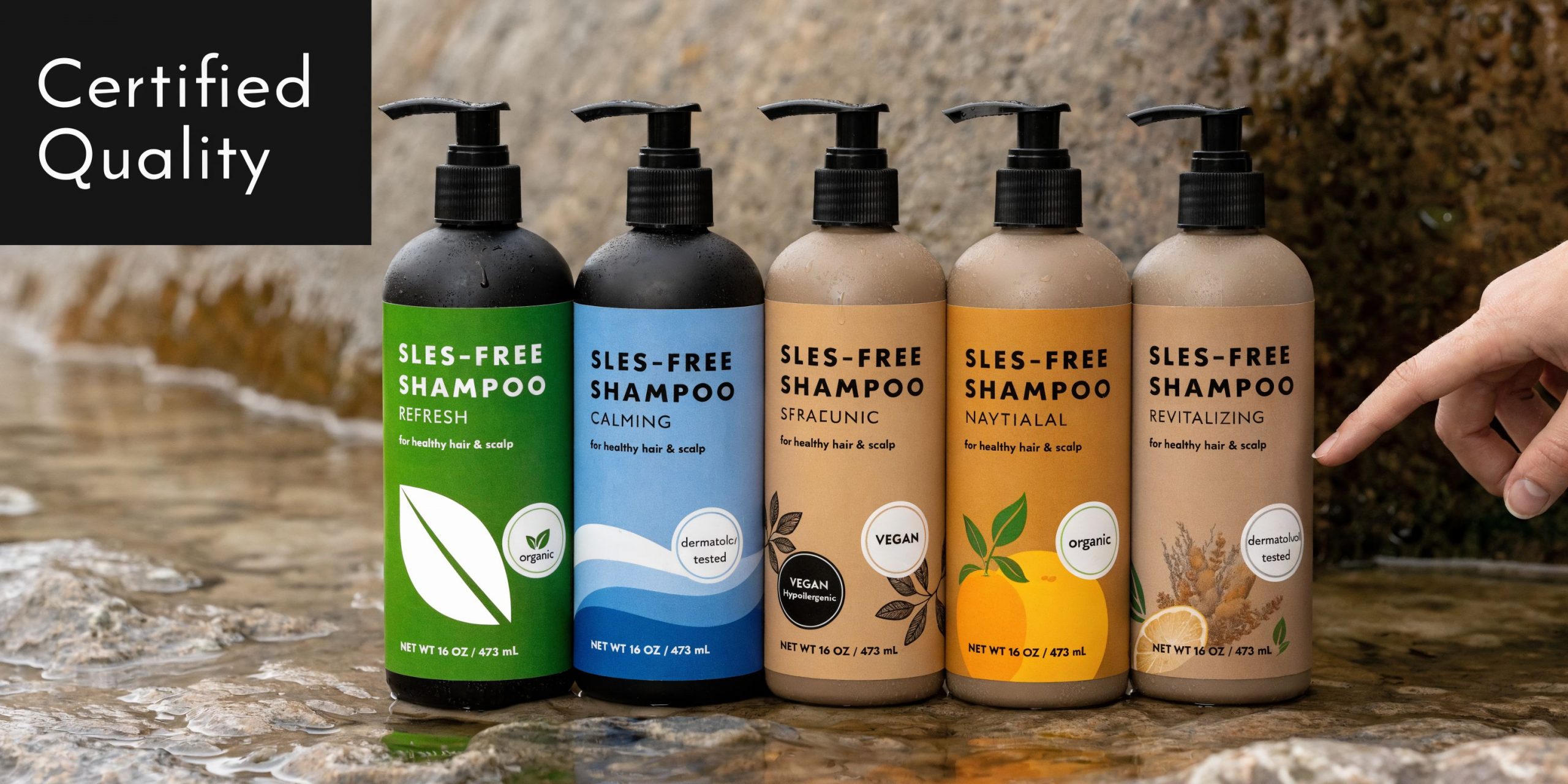
A clean label claim is easy to print. A recognised certification is harder to earn. That’s why certifications matter so much in this category.
Swiss buyers deal with a crowded market where many products borrow the language of natural beauty without offering equivalent sourcing, processing discipline, or documentation. Certifications help separate a serious formula from a fashionable one.
Why this matters in Switzerland
Swiss regulations under the KVO require strict labelling, and a 2025 BAG report indicated that 68% of imported shampoos fail initial checks for undeclared ethoxylated surfactants like SLES. The same reporting notes that ECOCERT-compliant lines can reduce re-testing costs for pharmacies by an estimated 25%, helping products move to shelf with less friction, as described in this review of shampoo ingredient risks and compliance issues.
For a pharmacy, that’s not a theoretical benefit. It affects range-building speed, supplier confidence, and administrative burden.
What certifications do commercially
They reduce sourcing risk
A certified product still needs due diligence, but it starts from a stronger position. That matters when you’re evaluating imported lines and don’t want surprises after the goods arrive.
They justify premium positioning
Customers will often pay more when the trust signal is visible and credible. ECOCERT and cruelty-free marks give staff something concrete to point to beyond brand storytelling.
They simplify the shelf conversation
A logo won’t replace training, but it makes trust faster. In a retail environment, that speed matters.
A certification mark does two jobs at once. It reassures the customer and protects the retailer from relying on vague marketing language.
What to look for in range selection
- Recognised standards: choose certifications that have clear external meaning for Swiss shoppers.
- Consistency across the brand: one certified hero SKU is less useful than a coherent certified sub-range.
- Support materials: suppliers should provide documentation, not just packaging claims.
In a category full of soft language, hard verification becomes a selling tool.
Your Action Plan for Merchandising SLES-Free Shampoos
A customer stands at the shampoo shelf, compares two labels, and asks the pharmacist a simple question: “Which one is gentler, and why does it cost more?” The sale often depends less on the formula than on how clearly the category is presented. In Swiss pharmacy retail, SLES-free shampoo works best as a guided category with a clear logic, visible trust markers, and staff who can explain trade-offs without slipping into fear-based claims.
Build the category around use cases
Swiss shoppers rarely search by surfactant chemistry alone. They shop by problem, habit, and tolerance. Group the shelf around needs such as sensitive scalp, frequent washing, colour protection, curls, and fine hair. That structure shortens the path to purchase and reduces the number of vague “natural shampoo” questions your team has to decode at the counter.
Brand blocking still has a place, but use it inside a need-state layout, not as the main organising principle.
Train staff on recommendation language
Short scripts improve conversion. They also reduce returns caused by poor expectation setting.
- For low-foam concerns: explain that a milder surfactant system often produces less dense lather, but can still remove sebum and styling residue effectively.
- For oily-hair complaints: explain that some customers need a short adjustment period, especially if they switch from a highly deterging formula.
- For label checks: train staff to confirm what is absent and what replaces it. Customers asking for “sulfate-free” do not always mean the same thing as SLES-free.
In practice, I would rather hear a staff member say, “This formula cleans more gently but may feel different for the first few washes,” than promise a perfect match on day one. That honesty protects trust.
Use trust signals at shelf level
Shelf communication should do three jobs. Show that the formula is SLES-free. Show who it is for. Show why the price is justified.
Keep shelf talkers tight. “For sensitive scalp,” “without sodium laureth sulfate,” and “certified natural cosmetics” are more useful than broad lifestyle language. In Switzerland, where pharmacy shoppers expect evidence and clear positioning, precise wording usually sells better than trend vocabulary.
Extend the message beyond the shelf
Local credibility matters. For pharmacy teams testing social or community-led promotion, smaller creators often fit this category better than broad beauty personalities. This guide on what a nanoinfluencer is is useful because specialist hair and scalp recommendations tend to perform better when they come from a trusted local voice with a defined audience.
A concise checklist
- Create a visible sub-category: keep SLES-free products together instead of scattering them across the full shampoo bay.
- Approve products by INCI: merchandising should follow ingredient review, Swiss compliance checks, and supplier documentation.
- Prepare staff for trade-off questions: foam level, wash feel, fragrance, and transition period all influence repeat purchase.
- Support premium pricing with proof: use certifications, dermatological positioning, and clear product-fit language.
- Review sell-through by need state: sensitive scalp and frequent-use shampoos often justify more facings than a broad “clean beauty” block.
Well-run pharmacies do not treat SLES-free shampoo as a trend corner. They treat it as a durable sub-category with better advice, better fit, and fewer disappointed returns.
If you’re building or upgrading a Swiss clean-haircare assortment, beautysecrets.agency can help you source certified, premium formulations that fit pharmacy, spa, and specialist retail expectations, with support for compliant range selection and differentiated merchandising.