A customer walks into your pharmacy, holds up a screenshot of a brown bottle, and asks, “Is this the strong one from The Ordinary, or the gentler one?” Another asks whether they can use it with an organic facial oil. A spa client wants smoother texture but says every retinoid they’ve tried has made their skin angry.
That's an important retail moment for retinol the ordinary. It isn’t just about stocking a famous SKU. It’s about answering precise questions with enough confidence that the client buys the right product, uses it correctly, and comes back for the rest of the routine.
For Swiss beauty professionals, that matters even more. Many customers want clinical actives, but they also expect clean positioning, thoughtful guidance, and compliant claims. The Ordinary sits right in that tension point. It offers straightforward formulas, transparent naming, and an unusually broad ladder of retinoid strengths. That makes it commercially attractive, but only if staff can decode the differences quickly and explain them in plain language.
The Retinol Opportunity Your Customers Are Asking For
The commercial case is already visible. The Ordinary achieved annual revenue of US$213 million on its primary online store in 2025, and in Switzerland its retinol products reached a 3.5 to 4.0% conversion rate in 2025, signalling strong engagement for local retailers and premium beauty channels, according to ECDB’s retailer profile for theordinary.com.
That matters because retinol shoppers rarely ask for “any anti-ageing serum”. They ask for a specific molecule, a specific strength, and often a specific bottle they’ve already seen online. The demand arrives pre-educated, but not always correctly educated.
Why this range attracts so much interest
The Ordinary made retinoids easier to browse than many prestige brands. The naming is direct. Retinol 0.2% in Squalane tells the buyer what’s inside. Retinal 0.2% Emulsion signals that it’s not the same chemistry. Granactive Retinoid 2% Emulsion sounds similar to retinol, yet behaves differently on skin.
That creates opportunity for the retailer who can interpret the range without adding confusion.
A strong consultation does three things:
- Builds trust fast by explaining what the client is buying, rather than repeating marketing language.
- Protects the customer experience by steering beginners away from formulas they’re unlikely to tolerate.
- Improves basket quality because retinoids are rarely sold alone. They need cleansing, hydration, and daytime SPF support.
Why Swiss retailers are in a strong position
Swiss pharmacies, spas, clinics, and curated e-commerce stores already work in an advice-led environment. Customers expect more than a shelf tag. They expect a recommendation that fits their skin history, season, and routine style.
That’s especially useful with The Ordinary. Its formulas are accessible, but they aren’t self-explanatory to the average shopper.
The sale isn’t the bottle. The sale is the buyer’s confidence that this bottle is the right starting point.
For premium retailers with a clean-beauty customer base, the range also creates a useful conversation. Many shoppers want efficacy without abandoning their preference for simpler routines, ethical positioning, or elegant supporting care. If your team can translate retinoid science into practical choices, you stop competing on price alone.
How Vitamin A Transforms Skin The Retinoid Family Explained

Retinoids are all part of the vitamin A family. They don’t all behave the same way, and that’s where many retail conversations go wrong.
The cleanest way to explain them is as a conversion pathway. Skin responds to retinoic acid. Some molecules arrive closer to that active form than others. The fewer conversion steps required, the more direct the activity tends to be.
The conversion pathway in plain language
Retinol is not the final active form. It first converts to retinaldehyde, then to retinoic acid. According to NIOD’s retinol ingredient glossary, retinol undergoes this two-step bioactivation and helps upregulate collagen and hyaluronic acid production. The same source notes that skin tolerability typically builds over 4 to 6 weeks as desquamation normalises.
That gives you a simple retail script:
- More steps to convert usually means a gentler start.
- Fewer steps to convert usually means quicker visible activity, but not always better tolerance for every user.
- Concentration alone doesn’t tell the full story. The molecule matters.
The main family members professionals should know
| Retinoid form | Distance from retinoic acid | Typical retail takeaway |
|---|---|---|
| Retinyl esters | Furthest away | Often chosen for very cautious users |
| Retinol | Two conversions away | Familiar benchmark ingredient |
| Retinaldehyde | One conversion away | More direct than retinol |
| Retinoic acid | Already active | Prescription territory, not standard cosmetic retail |
For a buyer, the key confusion is usually this: a higher percentage in one retinoid category doesn’t automatically equal a stronger result than a lower percentage in another. A 1% retinol and a retinal emulsion aren’t interchangeable because both are vitamin A derivatives.
Here’s a useful visual explainer for team training or client education:
What retinoids actually do in skin
In practice, retinoids are used because they help improve the look of:
- Fine lines
- Uneven texture
- Dullness
- Irregular tone
- Loss of smoothness
Those improvements come from changes in skin turnover and signalling activity. You don’t need to turn that into a lecture at the counter. You do need to explain that retinoids work through consistency, not intensity.
Practical rule: If the customer wants “results fast”, don’t automatically move them to the strongest bottle. Move them to the formula they’ll still be using a month from now.
Why irritation happens
Many first-time users think redness or flaking means the product is “working better”. That’s poor guidance. Irritation is not a performance metric.
Retinoids can temporarily disturb the barrier while skin adapts. That’s why the same concentration can feel easy for one user and disruptive for another. Skin history matters. Routine overlap matters. Application frequency matters.
For professional buyers, this is a key category skill. You’re not just learning ingredient theory. You’re learning how to match molecule, concentration, formula base, and user profile so the customer can stay on the treatment path.
Decoding The Ordinary Retinol Serums and Emulsions
A Swiss client stands at the shelf, sees six The Ordinary retinoid options, and asks a fair question: which one fits my skin, my routine, and my tolerance? If staff answer only with percentages, the consultation gets weaker. The better method is to sort the range by molecule first, then by vehicle, then by user profile.

For premium Swiss retail, that distinction matters. A cleanly merchandised shelf should help clients understand why one bottle suits a cautious beginner and another belongs with an experienced treatment user. The Ordinary gives you a clear ladder, but only if your team explains it in plain, technically correct language.
Pure retinol in squalane
These are the simplest SKUs to explain. The active is retinol and the base is squalane, a water-free, lipid-rich vehicle that supports stability and gives a softer, more cushioned skin feel than a classic water serum.
That texture changes the sales conversation. Clients who enjoy facial oils often accept these formulas quickly. Clients who dislike any oily afterfeel may hesitate even if the active itself is appropriate.
Retinol 0.2% in Squalane
This is the best starting point for many first-time retinol users. It suits the client who wants to begin carefully, especially if the consultation reveals sensitivity history, inconsistent product use, or anxiety about visible peeling.
Retail positioning:
- Entry-level pure retinol
- Suitable for cautious starters
- Easy to place in a stripped-back evening routine
Buyer guidance should stay realistic. This product is for building a habit and skin tolerance first. Results come from regular use over time, not from choosing the strongest label on day one.
Retinol 0.5% in Squalane
This is often the most commercially balanced option in the pure retinol line. It gives experienced users a meaningful step up from introductory strength without immediately pushing them into the highest concentration.
Best fit:
- Clients with previous retinoid experience
- Shoppers focused on visible smoothing and tone refinement
- Users who understand that frequency still needs control
In store, this is often the bottle that benefits most from staff confidence. It is strong enough to feel serious, but still broad enough in appeal to become a repeat-purchase SKU.
Retinol 1% in Squalane
This is the highest-strength pure retinol option in the classic squalane range. It is for advanced users, not merely ambitious ones.
That distinction matters at shelf level. A buyer may interpret 1% as the best value or the fastest route. A trained consultant should frame it more accurately. It is the strongest classic retinol in the line and therefore the easiest to oversell to the wrong customer.
It suits:
- Established retinoid users
- Clients who already manage application frequency well
- Routines that are otherwise kept fairly simple
For Swiss beauty professionals working in pharmacies, concept stores, or premium e-commerce, this is a product that needs controlled positioning. It should feel expert-led, not impulse-driven.
Granactive retinoid options
These products need more explanation because the wording is less self-explanatory. The key retinoid here is hydroxypinacolone retinoate, usually shortened to HPR.
From a training perspective, HPR is easier to sell if staff explain the practical outcome rather than the chemistry alone. Clients usually want to know two things. How strong does it feel, and how likely is it to irritate my skin? The Ordinary positions its Granactive options as a route associated with lower perceived irritation than classic retinol for many users.
Granactive Retinoid 2% Emulsion
This is often the easiest bridge product in the whole category. The emulsion texture feels familiar to clients who prefer creams or milky serums over oils, and the reduced-sensitivity positioning makes it approachable for people who want a retinoid but fear the adjustment phase.
Retail strengths:
- Good for undecided shoppers
- Helpful for clients moving from hydration into treatment
- Easy to merchandise beside barrier-supporting moisturisers in a premium clean-beauty set
A useful explanation for staff is simple: this is a gentler-feeling retinoid route for the client who wants treatment credentials without starting with classic retinol oil.
Granactive Retinoid 5% in Squalane
This version sits further along the confidence scale. It tends to attract shoppers who already recognise the Granactive name or who want a more treatment-focused identity while still avoiding the strongest pure retinol option.
The consultation matters more here. Staff should check:
- Previous retinoid use
- Comfort with oil textures
- Current use of exfoliating acids or other strong actives
- Whether the client wants simplicity or is building a complex routine
Those questions prevent a common retail mistake. A formula can be technically suitable and still be the wrong commercial recommendation if the user dislikes the texture or has a cluttered routine they will not simplify.
The advanced retinal option
Retinal deserves its own explanation because it sits closer to retinoic acid in the conversion pathway than retinol does. In practical terms, many professionals view retinal as a more direct, higher-performance step for experienced users.
Retinal 0.2% Emulsion
The Ordinary’s Retinal 0.2% Emulsion is not a beginner SKU. It belongs in consultations with clients who already understand retinoids and want a more advanced format with a modern delivery system.
According to Cosmetics Business coverage of the launch, The Ordinary’s Retinal 0.2% Emulsion uses an advanced encapsulated retinaldehyde delivery system and showed significant improvements in fine lines and skin tone within two weeks using only twice-weekly applications.
For retail teams, the message is straightforward. This is a specialist recommendation. It works best when presented with clear coaching, careful routine editing, and the expectation that stronger does not mean more frequent.
A buyer-friendly comparison
| Product | Active type | Texture | Best retail match | Main caution |
|---|---|---|---|---|
| Retinol 0.2% in Squalane | Pure retinol | Oil-serum | First-time retinol user | Expectations may be too high too soon |
| Retinol 0.5% in Squalane | Pure retinol | Oil-serum | Experienced but not advanced | Needs measured frequency |
| Retinol 1% in Squalane | Pure retinol | Oil-serum | Advanced retinol user | Easy to oversell |
| Granactive Retinoid 2% Emulsion | HPR plus retinoid complex | Cream-emulsion | Cautious user wanting comfort | Needs explanation of “Granactive” |
| Granactive Retinoid 5% in Squalane | HPR-focused route | Oil-serum | Confident retinoid shopper | Not ideal for confused beginners |
| Retinal 0.2% Emulsion | Retinaldehyde | Emulsion | Expert user seeking a more direct route | Needs precise counselling |
How to recommend without overwhelming the client
Good retinoid selling works like triage. You do not explain every molecule in full. You identify the right lane quickly, then support the decision.
Ask:
- Have you used retinoids before?
- Do you like or dislike oil textures?
- Are you already using exfoliating acids?
- Is your main goal texture, tone, or lines?
- Do you want the gentlest entry point or a more advanced treatment?
Then narrow the choice.
If a customer needs a long lecture to understand why you selected one bottle, the recommendation is still too broad. Strong retail teams in Switzerland do this better. They match concentration, vehicle, tolerance profile, and merchandising logic in one clear recommendation.
Guiding Your Clients Through Retinol Application and Irritation Management
A Swiss client buys a retinol serum on Friday, uses it three nights in a row, adds an acid toner because “more active” feels more professional, then returns the next week saying the product was too harsh. The formula was not always the problem. The routine usually was.
For retail teams, that distinction matters. Good counselling protects the client’s skin, reduces returns, and builds trust in a category that many customers want but many still misunderstand.

Start with a routine the client can actually follow
Retinol advice should sound calm and specific. A customer does not need ten steps on day one. They need a clear evening pattern they can repeat without guessing.
A practical staff script is:
- cleanse with a mild formula
- wait until skin is fully dry
- apply a small amount of the retinoid
- add moisturiser if the skin feels dry or tight
- use broad-spectrum SPF the next morning
That sequence works because retinoids are easiest to tolerate in a controlled environment. Dry skin reduces the chance of unnecessary sting. A small amount limits excess exposure. Moisturiser helps support the barrier while the skin adjusts.
Explain frequency before clients ask about strength
Professional buyers already know that concentration attracts attention on shelf. Tolerance drives repeat purchase.
A simple way to frame this for staff is to treat retinol like strength training. The skin needs progressive loading, not a heroic first session. For many clients, two evenings per week is a sensible starting point. If skin stays comfortable, frequency can increase gradually. If it does not, the first adjustment is usually fewer nights, not a stronger rescue product.
That point is commercially useful in Swiss premium retail. Customers who understand pacing are less likely to abandon the category after one poor week.
Where irritation usually starts
Clients often bring three assumptions into the consultation:
- more nights means faster results
- tingling means the product is working
- a “natural” product automatically softens an active routine
The third point needs careful handling, especially in Switzerland, where clean-beauty and botanical-led assortments often sit beside clinical skincare. Experience in stores and treatment settings shows that customers who mix retinoids with fragrant balms, essential oils, exfoliating botanicals, or acid-heavy natural formulas often report more sensitivity. The issue is not that natural products are unsuitable. The issue is that hybrid routines can become crowded very quickly.
For staff, the safest recommendation is usually to simplify retinoid nights.
How to position retinoids within a clean-beauty routine
The retinoid should be the treatment step. Everything around it should behave like a support system.
Use a routine with four clear jobs:
- a gentle cleanser to remove soil without stripping
- the retinoid as the active evening treatment
- a simple moisturiser, or a plain oil only if the client already tolerates oils well
- daytime sun protection
Be careful with products that bring their own activity to the same evening. That includes exfoliating acids, highly perfumed formulas, strong essential-oil blends, and “glow” products built around multiple plant extracts.
A useful consultation question is: “Which current products ever sting, feel hot, or leave your skin red?” If a product already causes a sensory reaction on its own, it usually does not belong in the same routine as a newly introduced retinoid.
The best beginner routine is often the least decorative one.
Help clients distinguish adjustment from overuse
Some dryness, light flaking, or a temporary feeling of tightness can occur during the early adaptation phase. Buyers and retail staff should be trained to explain that clearly, while also drawing a firm line around signs that the routine is too aggressive.
Useful corrective steps include:
Buffering
Apply moisturiser before the retinoid, after it, or both. Many clients know this as the sandwich method.Lowering frequency
If irritation appears, reduce the number of nights first.Protecting fragile zones
The sides of the nose, corners of the mouth, and the eye contour often react first. Clients can avoid those areas during the first weeks.Removing competing actives
Acids, scrubs, and strong exfoliating masks should usually stay out of the routine on retinoid evenings.
For premium Swiss retailers, this is also a service issue. Staff who can explain adaptation calmly tend to keep clients in the category instead of losing them at the first sign of peeling.
Sun protection needs a practical explanation
Clients hear “use SPF” so often that the phrase can lose meaning. Give the reason.
Retinoids encourage renewal. Newer surface cells are less forgiving of UV exposure, and Swiss conditions make that relevant well beyond summer. City walking, high-altitude weekends, winter sports, lake reflection, and travel all increase cumulative exposure. “Only when it’s sunny” is poor advice for retinoid users.
Keep the message simple. Evening retinoid use and consistent daytime sun protection belong together.
A consultation framework staff can use at the counter
| Customer says | Staff response |
|---|---|
| “I’m new to retinol.” | Recommend a slower start, with fewer nights and a simple support routine |
| “My skin is sensitive.” | Focus on vehicle, barrier support, and conservative frequency |
| “I use a lot of natural skincare.” | Simplify retinoid nights and remove active botanical products from the same routine |
| “My skin peeled after a week.” | Review frequency, layering, and any acids or fragranced products in the routine |
| “I want faster results.” | Explain that consistency and tolerance usually matter more than moving up too quickly |
Strong retinol retailing is part science, part instruction design. The goal is not to make the routine sound advanced. The goal is to make it work safely, clearly, and well enough that the client wants to continue.
Swiss Compliance for Retinol Products
A customer in Zurich asks a pharmacy adviser whether The Ordinary retinol can “treat acne” and whether it is safe during pregnancy. The product itself is only half the job at that point. The other half is language, and in Switzerland, wording determines whether a recommendation stays within cosmetic practice or drifts into territory staff should avoid.
For Swiss beauty retailers, the working rule is simple. Sell retinol as a cosmetic that improves visible skin appearance. Do not present it as a treatment for a medical condition. That distinction protects the business in e-commerce, selective retail, pharmacy, and clinic-adjacent environments, especially where premium positioning depends on credibility and restraint.
Claim boundaries staff should understand
Retinoid communication works best when teams separate cosmetic claims from therapeutic ones. A good test is this: if the sentence describes how skin looks, it usually belongs in cosmetic language. If it describes diagnosis, treatment, prevention, or body function, it usually does not.
Use wording such as:
- improves the appearance of fine lines
- helps skin look smoother and more even
- supports the look of refined texture
- helps improve the appearance of uneven tone
- fits an evening routine designed for gradual use
Avoid wording such as:
- treats acne
- heals damaged skin
- reverses a skin disorder
- changes hormonal skin conditions
- removes wrinkles permanently
That may sound strict, but it is good retail discipline. Premium customers tend to trust measured claims more than dramatic ones.
Safety communication should be standardised
Retinol compliance is often lost in casual speech at the shelf, not in formal brand documents. Staff improvisation is the weak point.
The Ordinary’s product materials describe retinoid format, strength, and expected sensitivity in cosmetic terms. They also include cautionary framing around use. For Swiss retailers, the practical takeaway is to build one approved wording set for consultations, shelf cards, PDPs, and customer service replies, then train every adviser to stay inside it.
Pregnancy is a clear example. Staff should not try to interpret personal risk. The correct response is procedural: advise the customer to consult a physician or pharmacist before use. That keeps the retailer in an appropriate role and reduces inconsistency between stores and channels.
A compliance checklist for premium Swiss retail
Use a pre-publication review for every customer-facing asset.
Claims review
Check that all benefit language stays focused on appearance.Usage instructions
Confirm that evening use and daytime sun protection are stated clearly and consistently.Sensitive audience queries
Prepare approved responses for pregnancy, very reactive skin, and use alongside prescription products.INCI and brand copy control
Base training notes on the official ingredient list and manufacturer wording. Do not let internal teams simplify active descriptions so far that they become inaccurate.Translation accuracy
Review German, French, and Italian copy carefully. Small shifts in wording during translation can turn a cosmetic claim into a therapeutic one.
That last point matters in Switzerland more than many international brands expect. Multilingual retail creates extra room for claim drift. A phrase that feels harmless in one language can become much stronger in another.
Compliance also shapes merchandising and outreach
Good compliance supports better selling. It reduces refunds driven by inflated expectations, lowers the risk of unsuitable recommendations, and strengthens the authority of store teams. In clean-beauty retail, where shoppers often expect transparency and careful curation, cautious wording is part of the brand experience.
It also affects who communicates the message. If a retailer uses creator partnerships or educational social campaigns, the briefing needs the same claim boundaries as the shelf tag. Teams planning influencer marketing for retinol products should give partners approved language, prohibited claims, and simple usage instructions before any content goes live.
Clear compliance is good science translated into good retail practice.
How to Successfully Market and Merchandise The Ordinary Retinol
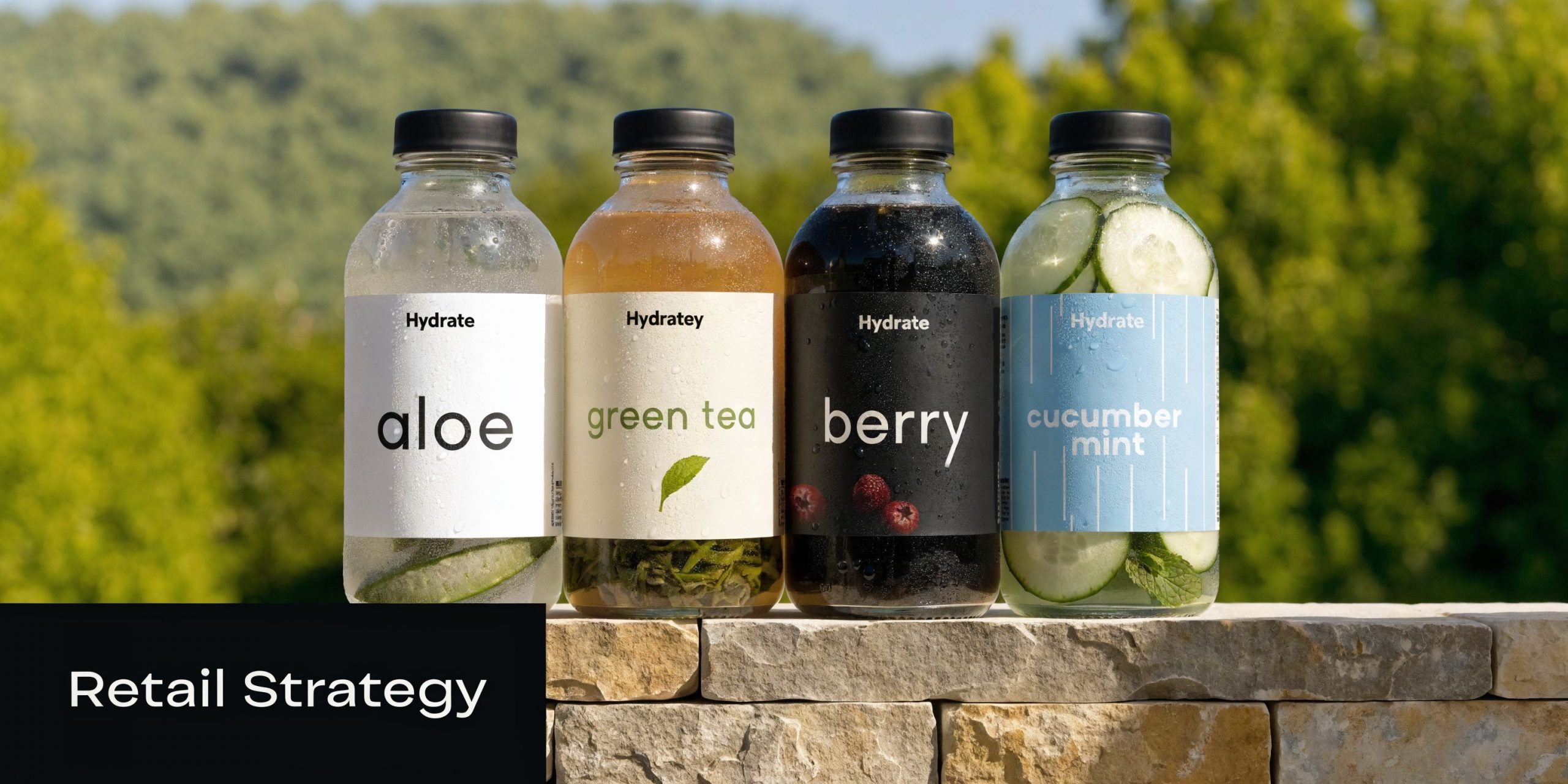
Retinoids sell best when they’re merchandised as a guided system, not as isolated bottles. The customer rarely needs only the active. They need a path.
That changes how you present retinol the ordinary in-store and online.
In-store merchandising that reduces friction
Start with adjacency. Place retinoids near:
- gentle cleansers
- straightforward moisturisers
- daily SPF
- barrier-supporting evening care
That layout does two jobs. It increases linked purchases, and it teaches routine logic.
A shelf display is stronger when it answers the customer’s first three questions:
- Which one is for beginners?
- Which one is strongest?
- What else do I need with it?
Short educational cards work well here. Keep them plain. “New to retinoids?” is a better shelf prompt than a dense ingredient panel.
Product page strategy for Swiss e-commerce
Online, customers need fewer claims and better sorting. Build pages around decision support.
Useful modules include:
- Who it suits
- Texture type
- Experience level
- How to start
- What not to combine on the same evening
That structure lowers return risk and reduces pre-sale customer service friction.
It also helps to publish education-led content rather than purely promotional copy. For example, a guide comparing retinol, retinal, and granactive retinoid can convert well because it solves a real confusion point before the customer reaches checkout.
For retailers considering creator partnerships, this is also where education matters. A practical explainer from a credible skin-focused creator will usually outperform a vague “favourites” post. If your team wants a strong primer on how influencer marketing works in a commercial setting, that overview is useful for planning campaigns around education rather than hype.
Train staff to recommend routines, not just serums
A strong team script should guide the customer to one core active and a small number of support products.
Try this framework:
- Choose the retinoid.
- Confirm evening use.
- Add moisturiser if needed.
- Confirm daily SPF.
- Book a follow-up touchpoint or invite the client back with questions.
That final step matters. Retinoid retail improves when the customer feels permission to adjust, rather than feeling they failed.
What premium positioning should look like
Don’t force The Ordinary into a luxury script it doesn’t need. The smarter route is to position it as:
- ingredient-transparent
- clinically legible
- easy to compare
- useful within a curated routine
That works especially well in Swiss environments where customers value substance over theatrical branding.
The best merchandising for retinoids removes uncertainty before the customer asks for help.
When stores present the line with that level of clarity, sales quality improves. Customers buy with a plan. Staff spend less time correcting avoidable mistakes. The category starts behaving like a repeat business engine instead of a one-off trend purchase.
Empowering Your Business with Expert Retinol Knowledge
The Ordinary’s retinoid line rewards retailers who can translate chemistry into decisions. That's a significant advantage.
When your team understands the difference between retinol, granactive retinoid, and retinal, consultations become sharper. When staff know how to start low, manage irritation, and keep claims compliant, customers are more likely to stay with the routine. When merchandising supports the full journey, the category becomes easier to sell and easier to trust.
For Swiss beauty professionals, this matters because clients often want two things at once. They want visible performance, and they want thoughtful guidance that fits a premium, clean-minded shopping environment.
That’s why retinol the ordinary works best in educated hands. The products are accessible, but the value comes from interpretation.
A pharmacy, spa, clinic, or e-commerce partner that can explain the ladder clearly won’t just move units. It will build authority. And in a category where customers are often confused before they buy, authority is what turns interest into repeat business.
Retailer FAQs About The Ordinary Retinol
How should we train staff without overwhelming them
Teach a decision tree, not a chemistry lecture. Staff need to know the three active families, who each one suits, and the first-line advice for frequency, moisturising support, and SPF.
Can we pair these products with a clean-beauty assortment
Yes, but keep retinoid nights simple. Pair with gentle cleansers, uncomplicated moisturisers, and non-irritating support products. Avoid building the recommendation around multiple active botanicals at once.
What’s the easiest way to answer “Which one should I start with?”
Use experience and texture preference. Beginners usually need the gentler end of the range. More confident users may prefer a stronger retinol or a retinal route if they already tolerate retinoids.
Should we offer samples
Sampling can help, but only if it includes written instructions. A retinoid sample without guidance often creates confusion rather than conversion.
What should staff say if a client reports peeling
Ask about frequency, layering, cleansing strength, and any acids in the routine. Most of the time, the answer is to simplify the routine and reduce use, not to abandon the category immediately.
If you’re building a Swiss retail assortment that balances clinical efficacy with clean-beauty expectations, beautysecrets.agency can help you curate the right mix of education, premium support products, and differentiated skincare brands for pharmacies, spas, clinics, and e-commerce.