
You've landed in Kona, collected the hire car, and are already looking at a map that makes your hotel, the volcanoes, Hilo, and the northern valleys seem deceptively close. Then the road begins to climb, the dry lava coast gives way to green pasture, and you realise that Big Island Hawaii isn't a compact beach destination with a few optional day trips. It's a vast, changing island where the wrong base can turn a relaxing holiday into a driving schedule.
The Big Island, officially Hawaiʻi Island, covers 4,028 square miles and had a population of 200,629 in the 2020 U.S. Census, making it the state's largest island by land area but not by population. Communities are widely spread across a volcanic terrain, and the island's low density affects roads, services, accommodation, and access to attractions. The island's scale and population profile are documented in the Hawaiʻi Island overview).
Why the Big Island Demands a Different Kind of Trip Plan

A couple arriving in Kona for three days often makes the same mistake. They book one attractive resort, add Hawaiʻi Volcanoes National Park to the itinerary because it looks manageable on the map, then discover that the island's best experiences sit in completely different corners. The result is an early alarm, a long return drive, and less time in the places they came to enjoy.
The island's geology makes the planning problem more pronounced. Hawaiʻi Island rises from sea level to the summit of Mauna Kea at 13,803 feet, while active volcanoes continue to shape its form. USGS records show that nearly all Hawaiian eruptions in recorded history occurred at Mauna Loa and Kīlauea. Both volcanoes erupted simultaneously on March 30, 1984, the first such occurrence since 1924, and Kīlauea has been erupting nearly continuously since 1983, as described in the USGS account of Hawaiʻi's volcanic history.
The single-base mistake
One base can work, but only if your priorities are narrow. Kona is the sensible choice for beaches, snorkelling, sunset dinners, manta rays, and a west-side holiday. Hilo works better for waterfalls, rainforest scenery, local markets, and quicker access to the national park. A Volcano Village stay makes sense when the park is the centrepiece rather than a long day trip.
The island's climate changes just as sharply as its scenery. Rain can fall in Hilo while Kona remains bright, and a warm coastal morning can become cold and windy higher on the mountain. Rainfall also varies dramatically over short distances, so a county-wide forecast tells you less than a region-specific forecast and current road information.
Practical rule: Choose your base around the experience you most want to repeat, not the attraction you can technically reach once.
Match the island to your trip length
A three-day visit needs ruthless prioritisation. Stay on the west side and devote one carefully planned day to the volcanoes if that experience matters most. A week supports a two-base plan, usually Kona plus Hilo or Volcano. Ten days gives you room for South Point, the Hamakua Coast, North Kohala, weather buffers, and unhurried beach time.
This is the right way to approach Big Island Hawaii in 2026. Don't ask whether an attraction is possible. Ask whether it deserves the driving, whether conditions are likely to suit the activity, and whether it fits the people travelling with you.
Understanding the Island's Regions and Microclimates
Arrive in Kona under clear skies, then drive toward Hilo and watch the road turn wet, green, and cooler. That shift is normal on the Big Island. Trade winds, elevation, volcanic slopes, and exposure to windward weather create sharp local differences. National Weather Service rainfall products track 3-, 6-, 12-, and 24-hour totals, while severe-weather summaries have recorded 15 to 25 inches of rain, with locally higher totals, in southeastern parts of the island. Use the National Weather Service Hawaiʻi hydrology resources for route planning instead of relying on one island-wide forecast.
Exact average rainfall, temperature ranges, and sunshine figures change by station and elevation. Treat regional patterns as planning guidance, not a promise. Choose your base from the table, then check conditions for the places you will visit.
Big Island Regions at a Glance
| Region | Avg Rainfall | Avg Temp Range | Drive Time from Kona | Best For |
|---|---|---|---|---|
| Kona and Kohala Coast | Dry leeward conditions | Warm coastal weather | Base location | Families, beach travellers, resort stays |
| Hilo | Wet windward conditions | Warm, humid coastal weather | A long cross-island drive | Waterfalls, markets, rainforest |
| Kaʻū | Variable, often open and rural | Warm coast to cooler uplands | A substantial southbound drive | Adventurers, quiet rural scenery |
| Waimea and Kamuela | Cooler upcountry conditions | Mild days, cool evenings | A shorter northbound drive | Food, farms, families seeking cooler air |
| Volcano area | Rainforest and upland conditions | Cool, damp, changeable | A long drive from Kona | Volcano-focused travellers, hikers |
Kona and the Kohala Coast are the practical picks for reliable beach time. The leeward side sits in the mountains' rain shadow, so resorts, snorkelling operators, restaurants, and sunset spots are concentrated there. Kohala feels polished and resort-focused. Kailua-Kona provides a more useful mix of hotels, holiday rentals, casual food, harbour access, and evening activity.
Hilo suits a different trip. Frequent rain and humid air create its green character, so book it for waterfalls, botanical gardens, farmers markets, and lush scenery. Choose Hilo when you want those conditions, not when you expect Kona's dry, beach-first routine. Pack a rain layer and keep wet-weather plans ready.
Upcountry and southern choices
Waimea and Kamuela sit higher and feel cooler, particularly after sunset. They suit travellers who want pastureland, local food, galleries, and a central position between the west coast and northern routes. Use the area as a stopover or a base for inland exploring, rather than expecting a conventional beach holiday.
Kaʻū and the Volcano area reward patience and a realistic schedule. Kaʻū offers broad, sparsely settled scenery, with access to Punaluʻu and South Point. Volcano Village is damp, quiet, and atmospheric, and its location shortens the drive to Hawaiʻi Volcanoes National Park.
Geology affects more than what you see. Hawaiʻi Island consists of overlapping lava-flow sequences, and lava-flow permeability influences groundwater storage, aquifer connections, well placement, and contamination management. The USGS geologic map of Hawaiʻi provides the technical background for that relationship.
Rain doesn't ruin a Hilo day. It ruins a Hilo day when you pack for Kona and schedule nothing that works in wet weather.
Major Attractions and How to Experience Them
The Big Island's headline attractions are excellent, but none should be treated as a quick tick-box stop. Distances, weather, access rules, and changing volcanic conditions decide whether a famous place feels memorable or exhausting.
Hawaiʻi Volcanoes National Park
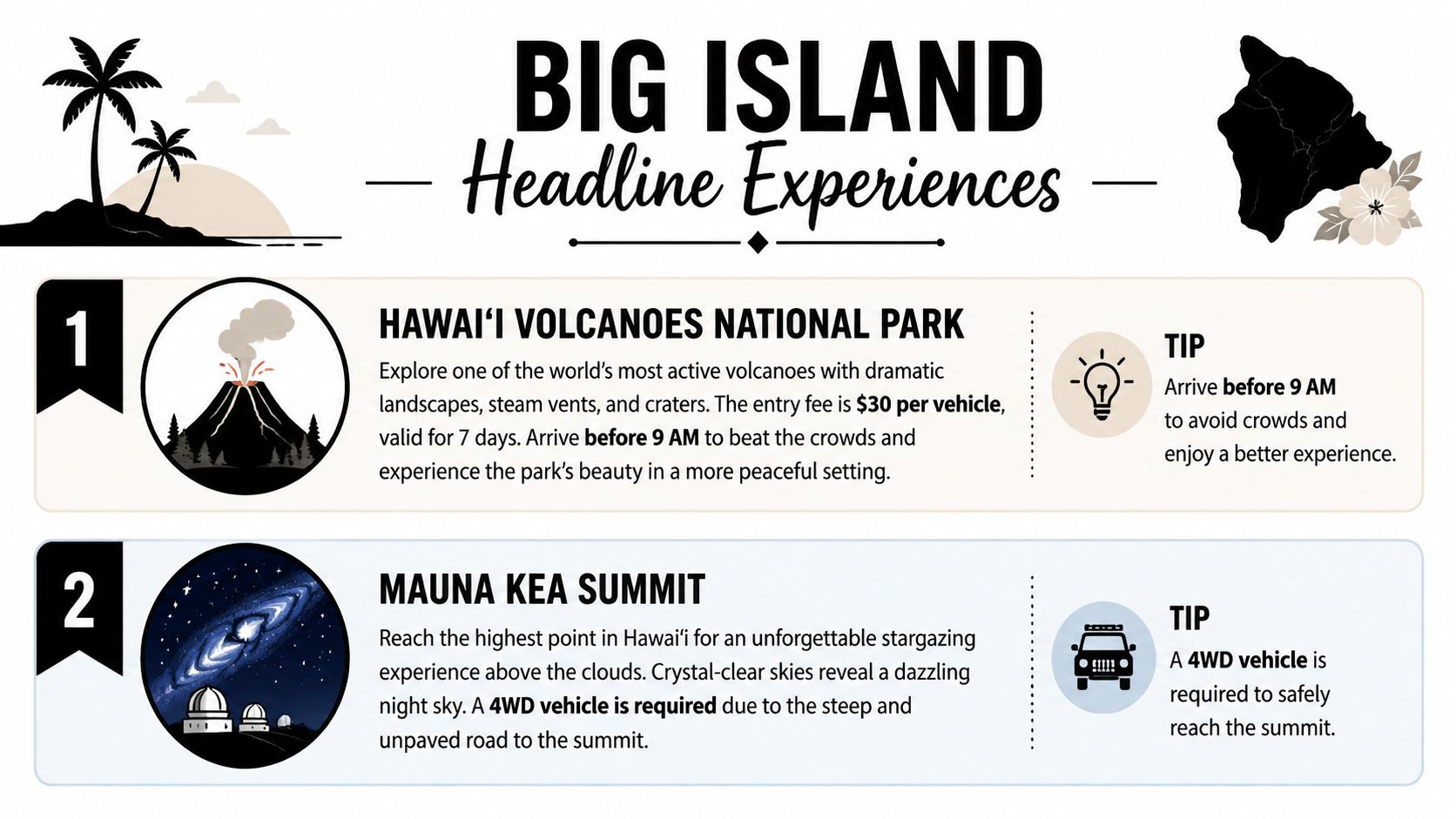
Start early, especially if you're visiting from Kona. Check the official park alerts before leaving, then go first to the visitor centre for current closures, trail conditions, volcanic information, and safe viewing guidance. The park is worth a full day when you include crater overlooks, steam vents, rainforest trails, lava tubes, and Chain of Craters Road.
Don't build the day around a guaranteed lava show. Eruptions are unpredictable, and viewing conditions can change with little notice. The 2018 eruption destroyed more than 700 structures around Leilani Estates, while the 1924 explosive eruption sent blocks weighing up to 14 tons into the surrounding area, reminders that volcanic environments require respect rather than improvisation. Mauna Loa's eruption from November 27 to December 11, 2022, its first in nearly 40 years, also shows how quickly conditions can shift. These events are recorded by USGS Hawaiʻi volcano resources.
The park's entry fee, closures, and operating details change, so verify them directly before departure rather than relying on an old itinerary. Arrive before the day warms up, and keep a rain layer in the car even if Kona is sunny.
Mauna Kea summit
Mauna Kea is a serious high-altitude outing, not just a scenic drive. The summit rises to 13,803 feet, and visitors need time to acclimatise before going higher. Stop at the Visitor Information Station, follow current access requirements, and check road and weather conditions before attempting the summit.
A guided stargazing tour is usually the better choice for first-time visitors. Operators handle the route, vehicle requirements, timing, equipment, and altitude briefing, while you can focus on the sunset and sky. If you drive yourself, confirm that your hire agreement permits summit travel and that the vehicle meets current requirements. Never continue upward if you feel unwell.
Kona snorkelling
Kealakekua Bay deserves the effort, but access takes planning. Hiking down means a hot return climb, while kayaking and boat trips involve permits, launch arrangements, or fixed departure times. Start early for calmer conditions and better visibility, and carry water because shade is limited.
Two Step is more accessible and can deliver excellent reef viewing close to shore, but the entry is rocky and conditions can change. Wear appropriate footwear, avoid standing on coral, and leave if the water looks rough. For a night-time manta experience, book early and choose a reputable operator. Travellers comparing departure points, equipment, and safety procedures can review this Big Island manta ray night tour resource from Kona Honu Divers.
Hilo, black sand, and the north
Hilo's farmers market is best approached as a morning stop, when produce, prepared food, and local atmosphere are strongest. Pair it with Rainbow Falls or a northbound route towards Akaka Falls, but don't force every waterfall into one day. Rain makes trails slippery, and visibility can change quickly.
Punaluʻu Black Sand Beach is worth visiting for its volcanic shoreline and frequent turtle sightings, not as a guaranteed swimming beach. Currents and shore breaks can be dangerous. Watch from a respectful distance, never touch or block turtles, and follow signs and ranger guidance.
The northern valleys are visually dramatic, but viewpoints can be enough for a short trip. Don't hike a steep or restricted route just because an old guide recommends it. Check current access before committing.
Sample Itineraries for 3, 7, and 10 Day Trips
A short Big Island trip should feel edited, not incomplete. The best itinerary is the one that protects time for the experiences you care about and cuts the attractions that demand disproportionate driving.
Three days
Base yourself in Kailua-Kona or the Kohala Coast. Spend the first day on beaches and in town, the second on South Kona snorkelling and cultural sites, and the third on Hawaiʻi Volcanoes National Park. If you're driving from Kona to the park, leave before sunrise and accept that the round trip will consume much of the day.
Skip Hilo waterfalls, South Point, and North Kohala. They're good, but they'll dilute a short visit. If volcanoes aren't your priority, replace the park day with a relaxed north-coast beach day and a manta ray tour.
Seven days
Use two bases. Begin with four nights on the west side for Kona, Kohala beaches, Kealakekua Bay, Two Step, and a possible Mauna Kea evening. Move to Hilo or Volcano for the remaining nights, then explore the park, waterfalls, the Hamakua Coast, and northern viewpoints without retracing the entire island.
Start long drives early. Afternoon rain is more likely on the east side, and an early departure leaves room for weather changes, slow scenic stops, and an unplanned market or beach.
Ten days
Ten days supports a slower circuit. Add South Point and Punaluʻu, spend time around Volcano, explore Hilo and the Hamakua Coast, then continue through Waimea and North Kohala before returning to Kona. Keep a buffer day for poor mountain weather, rough ocean conditions, or a second attempt at a major experience.
A ten-day plan shouldn't contain ten days of sightseeing. The extra space is what makes the island enjoyable.
Big Island Itinerary Comparison by Trip Length
| Feature | 3-Day Itinerary | 7-Day Itinerary | 10-Day Itinerary |
|---|---|---|---|
| Main base | Kona or Kohala Coast | Kona plus Hilo or Volcano | Two or three bases |
| Volcanoes National Park | One intensive day | Dedicated visit | Flexible, weather-aware visit |
| Hilo and waterfalls | Skip | Include | Explore slowly |
| Mauna Kea | Optional, only with careful planning | Strong option | Easy to schedule around weather |
| South Point and Kaʻū | Skip | Optional | Include |
| North Kohala | Skip | Viewpoint or day trip | Full scenic route |
| Rest days | Limited | Some beach time | Built into the plan |
| Best for | First highlights | Balanced overview | Deeper exploration |
Transport, Accommodation, and Packing Essentials
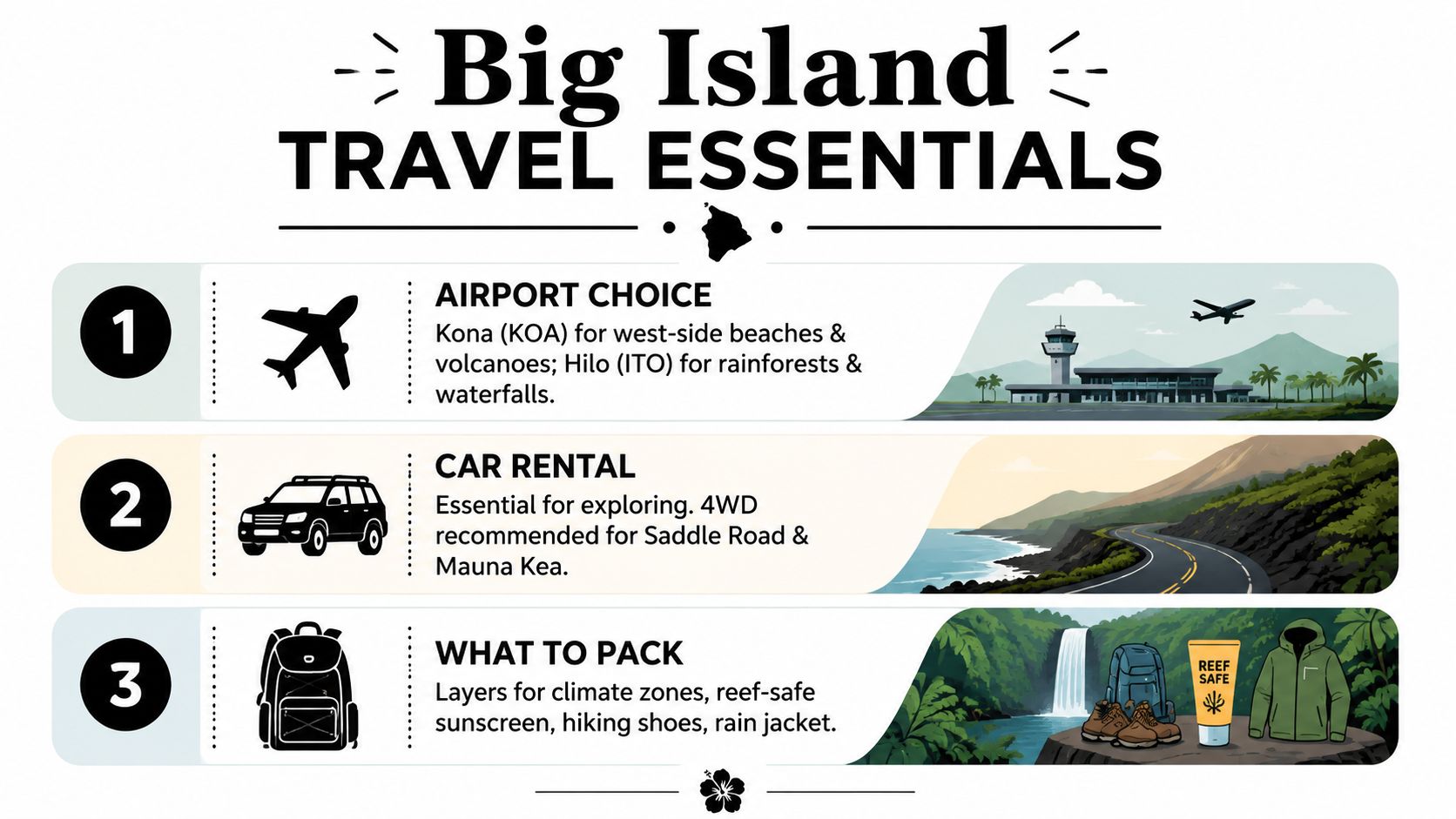
Rent a car. The island's communities, beaches, trails, and viewpoints are too dispersed for a relaxed holiday built around infrequent public transport. Book early, especially around school holidays and popular travel periods, and compare the total cost rather than the headline daily rate.
Kona International Airport, KOA, is the practical arrival point for west-side beaches, resorts, snorkelling, and a Kona-first volcano plan. Hilo International Airport, ITO, is better for a rainforest and waterfall itinerary or a trip focused on the eastern side. Inter-island flights from Honolulu can serve either airport, so choose the landing point after choosing your first base.
Vehicle decisions
A standard car is enough for most coastal roads and main routes. Don't assume it's suitable for every mountain or valley road. Mauna Kea summit access has specific vehicle and weather requirements, and Waipiʻo Valley access is restricted and condition-dependent. Confirm current rules with the relevant authority and your rental company.
Fuel planning matters because long cross-island drives can leave you far from your accommodation and preferred station. Fill up before remote routes, keep water in the vehicle, and don't treat a nearly empty tank as a minor inconvenience.
For route inspiration, this practical guide to top Big Island drives 2026 from Olson & Sons can help you compare scenic corridors before fixing your accommodation.
Where to sleep
- Kona and Kohala Coast: Choose a resort for pools, beach access, and on-site dining. Condominiums suit families who want a kitchen, while central Kona is more convenient for restaurants and tours.
- Volcano Village: Choose a guesthouse or cottage when early park access matters more than nightlife. Expect cooler, wetter conditions and limited evening dining.
- Hilo: Pick a hotel, guesthouse, or apartment for practical access to waterfalls, markets, and the eastern side. It's the strongest choice for travellers who value location and local atmosphere over resort facilities.
- Waimea: Consider a small inn or holiday rental for a cooler inland base with access to farms, food, and northern routes.
Downloadable packing checklist
Copy this list into your notes app before departure:
- Passport or accepted travel identification
- Hire-car reservation and driving licence
- Accommodation confirmations
- Reef-conscious sunscreen and sun protection
- Reusable water bottle
- Lightweight rain jacket
- Quick-drying clothes
- Warm layers and gloves for Mauna Kea
- Sturdy shoes for lava and uneven trails
- Water shoes for rocky entries
- Dry bag for boat and snorkelling days
- Torch or headlamp
- Downloaded maps and offline reservations
- Small first-aid kit and personal medicines
Cultural Etiquette and Sustainable Travel Practices
Respect isn't a decorative extra on Hawaiʻi Island. It changes how you move through the place, how locals respond to you, and whether you leave a site intact for the next visitor. Learn a few Hawaiian words, listen when a guide explains protocol, and treat every sacred or fragile location as more than a photo backdrop.
Heiau, or temples, deserve particular care. Don't climb on them, stack rocks, remove lava stones, or create small memorials. Rock stacking damages habitat and can interfere with cultural meaning. At Puʻuhonua o Hōnaunau, keep to marked areas, lower your voice, and follow the site's interpretation rather than turning ceremonial structures into props.
Kuleana in practice
Kuleana means responsibility. For a visitor, that responsibility can be practical:
- Choose local ownership: Spend with Native Hawaiian-owned businesses and independent island operators where possible.
- Hire knowledgeable guides: A local guide can explain history, access, and cultural boundaries that a generic excursion may ignore.
- Eat with intention: Select restaurants and markets that identify island-grown ingredients and support local producers.
- Leave no trace: Pack out rubbish, stay on marked trails, and don't take lava, sand, shells, or plants.
Marine wildlife needs space. Green sea turtles and Hawaiian monk seals must never be touched, chased, surrounded, or used as a reason to enter a closed area. Give animals room to rest, keep children back, and listen to lifeguards or rangers.
Protect the places you came to see
Non-mineral sunscreen helps reduce pressure on reefs, but it doesn't make careless snorkelling safe. Keep your fins off coral, don't feed fish, and choose a calm, supervised entry. On land, off-path hiking widens trails, accelerates erosion, and damages plants that may take years to recover.
Travel during quieter periods, visit less-publicised beaches when access is legal, and volunteer through an organised beach cleanup or native tree-planting day. Those choices create better encounters than racing between famous stops, and they reduce your impact without asking you to abandon the island's best experiences.
Safety Tips and Local Resources for a Smooth Visit
The Big Island rewards curiosity, but it punishes casual assumptions. Treat volcanoes, mountains, rain, cliffs, and ocean entries as active conditions rather than permanent scenery.
Volcanic and weather awareness
Check Hawaiʻi Volcanoes National Park alerts before driving to the park. Monitor National Weather Service rainfall and flood information, especially for southeastern routes where intense rain can develop across a concentrated area. County civil defence updates matter during lava activity, road closures, wildfire threats, or evacuation orders.
Vog, or volcanic smog, can affect air quality during volcanic activity. If you have asthma or another respiratory condition, check air-quality information before outdoor exertion and carry prescribed medication. Never approach an active lava area outside an authorised viewing zone, and don't cross barriers for a better photograph.
Ocean and altitude risks
Calm-looking water can hide rip currents and powerful shore breaks on both coasts. Check surf conditions, use lifeguarded beaches where available, avoid entering alone, and turn around when visibility or water movement feels wrong. At black sand beaches and rocky snorkelling entries, footwear protects your feet but doesn't make rough water safe.
Mauna Kea's summit is a high-altitude environment. Acclimatise at the visitor centre, avoid alcohol before the ascent, move slowly, and descend immediately if you develop headache, nausea, dizziness, confusion, or breathing difficulty. Don't treat a summit visit as a normal coastal excursion.
Save these resources before leaving
- Park alerts: Check the official Hawaiʻi Volcanoes National Park alerts page before departure.
- Weather and surf: Use NOAA and National Weather Service forecasts for your specific coast and route.
- Emergency updates: Follow Hawaiʻi County Civil Defense for lava, weather, and evacuation information.
- Trail status: Check the Hawaiʻi Department of Land and Natural Resources hiking trail portal before setting out.
- Medical care: Identify the nearest hospital or urgent-care facility in Hilo or Kailua-Kona before remote activity.
- Emergency calls: Use 911 for immediate danger, and confirm local non-emergency police and Poison Control contact details before travel rather than relying on an unverified number in an old guide.
Final pre-departure check
- Check park, road, trail, weather, surf, and volcanic alerts
- Download maps and save accommodation addresses offline
- Confirm car, insurance, fuel plan, and mountain-access rules
- Recheck snorkelling, manta ray, and guided-tour reservations
- Pack layers, rain protection, water, sun protection, and sturdy footwear
- Share your route with someone at home for remote hikes
- Save hospital, urgent-care, police, and emergency contacts
- Leave room in the itinerary for weather and changing volcanic conditions
beautysecrets.agency helps Swiss pharmacies, retailers, spas, hotels, and clean-beauty e-commerce partners source natural, ethically selected skincare and wellness brands with recognised standards and transparent positioning. If your business wants a carefully curated premium assortment that matches the thoughtful, sustainability-minded approach outlined here, visit beautysecrets.agency to explore its brand portfolio and partnership options.