Mauritius's largest national park covers 6,574 hectares, an area UNESCO describes as roughly 3.5% of the island's land. That single figure changes how you see Mauritius Black River Gorges. This isn't just a green break from the beach itinerary. It's one of the island's most important strongholds for endemic forest, wildlife, water catchments, and the remaining native vegetation that evolved in isolation.
Why Black River Gorges Matters More Than You Think
Black River Gorges National Park lies in south-west Mauritius, within a compact mountain and forest corridor. The park was established in 1994, while the wider Black River Gorges–Bel Ombre biosphere reserve was nominated in 1977 and covers 8,582 hectares, according to UNESCO's account of the protected landscape. Those dates tell a story of growing recognition. Mauritius first acknowledged the area's ecological importance through biosphere protection, then reinforced that commitment through national-park status.
The reason is simple but profound. The reserve contains the last significant remnants of Mauritius's endemic vegetation, as UNESCO records in its description of the Black River Gorges–Bel Ombre biosphere reserve. On an island with limited land, protecting one substantial native forest corridor matters far beyond its boundaries. The trees hold soil on steep slopes, shade streams, shelter birds, and preserve relationships between plants and animals found nowhere else.
The first impression from the gorge rim
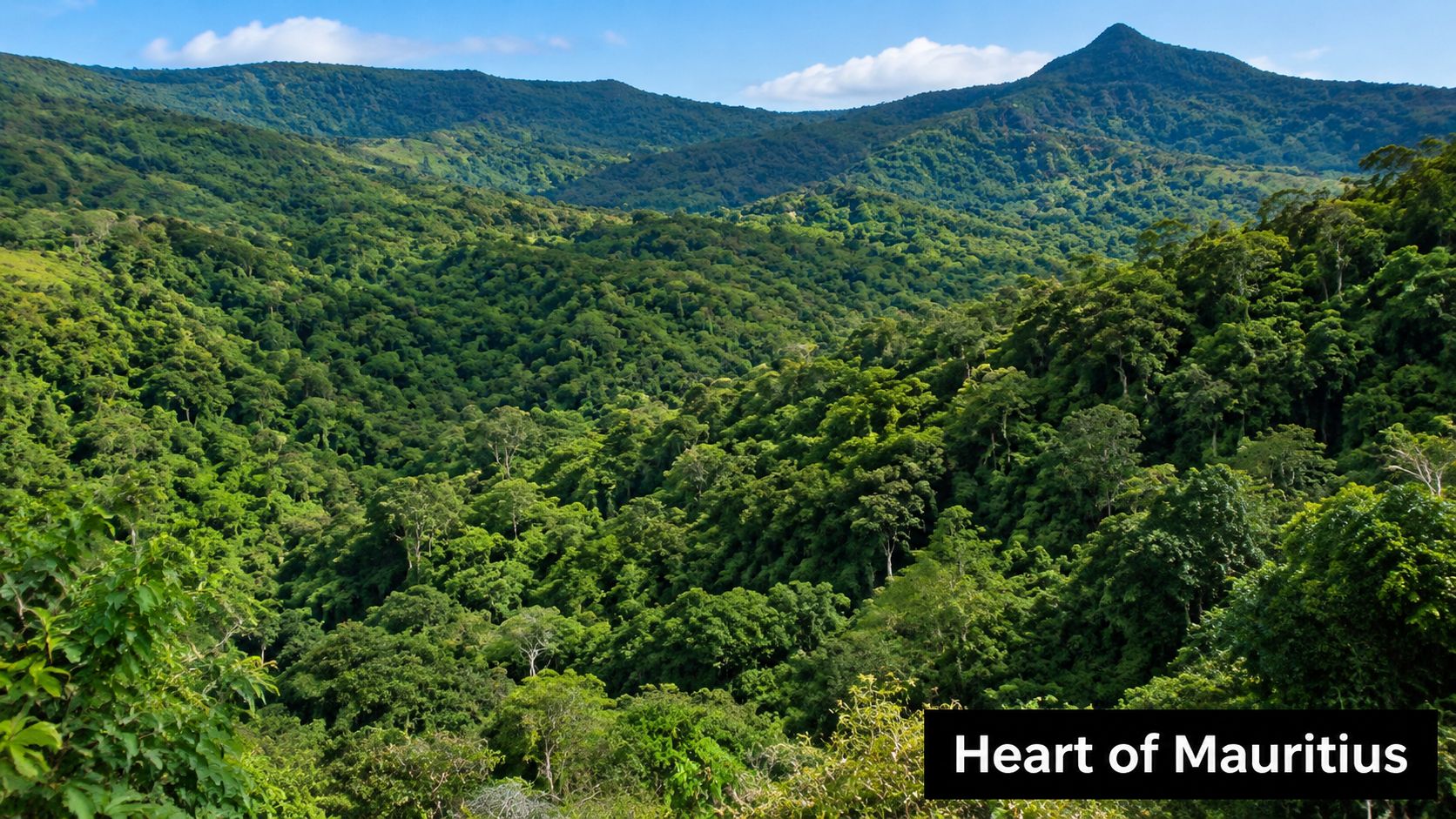
Arrive early at a viewpoint and the park often announces itself through atmosphere before scenery. Damp air gathers around the ridges. Wind moves through layers of canopy, while the deep gorge keeps its own cooler rhythm below. On a quiet morning, bird calls seem to travel farther than expected, then vanish into the forest.
A naturalist learns to slow down here. The most rewarding sight may not be a dramatic waterfall, but a flash of movement in the foliage, a native tree standing among introduced growth, or a bird call that prompts a careful search rather than an instant photograph. The park rewards attention because its ecological richness is easy to miss when visitors treat it as a drive-through viewpoint.
Field note: The gorge is a living protection system, not a backdrop. Every path, stream, and patch of native forest contributes to the island's ecological resilience.
The compact geography also makes the park unusually instructive. A visitor can move through changing vegetation, weather, and terrain within one protected area. That variety explains why Black River Gorges deserves more than a rushed stop between coastal attractions. It offers a direct lesson in how island biodiversity survives, and how quickly it could disappear without deliberate protection.
Understanding the Park's Unique Ecosystems and Climate Zones
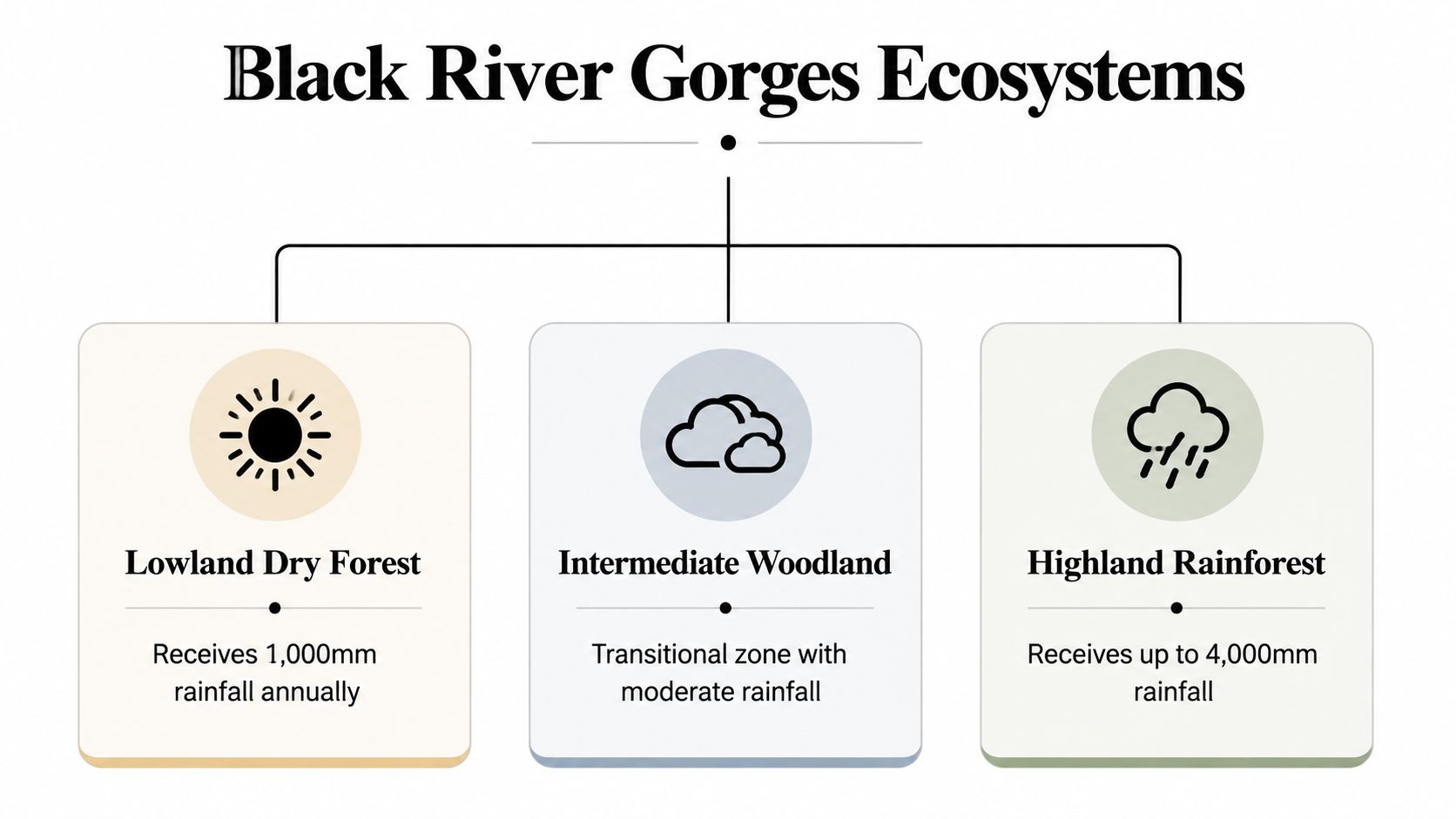
Black River Gorges feels like several forests stacked vertically because rainfall changes sharply across the park. Official descriptions record precipitation ranging from about 1,000 mm in drier areas to 4,000 mm on the uplands, and this gradient controls vegetation zones across the park, as explained by National Parks of Mauritius.
Think of the park as a journey from a sun-exposed forest edge towards a cool, dripping cloud forest. The lower, drier areas support vegetation adapted to longer periods without heavy rain. Higher ground receives far more moisture, allowing denser growth, thicker moss, and forest communities shaped by persistent dampness. Between them sits a transition where conditions gradually change rather than stopping at a clear boundary.
Reading the forest as you walk
At the drier end, look for a more open impression. Sunlight can reach the forest floor more readily, and plants must cope with reduced moisture. That doesn't mean the habitat is empty or less valuable. Dry forest can support specialised native plants that would struggle in saturated upland conditions.
The intermediate woodland acts like an ecological hinge. Species from different conditions may occur close together, while slope, exposure, and soil depth create small variations within a short walk. This is why two nearby sections of trail can look surprisingly different. The forest responds to its exact position, not just to a general park label.
On the uplands, cloud and rain transform the experience. Leaves stay wet, tree trunks may carry mosses and other moisture-loving growth, and visibility can change quickly as mist moves across the ridges. The forest feels enclosed, soft-edged, and layered. Even sound changes, with water dripping from leaves and distant calls absorbed by dense vegetation.
Why this matters for wildlife
The rainfall gradient creates more than attractive scenery. It produces different feeding surfaces, nesting conditions, shelter, and flowering opportunities. A bird moving through the park isn't choosing “forest”. It's responding to where food, cover, and suitable trees occur at that moment.
For hikers, the practical lesson is to adjust expectations. Dry weather at a lower viewpoint doesn't guarantee clear, comfortable conditions higher up. Pack for changing exposure, protect cameras and binoculars from sudden moisture, and give yourself time to notice transitions in the vegetation. The park's climate zones turn an ordinary hike into a form of field observation.
Endemic Flora and Fauna You Will Not Find Anywhere Else
Island endemism creates a special kind of wonder. A species that evolved on Mauritius alone has no other wild population elsewhere on Earth. That also makes it vulnerable, because a local threat can affect the whole global population of a plant or animal.
The Mauritius kestrel is one of the park's most celebrated birds. Watch the open edges, ridges, and breaks in the canopy rather than staring only into deep forest. Its hunting style makes high viewpoints useful, but sightings depend on patience, weather, and luck. A guide who knows the calls and regular flight paths can help you search without disturbing the bird.
The echo parakeet rewards listening. Its green plumage can disappear against foliage, while its movement and calls reveal its presence first. Search the canopy carefully and keep your binoculars ready before raising a camera. Sudden approaches and loud groups make observation harder for everyone.
The pink pigeon in the foliage
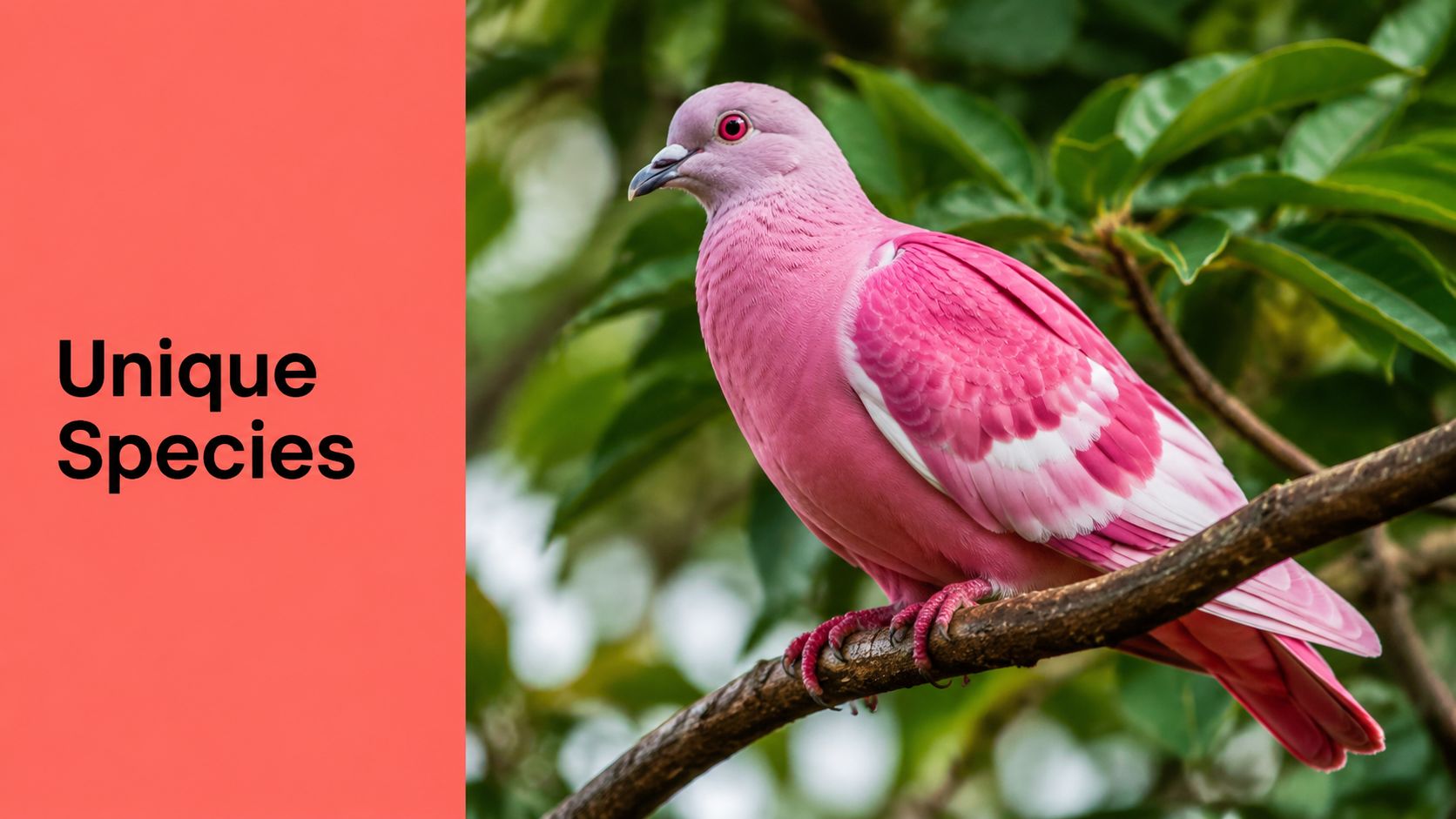
The pink pigeon is easier to recognise once you understand its shape and colour. Look for a pigeon moving deliberately through native vegetation, with pink tones that become more visible when it leaves deep shade. It may appear briefly, then settle into cover. Give the bird space and avoid following it along the trail.
Plants deserve equal attention. Trochetia boutoniana, Mauritius's national flower, carries cultural as well as botanical importance. Its flowers stand out against green foliage, but visitors shouldn't treat a sighting as an invitation to touch, pick, or collect. A protected plant remains part of a larger habitat, where pollinators, soil organisms, and neighbouring species all matter.
The rarer Trochetia blackburniana illustrates why a walk through Black River Gorges should feel more like visiting a living archive than a botanical shopping trip. Look for labelled specimens and ask local guides about identification rather than relying on a quick photograph. Small differences in leaves, flowers, and growth habit can be difficult for an untrained eye to interpret.
A field guide's observation rules
- Listen first: Bird calls often reveal a species before movement or colour does.
- Scan in layers: Check the ground, understory, trunks, and canopy instead of focusing on one height.
- Leave plants untouched: Native flora survives through uninterrupted growth and regeneration.
- Record responsibly: Use photographs and written notes, but never publish precise locations for vulnerable species without guidance.
The strongest encounter may be quiet and incomplete. Seeing a pink pigeon disappear into foliage, or hearing an echo parakeet without finding it, still connects you with a conservation story that extends beyond the trail.
Top Hiking Routes and Viewpoints for Every Fitness Level
Trail choice should follow your purpose, not the pressure to complete the hardest route. Some visitors want a demanding summit and broad views. Others want a short forest walk with time for birdwatching. Black River Gorges can accommodate both, provided you check current conditions locally and allow for wet ground, mist, and changing visibility.
The comparison below is a practical planning aid. Exact conditions can alter the experience, so treat route details as a starting point and confirm trail status before setting out.
Black River Gorges Trail Comparison
| Trail Name | Distance (return) | Duration | Difficulty | Key Highlight |
|---|---|---|---|---|
| Black River Peak Trail | Confirm locally | A substantial outing | Challenging | High ridge and expansive forest views |
| Macchabée Forest Trail | Confirm locally | Half-day style walk | Moderate | Native forest atmosphere and birdwatching |
| Alexandra Falls viewpoint route | Short walk from access point | Brief visit | Easy | Gorge, valley, and waterfall outlook |
| Pétrin Nature Walk | Short nature walk | Short outing | Easy | Accessible introduction to forest habitats |
Choosing the right experience
Black River Peak Trail suits hikers who enjoy sustained effort and exposed viewpoints. Start early, carry enough water, and keep a rain layer accessible. The reward is perspective, but the route demands respect for weather and footing.
Macchabée Forest Trail is a strong choice for visitors who want to spend time inside the forest rather than just view it from above. Walk slowly, especially through quieter sections, and pause often for canopy movement and bird calls. A modest pace usually produces better wildlife observations than rushing towards the finish.
Alexandra Falls viewpoint route works well for mixed groups or a day built around several stops. The short approach makes it possible to enjoy the scenery without committing to a long hike. Mist can soften the view, but that atmosphere is part of the upland character rather than a failure of the visit.
Pétrin Nature Walk offers a gentler introduction. It's useful for families, first-time walkers, and travellers who want to learn the visual language of native forest before attempting a longer route.
Choose a trail by the kind of attention you want to give the park. A short, observant walk can be more meaningful than a long route completed in a hurry.
Wear shoes with reliable grip, especially after rain. Follow marked paths, avoid shortcuts across vegetation, and begin early when you want cooler conditions and softer light for photography.
Practical Visiting Information and Trip Planning Essentials
A well-prepared visit starts with realistic expectations. Black River Gorges is a protected mountain area, not a controlled urban attraction. Weather changes, some paths may be damp or uneven, and mobile connectivity shouldn't be treated as a substitute for preparation.
Transport and access
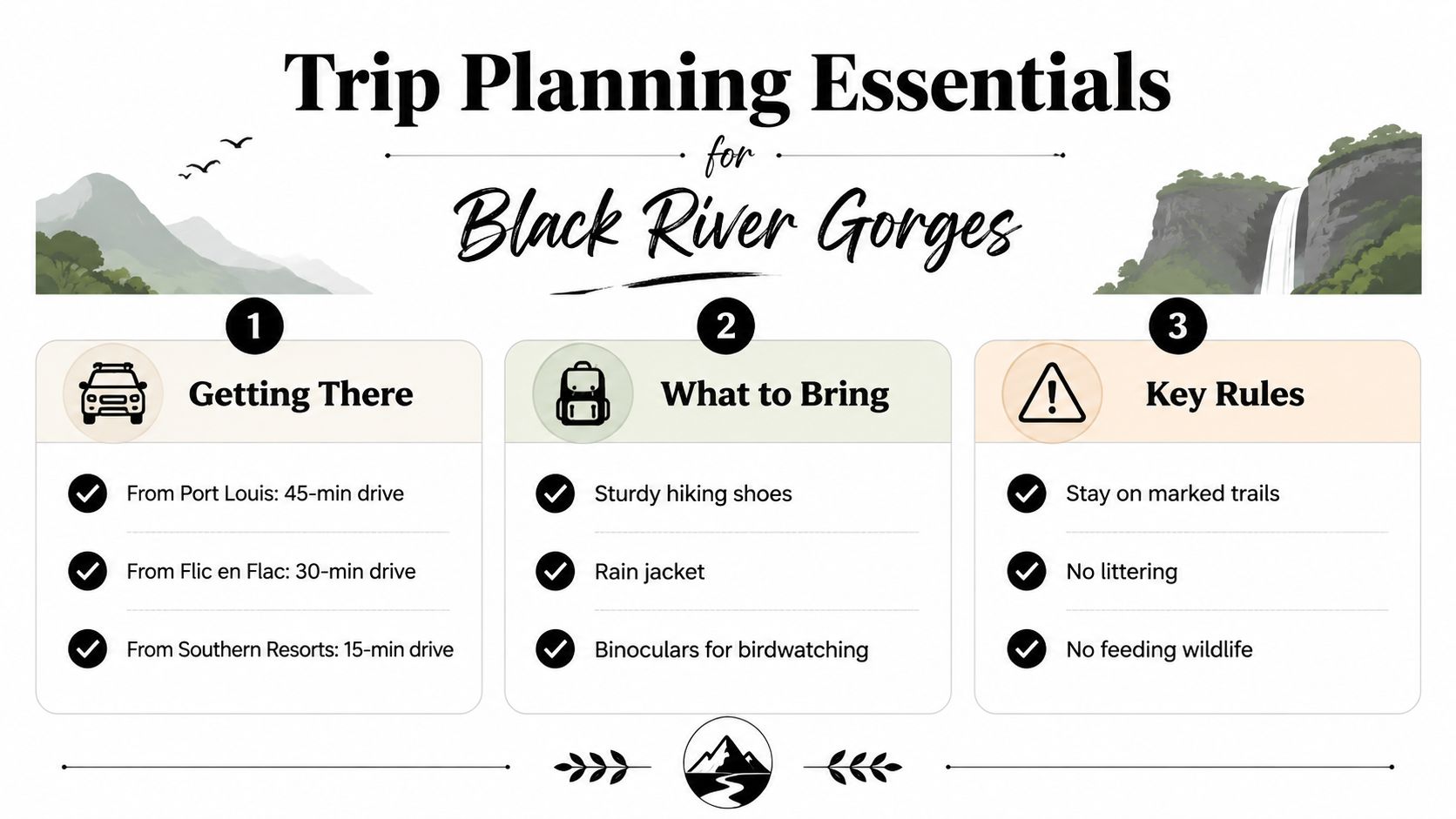
- Driving: A hired car or arranged taxi gives the most flexibility between trailheads, viewpoints, and forest access points.
- From Port Louis: Plan the journey around traffic, road conditions, and your chosen entrance rather than relying on a fixed timetable.
- From Flic en Flac: The west coast provides a practical base for reaching the south-western park area.
- From southern resorts: These can offer convenient access to viewpoints and trails in the southern part of the protected area.
- Public transport: Buses may help with regional travel, but they don't provide the same flexibility for remote trailheads or early starts.
What to pack
- Footwear: Sturdy hiking shoes with good traction are more useful than casual trainers.
- Weather layer: Bring a light rain jacket because upland showers and mist can arrive quickly.
- Observation kit: Binoculars help you look for birds without approaching them.
- Water and food: Carry what you need for your route and take all packaging back out.
- Protection: Sun protection and insect repellent remain sensible even when the forest feels cool.
Rules and accessibility
Stay on marked trails, don't feed wildlife, and never remove plants, rocks, or other natural material. Ask park staff about current access, opening arrangements, permits, and trail conditions before travelling, because these details can change and not every route suits visitors with reduced mobility.
The easiest viewpoints and short nature walks generally offer the most manageable experience for visitors who need to limit steep ground or uneven surfaces. Longer forest routes may include roots, mud, slopes, and narrow sections, so choose conservatively.
A visual reminder can help you prepare before leaving your accommodation:
Conservation Efforts and Responsible Tourism Practices
Black River Gorges protects an environment that cannot be replaced once its native relationships disappear. Conservation work in Mauritius includes controlling invasive species, restoring habitat, and supporting breeding and recovery programmes for threatened endemic wildlife. Visitors don't perform that work directly, but their choices can either make it easier or create more pressure.
A boot that leaves the marked path can crush seedlings. Food offered to a bird can alter its behaviour. A plant collected as a souvenir removes part of a population that may already be restricted to a small habitat. These actions can seem harmless in isolation, yet protected areas depend on thousands of visitors making the careful choice repeatedly.
Responsible behaviour on the trail
- Stay on marked routes: Keep your weight on established surfaces and protect regeneration beside the path.
- Keep wildlife wild: Watch attentively, never feed animals, and don't use playback to draw birds closer.
- Carry out waste: Pack wrappers, tissues, and food scraps until you reach an appropriate disposal point.
- Respect silence: Small groups and low voices improve observation and reduce disturbance.
- Choose local knowledge: A qualified local guide can interpret species and explain restrictions without encouraging risky access.
Practical habits extend beyond the park. Travellers looking to reduce waste, limit unnecessary purchases, and make more considered choices can use these eco-friendly travel tips as a useful planning resource.
From forest provenance to clean beauty
The park also offers a valuable way to think about natural ingredients. "Natural" doesn't automatically mean responsible. A plant ingredient still has a source, harvest method, processing chain, and ecological cost. If those links remain hidden, buyers can't tell whether demand supports habitat stewardship or encourages extraction.
The same principle applies to clean beauty sold in Swiss pharmacies, spas, and wellness retailers. Responsible formulations should be discussed through provenance, traceability, harvesting practices, and recognised standards, not only through attractive botanical language. Intact ecosystems provide the reference point. They show why a natural ingredient needs protection at origin, not just polished presentation at the point of sale.
A responsible product story begins before the ingredient reaches the laboratory. It begins with the landscape and the people who protect it.
Visitors can carry that lesson home. Ask brands where botanical materials come from, how suppliers manage regeneration, and which standards support their claims. Respect for Black River Gorges becomes more meaningful when it informs purchasing decisions far beyond Mauritius.
Planning Your Visit and Supporting the Park's Future
A focused one-day visit can combine an early forest walk, a viewpoint such as Alexandra Falls, and a shorter nature stop chosen for your group's energy. Keep the schedule flexible. Time for quiet observation often reveals more than adding another rushed attraction.
A two-day plan gives you room to separate demanding hiking from slower wildlife watching. Use one day for a longer route such as Black River Peak or Macchabée, then reserve the next for easier viewpoints, bird observation, and conversations with local guides. Confirm access conditions before committing to any itinerary, particularly after wet weather.
Make the visit contribute
- Hire local expertise: Choose a certified or well-established guide who can explain trail etiquette, species identification, and current conditions.
- Spend locally: Use locally owned transport, guiding, food, and accommodation services where practical.
- Share carefully: Tell others about the park's value without revealing sensitive locations for vulnerable species.
- Prepare responsibly: Travellers arranging longer stays or educational trips may find this pre-departure advice for gap years useful for organising documents, equipment, and expectations.
Black River Gorges connects three responsibilities. Protect the habitat while you're there, support people whose livelihoods align with conservation, and question the provenance of natural products you buy elsewhere. That combination turns sightseeing into informed participation.
Plan your route, pack for wet upland conditions, and leave enough time to listen. Visit Black River Gorges with a local guide when possible, follow every marked path, and carry its conservation story into your everyday choices.
beautysecrets.agency helps Swiss pharmacies, retailers, spas, and wellness professionals source thoughtfully selected natural and ethically positioned beauty brands with transparent standards. Explore the curated portfolio and discover how responsible provenance can strengthen your clean-beauty offering at beautysecrets.agency.