The car leaves the airport zone and, within minutes, the mood changes. Roadside movement gives way to a quieter headland, and Six Senses Koh Samui starts doing what the best wellness properties do early: it lowers stimulus before it asks for attention.
An Introduction to Barefoot Luxury on Samui's Northern Tip
The first impression is not opulence. It is restraint.
That distinction explains much of the Six Senses Koh Samui model. The resort creates value through privacy, controlled pacing, natural materials, and a deliberate sense of removal from visual clutter. For a Swiss spa operator or premium beauty retailer, that makes the property more than an attractive island address. It turns the resort into a useful case study in how modern luxury can feel calm, credible, and commercially coherent at the same time.
Set on a headland at the northern tip of Koh Samui, the resort uses space with discipline. Villas are dispersed through tropical vegetation rather than stacked into a dense hospitality grid, and the effect is practical as much as aesthetic. Guests experience less visual intrusion, lower ambient noise, and more of the psychological separation that high-value wellness clients increasingly expect.
Why the model feels current
Six Senses Koh Samui is best understood as one operating philosophy expressed across multiple touchpoints.
Accommodation supports rest rather than display. Dining is tied to place rather than generic luxury cues. Sustainability is visible in the guest experience instead of being left in back-office reporting. The spa sits inside that wider logic, not beside it. For European audiences, and particularly for Swiss clients who often assess quality through consistency rather than spectacle, that kind of alignment carries weight.
I find the property useful as a benchmark because it speaks in the language of understated proof. Materials feel considered. Service sequencing is intentional. Environmental claims are easier to trust when they show up in design choices, ingredient stories, and daily operations instead of only in marketing copy. That reads well in a market where clients ask sharper questions about sourcing, ethics, and whether a wellness proposition has substance beyond attractive treatment rooms.
Practical rule: In high-end wellness, credibility depends on alignment. If design, treatment philosophy, food, and sustainability point in different directions, guests notice quickly.
What's worth studying closely
The strongest lesson is not that Six Senses Koh Samui offers luxury. Many resorts do. The stronger lesson is how it makes luxury feel lighter, quieter, and easier to inhabit without stripping away sophistication.
That has direct relevance for Swiss pharmacies, clean-beauty retailers, and spa businesses trying to position premium products with precision. Clients at the top end respond well to sensory quality and emotional comfort, but they also want evidence of intention. Why this material. Why this ingredient story. Why this ritual sequence. Six Senses answers many of those questions well because the guest experience is built as a system, not as a collection of indulgent add-ons.
There is, however, a real trade-off, and it is worth stating plainly. Parts of the model are highly tangible, especially around environmental practice and spatial planning. Some wellness claims remain softer and depend more on brand trust than hard evidence. That tension does not weaken the resort's relevance. It is exactly what makes it valuable to study as a benchmark for integrated wellness and sustainability in modern luxury hospitality.
Your Arrival Journey and First Impressions
The first useful detail is how quickly the resort takes control of the guest experience after landing. Six Senses Koh Samui sits on the island's northern tip in Baan Plai Laem, close enough to the airport that transfer fatigue stays low and the property can establish its tone before the journey starts to feel transactional.
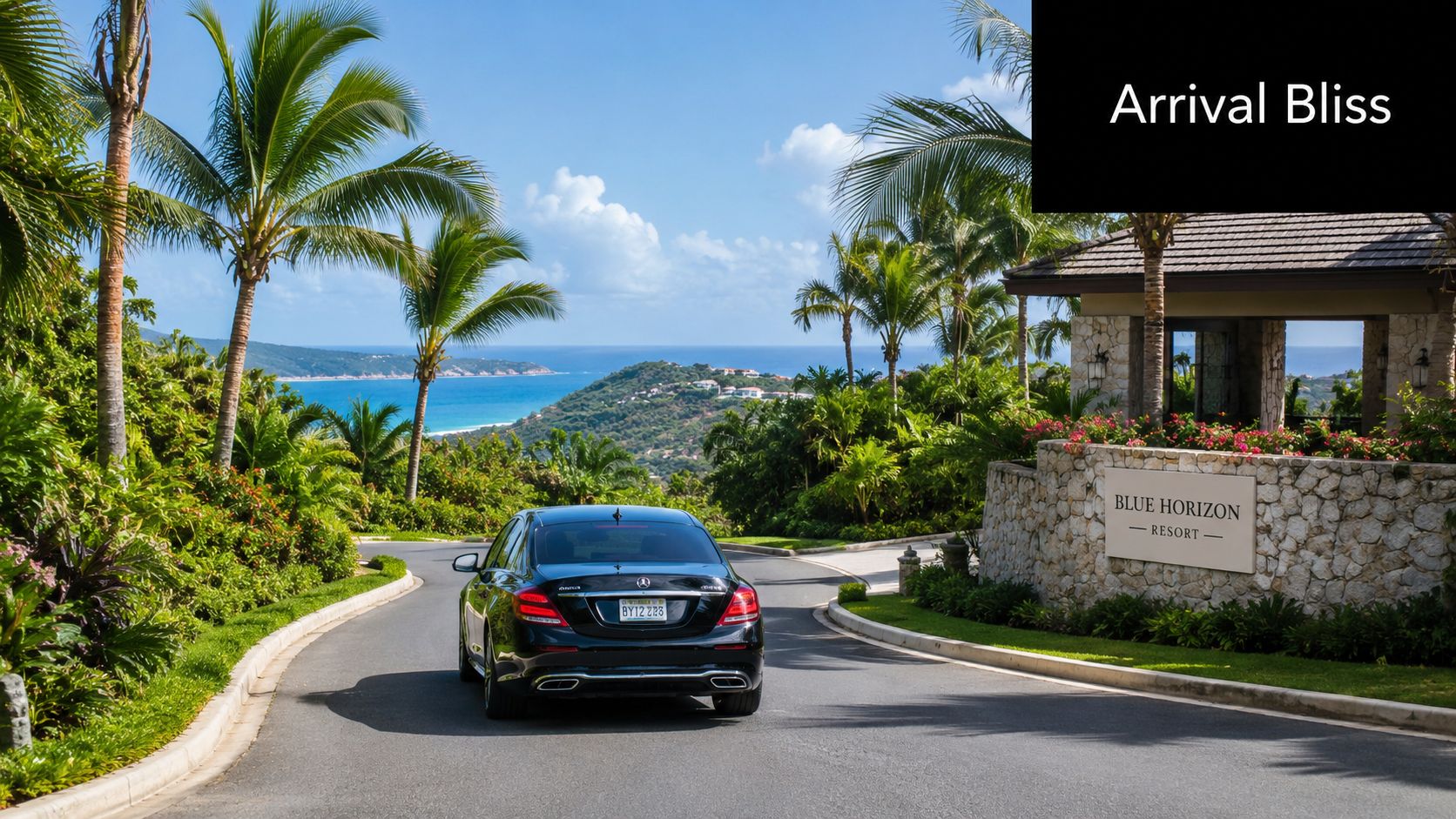
That matters more than many hotel reviews admit. In wellness hospitality, arrival is part of treatment design. A short road transfer preserves mental bandwidth. Guests arrive with enough energy left to register the setting, the pace, the air movement, and the visual quiet. If the transfer were longer or more chaotic, the same architecture and service would have to work harder to produce the same result.
For a Swiss spa operator or premium beauty retailer, this is a useful operational lesson. The opening minutes shape perceived quality before any therapist, host, or product specialist has spoken at length. The strongest brands remove friction early, then let the environment carry part of the message. Six Senses handles that sequence well because the approach to the resort already supports decompression.
Arrival as a controlled reset
The check-in moment works best when it feels light. Guests need orientation, but they do not need an administrative performance. Here, the natural setting does a large share of the work. Greenery, open views, and a measured pace shift the body out of transit mode and into retreat mode without forcing a ceremonial tone.
That is a refined form of luxury. It asks for restraint.
Many high-end properties still confuse first impressions with intensity. They front-load information, signatures, welcome messaging, and activity options. Six Senses takes the better route. It reduces cognitive load and lets the guest settle first. For wellness-led businesses, that principle translates directly to spa reception, consultation design, and even retail hospitality. The client should not have to process too much before they can feel looked after.
Three practices stand out here:
- Keep procedures quiet: Documentation should support the welcome, not dominate it.
- Stage a clear visual arrival: The first sightline should calm and orient the guest quickly.
- Leave space after check-in: Unstructured time helps the environment begin its work.
Why the first afternoon matters
There is a practical trade-off. Efficient arrival creates an opportunity, but only if the schedule respects it. If partners, buyers, or press guests land and move straight into inspections, treatment trials, or commercial meetings, the benefit narrows. The property is designed to lower stimulation gradually, not to serve as a backdrop for an over-programmed agenda.
I would use the first hours sparingly. A quiet meal, a slow walk, and early rest usually produce better judgement the next morning than a packed arrival day. That approach sounds simple, but it reflects a deeper truth about the Six Senses model. Wellness here is not confined to the spa. It starts with how the resort handles transition, attention, and sensory load from the moment a guest arrives.
For Swiss trade partners assessing modern luxury, that is one of the clearest lessons on site. The experience begins before the first treatment and long before any sustainability narrative is explained. It begins with operational discipline around energy, pace, and timing.
Villa Sanctuaries and The Philosophy of Space
A guest opens the villa door, and the resort's thesis becomes clear. Space is doing the therapeutic work.
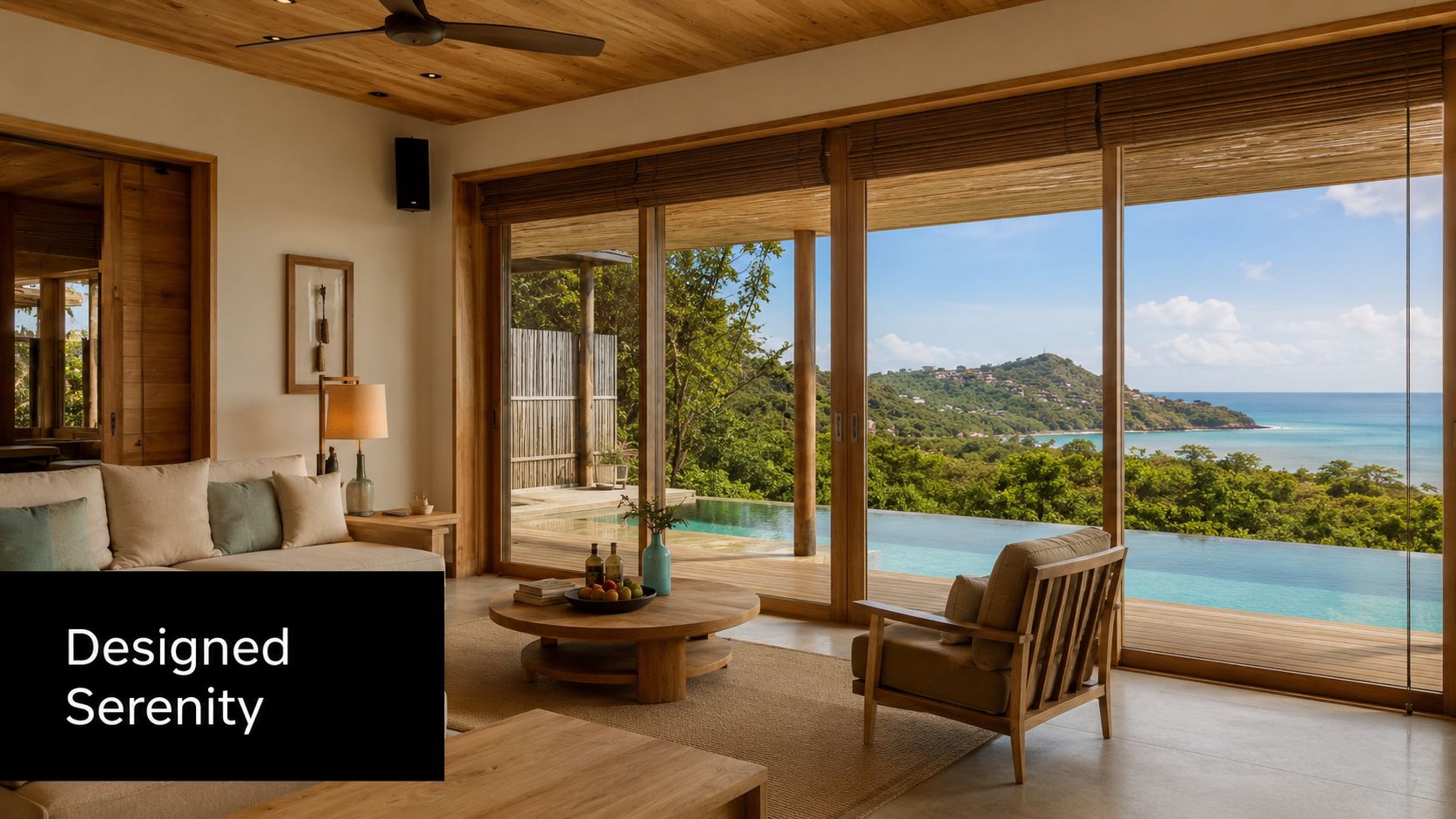
At Six Senses Koh Samui, accommodation operates as part of the wellness system, not as a decorative wrapper around it. The villas are arranged to protect quiet, frame greenery and sea views, and reduce the low-level disturbance that often weakens recovery in luxury resorts. For a Swiss spa operator or premium beauty retailer, that matters because it shows how architecture can support the same objective as treatment, better sleep, lower stimulation, and a stronger sense of personal control.
The practical point is simple. A detached villa changes behaviour. Guests spend more time outdoors, move between shade and sun at their own pace, and recover without negotiating shared loungers, corridor traffic, or a busy main pool scene. Privacy here is not only a status marker. It is an operating decision that improves the quality of rest.
That has a cost, of course.
A spread-out villa resort requires more land, more maintenance, and tighter service choreography than a compact hotel block. Buggies, housekeeping routes, engineering response times, and landscaping standards all become more demanding. Six Senses accepts that trade-off because the brand's version of luxury depends on lowering friction and sensory pressure long before a therapist meets the guest.
Why the layout works
The strongest villa concepts give guests choices without forcing them to think about those choices too much. Indoor living, outdoor decks, private water in many categories, and generous sightlines all support that. The result is a pattern Swiss wellness businesses should study closely. Recovery improves when a client can modulate exposure. Open air when energy is high. Shade and enclosure when the body wants less input.
Many spas get the treatment menu right and the surrounding environment wrong. The facial may be excellent, but the guest returns to a room with hard lighting, neighbour noise, or no meaningful private outdoor space. Six Senses Koh Samui avoids that contradiction by treating the villa itself as part of the restorative sequence.
What premium guests are really paying for
Floor area matters less than usability. In this segment, rate integrity depends on whether the room can function as a true sanctuary over several days, not whether it photographs well. Six Senses supports its premium positioning through a combination of separation, private exterior living, strong connection to the hillside setting, and a pace of stay that feels self-directed rather than managed.
That distinction matters commercially. A luxury villa product performs best when it gives the guest three things at once:
- Retreat without isolation
- Nature access without exposure
- Service support without constant staff presence
- Enough spatial flexibility to rest, dine, read, and recover in one place
For travellers comparing formats, an expert guide to luxury villas can help frame what to look for in privacy, service style, and suitability for different trip types.
Six Senses Koh Samui Villa Comparison
| Villa Type | Size (sqm) | Private Pool | Best For |
|---|---|---|---|
| Entry-level villa categories | Public category-level sizing varies by accommodation type | Some categories include private pools | Guests who want the Six Senses setting and villa privacy without choosing the highest-spec accommodation |
| Pool villa categories | Public category-level sizing varies by accommodation type | Yes, in applicable categories | Couples and guests who place a premium on in-villa time |
| Largest suite category | Premium multi-zone accommodation is available in the top tier | Premium categories are designed for private, extended stays | Longer stays, high-spend leisure, hosted wellness trips |
The video below gives a useful sense of the resort's topography and how architecture sits within the greenery rather than dominating it.
Design lesson: A restorative villa gives the guest immediate control over privacy, light, air, and pace. That usually adds more value than another amenity.
The Six Senses Spa and Integrated Wellness Programs
A guest can book a massage at almost any luxury resort. Six Senses Koh Samui is more useful as a benchmark because the spa is built as part of an operating model, not as an isolated revenue centre. The property links treatment, movement, rest, food choices, and practitioner input into one guest journey. For Swiss spa buyers and premium wellness retailers, that distinction matters. It shows how luxury service can feel sensorial and refined while still giving the client a clearer sense of purpose.
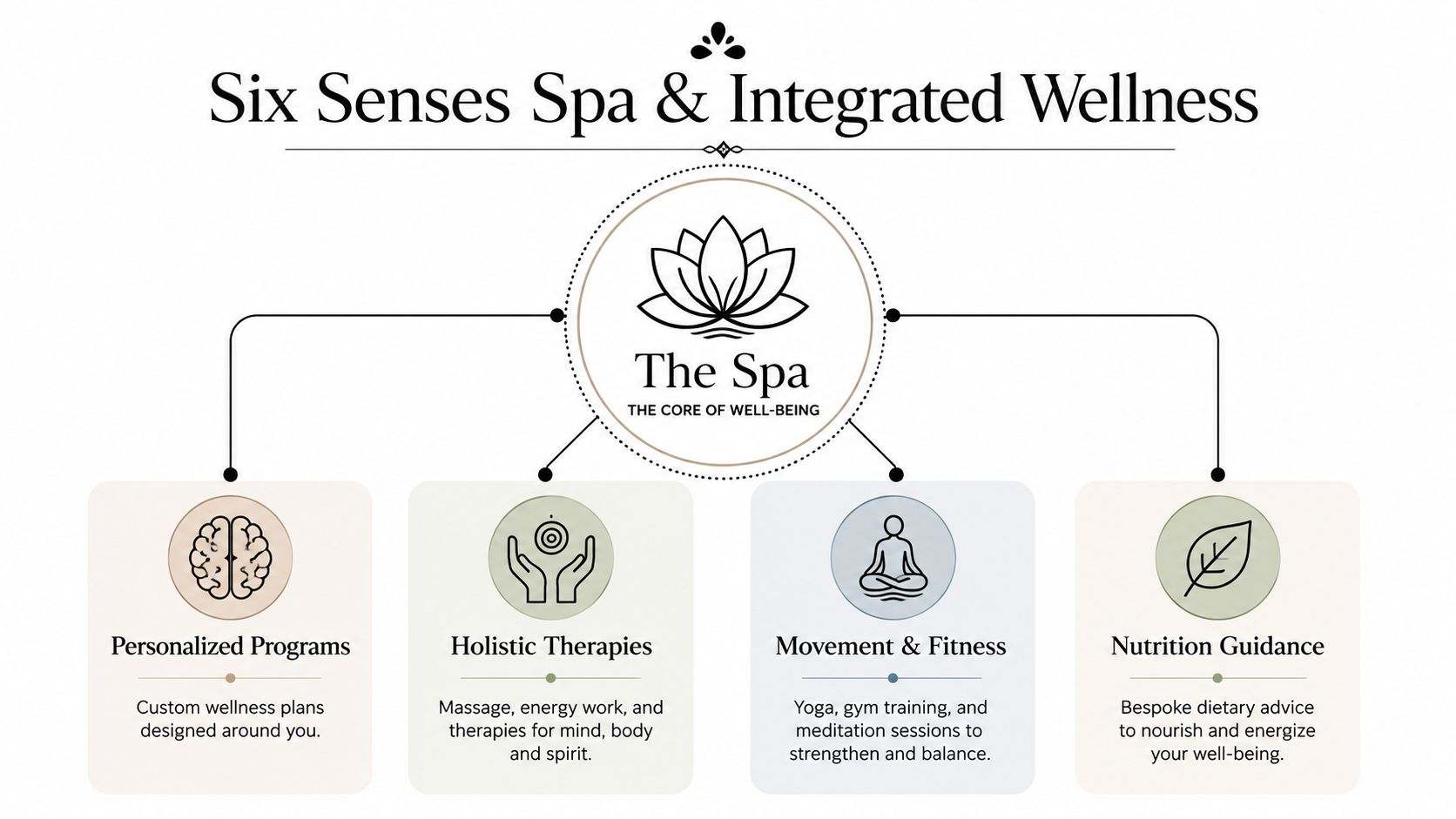
What stands out is the sequencing. The best wellness concepts do not start with a treatment menu and hope the rest of the stay supports it. They begin with the guest's condition. Sleep quality, stress load, muscle fatigue, digestion, mood, and appetite for activity shape the recommendation. That approach is commercially smart because it improves relevance without pushing the resort into a medical position it does not need to claim.
For Swiss pharmacies, spa directors, and prestige beauty retailers, this mirrors a wider shift in the premium market. Clients increasingly expect a relationship between skin, recovery, nervous system regulation, nutrition, and daily habits. They also expect the language around those connections to stay disciplined. A property like Six Senses Koh Samui performs well here because it presents wellness as a structured practice rather than vague aspiration.
What the spa model gets right
The resort's model works best when it makes the logic visible to the guest.
That usually depends on three operational choices:
- Consultation stays light but meaningful. Guests get direction without feeling they have entered a clinic intake process.
- Practitioner judgement remains central. Tools and assessments can support the session, but the therapist still interprets the guest in real time.
- The programme extends beyond one appointment. Treatment quality matters, but results hold better when sleep, movement, and dining choices support recovery over several days.
Many luxury spas fall short. They invest heavily in atmosphere, then treat wellness as a series of unrelated appointments. Six Senses is stronger because the guest can see how one part of the stay supports another. That creates higher perceived value and usually leads to stronger compliance with recommendations, whether that means choosing a calmer evening, adjusting meal timing, or adding mobility work between treatments.
Why this matters for Swiss trade partners
Swiss audiences tend to appreciate restraint, technical competence, and ingredient credibility. They are open to ritual and sensory pleasure, but they are less forgiving of soft claims that cannot be explained. That creates an interesting trade-off. Six Senses Koh Samui delivers an experience many luxury guests will trust instinctively because the service is coherent and well paced. Yet the Swiss market often asks for more explicit language around outcomes, especially when wellness moves beyond relaxation into sleep, resilience, detox, or performance recovery.
That tension is commercially useful. It helps separate strong concepts from marketable but vague ones.
A practical way to assess the Six Senses model is to look at where experience is already excellent, and where a Swiss operator might want stronger proof points before translating the concept into retail, treatment design, or partnership language.
| Area | What works well at resort level | Where evidence could be stronger |
|---|---|---|
| Sensory experience | Strong environment and emotional coherence | Emotional benefit is difficult to quantify |
| Personalisation | High perceived value when treatment feels adapted to the individual | Adaptation is often described more than measured |
| Clean-beauty alignment | Natural, place-led philosophy fits premium wellness positioning | Ingredient efficacy claims need careful substantiation |
| Guest trust | Strengthened by service, setting, and therapist expertise | Swiss buyers may still ask for clearer outcome tracking |
Premium guests often accept ritual. They trust it more when the operator can explain what is being observed, why it was chosen, and what improvement should realistically follow.
For product distributors and spa operators, the lesson is practical. Keep the pleasure, the texture, and the emotional intelligence of the treatment room. Add clearer treatment objectives, better consultation language, and follow-up methods where they fit the brand. That is how luxury wellness matures without losing its appeal.
Sustainability in Practice The Earth Lab and Beyond
I would treat Six Senses Koh Samui as a useful benchmark only if its environmental claims survive operational scrutiny. At this property, the sustainability story holds up better than it does at many luxury resorts because it is tied to systems, materials, staff behaviour, and guest-facing education rather than soft brand language.
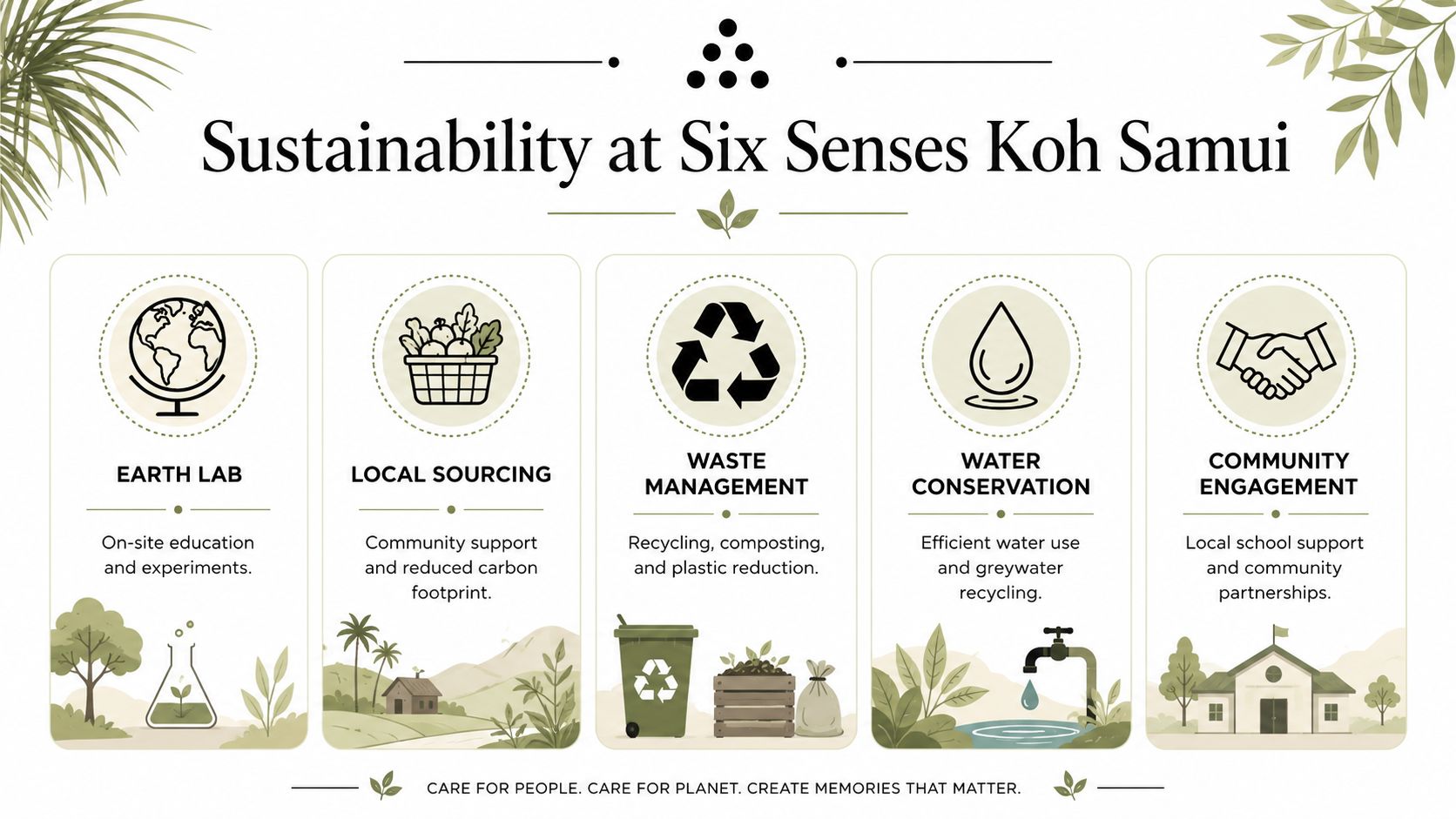
The resort's framework sits under GSTC standards, with the GSTC announcement on Six Senses standards recognition noting both a 25–30% reduction in operational energy consumption compared with conventional resorts and the use of 100% renewable or reclaimed wood materials as core practices. For trade buyers, that combination matters. Energy use affects the credibility of the operating model. Material selection affects what guests see, touch, and increasingly ask about.
Why the Earth Lab matters
The Earth Lab gives these commitments a visible operating base. That is more valuable than it sounds. In luxury hospitality, sustainability often disappears into back-of-house reporting, which may satisfy auditors but does little for guest trust or staff confidence.
Here, the resort turns environmental practice into something teachable. Guests can connect the idea of responsible luxury to a place, a process, and a routine. Staff have a concrete reference point when they explain how the property handles waste, resources, or local environmental initiatives. For a Swiss spa group or beauty retailer, that is the more transferable lesson. Good sustainability communication works best when it is attached to daily practice, not abstract purpose statements.
What Swiss partners can learn from it
From a commercial perspective, the Six Senses model has three strengths.
- Procurement discipline: Renewable or reclaimed materials show that sourcing standards are being applied to the built environment, not only to spa products or menu language.
- Training clarity: A physical sustainability hub gives frontline teams specific stories and examples to use with discerning guests.
- Brand fit: Retailers and operators with a strong position on traceability, formulation ethics, and responsible production are more likely to find strategic alignment here.
This is why the property has relevance beyond travel media. It offers a case study in how modern luxury can make environmental performance legible without making the guest experience feel corrective or austere.
The trade-off a serious buyer should keep in view
The model is credible, but it is not free of contradiction.
Luxury resorts still carry a heavy resource load. Private villas, water use, cooling demand, laundry volumes, imported goods, and aviation-linked arrivals all sit inside the same offer. A Swiss audience will recognise that tension immediately. The question is not whether a high-end island resort is low-impact in absolute terms. It is whether the operator reduces waste, energy demand, and material harm in ways that are systematic, visible, and independently grounded.
Operational takeaway: Sustainability earns trust when a guest can observe it, a staff member can explain it clearly, and a trade partner can verify the underlying standard.
That is the value of the Earth Lab. It turns environmental intent into an operating discipline, which is exactly what premium wellness partners should look for before adapting any part of the Six Senses approach to spa retail, treatment design, or brand collaboration.
Conscious Dining and Immersive Island Experiences
By dinner on the first evening, a resort usually reveals its true operating standard. The spa may be excellent and the villas beautifully resolved, but if the food feels generic, overly heavy, or disconnected from place, the wellness promise starts to fragment. Six Senses Koh Samui avoids that trap by treating dining as part of the same system as sleep, movement, and sensory calm.
That matters for a Swiss trade audience. In premium wellness, cuisine is not a side amenity. It is one of the clearest tests of whether a property can translate philosophy into daily guest behaviour.
The key venue is Dining on the Rocks, which functions as both a restaurant and a brand statement. The name alone signals what the resort understands well: memory in luxury hospitality often comes from context, not complexity. Here, the sea view, the pacing of service, and the physical separation from everyday routine do as much work as the plate itself. For retailers and spa operators studying the model, that is useful. The product is never just the treatment or the meal. It is the environment that makes each one feel persuasive.
Dining as part of the wellness model
A strong wellness resort designs meals to support the rhythm of the stay. Guests should leave lunch able to swim, read, rest, or take a treatment without feeling weighed down. Dinner should feel indulgent enough to satisfy the luxury brief, but not so rich that it works against sleep quality or next-morning energy.
Six Senses Koh Samui generally understands that balance. Different dining settings give guests control over tone. One meal can feel celebratory, another quieter and more restorative. That variety has operational value because wellbeing is rarely served by repetition. Guests want flexibility without losing coherence.
For Swiss partners, three points stand out:
- Setting shapes appetite: Open views, natural light, and a sense of airiness change how food is perceived and remembered.
- Choice supports personal rhythm: Multiple venues allow guests to match dining to mood, energy level, and the purpose of the trip.
- Signature moments justify rate: A standout restaurant creates recall and pricing power, especially when the experience feels specific to the property rather than interchangeable with urban fine dining.
There is also a trade-off worth acknowledging. Destination dining can drift into spectacle. When that happens, culinary identity starts to compete with the restorative purpose of the stay. Six Senses is at its best when it keeps the experience sensual and polished, but still grounded in freshness, restraint, and place.
Island experiences that reinforce, rather than distract
The same logic applies outside the restaurants. Activities only strengthen a wellness stay when they extend the property's pace and values. At Six Senses Koh Samui, the more effective experiences are the ones that keep guests in contact with the island's natural setting and avoid turning every hour into a scheduled event.
Time outdoors, gentle exploration, and unforced movement fit the property better than high-volume activity programming. Guests can also access nearby pursuits including scuba diving, hiking, and rock climbing, as noted earlier in the article. The point is less the checklist of options than the way those options sit around the core experience. They remain available without overwhelming it.
That balance is harder to achieve than it looks.
Many resorts speak convincingly about wellness in the spa, then lose discipline at the dinner table or activity desk. Six Senses Koh Samui is a useful benchmark because the experience stays largely coherent across those touchpoints. For a Swiss spa or beauty retailer assessing partnership fit, that consistency is a key signal. It shows how modern luxury can feel generous, sensorial, and commercially strong without losing sight of wellbeing.
A Practical Guide to Booking and Planning Your Stay
Booking Six Senses Koh Samui well means deciding what kind of stay you want before you compare room categories. This isn't a property where the cheapest available villa automatically offers the best value for your purpose. For some travellers, privacy and in-villa time justify paying more for a pool category. For others, the resort grounds and dining offer are strong enough that a simpler entry point makes sense.
How to plan the stay around the goal
If the trip is primarily restorative, keep the schedule light. Build around sleep, unhurried meals, and a small number of treatments or movement sessions rather than trying to consume the whole resort in a few days. The property's strength lies in atmosphere and rhythm, so over-scheduling works against the purchase.
For trade visits, I'd approach it differently. Clarify the evaluation lens before arrival:
- Are you assessing spa philosophy?
- Are you studying sustainability operations?
- Are you exploring partnership fit for retail, treatment concept, or education?
Without that filter, a luxury inspection trip can become pleasantly vague and commercially unhelpful.
What to confirm before booking
A practical shortlist helps:
- Villa fit: Ask whether you want maximum seclusion, easier access, or a stronger sea-facing setting.
- Rate logic: Compare the premium for private pool access against how much in-villa time you realistically expect to use.
- Stay design: If wellness is the purpose, leave margin in the itinerary. Don't treat the resort like a city break.
- Operational questions: Trade partners should request conversations around spa positioning, sustainability practice, and guest profiling rather than relying only on a hosted tour.
For hotel teams studying the operational side of reservation flow and guest management, this ultimate guide for hotel operators is a useful external reference for thinking about booking systems and service structure.
A final planning perspective
Six Senses Koh Samui suits travellers and partners who value coherence more than spectacle. If you want nightlife-led energy, there are other places on the island that fit better. If you want a property that can teach useful lessons about integrated luxury, restorative space, and sustainability with some measurable backbone, this one deserves close attention.
It is also best approached with the right expectations. The resort offers a persuasive model of modern wellness hospitality, but it isn't above scrutiny. The sustainability side is relatively well evidenced. The wellness side is emotionally convincing, though still stronger in experience than in publicly verified outcome data. For a Swiss audience, that distinction isn't a flaw. It's the basis for a smarter conversation.
For Swiss retailers, spas, pharmacies, and wellness operators looking to translate this kind of elevated, evidence-aware luxury into their own assortment strategy, beautysecrets.agency offers access to premium natural and ethically sourced beauty and wellness brands selected for quality, transparency, and market fit.