A customer is standing at the counter with two hydration serums in hand. One says hyaluronic acid. The other says Hyaluronic Acid 2% + B5. They ask a simple question that isn't simple at all. “What's the actual difference?”
For a Swiss pharmacy, spa, or premium beauty retailer, that moment matters. If the answer stays at “this one hydrates more”, you've missed the commercial value of the category. Buyers in Switzerland are often looking for tighter logic. They want to know how a formula works, who it suits, where it sits in a routine, and whether it deserves space next to retinoids, niacinamide, barrier creams, and dermocosmetic staples.
Hyaluronic Acid 2% + B5 has become a reference point because it represents a broader shift in modern hydration serums. The category has moved beyond simple moisture language towards multi-molecular hydration, barrier support, and routine compatibility. That shift is especially relevant in the Swiss market, where product compliance, ingredient transparency, and practical performance all shape trust at shelf level.
Beyond the Hype What Retailers Must Know
A Swiss buyer reviewing hydration serums isn't only choosing between textures or price points. They're choosing between claims architectures. One serum may offer generic moisturising language. Another sits inside a more precise, regulated cosmetics framework, with clear ingredient labelling expectations under Switzerland's aligned cosmetics regime and a formulation story built around multiple forms of hyaluronic acid plus ceramides, as outlined on The Ordinary's product page for its serum with ceramides.
That matters because the modern hyaluronic-acid serum category in Switzerland is best read through regulated formulation quality and claim discipline, not through hype around a single hero ingredient. In practical retail terms, the buyer isn't stocking “just another HA serum”. They're stocking a product that represents the category's move from basic moisturisation towards multi-benefit hydration support.
What sophisticated buyers should notice
At shelf level, the confusion usually starts with language. “Hydrating”, “plumping”, “barrier”, “dewy”, and “moisturising” often get used as if they mean the same thing. They don't.
A sharper consultation sounds more like this:
- Hydrating serum: Adds water-focused support to the routine.
- Barrier-support serum: Helps skin hold onto comfort more effectively when layered correctly.
- Moisturiser: Helps reduce water loss by sealing and cushioning.
That distinction helps staff explain why Hyaluronic Acid 2% + B5 belongs in a routine even when the client already owns a cream.
Retailers who explain function, not buzzwords, usually earn more trust from repeat skincare shoppers.
For online and omnichannel partners, the challenge is similar. Product pages often flatten nuanced formulas into generic “glow” language. Teams building better education flows can borrow useful merchandising thinking from ECORN's guide for beauty ecommerce businesses, especially when translating ingredient science into clearer digital buying journeys.
The Swiss retail implication
The strongest commercial position is to treat this serum as a category benchmark for hydration layering. It is not a miracle anti-ageing shortcut. It is not a replacement for a moisturiser. It is a high-utility formula that helps organise the customer's routine around hydration logic, barrier comfort, and compatibility with stronger actives.
That is a much better conversation to have at the counter.
Deconstructing the Hyaluronic Acid 2% + B5 Formula
The name sounds simple. The bottle isn't.
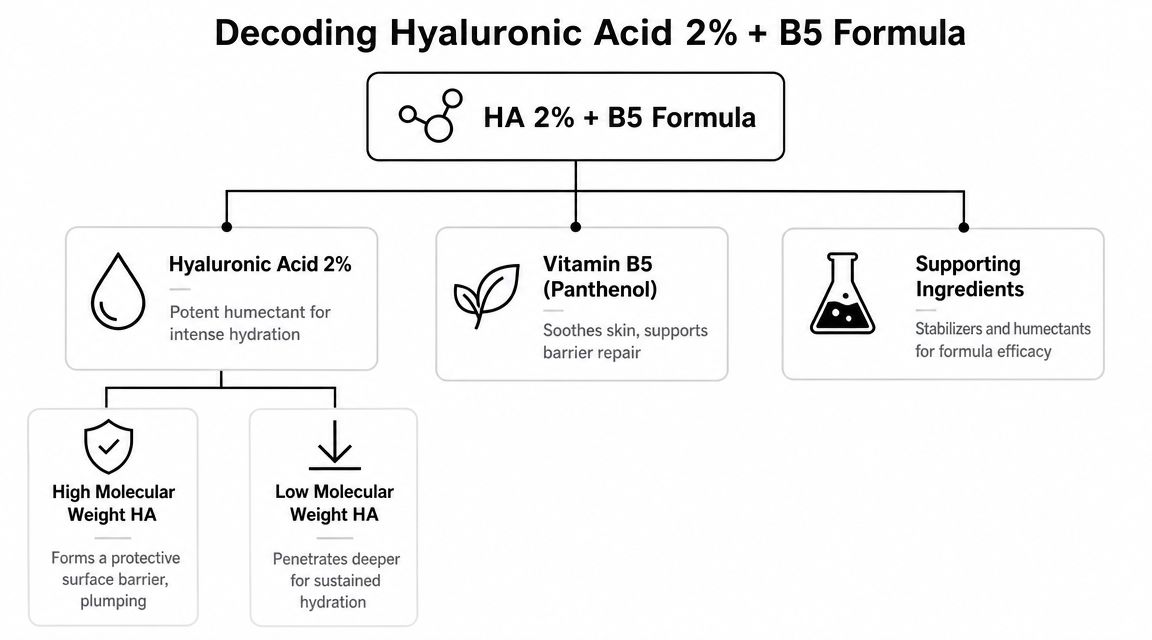
A formula marketed as Hyaluronic Acid 2% + B5 isn't just one water-binding polymer with a vitamin added for decoration. In the current generation of this type of serum, the architecture is much more deliberate. Boots describes the reformulated product as using five forms of hyaluronic acid, including low, medium, and high molecular weight sodium hyaluronate, plus hydrolysed hyaluronic acid and a hyaluronic-acid crosspolymer, combined with panthenol and barrier lipids. It also notes that the lower molecular weight fractions support rapid surface hydration, while the crosspolymer is associated with longer-lasting water binding. You can review that composition detail on Boots' listing for The Ordinary Hyaluronic Acid 2% + B5.
Why multiple forms of HA matter
The easiest way to explain this to staff is to stop talking about hyaluronic acid as if it were a single object.
Think of the different molecular weights like fishing nets with different mesh sizes:
- High molecular weight forms stay closer to the surface and support a smoother, more cushioned feel.
- Medium molecular weight forms help bridge immediate hydration with a more sustained skin feel.
- Lower molecular weight forms are selected to support hydration across the upper layers more quickly.
- Crosspolymer forms are useful for extending water-binding behaviour and improving sensory elegance.
That gives the formula a layered hydration profile rather than a one-note effect. For the retailer, that's the key upgrade story. You're not selling “more HA”. You're selling better-structured hydration delivery.
What the B5 part actually contributes
The “B5” in the name refers to panthenol. In merchandising language, it's tempting to reduce B5 to “soothing”. That's true, but incomplete.
Panthenol works well in this kind of serum because it supports the formula's broader comfort story. It sits naturally beside humectants and barrier-supportive ingredients, which is why this type of product is often easier to recommend to clients whose skin feels dehydrated, reactive, or overworked by active routines.
A useful staff explanation is this:
| Component | What staff can say | Practical benefit |
|---|---|---|
| Hyaluronic acid complex | Attracts and holds water | Skin feels fresher and looks less drawn |
| Panthenol | Supports comfort and softness | Formula feels less harsh in compromised routines |
| Barrier lipids and ceramide-style support | Complements hydration with barrier-minded care | Better fit for dryness-prone or winter-stressed skin |
What the “2%” should and should not mean
The number draws attention, but it shouldn't dominate the consultation. Buyers and clients often assume the percentage alone tells them whether the serum is effective. It doesn't.
In this category, formula quality depends on how the humectant system is built, what else supports it, and how the product is used in the routine. A simplistic single-polymer serum can sound strong on pack yet feel underwhelming in use. A better-built serum usually balances hydration, texture, spreadability, and follow-on compatibility.
Practical rule: Train staff to explain the system, not just the percentage.
That approach makes it easier to defend premium positioning, compare products fairly, and reduce disappointment from shoppers who expect one ingredient name to do every job at once.
Proven Benefits From Surface Plumping to Barrier Health
The immediate appeal of this category is visible. Clients apply a well-formulated Hyaluronic Acid 2% + B5 serum and often notice skin that looks smoother, fresher, and less tight. That short-term payoff matters in retail because it gives shoppers a result they can feel early in the routine.
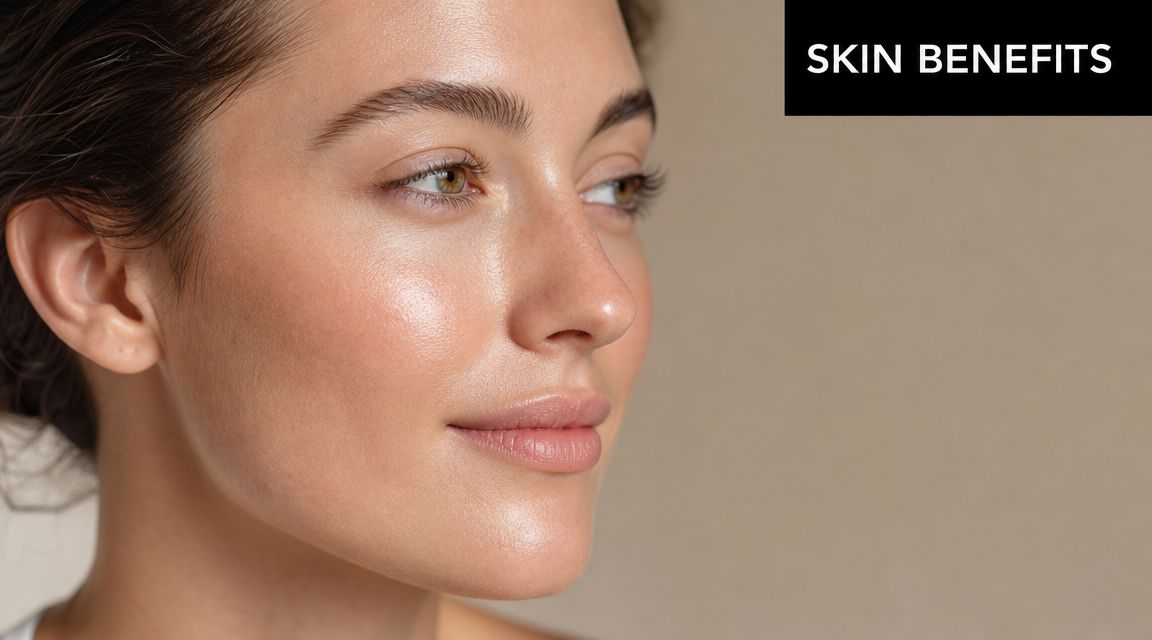
The scientific basis is straightforward. According to INCIDecoder's overview of The Ordinary Hyaluronic Acid 2% + B5, hyaluronic acid can bind up to 1,000 times its own weight in water, which is why it remains one of skincare's classic humectants. That same overview also notes the product's evolution towards multiple HA forms and ceramides, reflecting demand for more enhanced, barrier-supportive hydration.
What clients actually see
The first visible benefit is usually surface plumping. Dehydration lines can appear softer when the skin's upper layers are better hydrated. This is not the same as structural wrinkle correction, and your staff should keep that distinction clean.
A good consultation phrase is: this serum helps skin look better hydrated and less drawn, especially when dryness is the reason it looks fatigued.
Three common retail-relevant outcomes tend to follow:
- Smoother appearance: Skin often looks more even when dehydration is reduced.
- More comfortable feel: Tightness can ease when the routine supplies water support and proper sealing.
- Improved routine tolerance: Hydrated skin often copes better with stronger actives layered elsewhere in the regimen.
Beyond plumping
The more commercially useful benefit is barrier relevance.
When a serum combines multiple humectant forms with panthenol and barrier-supportive components, it stops being only a “plumping product”. It becomes part of a barrier-conscious hydration system. That's an easier sell in pharmacy, clinic-adjacent retail, and premium skincare because it fits how customers shop. They rarely want one flashy claim. They want a routine that feels coherent.
This short video can help staff visualise why hyaluronic acid remains such a staple in modern hydration routines:
Used well, a serum like this doesn't just make skin look temporarily fuller. It supports the comfort conditions that let the rest of the routine perform better.
That is the benefit worth merchandising.
Mastering Application and Layering for Swiss Climates
Many good formulas fail in real life not because the ingredient is weak, but because the customer uses it like a moisturiser and expects it to behave like one.
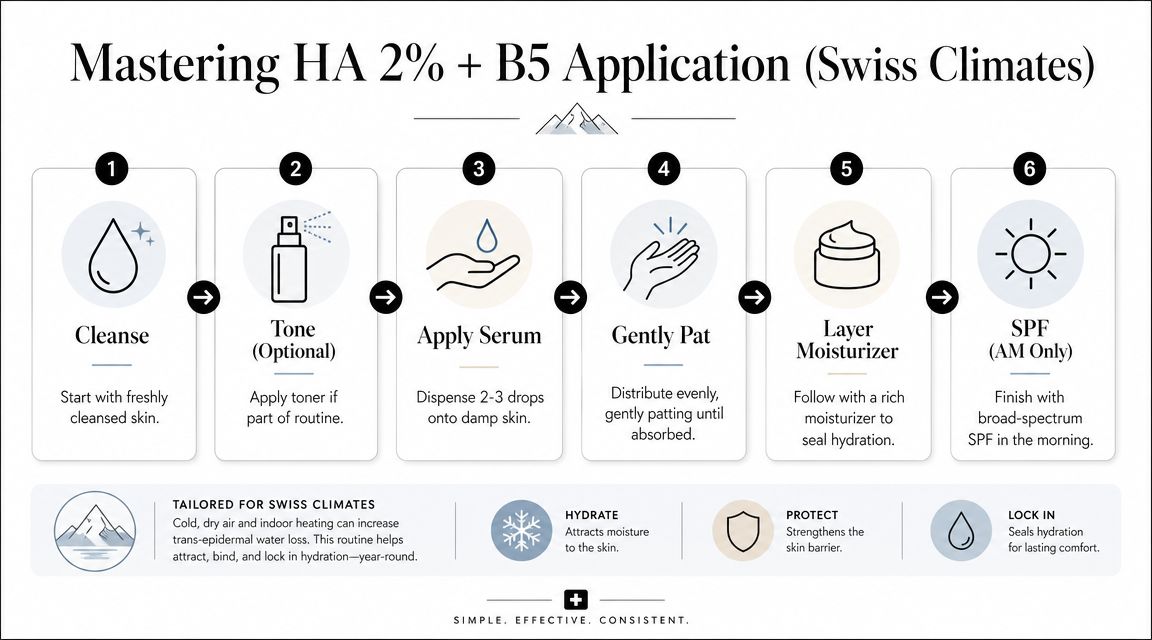
In Swiss winter conditions, that mistake becomes more obvious. Indoor heating and dry air can change how a humectant-led serum feels on skin. Guidance highlighted in this review discussing The Ordinary Hyaluronic Acid 2% + B5 stresses a key point for dry, low-humidity conditions: hyaluronic acid is best used on damp skin and then sealed with an emollient, because otherwise it can make skin feel tighter in very dry air.
The single rule staff should repeat
Apply it to damp skin, not bone-dry skin.
That one instruction prevents a large share of poor user experiences. If a customer says, “It felt tight” or “It didn't do much”, application technique is often the first thing to check.
The correct order in the routine
For most customers, the routine logic is simple:
- Cleanse first. Start with freshly cleansed skin.
- Use toner if relevant. Only if it already fits the client's regimen.
- Apply the serum while skin is still slightly damp. Don't wait until the face feels fully dry.
- Pat, don't overwork. Spread evenly and let it settle.
- Follow with moisturiser. This is what makes the hydration strategy complete.
- Use SPF in the morning. Especially if the routine includes other actives.
A sales associate doesn't need to turn this into a lecture. One clear sentence is enough: “This serum brings water-focused hydration, but your cream is what helps keep it there.”
Why Swiss winter changes the conversation
The Swiss market has a specific use-case challenge. Customers often move between cold outdoor air and heated indoor environments. That's why generic “apply morning and evening” advice isn't enough. Staff should actively ask:
- Do you use this under a cream, or on its own?
- Does your skin feel tight mainly in winter or after cleansing?
- Are you using retinoids, acids, or other drying actives?
Those questions reframe the product from impulse hydration to routine engineering.
If a client uses hyaluronic acid alone in winter-dry indoor air, the formula may feel less satisfying than it should. Layering is not an optional extra. It is part of how the product works best.
The most useful merchandising script
A concise in-store script might sound like this:
| Customer concern | Better recommendation |
|---|---|
| “My skin feels tight by afternoon” | Use the serum on damp skin, then follow with a richer cream |
| “I want glow but hate greasy products” | Position it as a lightweight hydration booster under moisturiser |
| “My active serum is drying me out” | Use it as a buffer layer to improve comfort in the routine |
Swiss retailers can stand apart, not by repeating the ingredient name, but by teaching the customer how to get the formula to perform under local climate conditions.
Strategic Merchandising and Client Consultation
Too many retailers still place Hyaluronic Acid 2% + B5 in the mental category of “basic hydration”. That undersells it.
A better commercial position is universal hydration booster. That phrase is useful because it reflects how this serum functions in modern routines. It works across age groups, across many skin types, and across multiple adjacent categories such as actives, barrier repair, and seasonal dryness support.
How to position it against anti-ageing expectations
For mature skin, the most credible consultation isn't “this will reverse ageing”. The more useful position, supported by Ulta's product framing of the ceramide version, is as a compatibility layer that can improve tolerance within active routines, including routines built around retinoids, rather than as a standalone age-reversal solution.
That distinction is commercially smart. It protects trust.
When a client says they want anti-ageing results, staff can respond along these lines:
- For visible dehydration: This is an excellent first step.
- For comfort with stronger actives: It helps support the routine.
- For structural wrinkle ambitions: Pair expectations with the right category, not just a hydration serum.
This doesn't weaken the product. It gives it a more durable role in the basket.
Cross-selling opportunities that make sense
This serum pairs especially well with categories that often create dryness, flaking, or discomfort. Think of it as a bridge product.
Useful pairings include:
- Retinoid routines: Offer it as a hydration buffer.
- Exfoliating-acid users: Position it as a comfort-restoring support step.
- Barrier creams: Build a “serum plus seal” conversation rather than a one-product promise.
- Winter skincare edits: Group it with richer creams and fragrance-light formulas.
A smart display or digital category page doesn't isolate this product under “plumping”. It places it next to products that help complete the hydration story.
Why this matters in digital retail too
Swiss buyers increasingly encounter products across shelves, brand sites, marketplaces, and ad-led discovery. If your team is refining online positioning, it helps to study how strong operators shape education and conversion together. For marketplace-oriented inspiration, profitable Amazon beauty campaigns offer a useful look at how beauty brands structure messaging around shopper intent instead of vague aspiration.
The strongest merchandising angle is not “everyone needs hyaluronic acid”. It is “almost every routine benefits from a well-positioned hydration layer”.
That's a more credible sales argument, and it usually leads to better cross-category attachment.
Understanding Safety and Skin Suitability
From a retail safety perspective, this is one of the easier serums to recommend. The usual concerns around acclimatisation, purging, or strong active conflict don't define this category. Most problems come from misuse, especially poor layering in dry conditions.
Who it suits best
In practice, Hyaluronic Acid 2% + B5 is easy to place across a broad customer base:
- Dry or dehydrated skin: Useful as a water-focused support layer beneath cream.
- Oily or combination skin: Helpful for customers who want hydration without a heavy feel.
- Sensitive-feeling routines: Often a better fit than jumping straight to stronger treatment categories.
- Mature skin: Best framed as supportive hydration, not as a solitary age-management strategy.
What can go wrong
The main issue to explain is the “tight” feeling some customers report. That doesn't automatically mean the serum is unsuitable. It often means one of two things:
| Issue reported | Likely reason |
|---|---|
| Skin feels tighter after application | Applied to dry skin, especially in dry indoor air |
| Serum feels underwhelming | Not followed by a moisturiser or sealing step |
That makes staff education more important than fear-based caution.
Good results with this category usually depend less on restriction and more on routine context.
For Swiss retailers, that's reassuring. It means the product can often be recommended confidently, provided the usage guidance is just as clear as the ingredient story.
Frequently Asked Questions
Can I use Hyaluronic Acid 2% + B5 with vitamin C, retinoids, or exfoliating acids
Yes. In retail practice, this is one of its best uses. It fits well as a hydration support layer beside stronger active categories and can help make routines feel more comfortable.
If a client is nervous about dryness from actives, this is often a safer first add-on than another treatment serum.
Is a more expensive hyaluronic acid serum better
Not automatically. Price alone doesn't tell you whether the formula is built well.
A better comparison looks at the formula structure. Does it use multiple forms of hyaluronic acid? Does it include supportive ingredients such as panthenol and barrier-supportive components? Does it have a sensorial profile that encourages correct use and layering? Those questions usually matter more than prestige pricing.
What's the difference between this serum and a moisturiser with HA
They do different jobs.
A serum like Hyaluronic Acid 2% + B5 is usually designed to deliver a concentrated water-phase hydration step. A moisturiser is there to cushion, soften, and help reduce water loss. One supplies hydration support. The other helps hold that support in place.
Can it replace an anti-ageing serum
Not if the customer's main goal is long-term wrinkle-targeted treatment. This serum is better positioned as a supportive hydration layer that helps the routine stay comfortable and consistent.
That answer is often more persuasive than overpromising.
Why does it sometimes feel sticky or tight
Usually because of application context, not because the category is flawed. Apply to damp skin, keep the amount reasonable, and follow with a suitable cream. In Swiss winter conditions, that last step matters even more.
If you're building a Swiss skincare assortment and want support choosing credible, ethically sourced brands for pharmacies, spas, boutiques, and premium e-commerce, beautysecrets.agency can help you curate differentiated ranges that align with clean formulation values, compliance expectations, and real retail demand.