If you're running a Swiss spa, clinic, pharmacy, or wellness centre, you've probably felt the same pressure many operators feel now. Clients want more than a classic hair ritual, but they also don't want another vague “wellness experience” with no visible result. They want a service that feels premium, photographs well, fits clean-beauty expectations, and gives your team a credible reason to recommend products for home use.
That's where the japanese head spa has become commercially interesting. Done properly, it sits at the intersection of scalp care, relaxation, and retail. Done badly, it becomes an expensive shampoo service with a steam halo and no treatment logic.
For Swiss professionals, the opportunity isn't just in adding a fashionable ritual. It's in building a service with clear standards, careful product curation, sensible pricing, and positioning that works for a market that values natural formulations, quality control, and professional credibility.
The Growing Demand for Japanese Head Spas in Switzerland
A client walks into a Zürich dermatology clinic with a reactive scalp, stress-related tension, and high expectations. She does not want a salon wash dressed up as wellness. She wants a treatment that feels refined, hygienic, and professionally justified. That is why the japanese head spa is gaining ground in Switzerland.
Demand in Switzerland is being driven by fit, not novelty. The concept sits comfortably inside two strong Swiss channels. One is the premium wellness centre looking for a ritual with visible theatre and strong repeat potential. The other is the dermatology-led clinic or medical aesthetic practice that wants a gentler, service-led bridge between scalp concern, relaxation, and homecare compliance.
That distinction matters because the service sells differently in each setting. In a luxury spa, the client buys sensory quality, deep relaxation, and a polished treatment journey. In a clinic, the client buys professional structure, scalp comfort, and confidence in the products used. Operators who understand that difference usually price and present the treatment more successfully.
Why the service fits Swiss buying habits
Swiss clients tend to respond well to services that combine comfort with treatment logic. Japanese head spa answers that expectation in practical ways:
- It is easy to position as premium. Water flow, scalp assessment, targeted massage, and a quiet treatment room create an experience clients can immediately distinguish from a standard hair wash.
- It works with clean formulation standards. Swiss buyers often ask about ingredient quality, fragrance load, and certification. A menu built around natural or ECOCERT-oriented products is easier to defend in both clinics and premium spas.
- It supports repeat bookings. Scalp congestion, dryness, excess sebum, seasonal sensitivity, and stress tension are recurring concerns, so the service lends itself to maintenance plans rather than one-off curiosity visits.
Commercially, high margins are achieved.
A well-designed head spa service can sit comfortably in the premium price band, but treatment revenue is only part of the picture. The stronger model includes paid consultation time, protocol-based upgrades, and retail that matches the client's scalp condition. In Swiss centres, that often means fragrance-conscious cleansers, mineral-balanced exfoliants, leave-on scalp serums, and homecare with a clear usage plan.
What creates demand, and what only creates noise
Social media has helped, particularly with younger luxury clients who are drawn to the visual side of the ritual. Water arches and scalp cameras attract attention. They do not create retention on their own.
Retention comes from treatment standards. Clients return when the pressure is correct, the consultation is credible, the products suit the scalp, and the result feels better the next day, not only on the treatment bed. For Swiss operators, that usually means resisting over-styled menus and building clearer indications for who the service is for.
Where Swiss businesses make the right margin
The strongest opportunities are rarely in discount-driven day spas. They sit in businesses that already understand premium service structure and client education. That includes:
- dermatological clinics adding a comfort-led scalp service alongside professional scalp consultations
- premium wellness centres expanding their ritual menu with a treatment that has retail follow-through
- selective pharmacies and trichology-focused practices that want a service linked to scalp maintenance, not just pampering
The trade-off is straightforward. Higher-quality protocols require staff training, slower treatment times, better basins or water systems, and disciplined product selection. Poorly specified services are cheaper to launch, but they usually produce weaker reviews, lower rebooking, and little credible retail.
What Swiss operators often get wrong
The first mistake is importing the aesthetic without the protocol. A decorative steam halo, soft music, and a long massage do not create a head spa standard.
The second is using the wrong product portfolio. Heavy fragrance, unclear actives, or generic salon shampoos weaken the service fast, especially in Swiss clinics and premium centres where clients ask direct questions about ingredients, tolerance, and certification.
The third is underpricing the service to get volume. That approach attracts trial bookings, but it leaves little room for therapist time, scalp analysis, laundry, water use, and the better natural formulations that make the treatment credible. A tighter menu, fewer options, and stronger pricing usually perform better than a long list of vague rituals.
The Philosophy of Scalp Care as Self Care
A client arrives after a dermatology consultation in Zürich or a long week in a Genève private bank. They do not want a theatrical wash. They want their scalp to feel clean, calm, and properly looked after, and they want the service to justify its price.
That is the commercial value behind the Japanese head spa philosophy. It treats scalp care as personal maintenance, sensory recovery, and visible beauty support in one protocol. For Swiss operators, that framing matters because it positions the service between wellness and scalp expertise, which is exactly where premium clinics and high-end centres can defend margin.
Scalp care is part of the self-care brief
Clients already understand facial cleansing, barrier support, exfoliation, and masks. The scalp deserves the same logic. It is skin, it produces oil, it collects residue, and it reacts to stress, climate, hard water, and overuse of styling products.
In practice, the philosophy is simple. Treat the scalp as a living skin environment rather than a by-product of hair washing. That changes the therapist's decisions. Pressure becomes more intentional. Product choice becomes more disciplined. Home care becomes part of the result, not an after-sales add-on.
This matters in Switzerland, where clients often ask direct questions about tolerance, formulation standards, and whether a treatment is suitable alongside medical scalp care. In that setting, vague wellness language is weak. Clear method wins.
The service has to feel intentional
A credible Japanese head spa should leave the client feeling two things at once. Relaxed, yes, but also properly treated.
That distinction affects how the service is built and sold. In a premium wellness centre, the self-care message can lead, but the protocol still needs a clear scalp objective such as comfort, rebalancing, or residue removal. In a dermatology-led clinic, the order usually reverses. Start with scalp condition, then explain the relaxation benefit as part of the treatment experience.
I advise teams to avoid promising transformation. Promise a well-executed scalp ritual with observable aims, suitable product selection, and good follow-through at home. Clients trust that language more, and it protects the business from overclaiming.
Product philosophy shapes credibility
This philosophy only holds if the formulations support it. If the service claims scalp care but uses strongly perfumed, generic wash products, the message falls apart fast.
Swiss clinics and premium spas are usually better served by a tighter product wardrobe. Gentle cleansers. Well-judged exfoliants. Masks and serums with a clear role. Natural positioning helps, but only if it is backed by ingredient transparency and sensible performance. For many operators, ECOCERT-aligned or similarly credible natural standards make the service easier to explain and easier to pair with retail.
For length care, after-scalp recommendations also need discipline. A heavy mask may suit dry or chemically treated hair, but it can flatten fine hair and weaken the client's impression of the whole treatment. Buy Me Japan's hair mask guide is a useful reference when you are comparing mask textures and finish profiles for different hair types.
Swiss clients need different language in different settings
The philosophy stays the same. The presentation should change.
- In dermatological clinics, describe the service as supportive scalp maintenance with a calming sensory component. Keep claims conservative and suitable for referral-based environments.
- In premium wellness centres, position it as a high-touch scalp and mind reset with visible hair-quality support and a structured home-care recommendation.
- In trichology or pharmacy-adjacent settings, emphasise routine, tolerance, and consistency. Clients in these channels often respond well to practical maintenance language.
Why this philosophy affects profit
Price resistance usually appears when the client thinks they are booking an upgraded shampoo. It drops when they understand they are paying for therapist skill, consultation, application method, water time, product quality, and a treatment design that suits their scalp type.
The same philosophy improves retail conversion. A client who sees the scalp as skin is more open to buying a cleanser, tonic, or treatment mask with a defined purpose between appointments. That is where Swiss operators can build a stronger service economy. Not through endless menu variations, but through a clear treatment identity backed by credible products and repeatable results.
Anatomy of a Signature Japanese Head Spa Treatment
A strong japanese head spa treatment has rhythm. Each stage prepares the next one. If the order is random, the service feels indulgent but not convincing.
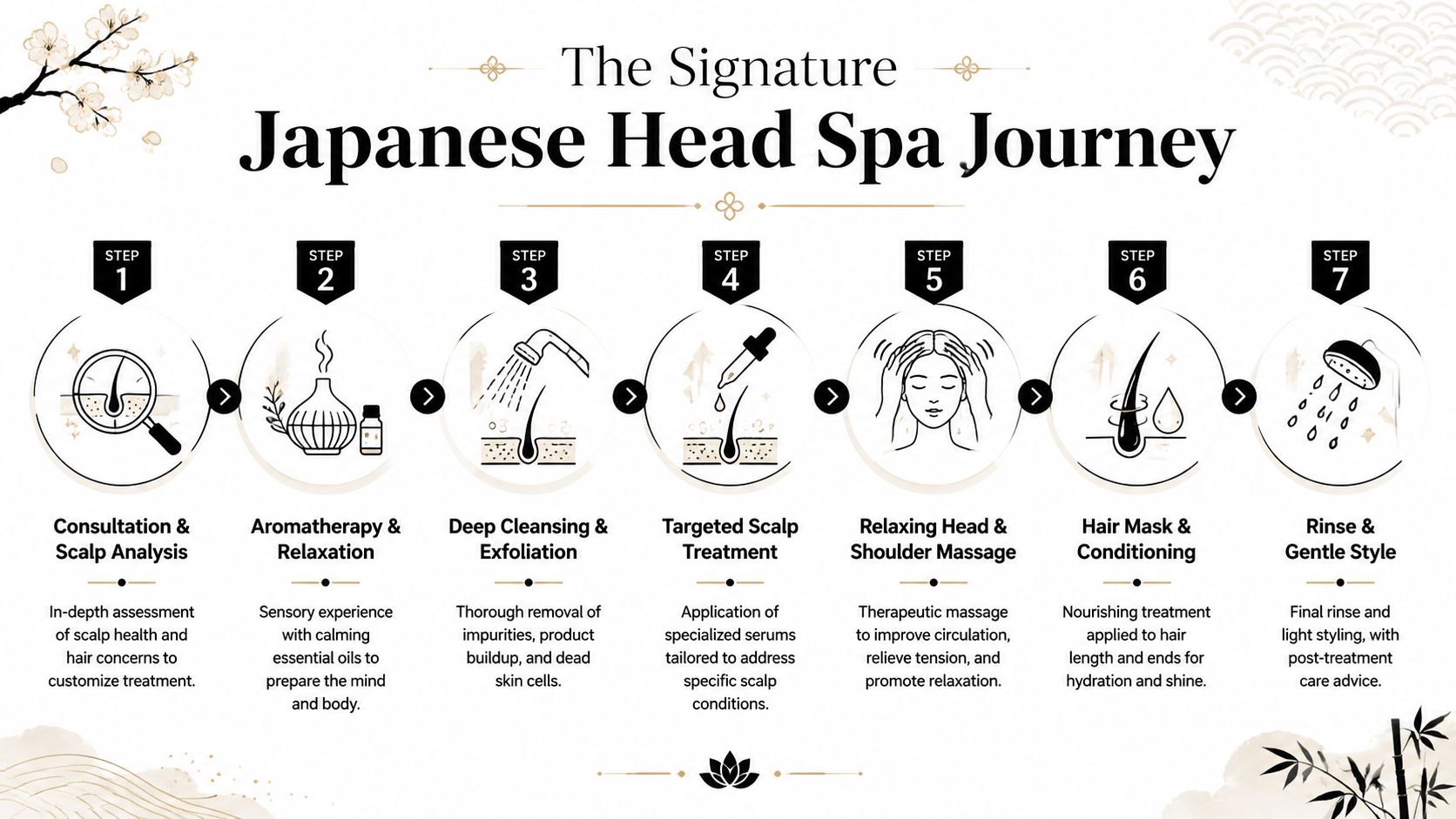
Consultation and scalp reading
Start with observation, not product. A proper consultation should cover scalp comfort, flaking, oiliness, product use, stress patterns, and any medical treatment already in place. If you use a scalp scope or micro-camera, keep the explanation simple and useful. The point is to tailor the service, not to overwhelm the client.
This first stage also protects your team. It helps you identify when a client is suitable for a spa treatment and when they should be referred to a dermatologist for active pathology, inflammation, or unexplained shedding.
Cleansing and thermal preparation
The cleansing phase is where many teams rush, and that's a mistake. The first cleanse should remove surface residue and styling buildup without over-stripping. The second should be chosen for the scalp condition you've identified.
Steam only works when it's controlled. In a 2025 Basel pilot involving patients with seborrhoeic dermatitis, the deep-cleansing phase used high-frequency steam at 45 to 50°C with 80% humidity for 10 minutes. The treatment was linked to 45% sebum clearance, 95% better absorption of phytotherapeutic masks, 22% higher scalp microbiome diversity, and a 61% reduction in Malassezia spp. according to the Basel pilot summary on Japanese head spa treatment mechanics.
That tells us something practical. Steam shouldn't be decorative. It should be calibrated, timed, and paired with the right mask or serum.
Before you build your treatment room protocol, it helps to review formulation texture and mask behaviour. Buy Me Japan's hair mask guide is a useful reference for how different mask types function, especially when you're deciding what belongs on scalp, what belongs on mid-lengths, and what should never be used interchangeably.
Massage technique and treatment logic
This is the core of the service. The manual work should move with intention across the scalp, temples, occipital zone, neck, and often shoulders. Pressure needs to be adaptable. Too light, and it feels superficial. Too strong, and you lose the sense of precision.
Good therapists don't perform one long generic massage. They vary tempo and contact according to the treatment goal:
- Slow, grounding contact settles the client and reduces guarding.
- Targeted scalp mobilisation helps work across fixed, tense areas.
- Circulatory stimulation supports the active treatment phase.
- Closing strokes signal completion and leave the client feeling organised rather than abruptly finished.
Here's a useful visual reference for how the treatment journey can be structured in practice:
Mask, rinse, and finish
The mask stage should follow the diagnosis. Don't put a rich length treatment directly onto a scalp that is reactive, congested, or highly oily unless the product is specifically designed for that use.
A strong finish includes a careful rinse, optional lightweight leave-in support, and brief aftercare advice. Keep styling simple. The point is to preserve the scalp result and send the client home with hair that still feels clean, calm, and manageable.
Treatment rule: every product in the room should have one job. If your team can't explain why a formula is used at a specific stage, remove it from the protocol.
Evidence-Based Benefits for Hair Scalp and Wellbeing
A Swiss client in a dermatology clinic or premium wellness centre usually asks some version of the same question. Will this help my scalp, or is it relaxing? Your team needs a clear, disciplined answer.
The strongest position is to describe Japanese head spa as a support service with three practical benefits. It can improve scalp comfort and cleanliness, it can help hair look and feel healthier, and it often produces a noticeable relaxation response. That framing is credible in consultation, commercially usable in marketing, and far safer than promising hair regrowth.
Scalp comfort, scalp hygiene, and visible hair quality
In practice, the most reliable improvements are the simplest ones. Clients often report less tightness, less itch, a cleaner-feeling scalp, and hair that holds freshness for longer after a proper treatment course. That matters in Switzerland, where many clients arrive with a mix of concerns rather than a single diagnosis. Hard water exposure, winter dryness, frequent washing, styling residue, and stress can all sit in the same case history.
For clinics and wellness operators, the commercial point is straightforward. Benefits that clients can feel within one or two visits are easier to sell than claims that depend on long timelines. A calmer scalp and lighter root area give the therapist something concrete to review at rebooking, and they give the client a reason to continue.
Hair quality also improves indirectly when the scalp environment is better managed. Less residue, more suitable exfoliation, and correct product selection usually leave the fibre looking cleaner, softer, and less weighed down. That is not the same as treating a medical hair-loss condition, and your team should say so plainly.
Why the treatment can influence wellbeing
The relaxation effect is not a side note. It is often one of the reasons the service retains clients.
Slow contact, repetitive scalp work, warm water, reduced sensory load, and a structured treatment sequence can help clients shift out of a guarded state. In a premium setting, that has practical value. Clients who feel settled are more likely to perceive the service as worth the tariff, follow home-care advice, and rebook on a schedule rather than as an occasional indulgence.
This is especially relevant for Swiss operators positioning Japanese head spa inside dermatology-led wellness, longevity, or recovery-focused menus. The service sits well alongside stress-management, sleep-support, and skin-health narratives, provided the language stays careful and does not drift into medical promises.
What practitioners should and should not claim
Use language that can survive a clinical environment and a Google review.
Reasonable claims:
- Supports scalp comfort and a cleaner scalp environment
- Helps reduce the feeling of congestion from oil, product build-up, and dry flakes
- Improves the sensory condition of the hair and scalp
- Contributes to relaxation and perceived stress relief
- Works best as a course of treatment with suitable home care
Claims to avoid:
- Guaranteed hair growth
- Medical treatment for psoriasis, eczema, alopecia, or infection
- One protocol for every scalp type
- Results that ignore product quality, therapist skill, or client compliance
The trade-off is simple. If you market the service only as relaxation, you leave money on the table with clients who want scalp results. If you market it as a corrective treatment for every hair and scalp problem, you create complaints, refund pressure, and trust issues with medically informed clients.
A Japanese head spa performs best in the Swiss market when it is presented as skilled scalp care with measurable sensory benefits, careful product matching, and a strong wellbeing component.
Curating the Perfect Natural Product Portfolio
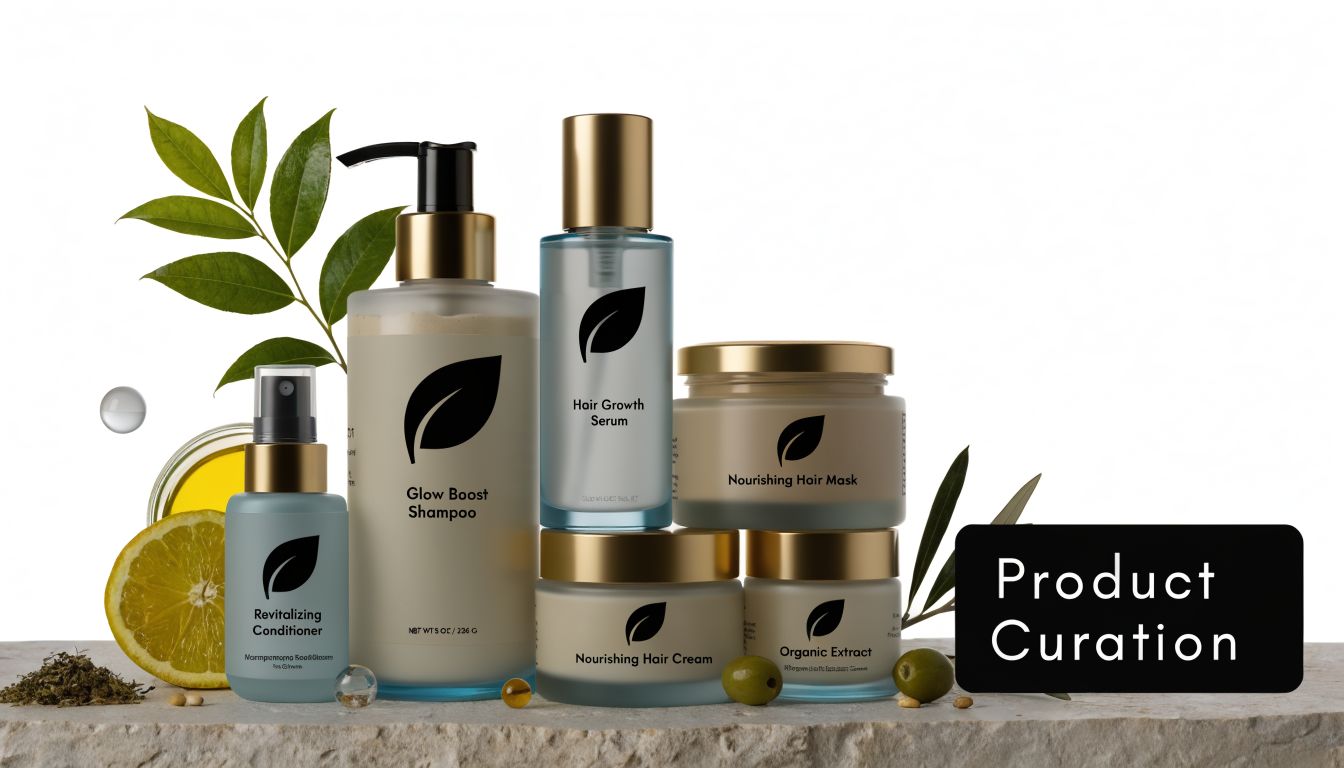
The product portfolio determines whether your japanese head spa feels coherent or stitched together. Swiss clients are usually quick to notice when the treatment story says “clean, careful, premium” but the backbar says something else.
That's why I favour a narrow, disciplined portfolio over a crowded one. You don't need many products. You need products that behave predictably under steam, rinse cleanly, respect the scalp barrier, and support a professional clean-beauty narrative.
What to prioritise
Start with four functional categories:
- A preparatory cleanser with good sensory quality and low residue.
- A scalp-focused treatment such as a lightweight oil, tonic, or mask chosen for the client's condition.
- A length product that nourishes the fibre without collapsing root freshness.
- A retail bridge product the client can realistically use at home.
For the Swiss market, natural, ethically sourced, and certified lines are the sensible centre of gravity. ECOCERT compatibility matters because it supports both client trust and your own brand positioning. Cruelty-free commitments also matter, especially in premium retail environments where the buyer often checks standards before ingredients.
Matching formulation style to service style
Not every “natural” formula is suitable for a head spa. Some oils are beautiful for massage but too heavy for clients with congested scalps. Some masks feel luxurious but leave residue that shortens the perception of cleanliness after the treatment.
A more useful way to curate is by treatment role:
| Product role | What you need | What to avoid |
|---|---|---|
| Scalp massage medium | Light slip, easy rinse, calm aroma | Thick oils that cling to fine roots |
| Steam-compatible mask | Stable texture, scalp suitability, clean removal | Products that melt into heaviness |
| Length conditioner | Softening without excess coating | Silicone-heavy finishes that flatten movement |
| Retail aftercare | Simple use, clear benefit, repeatable habit | Complex routines clients won't maintain |
Suitable brand directions for Swiss professionals
Fresh-pressed organic oils can work well for the massage stage when the therapist uses a controlled amount and chooses by scalp type. Marine-based actives make sense for centres that want a more thalasso or dermatocosmetic identity. Alchemical or botanical brands can also fit beautifully if the textures are refined and the claims stay grounded.
Selection test: if a formula feels excellent in the treatment room but performs badly in the client's weekly routine, it's the wrong retail product.
A final practical point. Build the protocol around what your team can explain in one clear sentence. If the therapist needs a long script to justify a product, the assortment is too complicated.
Integrating the Service Into Your Swiss Business Model
Most operators don't fail because the japanese head spa is weak as a concept. They fail because they install the hardware, write one menu line, and hope demand will organise itself.
A better approach is to build the service as a business unit. That means equipment, training, menu design, retail logic, and referral positioning all need to work together. One of the challenges in Switzerland is that local content still leaves gaps around awareness, pricing relative to income, and return on inventory investment. That's exactly why businesses need a practical framework specifically designed for CH market demographics and regulatory expectations, as noted in this discussion of Swiss adoption barriers and decision-making needs.
Start with the operational basics
You need enough infrastructure to deliver consistency, not theatre. In most settings, that means:
- A proper treatment basin or bed setup that allows comfortable neck support.
- A professional steamer that can be controlled reliably and cleaned properly.
- Scalp analysis equipment if your positioning includes consultation-led care.
- Laundry and timing discipline so the room always feels calm and organised.
Training matters as much as equipment. The team needs to know pressure control, contraindication awareness, product sequencing, and how to tailor the service for dry, oily, sensitive, or buildup-prone scalps. If they only memorise choreography, the treatment won't hold up.
Build a menu clients can understand
A complicated menu usually depresses bookings. Keep the structure clear, then personalise within the protocol.
Sample Service Menu Integration
| Service Tier | Duration | Includes | Price (CHF) |
|---|---|---|---|
| Express Scalp Reset | 30 min | Consultation, cleanse, short massage, rinse, home-care advice | |
| Signature Japanese Head Spa | 60 min | Consultation, scalp analysis, cleanse, steam, targeted treatment, head and shoulder massage, rinse | |
| Ultimate Scalp and Hair Ritual | 90 min | Full signature protocol plus intensive hair mask, extended massage, styling finish, retail prescription |
The prices in your own menu should sit within your market, cost base, and positioning. What matters most is that each tier feels distinct. Avoid stretching time. Add meaningful treatment value.
Where profitability usually comes from
In practice, profitability often improves when you focus on three levers:
- Strong rebooking habits. Offer a next-visit recommendation based on scalp need, not generic frequency language.
- Retail alignment. Prescribe one or two home products, not five.
- Adjacency. Pair the service with facials, stress-relief rituals, or clinic-led scalp programmes where appropriate.
If you're a pharmacy or dermatology-adjacent business, your advantage is credibility. If you're a hotel spa, your advantage is experience design. If you're an independent wellness centre, your advantage is agility. Build the menu around the advantage you already have.
Don't copy another centre's treatment room script. Build a version your team can deliver cleanly, every time, with the stock, skill, and time you actually have.
Marketing Your Japanese Head Spa Service Effectively
Marketing a japanese head spa in Switzerland works best when it sounds informed, not flashy. The service already has visual appeal. What most brands lack is the right framing.
Lead with a problem the client recognises
One underused angle is scalp pathology support. Existing consumer content often stays at the level of shinier hair and stress relief, but Swiss clinics and aesthetic practices can differentiate by positioning the service as an adjunctive option for concerns such as dandruff or seborrhoeic dermatitis, especially within the dermatocosmetica category, as discussed in this analysis of the scalp pathology positioning gap.
That wording matters. “Adjunctive” is credible. It leaves room for collaboration with dermatologists and avoids overstating what a spa treatment can do on its own.
Build your message around three audience types
Not every client books for the same reason. Your campaigns should reflect that.
- The stressed executive wants decompression, sleep support, and a premium pause.
- The beauty client wants scalp freshness, better-looking hair, and a more elevated ritual than a blow-dry add-on.
- The clinic-referred client wants a professional, supportive service that respects an existing treatment plan.
Use separate visuals and copy for each group. One generic campaign usually underperforms because it speaks to no one in particular.
Keep your content calendar disciplined
This service needs education-based marketing. Show the basin setup. Explain scalp analysis. Demonstrate the difference between a scalp mask and a hair mask. Share aftercare advice. Answer common questions your reception team hears every week.
If your team struggles to keep that content organised, a minimalist dashboard for scheduling social content can help keep the educational side of the launch consistent without turning it into a full-time admin project.
What converts interest into bookings
Three things usually move a client from curiosity to appointment:
- Before-and-after consultation storytelling. Not dramatic claims. Clear explanation.
- Packages with logic. Pair a course of treatments with one home-care product and a review point.
- Professional alliances. Build referral relationships with hair specialists, trichology-focused practitioners, and dermatology-adjacent clinics where appropriate.
Retention comes from quality, but marketing still needs to set the expectation correctly. Promise a structured scalp and wellbeing ritual. Deliver a treatment that feels precise, calm, and worth repeating.
If you're looking to build a japanese head spa offer with natural, ethically sourced, Swiss-market-ready products, beautysecrets.agency can help you shape the right assortment for pharmacies, clinics, spas, and premium wellness retail. Their portfolio and trade support make it easier to create a treatment menu that feels credible, sensorial, and commercially sound.