A customer steps up to the counter and asks a familiar question. She doesn't want “just a nice eye cream”. She wants one that feels clean, works on puffiness, won't irritate sensitive skin, fits her values, and comes from a brand she can trust.
That single question captures why top eye creams deserve careful attention in Swiss retail. The category sits at the intersection of efficacy, ethics, and consultation. Customers often arrive informed, cautious, and ready to compare ingredient lists, certifications, textures, and claims.
For pharmacies and spas, that's good news. A considered eye care assortment creates room for expertise. It also creates room for premium positioning, because the eye area is where many customers are willing to pay more for products that feel specific and credible.
The Modern Customer and the Eye Cream Question
The eye cream customer in Switzerland is rarely buying on impulse alone. She may already use a facial serum, know what hyaluronic acid does, and ask whether a formula is fragrance-free, vegan, or certified organic. In a spa, she may want a sensorial treatment product. In a pharmacy, she may want reassurance that a formula suits reactive skin and daily use.
That change in behaviour matters because the category itself is growing. The European eye cream segment was valued at USD 1.8 billion in 2025 and is projected to reach USD 3.4 billion by 2035, while natural and organic eye creams in Switzerland captured 28% market share in 2025, up from 19% in 2020. The same market context notes Switzerland's per capita skincare spend of CHF 285 annually, with demand strongly linked to ECOCERT-aligned products and local regulatory expectations, according to regional eye cream market analysis from Global Market Insights.
Why the Swiss shopper asks harder questions
Swiss customers often connect skincare with overall wellbeing. They don't only ask, “Will this help wrinkles?” They also ask:
- What's inside it. They want to understand active ingredients, not just glossy packaging.
- How it was made. Ethical sourcing and sustainability carry real weight in premium retail.
- Whether it fits their skin reality. Climate, routine, sensitivity, and age all shape the answer.
- Why this product costs more. If the value story isn't clear, the sale slows down.
A generic “best eye cream” list doesn't help much at shelf level. Retail teams need a sharper approach. They need a way to explain why one formula belongs in a spa ritual, why another works better for a pharmacy customer with irritation, and why a third earns its place because of certification and packaging discipline.
Top eye creams don't win because they sound luxurious. They win because the formula, claim, and customer need line up cleanly.
What strong retail curation looks like
A strong assortment doesn't try to stock every possible format. It builds confidence through selection. In practice, that means choosing products that cover the main purchase motivations without creating confusion.
For most Swiss partners, that means curating around a few clear ideas:
- A hydration-first option for dryness, tightness, and first signs of fatigue.
- A targeted anti-ageing option for lines and visible loss of smoothness.
- A soothing option for highly reactive or compromised skin.
- A more natural or certified option for customers who begin with values, not actives.
That's where the opportunity sits. The retailer who can answer the eye cream question calmly, clearly, and credibly becomes more than a stockist. That retailer becomes the place customers return to when they want advice that feels both scientific and human.
Deconstructing Excellence What Defines a Top Eye Cream
“Top” is an overused word in skincare. If everything is premium, advanced, and remarkably effective, those words stop meaning anything. A better approach is to judge eye creams by a few practical criteria that staff can explain in plain language.
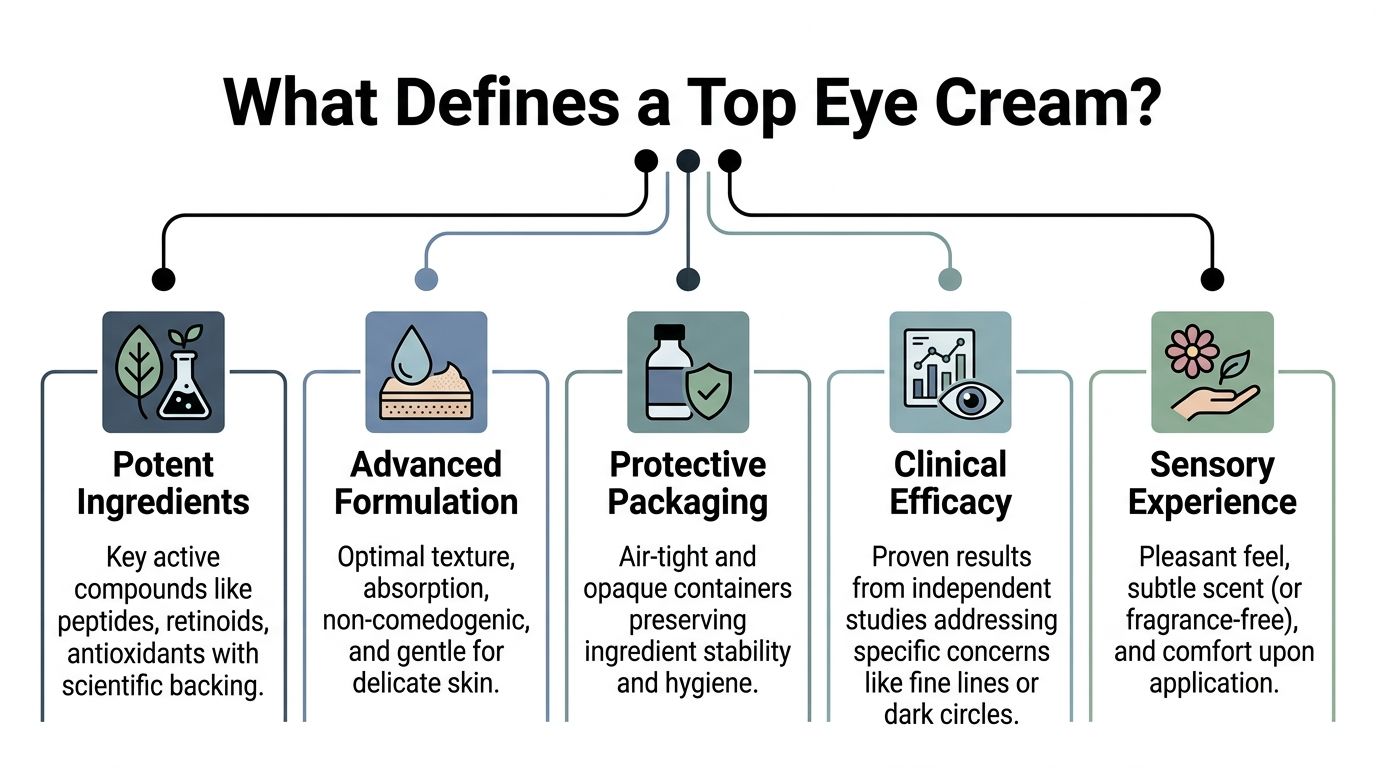
A reliable eye cream usually stands on five things. Ingredient choice. Formula design. Packaging. Evidence. User experience.
Ingredients that match a real concern
The easiest way to mis-sell an eye cream is to treat all active ingredients as interchangeable. They aren't.
A hydration-led formula behaves differently from one built for visible lines or dark circles. Clinical data supports that distinction. A 2020 University of Zurich study found that eye creams with hyaluronic acid increased under-eye hydration by 25 to 30% after 4 weeks and reduced puffiness in 62% of users. The same evidence set reports that retinoids reduced periorbital wrinkles by over 14% in 4 weeks, while caffeine was effective for dark circles in 70% of cases, as outlined in this clinical review on eye-area actives.
That gives retail teams a clean framework:
- Hyaluronic acid works best when the customer says the eye area feels dry, creased, or tired by midday.
- Retinoid-led formulas fit customers who prioritise wrinkle reduction and are comfortable with stronger actives.
- Caffeine makes sense when puffiness and dark-looking under-eyes are the main complaint.
- Antioxidant support such as vitamin C is often easier to explain in relation to brightness and environmental stress.
Formula design matters as much as the hero ingredient
Ingredient lists can look impressive and still disappoint if the formula itself is wrong for the user. In such cases, many teams need clearer language.
Think of formulation like fabric. Two garments may use fine wool, but one becomes a summer knit and the other a winter coat. Eye care works the same way.
Three useful texture families
- Light gels suit customers who dislike residue, wear make-up, or mainly complain about morning puffiness.
- Classic creams fit dryness, fine lines, and customers who want comfort without heaviness.
- Balms or richer salves are better for fragile skin barriers, cold weather routines, and highly reactive skin.
Practical rule: If a customer says, “Everything stings”, start with texture and tolerance before talking about wrinkle correction.
Packaging belongs in the same conversation. A potent formula loses value if the container exposes it repeatedly to air, fingers, and bathroom heat. Airless pumps and opaque tubes usually support hygiene and ingredient stability better than open jars. That's especially relevant for formulas with delicate botanicals or oxidation-sensitive actives.
Later, when teams create shelf talkers or online PDPs, visual explanation helps. Some retailers even use tools such as Glima AI to generate simple educational visuals that show concern areas like crow's feet or dehydration lines without relying on exaggerated before-and-after messaging.
A short ingredient explainer can reinforce this in-store:
- Potency isn't enough. The product also has to be gentle around a thin, mobile area of skin.
- Texture shapes compliance. If a cream pills under concealer, many customers stop using it.
- Packaging protects performance. Stable product presentation supports trust.
A useful training aid for staff is this short overview:
The final test is how the product feels and behaves
Customers notice efficacy over time, but they judge comfort immediately. A top eye cream should spread easily, sit well under sunscreen or make-up, and avoid unnecessary irritation triggers. Sensory quality isn't superficial. It affects repeat purchase.
That's why the best-performing assortment often includes products with different personalities rather than one universal hero. One customer wants a fresh gel she can tap on quickly before work. Another wants a dense evening cream that feels cocooning. Another wants no fragrance, minimal ingredients, and visible certification on pack.
The “top” product isn't the one with the loudest story. It's the one your staff can match precisely to the person standing in front of them.
Matching Formulations to Swiss Skin Concerns
Swiss retail needs a more local lens on eye care. Many global recommendations assume a generic customer in a generic climate. Your customers don't live in a generic climate.
Dry mountain air, strong seasonal contrasts, and high solar exposure shape the eye area in ways that affect both product choice and consultation style. The under-eye zone is already delicate. Environmental stress makes the wrong formula feel even more wrong.
Data from the Swiss Federal Office of Public Health indicates that 25% of the Swiss population reports sensitive skin, often worsened by dry mountain air and UV index levels above 8. A 2025 Swiss Cosmetology Association study found that 68% of consumers in Switzerland prefer marine-derived or organic formulations for eye care to help manage these stressors, according to this Swiss skin sensitivity and preference summary.
What alpine conditions change
In practice, customers in Switzerland often present with mixed concerns. They don't only have fine lines. They may have fine lines plus dehydration, puffiness plus sensitivity, or dark circles plus irritation from weather exposure.
Three patterns appear again and again in consultation:
- Dryness that looks like ageing. A customer thinks she needs a stronger anti-ageing product, but the first issue is water loss and tightness.
- Sensitivity made worse by climate. The eye area reacts to wind, cold, indoor heating, and UV.
- Pigmentation or tired-looking eyes linked to stress, altitude, travel, city pollution, or disrupted barrier function.
The answer isn't one “best” product. It's a matching process.
Eye Cream Archetype Matching Guide
| Skin Concern | Primary Cause (Swiss Context) | Recommended Ingredient Archetype | Ideal Formulation Type |
|---|---|---|---|
| Tight, crepey under-eye area | Dry alpine air and seasonal dehydration | Hyaluronic acid and marine-derived hydrators | Cream-gel or light cream |
| Morning puffiness | Fluid retention, fatigue, colder mornings | Caffeine and refreshing botanicals | Lightweight gel |
| Reactive, easily irritated eye contour | Sensitive skin under climatic stress | Soothing botanical and certified-organic support | Fragrance-minimal cream or balm |
| Fine lines with dryness | UV exposure and barrier depletion | Barrier-supportive antioxidants and rich emollients | Nourishing cream |
| Dull or shadowed eye area | Environmental stress and uneven tone appearance | Brightening botanical antioxidants | Fast-absorbing cream |
| Fragile mature skin | Hormonal change and chronic sensitivity | Botanical, peptide-free alternatives | Comforting cream or balm |
How to ask better questions at the counter
The best consultations aren't long. They're precise. Staff can usually identify the right product family with a few well-phrased questions.
Try these instead of “What are your skin concerns?”:
- Does the eye area feel dry, puffy, dark, or reactive by the end of the day?
- Do most products sting there, or only stronger anti-ageing ones?
- Will you use this under make-up in the morning, or as an evening treatment?
- Do you prefer a natural or certified formula, or is performance your only priority?
Those questions produce better recommendations because they focus on behaviour and sensation, not marketing language.
If a customer describes burning, watering, or a “paper-thin” feeling under the eyes, move towards simplicity and barrier comfort first.
Why marine and organic stories resonate locally
The preference for marine-derived and organic formulations isn't only a lifestyle statement. It also fits the practical needs of Swiss customers who want hydration, comfort, and a more natural profile in one purchase.
Marine-inspired products often give staff an easier language for explaining hydration and replenishment. Organic or certified-natural products, meanwhile, help reduce decision fatigue for shoppers who begin with ingredient philosophy and ethics before they even test texture.
That's useful in both pharmacy and spa settings. In a pharmacy, the customer may want reassurance and low-irritation logic. In a spa, she may want a treatment-led product that still feels aligned with clean beauty values.
The retailer's advantage comes from connecting these local concerns to the right formulation archetype, not from overwhelming the customer with every active under the sun.
Curating Your Portfolio with Product Archetypes
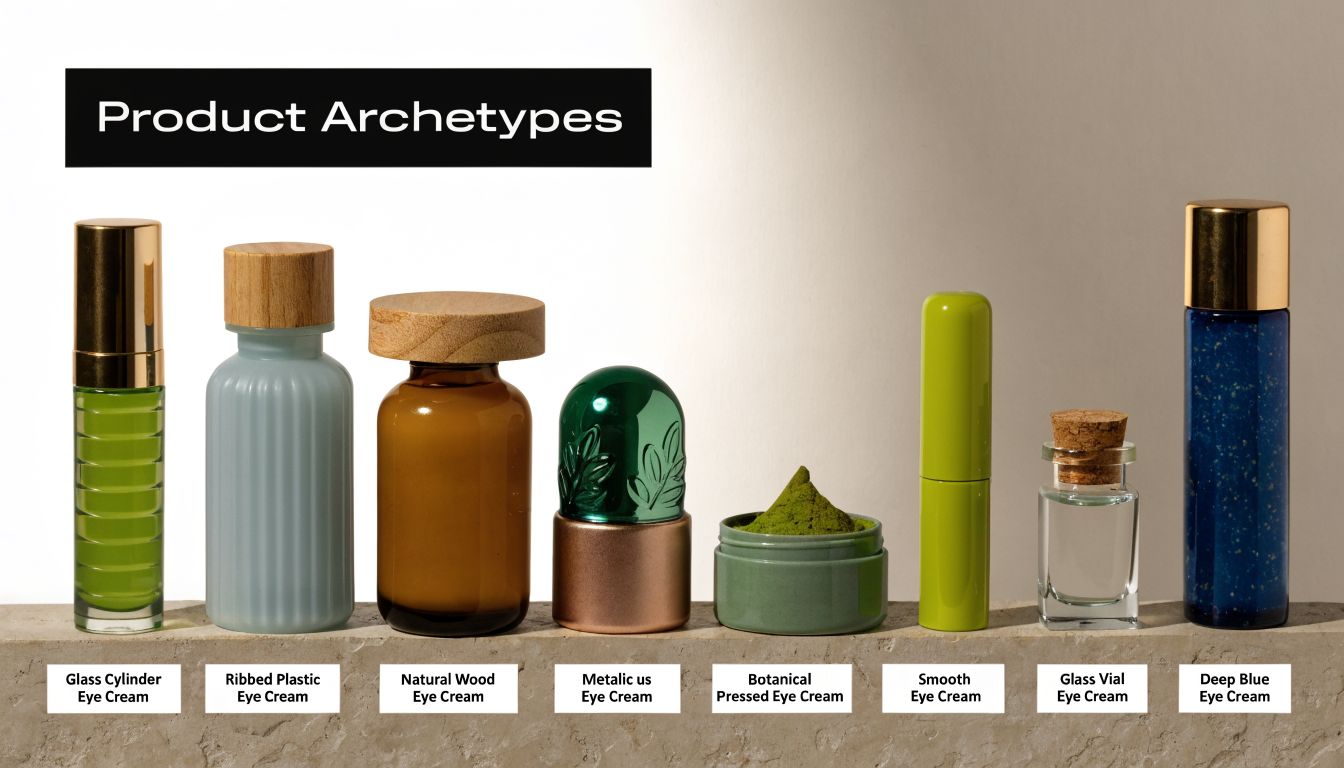
A good assortment doesn't need a long list of top eye creams. It needs recognisable product roles. When every SKU has a job, staff recommend with more confidence and customers understand the difference faster.
That's where product archetypes help. They give your team a way to sell benefits, not just brand names. They also prevent range duplication, which is common when buyers choose products that all promise anti-ageing but feel nearly identical on shelf.
The Marine Bio-Active Rejuvenator
This is the product for the customer who wants results but still cares about sensoriality. She may already use premium skincare and expect texture, fragrance discipline, and visible sophistication. In a spa, this archetype fits well into facial rituals and after-treatment retail.
Its value comes from the combination of hydration, smoothing support, and a refined experience. Staff can describe it as the “performance-meets-wellness” option. It suits customers who say their eye area looks tired, lined, and depleted rather than acutely irritated.
The Alchemical Herbal Elixir
This archetype speaks to a different customer. She often asks deeper questions about ingredients, rituals, and whether a product feels natural and well-rounded rather than clinical. The formula may centre on herbs, oils, or traditional plant knowledge, but the merchandising language still needs to remain precise.
That positioning matters because the menopausal and perimenopausal customer is becoming more visible. Switzerland has seen a 15% rise in searches for menopausal skincare, and a 2025 University of Zurich study on women aged 45 to 55 found that 72% experienced eye-area sensitivity to common synthetic peptides. The same dataset describes botanical alternatives with 30% better tolerance, while an alchemical herbal blend reduced fine lines by 28% in a Swiss spa trial, as summarised in this report on eye cream trends and peptide sensitivity.
For retail, that means peptide-free or plant-led eye care shouldn't sit in a marginal niche. It deserves a clear place in the range.
Some customers don't want a stronger formula. They want a calmer one that they'll actually keep using.
The Fresh-Pressed Botanical Concentrate
This is the purity-driven purchase. The shopper often scans labels, prefers simpler formulas, and likes the idea of fresh-pressed oils, botanical concentrates, and ingredient traceability.
It's not always sold as a conventional eye cream. Sometimes it appears as an eye oil, a multipurpose contour treatment, or a concentrated night product. That flexibility can be an advantage if your team explains use clearly.
A few selling points work well here:
- Minimalist appeal. The customer feels she's choosing fewer, better ingredients.
- Ritual value. Application becomes part of an evening routine, not just a corrective step.
- Natural positioning. This archetype helps serve shoppers who would otherwise reject mainstream anti-ageing language.
The Certified-Organic Soothing Balm
Every strong assortment should include one product that functions as the safe harbour. This is the product for reactive skin, post-irritation routines, winter stress, and customers who distrust aggressive actives.
It may also appeal to mothers, gift buyers, or customers already shopping in a wider family wellness mindset. Texture is central here. A balm or richer cream creates immediate reassurance in a way a watery gel usually can't.
This archetype works best when merchandised around comfort and trust:
- Barrier-first use for very delicate skin
- Simple routines for overwhelmed customers
- Certified reassurance for those who buy on standards as much as on feel
How archetypes improve buying decisions
When buyers use archetypes, range planning becomes easier. You can immediately spot gaps. Perhaps you already have two rejuvenating creams but no real soothing option. Perhaps your spa has beautiful marine formulas but no peptide-free answer for hormonally changing skin.
That's a smarter way to think about top eye creams. Not as a beauty editor's ranking, but as a retail system where each product earns its place by serving a specific customer problem.
Effective Merchandising in Swiss Pharmacies and Spas
A premium eye cream can fail for a simple reason. The product is right, but the merchandising is silent.
Customers rarely understand an eye cream by glancing at a carton. They need a reason to stop, compare, and ask. That's why eye care performs better when it's sold as a consultation category rather than a passive add-on beside face creams.
Build a small destination, not a crowded shelf
A dedicated eye care zone works better than scattering products across brand blocks. It tells the customer that the category deserves attention and gives staff a natural place to begin a conversation.

In pharmacies, this area should feel clinical but approachable. In spas, it should feel sensorial and calm. In both settings, shoppers need immediate orientation. Group by need state rather than by abstract claims.
Try signage such as:
- For puffiness and morning fatigue
- For dry, fragile eye contours
- For mature or hormonally changing skin
- For highly sensitive or certified-natural preferences
That structure lowers friction. Customers don't have to decode every ingredient before they know where to look.
Give staff language they can actually use
Teams often know the products but struggle to explain them quickly. They either become too technical or too vague. Neither helps.
Train staff with short, repeatable phrasing:
- “This one is lighter and sits well under make-up.”
- “This option is better if the area stings easily.”
- “This formula is aimed more at visible lines than puffiness.”
- “This is the natural-first choice if you prefer certified or botanical skincare.”
A good consultation sounds calm and specific. It doesn't sound like a brochure.
Shelf rule: Never display a premium eye cream without one plain-language sentence explaining who it's for.
Use ritual and pairing to increase relevance
Eye creams sell better when attached to a routine. The product becomes easier to justify when the customer understands where it fits.
Good pairings include:
- Evening repair pairing. Eye cream with a facial oil or richer night treatment.
- Morning defence pairing. Lightweight eye gel with SPF-focused daytime skincare.
- Spa recovery pairing. Eye cream alongside a soothing mask or post-treatment homecare product.
Sampling also matters. A sachet, tester protocol, or mini treatment application can remove hesitation, especially in premium price bands. The goal isn't only trial. It's confidence.
Storytelling helps too. Global bathing traditions, fresh-pressed herbs, marine spa heritage, and certified-organic care all give staff a memorable way to frame products without drifting into fantasy. The story should support the formula, not replace it.
When merchandising is done well, the eye cream shelf stops being a niche corner. It becomes a compact lesson in expertise.
Navigating Claims and Regulations in Switzerland
Trust is a commercial asset in Swiss beauty retail. Customers notice when language becomes inflated, and regulators expect claims to remain supportable. Eye care needs particular discipline because the area is sensitive and the promises can easily become exaggerated.
Distinguish evidence from decoration
A useful internal rule is simple. If the claim sounds precise, the proof should be precise too. If the evidence is limited, the language should stay modest.
That means teams should separate three things:
- Ingredient function. What a known ingredient is generally used for.
- Product claim. What this specific formula can reasonably say.
- Marketing atmosphere. Words that create mood but don't count as proof.
“Hydrating eye cream with hyaluronic acid” is a different level of statement from “clinically proven to reduce wrinkles”. The second requires a higher burden of support.
Why certification matters at shelf level
Third-party certification helps because it turns abstract trust into a visible signal. For many shoppers, logos do part of the interpretive work before a staff member even speaks.
In eye care, the most useful trust markers often relate to:
- Natural or organic standards
- Cruelty-free positioning
- Ingredient transparency
- Manufacturing discipline
That doesn't mean every customer buys only on certification. It means certification can shorten the path to confidence, especially when the shopper is comparing unfamiliar premium brands.
A certification logo won't replace a good consultation, but it often starts one.
Keep Swiss compliance practical
Retailers don't need to become regulatory specialists overnight, but they do need a repeatable process for reviewing assortment and marketing copy. Focus on a few habits.
- Check pack claims against supplier documentation. Don't assume global marketing language translates cleanly into local use.
- Review visuals and shelf talkers. Before-and-after language and dramatic promises can create avoidable risk.
- Train staff to avoid overpromising. Verbal claims made on the shop floor matter too.
- Prioritise products with clear documentation and recognised standards. These are easier to defend and easier to explain.
This is also where Swissmedic awareness matters. Partners should understand that local cosmetic compliance isn't a formality. It supports safe positioning, especially for imported products and natural lines that rely heavily on purity and sourcing narratives.
The strongest retailers don't treat regulation as a brake on sales. They treat it as part of the value proposition. Clear claims, careful language, and trusted certification make premium eye care easier to recommend, not harder.
Conclusion Becoming the Trusted Eye Care Authority
The retailers who lead in top eye creams don't usually have the biggest range. They have the clearest point of view.
They understand what makes a formula credible. They know how Swiss climate and customer behaviour change the consultation. They curate by archetype, not by noise. And they train staff to explain products in language that feels intelligent, calm, and useful.
That approach does more than lift one category. It changes how customers see your business. A pharmacy becomes a place for personalized skin guidance. A spa becomes a source of homecare expertise, not only treatment ambience.
If you also want to strengthen how your business communicates that expertise beyond the shelf, it helps to study how others create thought leadership content that turns specialist knowledge into customer trust.
The most significant opportunity in eye care isn't merely selling another cream. It's becoming the retailer customers trust when the question is complicated, personal, and worth getting right.
If you're looking to strengthen your eye care assortment with natural, ethically sourced, and Swiss-market-ready brands, beautysecrets.agency can help you curate a portfolio that fits pharmacy, spa, and premium retail needs with greater clarity and confidence.