Women represent a large share of the healthy-ageing customer base in Swiss pharmacy, and that shifts how buyers should assess shilajit benefits for female. The category is not driven by vague wellness interest alone. It sits inside higher-value concerns such as bone maintenance, skin quality, energy perception, and postmenopausal support, where product credibility affects both conversion and professional recommendation.
For Swiss retail, that distinction matters. An ingredient with a traditional origin can attract attention, but repeat purchase in pharmacies and premium clean-beauty channels depends on cleaner evidence, tighter quality control, and claims that can be explained without exaggeration. Shilajit deserves attention because it offers more than provenance. It brings a defined composition, including fulvic substances and trace minerals, plus a growing body of research that gives formulators and buyers a more disciplined commercial story.
The opportunity is therefore twofold.
First, shilajit can be positioned within female wellness in a way that aligns with the expectations of pharmacists and informed consumers. Second, it can support premium pricing if sourcing, purification, and standardisation are handled to a level suitable for the Swiss market.
That makes shilajit less interesting as a trend ingredient than as a portfolio ingredient. For buyers, the question is not whether the story sounds ancient or exotic. It is whether the ingredient can meet modern standards for compliance, quality reassurance, and channel-specific positioning.
An Ancient Remedy Meets Modern Swiss Wellness
Swiss wellness retail has matured beyond folklore. Buyers still appreciate traditional ingredients, but tradition alone rarely earns shelf space in a pharmacy or premium concept store. The winning products now combine natural sourcing with evidence that can be translated into compliant, precise language.
Shilajit fits that pattern unusually well. It has long been used in traditional systems, yet the more interesting point for Swiss trade is that current research gives buyers something concrete to work with. That changes the conversation from “ancient remedy” to “clinically interpretable ingredient”.
For female health, that distinction matters. Women’s wellness is often marketed in broad emotional language, especially around energy, menopause, skin, and resilience. Shilajit allows a more disciplined framing. In the available clinical data, it has shown relevance to bone preservation in postmenopausal women and to skin microcirculation in middle-aged women. Those are not interchangeable claims. They are two separate commercial routes with different customer journeys, product formats, and retail environments.
Swiss buyers don’t need another fashionable adaptogen. They need one they can explain in a sentence, defend in a consultation, and position without over-claiming.
That makes shilajit more interesting than many trend ingredients. A pharmacist can discuss bone-health support in an evidence-led context. A premium beauty retailer can discuss microperfusion and extracellular matrix support instead of generic “glow”. A spa buyer can frame it as inner support for visible ageing concerns rather than a miracle cure.
The phrase shilajit benefits for female audiences often gets flattened into generic wellness copy online. In the Swiss market, that’s a wasted opportunity. The better lens is category strategy: where does this ingredient fit, which claims are supportable, and what sort of consumer will understand its value fastest?
Understanding Shilajit From Mountain to Molecule
Shilajit is easiest to understand if you stop treating it as an exotic resin and start thinking of it as nature’s slow-brewed mineral concentrate. Over long periods, plant material and minerals transform under mountain conditions into a dense, bioactive substance. That origin story is attractive, but buyers shouldn’t stop there. What matters commercially is composition.
Why composition matters more than mythology
The core reason shilajit has therapeutic interest is that it isn’t a single isolated compound. It’s a complex matrix. In market language, that means its value doesn’t come from one fashionable active alone, but from how its constituents may work together.
Two elements deserve attention.
- Fulvic acid acts as the most commercially important differentiator because it gives buyers a mechanism to discuss. In the clinical skin research, fulvic acid was linked to activation of genes involved in collagen synthesis and microvascular expression.
- Mineral richness matters because it supports a broader positioning around nourishment, structural support, and recovery. Existing background material repeatedly associates shilajit with minerals such as calcium, magnesium, and phosphorus.
A useful way to explain this to staff is simple: fulvic acid is the part that helps make the ingredient biologically interesting, while the mineral matrix makes it nutritionally relevant.
From raw material to functional ingredient
Not all shilajit on the market deserves the same confidence. Raw, unprocessed material may sound more “authentic”, but authenticity isn’t the same as suitability for Swiss retail. Professional buyers should think in three stages.
Origin
Mountain sourcing shapes the ingredient story, but origin alone doesn’t establish safety or consistency.Purification
Purification is what turns a traditional raw material into a viable wellness ingredient for pharmacies and premium retailers.Standardisation
Standardisation allows a formulator or buyer to know what’s being sold repeatedly, not just poetically described once.
Practical rule: if a supplier talks extensively about remote mountains but can’t speak clearly about purification and testing, the product story is incomplete.
The molecule-level retail advantage
Shilajit works best in premium channels when it’s presented as a bridge between geological origin and molecular function. That’s a stronger proposition than either extreme. Lean too hard on mountain mystique and it looks unscientific. Lean too hard on laboratory language and it loses natural-product appeal.
Swiss buyers are especially responsive to products that reconcile both. They want ingredients that feel elemental and minimally contrived, yet still translate into outcomes customers can understand. Shilajit can do that. It is earthy in source, but complex in its workings.
That dual identity is exactly why it deserves more disciplined attention in female wellness assortments.
Core Health Benefits for Every Stage of Womanhood
Postmenopausal bone loss is one of the clearest female health concerns in pharmacy retail because it is measurable, clinically monitored, and closely linked to long-term quality of life. For shilajit, that matters. Among the many claims attached to the ingredient, bone support is the one with the strongest commercial discipline for women’s health positioning.
Bone integrity is the primary evidence-led claim
Within the evidence discussed earlier in the article, the most decision-ready signal comes from research in postmenopausal women with osteopenia. The reported effect was not a vague improvement in wellness. It centred on preservation of bone mineral density alongside reductions in oxidative and inflammatory burden.
For Swiss pharmacy buyers, that creates a more credible route to market than generic “female vitality” messaging. Bone fragility is already a recognised counselling topic in healthy ageing. An ingredient associated with structural support fits established consultation behaviour, especially in premium channels where customers expect both a natural origin story and a plausible physiological rationale.
That has direct assortment value. Shilajit can sit credibly in:
- menopause support lines with a structural-health focus
- healthy ageing formulas aimed at women seeking naturally positioned options
- pharmacist-led recommendation protocols where bone maintenance, recovery capacity, and inflammatory load are discussed together
The more strategic conclusion is less obvious. Shilajit may perform better commercially as an ageing-support ingredient with a defined clinical anchor than as a catch-all solution for every female wellness concern.
Energy, stress load, and day-to-day function
Many women do not present with a single isolated complaint. In practice, pharmacy conversations often begin with tiredness, reduced resilience, slower recovery, or the feeling that midlife demands are becoming harder to absorb. Shilajit frequently enters consideration through that pattern.
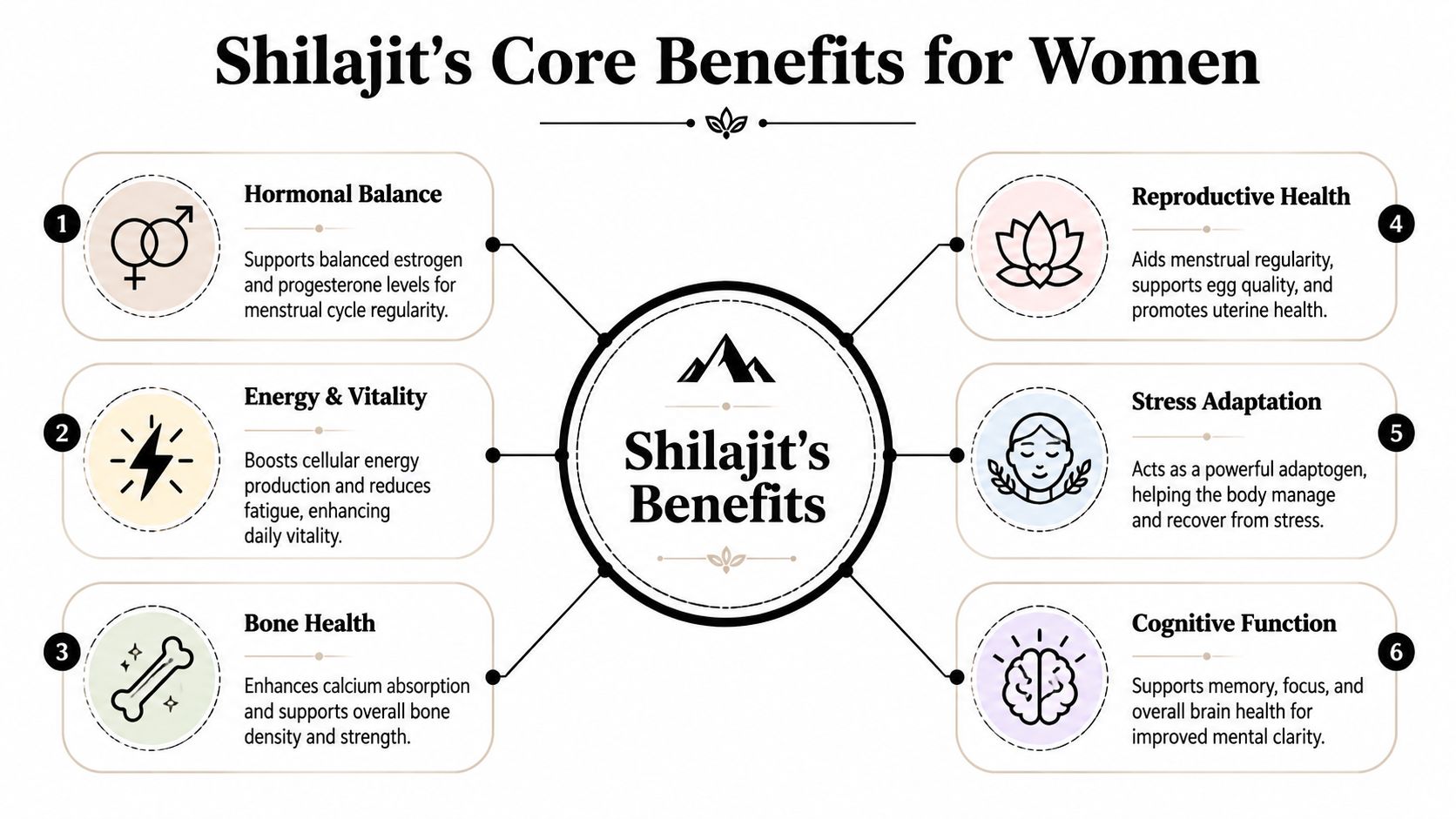
The current evidence base provided for this article does not justify precise fatigue-reduction claims in women, so the language should stay controlled. A compliant and commercially useful position is that shilajit is used in wellness routines focused on energy metabolism, stress adaptation, and general vitality, particularly for customers who prefer a non-stimulant profile.
This matters in Switzerland because premium consumers often shop by cluster, not by symptom. A woman looking for support with energy may also be concerned about skin quality, healthy ageing, and longer-term structural health. That makes shilajit more relevant as part of a broader resilience narrative, provided the product story stays inside defensible claim boundaries.
Educational content can support that sale without overpromising. Buyers building menopause-adjacent education can pair product recommendations with science-backed tips for menopausal energy, especially in cases where the conversation starts with fatigue rather than supplement selection.
Why the mechanism supports premium retail
Swiss professional channels respond better to mechanisms than to mythology. In the bone-health context, the relevant explanation is the observed association between lower oxidative stress, lower inflammation, and better maintenance of structural tissue.
That gives pharmacy staff a usable script with scientific shape:
- bone support is not limited to calcium intake
- healthy ageing also depends on how the body manages inflammatory and oxidative pressure
- shilajit is of interest because it has been associated with improvements in those biological stress markers while supporting preservation-focused bone outcomes
That script is commercially useful because it is specific without becoming overly technical. It also aligns with the expectations of premium clean-label consumers, who increasingly want to know how an ingredient may work, not just what it is traditionally said to do.
What buyers should say, and what they should avoid
The main risk is overextension. Claims around hormones, fertility, mood, cognition, and cycle regulation are often bundled together in consumer marketing with little regard for differences in evidence quality. That approach is poorly suited to Swiss pharmacy, where credibility depends on precision.
A stronger model separates clinically better-supported positioning from broader wellness use cases.
| Female wellness area | Evidence position for buyers | Recommended sales language |
|---|---|---|
| Bone integrity in postmenopausal women | Strongest within the supplied evidence | “Supported by clinical research relevant to bone preservation and healthy ageing” |
| Energy and vitality | Qualitative positioning | “Often selected as part of a broader vitality and resilience routine” |
| Stress adaptation | Qualitative positioning | “Used in wellness protocols where stress load and recovery are part of the picture” |
| Cognitive clarity | Qualitative positioning | “May suit customers seeking broad-spectrum wellbeing support rather than a single-issue supplement” |
The retail opportunity across life stages
Menopause is where the evidence-backed argument is clearest, but it is not the only commercial entry point. Younger adult consumers may respond to stamina, daily resilience, and beauty-from-within positioning. Midlife consumers are often more receptive to healthy ageing language. Postmenopausal consumers are the strongest fit for a structural-support narrative grounded in clinical restraint.
That flexibility matters for category planning. A single ingredient can appear in more than one women’s health subcategory if the messaging changes with the shopper need and remains aligned with what can be defended under Swiss retail expectations.
The Clinical Case for Shilajit in Clean Beauty
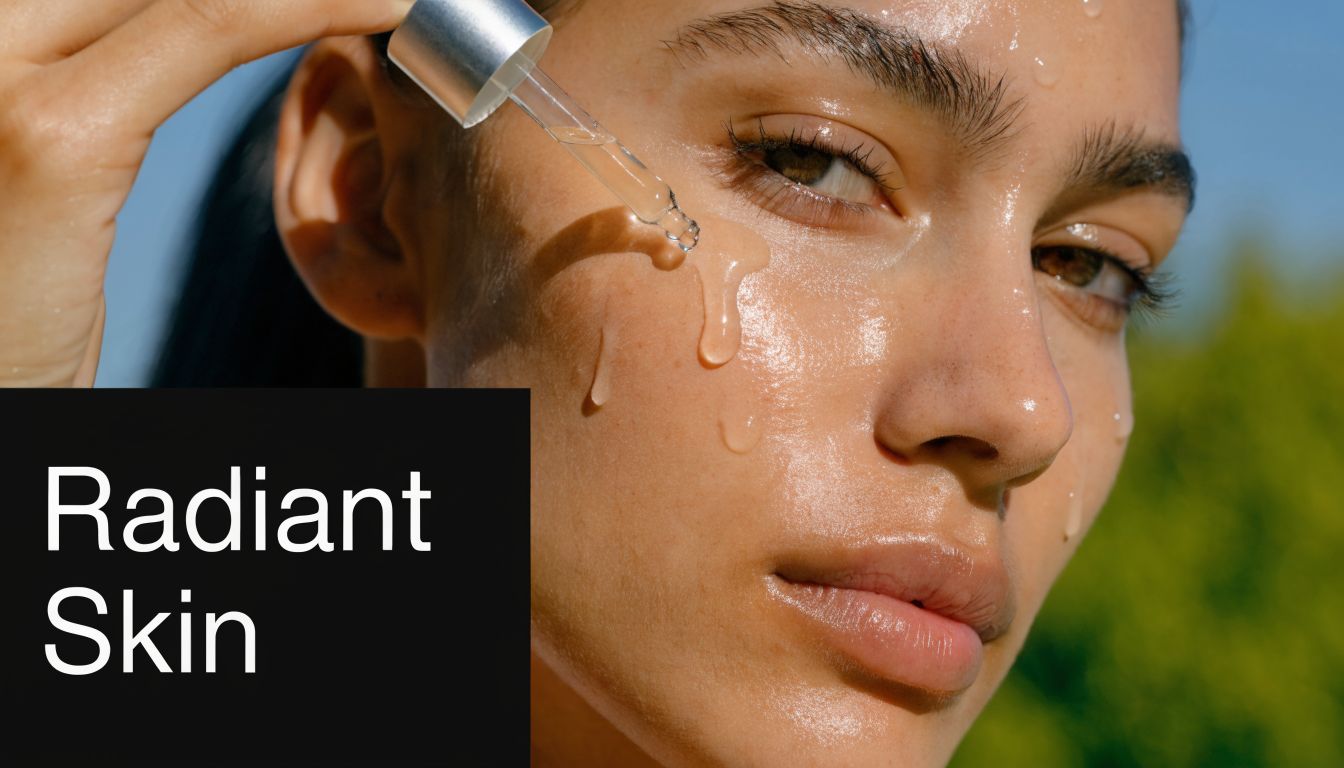
Skin-related supplement claims rarely survive buyer scrutiny in Swiss pharmacy and premium beauty channels unless they point to a measurable physiological outcome. Shilajit has a stronger commercial case than many botanical beauty ingredients because the discussion can be anchored in skin microcirculation and tissue-support pathways rather than generic glow language.
What the dermatology-relevant trial actually showed
A placebo-controlled trial in middle-aged women used oral shilajit at 250 mg twice daily over 14 weeks and reported improved skin microperfusion, along with gene-expression findings linked to endothelial cell migration, vascular growth, and extracellular matrix maintenance, as noted earlier. The same protocol reported no adverse effects during the study period.
For buyers, those endpoints are more useful than broad cosmetic descriptors. Microperfusion gives a concrete biological frame for discussing skin appearance. Endothelial and extracellular matrix pathways give formulators and pharmacists a basis for explaining why an ingestible may fit a beauty-from-within assortment without drifting into implausible anti-ageing claims.
That distinction matters in Switzerland.
A premium ingestible beauty product usually has to satisfy two audiences at once. The consumer wants visible relevance. The pharmacist, para-pharmacy buyer, or medically oriented beauty retailer wants language that can be defended under a stricter standard of evidence and compliance. Shilajit is commercially interesting because it can meet both requirements if the messaging stays disciplined.
Translating mechanism into credible retail language
Gene-expression data should not appear on pack as raw technical jargon. It should shape how the product is positioned, how staff are trained, and how claims are phrased in professional sales materials.
The cleanest translation looks like this:
- Skin microperfusion support gives a credible basis for discussing nutrient and oxygen delivery to skin tissue.
- Endothelial pathway relevance supports a skin-function narrative linked to vascular support rather than surface-only beauty messaging.
- Extracellular matrix maintenance relevance creates a careful bridge to firmness, structure, and healthy-ageing language, especially in premium nutricosmetic formats.
This approach improves compliance quality as well as conversion. A claim framed around physiological support is easier to defend than one framed around transformation. In the Swiss market, that difference affects listing confidence.
Why shilajit fits clean beauty better than many trend ingredients
Many ingestible beauty ingredients are sold on aesthetics first and substantiation second. That model is weaker in pharmacy-led retail, where a buyer may ask what exactly the ingredient is doing, for whom, and with what level of evidence. Shilajit performs better in that setting because its story can be built around tissue support, circulation-related skin function, and healthy ageing.
It also fits the current premium clean-beauty direction. Consumers in this segment increasingly expect products to be natural, traceable, and scientifically legible. Shilajit addresses the third criterion particularly well when presented as a purified, standardised ingredient with clinical context. For brands, that creates a useful point of separation from collagen-heavy assortments that often compete on sameness.
Best-fit channels in Switzerland
The strongest retail environments are the ones that can explain mechanism and quality together.
Premium pharmacies and para-pharmacies
These channels can place shilajit within healthy-ageing, beauty-from-within, and women’s wellness assortments while keeping the recommendation evidence-led.Dermatology clinics and aesthetic practices
Here, the ingredient can sit alongside procedural skincare and recovery-support concepts as an ingestible complement to topical care.Selective clean-beauty retailers with trained staff
In these stores, the opportunity is education-led merchandising. Shoppers are more likely to accept a clinically framed natural ingredient when staff can explain why circulation and extracellular matrix support matter for skin quality.
Compliance-aware messaging for premium retail
The strongest claims are also the most commercially durable. Swiss buyers should favour wording such as clinically studied support for skin microcirculation or positioned for skin support within a healthy-ageing routine. Those formulations are specific enough to sound credible and restrained enough to reduce regulatory risk.
Claims around wrinkle reversal, lifting effects, or dramatic visual transformation are harder to justify from the available evidence. Overstatement may improve short-term click-through, but it weakens pharmacy trust, raises compliance exposure, and makes repeat purchase less likely if consumer expectations are set too high.
For premium clean beauty, shilajit is not best presented as an exotic story ingredient. It is better presented as a clinically informed, naturally derived ingestible that gives retailers a more precise way to talk about skin support. In Swiss pharmacy and high-end beauty retail, precision is what gets listed.
Navigating Quality Sourcing and Certification in Switzerland
In Swiss pharmacy retail, documentation often determines whether a novel natural ingredient is listed, restricted, or rejected. Shilajit sits squarely in that filter. It is a geologically derived resin sold as a concentrated ingestible, so the commercial question is not whether the origin story is compelling. The question is whether the product file can withstand professional scrutiny.
Why provenance alone does not justify premium placement
Mountain origin has marketing value, but origin is not a quality standard. For buyers, the more relevant issues are purification method, contaminant control, batch consistency, and the degree of standardisation applied before the material reaches finished-product form.
Terms such as “raw” and “pure” often create more ambiguity than reassurance.
A poorly characterised resin can vary in composition and may raise obvious concerns around heavy metals, environmental contaminants, and lot-to-lot consistency. In Switzerland, that uncertainty has direct retail consequences. It complicates pharmacist recommendation, weakens premium pricing logic, and makes compliance review harder for chains that expect disciplined technical files.
The commercially durable position is clear. Buyers should prioritise purified, tested, standardised shilajit with documentation that supports repeat purchasing decisions, not just first-sale curiosity.
A Swiss-specific positioning opportunity, handled carefully
There is also a more subtle route to market. Reviewed evidence has linked shilajit with preservation of bone mineral density in postmenopausal women, and market commentators have suggested that its mineral profile could interest Swiss partners thinking about region-specific micronutrient patterns, as discussed in Your Health Magazine’s overview of the opportunity.
That observation has value, but only if it is framed with discipline. It does not support Alpine-specific efficacy claims, and it should not be presented as proof of benefit in Swiss women as a defined population. What it does support is a retail hypothesis. A pharmacy buyer may see room for a mineral-aware healthy-ageing proposition if the brand clearly separates established clinical findings from market interpretation.
That distinction matters in Switzerland, where discerning consumers and professional channels tend to reward precision over storytelling excess.
Alpine relevance is a positioning hypothesis for category development, not evidence of local clinical efficacy.
What premium buyers should request from suppliers
The fastest way to assess a shilajit supplier is to move from narrative to specification. Buyers should ask for the technical dossier early and use it to test whether the brand is built for pharmacy-grade distribution or for looser wellness channels.
| Quality Factor | Weak Supplier Signal | Premium Buyer Standard |
|---|---|---|
| Raw material description | General claims about mountain origin with limited technical detail | Clear identification of source material, extraction process, and standardisation method |
| Purity testing | No recent laboratory evidence | Third-party test results covering purity and contaminant risk |
| Consistency | Visual or descriptive variation across batches without explanation | Batch specifications with defined, repeatable quality parameters |
| Active profile | Limited explanation of fulvic acid or related actives | Clear explanation of active profile and its relevance to formulation strategy |
| Compliance readiness | Consumer-facing brochure only | Technical file suitable for pharmacy review, premium retail listing, or practitioner assessment |
| Brand positioning | Heritage story dominates all communication | Balanced presentation of tradition, manufacturing control, and evidence |
Certifications and operational signals that matter in Switzerland
Certifications do not replace product quality, but they do indicate process discipline. For Swiss buyers, the useful signals are practical rather than decorative.
Look for manufacturing aligned with recognised systems such as GMP or ISO. Look for a clear description of the purification workflow and how contamination risks are controlled. Look for documentation that can be handed to retail partners without extensive rewriting, including test reports, specifications, and claim language that is restrained enough for a regulated setting. Traceability and sustainability also matter, especially in premium natural retail where environmental credibility increasingly influences assortment decisions.
A product does not need every possible certification mark. It does need an audit trail that a pharmacist, category manager, or compliance reviewer can follow without guessing.
Quality control is also a brand architecture decision
For premium channels, quality sourcing affects more than safety. It shapes how the ingredient can be merchandised.
A well-documented shilajit product can sit within a serious healthy-ageing, women’s wellness, or beauty-from-within portfolio because the evidence file, sourcing controls, and claims language point in the same direction. A weakly documented product remains stuck between supplement trend and folkloric curiosity, which limits recommendation confidence and lowers the perceived standard of the wider assortment.
In Swiss pharmacies and selective clean-beauty retail, the suppliers most likely to win are usually those that can explain how the ingredient was purified, standardised, and verified at batch level. Origin still matters. Process control matters more.
Safe Dosing and Professional Guidance Protocols
In premium pharmacy retail, dosing discipline is part of product credibility. For shilajit, the most defensible approach is straightforward. Base recommendations on studied intake ranges already referenced earlier in the article, and avoid the inflated routines common in online wellness content.
That matters in Switzerland, where pharmacists, category managers, and compliance teams assess not only whether an ingredient is interesting, but whether it can be recommended with clear, repeatable instructions.
Use studied intake ranges, not folklore
The female-focused evidence discussed earlier points to a fairly narrow practical range rather than an open-ended “more is better” model. Clinical use has typically stayed in low daily amounts divided across the day, with protocols extending over weeks or months depending on the objective.
For pharmacy teams, the commercial implication is clear. A product positioned for women’s healthy ageing or beauty-from-within support should present a dose that stays close to published human use, preferably in a format that makes adherence simple and counselling consistent.
Higher-dose marketing may attract attention. It also creates avoidable questions from pharmacists who expect a rationale tied to human data.
Build guidance around the consultation, not the label alone
A strong recommendation protocol includes dose, but it should not end there. Staff need a short decision framework that fits real counter conversations and protects recommendation quality.
Define the use case
Clarify whether the shopper is seeking support for healthy ageing, skin-focused supplementation, energy perception, or general wellbeing. Different goals change how the product should be framed and when referral is more appropriate.Confirm the product standard
Standardised, purified extracts are easier to counsel than loosely described raw resin products. They also give pharmacies a cleaner basis for dose consistency and adverse-event review.Start with a conservative regimen
Early tolerance matters. Beginning at the lower end of the label recommendation, especially for first-time users, is usually easier to justify than encouraging immediate maximal use.Review medicines and relevant history
This step is where pharmacy adds value. If the customer uses treatment for glycaemic control, blood pressure, or another chronic condition, staff should check whether clinician review is appropriate before sale.
A premium supplement earns professional trust when staff can explain who it suits, how it should be used, what timeframe is realistic, and when not to recommend it.
Define caution groups clearly
For women’s health positioning, the evidence base is still selective. That means caution language should be specific and visible, not buried in technical copy.
Use increased professional oversight, or defer recommendation, in the following groups:
- Pregnant or breastfeeding women, because the evidence discussed in this article does not establish appropriate use in these populations
- Individuals with haemochromatosis or other iron-overload concerns, because mineral-rich formulations may be unsuitable in that context
- People with active autoimmune disease, unless their treating clinician has reviewed the product
- Customers taking medication that affects blood sugar or blood pressure, where interaction risk or monitoring needs should be assessed case by case
This is good clinical practice. It is also good retail practice. In Swiss pharmacy, restraint usually strengthens confidence more than aggressive selling does.
Position shilajit within a managed regimen
Shilajit should be presented as one part of a broader support plan that includes sleep, diet, symptom history, and appropriate medical follow-up where needed. That framing is especially important in a female wellness category, where shoppers often arrive with overlapping concerns rather than a single isolated goal.
It also improves retention quality. Customers who understand the intended use, expected timeline, and limits of the product are more likely to use it consistently and judge outcomes sensibly. For premium channels, that reduces dissatisfaction, supports repeat purchase on the right cases, and keeps the ingredient positioned as a credible addition to a professional wellness portfolio rather than a short-lived trend.
Conclusion Integrating Shilajit into a Premium Wellness Portfolio
Shilajit earns attention in the Swiss market because it can do something rare. It connects natural-origin storytelling with clinically useful substance. For female health, that matters most where the evidence is most commercially relevant: bone preservation in postmenopausal women and skin-support positioning through microperfusion and extracellular matrix-related pathways.
That doesn’t mean every claim should be broadened. It means buyers should be selective. In pharmacy, shilajit works best as a healthy-ageing ingredient with disciplined educational support. In premium beauty, it works best as a beauty-from-within active that can be explained in scientific language. In both channels, quality documentation is the difference between a premium line and a risky one.
The deeper opportunity is strategic. Shilajit lets buyers build a bridge between supplement efficacy, clean-beauty expectations, and Swiss demand for transparency. It can sit inside a modern portfolio not because it is ancient, but because it is interpretable. That is what makes it viable.
For teams evaluating shilajit benefits for female consumers, the right conclusion isn’t “add another trend product”. It’s “identify the right format, insist on premium sourcing, keep claims precise, and place the ingredient where informed consultation adds value”.
If you’re building a differentiated Swiss assortment in natural wellness, cosmeceuticals, or pharmacy-led beauty, beautysecrets.agency can help you identify premium, ethically sourced formulations that align with Swiss expectations for efficacy, compliance, and clean positioning.