A client has just finished a facial, microneedling session, or muscle recovery treatment. They ask a simple question at the desk: “What should I use at home tonight?” In many Swiss pharmacies and spas, the answer still jumps straight to serum, balm, or cream. The hot cold ice pack sitting nearby is treated like a low-interest accessory, not part of the treatment outcome.
That’s a missed opportunity. In a premium setting, a reusable pack can support comfort, improve the treatment experience, and help staff explain recovery in a concrete, practical way. It also fits naturally into conversations around non-pharmacological relief, clean-beauty aftercare, and home ritual building.
More Than First Aid A Strategic Wellness Tool
A pharmacy owner in Zürich might stock a reusable pack near sports supports and pain relief. A spa manager in Lausanne might keep one in the treatment room fridge for post-facial calming. Both are using the same product, but only one is positioning it as part of a broader wellness protocol.
That distinction matters. The category is not standing still. The hot and cold therapy packs market was valued at USD 1.20 billion in 2025 and is projected to reach USD 1.27 billion in 2026, with a projected CAGR of 5.9% through 2036, driven by demand for non-pharmacological pain management and use in wellness and sports medicine, according to Future Market Insights on the hot and cold therapy packs market.
For Swiss trade buyers, that growth signals something useful. A hot cold ice pack isn’t only a commodity for sprains. It can become a bridge product between wellness service and retail purchase. The client understands it immediately, uses it repeatedly, and often comes back for another one in a different size or format.
Where premium positioning starts
In natural beauty and pharmacy settings, the best use case is rarely “just put ice on it”. It’s more refined than that. Staff can connect the pack to post-treatment comfort, facial de-puffing, jaw tension, neck stiffness, or recovery after sun exposure, where a resource on aloe vera sunburn relief can also help clients understand when soothing topical care and cooling support work well together.
A simple product becomes valuable when the client sees exactly when to use it, why it helps, and what to pair it with.
Why pharmacies and spas should care
A reusable pack earns its place when it does three jobs at once:
- Supports outcomes: It gives clients a practical recovery tool after treatment or purchase.
- Improves consultation quality: Staff can explain heat, cold, timing, and safe application in plain language.
- Expands the basket naturally: It pairs well with oils, masks, calming creams, and post-procedure care.
That’s why this category deserves more respect in Swiss premium wellness. It’s not just first aid. It’s part of the service language.
The Science of Therapeutic Temperature Transfer
Most clients know that cold “reduces swelling” and heat “loosens things up”. They often don’t know why. If your staff understand the mechanism in simple terms, they can recommend the right approach with more confidence.
Cold works by slowing the area down
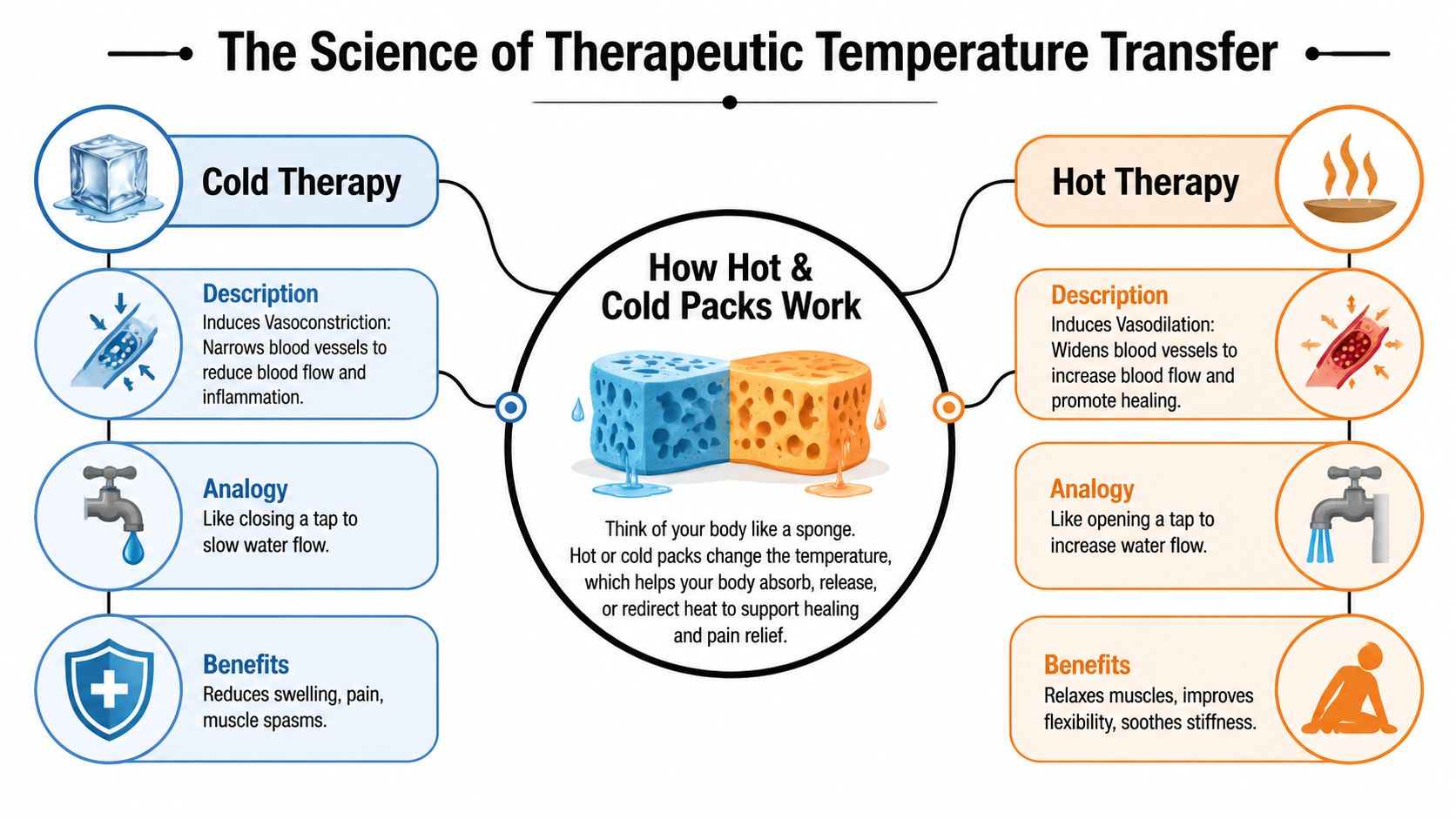
Think of cold therapy like turning down the flow through a tap. When a cold pack is applied locally, blood vessels narrow. That response is called vasoconstriction. In practical terms, it helps calm the area and limit visible puffiness.
The early history of the category helps explain why reusable packs became so important. The first hot and cold pack appeared in 1948 as Hot-R-Cold-Pak, and reusable technology advanced when Jacob Spencer patented the first reusable hot and cold pack in 1973. Earlier clinical evidence also matters. By 1955, Bierman’s research showed that applying an ice pack for 120 minutes could reduce skin surface temperature by about 6°C, as described in this ice pack history overview.
For facial or post-procedure applications, cold is not only about sensation. The material matters too. Modern packs often use a non-toxic, viscous gel that can be chilled in roughly 1 to 2 hours to reach an optimal therapeutic cold of around -5°C to 0°C. That gel can maintain temperature 20 to 30% longer than ice or frozen peas, and its thixotropic character helps it adapt to facial contours. This is one reason reusable gel formats are so useful in premium aftercare, as outlined in ScripHessco reusable hot and cold pack details.
Heat works by opening the area up
Heat does the opposite. It encourages vasodilation, which means blood vessels widen and circulation increases. A simple analogy helps: cold closes the tap, heat opens it.
This is why gentle heat feels different from cold. It can soften tightness, improve comfort before massage, and prepare tissue for oils or manual work. If your team already uses thermal rituals, the same principle appears in Stillwaters Healing hot stone insights, where controlled warmth is used to support relaxation and ease muscular tension.
Why gel beats makeshift substitutes
A bag of frozen peas can get cold. A hot water bottle can get warm. Neither was designed for predictable therapeutic transfer.
A good gel pack is better for professional settings because it offers:
- More even contact: The pack moulds to the body instead of sitting awkwardly on top.
- Better temperature control: It doesn’t create the same uneven hot spots or icy edges.
- Cleaner handling: It can be wiped down and re-used more easily in organised treatment settings.
- Dual use: One product can support both warming and cooling protocols.
For hot therapy, the data are especially useful in spa settings. Microwaveable gel packs reach 40 to 50°C in 60 to 90 seconds at 800W, and that level of warmth can triple capillary perfusion. In luxury spa use, this can increase transdermal absorption of natural actives by 30 to 50%, according to Steroplast’s explanation of how hot and cold ice packs work.
Practical rule: The pack is not the treatment on its own. It’s a delivery support tool that helps the treatment perform as intended.
Choosing the Right Pack for Your Clientele
Not every reusable pack belongs in every business. A spa doing marine facials has different needs from a pharmacy selling home-use recovery products. The wrong pack creates hygiene problems, awkward handling, or disappointing temperature performance.
The easiest way to choose is to start with the setting. Ask where the pack will live, who will use it, and whether it needs to support cold, heat, or both.
Three common pack types
Gel-filled packs are the format most professionals recognise first. They’re versatile, easy to chill or warm, and usually the best fit for face, neck, shoulder, and joint applications. They also suit premium treatment rooms because they conform well to the body.
Clay-based packs often appeal to businesses that want an earth-derived story or a more natural-feeling profile. They can work nicely for warming rituals, but they may not behave as flexibly as gel when very cold.
Grain or seed-filled packs, such as wheat or flax designs, are popular for cosy heat applications at home. They feel familiar and soft, but they’re usually less suitable for repeated cold use and more difficult to sanitise properly in a professional setting.
Comparison of Reusable Hot & Cold Pack Types
| Pack Type | Primary Material | Best For | Heat Retention | Cold Retention | Flexibility When Frozen | Hygiene/Cleaning |
|---|---|---|---|---|---|---|
| Gel-filled | Gel within sealed pouch, often with nylon or similar outer layer | Professional spa use, pharmacy retail, post-treatment care, dual hot/cold use | Strong and consistent | Strong and consistent | Usually good | Usually easiest to wipe clean |
| Clay-based | Clay or mineral-based fill | Warming rituals, clients seeking a more natural material story | Often good | Can vary by product | Can become firmer | Depends on cover and seal quality |
| Grain or seed-filled | Wheat, flax, or similar natural fill | Comfort heat, home relaxation, gift retail | Pleasant for dry heat | Limited for true cold therapy | Not designed for freezer flexibility in the same way | Harder to sanitise thoroughly |
What matters in a Swiss professional setting
In spas and clinics, hygiene is often the deciding factor before marketing language. A beautiful outer fabric won’t help if the pack can’t be cleaned between clients. Sealed reusable gel packs usually make the most sense where treatment turnover is high.
In pharmacies, the decision often shifts toward clarity and simplicity. Clients want to know whether the pack is suitable for the face, suitable for the freezer, microwave-safe, and comfortable against the skin. They also want instructions they can follow without guessing.
If your business already works with treatment equipment and recovery tools, resources on tools for physical therapists can be useful for thinking about how small support products fit into a larger care environment.
Match the pack to the client, not the category
A few practical examples help:
- For post-facial calming: Choose a flexible gel format that sits neatly across cheeks, jaw, or forehead.
- For body rituals: A larger rectangular pack works better for shoulders, lower back, or thighs.
- For retail gifting: Softer heat-focused formats may sell well, but they need clear positioning so clients don’t mistake them for a true dual-use therapy pack.
- For pharmacy advice counters: Keep one sample unit available so staff can show thickness, flexibility, and outer material.
In premium retail, the client rarely asks for “a reusable pack”. They ask for relief after a treatment, tension in the neck, or something soothing for home use. Your assortment should answer that real question.
Professional Protocols for Safe and Effective Application
Professional use starts with restraint. Many problems come from doing too much, too fast, or applying temperature directly to skin without enough thought. A hot cold ice pack works best when the protocol is calm, repeatable, and easy for staff to teach.
Core safety habits
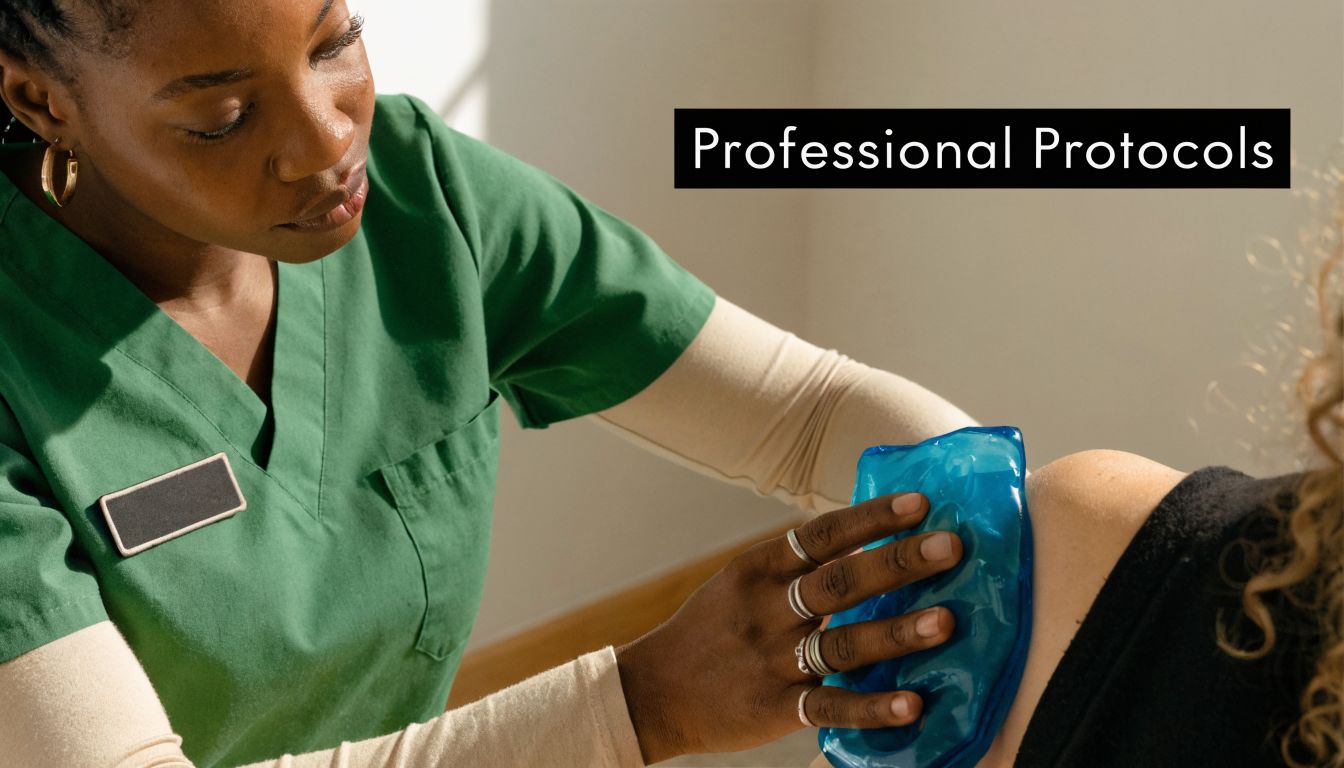
A professional routine should always include a barrier between pack and skin, a quick skin check before application, and clear timing. Clients with reduced sensation, open wounds, or uncertain skin response need extra caution. If there’s any doubt, the safest choice is to pause and reassess rather than press ahead.
For hot use, follow the product’s heating instructions carefully. For cold use, avoid over-freezing assumptions such as “colder is better”. The goal is therapeutic support, not aggressive exposure.
A simple protocol staff can remember
- Check the tissue first: Is the area puffy, flushed, stiff, tender, or reactive?
- Choose the right temperature direction: Cooling tends to suit post-treatment settling. Gentle warmth tends to suit stiffness and prep work.
- Add a clean barrier: A towel, sleeve, or suitable cover protects the skin and keeps the experience comfortable.
- Monitor the response: Ask the client what they feel after the first minutes. Useful therapy should feel controlled, not harsh.
- Document if used in clinic: In treatment settings, record what was used and for how long.
Contrast therapy for skin recovery
Swiss beauty and dermatology settings have a particular opportunity here. Guidance on contrast therapy for skin rejuvenation is still underdeveloped in the market, yet a 2025 University of Zurich study found that 68% of patients experienced enhanced anti-inflammatory effects and a 25% reduction in downtime post-microneedling when gel packs were combined with organic algae extracts, according to this reference discussing hot and cold gel pack applications.
That matters because many premium spas already use marine-based or botanical protocols. Contrast work gives them a structured way to add temperature as part of the service, not just as an afterthought.
A simple contrast rhythm often means alternating short periods of warmth and cooling, then finishing cold. The exact approach should match the treatment and the client’s sensitivity.
Here’s a visual refresher that staff can use when training or demonstrating home care:
Good communication improves compliance
Clients often forget technique as soon as they leave. Give them language they’ll remember:
- “Use a cloth barrier.”
- “If it feels too intense, stop.”
- “For facial recovery, gentle and short is better than extreme.”
- “If your skin stays very red or uncomfortable, get advice before repeating.”
The best protocol is the one your staff can repeat consistently and your client can follow correctly at home.
Navigating Sustainability and Swiss Regulations
In Switzerland, premium buyers don’t separate performance from values as neatly as mass retail does. If a pack is positioned for natural wellness, buyers will ask what it’s made from, how long it lasts, whether the fill is non-caustic, and whether the overall presentation fits a cleaner product philosophy.
Sustainability is now a performance question
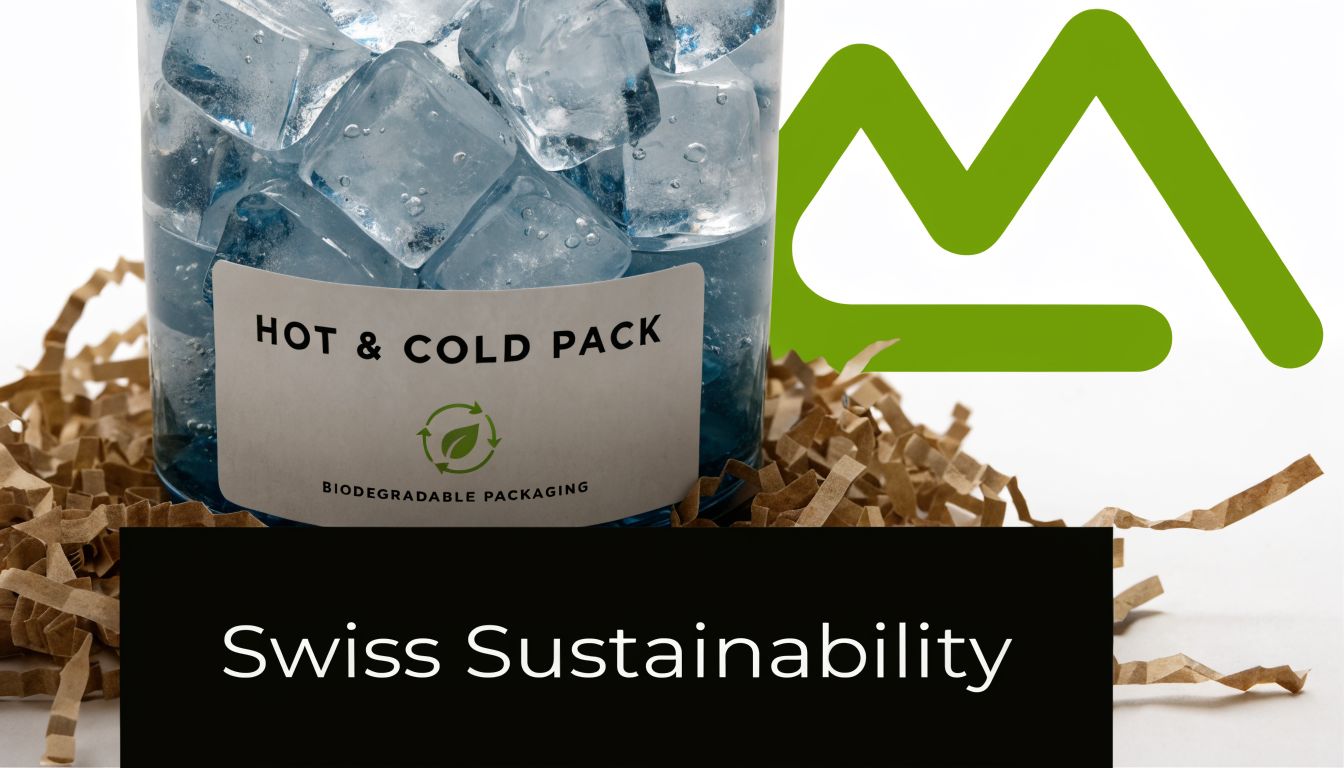
Interest in the category has grown. In Switzerland, demand for zero-waste wellness products rose by 22% in 2025, and an ETH Zurich trial in January 2026 found that plant-derived gels retained flexibility at -18°C for 40% longer than petroleum-based alternatives, as noted in this trend reference on reusable gel pack development.
That finding shifts the conversation. Eco-positioning doesn’t have to mean sacrificing function. For spas and pharmacies, it can mean the opposite. A better cold feel and a stronger sustainability story in one product.
What buyers should verify
When reviewing suppliers, ask for specifics rather than broad green language.
- Fill composition: Is the gel described clearly, and is it non-toxic?
- Outer materials: Can the cover or pouch be cleaned appropriately for your use case?
- Durability: Is the pack designed for repeated cycles without early leakage risk?
- Claims support: Are terms like eco-friendly, cruelty-free, or natural backed by recognised standards or documentation?
- Use category: Is the pack sold as a wellness accessory, or does it enter a more regulated medical device context?
Compliance matters in premium channels
For Swiss pharmacies, clinics, and treatment businesses, reusable products may trigger additional diligence under Swiss rules such as MedDO depending on how the product is classified and marketed. Even when a pack sits closer to wellness than medical treatment, the sourcing conversation should still cover leak resistance, safety of fill materials, labelling, and instructions for use.
A sustainable pack that lacks clear documentation creates work for the retailer and uncertainty for the client.
This is also where premium channels can distinguish themselves from generalist online sellers. Thoughtful product selection, proper documentation, and realistic claims build trust faster than trendy packaging alone.
Elevating Your Retail and Spa Offerings
A hot cold ice pack usually sells badly when it’s displayed like a commodity. It sells far better when clients see it as part of a ritual, a treatment extension, or a targeted solution.
That means placement matters. So does language. A pharmacy shelf card that says “Reusable hot/cold pack” is technically correct and commercially weak. A message tied to de-puffing, jaw tension, travel recovery, shoulder stiffness, or post-treatment comfort gives the client a reason to pick it up.
Where to place it
In pharmacies, the strongest position is often beside related categories, not hidden in a generic support section. Think near facial recovery products, muscle comfort oils, or calming skin care.
In spas, keep packs in both treatment and retail zones. If the client experiences one during the service, the take-home version becomes much easier to recommend.

Bundle by use case, not by product department
Good merchandising links one need to several products that support it. This works especially well in premium wellness because clients buy outcomes, not isolated items.
A few bundle ideas:
- Post-facial recovery set: Cooling pack, gentle mask, soothing finishing cream.
- Neck and shoulder comfort edit: Warmable pack, body oil, bath ritual support.
- Travel and jet-lag recovery pouch: Cooling eye-area pack, hydrating mist, comforting balm.
- Mother care gift selection: Soft-warm comfort pack and suitable nurturing body care.
Train staff with short scripts
Staff don’t need a lecture. They need two or three useful lines they can say naturally.
For example:
- “This one stays flexible in the cold, so it sits better on the face.”
- “Use it with a cloth barrier after your treatment this evening.”
- “If you prefer warmth for stiffness, this format can do both.”
Create a premium visual story
Presentation should reinforce calm, cleanliness, and care. Use trays, chilled displays for demonstration units, or treatment menu notes that mention thermal aftercare. If the visual world feels clinical only, the spa client may ignore it. If it feels decorative only, the pharmacy client may doubt its utility.
A well-merchandised hot cold ice pack sits comfortably between those two worlds. It looks considered, but it also solves a clear problem.
Retail success comes from reframing the pack from “basic accessory” to “repeat-use recovery tool”.
Integrating Hot and Cold Therapy for Future Growth
The businesses that get the most value from a hot cold ice pack don’t treat it as an impulse add-on. They treat it as part of a care system. That system includes product choice, staff language, safe protocol, sustainability checks, and thoughtful merchandising.
For Swiss pharmacies, the opportunity is consultation. The pack helps translate advice into something practical the client can use at home. For spas and clinics, the opportunity is continuity. The treatment doesn’t end when the client leaves the room.
There’s also a broader strategic point. Buyers in premium wellness increasingly expect products to do more than one job. They want comfort, reusability, cleaner materials, and clear instructions. A well-selected thermal pack answers all of those expectations when it’s positioned properly.
The category may look simple, but simplicity is often what scales. A product that clients understand quickly, use repeatedly, and associate with relief can become one of the most dependable support items in a premium assortment.
If you're building a more differentiated wellness, pharmacy, or spa assortment in Switzerland, beautysecrets.agency can help you source premium, ethically aligned brands and create cleaner, more credible recovery and aftercare offerings for modern clients.