A lot of Swiss retailers are in the same spot right now. A customer asks for a body cream that feels richer than a standard lotion, cleaner than a petroleum-heavy balm, and more credible than a trend-led “natural” product with a nice label but weak formulation. You can stock something quickly, or you can stock something that earns repeat purchase and professional trust.
That’s where cocoa butter cream deserves a closer look. In the right format, it’s not an old-fashioned commodity. It’s a commercially useful category that can sit comfortably in pharmacies, spas, premium boutiques, maternity edits, and online clean-beauty assortments. The difference lies in how you choose it, how you position it, and how well you understand the trade-offs behind the jar.
The Growing Opportunity for Cocoa Butter Creams in Switzerland
If you run a pharmacy, spa shop, department store counter, or curated e-commerce range, you’ve probably noticed the same shift. Customers still want sensorial skincare, but they also ask sharper questions. They want to know where the ingredient comes from, whether the formula is suitable for sensitive skin, and whether “natural” means anything beyond packaging.
That makes cocoa butter cream relevant again, but in a more demanding way than before. The global cocoa butter market was valued at USD 11.49 billion in 2025 and is projected to reach USD 21.87 billion by 2034, with a 7.48% CAGR, according to Fortune Business Insights’ cocoa butter market analysis. That growth is linked to clean-label demand across both food and skincare, and that matters for Switzerland because Swiss consumers tend to reward products that combine story, performance, and standards.
Why the category fits Swiss retail
A good cocoa butter cream works in several commercial contexts at once:
- Pharmacy shelves: It answers demand for barrier-supportive body care with a familiar ingredient profile.
- Spa and wellness: It brings texture, comfort, and a recognisable natural cue that clients instantly understand.
- Premium retail: It offers a credible bridge between traditional botanical care and modern formulation.
- Online sales: It’s easy to search for, easy to explain, and easy to bundle with body, maternity, and winter-skin routines.
The opportunity isn’t in selling “just cocoa butter”. It’s in selling well-built cocoa butter creams that justify their place beside ceramide lotions, marine body care, and mother-and-baby staples.
Commercial reality: Cocoa butter cream sells best when you present it as a formulation choice, not a nostalgic ingredient.
What buyers are actually looking for
Swiss customers rarely buy premium body care on texture alone. They compare scent, finish, ingredient list, certifications, and suitability for reactive skin. They also expect consistency. If one jar feels luxurious and the next feels waxy, you lose confidence fast.
Retailers who do well with cocoa butter cream usually avoid treating it as a single-SKU filler. They treat it as a category with clear sub-positions:
| Retail channel | Best positioning angle |
|---|---|
| Pharmacy | Barrier comfort, professionally formulated, suitable for dry skin |
| Boutique | Sensory richness, ingredient story, ethical origin |
| Spa | Ritual body care, massage-compatible richness, comfort finish |
| E-commerce | Use case clarity, ingredient transparency, targeted bundles |
That’s the opening. The rest is execution.
Decoding the Essence of a True Cocoa Butter Cream
A true cocoa butter cream isn’t just any cream with a chocolate-themed label or a token amount of Theobroma Cacao Seed Butter hidden low on the INCI list. It’s a formulation in which cocoa butter plays a real structural and sensorial role. You can usually feel the difference before you even read the marketing copy.
What cocoa butter contributes in a cream
Cocoa butter is a firm vegetable butter at room temperature. In a finished cosmetic product, that matters because it changes the way the formula sits in the jar, softens on contact, and leaves a protective film on the skin. It gives body and richness that a lightweight lotion can’t achieve on its own.
Think of the difference like this. A basic lotion is often built to spread quickly and disappear quickly. A cocoa butter cream, when formulated properly, behaves more like a precisely crafted emulsion with weight, cushion, and staying power. It doesn’t have to feel greasy, but it should feel deliberate.
Cream versus butter versus balm
Retail partners often lump these together, and that’s where confusion starts.
- A butter is usually anhydrous or nearly so. It feels dense, often melts slowly, and suits very dry areas.
- A balm tends to be more occlusive and more protective, often with waxes.
- A cream is an emulsion of water and oils or butters. It should offer easier spreadability, better day-to-day usability, and a more elegant finish.
That distinction matters at the point of sale. A customer who wants all-over body comfort after showering usually needs a cream, not a solid butter. A customer with very rough elbows or winter-shocked hands may benefit from a denser balm layered over cream.
How cocoa butter differs from shea or mango butter
Retail staff often need a simple way to explain why one butter-based cream feels different from another. This comparison helps:
| Butter | Typical sensorial profile | Best retail language |
|---|---|---|
| Cocoa butter | Firm, smooth, rich, more structured | Protective, cocooning, polished finish |
| Shea butter | Softer, creamier, often more pliable | Nourishing, comforting, everyday flexibility |
| Mango butter | Lighter, drier feel, often less dense | Softening, elegant, lighter body care |
Cocoa butter tends to bring a more “finished” richness. It can help a product feel premium, especially in body creams, hand care, and maternal care products where customers expect sustained comfort.
If cocoa butter is the hero ingredient, the cream should feel like cocoa butter has been given room to perform. If it feels thin, fleeting, or anonymous, it probably has.
What to look for at first touch
When you test a cocoa butter cream, judge it on four points:
Jar texture
It should look uniform and stable, not grainy, split, or wax-clumped.Spread
It should soften steadily, not drag across the skin.After-feel
Rich is fine. Sticky and suffocating isn’t.Aroma discipline
A faint cocoa note can feel authentic. Overpowering sweetness often signals a fragrance-led formula rather than an ingredient-led one.
At this point, many buyers make the right or wrong call. A premium cocoa butter cream shouldn’t merely mention cocoa butter. It should behave like it contains it for a reason.
The Science of Skin Nourishment and Protection
A customer in Zurich buys a rich body cream in January, applies it after showering, and returns two days later saying her skin still feels tight by lunchtime. In most cases, the problem is not the promise on the front of pack. It is the gap between a light moisturising message and the level of occlusion her skin needed. Cocoa butter creams earn their place when staff can explain that difference clearly and recommend the right texture for the right use.
The barrier effect is the commercial advantage
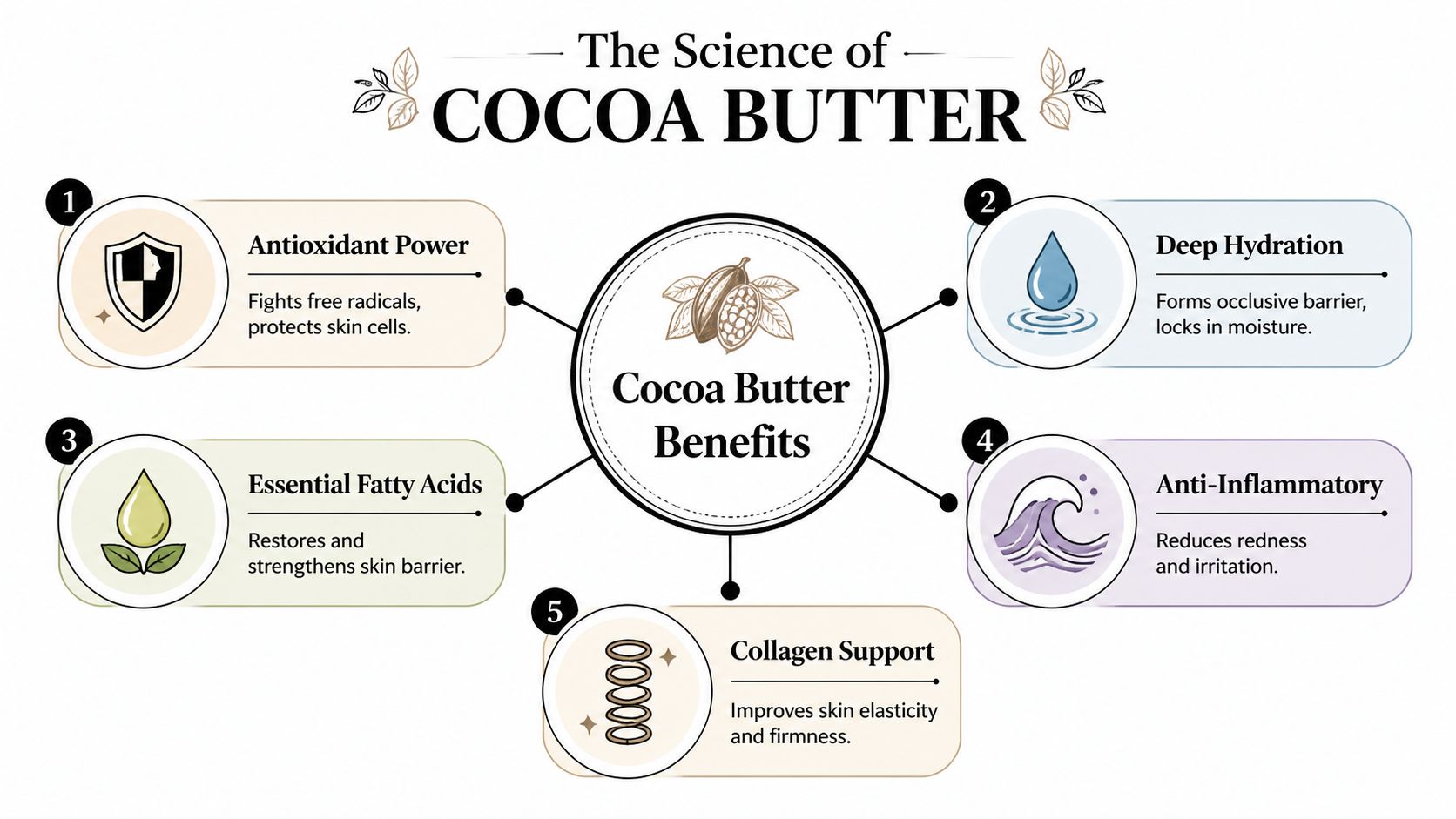
Cocoa butter is valued in body care because its fatty acid profile helps slow transepidermal water loss and leave skin feeling protected for longer. For retail teams, that matters more than abstract ingredient theory. It gives a practical answer for customers who say a standard lotion disappears fast and leaves no lasting comfort.
This is why cocoa butter creams sell well in Swiss winter, in hand care, and in body routines built around frequent washing or dry indoor air. The formula can sit on the skin with enough substance to reduce that dry, stretched feeling that often returns soon after application.
A good product does this without turning greasy.
Why texture often predicts performance
Texture is not only a luxury cue. It is often the first sign of whether the formula has been built with enough structure to support the claim.
Cocoa butter contributes stearic and oleic acids. In finished creams, that usually translates into three commercially useful effects:
- More structure in the emulsion. The cream feels denser and more protective.
- Better slip during application. Rich formulas spread with less drag.
- A smoother after-feel. Rough, flaky skin feels softer quickly, which helps first-use satisfaction.
That immediate sensory payoff matters in store. Customers judge body care fast. If the cream feels cushioning, even, and settled after application, the science becomes credible without a long explanation.
What cocoa butter creams do well
The strongest cocoa butter creams are best positioned for body zones that need sustained comfort rather than a barely-there finish. They are usually a strong fit for:
- Dry body skin during cold weather
- Hands and cuticles exposed to repeated cleansing
- Post-bath or post-shower care where skin loses moisture quickly
- Seasonal discomfort on shins, elbows, forearms, and knees
Retailers should also be honest about the limits. A customer asking for a featherlight gel-cream for humid travel, oily facial skin, or fast dressing in the morning may prefer another texture. Good advice protects repeat sales. Overselling richness creates returns.
Antioxidant interest is secondary to formula quality
Cocoa-derived ingredients are associated with polyphenols, which supports a broader nourish-and-protect story. For merchandising and product training, that can add value. It should not be the lead claim unless the full formula supports it.
What drives satisfaction day to day is simpler. The cream has to apply evenly, reduce tightness, and remain pleasant enough to use again. In my experience, repeat purchase comes from consistent comfort and skin feel far more often than from technical antioxidant language on the carton.
A staff script that works on the shop floor
Teams do not need a chemistry lecture. They need language that is accurate, easy to remember, and suitable for a Swiss customer who expects precision.
| Customer concern | Helpful explanation |
|---|---|
| “My skin feels dry again very quickly.” | This cream leaves a more protective film than a light lotion, so comfort tends to last longer. |
| “I want something rich but still refined.” | Cocoa butter gives richness and softness, but the better formulas are balanced so they do not feel heavy. |
| “Why does this feel more substantial?” | The butter adds body to the cream and helps it cushion the skin for longer. |
That level of explanation is enough to support trust, improve recommendations, and position premium cocoa butter creams as a considered purchase rather than a generic moisturiser.
Sourcing with Integrity from Bean to Jar
A customer in Zürich picks up two cocoa butter creams priced only a few francs apart. One has a polished origin story, credible standards, and a formula that feels consistent from tester to full-size jar. The other talks about nature and luxury but says little about sourcing, processing, or who stands behind the claims. In Swiss retail, that gap decides which product earns trust and which one creates hesitation at the shelf.
Swiss heritage gives this category a real commercial advantage. Cocoa is already familiar, and Swiss shoppers associate it with quality, refinement, and technical competence. As noted earlier, the link goes back to the Swiss chocolate tradition shaped by Rodolphe Lindt and the conching process in Bern. For cosmetic retail, the practical value is clear. Cocoa butter already makes cultural sense here, so retailers can focus less on introducing the ingredient and more on proving the standard behind it.

Ethical sourcing has to hold up under scrutiny
Swiss customers buying premium body care rarely stop at “contains cocoa butter.” They want to know where it comes from, how it was handled, and whether the finished cream justifies the premium. That is especially true in pharmacy, natural beauty, and gift-led retail, where customers expect claims to be precise.
For buyers, the sourcing review should cover four points:
Certification fit
ECOCERT or a similar standard helps show that natural positioning is supported by audited practice, not just packaging design.Cruelty-free clarity
Recognition from programmes such as PETA or Cruelty Free International gives staff a clear answer when customers ask ethical questions at the counter.Raw material handling
Cocoa butter can be responsibly sourced and still poorly processed. If odour varies too much, colour looks inconsistent, or the cream feels unstable, the supply chain is not being managed well enough.End-to-end coherence
Origin, processing, pack quality, and skin feel should tell the same story. A premium sourcing claim loses force quickly if the closure cracks, the texture turns grainy, or the scent drifts batch to batch.
What matters commercially
Retailers do not stock certifications for their own sake. They stock products that are easier to recommend, easier to defend, and less likely to disappoint after purchase.
| Label or sourcing signal | Commercial value in Swiss retail |
|---|---|
| ECOCERT-style natural certification | Supports premium natural positioning and reduces doubt around green claims |
| Cruelty-free verification | Helps close sales with ethically minded shoppers, especially in younger urban segments |
| Clear origin and processing narrative | Gives store teams a concrete reason to justify price and brand selection |
| Consistent finished product quality | Protects repeat purchase and lowers the risk of returns or complaints |
I usually advise new retail partners to test bean-to-jar claims against the physical product, not the brochure. Open the tester. Check the odour. Look at the fill level, closure, label finish, and how the cream behaves after exposure on shelf. A brand that manages sourcing well tends to show discipline all the way through the range.
Bean to jar means traceability plus execution
The strongest cocoa butter creams come from suppliers who treat sourcing as part of formulation control. That affects more than the story on the outer carton. It shows up in texture consistency, cleaner odour control, better stability, and a more reliable customer experience.
That is the standard worth backing in Switzerland. Heritage may start the conversation, but traceability, processing discipline, and finished-product quality are what earn the sale.
Formulation Insights for Curating a Premium Range
Buying cocoa butter cream well means looking past the front label. Many products use cocoa butter as a marketing signal. Fewer use it intelligently. If you’re building a serious assortment, the formulation details are what separate a reliable repeat seller from a jar that sits still after the first wave of curiosity.
Refined versus unrefined cocoa butter
This is one of the most important buying decisions in the category.
| Type | Advantages | Drawbacks | Best fit |
|---|---|---|---|
| Refined cocoa butter | More neutral scent, cleaner colour, easier in elegant formulations | Less of the “raw cocoa” identity some shoppers expect | Facial-adjacent body creams, pharmacy ranges, sensitive-skin positioning |
| Unrefined cocoa butter | Stronger natural aroma, more artisanal story, more ingredient character | Can feel heavier, smell more dominant, and be harder to formulate elegantly | Body balms, rustic natural ranges, niche boutique products |
Refined cocoa butter usually gives retailers fewer problems. It’s easier to integrate into a polished cream that appeals to a broader audience, especially where pharmacy, maternity, or sensitive-skin customers are involved.
Unrefined cocoa butter has its place, but it needs tighter brand discipline. If the formula isn’t well balanced, the result can feel waxy, smell too assertive, or create unnecessary friction for customers who expected “natural luxury” and got “kitchen cupboard”.
Reading the INCI like a buyer
You don’t need a chemist’s bench to make better purchasing decisions. You do need to read the INCI list without being distracted by the hero ingredient on the front.
Look for these signals:
Cocoa butter placement
If Theobroma Cacao Seed Butter appears high enough to matter, the product is more likely to deliver a recognisable cocoa butter feel.Supporting emollients
A good cream often pairs cocoa butter with complementary lipids and humectants to improve spread and usability.Fragrance load
If perfume dominates the formula identity, cocoa butter may be there mostly for storytelling.Texture support
Thickeners and emulsifiers aren’t bad. They’re necessary. What matters is whether they support the butter or overwhelm it.
The better question to ask suppliers
Don’t just ask, “How much cocoa butter is in it?” Ask these instead:
- How does the formula avoid drag or waxiness?
- Is the cocoa butter refined or unrefined?
- What skin type or use case was this cream built for?
- Has the natural odour been balanced with restraint or covered aggressively?
- What other actives make the butter perform better?
Those questions expose the difference between a considered formula and a commodity cream.
The best cocoa butter cream usually doesn’t rely on cocoa butter alone. It uses cocoa butter as the anchor, then builds around it.
Ingredient synergy is where premium products win
A plain cocoa butter cream can be pleasant. A synergistic cocoa butter cream can become a category leader in your assortment.
This matters especially when you curate specialist edits such as:
- Maternal body care
- Spa body rituals
- Winter skin recovery
- Hand and body rescue products
In premium ranges, cocoa butter often performs best when paired with ingredients that improve hydration dynamics, skin feel, or elasticity support. That’s why some products feel substantially more effective than others even when both claim cocoa butter on pack.
For retail partners, the practical lesson is simple. Don’t reward the loudest cocoa story. Reward the best-built formula.
Advanced Client Guidance and Application Techniques
A customer in Zurich picks up a cocoa butter cream, asks whether it will help during pregnancy, then adds that she hates sticky body products and reacts badly to heavy fragrance. Staff need a better answer than “apply daily.” They need to match the formula, texture, and claim language to the person in front of them.
Good retail guidance does three things. It improves customer satisfaction, reduces returns from poor product fit, and helps premium creams justify their shelf position in a market as selective as Switzerland.
Maternal care needs disciplined advice
Pregnancy and postpartum body care deserve trained consultation, not generic reassurance. Cocoa butter cream fits naturally into this category because customers already associate it with comfort, massage, and skin suppleness. The commercial mistake is overselling it as a guaranteed stretch mark solution.
A better approach is to position cocoa butter cream as supportive daily body care for areas under tension, especially the abdomen, hips, thighs, and bust. Staff should explain that regular use, good slip, and customer compliance matter more than dramatic claims. If a texture feels too greasy, many customers stop using it within days.
For maternity ranges, the best sellers are usually creams that combine rich nourishment with a finish the customer can tolerate morning and evening. That is where premium formulation earns its margin.
How staff should guide pregnant and postpartum clients
Use practical language at the fixture or treatment desk:
Recommend routine, not promises
Advise twice-daily application on high-tension areas, especially after showering and before bed.Sell texture as part of efficacy
A cream that absorbs well usually gets used consistently. A heavy formula often sits in the cupboard.Keep claims controlled
Describe support for comfort, softness, and elasticity appearance. Avoid absolute prevention claims.Ask one useful follow-up question
“Do you want rich and cocooning, or rich but quick to dress after?” That question often decides the right SKU.
Dry body skin responds well to method
Swiss winter trade is predictable. Customers arrive with tight shins, rough elbows, flaky arms, and hands damaged by washing, wind, and indoor heating. Cocoa butter cream performs well here if staff teach application properly.
The best advice is simple. Apply after bathing while skin is still slightly damp, then use a smaller second application at night on repeat problem areas. One good cream used correctly often beats a basket of poorly matched products.
Demonstration helps close the sale. Apply a pea-sized amount to the back of one hand, wait a minute, then ask the customer to compare both sides. Premium cocoa butter creams should leave comfort and flexibility, not a shiny film that transfers to clothing or phones.
Sensitive skin requires restraint
Natural positioning does not guarantee broad tolerance. For sensitive or clinic-adjacent customers, steer them toward professionally manufactured formulas with a restrained fragrance profile, clear labelling, and patch-test guidance where appropriate.
Amount matters too.
Many complaints about “heaviness” come from over-application, especially on hands or in warmer indoor conditions. Show the customer the right dose for each area. That small piece of coaching reduces dissatisfaction and makes your team sound credible.
Here’s a short explainer you can embed in staff training or digital content:
For body use, a cocoa butter cream should feel substantial in the hand and restrained on the skin. If the finish still feels heavy after a few minutes, the customer likely used too much or chose the wrong texture for that area.
Smart recommendation by use case
| Client need | Best advice |
|---|---|
| Pregnancy body care | Recommend a premium cream with good slip and clear guidance for regular use on high-tension areas |
| Winter body dryness | Advise application after showering, then a night top-up on rough zones |
| Hand care | Suggest a small amount after washing and a richer layer before bed |
| Spa ritual | Position as a massage-friendly body cream or post-treatment comfort product |
Retailers scaling this category across stores also need dependable stock handling, tester logistics, and batch consistency. Partners using specialized cosmetics fulfillment often find it easier to support premium positioning without service gaps.
That is how cocoa butter cream becomes a considered, high-trust sale rather than a generic moisturiser.
Swiss Market Success Regulation Merchandising and Positioning
A Swiss customer picks up a cocoa butter cream in a pharmacy in Zurich, then checks the INCI list, country of origin story, and claims before buying. That buying pattern shapes the category. In Switzerland, premium positioning only works if the product stands up to scrutiny on formula quality, compliance, and presentation at the same time.
Retailers who do well in this segment treat regulation as part of assortment strategy, not as back-office admin. Swiss saleability depends on correct labelling, traceable documentation, responsible claims, and manufacturing standards that fit both Swiss expectations and the wider European cosmetics framework. For a new retail partner, the practical takeaway is simple. Choose suppliers that can produce a clean product information file, consistent batch documentation, and packaging that does not drift into medicinal language.
Regulation supports premium credibility
For cocoa butter creams, compliance starts with disciplined product selection. Favour professionally manufactured formulas with clear ingredient declarations, allergen disclosure where required, stable preservation systems, and packaging suited to the formula’s texture and shelf life.
That matters commercially.
Swiss shoppers, especially in pharmacy, apothecary, clinic-adjacent, and higher-end e-commerce channels, are quick to question vague natural claims. A product that sounds artisanal but lacks technical clarity often creates hesitation at shelf and more questions for store staff. A product that explains its function clearly is easier to trust and easier to sell.
What strong positioning looks like by channel
Each channel needs different emphasis, even when the jar is the same.
Pharmacy positioning
Keep the message clinical in tone, but not cold. Place cocoa butter cream near dry-skin body care, hand repair, winter skin support, or pregnancy body-care solutions where appropriate to the formula and local merchandising rules. Shelf communication should focus on:
- Purity and professional formulation
- Comfort for dry or tight-feeling skin
- Appropriate body areas such as hands, elbows, legs, and shins
- Texture and finish, especially if richer than a standard lotion
Spa and hotel retail
Here, the sale is sensory first and technical second. Guests respond to texture, scent restraint, and after-feel. Use testers, mini hand rituals, or post-treatment recommendation scripts. Staff do not need to recite legal detail, but they do need confidence in why the cream feels refined, absorbs as expected, and fits a premium treatment environment.
Boutique and department store counters
Packaging discipline matters more in this channel than many buyers expect. Swiss premium customers notice carton quality, closure integrity, language consistency, and whether the ethical sourcing story sounds specific or generic. Keep the selling line sharp. “Rich body comfort with a polished finish” works better than a cluster of soft claims that blur together.
E-commerce merchandising
Online, weak structure kills conversion. The best product pages answer the practical questions fast.
| Page element | What to include |
|---|---|
| Product title | Use case plus cocoa butter cue |
| Opening copy | Texture, skin need, and primary benefit |
| Bullet points | Size, finish, ideal body zones, scent level, formula type |
| FAQ | Who it suits, when to apply, how rich it feels |
| Images | Pack shot, texture close-up, in-use visual |
If you are selling across multiple storefronts or fulfilling for several stockists, operations start to affect brand perception. Rich creams can arrive looking premium or looking mishandled, depending on packing discipline, storage conditions, and dispatch consistency. That is why growing retailers often review systems for specialized cosmetics fulfillment before they scale the category.
Positioning choices that improve sell-through
The Swiss market rewards precision. Say what the product is, who it suits, and why its texture earns a place in the routine.
A few decisions usually separate strong sellers from slow movers:
Segment the range properly
A pharmacy-friendly daily body cream, a richer winter rescue cream, and a boutique-led indulgence cream should not share the same sales script.Keep claims disciplined
Avoid broad promises around sensitive skin, irritation, or prevention of skin conditions. Use careful wording and train staff to recommend patch testing where appropriate.Translate ethical sourcing into retail language
“Ethically sourced cocoa butter” is too thin on its own. Explain what the customer gets from that standard, whether that is traceability, supplier consistency, or a more dependable premium story.Match texture to channel and season
Heavier creams often perform best from autumn through early spring and in alpine regions where customers expect more protection. Lighter cocoa-butter-led creams usually have broader year-round appeal.Avoid generic natural positioning
Swiss customers usually expect a reasoned product choice. Origin matters. So do finish, stability, and packaging quality.
The retailers I see succeed in Switzerland make cocoa butter cream feel considered, not incidental. They stock fewer weak options, train teams on why each formula belongs in the assortment, and present compliance as proof of quality rather than as a disclaimer. That combination improves trust, protects margin, and gives the category a place in serious premium skincare retail.
Crafting Product Descriptions That Convert
A good product description does two jobs. It helps the customer understand the product quickly, and it helps your team stay consistent across shelf talkers, webshop copy, and marketplace listings. Cocoa butter cream is especially sensitive to wording because weak copy makes it sound ordinary, while inflated copy makes it sound untrustworthy.
Copy rules that improve conversion
Before the templates, keep these principles in place:
- Lead with use, not poetry
Say what the cream is for in the first line. - Describe texture accurately
Rich, velvety, cushioning, protective. Use terms the customer can picture. - Show the formulation logic
Mention whether it’s a daily body cream, a richer rescue cream, or a maternity-supporting body product. - Keep visuals aligned with the claim
Clean, sharp pack shots and texture imagery matter. If your current images look inconsistent, it helps to review practical guidance on high-quality product image processing before publishing new listings.
Template for a pharmacy webshop
Cocoa Butter Cream for Dry and Tight-Feeling Skin
A rich body cream formulated with cocoa butter to help soften rough-feeling skin and support daily comfort. Suitable for areas that need a more protective finish, including legs, elbows, and hands. Ideal for customers who find standard lotions too light.
Why customers choose it
- Cocoa butter-based nourishment for body care
- Cream texture with lasting comfort
- Suitable for daily use on dry skin areas
- A practical choice for colder weather and frequent hand washing
Template for a premium boutique
Velvety Cocoa Butter Cream with a Comforting Finish
This cocoa butter cream wraps the skin in a smooth, cocooning texture that feels polished rather than heavy. Best for body care rituals when customers want richness, softness, and an ingredient story rooted in botanical luxury.
Best suited to
- Evening body care
- Giftable natural beauty edits
- Customers who prefer richer textures and sensorial application
Template for a general e-commerce listing
Cocoa Butter Cream
A nourishing body cream designed for dry skin that needs more than a lightweight lotion.
Texture
Rich cream
Skin feel
Soft, protected, comfortable
Ideal for
- Dry legs and arms
- Hands and elbows
- Daily body moisturising
- Cold-weather routines
Why it stands out
Built around cocoa butter for a more substantial, comforting finish than standard body lotion.
Template for maternal care positioning
Cocoa Butter Cream for Pregnancy and Postpartum Body Care
A rich body cream designed for areas prone to tightness and dryness during pregnancy and after birth. Best positioned as supportive daily body care within a consistent routine.
Strong product copy sounds like a knowledgeable buyer wrote it. Weak product copy sounds like a label generator filled the blanks.
The practical habit I recommend is this: write one master description, then adapt it for each channel instead of letting every stockist improvise. That protects your positioning and keeps customer expectations aligned with the formula.
If you’re looking for Swiss-ready cocoa butter creams and complementary natural skincare lines that meet premium retail expectations, beautysecrets.agency is a strong partner to speak with. Their portfolio is curated for pharmacies, spas, boutiques, and e-commerce retailers that need ethical sourcing, recognised standards, and formulations customers will come back for.