French gel nails are the epitome of timeless, professional style. They offer that durable, high-gloss finish clients love, lasting for weeks without a chip. This iconic look, defined by its classic sheer pink base and a crisp white tip, brings an unmatched elegance and versatility to the table, making it one of the most consistently requested services in salons today. Its enduring appeal is simple: it beautifully marries classic style with the tough resilience of modern gel technology.
Why French Gel Nails Remain a Timeless Classic
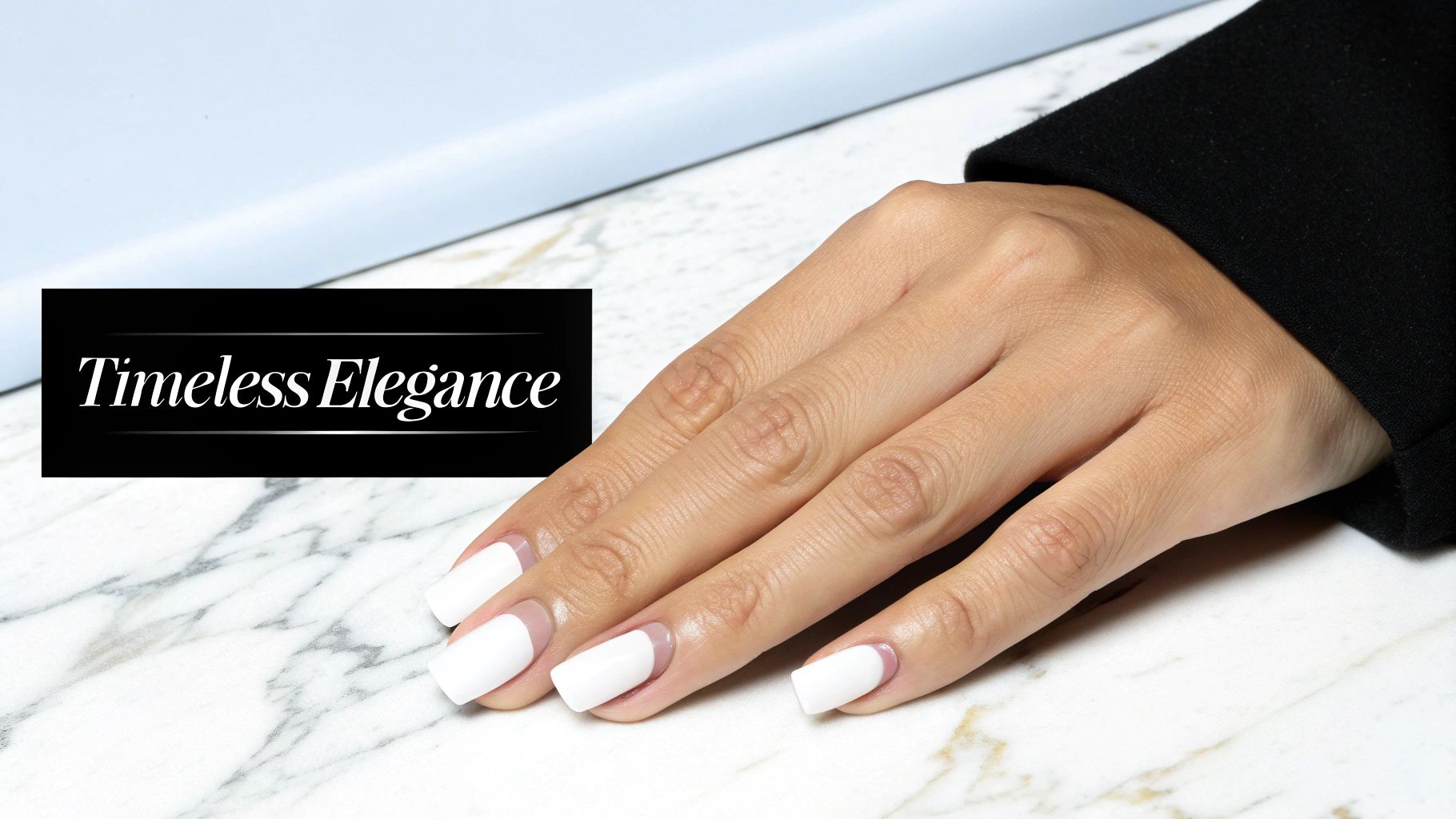
The French manicure is so much more than a passing trend—it's a true cornerstone of the beauty industry. It actually got its start as a clever, practical solution for Hollywood actresses back in the 1970s, but its clean, sophisticated look quickly turned it into a global symbol of elegance. Fast forward to today, and this classic design continues to be a top request on service menus in Swiss salons for one simple reason: it always delivers what clients are looking for.
When french gel nails came onto the scene, the game changed. This classic look was suddenly supercharged with incredible durability. Unlike traditional polish that can chip in a day, a proper gel application holds its own, maintaining that pristine, just-done appearance for two weeks or longer. That kind of longevity is a huge selling point for clients with busy lives who need their beauty treatments to offer real value and lasting results.
The Modern Appeal of Understated Elegance
In a world overflowing with bold colours and complex nail art, the sheer simplicity of the French manicure really stands out. Its understated chic works with any outfit, for any occasion, in any season, making it a reliable, go-to choice for clients all year round. From a business perspective, that universal appeal translates directly into consistent, predictable revenue.
What really keeps it so popular? It comes down to a few core elements:
- Versatility: It looks just as right in a professional board meeting as it does at a formal wedding or for casual day-to-day wear.
- Cleanliness: That crisp white tip and sheer base create a beautiful illusion of impeccably groomed, healthy-looking nails.
- Professionalism: It just radiates a polished, put-together image that never, ever feels dated.
This is where its power lies for your business. When a client is on the fence, unsure what to choose, the French manicure is that familiar, safe, and beautiful option they know and trust. Nailing this service perfectly helps solidify your reputation for undeniable quality.
Aligning with Conscious Consumer Values
Beyond the look itself, the modern french gel nails service gives you a chance to connect with your clients on a more meaningful level. The demand for clean beauty isn't just for skincare anymore; people are paying much closer attention to the ingredients in all their products, including what goes on their nails.
By offering French manicures using high-quality, ethically sourced gels, you're speaking directly to this conscious consumer. Making a point to highlight formulations that are cruelty-free and formulated without harsh chemicals can become a powerful way to set your salon or retail space apart. It sends a clear message that you care about both beauty and wellness, which is exactly how you build trust and attract a loyal clientele who value a premium, thoughtful experience.
Building Your Professional French Gel Nail Toolkit
Creating a flawless French gel manicure isn't just about your technique—it starts with having the right tools for the job. You don’t need every product under the sun, but you absolutely need the right ones. Each piece in your kit, from your file to your top coat, plays a vital role in getting that durable, high-gloss finish your clients are paying for.
Think of your toolkit as a complete system. Every single component has to work with the others. For example, your choice of nail file is more critical than most people realise. I always recommend a 180/240-grit file. It's perfect for gently shaping the natural nail and lightly buffing away the shine, which creates just enough texture for the gel to grab onto without thinning out the nail plate. If you use a file that's too coarse, you risk causing damage that leads to lifting later on.
Another non-negotiable for me is a quality pH bonder or dehydrator. This is what whisks away any lingering oils or moisture on the nail plate, giving your base coat the clean surface it needs to form a super-strong bond. Honestly, skipping this step is the number one reason I see for premature chipping and lifting. It’s what turns a two-week manicure into a one-week frustration.
Curating Your Core Gel Polishes
At the heart of your kit, of course, is the gel polish. For a classic French, you really only need three core colours, but you need to choose them wisely.
- A Superior Base Coat: This is your foundation. I look for one that’s designed to be flexible, so it can move with the natural nail and prevent cracking.
- The Perfect Sheer Pink or Nude: You'll want a colour that flatters a wide range of skin tones. A beautiful semi-translucent formula gives you that classic, healthy look without completely hiding the natural nail.
- A Crisp, Pigmented White: For that iconic smile line, you need a builder or art gel that’s packed with pigment. This lets you paint a sharp, opaque white tip in just one or two thin coats, avoiding the bulky look that comes from layering a weaker polish.
Here’s a pro tip I always share: sticking with one brand for your core gels usually gives you the most reliable results. Products from the same system are designed to cure at the same rate and bond together chemically, which means a stronger, longer-lasting manicure.
This focus on high-quality, ethically sourced products is exactly what clients are looking for today. Here in Switzerland, there's a huge demand for premium, natural, and eco-friendly nail products. In fact, projections show Switzerland holding a 4.00% share of Europe's professional nail care market in 2025, with an expected growth of 8.57% CAGR through 2030. You can dive deeper into these trends over on Statista.
Essential Tools for Precision and Safety
Beyond the polishes themselves, a few precision tools can make all the difference. You absolutely need a fine-tipped nail art brush for painting that smile line freehand. Many experienced techs, myself included, often prefer a short, flat brush because it gives you incredible control over the line.
Finally, the linchpin of your entire setup is a powerful LED or UV lamp. Don't skimp here. An old or underpowered lamp leads to under-cured gel, which is the main culprit behind service breakdown and can even cause skin sensitivities. Invest in a professional-grade lamp and make a note to replace the bulbs as the manufacturer suggests. This is the only way to guarantee every layer cures perfectly, giving your clients the safe, beautiful, and long-lasting French gel nails they came for.
The Art of Flawless Application
This is where the real magic happens. You’ve got your perfectly curated toolkit, and now it's time to bring that vision to life on your client's hands. Nailing a flawless French gel manicure isn't just about painting; it's a precision process where each layer builds on the last to create something durable and beautiful. And it all starts with meticulous prep work—the non-negotiable foundation that determines how long the manicure lasts and how good it looks.
Prep Is Everything: Setting the Stage for Success
Don't rush this part. A great prep is far more than a quick file and buff; it’s a detailed ritual that ensures perfect adhesion and prevents lifting down the line.
- Shape first: Start by shaping the free edge with a 180-grit file. This is your chance to define the client’s desired look, whether it's a soft square, a classic almond, or something in between.
- Focus on cuticles: Next, get in there and do precise cuticle work. Gently push back the eponychium and carefully remove any non-living tissue from the nail plate itself. This one step is absolutely critical for stopping the gel from lifting at the base a week later.
- Buff and cleanse: Once the cuticles are immaculate, lightly buff the entire nail surface with a 240-grit buffer. You’re not trying to be aggressive here. The goal is simply to remove the natural shine and create a slightly porous surface for the base coat to grip onto. Finish by cleansing the nail thoroughly with isopropyl alcohol to get rid of every last bit of dust and oil. Now, the nail plate is perfectly primed for french gel nails.
Layering for Strength and Elegance
With the prep work squared away, you can begin building the manicure. Each coat has a specific job, contributing to both the final look and the structural integrity of the nail. It helps to think of it less like painting and more like building a resilient, flexible enhancement from the ground up.
First up is the base coat. Apply a thin, even layer. Crucially, make sure to "cap" the free edge by running the brush along the very tip of the nail. This simple action creates a seal that is your best defence against chipping.
After the base, it's time for your sheer foundation. Apply one or two thin coats of your sheer pink or nude gel polish. This is what provides that classic, healthy-looking backdrop for the iconic white tip. Always remember to cure each layer fully according to the manufacturer's instructions before you even think about moving on.
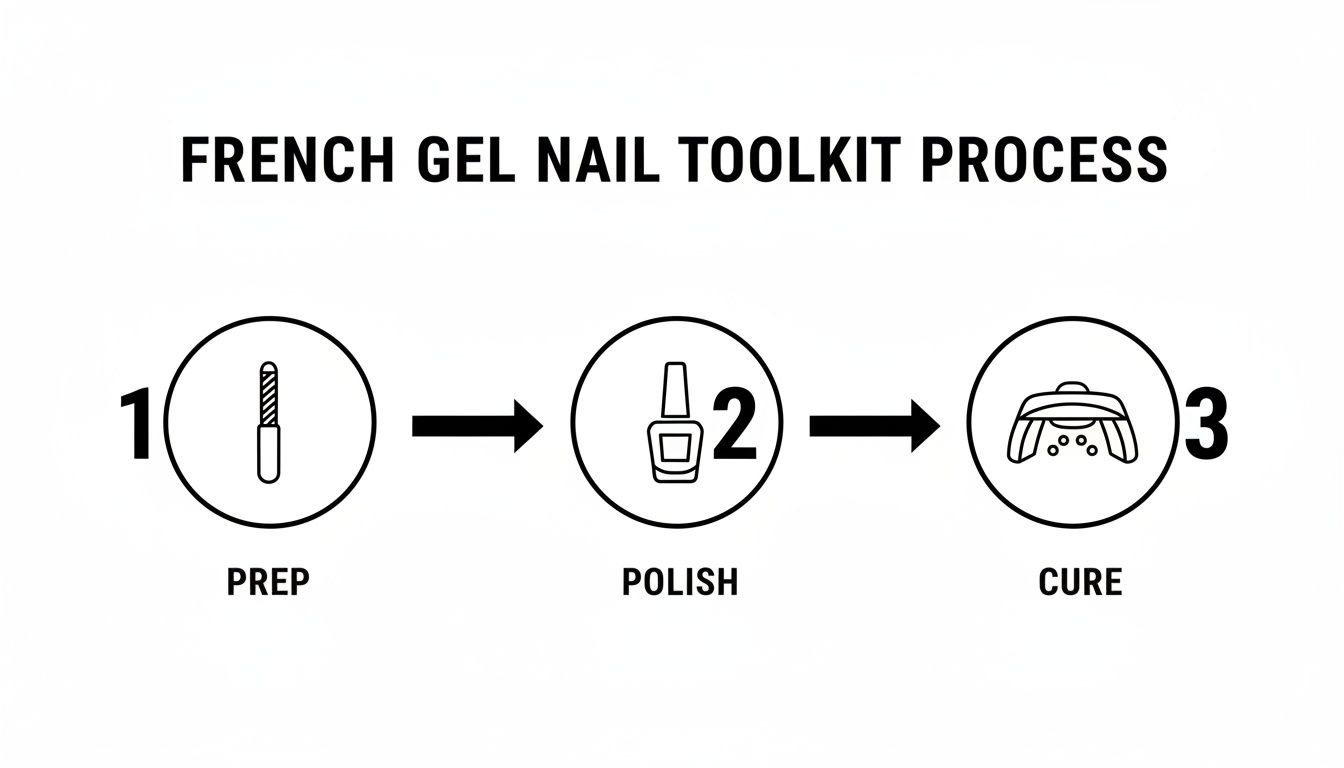
This simple workflow—prep, polish, cure—is the core of any successful French gel service. Mastering the first two stages is what makes that final cure lock in a perfect result.
Crafting the Perfect Smile Line
Let's be honest: the smile line is what makes or breaks french gel nails. Creating that crisp, symmetrical arc is a true mark of a skilled technician. There are a few tried-and-true professional techniques to get it right, and the best one for you often just comes down to personal preference and a bit of practice.
The classic freehand method involves a fine liner brush dipped in a highly pigmented white gel. I like to start by painting a thin line across the free edge, then using the tip of the brush to carefully carve out the "smile" on each side, pulling the white gel down to create that perfect curve. If you're not quite confident freehanding yet, silicone stampers or even French tip guides can deliver excellent, consistent results while you build your skills.
No matter which method you land on, thin application is your secret weapon. A thick, bulky white tip doesn't just look unnatural; it's also a prime candidate for improper curing. It's always, always better to apply two delicate coats than one heavy one.
Curing and Finishing Touches
Proper curing is the chemical process that transforms the liquid gel into a hard, durable coating. This isn't the step to eyeball. Under-curing is a common mistake that leads to a soft finish, service breakdown, and even potential skin sensitivities for your client.
Quick Reference Curing Times for French Gel Nails
To avoid any guesswork, it’s essential to know the typical curing times for your products and your lamp. While you should always defer to the manufacturer's guidelines, this table offers a solid starting point for most professional systems.
| Gel Layer | LED Lamp Curing Time | UV Lamp Curing Time | Professional Tip |
|---|---|---|---|
| Base Coat | 30 seconds | 60 seconds | Ensure the layer is thin and even. Capping the free edge here is crucial for preventing chips. |
| Sheer/Nude Coat | 30-60 seconds | 120 seconds | Cure for the full time, especially between multiple coats, to build a solid foundation colour. |
| White Tip | 60 seconds | 120 seconds | White pigments can block light, so a full cure is vital to prevent a soft, uncured layer. |
| Top Coat | 60 seconds | 120 seconds | A complete final cure guarantees that signature high-gloss shine and scratch resistance. |
Remember, these are general guidelines. High-pigment colours or thicker top coats might need a little extra time in the lamp to cure all the way through.
After curing that final layer—whether it’s the white tip or a final sheer coat over it—it's time for the top coat. Again, cap that free edge to seal everything in. Once the final cure is done, cleanse the tacky inhibition layer with isopropyl alcohol to reveal that high-gloss, resilient finish we're all after. The perfect final touch? A drop of nourishing cuticle oil. It rehydrates the surrounding skin and gives the manicure that luxurious, just-left-the-salon look that makes your work truly stand out.
How to Troubleshoot Common Application Issues
Even the most seasoned nail tech runs into hiccups now and then. Things just happen. But understanding why issues like lifting or wrinkling pop up is the real secret to fixing them on the spot and making sure they don't become a habit in your french gel nails applications. Think of this as your go-to diagnostic guide for getting that flawless finish, every single time.
Let's talk about premature lifting. It’s easily one of the most common frustrations, usually showing up around the cuticles or at the free edge. Nine times out of ten, the problem goes all the way back to your prep work. If you leave even a microscopic bit of non-living tissue on the nail plate, the gel bonds to that instead of the nail itself. As the nail grows, that little bit of cuticle pulls the gel right up with it, causing a lift.
Likewise, any lingering oils or moisture will completely sabotage the gel's ability to stick. That's why a meticulous cleanse with isopropyl alcohol after buffing isn't just a suggestion—it's an essential step for creating a perfectly clean slate for the gel to grab onto.
Solving Wrinkling and Bubbles
We’ve all been there. You guide your client’s hand out of the lamp, and your heart sinks when you see the white tip has wrinkled. This is a classic sign that the gel was applied too thickly. It's especially common with highly pigmented colours, like the bright white needed for a crisp French tip. These colours need to be applied in super thin layers so the UV or LED light can penetrate all the way through for a proper cure.
If a layer is too thick, only the top part hardens. The gel underneath remains liquid, and as it shrinks, it pulls the cured surface down with it, creating that tell-tale wrinkled look.
- The Fix for Wrinkling: The solution is simple. Always paint the white gel in two paper-thin coats instead of trying to get full coverage in one thick one. This guarantees a complete, even cure.
- The Fix for Bubbles: Bubbles usually mean the gel was overworked, or the bottle was shaken too vigorously. Instead of shaking, just roll the bottle gently between your palms to mix it. Apply your polish with smooth, deliberate strokes to keep air from getting trapped.
The secret to a perfect cure is respecting the product's chemistry. Thin layers allow for full light penetration, leading to a stronger, more durable, and flawless finish that lasts.
Preventing Chipping at the Free Edge
Chipping right at the tip of the nail, sometimes just a few days after the service, is another all-too-common problem. This almost always points back to one tiny but crucial step that got missed: capping the free edge.
You absolutely have to seal the edge of the nail with every single layer—base coat, colour, and top coat. This simple action creates a protective bumper around the tip, encapsulating the natural nail. It prevents water and oils from creeping underneath, which is what causes the layers to separate and chip away. It's a small habit that makes a massive difference in the longevity of french gel nails.
The demand for quality is only growing. The Swiss nail polish market, for example, is projected to reach an incredible 358.81 USD billion by 2032. This shows a huge consumer appetite for high-quality manicures that last. When clients are investing in premium services like French gel nails, delivering durable, chip-free results is how you meet their expectations and keep them coming back. You can dive deeper into these trends in this detailed market research.
Client Aftercare for Long-Lasting Manicures
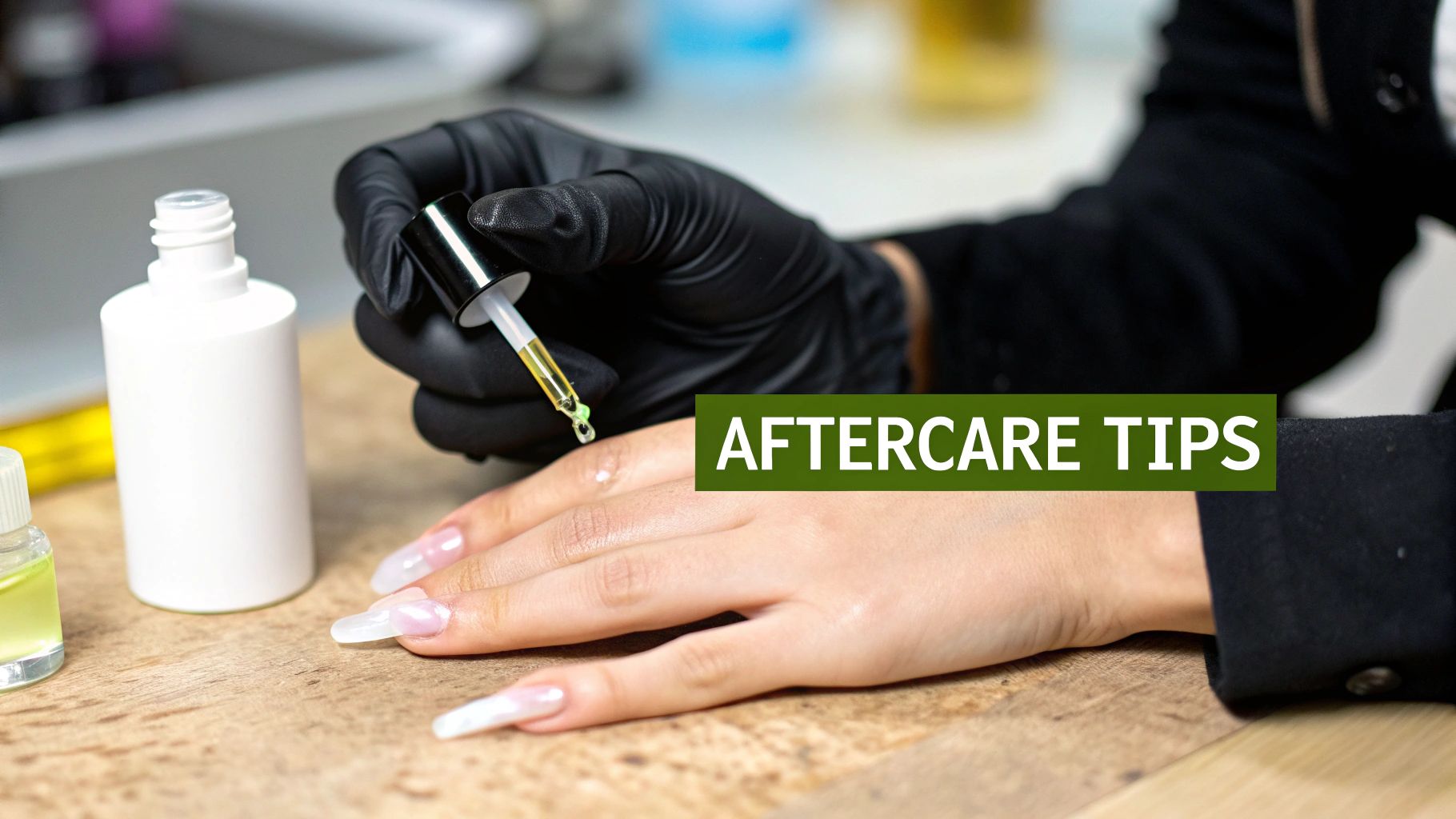
The life of a flawless manicure extends far beyond your salon chair. How you educate your clients on aftercare is what separates a good technician from a great one. It’s not just about protecting your hard work; it’s about showing clients how to get the most value from their service, which builds trust and keeps them coming back.
When they see how well their french gel nails last, they'll appreciate the expertise you provide even more.
The most important piece of advice you can give is also the simplest: use a high-quality cuticle oil every single day. Seriously, this small habit is a game-changer. It keeps the gel flexible and the surrounding skin hydrated, which is the best defence against lifting and brittleness.
Empowering Clients with Practical Tips
Beyond the daily oil ritual, I always give my clients a few easy-to-remember rules. Think of it as empowering them to protect their investment and keep their nails looking salon-fresh between visits.
- Treat Nails as Jewels, Not Tools: This is a classic for a reason. Remind them not to use their nails to open cans, scrape off stickers, or do anything that puts sharp pressure on the tips.
- Wear Gloves for Chores: Water and cleaning chemicals are the biggest enemies of a long-lasting gel mani. Washing up, gardening, or using harsh sprays without gloves is a sure-fire way to cause lifting.
- Avoid Extreme Heat (For a Day): Right after their appointment, it’s best to avoid long, hot baths or saunas. This just gives the gel bond a little extra time to fully settle without interference.
Framing aftercare as a team effort makes all the difference. You're not just giving them a list of rules; you're partnering with them to maintain beautiful nails. This approach positions you as their go-to expert.
The Critical Importance of Professional Removal
This is the big one. You absolutely have to stress why they must never, ever pick or peel off their gel polish. We've all seen the damage it causes—stripping away layers of the natural nail and leaving it weak and flaky.
Explain that professional removal is non-negotiable for maintaining healthy nails. This conversation is the perfect, natural moment to pre-book their next appointment for a safe soak-off and fresh set.
In Switzerland, where clients expect a high standard of care, this professional guidance is part of the premium experience. This demand for quality is reflected in the country's professional nail care market, which is on track to hold a 4.00% share in Europe by 2025. You can dig deeper into these market dynamics to see the trends for yourself.
Answering Your Top French Gel Nail Questions
Even the most seasoned nail techs run into the same questions about French gel manicures. Whether it's a client asking about technique or a fellow pro looking for a little troubleshooting, having solid answers ready is a must. It builds trust and makes sure everyone walks away happy.
Let's dive into some of the most common questions I hear in the salon and break down the answers. Think of this as your quick-reference guide for those moments when you need a clear, expert take.
Can I Use Regular Polish for the White Tip?
I get this one a lot, but the short answer is a firm no—not if you want a professional, lasting result. Regular nail polish and gel polish are just not made to work together. They have completely different chemical makeups and cure in entirely different ways. Your standard polish air-dries as solvents evaporate, while gel polish undergoes a chemical reaction called polymerisation under a UV or LED lamp to harden.
If you try to sandwich a layer of wet, air-drying polish under a gel top coat, you're creating a recipe for disaster. The regular polish will never truly dry. This creates a squishy, unstable layer that will wrinkle and peel almost immediately, completely ruining the integrity of the manicure. For a flawless, durable finish, you must always use gel polish for every single layer.
How Do I Create a Softer, More Natural French Manicure?
The key to that beautiful, modern "soft French" that clients are loving right now is all about subtlety in your colour choice and a little bit of blending. It’s a far cry from the stark, high-contrast look of the past and feels so much more elegant.
Here’s how to nail the look:
- Go for a milky white: Ditch the opaque, bright white and grab a semi-translucent or milky shade for the tip instead. This instantly softens the definition.
- Pick the perfect base: Choose a sheer nude or pink base that genuinely complements your client's skin tone. The goal is a seamless, "your nails but better" effect.
- Feather the smile line: This is the game-changer. After painting the tip but right before you cure, take a clean, dry nail art brush and gently tap along the smile line. This simple step blurs that sharp edge, creating a stunning, subtle gradient that looks incredibly chic.
What Is the Best Way to Price a French Manicure Service?
A French gel manicure is an art form, and you should absolutely price it as a premium service. It takes more time, a higher level of skill, and a much steadier hand than a simple one-colour gel application. The precision required to craft those perfect smile lines more than justifies a higher price.
As a rule of thumb in the industry, adding a surcharge of 15-25% on top of your standard gel manicure price is a good starting point. For instance, if your regular service costs CHF 80, pricing your French manicure somewhere between CHF 92 and CHF 100 is perfectly reasonable. Don't forget to consider your product costs, your level of expertise, and what the local market will support when you set your final price.
How Should I Explain Safe Gel Removal to My Clients?
Teaching your clients about proper removal is one of the most important things you can do to protect their nail health. Make it crystal clear that they should never, ever peel or pick off their gel polish. This action is so damaging because it rips off the top layers of the natural nail plate right along with the colour.
Walk them through the professional process. Explain how you gently file the top coat to break the seal, then apply cotton pads soaked in a professional-grade gel remover to each nail. Wrapping them in foil for about 10-15 minutes allows the remover to work its magic. The gel will soften and lift away from the nail, making it easy to gently push off with a wooden cuticle stick. Stress that proper, gentle removal is the secret to keeping their nails strong and healthy for their next appointment.
At beautysecrets.agency, we partner with Swiss pharmacies, spas, and retailers to provide premium, ethically sourced cosmetic brands that align with conscious consumer values. Discover our curated selection of clean beauty formulations at https://beautysecrets.agency.