A Swiss spa buyer stands in front of a chilled skincare display, while a pharmacy manager looks at a shelf that needs to earn its space quickly. Both are asking the same question in different language, will this product move, and will clients come back for it? Eye pad masks sit right in that decision zone, because they promise a fast, visible ritual, and Swiss buyers tend to favour products that can justify themselves with clear performance, not just pretty packaging.
The category is no longer a niche indulgence. Recent market reporting values the global eye-mask market at USD 19.92 million in 2025 and projects growth to USD 36.28 million by 2034, which implies a 6.97% CAGR over 2026 to 2034 (Fortune Business Insights). That matters in Switzerland because premium pharmacies, spas, and beauty retailers usually do best with products that feel both immediate and credible. If a client can see, feel, and understand the benefit quickly, the item earns trust faster.
The other reason buyers keep circling back to eye pad masks is simple. Under-eye content often leans hard on glossy claims, but the best retail stories are the ones that separate temporary de-puffing from longer-term skin change. That distinction is where Swiss merchandising can become smarter, and where staff can answer questions without overpromising.
Introduction to Eye Pad Masks in Swiss Retail
A buyer in Lausanne or Zurich rarely struggles to find eye care products. The harder task is choosing the formats that still feel credible on a shelf crowded with serum sachets, gel patches, and luxury spa add-ons. An eye pad mask has to do more than look clinical. It has to make sense to a customer who expects elegance, a clear use case, and evidence that does not overpromise.
That distinction matters in Switzerland, where premium pharmacies, spas, and beauty retailers usually favour products that are easy to explain and realistic in their results. Eye pad masks fit that brief when they are presented as a short treatment for comfort and a fresher-looking eye area, not as a fix for every under-eye concern. The commercial interest is less about hype and more about whether the format can support trial, staff recommendation, and repeat purchase in a careful retail setting.
Why Swiss buyers should care
Swiss retail rewards products that staff can explain in plain language. Eye pad masks work well in that setting because the benefit is easy to describe, the ritual is quick, and the client experience is immediate enough to feel worthwhile. A spa therapist can use them as a calming add-on during a facial. A pharmacy team can place them beside eye creams or overnight treatments as a premium format that still feels practical.
Practical rule: if a product needs a long speech before it makes sense, it will be hard to sell at the counter.
The strongest shelf story is usually the simplest one. Clients often want a cooler feel, a short treatment window, and reassurance that the product can support a more rested look around the eyes. Swiss shoppers also tend to compare texture, packaging, and claim logic before buying, so the format has to look refined without relying on exaggerated promises.
Where the commercial opportunity sits
Eye pad masks can work in more than one retail setting. In spas, they fit neatly into a facial service as a premium-feeling step that adds comfort. In pharmacies, they sit well beside eye creams and overnight masks as a trial-friendly item that can support upselling without feeling forced.
The opportunity comes from clarity, not complexity. Buyers do not need a dramatic innovation story here. They need a clean explanation, a sensible margin structure, and staff who can describe what the mask is meant to do, what it is not meant to do, and how quickly clients should expect to notice any change.
Understanding Eye Pad Masks and Their Core Function
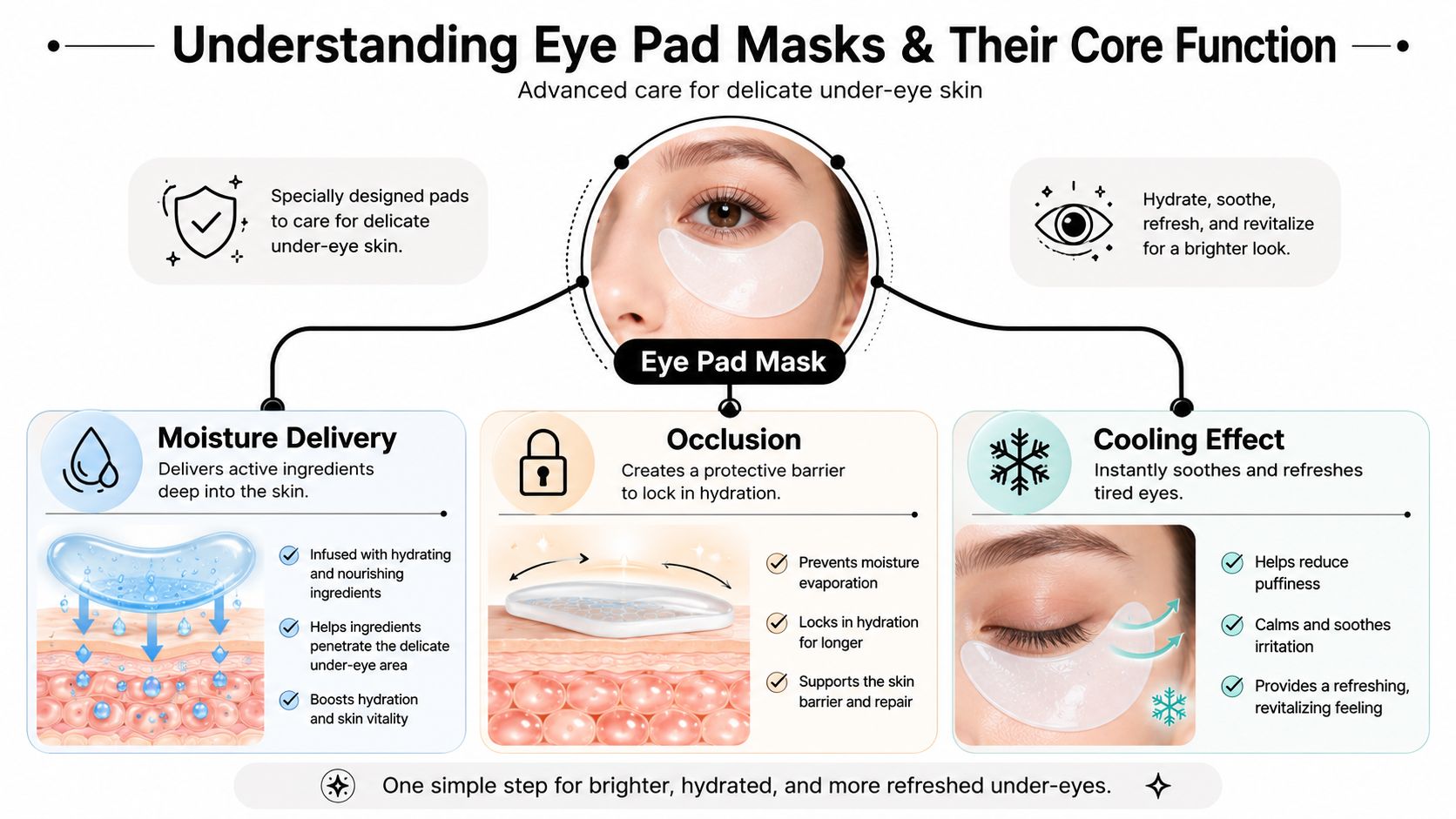
An eye pad mask works a bit like a well-designed dressing for the skin, except the aim is comfort, hydration, and a more rested look rather than healing a wound. It sits close to the under-eye area, reduces evaporation, and gives active ingredients a better chance to stay in contact with the skin. For clients, that often feels like a small treatment with an outsized sensory payoff.
The three mechanisms buyers should understand
The easiest way to explain the format is through a three-part concept map.
- Moisture delivery. The patch holds formulas against the skin so ingredients have time to work where they're placed.
- Occlusion. The material acts like a lid, slowing water loss and helping the under-eye area feel more supple.
- Cooling effect. A chilled patch can feel soothing and can make the eye area look less puffy for a short time.
Those three functions are why format matters. A gel patch usually feels more slippery and cooling, while a sheet-style pad may feel lighter and more fabric-like. The sensation is part of the product story, because customers often judge eye care by how it feels within the first minute.
Why the skin reacts differently under a patch
Under-eye skin is thinner and more delicate than much of the face, so even a short contact treatment can feel noticeable. A patch creates a controlled micro-environment. That means the formula is less likely to disappear into the air, and the cooling sensation is more consistent than if a client applied a serum on its own and waited.
A good eye pad mask is less about dramatic intervention and more about control, contact, and comfort.
That is also why retail staff should not describe it like a heavy cream or a full facial mask. Eye pad masks are usually a targeted, short-wear format. They make more sense when staff present them as a precise eye-area treatment that supports hydration and a fresher look, rather than a general-purpose skincare step.
Exploring Eye Pad Mask Types and Key Ingredients
Buyers often ask which format is “best”, but the better question is which format fits the clientele. Hydrogel, bio-cellulose, and cotton all solve the same basic problem in different ways. The right choice depends on what the customer expects to feel, how long the patch needs to stay in place, and how premium the product should appear on the shelf.
Format comparison for Swiss assortments
Hydrogel is the most obviously spa-like option. It tends to feel cool, flexible, and comfortably snug, which makes it strong for premium positioning and visible in-store theatre. Bio-cellulose often hugs the skin very closely, which can help it feel more precise and more luxurious, especially for customers who want a refined treatment texture. Cotton is usually the most familiar and straightforward format, which can make it approachable for everyday pharmacy shoppers who want a simpler entry point.
For buyers, the trade-off is practical. Hydrogel and bio-cellulose usually support a more premium ritual, while cotton may be easier to explain as a familiar skincare step. Environmental positioning also matters, because reusable or fibre-based formats can be framed differently from gel-based ones, depending on the retailer's sustainability story.
Ingredient classes that actually matter
Hyaluronic acid is common because it supports a plumper, more hydrated feel. Peptides are often used when the product wants to speak the language of firmness or anti-ageing. Botanical extracts usually add a soothing or sensorial angle, which is helpful for spa settings and for clients with more sensitive preferences.
The details matter more than the label. Ingredient concentration, molecular size, and the delivery medium all influence how a product behaves on skin. A high-end-looking mask still needs a formula that makes sense for the target use.
- For sensitive skin: look for short ingredient lists, low-fragrance positioning, and a calming story.
- For pigmentation concerns: keep claims cautious, because the strongest retail message is usually about appearance and freshness, not correction.
- For anti-ageing goals: focus on hydration, elasticity support, and short-term smoothing, not dramatic transformation.
Buying cue: if a supplier can't explain the role of the base material, the actives, and the wear experience, the assortment story will feel thin at the counter.
Swiss buyers don't need a giant ingredient lecture. They need a clean matrix that helps them sort products by sensation, claim style, and shopper profile. That's how the shelf turns from a mixed assortment into a curated offer.
Evidence-Based Benefits of Eye Pad Masks and Safety
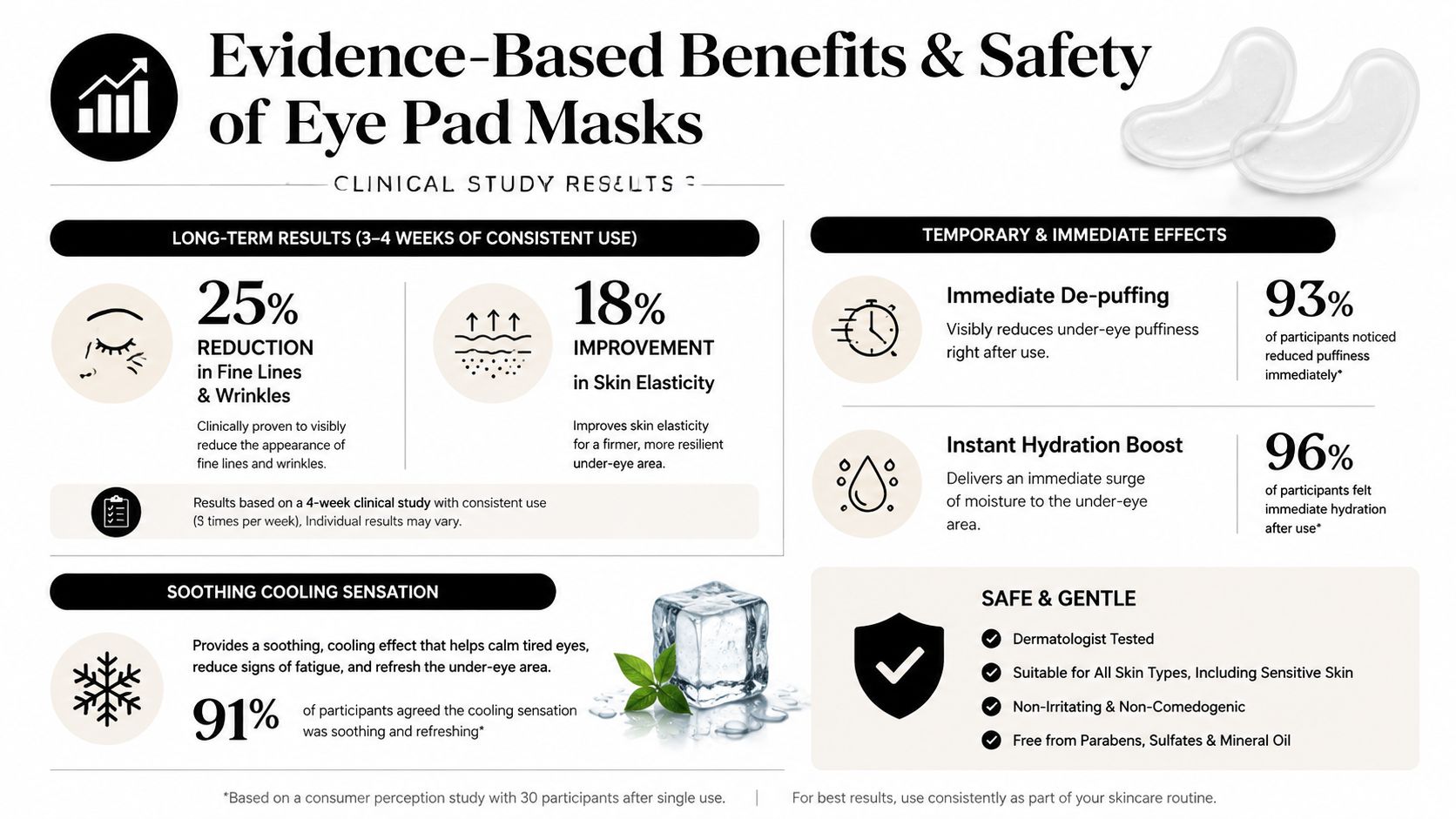
A buyer standing at the Swiss pharmacy counter often hears the same promise, brighter eyes, smoother skin, less fatigue. The evidence is narrower than the marketing copy, and that is exactly why it is useful. Eye pad masks can show visible improvements in wrinkles and dark circles after 4 weeks, and the authors of one peer-reviewed study reported that the anti-wrinkle pad showed efficacy in 3 weeks (PMC study). For retail teams, that gives a realistic window for trial, follow-up, and repeat purchase conversations.
What the evidence supports
The strongest retail story is the modest one. Eye pad masks can support a hydrated look, a soothed feel, and short-term visual freshness, which is the kind of change clients notice first in the mirror. The clinical benchmark above also reported improved appearance and elasticity around the eye area, so the product can be presented as a functional skincare item rather than a decorative add-on.
The safest way to explain the category is to compare it with a glass of water for the eye area. It may help the skin look more rested and feel more comfortable, but it does not rebuild the structure underneath. The literature on under-eye patches and masks treats these products as short-term hydration and soothing aids, not as reliable solutions for pigmentation or structural puffiness (PMC review). That distinction keeps the conversation grounded and helps staff avoid promising a result the product cannot consistently deliver.
Safety and claim discipline
Language matters at the counter. If a customer asks whether a patch “gets rid of eye bags”, the honest answer is that it may make the area look temporarily fresher and feel cooler, but it is not a structural correction tool. That kind of answer is clear, and in premium skincare it usually builds more trust than a bigger promise.
Useful script: “This kind of mask is best for a quick refreshed look, hydration, and comfort. It is not a long-term treatment for under-eye structure.”
Safety conversations should stay practical. Patch testing makes sense for clients with reactive skin, and staff should flag sensitivity to preservatives or added fragrance when the ingredient list suggests a risk. For Swiss pharmacies and spa teams, the goal is not to complicate the sale, it is to help the client use the product with confidence and avoid avoidable irritation.
The most useful retail habit is restraint. A benefit that is explained clearly and looks believable will usually perform better than a larger claim that feels inflated. In premium Swiss skincare, credibility is a commercial advantage.
Eye Pad Mask Application Guidance for Staff and Clients
A treatment that feels good can still underperform if the handling is sloppy. Cooling masks are especially sensitive to storage, touch, and timing, so staff need a repeatable routine that keeps the experience consistent from one client to the next. The manufacturer guidance below specifies a cooling step below 4°C for 1 minute before use, which is a simple but important comfort cue (Cosanum technical document).
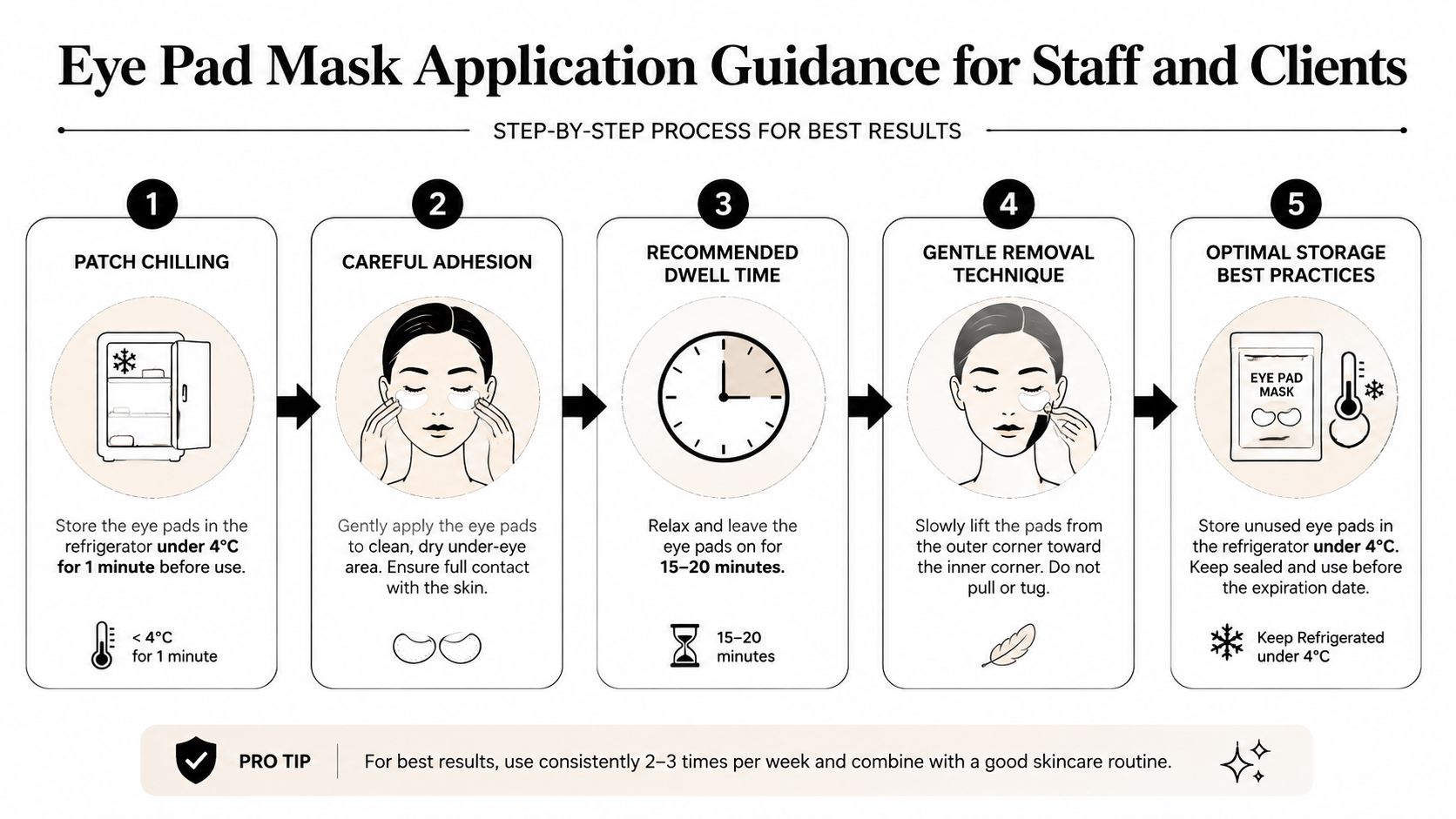
A simple staff flow
- Chill the patch. Keep the product within the recommended cooling range and, when required, cool it below 4°C for 1 minute before use so the treatment feels consistent and comfortable.
- Prep the skin. Clean, dry skin helps the patch sit properly.
- Place with care. Align the pad to the under-eye area without stretching the skin.
- Let it work. Use a short, sensible dwell time that suits the product format and the client's comfort.
- Remove gently. Lift from the edge rather than tugging at delicate skin.
The point of this routine is repeatability. If staff handle the patch roughly, the customer feels that immediately. If they explain the sequence calmly, the whole treatment feels more premium.
Storage and merchandising habits that help
Cooling formats should be stored so their temperature story stays credible. If the product is meant to feel chilled, it should not sit warming under harsh lights for long periods. Hygienic handling also matters between clients in spas, where the same presentation standards apply every time.
A few practical habits make a difference:
- Keep units protected: packaging should stay sealed until use.
- Train for touch control: staff should avoid unnecessary handling of the active surface.
- Standardise the demo: use the same demo language every time so clients don't hear mixed messages.
- Sell the next step: pair the patch with an eye cream or soothing serum when appropriate.
The staff script should be calm and specific. Clients usually don't need a performance. They need to know how the product feels, how long it stays on, and why the cooling step matters.
Certification Standards for Eye Pad Masks and Sourcing Checklist
Certification language can get messy fast, especially when suppliers throw around terms like natural, clean, organic, or cruelty-free without a clear document trail. For Swiss buyers, the safest approach is to treat certification as a sourcing filter, not a decorative label. If a claim matters on the shelf, it should also exist in the file.
What to ask suppliers for
A clean checklist should start with the basics. Ask for the certification documents, ingredient disclosure, batch traceability, and any testing records that support the product's intended use. If the patch is a reusable gel format, customs and material classification should also be part of the review.
The customs angle is not trivial. A Swiss customs ruling classified a two-piece cooling gel eye mask as a plastics household article under HS 3924.90.5650, with a 3.4% duty and an extra 7.5% for China-origin goods (customs ruling). For distributors, that means landed cost can change depending on material composition and sourcing origin.
Practical sourcing checklist
- Certification proof: ask for ECOCERT, organic, cruelty-free, or PETA documentation where relevant.
- Ingredient transparency: request the full INCI list and any allergen disclosures.
- Customs classification: confirm whether the product is treated as a reusable gel item or another material category.
- Batch consistency: verify that the same formula and construction are used across shipments.
- Retail suitability: check whether the product's claim language matches pharmacy, spa, or e-commerce use.
Buyers who skip documentation often end up re-learning the product at the border, not at the shelf.
For Swiss pharmacies, this paperwork matters because transparency is part of the value proposition. A customer who buys a premium patch wants reassurance that the product is not only pleasant, but also properly sourced and correctly described.
The cleanest assortments are usually the easiest to explain. That is true on the sales floor, and it is even more true when customs, compliance, and claims all need to line up.
Packaging Merchandising and Marketing Scripts for Eye Pad Masks
A shopper standing at the eye-care shelf should understand the offer within seconds. A cool display, clear grouping by need, and tidy premium cues usually do more than a long shelf talker. The product should read as a short, practical ritual with visible comfort, not as a beauty claim stretched too far.
Good merchandising starts by separating shopper intent. One customer wants a morning refresh, another wants a spa-like pause, and a third is looking for a small gift or add-on. If those paths sit in one pile, the range feels vague. If each group is shown by purpose, the choice becomes easier, like putting tea, coffee, and herbal blends in separate sections instead of one mixed basket.
The wording needs the same discipline. Under-eye patch content often blends immediate de-puffing with longer-term skin change, which is why staff scripts should keep the distinction clear and evidence-led. Say what the product can do in the moment, then avoid implying that a single patch session will produce lasting structural change.
Retail buyers in premium beauty and lifestyle can also learn from packaging language in other sectors. The article on boost your UK hospitality brand shows how presentation shapes first impressions before anyone has read the details.
Ready-to-use staff language
- Counter script: “This patch is a good choice if you want a cooler feel, a fresher look, and short-term hydration around the eye area.”
- Spa script: “We use it as a calming step so clients look and feel more rested before the facial ends.”
- Pharmacy script: “It suits someone who wants a quick comfort ritual and visible freshness, rather than a heavy overnight treatment.”
Email and newsletter copy should stay grounded too. Try phrases like “fresh-looking eyes in minutes”, “cooling comfort for tired days”, or “a simple eye ritual with a premium feel”. These lines are clear, and they do not drift into promises that the product cannot support.
Shelf placement should reinforce the same message. Chilled formats work well where they feel intentionally premium, clean signage should name the use case, and the visual language should stay closer to pharmacy-grade trust than spa fantasy. That mix helps a customer understand the product quickly, which is often what turns a first purchase into a repeat one.