
A customer stands in a Swiss pharmacy, comparing three shelves of serums and asking a deceptively simple question: does vitamin C go before hyaluronic acid? The right answer isn't another product recommendation. It's a clear skincare routine order that assigns every formula a job.
Swiss shoppers already have strong skincare habits. A population study found that 99.3% of respondents had used at least one leave-on personal care category during the previous year, while 1.6% had used all investigated categories. Among adults, face cream use reached 95.9% in women, and sunscreen use reached 85.7% in men. The same research found that 93% had applied sunscreen on at least one day during the previous summer or autumn period. These findings point to a practical retail opportunity: customers don't need more complexity. They need staff to organise familiar products into a routine they can follow. (Swiss population study on personal care use)
For pharmacies, spas, and e-commerce teams, the strongest recommendation is simple: sell the sequence first, then refine the formula. Certified natural, ECOCERT, Natrue, vegan, and cruelty-free preferences matter, but certification can't compensate for a cleanser that strips sensitive skin or a serum that overloads an already irritated barrier.
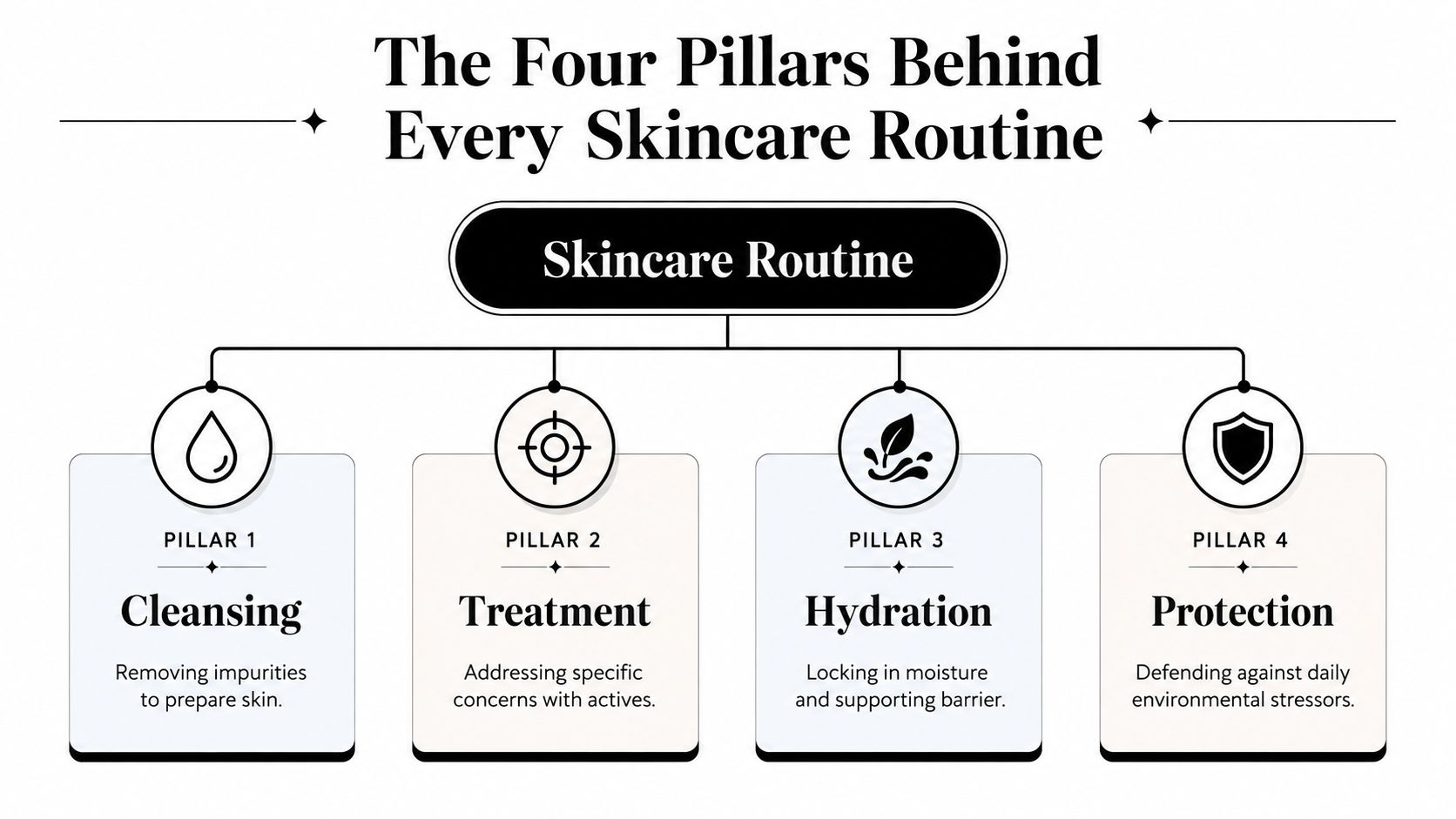
The Four Pillars Behind Every Skincare Routine
The four essential skincare routine steps are Cleanse, Treat, Moisturise, and Protect. These are functional positions, not rigid product categories. A toner, essence, or mist belongs in Treat when it delivers a targeted benefit. A moisturising serum may sit between Treat and Moisturise because its role is both to add water and to support comfort.
Cleanse
Cleansing removes sunscreen, make-up, excess sebum, sweat, and environmental residue so later products meet a clean surface. It shouldn't leave the face tight or squeaky. For Swiss pharmacy customers, the correct cleanser depends less on whether a product is labelled “natural” and more on whether the formula respects the customer's skin type, water exposure, and tolerance.
Treat
Treatment is where the customer's concern gets addressed. Vitamin C can support a brighter-looking complexion, niacinamide can suit customers focused on pores or uneven tone, and retinoids or exfoliating acids can serve more intensive evening routines. Staff should recommend one clearly defined treatment objective rather than stacking every active on the shelf.
Moisturise
Moisturising combines hydration and barrier support. Humectants attract water, while emollients and occlusive ingredients help reduce moisture loss. This is the comfort step, and it often determines whether a customer keeps using the routine.
Protect
Protection means daily sunscreen in the morning, with the formula matched to finish, sensitivity, complexion, and lifestyle. The Swiss research above shows that sun protection is already established in consumer behaviour, so pharmacies should present SPF as a routine essential rather than an occasional holiday product.
Retail rule: The order matters more than the brand. Actives do the targeted work, while textures decide whether customers enjoy using the routine.
For a more detailed explanation of step skincare routine order, staff can use this practical guide from Mesoderm RX as a useful educational reference. Morning and evening routines use the same pillars, but they don't use the same emphasis. The morning protects the skin from the day ahead. The evening removes daily build-up, introduces selected treatments, and supports comfort overnight.
Your Morning Routine in the Right Order
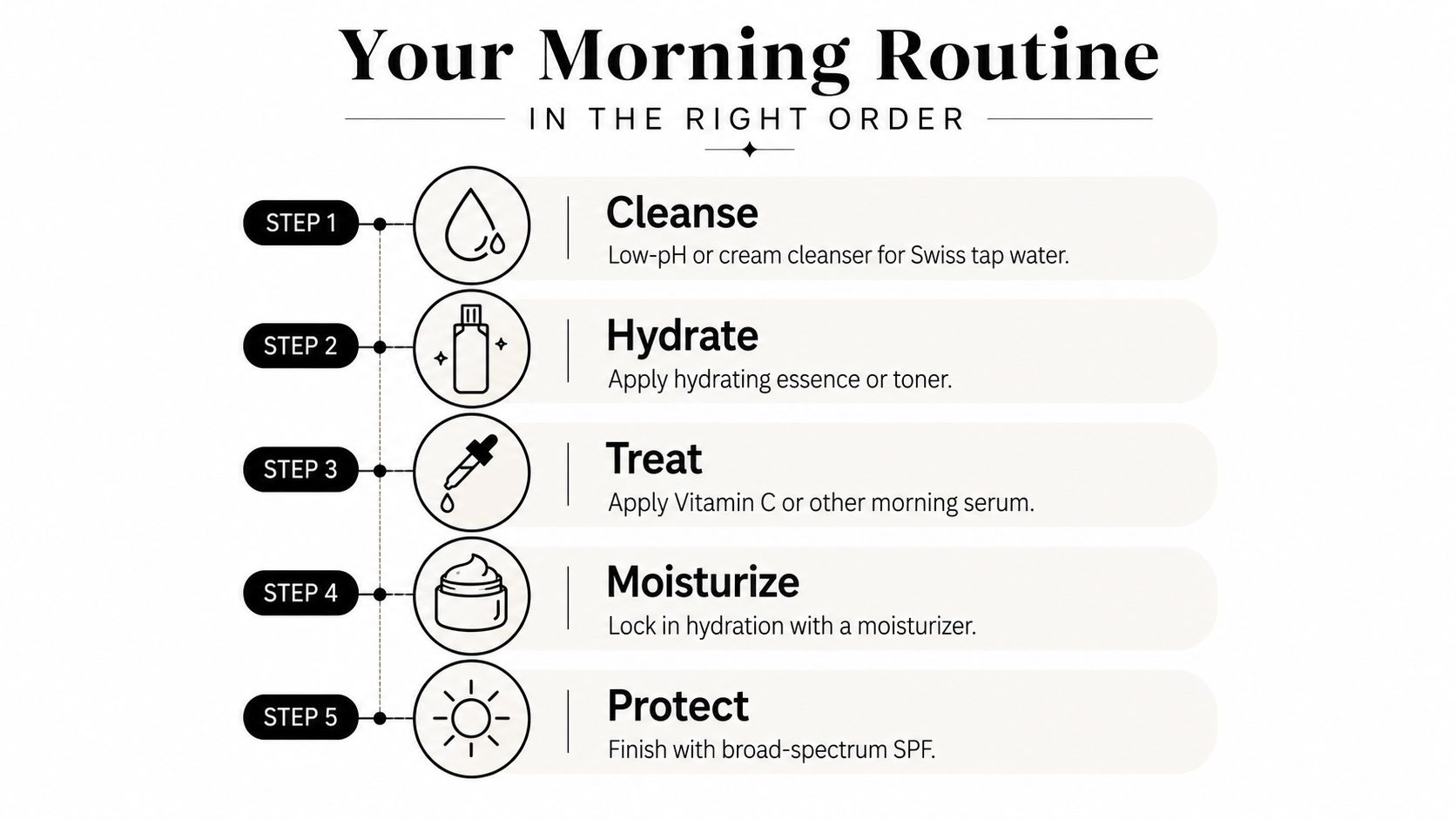
Morning skincare should feel light, efficient, and protective. The sequence is cleanser, hydration, targeted treatment, moisturiser, then sunscreen. Apply products from the thinnest texture to the richest, and allow roughly 60 seconds between steps when the formula needs time to settle.
Start with a low-pH or cream cleanser. Swiss tap water can feel drying for some customers, particularly when the skin is already sensitive or dehydrated, so avoid recommending a harsh foaming wash as the default. A gentle gel, milk, or cream cleanser should remove overnight residue without leaving tightness.
Follow with a hydrating essence or toner if the customer needs extra comfort or is using a treatment serum. This step isn't mandatory, but it can make a routine feel more balanced and help customers tolerate active products. Choose formulas with glycerin, panthenol, or hyaluronic acid when dehydration is the main complaint.
Choose one morning treatment
Match the serum to the concern, not to the customer's curiosity about the latest ingredient. Vitamin C suits brightness and antioxidant-focused routines. Niacinamide works well for customers concerned with visible pores, uneven tone, or barrier comfort. A peptide blend can be appropriate for customers beginning an early-ageing routine in their thirties.
Seal the serum with a day moisturiser containing humectants and light barrier-supporting ingredients such as ceramides. Oily skin usually prefers a fluid or gel-cream finish, while dry skin needs a more cushioning lotion or cream.
Finish with broad-spectrum SPF. A minimum of SPF 30 is the practical recommendation for daily use, with higher protection useful for intense outdoor exposure, mountain settings, and extended summer activity. Staff should merchandise sunscreen beside day moisturisers, not isolate it in a separate sun-care aisle. That placement makes the complete morning routine visible and gives customers a logical reason to add protection.
Your Evening Routine in the Right Order
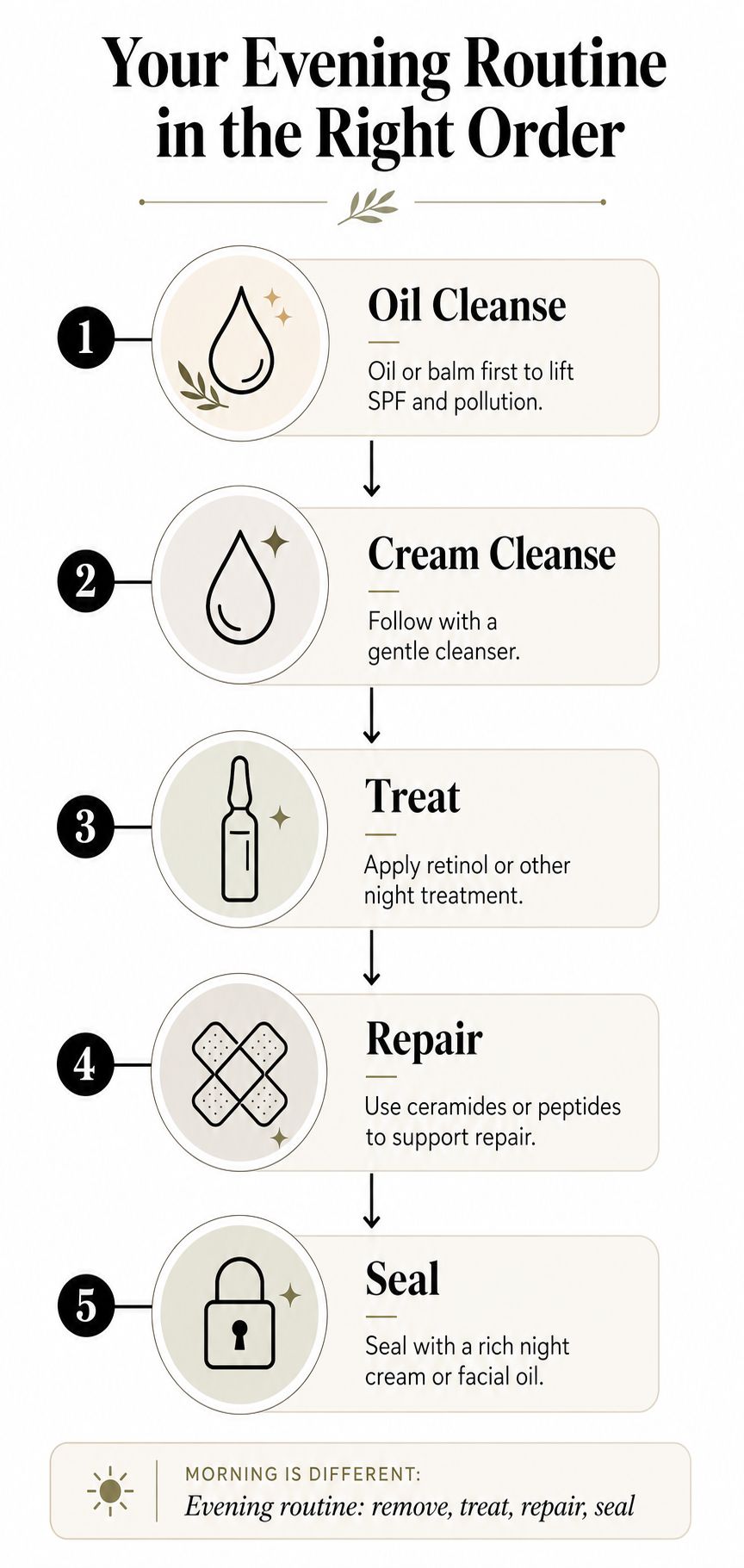
Evening care removes the day before it treats the skin. The morning sequence ends with SPF. The evening sequence begins with removing it.
Use an oil cleanser or balm first when the customer wears sunscreen, make-up, or water-resistant products. Oil-based textures help lift oily residue without aggressive rubbing. Follow with a gentle water-based cleanser to remove what remains and create a clean base for the rest of the routine.
Reserve stronger treatments for night
Evening is the sensible place for retinoids, AHAs, BHAs, or bakuchiol when the customer's skin can tolerate them. These products address defined concerns, but they shouldn't be introduced together. A customer with sensitive skin may need a soothing serum and barrier cream before considering an exfoliant or retinoid.
A reparative serum can follow the treatment, particularly when it contains peptides or hydrating ingredients. Then apply a night cream with squalane, ceramides, shea, or other emollient ingredients. Central heating during Swiss winters can leave indoor air dry, so customers with tight or flaky skin often benefit from richer evening textures and a balm on vulnerable areas.
Eye care comes after the main treatment and before the final sealing layer. A dedicated eye product is optional, but a customer who wants one should apply it gently rather than dragging the skin.
Pharmacy coaching: Double cleansing is an upgrade only when the customer has something substantial to remove. For everyone else, one gentle cleanser may be enough.
Position a cleansing balm beside SPF and make-up removal products, then connect it to the evening regimen rather than presenting it as an isolated add-on. Introduce active treatments gradually, ideally one at a time, and reduce frequency if the customer develops burning, persistent redness, or pronounced tightness. The best evening routine is the one the customer can repeat without barrier fatigue.
Tailoring the Routine by Skin Type, Age, and Concern
The base order stays stable. Cleanse, treat, moisturise, protect still works across profiles. What changes is the cleanser's strength, the treatment selected, the texture of the moisturiser, and how often an active appears.
| Skin profile | Routine adjustment | Product priorities | Avoid or limit |
|---|---|---|---|
| Oily or blemish-prone | Keep cleansing gentle and treatments targeted | Lightweight moisturiser, niacinamide, salicylic acid, non-comedogenic SPF | Harsh scrubs, over-drying gels, repeated stripping |
| Dry or sensitive | Reduce active load and prioritise barrier comfort | Cream cleanser, ceramides, panthenol, richer moisturiser | Multiple acids, strong fragrance, frequent product changes |
| Skin in the twenties | Build consistency before correction-focused layering | Basic hydration, non-comedogenic SPF, simple treatment selection | Chasing every intensive active |
| Skin in the thirties and forties | Add antioxidant or retinoid support when tolerated | Vitamin C, peptides, carefully introduced retinoids | Combining several high-intensity treatments |
| Mature skin | Favour nourishment without sacrificing gentleness | Peptides, humectants, emollients, richer creams | Over-exfoliation and drying cleansers |
| Hyperpigmentation concerns | Make protection the morning anchor | Sunscreen, azelaic acid, vitamin C | Treating discolouration without consistent SPF |
| Dehydrated skin | Layer water-binding ingredients beneath a sealing cream | Glycerin, hyaluronic acid, panthenol, occlusive moisturiser | Applying only a light serum and stopping there |
| Rosacea-prone skin | Keep the routine short and calming | Fragrance-free, soothing cleanser and moisturiser | Multiple acids, essential oils, aggressive scrubbing |
Retail by concern, not by age
Age can help start a conversation, but it shouldn't dictate the display. A customer in their twenties may have a compromised barrier, while a mature customer may have oily, blemish-prone skin. Grouping products by barrier, blemish, hydration, ageing, and sensitivity lets staff solve the actual problem.
A person may fit multiple categories. For example, someone with uneven skin tone might also have sensitive skin. Someone seeking anti-ageing care might also need an oil-control cleanser. Recommend the smallest routine that addresses the primary concern, then add a second treatment only after the first has proved comfortable.
Key Actives, Ingredients, and Pairing Rules
Treat ingredients as tools, not badges. A premium serum doesn't earn its place because its label lists many actives. It earns its place because the formula addresses a defined concern, suits the customer's tolerance, and fits the routine without creating unnecessary irritation.
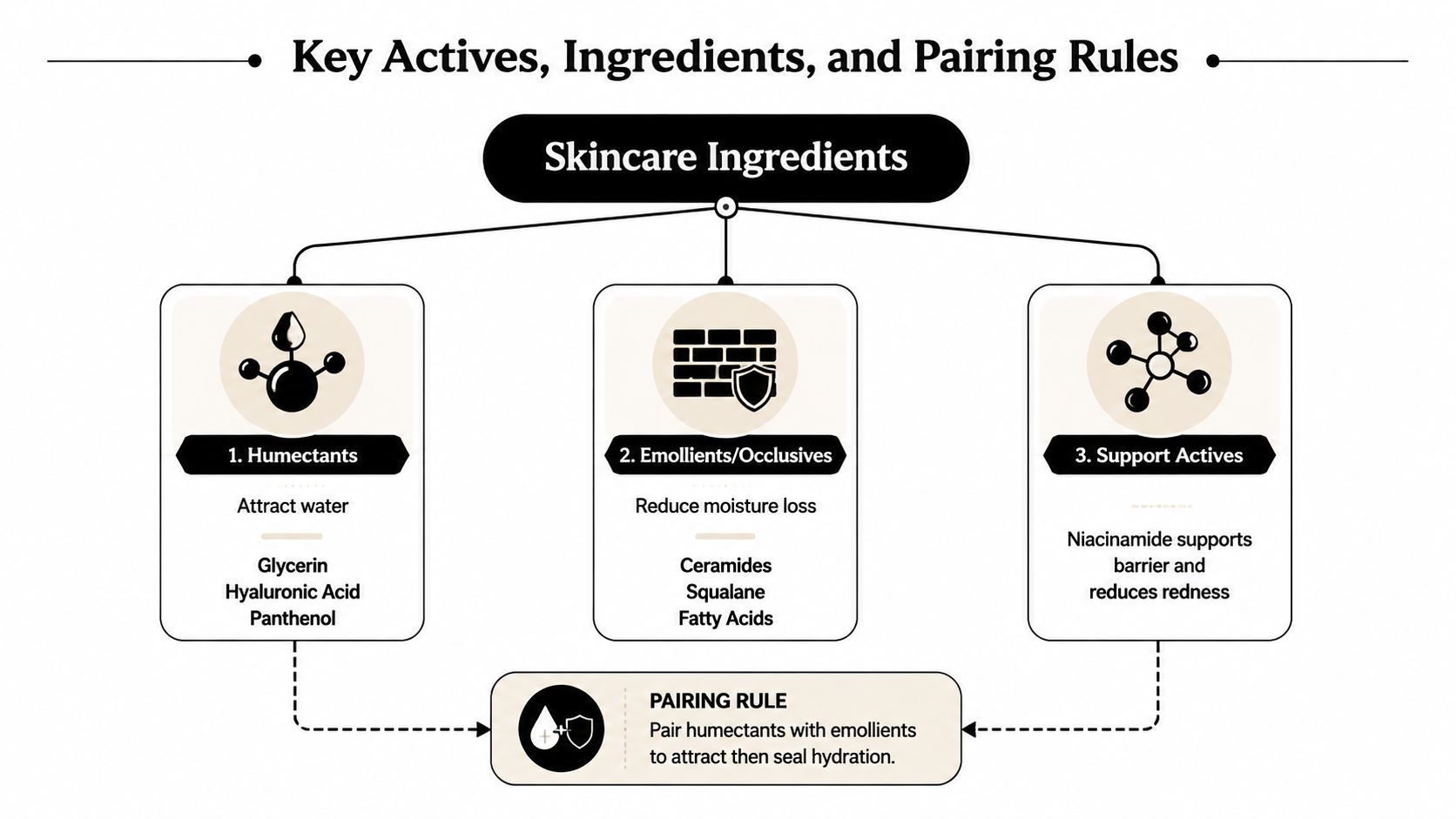
Humectants such as glycerin, hyaluronic acid, and panthenol attract water. They work best when followed by an emollient or occlusive layer that helps reduce moisture loss. Ceramides, squalane, and fatty acids support the protective feel of the barrier, making them useful partners for dehydrated or dry skin.
Niacinamide is a versatile support active for barrier comfort and uneven-looking tone. Vitamin C can support antioxidant-focused morning care when properly formulated. Exfoliating acids, retinoids, and benzoyl peroxide are more targeted tools, and their irritation potential makes introduction speed more important than ingredient quantity.
Use a pairing rule
Apply water-based products before richer ones. In the morning, that normally means serum, moisturiser, then SPF. In the evening, it means treatment, repair-focused serum, moisturiser, and an optional facial oil or balm.
Keep retinoids, strong acids, and benzoyl peroxide in carefully planned routines. Benzoyl peroxide should generally remain separate from tretinoin unless a clinician gives different advice. Don't automatically combine vitamin C with strong exfoliating acids in one routine, particularly for a customer who already reports sensitivity.
Natural ingredients still require judgement. Essential oils, citrus extracts, and concentrated fruit acids can irritate reactive skin, so “natural” isn't a substitute for patch testing. Vegan and cruelty-free claims, along with ECOCERT certification, can meet important shopper expectations, but staff should always put formula suitability first.
For customers seeking a more clinical explanation of treatment-focused products, this medical grade skincare guide from ProMD Health provides useful context. In-store, the practical advice is straightforward: introduce one active at a time, test it on a limited area for several days, and stop if swelling, burning, or persistent redness develops.
Common Routine Mistakes and Quick Fixes
The most expensive routine is often the one a customer abandons. Irritation usually comes from too much, too soon, not from a lack of products.
Customers commonly add a new cleanser, exfoliant, retinoid, vitamin C serum, and eye cream in the same week. If the skin reacts, nobody can identify the cause. Recommend one meaningful change at a time, and ask the customer to return for refinement rather than selling an entire shelf immediately.
| Common mistake | Why it causes problems | Quick fix |
|---|---|---|
| Adding several products together | Reactions become impossible to trace | Change one product at a time |
| Using too much active | Higher quantity can increase irritation without improving the routine | Use the amount stated on the product and follow its frequency |
| Skipping sunscreen | UV exposure can undermine tone-focused and resurfacing routines | Finish every morning with broad-spectrum SPF |
| Exfoliating too often | Scrubs, brushes, and acids can leave skin tight, red, or reactive | Keep exfoliation controlled and adjust to tolerance |
| Applying rich products first | Heavy textures can interfere with comfortable layering | Move from lightest to richest |
| Treating every concern at once | The routine becomes difficult to maintain | Select one primary concern and one targeted active |
| Keeping the same texture year-round | Winter and summer can create different comfort needs | Use richer creams in dry conditions and lighter layers in humidity |
A facial retinoid often needs only a small amount, while cleanser and moisturiser should be sufficient to spread evenly or rinse cleanly. Customers shouldn't judge a routine after only a couple of applications. Consistency, comfort, and follow-up matter more than a dramatic first impression.
Troubleshooting principle: If the skin burns, simplify. Return to a gentle cleanser, moisturiser, and sunscreen before rebuilding treatment steps.
Seasonal Adjustments and Retail Tips for the Swiss Market
Swiss climate changes should influence texture and frequency, not the fundamental routine order. In winter, cold outdoor air, low humidity, and indoor heating can make the barrier feel compromised. Reduce aggressive exfoliation, move towards creamier moisturisers, and keep a balm available for dry patches around the nose, lips, and cheeks.
Summer requires a lighter feel without reducing protection. Use fluid hydration beneath broad-spectrum SPF, and recommend reapplication during outdoor activity. Customers travelling to mountain areas should understand that cool air doesn't remove the need for sun protection. A portable moisturiser can also help customers moving between dry outdoor air and heated interiors.
| Season or setting | Routine priority | Retail and merchandising focus |
|---|---|---|
| Winter and heated interiors | Cleanse gently, support the barrier, seal dry areas | Feature cream cleansers, ceramides, balms, and richer night creams |
| Spring transition | Reassess sensitivity and treatment tolerance | Build flexible hydration and concern-led treatment groupings |
| Summer and outdoor commuting | Lightweight hydration and consistent SPF | Merchandise SPF beside moisturiser, cleanser, and after-sun comfort |
| Mountain and high-exposure settings | Protection, reapplication, and barrier comfort | Offer high-protection options, protective textures, and travel formats |
| Spas and wellness settings | Sensorial application with clear functional roles | Present cleanse, treat, moisturise, and protect as complete rituals |
| E-commerce | Make order and skin profile obvious | Use routine bundles, ingredient filters, and visible sensitivity guidance |
Build displays around complete regimens
Swiss cosmetics spending was estimated at CHF 2,045.3 million in 2025, with facial care estimated at CHF 363.4 million and a 38.76% market share, according to the Swiss premium skincare market report. Facial care deserves prominent, organised space, but the display should help customers assemble a routine rather than compare isolated hero products.
The broader Swiss study covering 759 people aged from 0 to 91 tracked 22 personal care products and found that face cream, hand cream, and sunscreen were among the most common leave-on products. (Swiss product-use study) That breadth supports age-aware recommendations, especially for families, but it doesn't justify one fixed routine for everyone.
Use certified natural, cruelty-free, and ECOCERT-verified options where they fit the customer's clean-beauty priorities. Keep fragrance-free, sensitive-skin, non-comedogenic, and finish descriptions visible. beautysecrets.agency supplies Swiss trade partners with natural and ethically sourced cosmetic and pharmaceutical ranges, including certified and cruelty-free options across facial care, body care, spa cosmetics, and multipurpose balms. Staff should still recommend each product according to formula suitability, not certification alone.
The evidence supports a structured approach. A clinical routine trial found that an advanced regimen outperformed a standard routine for superficial and deep hydration, roughness, mean pore area, melanin heterogeneity, and crow's-feet wrinkle depth. (Clinical skincare routine trial) The commercial lesson is direct: pharmacies, spas, and online retailers should merchandise protect, hydrate, and repair as connected jobs, then train staff to match the full sequence to skin type, exposure, season, and tolerance.
beautysecrets.agency helps Swiss pharmacies, spas, retailers, and e-commerce partners build clean-beauty assortments around practical skincare routine steps, from cleansing and treatment to moisturising and SPF. Visit beautysecrets.agency to explore natural, certified, and ethically sourced ranges suited to differentiated Swiss skincare recommendations.