You're probably already in the familiar spot: a Swiss spa buyer has a clean, disciplined brand, a demanding clientele, and a shortlist of overseas resorts that all look good on paper. The problem isn't finding a beach hotel with a spa. The problem is finding an adults-only property that can support a serious retail, treatment, and brand-partnership strategy without creating compliance headaches or operational friction.
Corallium Dunamar by Lopesan Hotels deserves attention because it sits in a part of Gran Canaria where leisure demand, beach access, and multi-outlet resort activity naturally support ancillary spend, but it only works for Swiss partners if the brand fit is tight and the logistics are handled properly. This is not a casual “nice hotel, nice spa” decision. It's a partnership question about guest profile, product alignment, distribution discipline, and whether the resort can carry premium but accessible wellness retail in a way that feels credible, not pasted on.
Overview of Corallium Dunamar by Lopesan Hotels
A Swiss spa director visiting Playa del Inglés would read Corallium Dunamar by Lopesan Hotels very differently from a holidaymaker. The resort matters because it sits inside a mature leisure market, not a speculative one, and that changes how you assess its potential as a retail or spa partner. The key question isn't whether the hotel attracts sun-seekers. It does. The core question is whether its adults-only positioning, resort format, and guest rhythm create the right setting for wellness-led merchandising, treatment add-ons, and co-branded experiences.
The property is officially listed as an adults-only hotel with a minimum check-in age of 18, check-in at 14:00, check-out at 12:00, and a 4-star classification, registered at Calle Helsinki, 8, 35100 Playa del Inglés. Those details matter because they tell you the hotel operates in a structured leisure segment rather than a loose boutique category. For Swiss partners, that usually means clearer service standards, more predictable guest flow, and a better foundation for partnership planning. The official tourism listing also confirms the hotel's place inside the Canary Islands accommodation ecosystem, which is useful when you're screening cross-border partners for legitimacy and operational maturity. Official hotel listing for Corallium Dunamar by Lopesan Hotels
What makes it relevant to Swiss buyers
The resort is not chasing everyone. That's the advantage. Adults-only properties tend to attract guests who value calmer pacing, privacy, and a more controlled atmosphere, which suits Swiss retail and spa brands that sell clean formulations, sensorial rituals, marine concepts, and premium body care rather than loud mass-market positioning.
For a Swiss partner, that means the hotel can support more than passive placement. It can support a curated retail edit, treatment-room integration, and guest-room amenity logic that feels deliberate. The fit is strongest for brands that want to appear refined, coastal, and credible in a resort environment without drifting into luxury excess.
Practical rule: if your brand depends on trust, texture, and repeat purchase, adults-only resort spas are usually better partners than family-heavy properties.
Property Profile and Guest Demographics at Corallium Dunamar
Start with the format. Corallium Dunamar by Lopesan Hotels operates with 273 rooms, which puts it in the upper mid-scale leisure bracket rather than a boutique niche. For Swiss suppliers, that scale changes the partnership equation. It supports steadier stock planning, more predictable guest turnover, and wider use cases for amenity kits, retail presentation, and treatment-linked sampling.
The adults-only model sharpens the profile further. A property that excludes minors usually delivers a calmer pace, clearer messaging for couples and solo travellers, and fewer clashes between wellness expectations and family leisure use. That does not make it an automatic spa partner, but it does make it easier to build a focused guest journey around rest, body care, and sensorial routines.
Key property details
| Attribute | Detail |
|---|---|
| Property | Corallium Dunamar by Lopesan Hotels |
| Location | Playa del Inglés, San Bartolomé de Tirajana |
| Classification | 4-star |
| Guest policy | Adults-only |
| Minimum check-in age | 18 |
| Check-in time | 14:00 |
| Check-out time | 12:00 |
| Registered address | Calle Helsinki, 8, 35100 Playa del Inglés |
| Room count | 273 |
Swiss partners should read that table as a commercial filter, not a brochure. The guest base is likely to respond best to products that feel restorative, easy to understand, and visibly premium without becoming intimidating. Marine-based skincare, organic body care, fragrance-light formats, and retail stories that connect relaxation with visible care all fit this setting.
The 4-star positioning is useful for another reason. It signals service discipline without narrowing the audience to ultra-luxury buyers. That usually broadens the workable assortment. You can move past hero SKUs and build a stronger conversion ladder with body lotion, cleansing essentials, after-sun care, and spa-linked gift formats that match resort use.
For brands that need a clear benchmark on room-ready textiles and guest comfort cues, the ultimate guide to hotel robes is a useful reference point.
The wrong move is to over-design for prestige. In this kind of hotel, guests want calm confidence, not theatrical luxury.
Location and Market Positioning
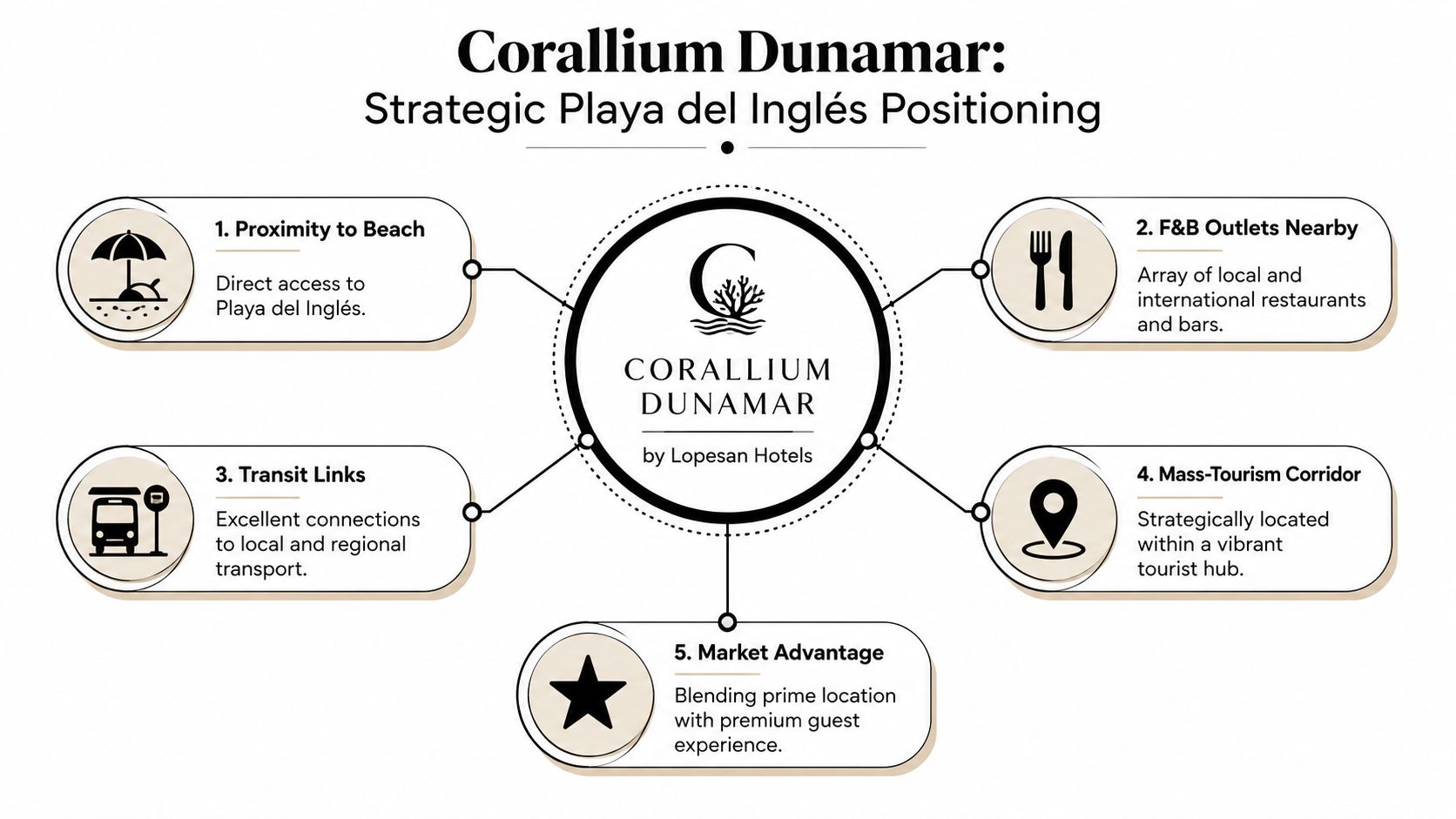
Playa del Inglés is not a quiet fringe market. It is one of Gran Canaria's best-established tourism corridors, and that gives Corallium Dunamar by Lopesan Hotels a built-in advantage that matters for Swiss retail and spa partners. If you're thinking about co-branded wellness products, location is never just geography. It's distribution, behaviour, and spend logic.
The hotel sits about 656 feet from Playa del Inglés Beach, and its on-site setup includes two restaurants, three bars, a fitness area, a pool bar, terrace, and garden. That combination signals a property built to capture spend across more than just the room rate. Guests are already moving through food, drink, leisure, and relaxation touchpoints, which creates multiple opportunities for product visibility and treatment attachment. Guest Reservations listing with beach distance and amenities
Why the location matters commercially
Beach proximity is more than a comfort feature. It shapes how guests use the day. A short walk to the sea encourages repeat movement between rooms, poolside areas, and social spaces, which is exactly where retail visibility matters. A Swiss spa brand that wants to place after-sun care, body mist, moisturising balms, or marine recovery products will do better in this setting than in an inland business hotel.
The multi-outlet F&B layout also supports ancillary capture. When guests circulate through restaurants and bars throughout the day, they're more exposed to small retail prompts, spa discovery moments, and branded sampling. That makes the hotel more suitable for cross-sell mechanics than a single-purpose property.
The market position is straightforward. This is an accessible resort environment with enough scale to support commercial partnerships, but not so much exclusivity that the operation becomes rigid or inaccessible. For Swiss brands, that means you can test a partnership without betting on a tiny audience.
Five location advantages that matter
- Beach proximity: easy guest movement between sea, pool, and spa touchpoints.
- F&B density: multiple consumption occasions, which helps retail and sampling.
- Resort corridor placement: strong visibility inside an established tourism flow.
- Adults-only atmosphere: more predictable guest pacing for wellness retail.
- Ancillary spend potential: more chances to attach products to the stay.
Accommodations and On-site Amenities
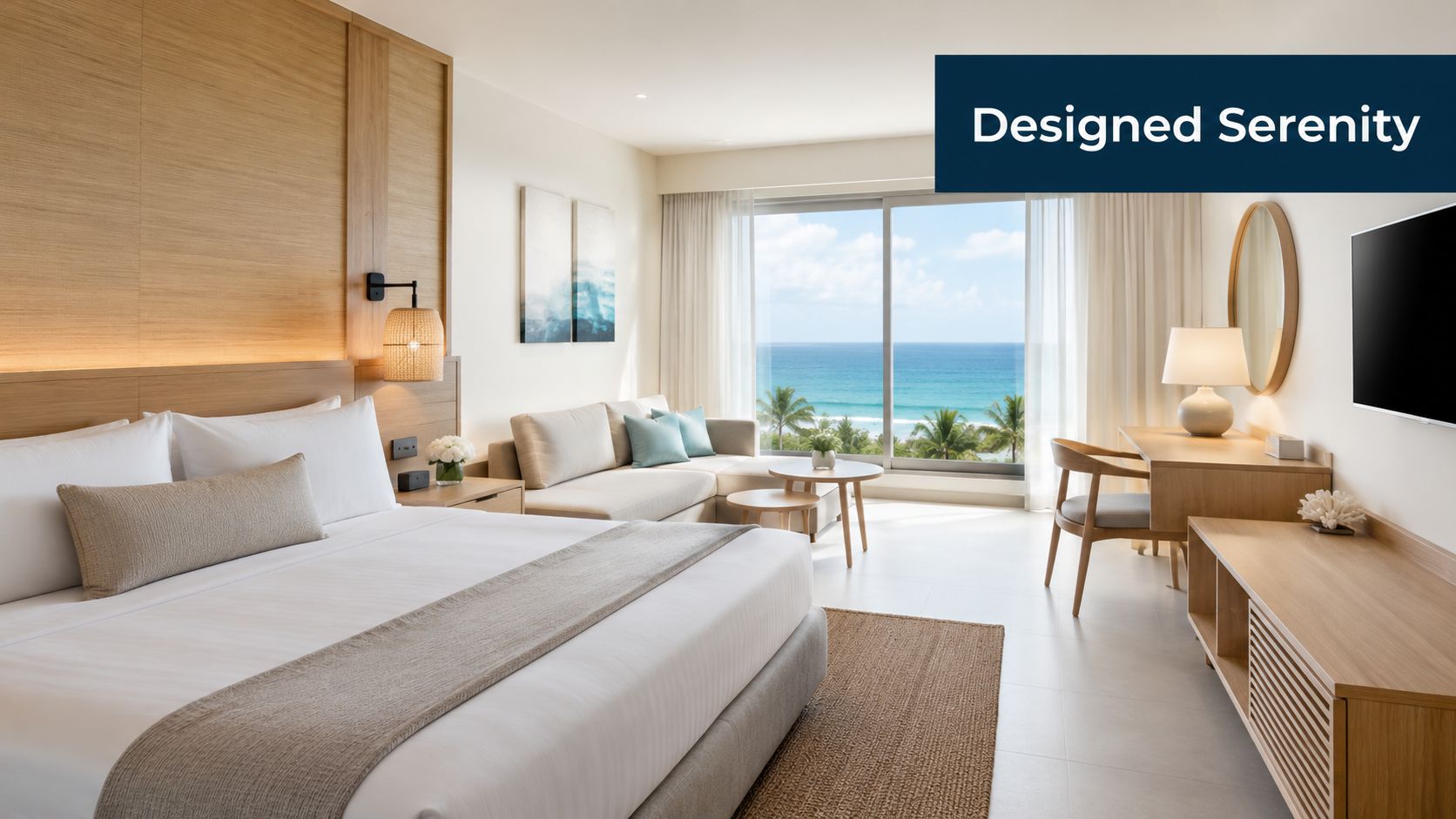
A hotel like this should be judged by how reliably it supports stay-based retail and spa use, not by room décor alone. With 273 rooms, Corallium Dunamar by Lopesan Hotels has enough scale to support stable housekeeping routines, repeatable guest handling, and consistent partner execution. For Swiss retailers and spa brands, that matters because a property of this size can keep a retail point of sale supplied, maintain standardised presentation, and absorb branded amenity programmes without turning every delivery into a special case. Trip.com property listing for room count and operational scale
The room product also needs to be read as part of the wider guest journey. A modern room with a balcony and an easy transition to the rest of the property supports a guest who expects comfort, recovery, and a clear link between private space and shared resort spaces. That is the right setting for a spa-minded retailer to place products that belong in a beach stay, especially sun care, body recovery, hydration, and relaxed resort routines.
What Swiss partners should look for in the room experience
Keep the room-level offer simple and functional. Amenity kits should be compact, useful, and immediately relevant to a beach resort stay. Guests do not want a complicated skincare story in the room. They want products they can use at once, then buy again if the experience feels credible.
Soft goods matter too. If the room package includes robes, towel quality, or similar comfort cues, they shape how the guest reads the spa offer before a treatment is even booked. A robe that feels good in use supports the brand story, while a weak one drags the whole impression down. The ultimate guide to hotel robes is a practical reference point for any partner planning that part of the collaboration.
The adults-only format makes soft luxury easier to sell. You are not competing with family entertainment or noise-heavy programming. You are selling comfort, calm, and recovery, which gives signature body care and retail storytelling a much cleaner setting than a crowded resort with mixed-use pressure.
Later in the stay, the common areas become the conversion points. Guests moving between the pool, terrace, and restaurants are more likely to notice a retail display, a small promotional card, or a consultation desk near the wellness area. That is where the commercial value usually appears, through visible, repeated contact rather than broad brand messaging.
Spa and Wellness Offerings
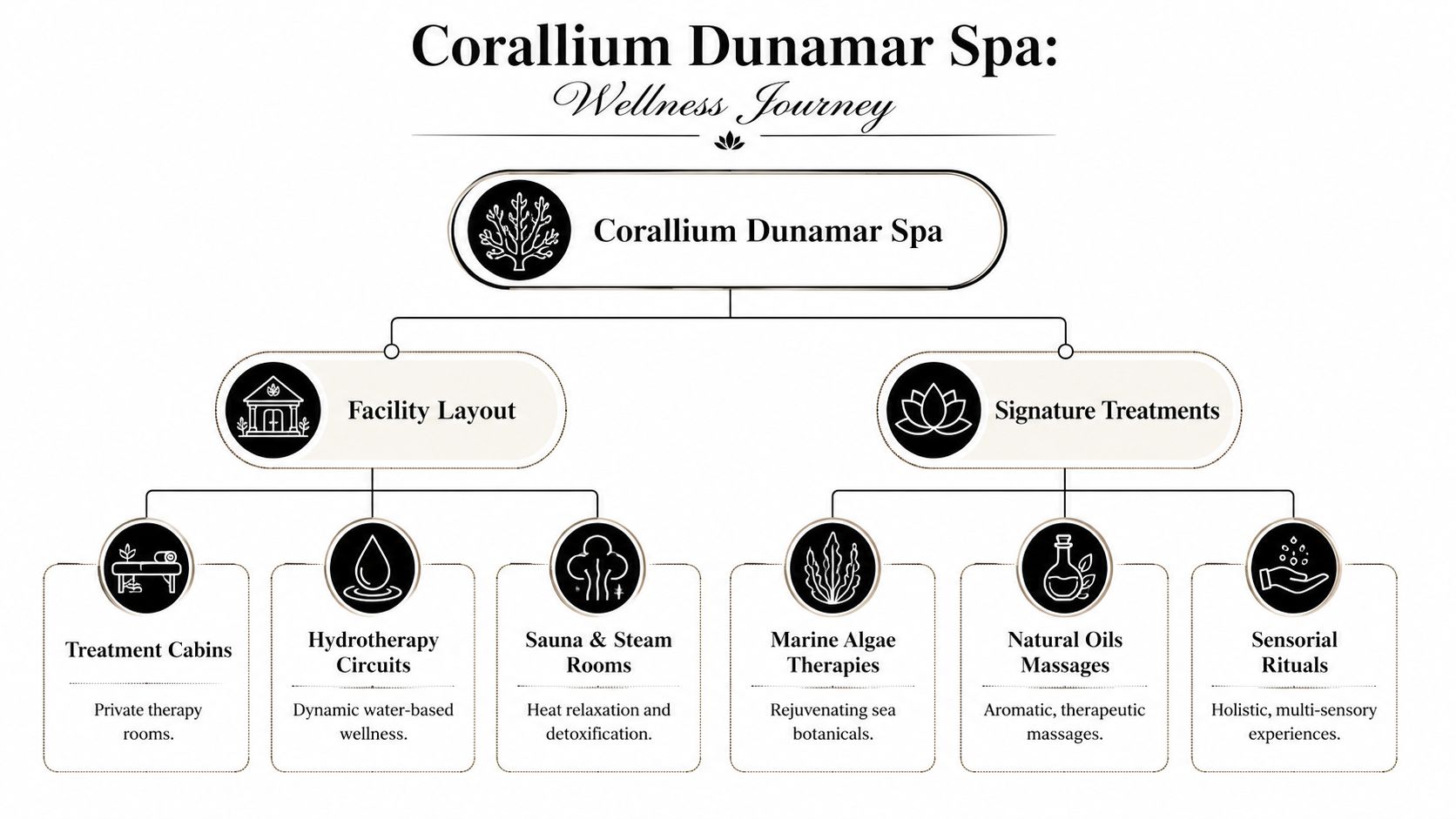
For Swiss partners, the spa angle is where this property becomes interesting. The adults-only setting already supports quiet, recovery-led use. The wellness offer should therefore be treated as a brand environment, not just a service list. If you're selling natural skincare, marine lines, or sensorial body care, the hotel's spa context gives you a credible stage.
The strongest fit is a menu built around marine algae therapies, natural oils massages, and sensorial rituals. Those themes match the destination well and give Swiss brands a clean narrative to work with. They also support retail conversion because the treatment itself can introduce the guest to the product category in a tactile, memorable way.
How to structure a wellness partnership
Start with the facility logic. Treatment cabins should remain private and calm, because privacy supports premium perception. Hydrotherapy circuits, if present or added through programming, should emphasise restoration rather than spectacle. Sauna and steam rooms, where they fit operationally, work best when tied to recovery and relaxation, not overpromised detox language.
Next, map the products to the treatment sequence. Marine-based creams, nourishing oils, and gentle cleansers belong in the room and in the spa backbar. They shouldn't be scattered randomly across the outlet. The more coherent the sensory language, the easier it is for the guest to understand what the brand stands for.
For formula education, a good companion reference is the guide to peptide serums for youthful skin. Even when the spa's main story is marine or botanical, Swiss buyers often need a second educational layer that explains active ingredients in a way retail teams are able to sell.
What to prioritise in treatment design
- Marine story: use sea-inspired positioning where it feels authentic.
- Low-fragrance formats: keep the experience comfortable for broad guest use.
- Fast understanding: guests should know the benefit in one sentence.
- Retail continuity: every treatment should point to a take-home product.
- Staff confidence: therapists must explain the line clearly and consistently.
The spa does not need to be overloaded with claims. It needs to be believable. That's the actual currency in a resort spa partnership, especially with Swiss buyers who will spot gimmicks quickly.
Partnership Opportunities with Corallium Dunamar Spa
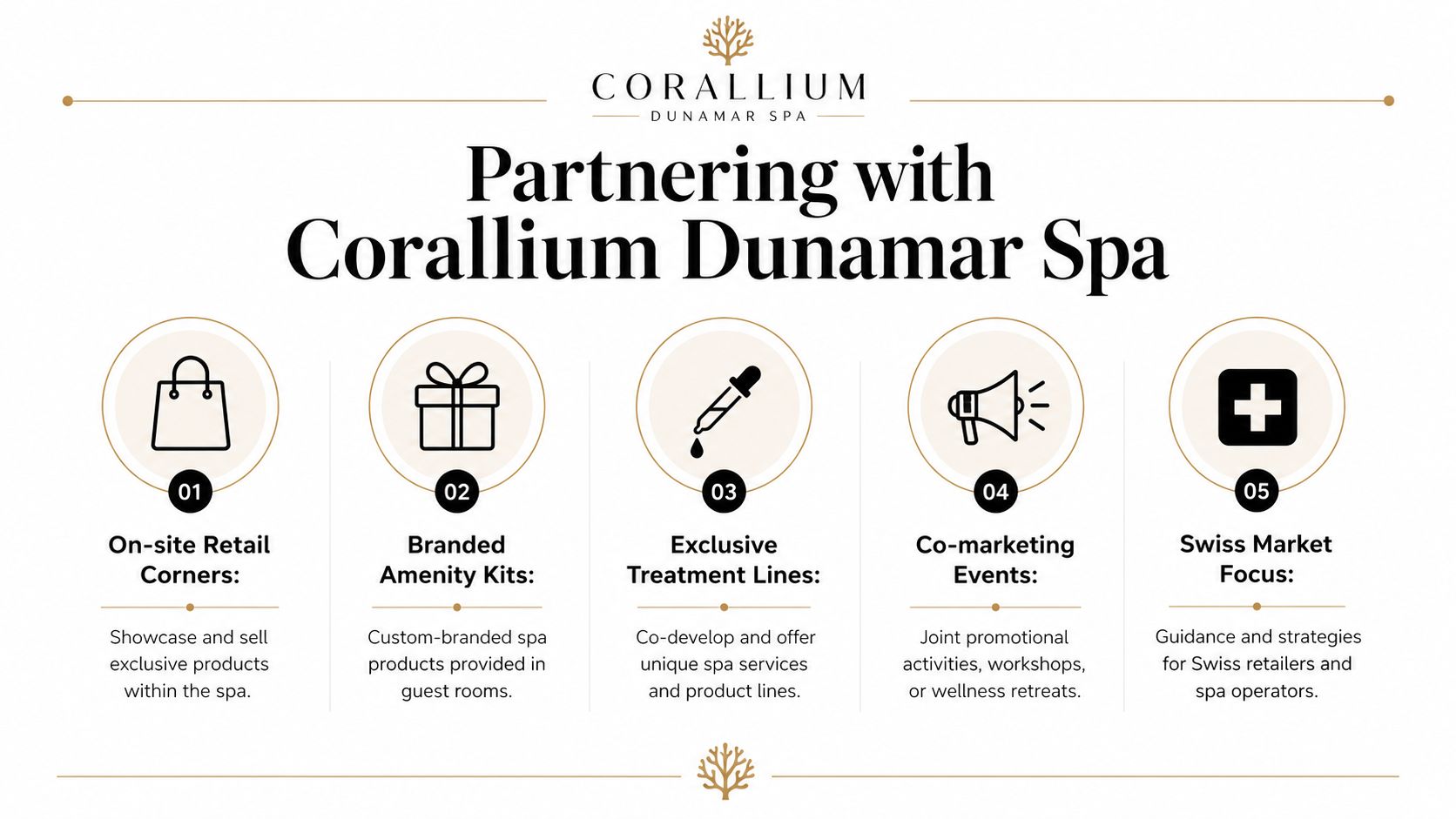
The best partnerships here are not broad, vague sponsorships. They are tightly designed collaborations that place your product where the guest already trusts the environment. Swiss retailers should be looking for specific, measurable placement opportunities, not just brand mentions.
The partnership models that actually make sense
- On-site retail corners: a compact, well-curated selection near the spa or wellness route works better than a large, unfocused display. Guests in resort mode want quick decisions.
- Branded amenity kits: these are ideal if the assortment is practical, premium, and clearly tied to the stay, such as body care, cleansing, and after-sun support.
- Exclusive treatment lines: a co-developed menu gives your brand more credibility than static shelf placement because the guest experiences the product in use.
- Co-marketing events: intimate workshops, launch sessions, or wellness tastings can work if they stay aligned with the hotel's adults-only tone.
- Swiss market focus: if your retail strategy depends on Swiss distribution after the trip, build in follow-up messaging that matches the expectations of Swiss pharmacies, spas, or e-commerce channels.
For Swiss retailers, the commercial advantage is clear. A resort spa partnership lets you prove how a product behaves in a live hospitality setting before scaling it into other channels. That is valuable because hotel guests often respond to texture, scent, and use experience faster than they do to packaging alone.
How to structure the deal
Start with product ownership and replenishment terms. If the hotel is going to carry stock, someone needs to control presentation standards and reorder logic. Then define the revenue model, whether that means wholesale, concession, or a service-led hybrid. Do not leave treatment retail and backbar supply inside the same vague clause. They're different businesses.
You also need guardrails on brand use. The hotel should not improvise your messaging, and your brand shouldn't force clumsy scripts on staff. The right agreement protects both sides and keeps the guest experience natural.
Commercial rule: if the hotel can't explain your brand in one clean sentence, the partnership is too complicated.
Practical Considerations for Swiss Retailers and Spas
Swiss teams should treat this as an international operations project, not just a buying exercise. The first step is compliance. If your assortment includes cosmetics, you need to verify product documentation, ingredient transparency, and claims discipline before anything ships. For Swiss retail and spa partners, that means checking alignment with recognized standards such as ECOCERT and cruelty-free commitments where relevant, then confirming that the hotel's staff can represent the products correctly.
Logistics come next. Overseas resort partnerships fail most often on simple execution problems. Stock arrives late, display materials get damaged, or the staff never receives a usable briefing. Fix that by assigning one person on the Swiss side to own forecasting, one person on the hotel side to own placement, and one shared calendar for reorder checks and promotional windows.
Use this launch checklist
- Confirm legal and label readiness. Make sure every SKU can be sold or sampled in the destination market without ambiguity.
- Agree on service roles. Decide who handles backbar, retail, sampling, and guest communication.
- Train the spa team. Give therapists a short script that explains the line, the benefit, and the recommended follow-up product.
- Design the display for the guest path. Put products where guests naturally pause, not where staff have to point them out.
- Plan the seasonal reset. Beach resorts change their rhythm fast, so the assortment should keep pace.
Marketing should stay simple and useful. Use short printed cards, elegant shelf talkers, and a clear retail story that matches the hotel's adults-only, beachside tone. Avoid clutter. In resort settings, too much copy weakens confidence.
The brands that win in hotel spas are the ones that arrive organised, train well, and make the hotel team's life easier.
For Swiss retailers, the smartest move is to start with a narrow pilot. Prove the partnership in one product family, one treatment line, or one retail zone, then expand only after the hotel team can run it without constant support. That's how you build something durable instead of a one-off placement.
If you're evaluating a hotel spa partnership and want a cleaner route from concept to execution, contact beautysecrets.agency and use its Swiss distribution expertise to shape a tighter retail, treatment, and compliance strategy for your next resort collaboration.