If you're assessing a London hotel for a beauty, wellness, or spa partnership, you're probably not looking for another traveller-style review. You're trying to answer harder questions. Does the property attract the right guest? Does the setting support premium pricing? Is there room for a partner brand to add value without fighting the hotel's existing identity?
That is where The Cavendish London becomes interesting. For a Swiss beauty distributor or spa operator, the primary issue isn't whether the hotel is pleasant. It's whether the hotel can function as a credible commercial platform in central London, and whether the partnership mechanics look workable in practice.
Introducing The Cavendish London A Strategic Overview
First, clear up a common confusion. The Cavendish London is not the same business as The Cavendish restaurant in Marylebone. They are two distinct entities. One is a 230-room 4-star luxury hotel in St James's at 81 Jermyn Street, while the other is a day-to-night restaurant at 35 New Cavendish Street in Marylebone, as noted in Tripadvisor's listing for The Cavendish London hotel. If you're considering sampling, amenity supply, launch events, or wellness programming, that distinction matters immediately.
For partnership evaluation, I start with three filters.
- Identity clarity: If the market can confuse the property with another venue, your brand materials must remove ambiguity from the first line.
- Commercial fit: A hotel must offer enough guest volume and enough positioning strength to justify training, supply, and account management.
- Operational maturity: A premium brand should avoid properties that can't support consistent service delivery.
The Cavendish London passes the first test because its identity is specific and easy to anchor once you use the full hotel name and street address. It becomes more compelling on the second and third tests because it sits in a luxury district and operates at a scale large enough to support structured programmes rather than one-off placements.
Practical rule: Treat this property as a business account, not a gifting opportunity. If you approach it with only product samples and brand story language, you'll likely miss the real opening.
From an operator's point of view, I would also want early visibility on the hotel's systems and workflow discipline. A useful primer for that conversation is this hotel PMS guide for hoteliers, because product placement, housekeeping replenishment, retail capture, and guest package execution all depend on how tightly the property runs its operational stack.
Location Prestige and Strategic Access in St James's
The address does a lot of the selling before your brand says a word. The Cavendish London sits at 81 Jermyn Street, SW1Y 6JF, in St James's, a part of London that carries heritage, polish, and a clientele that expects discretion rather than spectacle.
Why this postcode matters
For a luxury beauty or spa partner, location isn't just about convenience. It's about context. St James's sits close to luxury retail, established corporate traffic, private client activity, and the sort of visitor who notices details in-room and in public spaces. In practical terms, that makes the hotel better suited to premium skincare, sensorial bath products, treatment upgrades, and curated gift sets than a high-volume airport or outer-London property.
A central London address can still disappoint if access is awkward. That isn't the case here. The hotel is within a 5-minute walk of Green Park and Piccadilly Circus, according to Travel Weekly's hotel profile. The same source notes that this proximity correlates with a 15 to 20% higher room occupancy rate during peak London tourism seasons compared to peripheral 4-star hotels in Greater London. For a partner brand, that's less about the percentage itself and more about what it signals: stronger exposure windows when the city is busiest.
Access changes activation economics
When a property is easy to reach, more formats become viable.
| Partnership use | Why the location helps |
|---|---|
| Press appointments | Editors, buyers, and agents can arrive without complicated transfers |
| Guest sampling | Higher-quality footfall supports premium trial rather than mass giveaway |
| Retail pop-ins | Walkable surroundings increase the chance of impulse discovery |
| Small treatment showcases | Attendees can fit sessions around meetings, theatre, or shopping |
This matters for Swiss brands in particular. If you're bringing a natural or spa-led proposition into London, you often need the hotel to do double duty. It must serve overnight guests, but it should also work as a meeting point for local trade contacts, private clients, and media.
A prestigious address helps only when it matches the brand's intended customer. Jermyn Street does.
What doesn't work here
A St James's hotel isn't the right venue for every wellness concept.
- Mass-market discounting: It weakens the setting.
- Overly clinical merchandising: It can feel out of place unless carefully integrated.
- Loud experiential theatre: This neighbourhood usually rewards refinement over novelty.
The better play is a measured one. Think polished amenity programmes, refined treatment rituals, or discreet retail moments that feel native to the property rather than bolted on.
Accommodation and Dining The Guest Experience Benchmark
The first thing to understand is scale. The Cavendish London is a modern 230-room, 4-star luxury hotel at 81 Jermyn Street in St James's, as described in the hotel overview on Wikipedia. For a prospective brand partner, that room count changes the conversation. You're not dealing with a tiny independent property where every initiative depends on one champion. You're dealing with a hotel large enough to support recurring amenity demand, staff training cycles, and consistent guest touchpoints.
Reading the rooms as a brand environment
When I assess a hotel for beauty placement, I look past décor preferences and focus on compatibility. A premium cosmetic line needs an environment that feels orderly, calm, and credible. The Cavendish London's proposition appears to sit in that space. It isn't trying to be theatrical boutique hospitality, and that restraint can help a partner brand stand out in the right way.
That has practical implications.
- In-room bath and body products work best when packaging is elegant and understated.
- Pillow, sleep, or recovery rituals can fit naturally if they're framed as service enhancement rather than wellness jargon.
- Turn-down or VIP gifting has stronger impact in a setting that already signals polished service.
Dining as an extension of the brand story
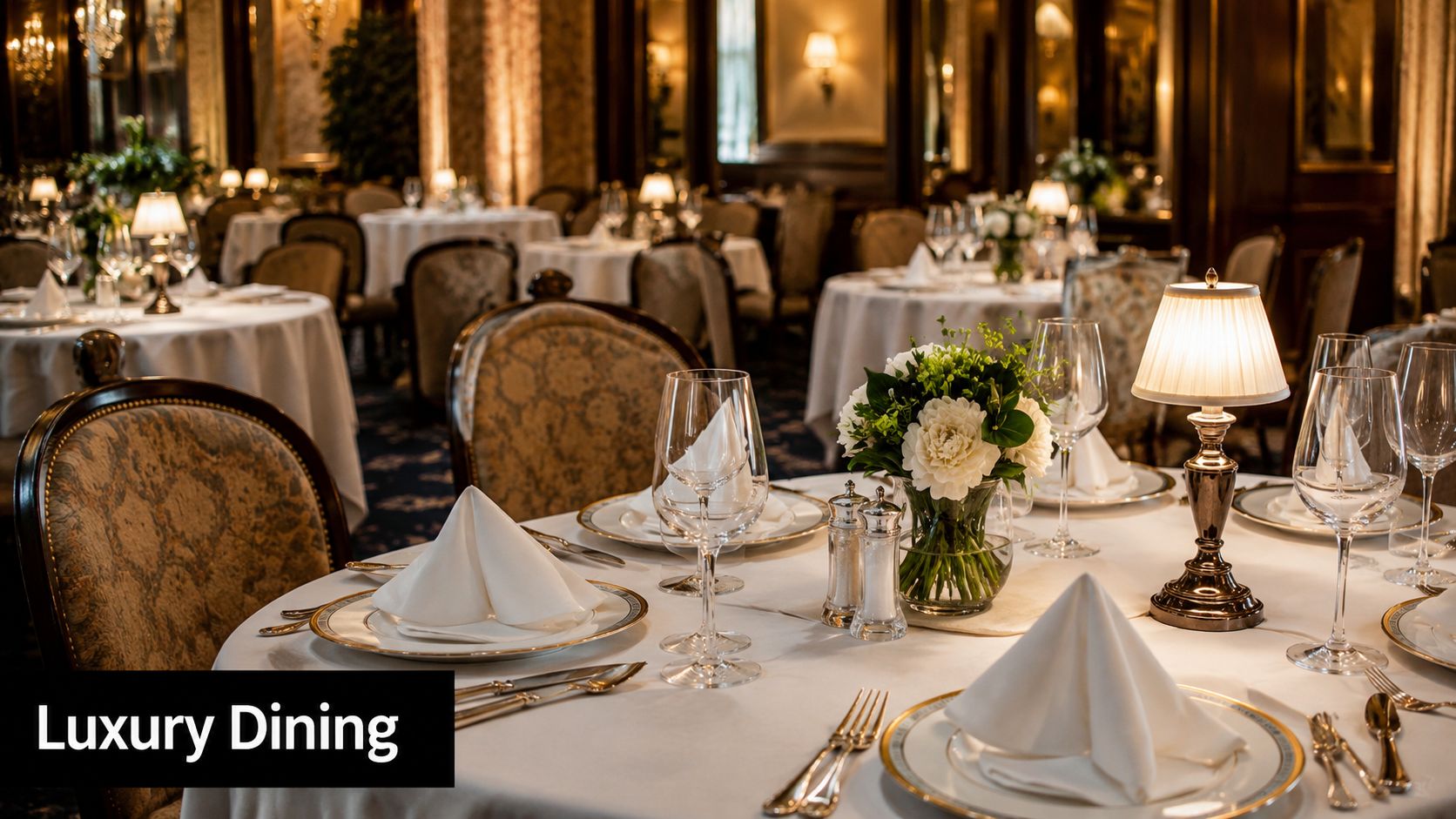
Dining matters because guests don't experience a hotel in silos. They move from room to restaurant to lounge to event space, and brand consistency either holds or breaks across those moments.
If a beauty partner is considering co-branded afternoon tea, wellness menus, in-room replenishment, or press hosting, furniture layout and dining flow suddenly become operational issues, not aesthetic trivia. That's why teams planning activations often benefit from reviewing resources on flexible furniture for hospitality operators. The point isn't to redesign the hotel. It's to understand how space can shift between daily service and branded hosting without disrupting the guest experience.
A useful visual reference sits below.
Where alignment is strongest
For a Swiss beauty or spa distributor, I see the strongest alignment in the following areas:
- Amenity elevation: Replacing generic formulations with a more distinctive premium set.
- Suite-level curation: Creating a sharper offer for VIP or executive guests.
- Dining-linked wellness touches: Herbal infusions, post-travel rituals, or sleep-focused evening placement.
What tends not to work is overcomplication. A hotel of this profile usually responds better to programmes that are easy for housekeeping, front office, food and beverage, and guest relations teams to execute without friction.
Evaluating Spa Wellness and Guest Amenities
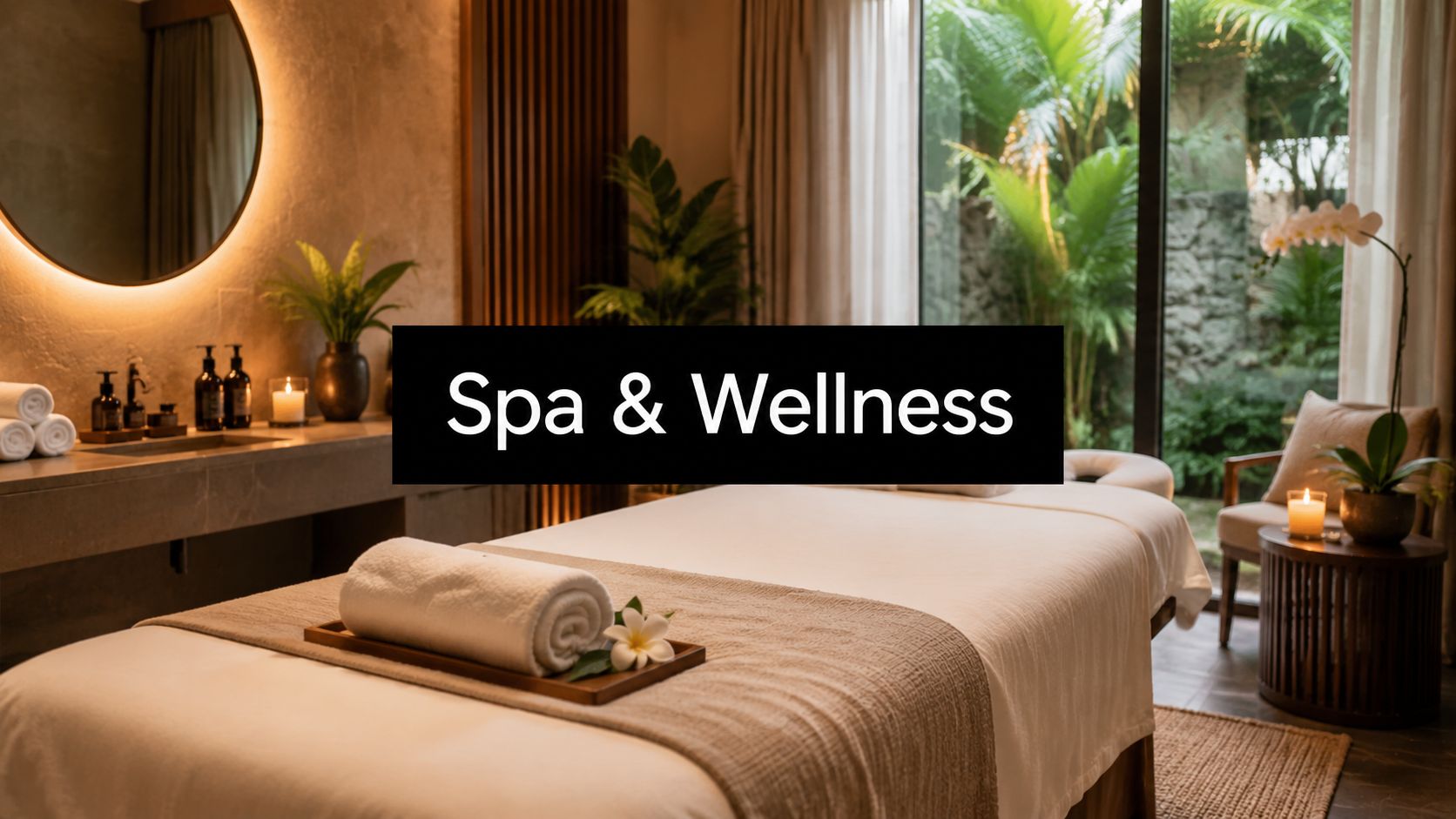
The first commercial question isn't whether The Cavendish London has an obvious spa story. It's whether the property has wellness whitespace that a partner can credibly fill.
That distinction matters. Some hotels already have a fully defined spa identity, established treatment suppliers, and limited appetite for outside concepts. Others have strong rooms, strong location, and strong service standards, but their wellness offer remains lighter or less differentiated. From a partnership perspective, the second situation is often more attractive.
Look for gaps, not just facilities
For a Swiss distributor or spa operator, the biggest mistake is evaluating only by presence or absence. No dedicated, heavily marketed spa concept doesn't automatically mean weak potential. In many cases it means the hotel has room to adopt a sharper wellness identity without dismantling an entrenched model.
I would audit the guest journey across five points:
| Touchpoint | What to assess | Why it matters |
|---|---|---|
| Bathroom amenities | Current product quality, packaging, replenishment discipline | This is often the easiest entry point |
| In-room wellbeing | Sleep, recovery, bath, and self-care cues | Good for low-friction premium upgrades |
| Fitness adjacency | Whether exercise or recovery can link to product use | Useful for body, muscle, or marine lines |
| Public areas | Space for discreet retail or consultation moments | Supports trial without full spa buildout |
| Concierge and guest relations | Ability to recommend or upsell wellness offers | Critical for adoption |
The likely opportunity set
Based on the hotel's profile, the most realistic beauty and wellness partnerships would probably sit in a layered model rather than a full destination-spa repositioning.
That could include:
- Luxury amenity replacement: A high-grade bath, body, or mother-and-baby line for selected room categories.
- Treatment menu creation: If treatment space exists or can be adapted, a concise signature menu is often stronger than a long list.
- Wellness welcome programme: Jet-lag, sleep, recovery, or city-break rituals can fit naturally with the guest mix.
- Retail curation: Compact but selective product display near reception, lounge, or wellness zones.
Don't force a resort-spa concept into a city hotel. City guests buy convenience, efficacy, and polish first.
Trade-offs a partner must face
There are real constraints.
A central London hotel in a heritage-heavy district may not have the physical footprint for an expansive spa concept. Operational teams may prioritise room yield, events, and dining over complex treatment programming. Staff training time is finite. Storage space is rarely generous. Premium products with difficult handling requirements can become a burden if the back-of-house reality isn't considered.
That is why the best proposals are modular.
- Start with one visible guest-facing win, such as upgraded in-room products.
- Add one service layer, such as express treatments or suite rituals.
- Expand only if the hotel can support retail, training, and reporting discipline.
What works better than a grand rollout
In my experience, hotel partnerships fail less from lack of demand than from poor integration. If a brand tries to launch retail, treatment cabins, staff incentives, press events, influencer gifting, and package marketing all at once, execution slips.
A better route is to prove fit through a small, elegant offer. Once the property sees guest response, housekeeping ease, and staff confidence, broader wellness collaboration becomes much easier to justify.
Meeting and Event Capabilities A Corporate Partnership Hub
For many beauty brands, the most valuable part of a hotel partnership isn't the bathroom shelf. It's the ability to use the property as a corporate hosting platform.
The Cavendish London has an advantage here because it combines a historic Jermyn Street setting with contemporary hotel operations. According to the hotel's brief history document, the property occupies a historic building redeveloped into a contemporary luxury facility, and its official contact details, +44 (0) 20 7930 2111 and enquiry.cavendish@the-ascott.com, indicate management under The Ascott Limited. That matters. Global group oversight usually brings process discipline, service consistency, and clearer accountability than a loosely run independent site.
Why this matters for B2B activations
If you're planning a launch, buyer briefing, spa training day, or private client event, reliability beats novelty. You need a venue that can handle guest arrival, rooming, food and beverage timing, AV coordination, and last-minute requests without turning your team into event firefighters.
The Cavendish London looks stronger as a partner when viewed through that lens.
- For trade meetings: The location supports attendance from central London stakeholders.
- For brand showcases: The district reinforces premium positioning.
- For international teams: A managed hotel platform reduces friction around booking and service expectations.
Better uses than a large-scale spectacle
I wouldn't position this hotel as the obvious choice for a giant public-facing beauty carnival. That's not the point. Its value sits in controlled, high-quality formats.
Host the kind of event where every guest matters and every detail gets noticed.
That includes:
- Press breakfasts with tactile product discovery
- Distributor or pharmacy partner briefings
- Executive client stays with in-room gifting
- Small treatment demonstrations for buyers or wellness decision-makers
The partnership signal to watch
A hotel's event capability isn't only about room inventory or meeting rooms. It's about whether hotel teams can act like commercial collaborators. A property under a recognised hospitality group often has a better chance of handling contracts, procurement steps, service standards, and interdepartmental coordination in a way that suits premium brand work.
For Swiss beauty businesses entering or deepening their London presence, that's valuable. It means The Cavendish London can be more than a stockist or a toiletries client. It can become a venue, a host, and a brand-setting environment in the same account.
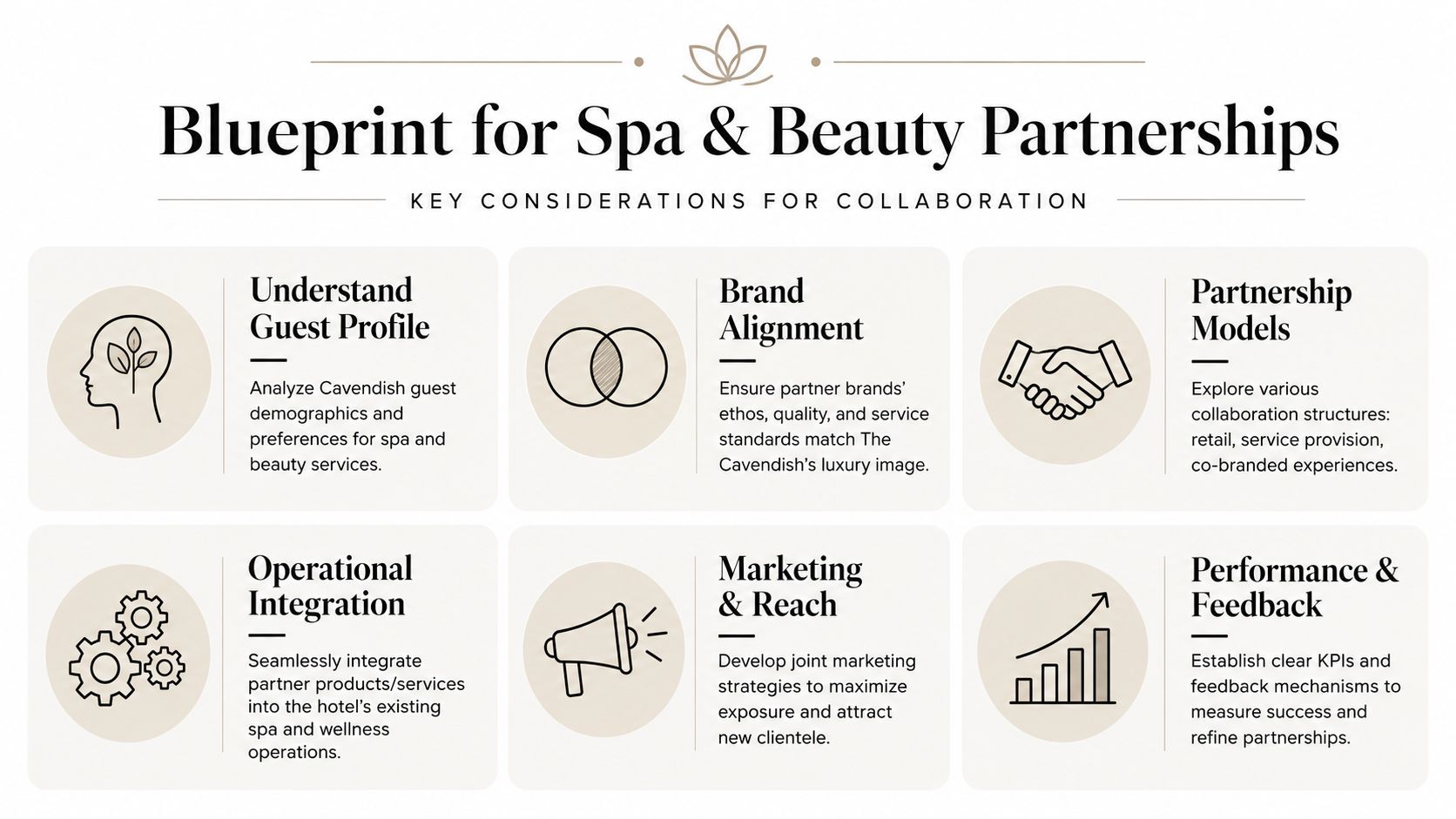
A Blueprint for Beauty and Spa Brand Partnerships
The strongest partnerships with The Cavendish London won't come from trying to turn the hotel into something it isn't. They come from matching a central luxury city hotel with programmes that improve guest experience, strengthen hotel differentiation, and stay realistic for operations.
Blueprint for Spa and Beauty Partnerships
Below is the framework I would use when shaping a proposal.
| Partnership track | Best use at The Cavendish London | Main risk | Practical fix |
|---|---|---|---|
| In-room amenities | Fastest entry point and broadest guest reach | Product becomes invisible if it's generic | Use distinct texture, fragrance, and packaging |
| VIP and suite gifting | Strong for executive and luxury leisure guests | Can feel inconsistent if front office isn't trained | Build simple allocation rules |
| Express treatments | Good if space and staffing allow | Overambitious menu design | Start with a short signature list |
| Retail curation | Supports discovery and take-home purchase | Poor sell-through if display is passive | Train staff on recommendation language |
| Wellness packages | Useful for seasonal or thematic stays | Weak uptake if marketing is too abstract | Tie benefits to travel recovery or rest |
Model one with immediate traction
Amenity partnerships are usually the cleanest starting point.
A city hotel with substantial room inventory gives a beauty brand repeated exposure at the most intimate moment of the stay: washing, bathing, recovering, preparing for dinner, or getting ready for a business meeting. That contact point is powerful when the product is materially better than standard bulk hospitality supply.
What works:
- A coherent bath and body ritual
- Refillable or carefully presented packaging if the hotel's sustainability stance supports it
- A premium upsell path for suites or executive stays
What doesn't work:
- Sending a retail product range and expecting the hotel to adapt it without hospitality formatting
- Complex SKUs that confuse housekeeping
- Fragrance directions that divide guests sharply
Model two with stronger storytelling value
A signature treatment concept can differentiate the property, but only if it respects the pace of a London guest.
The wrong move is a long, ceremonial menu that demands resort-style dwell time. The right move is a concise treatment architecture. Think recovery, sleep preparation, glow-before-event, or post-travel recalibration. A Swiss brand can bring authority here through Alpine botanicals, clinical cleanliness, or precision-led ritual design, but the service must still feel effortless.
The best hotel treatment menus solve a guest problem quickly. They don't ask the guest to adopt a philosophy.
Model three for revenue plus visibility
Selective retail can work well at a property like this when it feels curated rather than merchandised.
That usually means a small footprint with disciplined product choice. Hand care in public washrooms can lead to trial. A compact shelf of hero products can support impulse purchase. Giftable items can connect especially well around business travel, theatre stays, and celebratory weekends.
A few principles matter:
- Put forward hero products, not the whole catalogue.
- Support display with staff language, not just signage.
- Align timing with guest behaviour, such as arrival, turn-down, departure, or gifting moments.
Model four for commercial depth
The most mature format is a co-branded guest package.
This works when the hotel and partner combine room category, product experience, and light-touch service into one clear offer. It might include upgraded amenities, a welcome treatment item, a sleep ritual, or access to a brief treatment. The package should be easy for reservations and front office teams to understand. If staff can't explain it in a sentence, it is too complicated.
How I would stage the rollout
I would not pitch every model at once. I would stage the proposal in three waves.
Proof of fit
Start with one room-category amenity test or a VIP gifting programme.Service extension
Add a short treatment menu or express ritual once guest response and staff confidence are clear.Commercial expansion
Introduce curated retail and package marketing after the hotel has operational ownership.
That sequence respects how hotels adopt change. It also lets the brand gather meaningful feedback without overcommitting budget, stock, or trainer time.
Why The Cavendish London is a Premier Partner
The Cavendish London deserves attention because it combines several traits that rarely sit together neatly. It has a prestige address in St James's, meaningful room capacity, central accessibility, and a guest environment that can support premium beauty and wellness positioning without feeling forced.
For a Swiss beauty or spa distributor, the attraction isn't just the hotel's profile. It's the shape of the opportunity. This is a property where an amenity upgrade can make sense, where curated wellness can improve the guest proposition, and where meetings or hosted events can deepen the relationship beyond product supply.
The key is discipline. A good partnership here should be elegant, operationally simple, and commercially measurable. It shouldn't try to overwhelm the hotel with a giant concept deck. It should solve a guest need, fit the service culture, and give the property a sharper point of difference in a crowded London market.
If I were advising a brand on next steps, I would move quickly but selectively. Build a concise proposal. Lead with one high-confidence activation. Show that your products can strengthen the Cavendish experience rather than compete with it. That is how partnerships move from interest to implementation.
If you're a Swiss retailer, spa operator, pharmacy buyer, or hotel team looking for premium natural beauty and wellness brands that can translate into credible hospitality partnerships, beautysecrets.agency is worth a direct conversation. Their portfolio and market focus make them a practical partner for businesses that want clean formulations, strong brand standards, and commercial relevance rather than generic catalogue supply.