A Swiss spa buyer, hotel operator, or premium retailer usually reaches the same point sooner or later. The treatment menu is polished, the interiors are right, and the guest profile is affluent, but the product story still feels generic. The problem isn't quality alone. It's fit. In luxury wellness, the setting has to justify the formula, the ritual, and the price.
That's why Villa Orselina Orselina is worth studying as more than a hotel. It's a compact benchmark for how location, scale, and positioning can shape a credible wellness offer in Ticino. For professionals in Swiss hospitality and beauty, the essential question isn't whether the property looks aspirational. It does. The useful question is whether its luxury profile creates a stronger platform for selective spa and clean-beauty partnerships than a larger, broader hotel ever could.
Imagining the Pinnacle of Swiss Wellness
A good test for any premium wellness concept is simple. Ask whether the brand would still feel convincing if it were placed in the most rarefied setting available. If the answer is no, the problem usually sits in the product narrative, not in the packaging.
Villa Orselina sits squarely in that test case. It represents the kind of property Swiss wellness professionals often have in mind when they talk about “right fit” distribution. It's not mass-market. It's not trying to satisfy every traveller type. It signals calm, privacy, and a selective guest experience from the start.
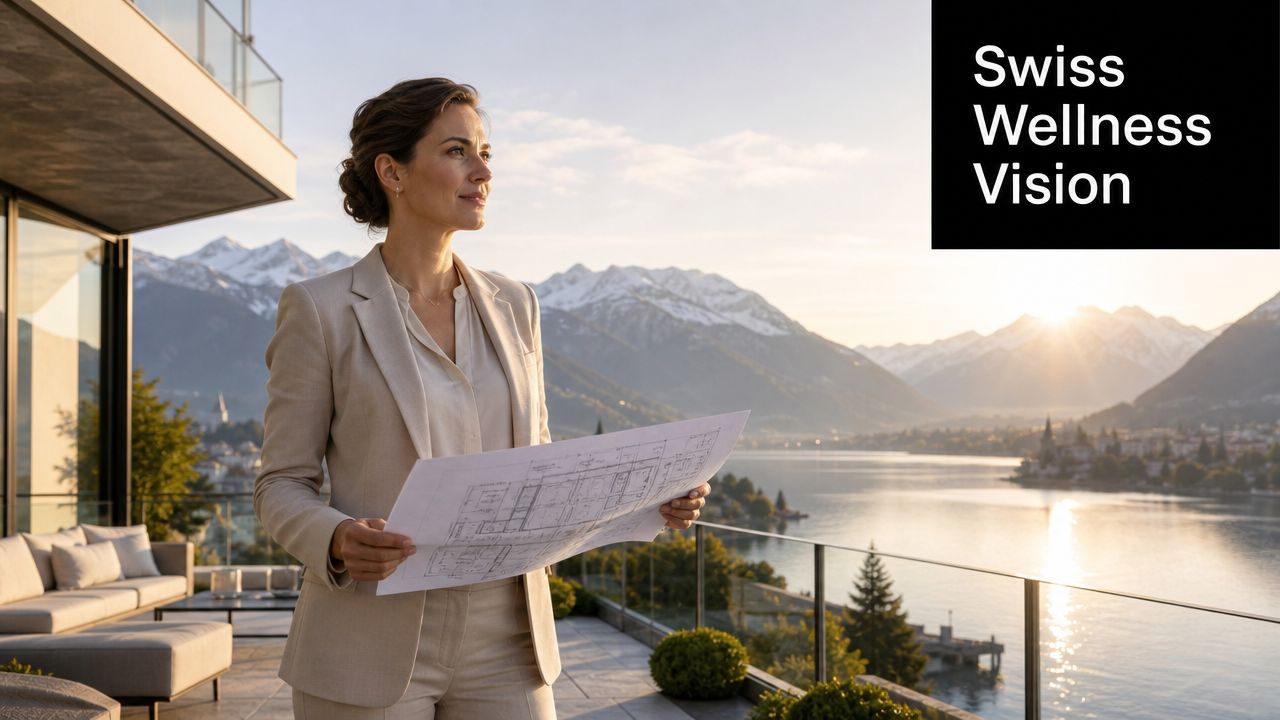
For a spa manager, that matters because product performance in luxury hospitality isn't judged only by ingredient list or certification. Guests read signals. They notice whether the amenity line matches the architecture, whether the spa ritual reflects the environment, and whether “natural” means something concrete or just sounds fashionable.
The commercial gap is hard to ignore. Swiss tourism data indicates that 78% of guests in luxury hotels in the CH region request eco-conscious or cruelty-free product lines, yet Villa Orselina's public-facing sustainability content doesn't specify which certified natural brands it uses, according to the hotel listing details on Expedia. In practice, that means the visual and positional groundwork exists, while the product story appears underdeveloped in public view.
What wellness operators should notice
- Selective environment: A property like this doesn't need a broad, crowded retail wall. It needs a tightly edited assortment with a clear reason for each placement.
- Narrative pressure: In a luxury setting, every treatment and retail product has to earn its place. Generic “spa-quality” language won't hold up.
- Cross-category relevance: Sleep, stress regulation, recovery, and skin health now overlap in guest expectations. Broader resources on biohacking for high-performing professionals help frame the kind of integrated wellness thinking luxury guests increasingly respond to.
The strongest hotel-spa partnerships don't begin with a catalogue. They begin with a credible match between place, guest psychology, and treatment logic.
Understanding Villa Orselina Orselina
Before anyone thinks about partnership strategy, it helps to establish what Villa Orselina is in business terms. Too many hospitality discussions stay at the level of mood and imagery. Buyers need a firmer base than that.
Villa Orselina is located at Via Santuario 10, 6644 Orselina, Ticino, and operates under the legal entity villaorselina sagl, with active classification in the operation of hotels, inns and B&B or guesthouses. It is also a member of Small Luxury Hotels of the World, a network that includes over 500 exclusive properties globally, as noted in the TripAdvisor property profile.
That matters for two reasons. First, legal and network identity tell you this isn't an improvised boutique concept. Second, affiliation with a recognised luxury collection shapes guest expectations before arrival. A hotel in this category doesn't compete on volume. It competes on refinement, consistency, and emotional assurance.
Why this profile matters commercially
When I assess a hospitality partner, I look at three filters before I look at the treatment room.
| Filter | What Villa Orselina signals | Why it matters |
|---|---|---|
| Operational legitimacy | Established legal entity in Swiss hospitality | Lower ambiguity for trade partners |
| Luxury affiliation | Membership in a global small-luxury network | Stronger premium positioning |
| Direct presence | Own website and direct phone contact | Better conditions for curated collaboration |
Its direct digital presence also matters. The hotel can be reached via +41 91 735 73 73 and operates through www.villaorselina.ch, both referenced in the same TripAdvisor listing. That may sound basic, but for premium suppliers it signals a property built to manage direct relationships rather than relying solely on marketplace visibility.
What works and what doesn't
A property with this profile works well for:
- Limited-edition amenity concepts
- Spa-exclusive treatment protocols
- Retail assortments with high explanation value
- Co-branded wellness experiences with strong training support
It usually won't work well for:
- Broad SKU dumps
- Discount-led offers
- Brands that need heavy promotional signage
- Formulas whose value depends on mass education at scale
Practical rule: If a brand needs a shelf talker to justify itself, it probably isn't ready for a setting like Villa Orselina.
The Anatomy of a 5-Star Luxury Experience
Luxury in boutique hospitality isn't created by adding more. It's created by removing friction, reducing noise, and making service feel personal rather than procedural. Villa Orselina illustrates that principle with unusual clarity.
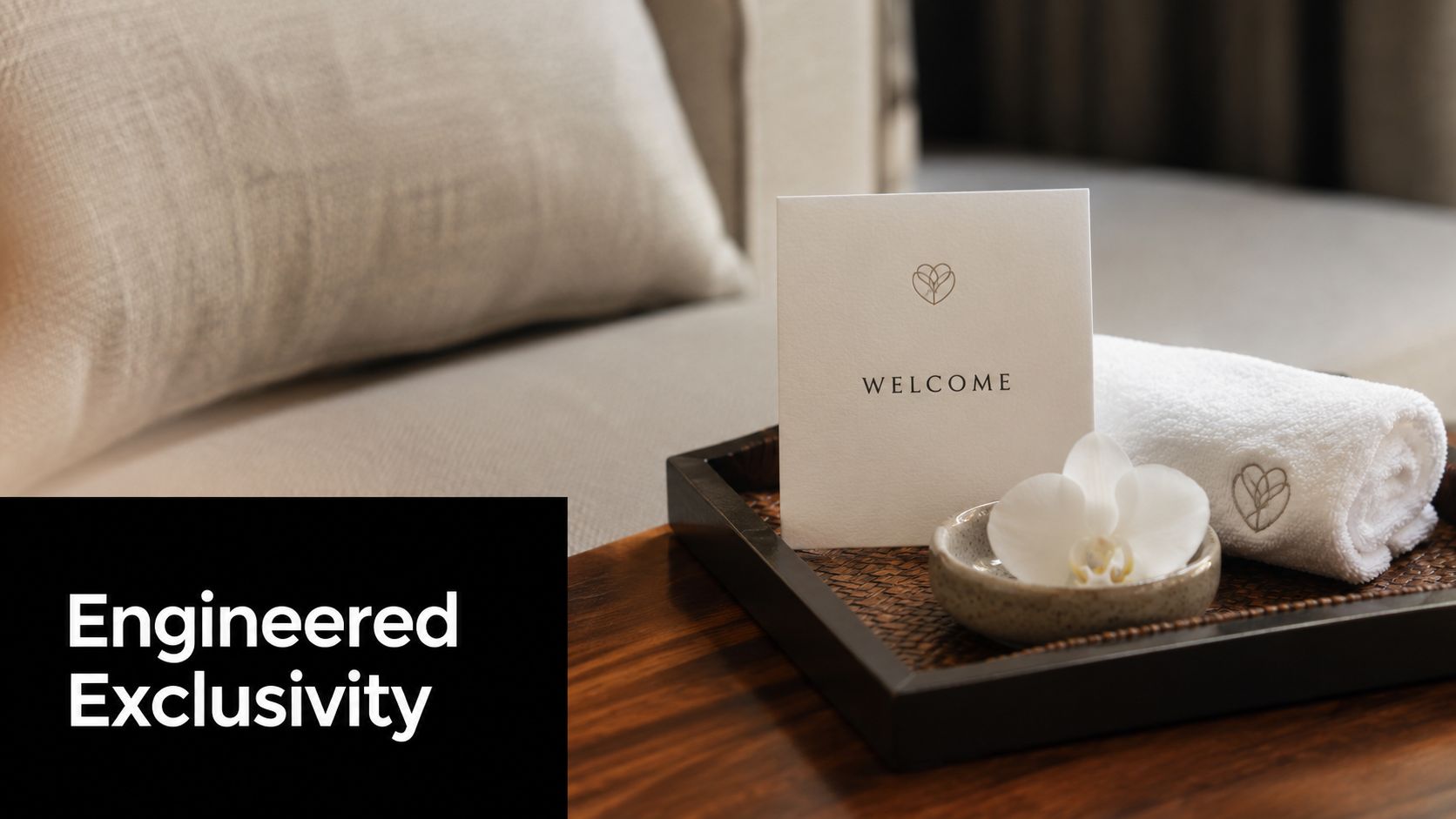
According to the HolidayCheck property information, Villa Orselina is a certified 5-star establishment with 7 rooms spanning 363 m². For a wellness consultant, that's the key operational fact. Seven rooms means every guest interaction can be more personalized. It also means every product touchpoint becomes more visible.
Why small scale changes product value
In a larger hotel, amenities often function as background. In a property this compact, they become part of the guest memory. The bath product, the treatment oil, the aftercare serum, or the herbal recovery infusion doesn't disappear into volume. It's noticed, and it's associated with the stay.
That changes what a supplier should propose.
- In-room products need restraint: Fewer items, better textures, cleaner brand language.
- Spa protocols need precision: Signature rituals beat long menus.
- Retail needs confidence: A compact display with trained recommendation performs better than a crowded boutique corner.
A lot of brands misunderstand this and overbuild. They assume prestige means offering more categories, more variants, more talking points. In reality, intimate five-star properties reward brands that edit hard.
Personalisation has a physical structure
The room count isn't just a hospitality detail. It creates the operating conditions for personalised wellness. Staff can remember preferences. Housekeeping can protect consistency. Therapists can adapt rituals without the chaos that comes with higher room turnover.
That's the kind of environment where niche products perform best, especially if they need explanation.
For a visual sense of how boutique luxury is framed publicly, this property video helps contextualise the atmosphere guests buy into before they ever test a treatment.
What tends to succeed in this kind of hotel
| Placement area | Best fit | Weak fit |
|---|---|---|
| Guest room | One clear ritual story | Assorted miniatures with no theme |
| Spa cabin | Therapist-led hero products | Overly technical ranges without training |
| Retail | Curated post-treatment take-home options | Full brand catalogue presentation |
Small luxury hotels make product curation more demanding, not less. Every item sits closer to the brand promise.
The La Spa Wellness Proposition
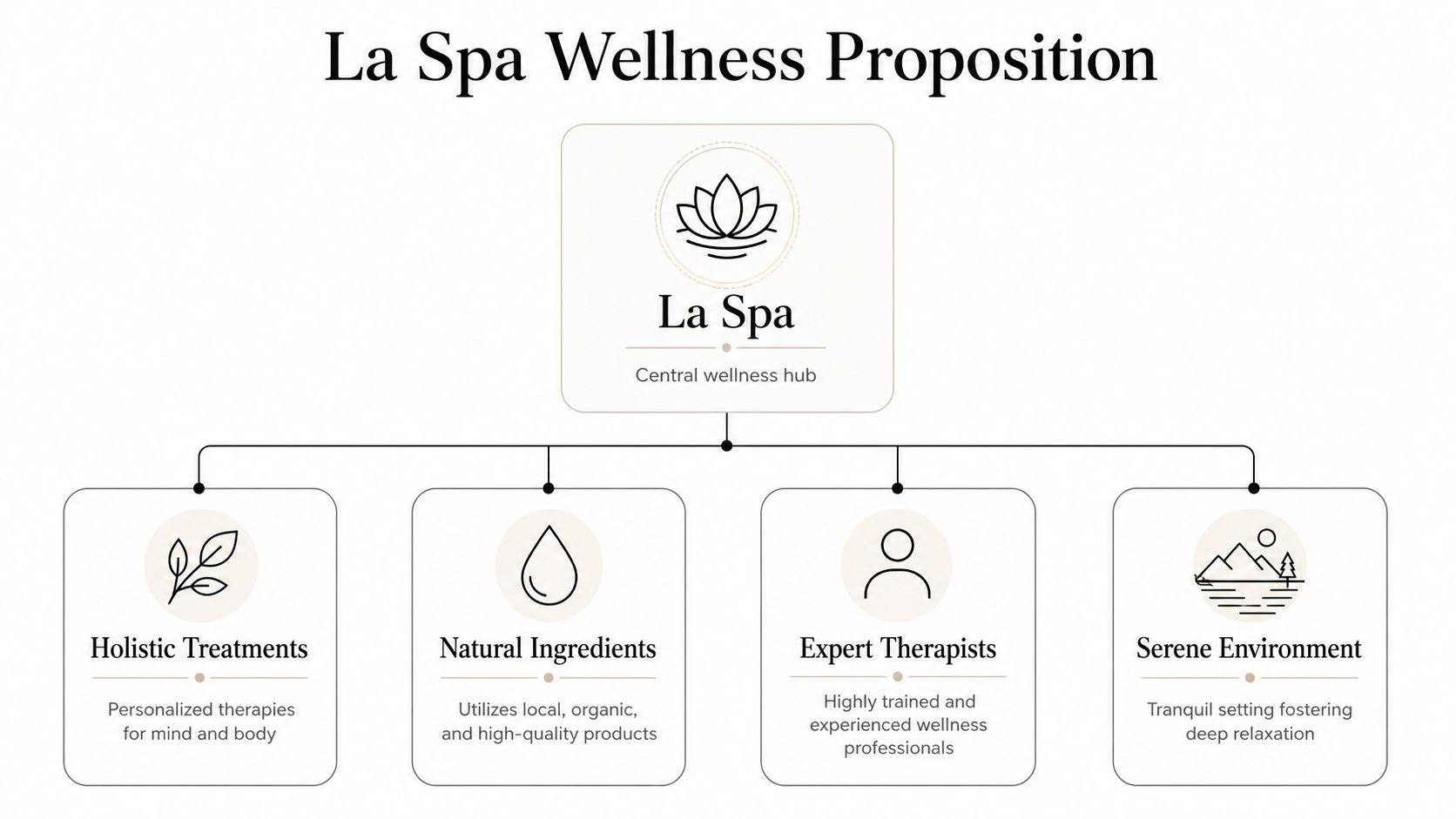
A five-star room product strategy is only part of the picture. The more interesting asset at Villa Orselina is La Spa, because it gives the property a defined wellness centre rather than a purely accommodation-led luxury image.
Villa Orselina is positioned at an elevation of 449 metres above Locarno, and the official Ticino tourism listing notes that its panoramic location can contribute to enhanced air quality, supporting spa treatments focused on respiratory and skin health. For wellness businesses, that creates a useful bridge between environment and treatment rationale.
Where geography becomes treatment logic
A lot of spa concepts mention scenery without turning it into anything operational. That's a missed opportunity. Guests don't buy a mountain view as a wellness result on its own. They buy an experience that translates setting into a believable treatment story.
At Villa Orselina, the stronger proposition would connect:
- Altitude and air quality with respiratory comfort and reset rituals
- Panoramic calm with slower, longer recovery treatments
- Ticino's sensory identity with product textures, aromatics, and aftercare recommendations
- Mediterranean hospitality cues with lighter, elegant, non-clinical spa delivery
This is especially relevant for brands built around marine, botanical, or alpine narratives. The setting gives those categories a natural frame, but only if therapists and spa managers use that frame intentionally.
What actually works in spa positioning
The most credible wellness programmes in settings like this usually have three traits.
First, they avoid overclaiming. Public information supports a favourable wellness environment, but it doesn't justify making specific dermatological promises about the local microclimate.
Second, they align treatment form with setting. A panoramic hillside retreat supports rituals around decompression, skin comfort, breath, and sensory restoration better than it supports aggressive, highly clinical messaging.
Third, they keep the guest journey coherent. If the spa speaks the language of serenity while the retail corner pushes disconnected products, the proposition breaks.
A luxury spa doesn't need louder claims. It needs better alignment between place, treatment, and take-home care.
A consultant's read on the opportunity
La Spa has the architecture of a compelling premium wellness story. What it still needs, from a strategic standpoint, is a more visible connection between the environment and the products that accompany treatment. That's where selective partnership design becomes powerful. Not because every guest wants complexity, but because high-end guests notice when the details support one another.
Orselina A Location Defined by Exclusivity
The municipality matters almost as much as the hotel. In premium wellness, the surrounding environment helps define what guests expect to find inside the property. Orselina sends a very specific signal.
According to the municipal profile for Orselina, the municipality had 706 residents as of December 2020, a municipal tax rate of 82, and an average real estate price of CHF 10,000 per square metre as of March 2026. For a hospitality or beauty operator, those figures point in one direction. This is a small, high-value enclave, not a broad-volume visitor market.
Why the local context changes brand strategy
A setting like Orselina supports a different commercial logic from a city-centre wellness operation.
| Local characteristic | Likely impact on hospitality wellness |
|---|---|
| Low population base | More privacy, less crowd-led positioning |
| High property values | Strong association with premium lifestyle |
| Quiet residential-tourist character | Better fit for restorative, discreet offers |
That profile tends to attract guests who don't need obvious luxury cues. They expect quality to be embedded. The practical implication is that product choices should be subtle, intelligent, and consistent with the setting.
What brands often get wrong in exclusive destinations
They confuse exclusivity with extravagance.
That leads to heavy gifting, oversized displays, and treatment menus that read like a department store launch plan. In a place like Orselina, those tactics usually feel intrusive. A more effective approach is to work with quiet authority. Offer fewer SKUs, stronger training, and a treatment concept that respects the guest's desire for discretion.
- Use refinement over abundance
- Favour tactility over visual noise
- Let the therapist recommendation do the selling
- Keep retail linked to service, not separated from it
The location also affects pricing psychology. Guests in a high-value area don't necessarily resist premium wellness pricing. What they resist is mismatch. If the environment says seclusion and taste, but the wellness offer looks standardised, trust erodes quickly.
The Untapped Opportunity for Clean Beauty Partnerships
Villa Orselina is more than an attractive property. It becomes a strategic opening for Swiss wellness businesses that understand how to turn market demand into a controlled luxury offer.
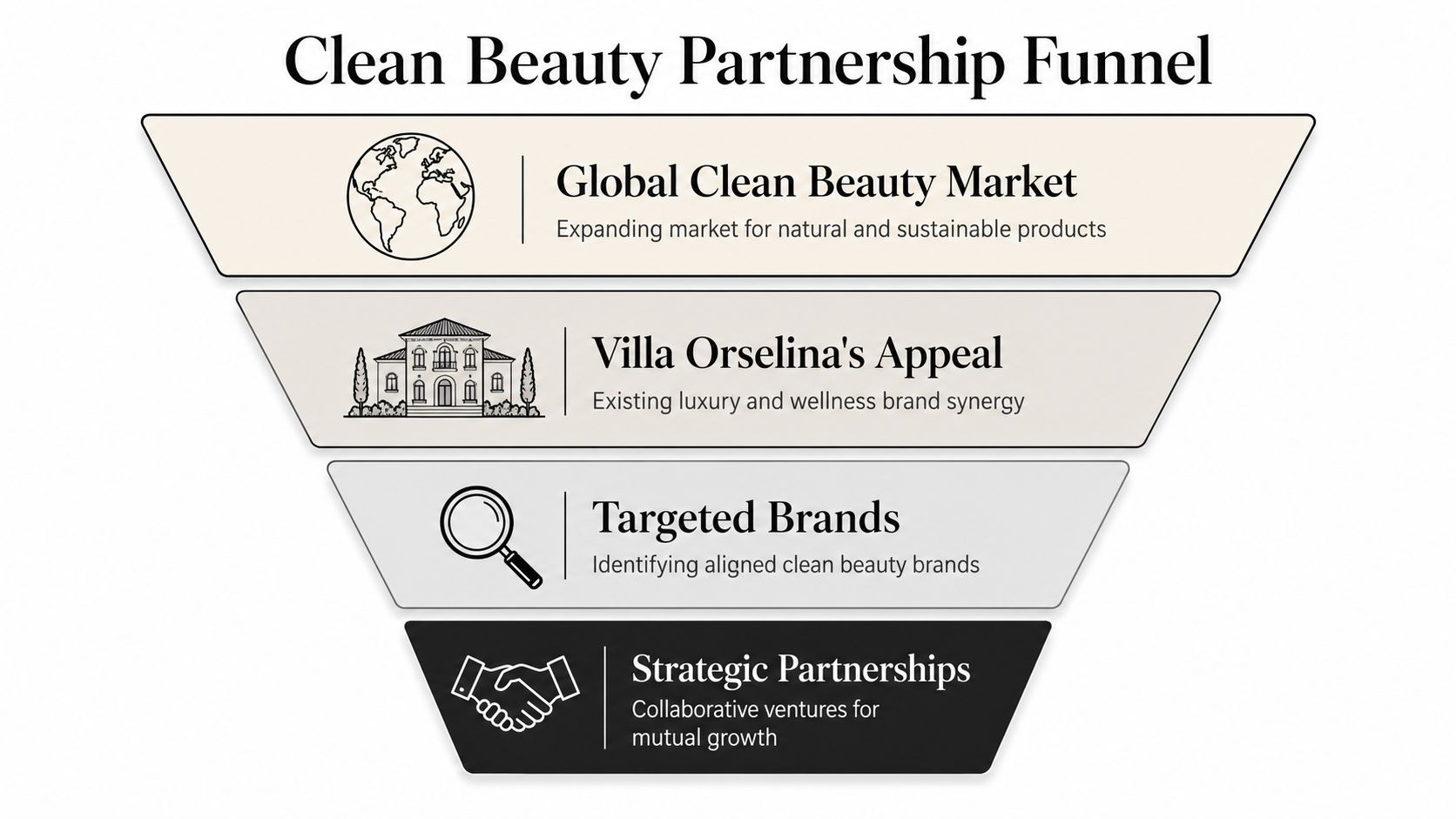
The strongest signal sits in the gap between guest interest and public-facing product storytelling. According to the referenced Ticino and Swiss consumer behaviour data, 42% of wellness travellers in Ticino inquire about climate-aligned beauty routines, and 65% of Swiss consumers seek skincare formulated for local environmental conditions. At the same time, there is no public information connecting Villa Orselina's microclimate to specific skin health benefits or certified natural product lines.
Why this gap matters commercially
Luxury guests don't always ask for “clean beauty” in those exact words. They ask for signs of care, discernment, and local relevance. They want to know whether a spa has thought about texture, climate comfort, ingredient quality, and ethical standards as part of the stay.
If that demand exists, but the hotel's public story doesn't identify the product solution, several opportunities open up:
In-room amenity curation
Certified natural products can support the property's quiet-luxury profile without forcing overt sustainability messaging.Treatment protocol development
Therapists can connect product choice to seasonal skin comfort, recovery, and environmental conditions in a way that feels customized rather than generic.Post-treatment retail editing
A small number of high-fit products can outperform a wider assortment because they continue a story the guest has already experienced.
What works versus what doesn't
A strong clean-beauty partnership in a property like this usually includes:
- Clear certification logic: Guests need to understand why the range belongs in a luxury spa.
- Training-led implementation: Therapists and front-of-house teams need language that feels natural, not scripted.
- Micro-assortment discipline: Hero products beat extensive launches.
- Seasonal adaptation: Skin comfort narratives should reflect changing conditions without making unsupported claims.
What won't work is attaching a natural brand to the hotel and assuming the setting will do all the labour. It won't. Luxury properties amplify weak positioning just as quickly as they enhance strong positioning.
The missing value isn't another beauty brand. It's a partnership model that translates guest interest into a coherent ritual, retail, and hospitality experience.
Where Swiss distributors and operators can move first
The best entry points are usually modest and highly controlled.
Start with one cabin ritual, one room amenity concept, and one retail recommendation path. Measure guest feedback qualitatively. Watch whether therapists can explain the line comfortably. See whether the product story feels native to the property. In boutique luxury, disciplined rollout beats ambitious rollout.
Positioning Your Brand at the Apex of Swiss Luxury
Villa Orselina Orselina stands out because its commercial value is concentrated. It has a recognised luxury identity, a highly intimate scale, a defined wellness centre, and a location that signals privacy and affluence. For wellness professionals, those factors create a sharper test environment than a larger resort where product meaning gets diluted.
The practical opportunity isn't to overload the property with more wellness language. It's to sharpen what's already there. The hotel appears well placed to support a more explicit clean-beauty and certified natural skincare narrative, especially where treatments, in-room products, and take-home retail can reinforce one another. That kind of alignment is what turns a pleasant spa offer into a memorable luxury one.
The strategic standard to aim for
A brand belongs in this environment if it can answer four questions clearly:
| Question | What a strong answer sounds like |
|---|---|
| Why this hotel? | The brand complements intimate, high-touch luxury |
| Why this spa? | The formulas support a calm, sensorial treatment style |
| Why this guest? | The assortment respects discerning, low-noise consumption |
| Why now? | The offer answers visible demand for cleaner, more locally relevant wellness stories |
There's also a reputational layer to consider. Swiss luxury still responds well to heritage, technical credibility, and disciplined formulation. For professionals evaluating that balance, material on Karin Herzog's pioneering science is a useful example of how Swiss-origin beauty narratives can combine scientific identity with premium positioning.
The larger lesson is straightforward. In a property like Villa Orselina, product selection is never just procurement. It's brand architecture. The winners will be the operators and beauty partners who treat it that way.
If you're assessing how to place certified natural, luxury spa, or pharmacy-ready skincare in premium Swiss hospitality, beautysecrets.agency offers curated brand portfolios suited for spas, hotels, retailers, pharmacies, and wellness businesses that need high-performance formulas with credible ethical and certification standards.