A customer is standing at the counter, running her fingers through tired mid-length hair, and asking the same question teams hear every week. She wants a change that feels visible. She doesn't want to look severe, and she doesn't want a cut that becomes a burden by next month.
That's where the long bob haircut keeps winning.
For salons, spas, pharmacies with premium beauty advisors, and retail partners building a clean haircare edit, the lob is more than a style reference. It's one of the easiest hair conversations to turn into a complete recommendation: cut shape, home styling method, smoothing product, texture support, flyaway control, and a practical routine that still feels elevated.
The Enduring Appeal of the Modern Long Bob
The long bob works because it solves a real client tension. Clients don't come in asking for a haircut theory lesson. They want to feel sharper, lighter, and more current without stepping into the risk of a very short crop.
In practice, the lob is the answer when a client says, “I want something different, but I still need options.” She still wants to tuck one side behind the ear, pull it back for a workout, smooth it for a meeting, or add bend for dinner. That combination keeps the cut commercially strong across age groups and lifestyle types.
Its appeal also isn't a passing social trend with no backbone. The lob belongs to the same family as the classic bob, a shape linked to the 1910s and 1920s, with earlier roots traced to 1903 and Bryn Mawr students wearing short hair for basketball, as outlined in this history of the bob haircut. The modern version became especially visible by 2015, when coverage of Kim Kardashian's move to the lob called it the “chop heard ’round the (internet) world” in that same source.
A haircut lasts when it gives people a new silhouette without taking away their sense of control.
That's why the lob stays relevant in premium beauty environments. It communicates polish, but it doesn't trap the wearer into one styling identity. For Swiss retail and spa partners, that matters. Customers often want modern hair that still fits work, travel, sport, and weather shifts.
Why it sells well in a premium setting
- It feels like a meaningful change: Clients see the difference immediately.
- It still preserves length: That lowers the emotional barrier for first-time short-hair customers.
- It opens product conversations naturally: Shine, texture, heat protection, and finishing care all become relevant without feeling forced.
The enduring appeal of the modern long bob is simple. It's a haircut people recognise as chic, but they also trust it to fit real life.
What Exactly Is a Long Bob Haircut
If the classic bob is a sharply structured blazer, the long bob haircut is the trench coat. It still has structure, but it's more forgiving, more adaptable, and easier to wear in different settings.
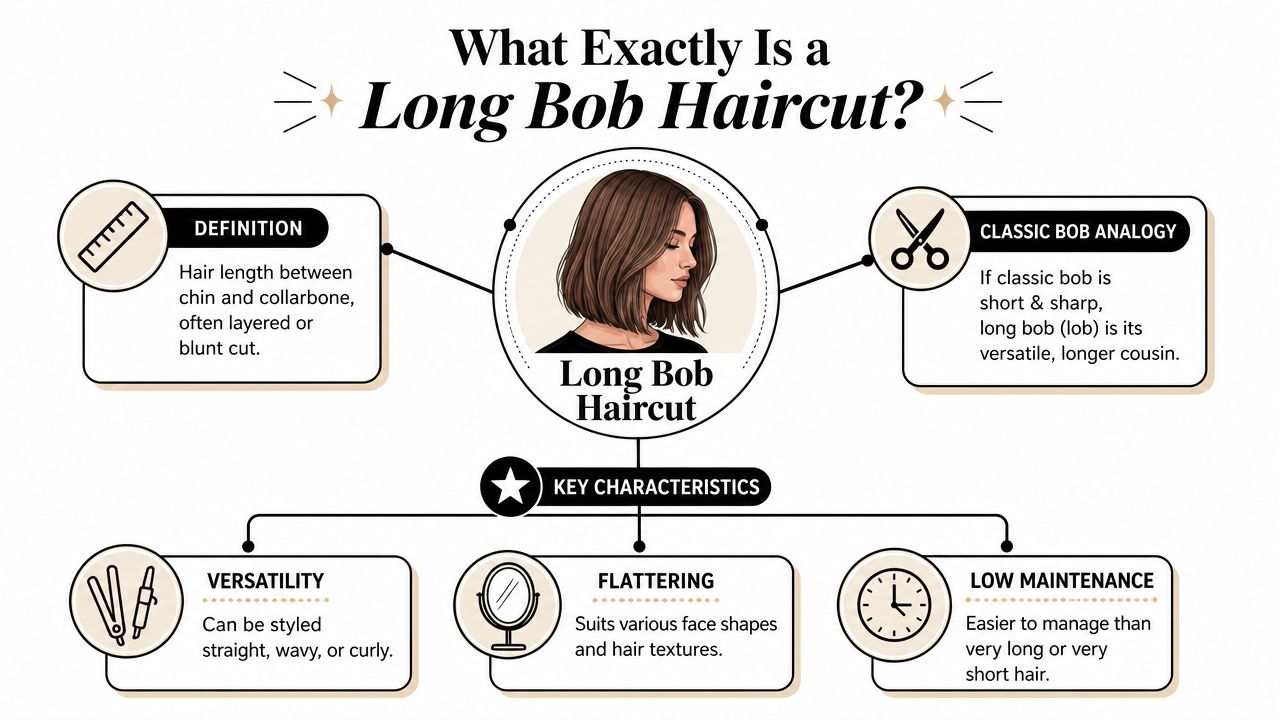
Technically, a long bob sits between the chin and the collarbone or shoulders, and the cut changes character depending on how the perimeter and interior are built, according to this technical guide to the long bob haircut. That same guidance distinguishes between a blunt one-length lob and a textured or feathered lob. A blunt edge gives a stronger outline. Internal layering and point cutting reduce weight and add movement.
The core structure
A good lob isn't just “shorter hair”. It has three decisions built into it:
Length placement
Chin-skimming reads bolder. Collarbone length feels softer and more forgiving.Perimeter finish
Blunt lines look cleaner and more graphic. Softened ends move more easily.Interior weight
Minimal layering keeps density. Strategic layering stops the shape from sitting too heavy.
Why the cut still feels current
The long bob also inherits the design logic that made modern bobs wearable in the first place. It comes from a haircut philosophy that values line, geometry, and easy daily management rather than elaborate setting.
Practical rule: A lob should hold its shape when the client does very little to it. If it only looks right after a full blow-dry, the cut usually needs adjusting.
For retail staff, this definition matters because it sharpens consultation language. “Lob” is often used loosely by customers for anything between jaw and shoulder length. A trained advisor can narrow the request quickly by asking whether the customer wants a cleaner edge, a softer finish, or more visible texture.
The simplest way to explain it to a customer
Use this phrasing:
- For a polished client: “It's a bob shape with a little more length and flexibility.”
- For a hesitant client: “You'll still feel like you have hair to work with.”
- For a styling-focused client: “The shape changes a lot depending on whether you want it blunt or textured.”
That clarity improves outcomes. It also makes product recommendations much easier later, because each version of the cut needs different support.
Exploring Key Long Bob Variations
The long bob isn't one haircut. It's a family of shapes, and each one sends a different message. That's useful in retail consultations because customers usually respond faster to a look and feeling than to technical cutting language.
The blunt lob
This is the cleanest version. The line looks deliberate, refined, and fashion-aware. It suits clients who like a polished wardrobe, crisp tailoring, or minimal styling that still reads expensive.
What works:
- Fine to medium hair that benefits from the appearance of fullness
- Clients who wear their hair straight or with a subtle bend
- Premium settings where the desired look is organised and sleek
What doesn't:
- Very dense hair with no interior control. It can turn into a heavy triangle.
- Clients expecting a wash-and-go wave if the cut has been left too solid.
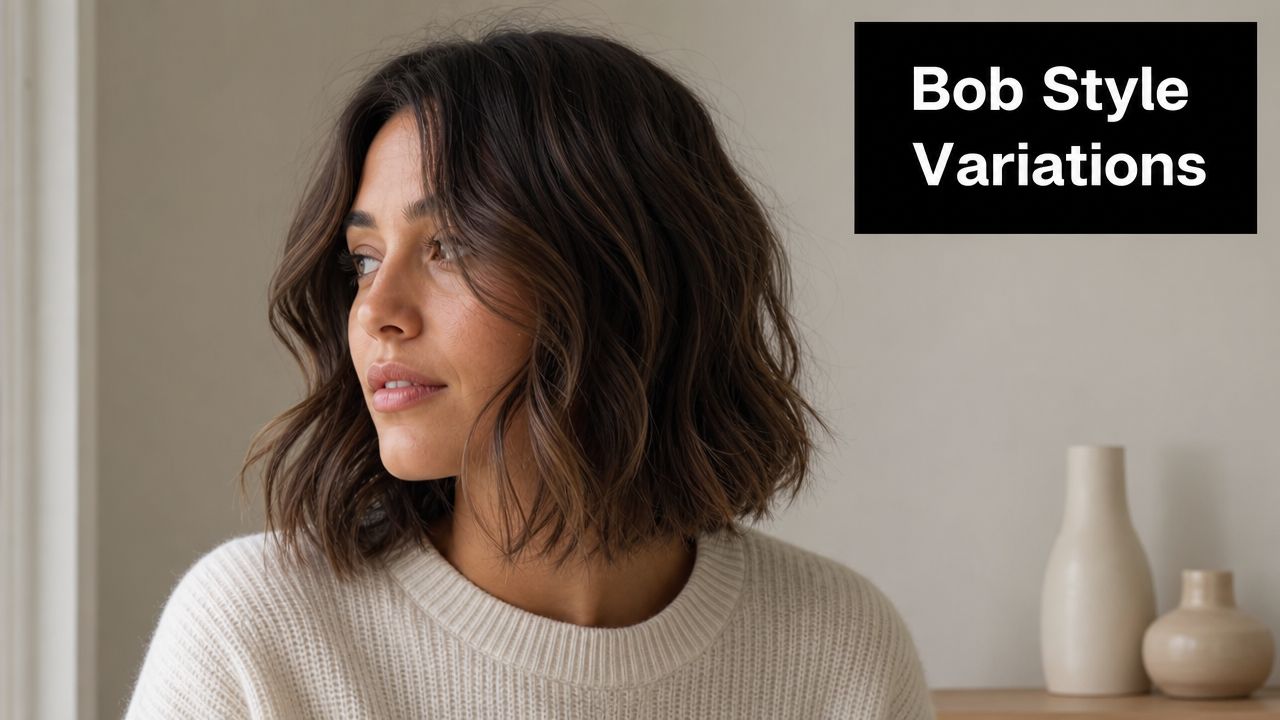
The textured lob
This version has more movement through the ends or interior. It feels relaxed, modern, and easier to personalise. A textured lob is often the safest recommendation when someone wants softness instead of precision.
It suits wavy patterns especially well, and it's often kinder during grow-out because there's less visual hardness at the baseline. It also supports air-dried finishes better than a very blunt shape.
Texture makes a lob feel lived in. Bulk makes it feel accidental.
The A-line lob
The A-line version is shorter at the back and longer toward the front. Done with restraint, it elongates the neck and gives a sharper profile. Done too aggressively, it can look dated or exaggerate facial structure.
Consultation skill matters. Subtle graduation can be elegant. Strong front-drop angles can become the only thing people notice.
The lob with bangs
Adding a fringe changes the entire personality of the cut. Curtain bangs soften. Wispy fringe keeps it light. A fuller fringe turns the lob into a stronger style statement.
A fringe also changes the maintenance conversation. Customers may love the look but underestimate the upkeep around the forehead, especially in damp weather or after hat wear.
For clients considering more fullness or shape correction around the front, it helps to understand hair extension placement and blending, especially when medium lengths need support without making the cut look bulky. That's relevant when a lob has to balance a dense perimeter with softer framing around the face.
A quick style vocabulary for advisors
- Blunt: sharp, chic, disciplined
- Textured: airy, relaxed, versatile
- A-line: directional, sleek, fashion-led
- With bangs: expressive, face-framing, personality-driven
That vocabulary helps retail teams translate a visual preference into a realistic haircut direction.
Guiding Clients to Their Perfect Lob
The best lob consultation doesn't start with trend language. It starts with prediction. How will this shape sit on this person, with this density, this movement pattern, and this tolerance for styling?
A long bob should be judged on day one and week six. Practical education on bob cutting notes that overly strong angles can over-emphasise facial structure, while softer, jawline-matched angles often grow out more gracefully, reducing maintenance and avoiding added fullness or roundness for some clients, as discussed in this practical lob grow-out guidance.
Face shape matters less than placement
Face shape is useful, but not in the rigid magazine sense. The better question is where the line lands and what it emphasises.
- Rounder features: Avoid placing the strongest width exactly at the fullest part of the face.
- Square or strong jawlines: A softened perimeter can look more balanced than a hard, horizontal block.
- Heart-shaped faces: Too much narrowness at the ends can leave the lower face looking under-supported.
- Oval faces: They can usually wear most lob variations, so hair texture should drive the choice.
Hair type changes the recommendation
Texture and density often matter more than face shape.
Fine hair usually responds well to cleaner outlines because the perimeter reads fuller. Thick hair often needs internal work or it can push outward. Wavy hair likes a shape that allows movement rather than trapping it into a blunt shelf. Curly hair needs a deliberate decision about expansion, shrinkage, and where width is welcome.
A flattering lob isn't about copying a photo. It's about placing weight where the client can actually wear it.
Long Bob Selection Guide by Face Shape and Hair Type
| Face Shape / Hair Type | Recommended Lob Variation | Styling Goal |
|---|---|---|
| Oval with fine hair | Blunt collarbone lob | Create a fuller outline and a clean silhouette |
| Oval with thick hair | Soft textured lob | Reduce heaviness while keeping polish |
| Round with fine to medium hair | Slightly elongated textured lob | Lengthen the visual line and avoid width at the cheeks |
| Round with thick hair | Softly angled lob with internal debulking | Control bulk and improve grow-out |
| Square with straight hair | Jawline-softened lob | Ease sharpness and keep movement near the ends |
| Square with wavy hair | Textured lob with face-framing pieces | Break up density and soften the perimeter |
| Heart-shaped with fine hair | Collarbone lob with light fringe or soft front pieces | Balance the lower face and keep softness around the forehead |
| Heart-shaped with thick or wavy hair | Textured lob with controlled weight through the ends | Prevent puffiness while keeping shape |
| Curly hair across face shapes | Longer lob with curl-aware shaping | Preserve spring and avoid a boxy outline |
What tends to grow out best
Softer angles usually age better than dramatic ones. Lobs with controlled texture also hide the in-between stage better than severe, one-note shapes. For busy clients, that's often the deciding factor.
Retail partners can use this in consultation language:
- If the client hates frequent trims: steer away from extreme A-line geometry.
- If she wants fullness: keep more perimeter strength.
- If she wants ease: build movement inside the cut, not just at the ends.
- If she wears hats, scarves, or sports ties: test whether the length can still tuck or tie where needed.
That approach is what turns a style recommendation into a credible service conversation.
The Salon Consultation How to Ask for a Lob
Most disappointing haircuts don't come from bad intentions. They come from vague language. “A lob, but not too short” means one thing to the client and something else to the stylist.
Retail and spa teams can help customers prepare better by giving them phrases that describe length, line, weight, and daily reality. The difference is immediate. A precise request gives the stylist something usable.
Phrases that get better results
Try language like this:
“I want the length to graze my collarbone.”
This gives a clear visual anchor.“I want it to feel blunt, but not bulky.”
Useful for fine or medium hair where fullness matters but stiffness doesn't.“Give me movement through the interior, not shaggy layers.”
Good for clients who want softness without turning the haircut into a different category.“I want a soft angle, not a dramatic front drop.”
This helps prevent an A-line that feels too sharp in real life.“I need to be able to tuck it behind my ears and tie some of it back.”
One of the most important lifestyle filters.
Photos help, but they need translation
A photo alone isn't enough. One image may show the right length but the wrong density. Another may show the right texture but a completely different hairline or face shape.
Ask the customer to bring two or three reference images and explain what she likes in each one.
The consultation points that often get missed
Daily styling tolerance
Some clients will use a round brush and dryer. Some won't. The cut should reflect that.Natural movement
Straight at the roots and wavy through the ends needs a different strategy from hair that is uniformly straight.Climate and routine
Gym use, helmet wear, winter hats, and office dress codes all matter.
Say what you need the haircut to do, not only how you want it to look.
A simple consultation script for staff to share
You can coach customers to say:
- “I want a long bob haircut that still feels soft.”
- “Please show me where the shortest front pieces will sit.”
- “I prefer a version that grows out neatly.”
- “I don't want the ends to flick out unless I style them that way.”
- “I want enough texture for movement, but I still want the shape to look polished.”
That script reduces ambiguity. It also helps the stylist make better cutting decisions before the first section is lifted.
Styling and Daily Maintenance Routines
The easiest mistake with a long bob haircut is promising that it's always low maintenance. It isn't. Maintenance depends on how the hair was cut, how much texture it has naturally, and how the client wants it to look from Monday to Sunday.
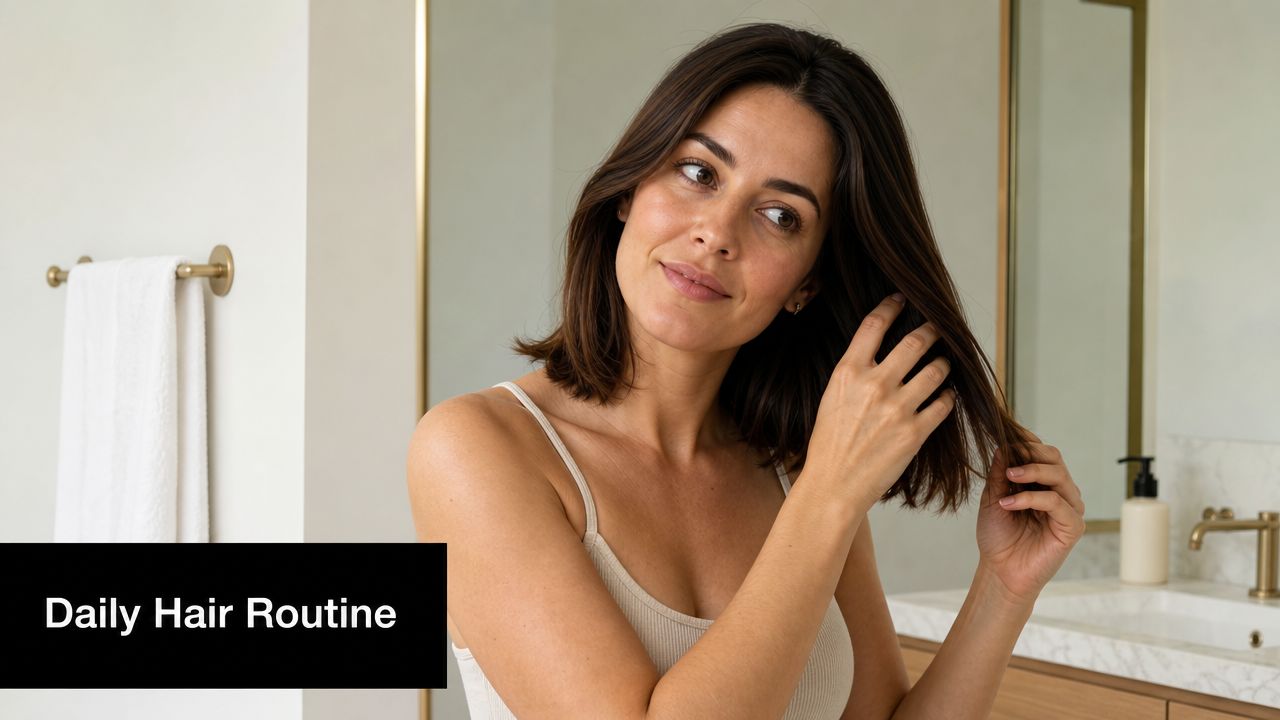
Guidance on lob upkeep notes that texture and layering materially change how the cut falls and how much upkeep it needs, especially for people balancing professional polish with active lifestyles and climate-driven concerns such as frizz or winter hat-hair in Switzerland, as discussed in this lob maintenance discussion.
Three reliable finishing routines
Sleek and polished
This is the sharpest expression of the lob. Start with a smoothing leave-in on damp hair, then blow-dry with tension using a paddle or medium round brush. Refine the mid-lengths and ends only if needed with a flat iron.
For clients who want a cleaner finish without repeated passes, a tool like the ceramic option from Elise Beauty Supply is useful context in product conversations because the plate material and heat behaviour affect how quickly the line looks smooth.
Soft wave with movement
This finish suits textured and slightly layered lobs. Dry the hair first, then add bend through the mid-lengths rather than curling from the roots. Leave the final centimetres a little straighter so the shape stays modern.
A dry texture spray or lightweight sea-inspired mist usually works better than a heavy cream here. Too much cream collapses movement and makes the cut look overworked.
Polished air-dry
Some clients don't want to heat-style most days. For them, the haircut has to carry more of the load. Apply a light cream or serum through the ends, direct the parting early, and encourage bend with fingers rather than a brush.
What usually causes trouble
- Too much oil at the root: the cut loses lift and looks flat.
- Over-layered ends: the silhouette turns stringy.
- Heavy butters on fine hair: movement disappears.
- Ignoring weather: hat compression and moisture change the finish dramatically.
A quick visual reference helps staff explain those differences in a practical way.
A better maintenance conversation for Swiss clients
In Switzerland, many customers need one cut to perform across office settings, weekend activity, dry indoor heating, and cold outdoor conditions. That means the best routine is rarely the most elaborate one.
Recommend a small wardrobe of products instead of a crowded shelf:
- A heat protector or smoothing primer for polished days
- A texture spray for volume and separation
- A lightweight finishing oil or balm for ends and flyaways
That keeps the lob manageable without overselling effort. If the cut needs a long ritual every morning, it won't remain a favourite.
Curating a Natural Product Assortment for the Lob
A customer leaves the salon with a sharp long bob, then walks into a pharmacy or spa two days later asking a familiar question. What do I need to keep it looking like this without using six products every morning? That is where the retail opportunity sits.
The lob sells well at retail because its maintenance pattern is disciplined. Clients usually buy a small routine, but they expect each product to earn its place. For B2B partners, that creates a useful selling position. Staff can recommend a focused edit of natural formulas that support shape, shine, and touchability without turning a practical haircut into a high-effort ritual.
That logic has deep roots in the bob category. Vidal Sassoon's work on precise, low-maintenance cutting helped define the commercial appeal of the shape, as described in this history of Vidal Sassoon's five-point cut. The lesson still holds. A haircut chosen for clean lines and repeat wear needs products that preserve the finish and reduce friction in daily use.
The most relevant natural product categories
Lightweight shine and sealing oils
A lob shows every detail at the ends. If the finish is too dry, the perimeter looks tired. If the oil is too rich, the line breaks apart and fine hair collapses.
The better option is a light oil with quick slip and a clean after-feel. In retail terms, this category performs best when advisors explain the trade-off clearly. The goal is polish, not weight.
Texture support without stiffness
Many lob clients want movement, especially if the cut has soft internal texture or is worn air-dried. They need hold that keeps separation in place while still allowing the hair to be touched and reworked during the day.
This is a strong category for natural assortments because customers often respond well to formulas that feel modern, flexible, and less lacquered than older styling products. In spa and wellness settings, sea salt alternatives, botanical texturisers, and soft-grip sprays are easy to position because the benefit is visible within minutes.
Multipurpose balms for flyaways and finish
A well-made balm solves several common lob problems at once. It can tidy the hairline, soften static, define ends, and restore order after scarves, collars, or winter hats.
That versatility matters in pharmacy and travel retail. One small product with obvious uses is easier for staff to explain and easier for customers to justify.
How to merchandise it for advisors
The strongest assortments for lob clients stay tight. A simple "Long Bob Essentials" set gives advisors a reliable framework:
- Prep: smoothing or protective primer
- Style: texture spray or soft-hold styling product
- Finish: lightweight oil or balm
This structure works because it mirrors how clients use products at home. It also helps retail teams avoid overprescribing. A lob customer who is sold five overlapping styling products often buys less confidently and uses none of them well.
For partners assessing bond-building and smoothing options before finalising a haircare edit, this overview on comparing Olaplex No 6 with Karseell gives useful context on how consumers judge leave-in performance, softness, and finish when they want control without residue.
One practical route for Swiss trade partners is to source adjacent clean beauty and premium care categories through beautysecrets.agency, which distributes natural and ethically sourced formulations for pharmacies, spas, retailers, and e-commerce partners in Switzerland. In lob merchandising, that matters because the haircut performs best with a concise assortment of high-quality care and finishing products, not a crowded wall of trend items.
The commercial value is straightforward. The long bob remains popular because it suits real life. The best retail assortments respect that and give advisors a sharper, more credible way to connect haircut demand with natural product sales.