The numbers alone justify shelf space. Analysts project strong global growth for clip in human hair extensions over the next decade, and that trajectory points to a category with real margin potential for premium retailers.
For a Swiss beauty business, clip in extensions deserve a serious commercial role, not a side placement near accessories. They fit the customer profile you already serve: clients who buy premium skincare, pharmacy-led beauty, scalp-conscious wellness, and ethically positioned self-care. They want immediate visible results, but they reject products that feel damaging, overly technical, or misaligned with clean beauty standards.
Clip in extensions meet that brief cleanly. They deliver length and volume without chemical adhesives, without a salon booking, and without locking the customer into a permanent change.
This is significant in Switzerland, where premium beauty purchases are rarely impulsive. Customers expect performance, low regret, and a product story that stands up to scrutiny. For retailers, that combination creates a rare opportunity. You can add a high-interest hair category that feels consistent with clean beauty values and commercially stronger than many low-repeat accessory lines.
The Growing Demand for Premium Hair Solutions
Clip-in extensions already command a leading share of the extensions category, and that scale should get every premium Swiss retailer's attention. This is not fringe demand. It is a mainstream beauty purchase with premium pricing power, strong gifting potential, and clear room for repeat sales through care, styling, and shade matching support.
Swiss clean beauty retailers are well placed to win here. Your customers already pay for products that respect the body, deliver visible results, and hold up under scrutiny. Clip-ins fit that buying logic. They offer transformation without glue, solvents, or a permanent commitment, which makes them easier to position than many high-risk beauty add-ons.
That commercial fit is unusually strong.
Why this category fits Swiss premium retail
Clip-in extensions align with the values that already drive premium Swiss beauty spend:
- Low-commitment transformation. Customers get fuller, longer hair on demand, then remove it the same day.
- Cleaner category logic. No chemical adhesive system means a simpler, more reassuring product story.
- Broad use cases. One set can serve volume at the crown, event styling, bridal looks, or discreet fullness for finer hair.
- Better value perception. A premium set feels like an investment product, not a one-time accessory.
For retailers, that creates a high-margin bridge between beauty, wellness, and occasion-led shopping. A pharmacy-led concept store, boutique perfumery, spa retail corner, or curated e-commerce business can sell clip-ins credibly without adding salon complexity.
The category also suits the Swiss decision-making style. Customers here rarely buy premium beauty on impulse alone. They compare quality, ask practical questions, and expect a product to justify its price. Clip-ins perform well in that environment when the assortment is disciplined and the education is clear.
Where the commercial logic gets stronger
The best opportunity sits in customer overlap. The shopper buying premium skincare, scalp serums, body care, bridal beauty, or healthy-aging solutions is often the same shopper open to fuller hair for events, travel, photography, or everyday confidence.
This overlap creates a commercial advantage. Clip-ins are easy to merchandise around existing rituals:
- Bridal curation with skin prep, body finishing, and occasion styling
- Event beauty edits with texture sprays, brushes, and accessories
- Confidence-led wellness for clients who want visible change without a technical service
- Age-conscious hair solutions for shoppers seeking density and polish rather than dramatic length
Premium retailers should treat this as a standards-led category. Product safety, fiber integrity, clip construction, and traceability all shape trust at the point of sale. That standard fits naturally with clean beauty retail and supports stronger positioning around product safety through heavy metals testing.
Keep the message disciplined. Sell believable results, easy wear, and responsible quality. That is what turns clip-in extensions from an accessory line into a profitable growth category for Swiss clean beauty retail.
Understanding Clip In Extension Quality
Quality determines whether clip in extensions become a profitable repeat category or a refund problem. Premium Swiss retail should build this category around one clear standard: human Remy hair with reliable construction and documented safety.
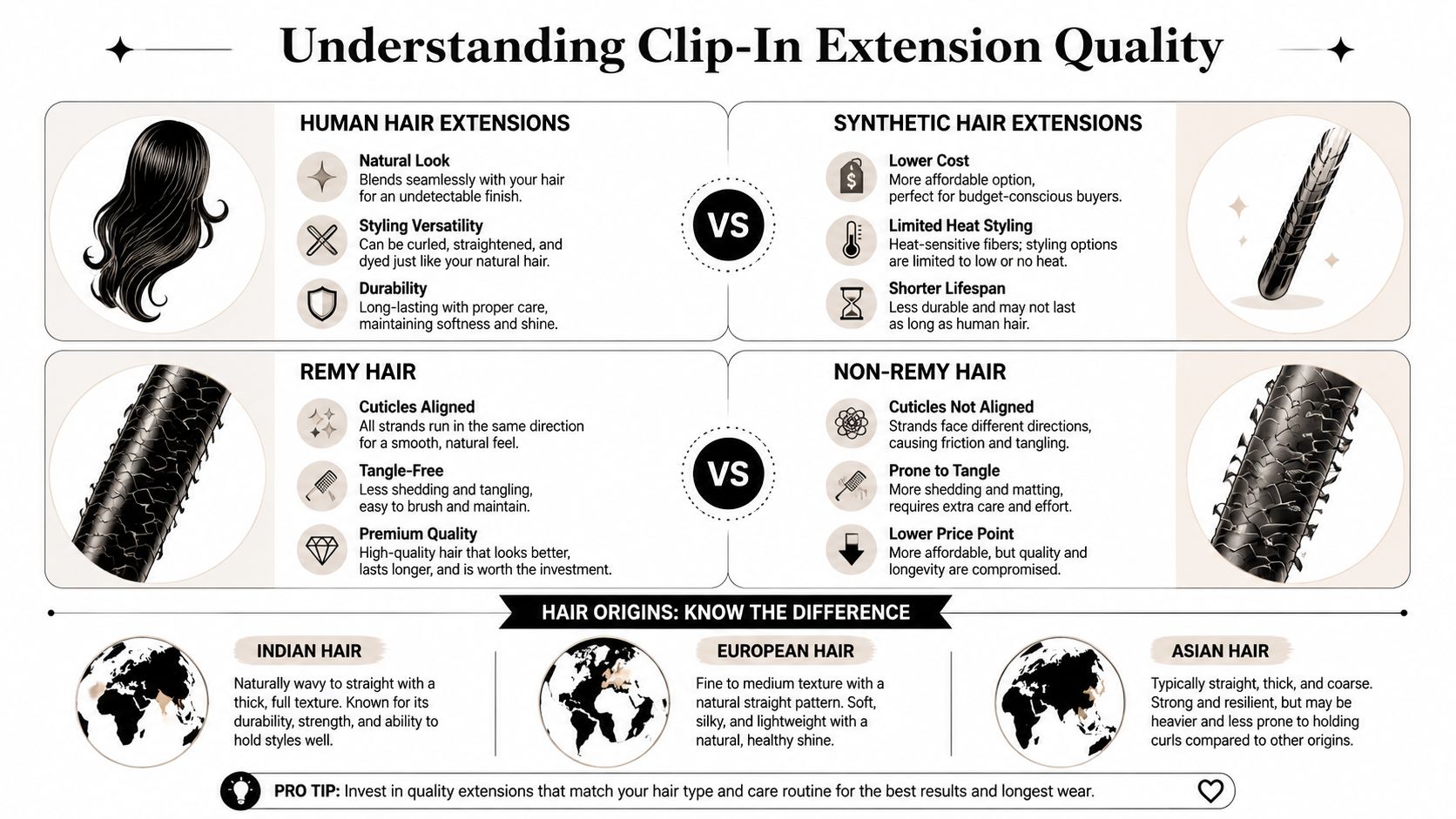
Remy human hair works like silk. Non-Remy human hair behaves more like a mixed fabric with a polished surface and weaker wear. Synthetic hair performs closer to polyester. All three can be sold. Only one supports a premium clean beauty position without undercutting trust.
Human hair versus synthetic hair
Synthetic hair is cheaper to buy in. It usually costs more in customer confidence. The feel is less convincing, the movement is stiffer, and heat styling flexibility is limited or inconsistent. For a retailer already selling premium skincare, scalp care, and other results-led beauty products, that gap is obvious.
Human hair fits the expectation your customer already brings into the store. It blends better, photographs better, and gives the wearer more control over styling. That makes it easier to defend the price and easier to generate repeat purchases instead of one-off curiosity sales.
Here is the commercial comparison:
| Type | Best use | Strength | Limitation |
|---|---|---|---|
| Human hair | Premium retail, repeat use, natural finish | Better blending, styling versatility, stronger perceived value | Higher buying cost |
| Synthetic hair | Entry-level fashion or novelty purchase | Lower upfront price | Less natural finish, limited styling flexibility |
Remy versus non-Remy decides customer satisfaction
If you stock one quality story, stock Remy. Remy hair keeps the cuticle aligned in one direction, which improves shine, reduces tangling, and gives a cleaner finish after brushing and styling. Those details matter because the customer judges performance at home, not just softness in the box.
Non-Remy hair is where many retailers damage the category. It can look acceptable on first touch, then mat, dull, or lose its finish after limited wear. That is a poor fit for Swiss premium retail, where customers expect durability, honesty, and visible value.
Analysts at Custom Market Insights on the hair extensions market project global category growth from USD 3.1 billion in 2026 to USD 5.5 billion by 2035, and identify human Remy hair as the leading segment. For a clean beauty retailer, that matters. The strongest margin opportunity sits at the quality end of the category, not the cheapest end.
Cheap extensions protect purchase margin on paper. Better extensions protect reputation, repeat business, and average order value.
What to ask suppliers before you list a product
A premium extension line needs proof, not sales language. Ask suppliers direct questions and expect direct answers.
- Hair specification. Is it human hair, and is it confirmed Remy?
- Processing method. How heavily has the hair been treated, coated, or silicone-finished?
- Clip and weft construction. Are the clips secure, comfortable, and discreet enough for repeat wear?
- Shade consistency. Can the supplier maintain batch accuracy across your core colours?
- Retail support. Do they provide clear care instructions, swatches, and education for store teams?
- Safety documentation. Can they show testing, compliance records, and material information?
This is also where clean beauty standards should stay firm. A retailer who screens skincare for formulation integrity should apply the same discipline to hair accessories and extension components. Resources on product safety through heavy metals testing are useful because they sharpen buying standards around contamination risk, supplier transparency, and what safe premium should mean in practice.
Keep the customer script short
Store teams do not need a technical lecture. They need a clear quality script that supports conversion.
- Human Remy hair looks more natural
- It tangles less and wears better
- It styles more like the customer's own hair
- It earns the premium price through better performance
That is the message to train. Clear language sells this category better than overexplaining ever will.
Curating the Perfect Assortment for Swiss Clientele
A strong clip in extensions assortment doesn't need to be huge. It needs to be right. Swiss customers respond well to edited choice, not cluttered choice. Start with a disciplined range that covers believable colour families, wearable lengths, and a few texture-led options that solve real customer needs.
The goal isn't to offer every shade under the sun. The goal is to make matching feel easy, premium, and trustworthy.
Build around believable European colour matching
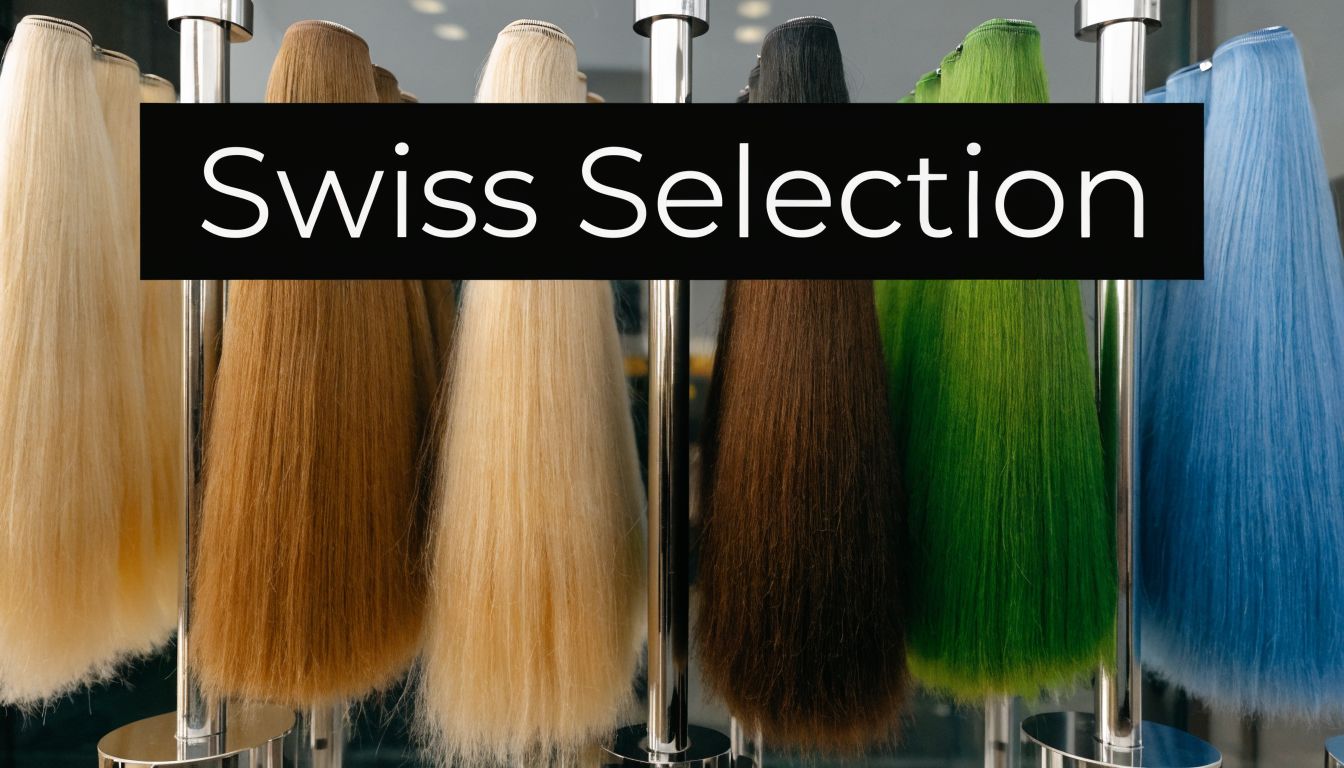
For the Swiss market, base your assortment around natural-looking tones first. Cool blondes, neutral blondes, soft brunettes, deeper brunettes, and understated dimensional shades will usually outperform trend colours in premium retail.
Keep the display practical. Customers struggle to choose from names alone. Use physical swatches and organise them by undertone rather than marketing labels.
A good starting structure looks like this:
- Light family with cooler and neutral blondes
- Mid family with soft dark blonde and light brown options
- Brown family with neutral and richer brunettes
- Deep family with dark brown and near-black shades
- Texture-led options for customers who need more natural movement rather than pin-straight finish
Fine and thinning hair needs its own curation
Most assortments fail at this stage. They treat all customers as if they have the same density, clip tolerance, and scalp resilience. They don't.
In Switzerland, an estimated 15 to 20% of women over 40 experience some form of hair thinning, creating a clear need for gentler solutions. Standard advice like heavy backcombing can worsen fragility. A better approach is lightweight low-profile clips and ECOCERT-certified root sprays for grip, as outlined by guidance on clip-ins for fine or thinning hair in Switzerland.
Buyer note: If your customer has low density hair, don't push maximum volume. Sell discreet fullness.
What to stock first
Rather than buying wide, buy intelligently.
Core volume sets
These should serve the broadest customer group. Focus on natural density, easy blending, and everyday wearability.Lightweight options These are essential for mature clients, fine-haired customers, and anyone worried about visible attachment points.
Texture-conscious pieces
Natural texture is no longer a niche concern. If you only stock sleek straight hair, you exclude customers who want believable blending.Occasion-led add-ons
Smaller pieces for updos, bridal styling, and event dressing can be a smart second-wave expansion after launch.
A disciplined assortment tells the customer you know what you're doing. That matters more than endless choice.
Advising on Application and Removal
Retailers don't need to perform application services to sell clip in extensions well. They do need to explain the process clearly and confidently. If the customer thinks application will be fiddly, visible, or damaging, you lose the sale before the pack is opened.
Your advice should emphasise three things. Placement matters. Weight matters. Removal should always be gentle.
The simplest application method to teach
Use a short verbal script that staff can repeat easily.
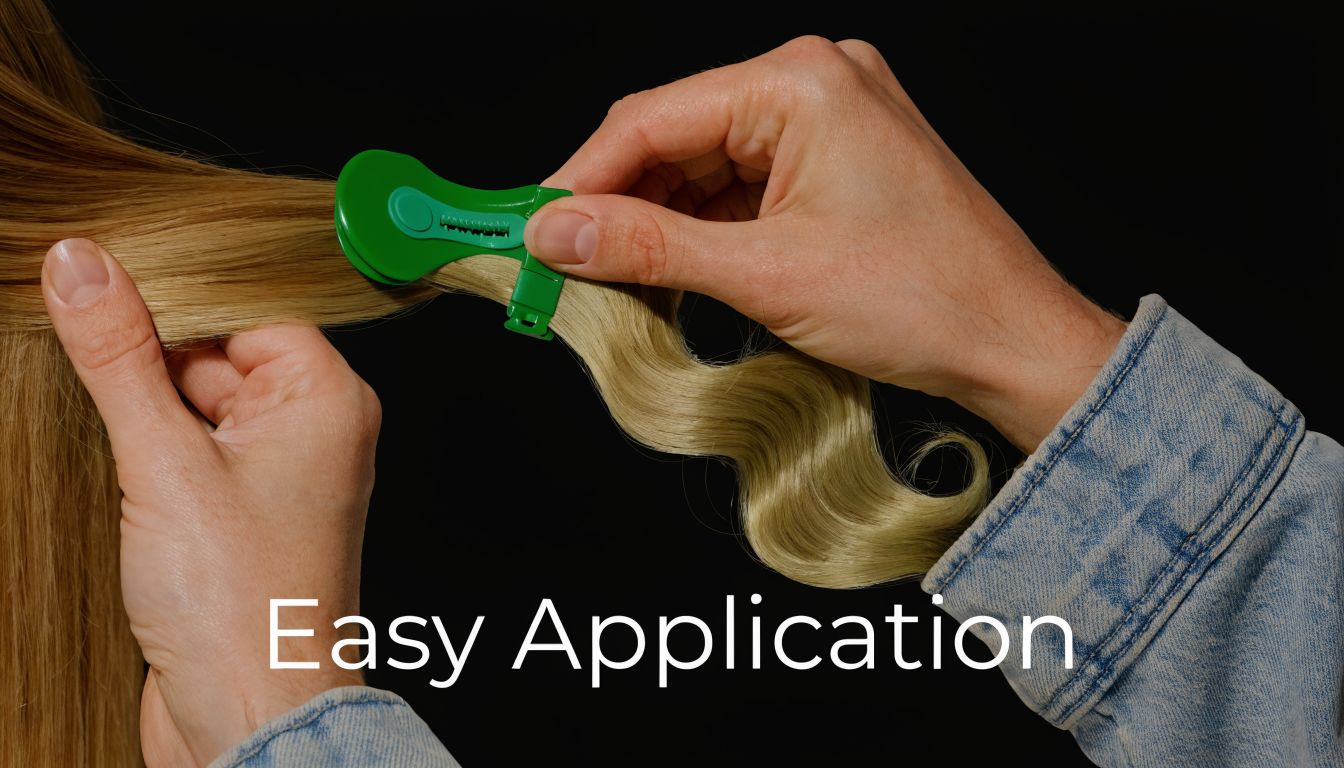
- Section the hair cleanly. Start at the lower back of the head and work upward.
- Anchor the weft where there's enough support. Don't place clips too close to the hairline.
- Snap the clips securely without forcing them. The fit should feel stable, not tight.
- Blend with the customer's own hair. The goal is integration, not obvious length added underneath.
A natural result usually comes from restraint. Most customers don't need every piece in the set every time they wear it.
Placement mistakes that make extensions look cheap
Bad application is what makes people say extensions look fake. The product often isn't the issue. The placement is.
Avoid these common errors:
- Clipping too high so the weft shows through the top layer
- Using too much hair which creates an obvious shelf effect
- Ignoring head shape and placing wefts in flat horizontal lines without checking balance
- Forcing volume at the crown when the customer really needs support through the sides and back
For customers with finer hair, the advice should be even tighter. Use fewer pieces. Choose lighter wefts. Keep the result soft and believable.
Removal should feel almost uneventful
If application creates confidence, removal protects trust. Customers need to know clip in extensions are temporary and manageable.
Explain it like this:
- Open each clip carefully.
- Support the natural hair with one hand.
- Slide the weft away without tugging.
- Brush the piece before storage.
That's the discipline. No ripping, no pulling, no hurried removal at the end of the night.
A visual tutorial helps staff and customers absorb the basics faster:
The best retail education reduces fear. Show customers that clip in extensions are quick to wear, easy to remove, and compatible with normal life.
Ensuring Longevity with Proper Care and Maintenance
A premium extension sale is rarely a one-time sale. It is the start of a higher-margin care cycle.
For Swiss clean beauty retailers, that matters. Clip in extensions fit best when they are positioned like any other premium beauty purchase: quality-led, responsibly maintained, and supported by the right aftercare. That framing protects satisfaction, raises average order value, and keeps the category aligned with the standards your customers already expect from skincare, scalp care, and wellness.
As noted earlier, well-made clip in extensions can stay in use for months when customers care for them properly. Your team should make that point early. Longevity is part of the value proposition, not a footnote after the sale.
Good maintenance should be taught as part of the product
Customers do not need a complicated routine. They need a clear one.
Set the standard with five instructions:
- Wash only when needed to remove buildup, not after every wear
- Choose sulfate-free shampoo to keep the hair softer and less prone to dryness
- Apply conditioner from mid-length to ends so the weft base stays lighter and cleaner
- Dry with low heat or air-dry to limit wear from repeated styling
- Brush before storage and before rewearing to prevent knotting and breakage
That advice does more than preserve the product. It reduces returns caused by misuse, lowers dissatisfaction, and gives staff a credible reason to recommend add-on care products.
Build a care basket, not a single-item sale
Retailers who treat clip ins as a stand-alone SKU cap their own margin. The stronger play is a care edit built around product longevity and clean performance.
A focused retail bundle should include:
| Care need | Recommended retail category |
|---|---|
| Gentle cleansing | Sulfate-free shampoo |
| Moisture support | Lightweight conditioner or rinse-out mask |
| Detangling | Soft brush or wide-tooth comb |
| Finishing | Light serum for ends |
| Storage | Protective pouch or extension hanger |
Premium positioning yields commercial benefits. Customers buying human hair extensions already accept maintenance as part of ownership, especially when the advice is practical and specific.
Protect the product, and you protect the margin
Premium customers will pay more when they understand how to preserve what they bought. Give them direct guidance. Do not sleep in clip in extensions unless the supplier explicitly approves it for that use. In most cases, the right routine is simple: remove, brush, and store after wear.
Storage deserves more attention than many retailers give it. Hair left loose in drawers mats faster, loses shape, and feels neglected sooner. A pouch or hanger is not a minor accessory. It is part of product protection.
This is also where sourcing discipline supports the care story. Retailers importing hair goods should keep origin documentation tidy and accurate, especially if they are handling international supply chains and want to avoid customs friction. Teams managing those documents can review this guide on avoiding common CO mistakes.
The commercial upside is straightforward. Better care advice leads to fewer complaints, stronger repeat purchasing, and more credible cross-sell opportunities across your clean haircare assortment.
Navigating Ethical Sourcing and Quality Regulations
In Switzerland, premium beauty retail runs on trust. That trust doesn't come from packaging language like “luxury”, “natural feel”, or “salon quality”. It comes from traceability, compliance, and a supplier who can answer direct questions without evasive language.
Clip in extensions deserve the same scrutiny you already apply to skincare and wellness products. If you position your store around ethics and clean standards, you can't treat hair accessories as an exception.
What ethical sourcing should mean in practice
Ask suppliers for clarity on origin, processing, and quality control. If they can't explain how the hair was sourced, sorted, processed, and coloured, they're asking you to carry reputational risk on their behalf.
Focus on these criteria:
- Traceability that follows the product through collection and processing
- Supplier transparency on how hair is gathered and handled
- Consistent batch quality so colour and texture don't drift
- Clear compliance paperwork for import and product documentation
This matters even more when you serve pharmacies, clinics, and wellness-led retail environments. Those channels don't just sell products. They lend credibility to them.
REACH and compliance aren't optional
Swiss premium consumers expect products to feel safe and responsibly controlled. That means retailers should favour suppliers who understand European compliance expectations, including REACH-aligned thinking around chemical safety and material responsibility.
You don't need to turn the sales floor into a regulatory seminar. You do need internal discipline. Vet first, sell second.
A useful operational habit is to tighten your import paperwork process early. If you work with international suppliers, guidance on avoiding common CO mistakes is worth reviewing because poor certificate-of-origin handling creates avoidable friction in sourcing and customs workflows.
The trust-building language staff should use
Keep the language clean and factual.
- We prioritise traceable, well-documented suppliers
- We favour products aligned with European safety expectations
- We choose quality that supports long-term wear and customer comfort
- We don't list products we can't defend
That final line matters. Customers hear the confidence behind it.
Retailers win in premium beauty when they curate more strictly than the customer expects.
Ethical sourcing isn't just a procurement issue. It's a merchandising advantage. When two products look similar, the one with stronger documentation, cleaner positioning, and better retailer confidence is the one that sells.
Selling and Merchandising Clip In Extensions in Your Store
High-growth beauty categories do not sell themselves. They sell when the retailer gives them status, structure, and a clear reason to belong in the assortment.
Clip in extensions deserve that treatment. For a Swiss clean beauty retailer, they are not a side fixture. They are a strong-margin add-on to an existing customer base that already pays for visible results, product quality, and credible guidance. Positioned correctly, this category sits naturally beside premium haircare, scalp care, bridal beauty, and self-styling tools.
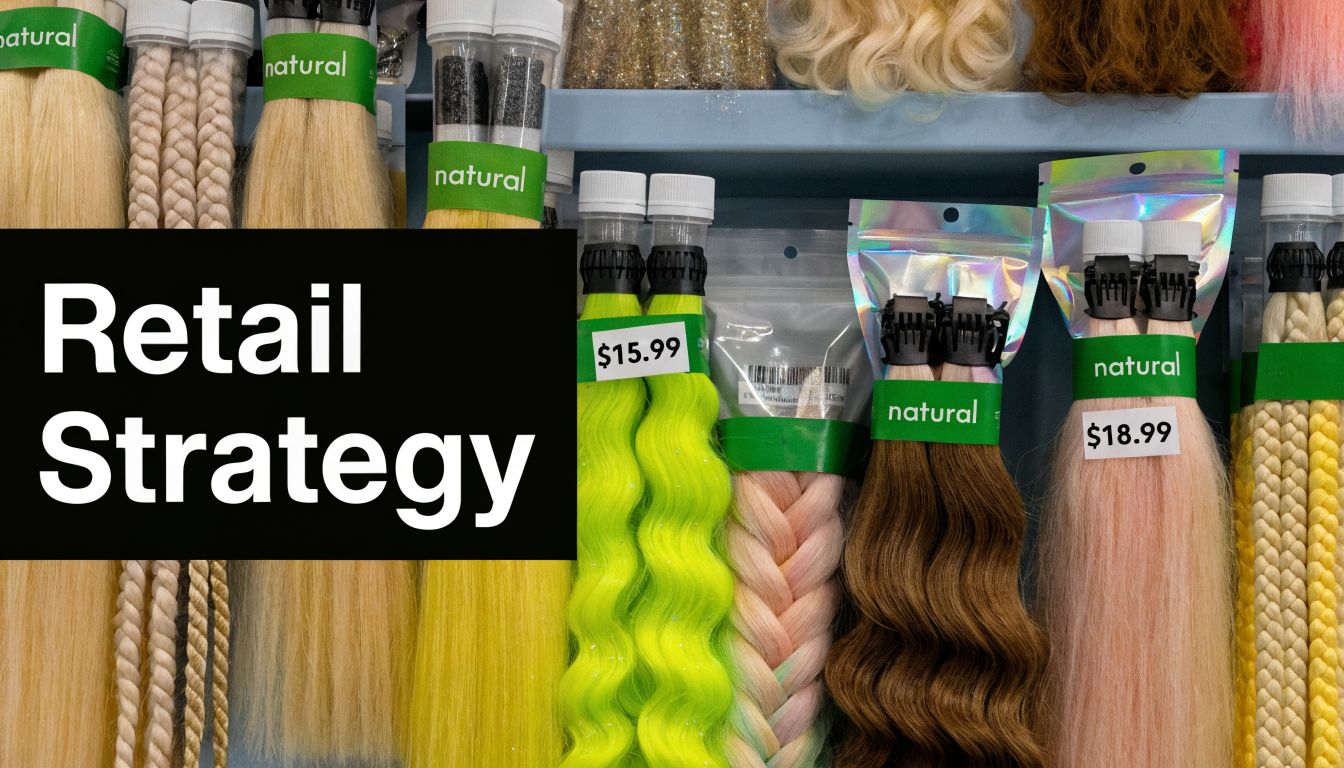
Position the category with authority
A premium customer reads the fixture before reading the pack. If the presentation feels cluttered, cheap, or trend-led, the category loses trust immediately.
Set it up like a considered beauty solution.
- Present shades in clean tonal order so matching feels controlled
- Offer tactile swatches so customers can judge colour, softness, and density with confidence
- Group by outcome such as added volume, event styling, fuller ends, or face-framing support
- Keep packaging restrained and polished if you control private label or co-branded presentation
- Place care items beside the extensions to increase basket size and reinforce long-term value
Keep low-grade fashion hair away from this area. Mixed signals hurt margin.
Merchandise around customer intent
Customers buy a result first. The unit configuration comes second.
Build edits that answer real shopping missions. Event-ready hair. More density for fine lengths. A polished look for photos. An easy way to improve an updo without committing to salon-installed extensions.
| Retail theme | What to include |
|---|---|
| Bridal and event | Clip in extensions, finishing brush, occasion body care |
| Fine hair solutions | Lightweight sets, gentle grip support, scalp-friendly styling aids |
| Luxury self-styling | Premium extensions, mirror placement, care kit |
| Giftable transformation | Extension set, pouch, curated beauty extras |
This format makes the category easier to shop and easier to upsell.
Train staff to recommend the right set fast
Strong retail teams sell certainty. They do not recite technical terms.
Use a simple consultation flow:
- Ask what change the customer wants to see.
- Check density, length, and shade family.
- Recommend the lightest option that achieves the result.
- Add care, storage, and the right brush.
- Explain application in plain language.
That structure protects the premium feel of the category. It also reduces returns caused by poor self-selection.
Use video to reduce hesitation
Clip in extensions are highly visual, so static merchandising is not enough. Customers need to see placement, blend, and final finish.
Short demo content works on product pages, social channels, and in-store tablets. Focus on three frames. Before, application, after. That is what moves conversion.
If your team needs a practical reference for producing more social proof and tutorial content efficiently, this guide to strategies for scaling video creative is useful for building beauty content that feels credible rather than overproduced.
Protect price integrity
Do not train customers to expect discounts in this category. That approach attracts price comparison, weakens trust, and makes premium education harder.
Hold margin by tying price to what the customer values:
- Hair quality
- Comfort during wear
- Ease of application
- Useful lifespan with correct care
- Clean, well-documented positioning
- Aftercare support from the retailer
The best comparison is premium skincare retail. Tight curation, clear explanation, and disciplined merchandising create stronger conversion and better repeat purchasing.
If you're a Swiss retailer, pharmacy, spa, clinic, or premium e-commerce partner looking to add ethically aligned beauty categories with stronger commercial upside, beautysecrets.agency can help you build a sharper assortment strategy around clean, credible products that fit how Swiss customers buy.