A Swiss pharmacy buyer often reaches the same point with Augustinus Bader. Clients ask for it by name. Prestige retailers already stock it. Editorial coverage keeps the brand visible. But once the excitement fades, the true questions begin.
Does augustinus bader the rich cream fit a Swiss assortment built around trust, ingredient scrutiny, and disciplined sell-through? Can a science-led luxury moisturiser sit credibly beside certified natural ranges? And can staff explain it well enough to justify the price without drifting into vague hype?
Those are the right questions. The Rich Cream is not a simple “yes” or “no” listing decision. It’s a high-recognition product with a clear performance story, but it also needs sharper positioning in Switzerland than it does in broader prestige beauty channels.
Introducing a New Icon to the Swiss Beauty Landscape
Swiss pharmacy and premium retail buyers keep running into the same commercial moment. A client in Zürich, Geneva, or Zug asks for Augustinus Bader by name after seeing it in international beauty coverage, on social media, or in a treatment room. The request sounds simple. The listing decision is not.
You are assessing more than demand. You are assessing credibility, clean-beauty fit, margin quality, staff readiness, compliance risk, and long-term sell-through.
Why buyers take it seriously
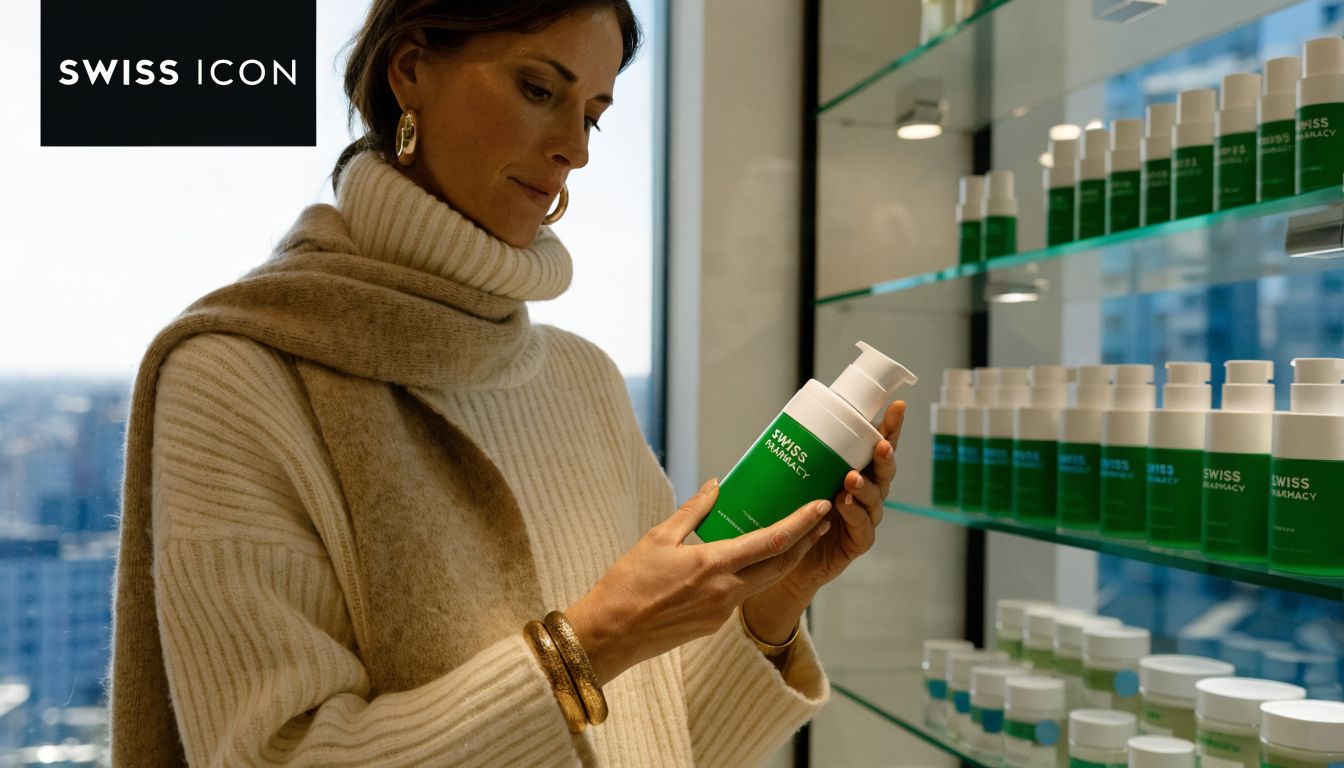
The Rich Cream entered the market as part of Augustinus Bader’s first product launch and quickly became the brand’s signature SKU. The commercial appeal is clear. It carries strong name recognition, a science-led founder story, and a texture profile that suits clients dealing with dryness, barrier stress, or seasonal discomfort.
That combination matters in Switzerland.
A premium cream can win first interest on visibility alone, but Swiss retailers usually need a cleaner sales rationale than prestige beauty counters in larger markets. Buyers want to know whether the product can hold its position beside natural ranges, dermocosmetic lines, and pharmacy staples that already have customer trust.
Why the Swiss market needs a tighter positioning script
The usual global luxury message is too loose for this channel. In Swiss retail, staff need to answer practical questions with precision:
- What problem does The Rich Cream solve in a routine?
- Which skin profiles justify the price most clearly?
- How should it be described in a clean-beauty assortment without implying certification it does not claim?
- Which claims are commercially useful but still safe from a compliance standpoint?
Those questions shape performance at shelf level. If the team cannot answer them, the product gets admired, sampled, and left behind.
At beautysecrets.agency, we usually advise partners to position The Rich Cream as a high-performance luxury moisturiser with a science-first story and selective clean-beauty relevance. That framing is more accurate for Swiss pharmacies and premium retailers than vague "clean" or "clinical" shorthand. It gives advisors room to discuss formulation quality, skin comfort, and barrier support without drifting into overclaiming or forcing the product into the wrong category architecture.
Media exposure still matters because demand often begins before the in-store conversation does. For teams tracking how prestige skincare earns attention, this roundup of top skincare beauty publications and journalists is useful because it shows where brand narratives are often established before Swiss buyers see the first client request.
Where the product usually performs best
The Rich Cream tends to perform best in environments where advisors can explain nuance and convert curiosity into a routine recommendation:
- Premium pharmacies with trained skincare staff
- Dermatology-adjacent and aesthetic channels where barrier support and recovery language are familiar
- Luxury spas and wellness retailers serving dry, mature, or climate-stressed skin
- Selective e-commerce with strong PDP copy, consultation tools, and ingredient education
It is a harder sell in stores built mainly around certification logos, strict natural positioning, or aggressive price comparison. In those settings, the product can still attract attention, but the conversion story needs much more work.
The Science Behind TFC8 Cellular Renewal Technology
A Swiss client stands at the counter, sees the price, and asks the question every advisor needs to answer well. What is materially different here?
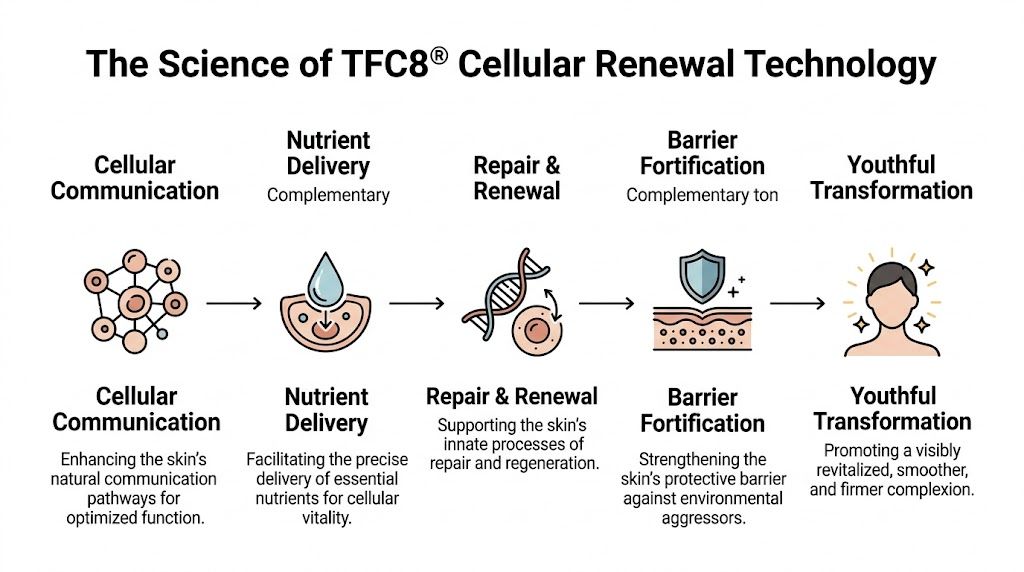
The useful starting point is TFC8®, short for Trigger Factor Complex. For retail teams, this is the part of the Augustinus Bader story that justifies premium positioning without slipping into vague luxury language or claims that create compliance problems.
TFC8® works as a guidance system for supportive ingredients
The brand presents TFC8® as a proprietary blend of amino acids, vitamins, and synthesized molecules formulated to support the skin environment and help useful ingredients reach the skin more effectively. On shelf, that matters because it gives staff a mechanism-led explanation instead of a texture-led one.
Clients buying in this tier usually want more than comfort. They want a formula with a rationale. TFC8® is the rationale.
A disciplined store explanation is simple. The cream is designed to support renewal processes associated with hydration, barrier condition, and the look of skin quality over time.
What staff should understand at mechanism level
Some third-party ingredient summaries describe TFC8® through functions tied to ingredients such as Panthenol and Zinc PCA, along with a broader hydration and skin-conditioning story on INCIDecoder’s Augustinus Bader The Cream page. That page is useful for ingredient orientation, but it is not the place to source hard clinical performance numbers for a sales conversation.
For Swiss pharmacies and premium retailers, the better approach is to stay close to what can be defended clearly:
- Amino acids, vitamins, and peptides: support the brand’s regenerative-science positioning
- Panthenol: fits a skin-comfort and conditioning narrative
- Zinc PCA: supports a balanced-skin discussion in ranges where calm and clarity matter
- Hydration pathway language: can be used carefully to explain why the product aims to do more than sit on the surface
That keeps the explanation credible and commercially useful.
What to say in store
Good advisors translate the technology into outcomes clients can understand without flattening the science.
- Credible explanation: “Augustinus Bader positions TFC8® as a proprietary complex that helps support the skin environment and improves how the formula works on skin, which is why the brand talks about renewal alongside hydration and comfort.”
- Poor explanation: “It has stem cells in it.”
- Also poor: “It’s expensive because it’s luxury.”
The first version gives the client a reason. The other two create risk. One is inaccurate. The other reduces a technical product story to prestige pricing.
Why this matters in Swiss retail
This section is where many teams either overcomplicate the science or oversell it. Both hurt conversion.
Swiss retail partners need a position that works within a stricter clean beauty conversation, especially in pharmacies, selective beauty, and premium wellness environments where clients often ask whether a biotech-led formula fits their definition of “clean.” The practical answer is yes, if staff frame it correctly. The Rich Cream is usually better positioned around formulation discipline, skin compatibility, and evidence-led development than around naturality cues or certification language it does not own.
That distinction protects the sale. It also protects compliance.
Where teams should stay precise
Do not turn TFC8® into a medical claim. Do not present research language as guaranteed consumer outcomes. Do not cite specific elasticity or fibroblast figures unless your team has the original source ready at point of sale and approved for use.
Use language like this instead:
- the product is science-led
- the formula is designed to support hydration, skin comfort, and the appearance of healthy-looking skin
- the proprietary technology helps explain why Augustinus Bader sits apart from standard rich moisturisers
That level of precision is usually enough to close the credibility gap between curiosity and purchase.
Deconstructing The Rich Cream Formulation
TFC8® gets most of the attention, but The Rich Cream would not have built its reputation on technology alone. The rest of the formula matters because it determines how the product feels, who enjoys using it, and who won’t.
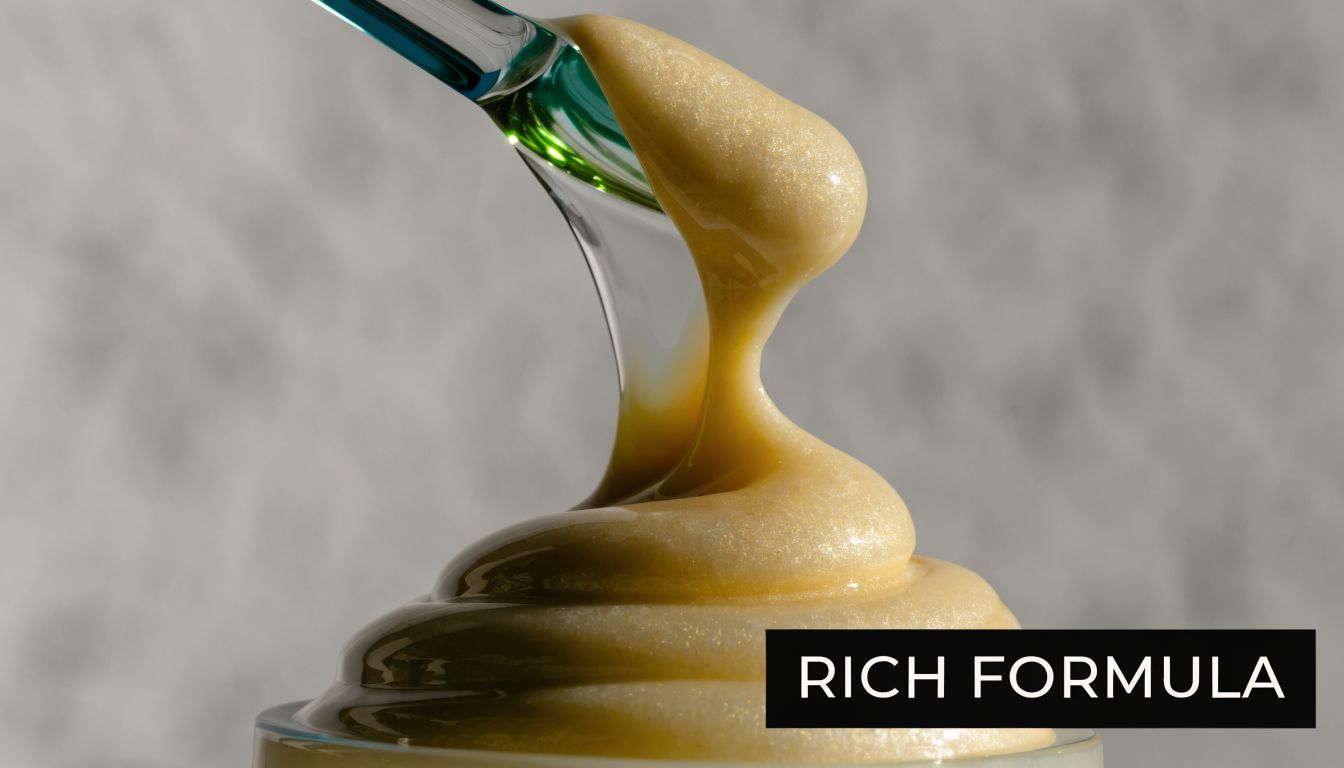
Why it’s called Rich
This is not a lightweight gel-cream trying to impersonate nourishment. The Rich Cream is built to deliver a more enveloping, lipid-supportive experience. That makes it particularly relevant for dry skin, mature skin, and skin under environmental stress.
The formula story relies on emollients and occlusives that help reduce the sense of tightness and improve skin comfort. In plain retail terms, it’s meant to feel cushioning.
The lipid profile matters
The formula includes ingredients commonly associated with barrier support and emollience, including Shea Butter, Avocado Oil, Squalane, and Sunflower Seed Oil. These aren’t there as decorative naturals. They form the structural body of the cream.
A retail team should understand the role of each type of ingredient:
- Shea Butter: gives density and a protective feel on skin.
- Avocado Oil: contributes richness and softness, especially valuable when skin feels depleted.
- Squalane: helps create slip and supports a more supple finish.
- Sunflower Seed Oil: fits naturally into a barrier-support narrative.
Who usually responds best
The best-fit customer is often easy to spot. They describe skin as tight, uncomfortable, weather-affected, or less resilient than it used to be. They may also dislike routines with too many steps.
The less ideal customer usually says something different. Their skin gets shiny easily. They dislike any residue. They want a moisturiser to disappear instantly.
That’s the practical divide.
Some clients love the cocooning finish. Others experience it as too present on the skin. That isn’t a formula failure. It’s a matching issue.
Swiss climate makes the richness easier to justify
In Switzerland, seasonal stress can make richer textures more appealing than they might be in milder conditions. Heating, cold air, altitude exposure, and routine transitions between indoors and outdoors often increase demand for creams that feel more protective.
That doesn’t mean every customer needs The Rich Cream. It means the formula has a clear role in an assortment where climate stress is a real selling context.
Recommended use and fit
The brand’s product page states the cream is recommended at 2 to 3 pumps twice daily for one month on the official The Rich Cream page. That guidance helps staff set realistic expectations on usage and texture.
For retail conversations, a simple fit grid works well:
| Skin profile | Likely fit |
|---|---|
| Dry and dehydrated | Strong fit |
| Mature and comfort-seeking | Strong fit |
| Post-travel or weather-stressed | Good fit |
| Oily and texture-sensitive | Caution |
| Minimalist routine user | Good fit if they like richer finishes |
What works and what doesn’t
What works:
- applying to skin that needs comfort and lipid support
- recommending it for clients who prefer one premium hero cream
- using it in colder months or in skin-recovery routines
What doesn’t work:
- pushing it as universally suitable
- describing it as weightless
- selling it to every oily or combination client without texture testing
A good advisor treats the richness as a feature, not a problem to downplay.
Summarizing the Clinical Evidence and Performance
A Swiss pharmacy advisor will usually hear the same question within minutes. What proof supports the price?
The answer should be precise and compliant. For this product, the strongest sales evidence available to staff is the brand’s published consumer perception testing, as noted earlier in the article, paired with careful expectation-setting at the counter.
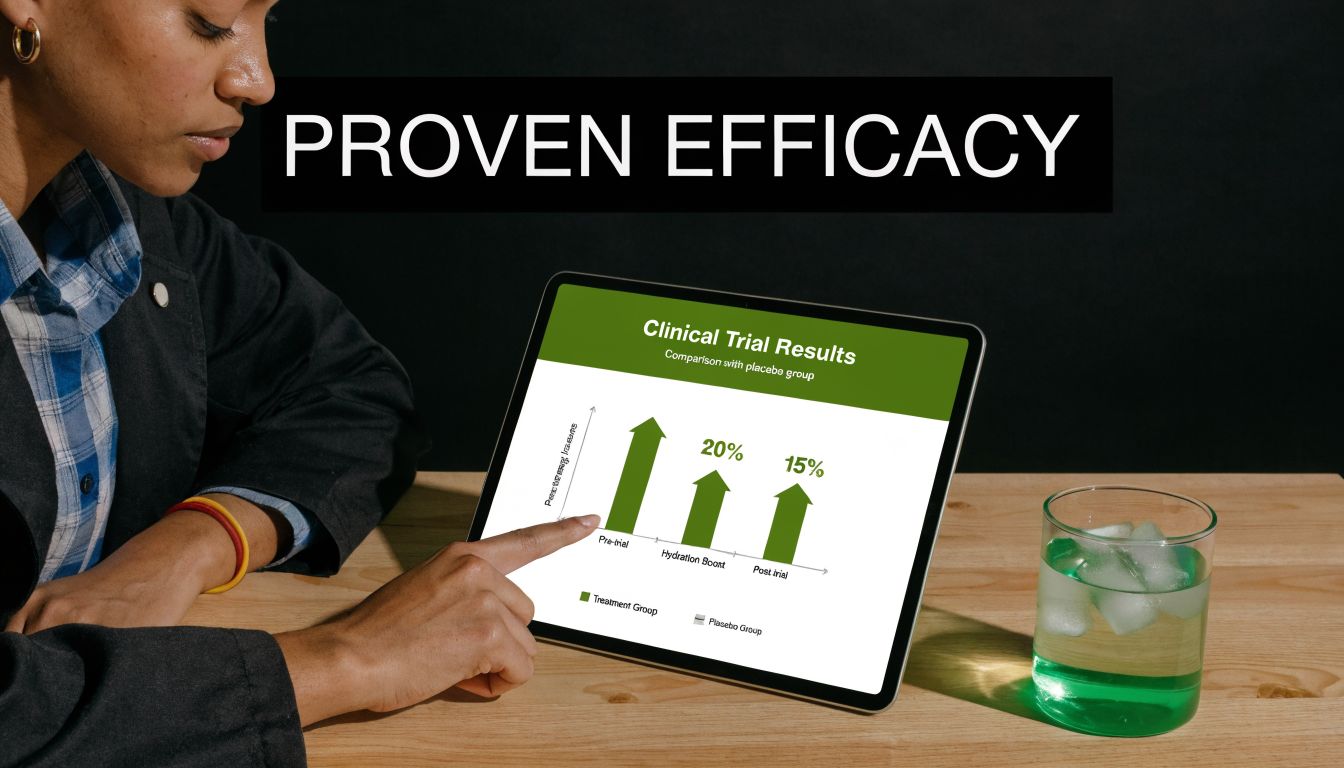
Three themes matter commercially.
- participants reported immediate hydration and nourishment
- participants reported day-long hydration after a consistent usage period
- participants reported improved firmness, suppleness, and elasticity
For Swiss retail partners, the distinction is simple. These are consumer-reported outcomes from brand-published testing. They are useful for sales conversations, but they are not local Swiss clinical trials, physician-supervised treatment claims, or proof of a medical effect.
That trade-off matters. In premium skincare, customers often buy after they can connect texture, immediate skin feel, and a believable longer-term benefit. Consumer perception data supports that conversation well. It does not support overclaiming.
A disciplined advisor keeps the language tight:
- use “helps skin feel hydrated, nourished, and more supple”
- use “reported results after consistent use”
- avoid “clinically proven to repair” unless a specific claim is documented and approved for your market
- avoid promising the same outcome for every skin type
This is especially important in Switzerland, where pharmacy teams and premium beauty staff often work under higher scrutiny from ingredient-aware, claim-aware shoppers. A clean-clinical brand story performs better when the evidence is presented with restraint.
Strong premium skincare sells better when the claim language is narrower than the marketing hype, not broader.
A short brand video can also help staff absorb the product narrative before translating it into their own language.
In practice, I recommend a four-step selling sequence for this section of the conversation. Start with the concern, usually dryness, comfort loss, or a feeling of reduced elasticity. Explain the mechanism in plain language. Reference the published consumer-reported outcomes. Then qualify the recommendation based on skin type, climate exposure, and finish preference.
That sequence gives retail teams something better than generic prestige storytelling. It gives them a defensible sales framework that fits pharmacies, clinic-adjacent retail, and premium counters where compliance and credibility directly affect conversion.
Positioning Augustinus Bader in the Swiss Retail Environment
A Swiss pharmacy advisor has two minutes with a client who asks a familiar question: “Is this clean, and is it natural?” If the answer blurs those terms, the sale gets harder and the return risk goes up.
That is the commercial reality for The Rich Cream in Switzerland. The product has strong prestige recognition, but recognition alone does not determine sell-through. Category fit does.
Position it as clean-clinical skincare with premium scientific authority
For Swiss retail, the strongest framing is precise: The Rich Cream is a science-led premium moisturiser with a selective free-from profile that can appeal to ingredient-conscious clients, but it should not be presented as certified natural or organic unless your documentation supports that claim.
That wording protects the advisor and the assortment.
At beautysecrets.agency, feedback from Swiss retail partners points to the same pattern. Clients increasingly ask about ingredient philosophy, certification status, and how a product fits beside established natural-beauty ranges. The opportunity is real, but so is the compliance risk if teams use “clean” as a shortcut and let the customer infer ECOCERT-style positioning.
What that means in practice
Do not place The Rich Cream in a bay that signals formal organic equivalence if you also stock brands chosen for certification-led natural positioning. That shelf context invites the wrong comparison before an advisor has even started the conversation.
Use one of these clearer merchandising narratives instead:
- advanced anti-ageing skincare
- barrier comfort and skin recovery
- science-led luxury facial care
- clean-clinical premium skincare
- rich moisturisers for dry, mature, or stressed skin
This approach gives retailers a cleaner commercial story. It also respects how Swiss customers shop, especially in pharmacies and premium doors where clients often expect tighter claim discipline than they do at a general beauty counter.
The real customer question behind “clean”
In store, “clean” rarely means one single thing. Advisors should separate the question before answering it.
| Customer question | What they usually mean | Best response angle |
|---|---|---|
| Is it natural? | Is it plant-led or certification-aligned? | State clearly that the product is science-led, not positioned as certified organic unless documented |
| Is it safe-feeling? | Will it feel compatible with my skin and avoid certain ingredients? | Explain the formulation philosophy and texture suitability without overclaiming |
| Is it ethical? | Does it align with cruelty-free or broader brand values? | Answer only with substantiated brand information |
A one-word “yes” creates avoidable confusion. Clear qualification builds trust faster than broad reassurance.
Its role in a Swiss assortment
The Rich Cream works best as a complementary option within a curated premium mix. It serves the client who wants biotech credibility, rich sensorial comfort, and a high-ticket facial moisturiser with a medical-founder halo. That is a different purchase motivation from the client actively seeking certification-first botanical skincare.
This distinction matters in pharmacies, selective perfumery, and clinic-adjacent retail. In each setting, the product earns its space by widening the decision set, not by imitating the language of natural brands already on shelf.
The same logic applies to staff development. Teams sell this product better when they can distinguish formulation philosophy, not just repeat prestige talking points. Retailers looking to strengthen that skill set often benefit from broader actionable customer relation training, especially for high-consideration categories where objection handling affects conversion.
Retail clarity protects margin. Confused positioning creates discount pressure, slower turns, and more staff hesitation.
Positioning errors to avoid
Common mistakes are predictable:
- calling it certified natural without proof
- implying compliance with Swiss natural-cosmetics standards that have not been documented
- downplaying the scientific story to make it sound more botanical
- treating all clean-beauty shoppers as one customer type
Swiss clean-beauty demand is split. Some customers are certification-driven. Others are results-driven but still selective about formulation standards and brand ethics. Good positioning respects that split instead of flattening it.
Sales language that holds up under scrutiny
A stronger in-store explanation is simple:
“This is our science-led premium cream for clients who want a richer texture, high comfort, and a biotechnology-based skincare story. If you are specifically looking for certified natural skincare, I can show you those options separately.”
That script does three jobs. It qualifies the product accurately, keeps the advisor credible, and protects the rest of the assortment from false comparison.
Your Merchandising and Sales Training Blueprint
A Swiss pharmacy advisor has two minutes between clients. A premium cream priced well above the category average sits on shelf. The tester feels excellent, but the sale only happens if the advisor can explain who it is for, what it does, and where it fits against certified natural options without drifting into claims the brand cannot support.
That is the operating reality for The Rich Cream. Merchandising and training need to reduce hesitation, protect credibility, and keep the product in the right conversations.
Start with placement discipline
Place The Rich Cream where consultation happens. It loses force when it is grouped inside a broad moisturiser wall with no clear advisor access.
The strongest placements are usually:
- Near premium facial care with active staff support
- Beside barrier-support, anti-ageing, or skin-recovery assortments
- Within sight of a consultation counter or treatment room exit
- In clinics, near practitioner-recommended homecare rather than fragrance-led prestige displays
Testers should be clean, full, and monitored. Texture sells this product, but poor hygiene weakens trust fast.
Give staff one selling route, not five
Teams do better with a repeatable structure than with a long brand lecture. I usually train advisors to cover fit, mechanism, texture, and usage in that order. It keeps the conversation practical and helps Swiss retail teams avoid overstating the science or blurring clean-beauty definitions.
A workable 30-second explanation
“Augustinus Bader The Rich Cream is a premium moisturiser for skin that feels dry, tight, or depleted. It combines a rich, comforting texture with the brand’s TFC8® technology, so the story is science-led rather than botanical-first. It suits clients who want one high-end cream that supports hydration, skin comfort, and a more polished look and feel.”
That script works in pharmacy, perfumery, and clinic retail because it is specific without sounding rehearsed.
Handle clinic and post-treatment demand with care
There is a real commercial opportunity in aesthetic and dermatology-adjacent retail. Swiss clients often ask for homecare that feels more advanced after periods of skin stress, seasonal dryness, or in-clinic procedures. That does not justify loose post-procedure claims.
The safer sales frame is clear. Present The Rich Cream as a premium option that may appeal to clients seeking comfort and nourishment after professional advice, provided the practitioner agrees. Do not present it as a Swiss post-laser standard or imply local clinical validation that has not been documented.
That distinction matters in Switzerland, where premium retailers and pharmacies are expected to balance aspiration with accuracy.
Key sales talking points for The Rich Cream
| Feature | Benefit (What it does) | Customer Talking Point (How to say it) |
|---|---|---|
| TFC8® technology | Supports a science-based product story | “Clients choose this for the biotech positioning as much as for the texture.” |
| Rich lipid profile | Helps reduce the feeling of dryness and tightness | “This is a strong match for skin that feels weather-stressed or consistently dry.” |
| Simplified premium routine | Appeals to clients who want fewer steps | “It suits people who want one hero cream instead of a complicated regimen.” |
| High-comfort texture | Creates immediate sensory reassurance | “If your skin likes a richer finish, this feels more protective than a light gel-cream.” |
| Clear category fit | Prevents confusion with certified natural skincare | “This is our science-led premium cream. If you want certified natural, I can show you those products separately.” |
Build objection handling into training
Objection handling should be practiced, not improvised at shelf. The highest-converting teams rehearse short answers and know when to qualify out.
Focus role-play on these moments:
- Price resistance
- Questions about whether it is natural or organic
- Concerns about heaviness or greasiness
- Questions about use around treatments
- Comparisons with other luxury creams
Retail managers who want better consultation standards often pair product training with broader service coaching. This guide to actionable customer relation training is useful because it trains staff to listen, qualify, and recommend with confidence instead of reciting features.
Margin is protected at the point of explanation. If the advisor describes the jar before the client need, conversion drops.
Ready-to-use clienteling copy
Short follow-up copy performs better than polished brand language.
After a consultation
“Based on your dryness and comfort concerns, The Rich Cream is the best-fit premium option we discussed. It offers a richer finish than a standard moisturiser and is best suited to skin that feels tight, weather-affected, or depleted.”
For social content
“The right premium cream depends on skin need. The Rich Cream suits clients looking for a richer texture, strong comfort, and a science-led skincare story.”
For clinic retail
“For clients discussing advanced homecare after periods of skin stress, The Rich Cream is a premium option to review with your practitioner or skincare advisor.”
Answering Common Questions and Objections
The most effective sales teams don’t dodge objections. They answer them cleanly.
Why is it so expensive
Because the product is positioned at the intersection of biotech storytelling, prestige skincare, and high-touch formulation. Clients are not only paying for a moisturiser texture. They are buying into a branded technology platform, a founder-led research narrative, and a luxury format.
That doesn’t mean everyone should buy it. It means the price follows the brand architecture. If a client only wants basic hydration, there are simpler options. If they want a rich cream with a stronger science identity, the price becomes easier to understand.
Is it better than other luxury creams
Not universally. It’s better for some customers and worse for others.
It’s a strong fit when the client wants:
- rich daily comfort
- a simplified routine
- a science-led alternative to heritage luxury creams
- support around dryness, visible suppleness, and skin feel
It’s a weaker fit when the client wants a featherlight finish or only values botanical purity language.
If it isn’t certified organic, is it really clean
That depends on what the client means by clean.
If they mean certified natural or organic, don’t blur the answer. The Rich Cream should not be presented as equivalent to a formally certified natural product without substantiation.
If they mean ingredient-conscious, free-from, and selective, then the product may still appeal strongly. The right response is honesty, not category stretching.
Will it feel too heavy
For some clients, yes.
That’s the trade-off built into the product name itself. The richness is part of the benefit for dry and mature skin, but it can feel too substantial for clients who dislike any residue or whose skin is naturally oilier.
The solution isn’t persuasion. It’s qualification. Ask how they usually react to rich creams. Ask what they currently use. If possible, texture-test before selling.
The right objection response is often a redirect, not a rebuttal.
Can I use it with other skincare
Generally, yes, as part of a sensible routine. It works most naturally as the moisturising step within a broader regimen.
The main practical guidance for staff is to ask about the client’s routine complexity. A minimalist may use it as their hero cream. A more advanced user may layer it after treatment products or serums. What matters most is not overcomplicating the recommendation.
Is it suitable for post-treatment skin
It can be discussed in that context, especially in premium clinic retail, but staff should stay within what they can support confidently. There is market opportunity around recovery positioning, but local Swiss trial evidence hasn’t been established in the available data.
So the honest answer is: it may suit some post-treatment routines as a rich, comforting premium cream, but the final recommendation should follow practitioner guidance.
What if a client compares it to a certified natural cream in store
A good answer is direct:
“They serve different priorities. This one is the science-led option. The other is the certification-led natural option. The best choice depends on whether you care most about formulation philosophy, texture, or the type of results story you prefer.”
That response protects trust and preserves your assortment logic.
If you're assessing whether augustinus bader the rich cream belongs in your Swiss retail mix, beautysecrets.agency can help you shape the right positioning, staff education, and assortment strategy for premium beauty, pharmacy, spa, and clinic channels.