When it comes to getting rid of unwanted hair, there are countless temporary fixes. But electrolysis hair removal stands alone. It’s the only method recognised by medical authorities like the FDA as being truly permanent. While other techniques only offer hair reduction, electrolysis delivers a definitive, lifelong solution that works for every skin tone and hair colour.
Why Electrolysis Is Your Only Permanent Hair Removal Solution
If you're fed up with the endless cycle of shaving, waxing, and tweezing, you've probably been looking for a real, lasting answer. Many methods promise smooth skin, but the results are fleeting. Electrolysis is different. It’s a time-tested technique that provides what others simply can't: genuine permanence.
This guide will walk you through everything you need to know about this powerful treatment. We’ll cover the entire journey, from the science that makes it work to finding a skilled practitioner—which is especially important for discerning Swiss consumers who value quality and proven results.
What This Guide Covers
We're going to break down the process so you can feel confident deciding if it's the right choice for you. You'll get a clear picture of what makes electrolysis hair removal so unique and effective.
Here’s what we’ll explore together:
- The Science Explained: How electrolysis actually works at the follicle level to stop hair from ever growing back.
- Method Comparison: A straightforward look at how it compares to laser, waxing, and other common hair removal options.
- Your Treatment Journey: A realistic timeline of what to expect, from your first session to your final, smooth result.
- Finding an Expert: Practical advice on how to choose a qualified and certified practitioner in Switzerland.
- Clean Aftercare: How to support your treatment with a clean skincare routine for healthy, flawless skin.
By targeting and destroying the hair's growth centre right at the root, electrolysis ensures that once a hair is gone, it's gone for good. This isn't just hair reduction; it's total hair elimination.
Ultimately, choosing electrolysis is an investment in yourself—in your confidence and in your time. It does require a commitment over multiple sessions, but the reward is a lifetime of freedom from unwanted hair. This guide gives you all the details you need to start this journey with clarity and assurance.
How Electrolysis Permanently Stops Hair Growth
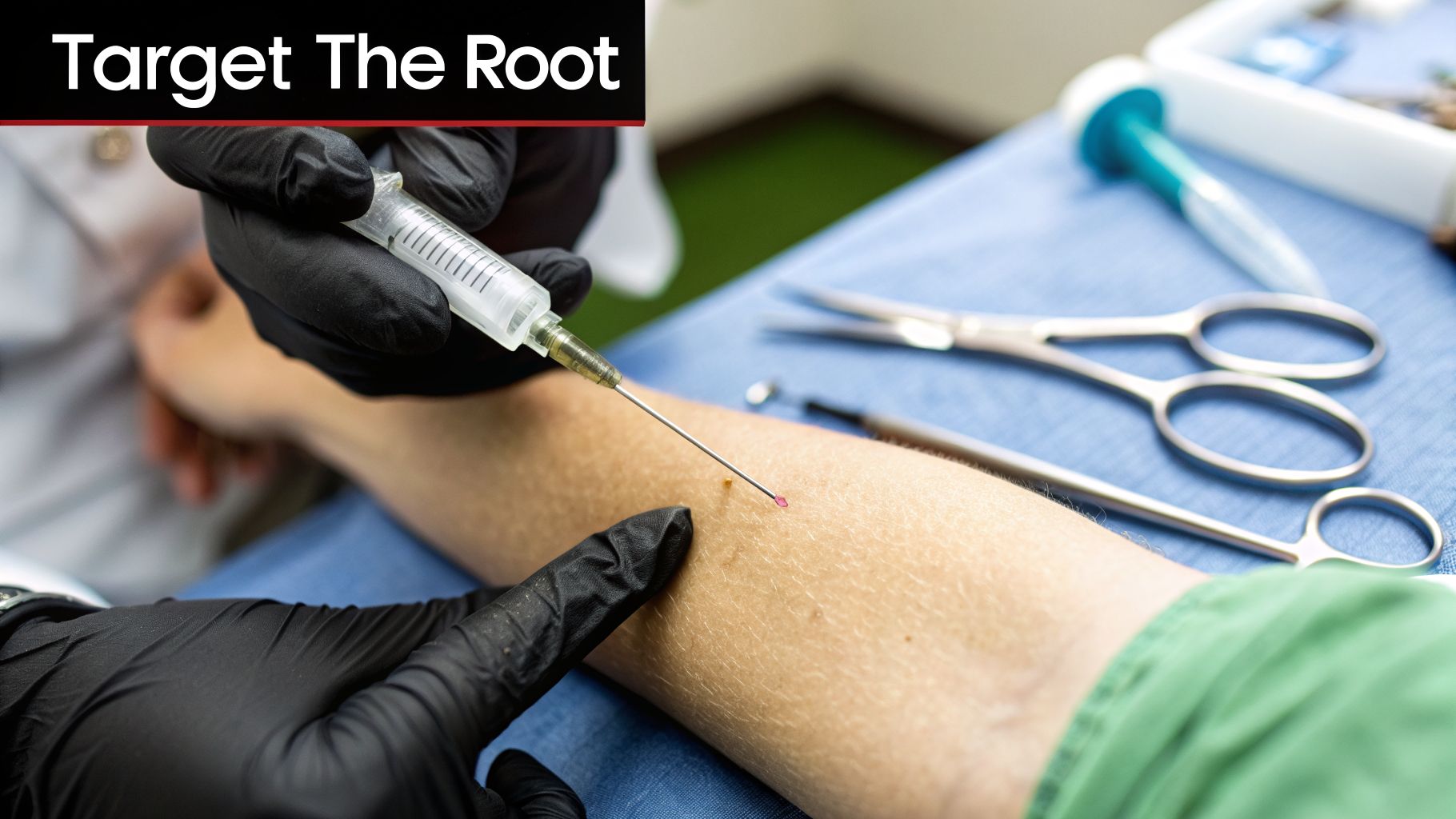
So, what’s the secret behind electrolysis's claim as the only truly permanent hair removal solution? It all comes down to how it works. Think of each hair as the product of a tiny, individual factory—the hair follicle. Shaving and waxing are like trimming the grass; they deal with what’s on the surface but leave the root system untouched and ready to grow back.
Electrolysis, on the other hand, goes straight to the source. It doesn’t just manage the hair; it shuts down the factory for good.
The process is incredibly precise. A skilled practitioner slides a sterile probe, often thinner than the hair itself, into the natural opening of the follicle. Once it’s perfectly positioned, a small pulse of electrical energy is delivered directly to the follicle's base. This energy destroys the dermal papilla—the hair's growth centre—along with the cells responsible for regeneration.
Once those key structures are disabled, the follicle simply cannot produce another hair. The treated hair is then gently lifted out with tweezers, not pulled, which confirms the follicle has been successfully neutralised. This hair-by-hair approach is what makes electrolysis hair removal so thorough and why its results are truly permanent.
The Three Core Electrolysis Techniques
An electrologist will choose from one of three proven methods, or even combine them, based on your specific hair type, skin condition, and the area being treated. While they all achieve the same goal, they get there in slightly different ways.
- Galvanic Electrolysis: This is the original technique. It uses a direct current to create a chemical reaction inside the follicle, producing lye (sodium hydroxide) which destroys the growth cells. It's incredibly effective but is the slowest of the three methods.
- Thermolysis (Short-Wave): A more modern approach, thermolysis uses a high-frequency current to create a quick burst of heat. This heat essentially cauterises the hair’s growth tissue. It’s much faster than galvanic, making it a great option for larger areas.
- The Blend Method: As you might guess, this method combines the best of both worlds. It uses the heat from thermolysis to accelerate the chemical reaction of the galvanic current. This creates a highly effective and powerful treatment, especially for stubborn, coarse, or distorted follicles.
Universal Effectiveness For All Hair And Skin
Perhaps the biggest advantage of electrolysis is that it works for everyone. Unlike laser hair removal and other light-based systems, which need a strong contrast between dark hair and light skin to be effective, electrolysis is completely "colour-blind."
Because it targets the follicle directly with electrical energy rather than pigment (melanin), electrolysis is equally effective on all hair colours—blonde, grey, red, and dark—and safe for all skin tones.
This quality makes it the only truly permanent solution for people who aren't good candidates for laser. Its precision is also why it's the gold standard for delicate facial work, like shaping eyebrows or clearing the upper lip.
The demand for such a reliable method is growing fast. In Switzerland, the electrolysis market was valued at CHF 92 million in 2026 and is on track to reach CHF 145 million by 2033. This surge is supported by a 28% increase in medical spas since 2020, as more people look for lasting solutions to concerns like hirsutism, a condition affecting many. You can explore more about these market trends and the rise of advanced services.
Ultimately, this direct, individualised method of destroying the follicle is why electrolysis remains the benchmark for achieving permanently smooth, hair-free skin, no matter your hair colour or skin type. It’s a methodical process that genuinely delivers on its promise.
Comparing Electrolysis Against Laser and Other Methods
When you start looking into permanent hair removal, the conversation nearly always comes down to two options: electrolysis hair removal and laser. While they're both popular choices, they work in completely different ways and, more importantly, give you very different results in the long run. Getting clear on these differences is the key to choosing the right path for your goals, hair type, and skin tone.
Many people toss around the terms "permanent hair removal" and "permanent hair reduction" as if they mean the same thing. They don't. This is arguably the most important thing to understand when weighing your options.
Electrolysis is the only method recognised by medical authorities as truly permanent hair removal. It works by destroying the hair follicle’s ability to regrow hair, meaning once a hair is treated, it’s gone for good. Laser, on the other hand, is classified as permanent hair reduction. It aims to damage the follicles, which often leads to finer, lighter regrowth over time, but it doesn't guarantee every treated hair is gone forever.
So, while laser can make a huge difference in the amount of hair you have, it doesn't promise to eliminate every single hair permanently.
Effectiveness Across All Hair and Skin Types
One of the biggest wins for electrolysis is that it works for absolutely everyone. The science behind it is completely “colour-blind,” making it a foolproof solution no matter your hair or skin colour.
Because the process sends a tiny electrical current directly into the follicle, it doesn't need to find pigment (melanin) to do its job. This makes it incredibly effective for:
- All hair colours: Blonde, red, grey, and white hairs are basically invisible to a laser, but they can be permanently removed with electrolysis.
- All skin tones: It’s safe and effective for every skin colour, from the fairest to the darkest, without the risk of pigmentation changes that can sometimes happen with laser treatments on darker skin.
Laser hair removal works by targeting the melanin in the hair. For it to work well, there needs to be a strong contrast between the skin and hair colour. This is why laser gives the best results on dark hair against lighter skin and is generally not an option for light-coloured hair.
The Head-to-Head Comparison
Choosing between hair removal methods can feel overwhelming, but a simple comparison often makes the decision much clearer. Below, we've broken down how electrolysis measures up against laser and the more traditional, temporary method of waxing. Each has its own pros and cons, serving very different needs.
Electrolysis vs. Laser vs. Waxing: A Comparison
This table compares key features of popular hair removal methods to help you choose the best option for your needs.
| Feature | Electrolysis | Laser Hair Removal | Waxing |
|---|---|---|---|
| Result | Permanent Removal: The follicle is destroyed. | Permanent Reduction: Follicles are damaged, not always destroyed. | Temporary: Hair regrows in 3-6 weeks. |
| Best For | All hair colours and skin tones, including blonde, grey, and red. | Dark hair on lighter skin tones. Ineffective on light hair. | All hair and skin types. |
| Process | Treats one hair at a time with a fine probe. | Treats multiple hairs at once with pulses of light. | Removes hair from the root using sticky wax. |
| Precision | Extremely high, perfect for shaping eyebrows or targeting single hairs. | Good for large areas like legs and back. | Less precise, better for larger, dense areas. |
| Pain Level | Mild to moderate stinging or heat sensation per hair. | Snapping or stinging sensation, like a rubber band. | Sharp, intense pain during the pull, with lingering soreness. |
| Long-Term Value | Higher initial investment but permanent results mean no future costs. | Requires ongoing maintenance sessions, adding to the long-term cost. | A consistent, lifelong expense. |
As you can see, the methods are designed for different outcomes. If your goal is a final, permanent solution, electrolysis is the only one that truly delivers on that promise.
For a deeper dive into the specific technologies and why one is considered removal versus reduction, this guide on Laser Hair Removal Vs Electrolysis is a great resource.
Treatment Timeline and Commitment
The timeline is another big point of difference. Electrolysis is a methodical, deliberate process that requires a real commitment.
Because it treats each hair one by one, and because our hair grows in different cycles (growth, resting, and shedding), you'll need multiple sessions to catch every single hair in its active growth phase. A full treatment plan could take several months or even over a year, but your sessions will get shorter and further apart as you go.
Laser sessions are usually quicker since the machine zaps a whole patch of skin at once. But since it only reduces hair, you’ll likely need to book touch-up sessions every year or so to keep any new growth under control.
And then there’s waxing. It gives you instant smoothness, but it's a lifelong treadmill of appointments every few weeks. While electrolysis hair removal asks for patience upfront, your reward is a permanent end to the hair removal cycle, saving you endless hours and money over a lifetime.
What to Expect From Your Treatment Journey
Deciding to go with electrolysis hair removal is a real commitment, but it’s one that pays off with permanently smooth skin. Unlike methods that offer a temporary fix, this process requires patience. The reward, though, is a lifetime of freedom from unwanted hair.
The entire treatment plan revolves around one simple biological fact: your hair grows in cycles. Understanding this is key to realising why you’ll need more than one session to get the job done right.
The Three Phases of Hair Growth
To work, electrolysis needs to catch the hair follicle at just the right time—during its active growth phase. Your electrologist is an expert at timing your appointments to make sure every hair is eventually treated when it’s most vulnerable.
Anagen (The Growth Phase): This is the sweet spot. The hair is actively growing and still connected to its root (the dermal papilla). Electrolysis is only effective during this phase because the current can travel directly down the hair to destroy the growth cells at the source.
Catagen (The Transition Phase): Here, the hair has detached from its root and is no longer growing. Trying to treat it now is pointless, as the connection needed to destroy the follicle is gone.
Telogen (The Resting Phase): The hair is now just waiting to fall out as a new one begins to grow beneath it. Treating a hair in this phase is also ineffective.
At any given moment, only a fraction of your hair is in the anagen phase. That’s why a series of appointments is essential. It’s the only way to ensure every single follicle is eventually zapped while it's active.
Your Typical Electrolysis Session Step-By-Step
Knowing exactly what will happen during your appointment can help take the edge off. A professional session is a very calm, precise, and controlled process.
- Skin Preparation: First, the electrologist will thoroughly cleanse the treatment area to get rid of any surface oils or bacteria. This ensures the skin is sterile.
- Gentle Probe Insertion: Using a sterile, single-use probe that’s often as fine as the hair itself, they will slide it into the follicle right alongside the hair. You shouldn't feel this part at all; it’s just following a natural opening.
- Application of Current: A tiny pulse of electrical energy is sent down the probe to the base of the follicle. This is the moment the magic happens—the growth cells are permanently destroyed. You might feel a quick, warm sensation or a brief sting.
- Effortless Hair Removal: The treated hair is then simply lifted out with tweezers. If the treatment was successful, the hair will slide out without any pulling or resistance. That’s the sign that the follicle has been neutralised for good.
The sensation is often described as a momentary sting or a feeling of heat that lasts for only a split second. A skilled electrologist using modern, computerised equipment can adjust the settings for your comfort, making the experience very manageable.
If you’re concerned about discomfort, especially in sensitive areas, it’s worth talking to your practitioner about options like a lidocaine spray for pain relief.
The infographic below really puts the long-term results of electrolysis into perspective when compared to other common methods.
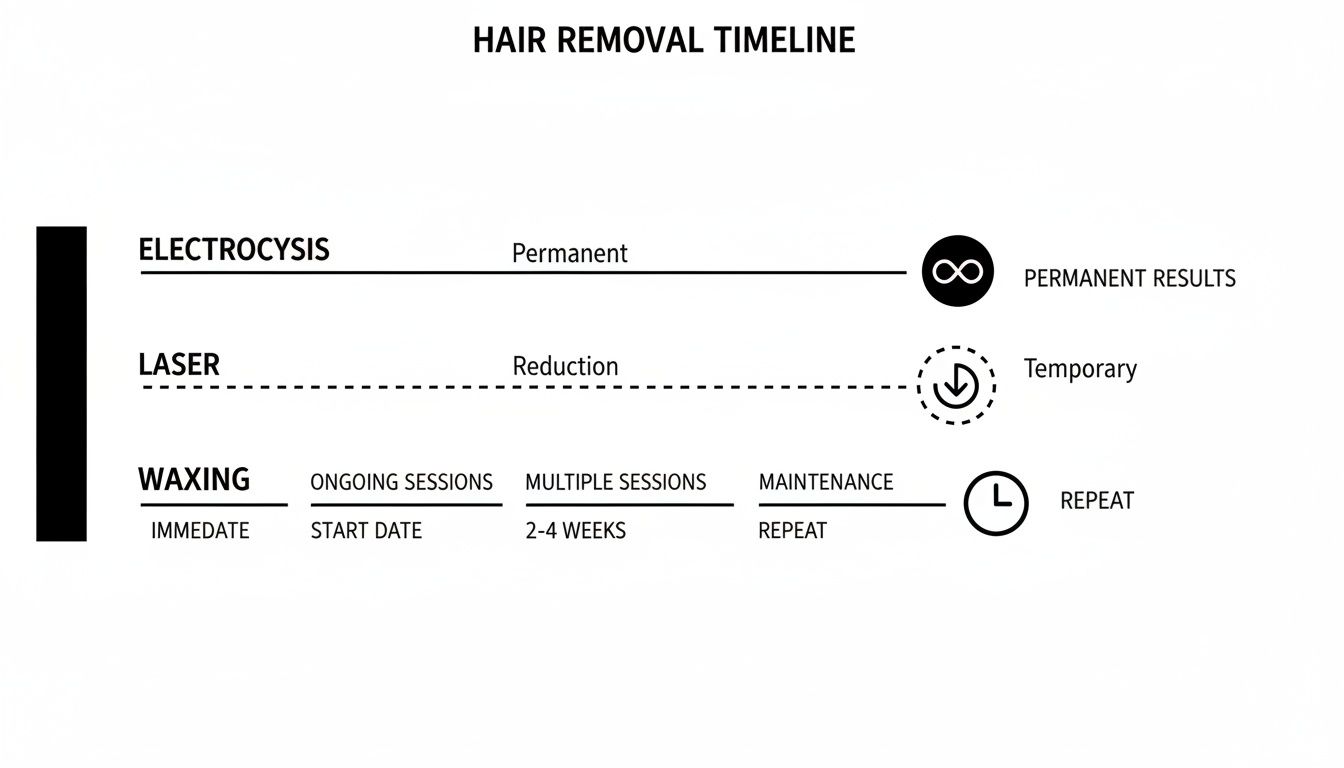
As the timeline shows, only electrolysis delivers a truly permanent outcome. Other techniques might reduce hair or keep it at bay for a while, but they don't offer a final solution.
This commitment to a permanent fix is becoming more popular. In Switzerland, for instance, demand for electrolysis hair removal continues to grow, in line with the country's thriving medical aesthetics industry. Projections for 2025 showed aesthetic procedures, including permanent hair removal, rising by 12% year-over-year. Electrolysis alone was expected to make up 18% of all hair removal treatments in urban centres like Zurich and Geneva, translating to over 45,000 sessions annually. You can read more in the full research on the electrolysis market.
Finding a Qualified Practitioner in Switzerland
The single most important decision you'll make for successful electrolysis is choosing the right person to perform it. In Switzerland, where standards for precision and quality are famously high, this is especially true. A skilled electrologist does far more than just remove unwanted hair; they are the guardians of your skin's health, ensuring your results are permanent and your skin remains undamaged.
Think of it this way: electrolysis isn't a simple beauty treatment. It’s a highly technical procedure that demands a deep understanding of hair biology, skin science, and electrical currents. The exceptional safety record of electrolysis in Switzerland is no accident—it's the direct result of incredibly rigorous training and certification standards.
Why Swiss Certification is Non-Negotiable
When you start your search, your first and only focus should be on qualifications. Checking a practitioner's credentials isn't just a box to tick; it's your best insurance against subpar results, unnecessary pain, or even permanent skin damage.
Always look for professionals with certifications that are officially recognised in Switzerland. This rigorous approach is why Swissmedic reported zero severe adverse events linked to electrolysis between 2020-2026. To earn their credentials from an authority like the Bundesamt für Gesundheit (BAG), electrologists must complete a minimum of 1,000 supervised hours. This extensive training ensures they have truly mastered complex techniques like the blend modality. For a broader look at the technology, you can discover more insights about the global electrolysis device market on Valuates Reports.
When you choose a certified electrologist, you're placing your trust in a professional who has proven their competence and commitment to safety. This is the cornerstone of a successful treatment and isn't something you should ever compromise on.
Questions to Ask During Your Consultation
Your initial consultation is more than just a meet-and-greet; it’s your chance to interview the person you’ll be working with. A true professional will be transparent, encourage your questions, and answer them with confidence. This is your time to get a feel for their expertise and their approach to client care.
Here’s what you should be asking:
- Could you show me your certifications? Don't be shy about asking to see the actual documents. Look for credentials from reputable Swiss bodies and ask about their ongoing professional development.
- What kind of machine do you use? Modern, computerised epilators are the gold standard. They allow for precise control over the current, which translates to a more effective and comfortable treatment for you. Outdated equipment can be less efficient and increase the risk of side effects.
- How do you handle sterilisation? The answer should be immediate and clear: a new, sterile, single-use probe is used for every client, every single time. All other tools, like tweezers, must be sterilised in a medical-grade autoclave. There is no room for compromise here.
- Do you have experience with my skin and hair type? Ask to see before-and-after photos of previous clients who have a similar skin tone and hair texture. An experienced practitioner will have a portfolio that demonstrates their ability to handle a wide range of cases successfully.
- What does a realistic treatment plan look like for me? Based on the treatment area, hair density, and your goals, they should be able to provide a clear, honest estimate of the number of sessions and the total timeframe needed for full clearance.
Finding the right expert is a bit like finding a trusted craftsman. By making Swiss-certified qualifications your top priority and asking these key questions, you can confidently choose a practitioner who will deliver the safe, permanent results you're looking for.
Your Clean Beauty Aftercare Routine
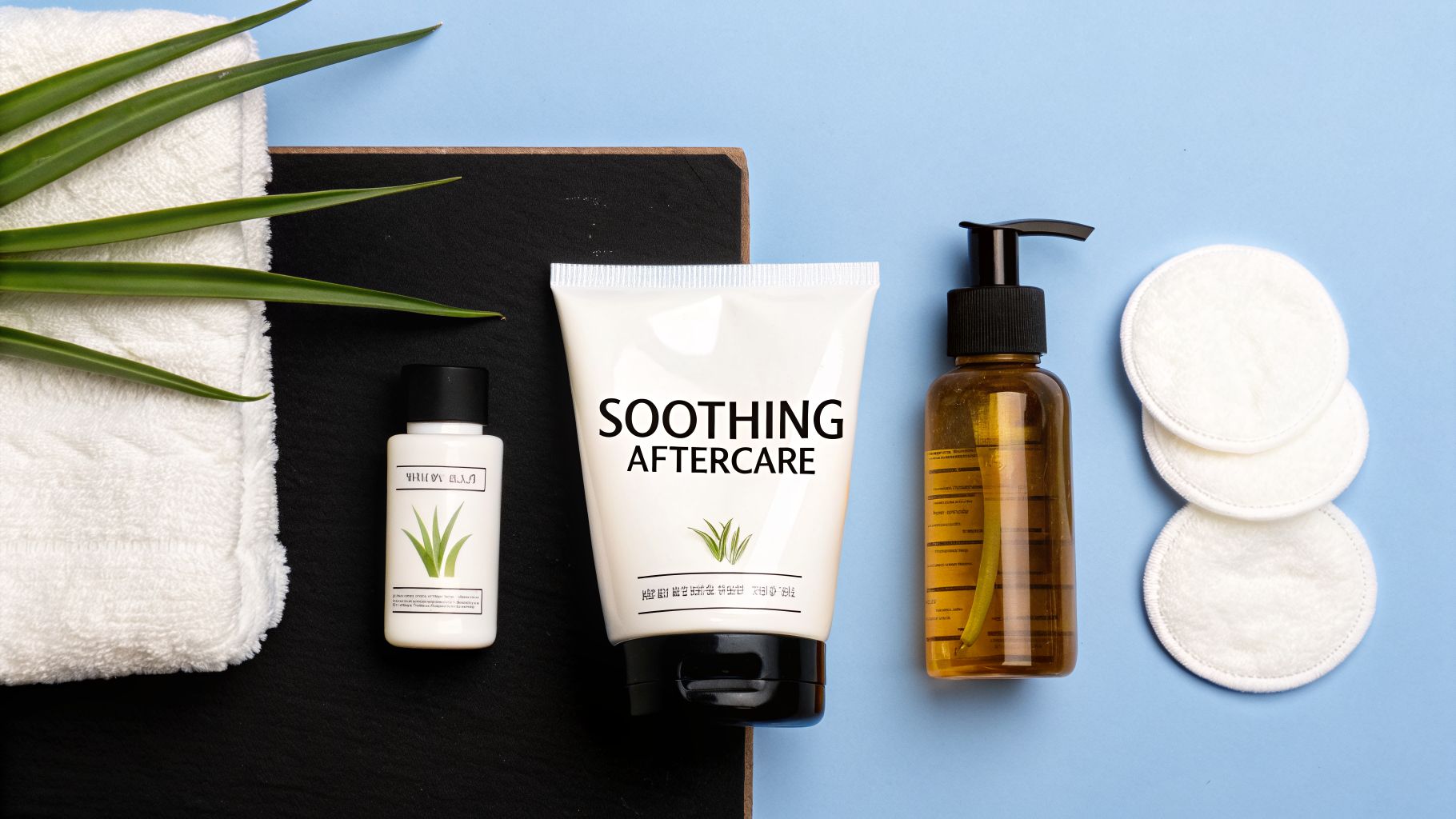
Think of your skin right after an electrolysis hair removal session like a freshly treated canvas. It’s been through a very precise process, and what you do next is just as important as the treatment itself. Good aftercare isn't just a suggestion; it’s your key to a fast, comfortable recovery and the smooth skin you're aiming for.
The first 24 to 48 hours are when your skin needs the most attention. It’s sensitive, and the tiny treated follicles are open and vulnerable to bacteria. Your job is simple: calm any inflammation, keep the area perfectly clean, and hydrate without using anything that could clog those follicles. This is where a clean, minimalist approach to skincare really shines.
Immediate Post-Treatment Care: The First 48 Hours
It's completely normal to see some redness or feel a bit of puffiness. This is just your skin's natural reaction, and it usually calms down quickly. The right steps will soothe it right away and protect it from anything that might cause irritation.
Here's a straightforward protocol to follow:
- Cool It Down: Gently apply a cold compress (a clean cloth or a gel pack will do) for a few minutes at a time. This feels fantastic and is one of the quickest ways to reduce any swelling or lingering warmth.
- Keep It Clean: Wash the area with lukewarm water and a very mild, fragrance-free cleanser. When you’re done, pat the skin dry with a soft, clean towel. No rubbing!
- Avoid Irritants: For at least 48 hours, you'll want to avoid makeup, fragranced lotions, and deodorant on the treated area. Also, put a pause on any active skincare ingredients like retinoids or exfoliating acids.
- Stay Out of the Sun: Freshly treated skin is much more prone to hyperpigmentation. If you can't avoid the sun, be sure to protect the area with a high-SPF, mineral-based sunscreen.
Don’t be tempted to skip these first steps. They are your best defence against irritation or minor infections, both of which can slow down healing and get in the way of your final results.
Long-Term Healing with Clean Beauty
After the initial 48-hour window, the sensitivity will fade, and your focus can shift to gentle healing and hydration. This is a great time to lean into high-quality, natural skincare that supports your skin's recovery without any unnecessary or harsh chemicals. The right ingredients can make a huge difference in how your skin looks and feels.
Look for products that are packed with soothing, restorative botanicals. These are the heroes of clean beauty for a reason—they’re gentle but incredibly effective.
- Aloe Vera: A true classic for soothing skin. It’s deeply hydrating and has natural compounds that help cool and reduce inflammation.
- Calendula: This powerful flower is known for its calming and antiseptic qualities, making it ideal for soothing post-treatment skin and helping it repair.
- Chamomile: Perfect for taking down redness, chamomile also offers antioxidant benefits that protect your skin while it heals.
- Jojoba Oil: Because its structure is so similar to our skin’s natural oils, jojoba provides moisture without any risk of clogging pores.
Using a simple, multipurpose product like Egyptian Magic can be a brilliant all-in-one solution. Its clean, natural formula creates a protective barrier over the skin while delivering deep nourishment. By following the precision of electrolysis hair removal with a gentle and clean aftercare routine, you’re ensuring your skin heals beautifully, revealing the smooth, hair-free results you've invested in.
Your Electrolysis Questions, Answered
When you're considering a permanent change like electrolysis, it's natural to have questions. In fact, it's a good thing! To help you feel completely confident in your decision, I've put together answers to the most common queries that come up during our consultations.
Is Electrolysis Really Permanent?
Yes, it absolutely is. Electrolysis is the only method recognised by health authorities like the U.S. FDA as offering permanent hair removal. It isn't just about reducing hair; it’s about completely eliminating it.
Here’s how it works: a tiny probe delivers energy straight into the individual hair follicle, which is the root of the problem. This process destroys the follicle's ability to grow hair. Once a follicle has been successfully treated, it's gone for good. It simply cannot produce another hair.
This is where electrolysis truly stands apart from laser hair removal. Laser is classified as permanent hair reduction, meaning it can damage follicles, but hair may eventually regrow, often finer than before. With electrolysis, once your course of treatments for an area is complete, you are done. Forever.
Does It Work for Everyone?
This is one of the biggest strengths of electrolysis. The treatment targets the follicle directly, not the pigment in the hair (its colour). This means it works on absolutely any hair colour – blonde, grey, red, and of course, darker hair.
It's also safe and effective for every skin tone, from the very fair to the very dark. This makes electrolysis hair removal the perfect permanent solution for so many people who aren't suitable candidates for laser because of their hair or skin colour.
How Much Does Electrolysis Cost in Switzerland?
The cost of electrolysis is almost always calculated by time. Here in Switzerland, you can typically expect rates to fall somewhere between CHF 120 and CHF 180 per hour.
Of course, the total investment depends on a few things:
- The size of the treatment area: Clearing an upper lip will naturally take much less time than a larger area like the legs.
- The density of the hair: The more hair you have in a given area, the more follicles there are to treat.
- Your hair’s growth cycle: We need to catch each hair in its active growth phase, which requires a series of sessions.
While the upfront cost might seem higher than waxing or threading, remember that electrolysis is a one-time investment for a permanent result. When you think about the lifetime cost of temporary methods, electrolysis is often far more cost-effective.
What Are the Side Effects?
Thankfully, the side effects are usually quite minor and don't last long. Most people will see some redness and feel a bit of tenderness in the treated area, and maybe some slight swelling. This typically calms down within a few hours.
You might notice tiny scabs forming over the treated follicles, which is a normal part of the skin’s healing process. It’s so important that you don't pick at them, as this can lead to scarring. A skilled, certified practitioner and proper aftercare are your best defence against any lasting issues like changes in skin pigmentation.
At beautysecrets.agency, we believe that effective treatments and pure, high-quality aftercare go hand-in-hand. Our curated selection of natural skincare is perfect for supporting your skin's healing journey after electrolysis. You can explore gentle, restorative products to help you achieve your smoothest, most radiant skin in our beautysecrets.agency collection.