When it comes to choosing between an eau de parfum or eau de toilette, the heart of the matter is the concentration of fragrance oil. An Eau de Parfum (EdP) boasts a higher concentration, giving it a rich, long-lasting character. In contrast, an Eau de Toilette (EdT) is lighter and fresher, making it a wonderful choice for a more subtle, everyday presence. The best fit really depends on the intensity and longevity you're looking for to suit your lifestyle and the occasion.
Eau De Parfum Vs Eau De Toilette: The Core Differences
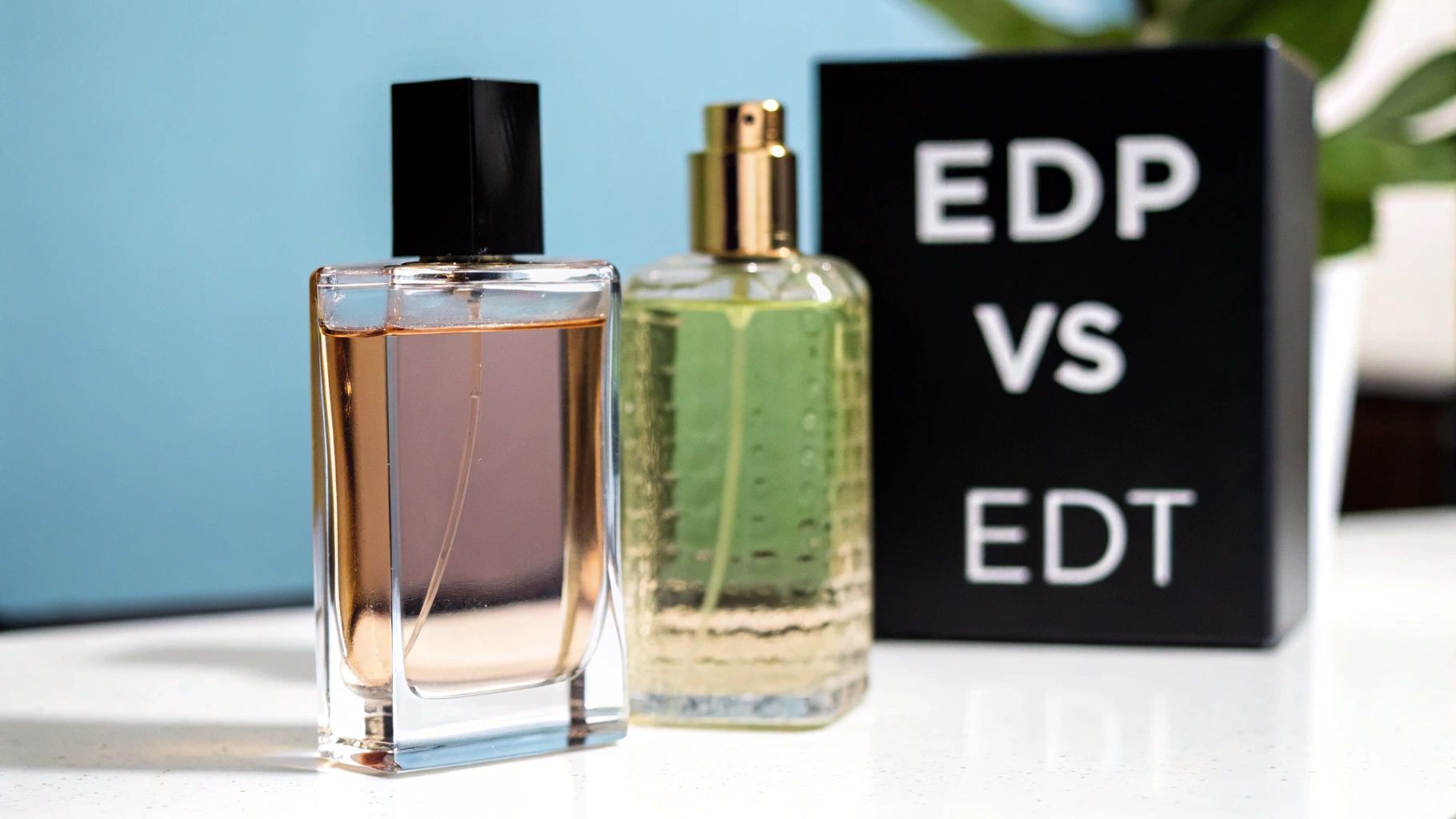
When guiding clients in a Swiss pharmacy, spa, or boutique, getting this distinction right is crucial for offering truly expert advice. The fundamental difference between these two fragrance types is the percentage of pure perfume oil they contain, which directly dictates how the scent performs on the skin.
An Eau de Parfum (EdP) is the more concentrated of the two. It typically contains between 15-20% pure perfume oil. This higher concentration makes the fragrance more potent and gives it a deeper, richer character that lingers beautifully on the skin, usually for a good six to eight hours.
On the other hand, an Eau de Toilette (EdT) has a lower concentration of perfume oil, generally ranging from 5-15%. This formulation results in a lighter, fresher, and more delicate scent experience. Its longevity is naturally shorter, lasting around three to five hours, which is perfect for daytime use or for anyone who prefers a less assertive fragrance.
Swiss Market Preference
This difference in performance is a significant factor in the Swiss market. Here, Eau de Parfum has clearly become the preferred choice, capturing around 55% of total fragrance sales volumes in 2022. This preference for EdP’s superior longevity aligns perfectly with the Swiss consumer's desire for high-quality, high-performance products in a market valued at over $326 million that year. You can explore a summary of Swiss fragrance market trends for more details.
The choice is about more than just strength; it's also about how the scent is structured. EdPs often reveal more complex heart and base notes that evolve slowly over several hours. EdTs tend to be brighter, placing more emphasis on the initial top notes for an immediate—though more fleeting—impression.
The key takeaway for retailers is straightforward: Guide clients looking for lasting power and depth toward an EdP. For those wanting a light, refreshing, or more budget-friendly option, an EdT is the perfect recommendation.
To make these distinctions easy to recall during a client consultation, this table provides a quick side-by-side comparison.
Eau De Parfum Vs Eau De Toilette At a Glance
| Characteristic | Eau de Parfum (EdP) | Eau de Toilette (EdT) |
|---|---|---|
| Fragrance Oil Concentration | 15–20% | 5–15% |
| Typical Longevity | 6–8 hours | 3–5 hours |
| Scent Intensity | Strong and rich | Light and fresh |
| Best For | Evening wear, special occasions, colder seasons | Daily wear, office, warmer seasons |
| Price Point | Higher | More accessible |
This simple breakdown highlights the essential differences, helping you quickly match the right fragrance type to your customer's needs and preferences.
Diving Deeper: How Fragrances Truly Perform
Knowing the perfume oil percentage is one thing, but guiding a client to the right choice between an eau de parfum or eau de toilette means understanding how those numbers play out in the real world. This is where we go beyond simple longevity and get into the nuances of how a fragrance projects, the trail it leaves, and how its story unfolds on the skin.
Think of an Eau de Toilette as a watercolour. Its lighter composition, with 5-15% perfume oil, is all about brightness and transparency. The lower concentration lets those volatile top notes—think zesty citrus, fresh herbs, or light florals—sparkle right away, giving an instant, refreshing hit.
An Eau de Parfum, on the other hand, is more like a rich oil painting. With 15-20% oil concentration, it has far more depth and complexity. The higher oil content gives the fragrance more weight, allowing the heart and base notes to develop slowly and luxuriously on the skin.
Longevity and the X-Factor of Skin Chemistry
We can offer general guidelines—an EdP often lasts six to eight hours, while an EdT might give you three to five. But skin chemistry is the wild card that can change everything. It's the canvas that dictates the final masterpiece.
- Dry Skin: This skin type struggles to hold onto fragrance molecules because it lacks the natural oils for them to cling to. An EdP is almost always a better fit, as its richer oil base not only anchors the scent but also provides a touch of moisture.
- Oily Skin: The natural oils on this skin type act as a fixative, helping fragrances last longer. An EdT can perform beautifully here, with the skin's own oils extending its life and preventing it from vanishing too quickly.
So, when a client with dry skin mentions that scents just don't last on them, suggesting an EdP isn't an upsell. It's a genuinely helpful, personalised solution rooted in their unique body chemistry.
A fragrance's performance is a dynamic dance between its formula and the wearer's unique skin. The richer oil base in an Eau de Parfum almost always delivers a more consistent and lasting experience, especially for those with drier skin.
Projection and Sillage: The Scent Bubble vs. The Scent Trail
People often use projection and sillage interchangeably, but they're two very different things that define a fragrance's presence. Projection is how far the scent radiates from your body—your personal scent bubble. Sillage (pronounced see-yazh) is the beautiful trail you leave in the air as you walk away.
An Eau de Toilette often starts with a bang. Its higher alcohol content helps launch those top notes into the air, creating strong initial projection. But this can be fleeting, and as the top notes fade, so does the projection. The sillage is typically light, airy, and subtle.
An Eau de Parfum behaves differently. It tends to sit a bit closer to the skin, creating a denser, more intimate, but incredibly tenacious scent bubble. Its sillage is often richer and more memorable because it’s the heavier, lingering base notes that form that captivating trail.
This is a critical distinction when making recommendations.
- For the office or an intimate dinner: An EdP’s closer projection is perfect. It invites people in rather than shouting for attention from across the room.
- For a summer picnic or daytime wear: An EdT offers a brilliant, refreshing burst that gets noticed without feeling heavy, making it ideal for warm weather or casual outings.
The Scent's Journey: How the Story Unfolds
Maybe the most sophisticated difference between the two is how their scent profile evolves over time. This journey, known as the dry-down, is where the artistry of an EdP really comes to life.
With an EdT, the experience is often front-loaded. You get a fantastic burst of top notes, but as they fade, the heart and base are usually simpler and less pronounced. The story is bright, enjoyable, but relatively short.
An EdP tells a much more complex story. The top notes are just the opening chapter. Over the next few hours, the fragrance transitions through its heart of florals or spices before finally settling into a deep, enduring base of woods, musk, or resins. It's this slow, graceful evolution that creates a truly rich and multifaceted experience. Encouraging a client to spray an EdP on their skin and simply wait for this journey to unfold can completely change how they perceive—and appreciate—a fragrance.
Reading the Room: Swiss Market Dynamics and Consumer Preferences
To give genuinely helpful advice on the eau de parfum ou eau de toilette question, you first need to understand the Swiss fragrance customer. They are, by and large, a discerning group. Swiss consumers famously prioritise lasting quality, craftsmanship, and performance over what’s merely trendy. This deep-seated cultural appreciation for enduring value absolutely shapes how they choose a fragrance.
So, how does this play out on the shop floor? It means they’re often drawn to premium, long-lasting products. An Eau de Parfum, with its higher oil concentration and better longevity, just clicks with that Swiss mindset of investing in quality. It delivers a more complex and persistent scent, which feels like a smarter purchase—a better return on investment for someone who values substance.
This isn't just a hunch; the numbers tell the same story. Switzerland’s fragrance market is significant, projected to hit $507.36 million by 2025. Within that market, Eau de Parfum commands a massive 58% value share over Eau de Toilette. What’s driving this? A clear trend towards premium products, with consumers dedicating a notable 28% of their beauty budget specifically to long-lasting scents. This trend is especially pronounced among women, who make up 64% of the market. You can dive deeper into these figures with these Swiss fragrance market insights on Statista.com.
The Growing Influence of Conscious Consumerism
But it's not just about performance anymore. A powerful movement towards wellness, sustainability, and clean beauty is fundamentally changing how people shop here. Today's Swiss customer isn't just buying a scent; they're buying into a brand's entire philosophy. They're looking for transparency, ethical sourcing, and formulas that are free from controversial ingredients.
This shift has opened up a huge opportunity for natural and clean fragrances, especially within the Eau de Parfum category. The higher concentration of perfume oils in an EdP is the perfect vehicle to showcase high-quality, ethically sourced botanicals. It allows the richness and complexity of these premium, natural ingredients to truly come alive, creating a luxurious experience that speaks directly to the conscious consumer.
For Swiss pharmacies, spas, and retailers, the path forward is clear. Curating a fragrance selection that aligns with clean beauty and sustainability values will attract a loyal, growing customer base that is ready and willing to invest in products that are both beautiful and ethical.
Matching Your Inventory to Market Realities
Once you grasp these dynamics, curating your fragrance selection becomes much more intuitive. A pharmacy or boutique that offers a thoughtful collection of high-performance, clean Eau de Parfums is perfectly positioned to meet the demands of the modern Swiss consumer. The conversation about eau de parfum ou eau de toilette evolves from a simple discussion of strength to one about lifestyle and values.
Here are a few strategic points to consider for your inventory:
- Lead with Performance: Ensure you stock a diverse range of EdPs across the main scent families—floral, woody, oriental—all delivering on that core promise of longevity.
- Showcase Clean Credentials: Make a point to highlight brands that are certified cruelty-free, vegan, or use organic and sustainably harvested ingredients. This kind of transparency builds incredible trust.
- Frame the Value Proposition: Train your staff to confidently explain why an EdP, while carrying a higher price tag, often represents better long-term value due to its performance and the fact that a little goes a long way.
This kind of approach elevates the customer experience from a simple sale to a genuine, expert consultation. It positions your business as a trusted destination for premium, conscious fragrance choices. With demand for vegan and sustainable options having climbed by 30%, it's clear this is no longer a niche interest but a mainstream expectation. Meeting this demand isn't just a good idea—it's essential for growth in the Swiss beauty market.
Advising Clients with Strategic Recommendations
Turning a simple transaction into a memorable consultation is what sets an expert apart. When you guide a client to their perfect fragrance—whether it's an eau de parfum or an eau de toilette—you’re building incredible trust and loyalty. It all starts when you stop talking about product features and start asking about their life.
The secret is in the questions you ask. Forget starting with, "What kind of scents do you like?" Instead, open with questions that uncover their lifestyle, what they need, and even their skin's unique chemistry. This simple shift changes the entire dynamic; you're no longer just selling a product, you're solving a personal puzzle.
Frame the Consultation Around Use Cases
Every fragrance has a time and a place. Your job is to help the client picture exactly where and when they’ll be wearing their new scent. When you frame the discussion around real-life scenarios, the choice between an EdP and an EdT becomes intuitive.
Start by digging into their plans with a few targeted questions:
- "What's the main occasion for this fragrance? Is it for daily wear at the office, or more for special evenings out?" This question immediately points you toward either a subtle, fresh scent or a richer, more enduring one.
- "Are you hoping to find a signature scent for all year round, or something specific for the warmer or cooler months?" This opens up a great conversation about how temperature impacts a scent’s projection and staying power.
- "How important is it that your fragrance lasts all day without needing a top-up?" This gets straight to the heart of the matter and highlights the core value of an Eau de Parfum.
For instance, a client looking for something for their professional life in an open-plan office would likely appreciate the understated nature of an Eau de Toilette. It creates a pleasant, clean aura that stays within their personal space. On the other hand, if a client is preparing for a winter wedding or a formal gala, the depth and impressive longevity of an Eau de Parfum is the obvious choice.
Personalise Advice Based on Skin Chemistry
Skin type is a huge, often-overlooked factor in a fragrance's performance. When you explain this to clients, especially those who feel scents just don't last on them, you instantly boost your credibility and provide genuinely useful advice.
The science is simple. Dry skin doesn't have the natural oils needed to grip fragrance molecules, so the scent evaporates much faster. Oily skin, however, acts as a natural anchor, helping the fragrance last longer.
When a client tells you perfumes tend to "disappear" on their skin, it's a classic sign of dryness. An Eau de Parfum is the perfect solution. Its higher oil concentration not only lasts longer but can also feel more nourishing on their skin.
Here’s a straightforward way to visualise the decision for a Swiss consumer who really cares about how long their fragrance lasts.
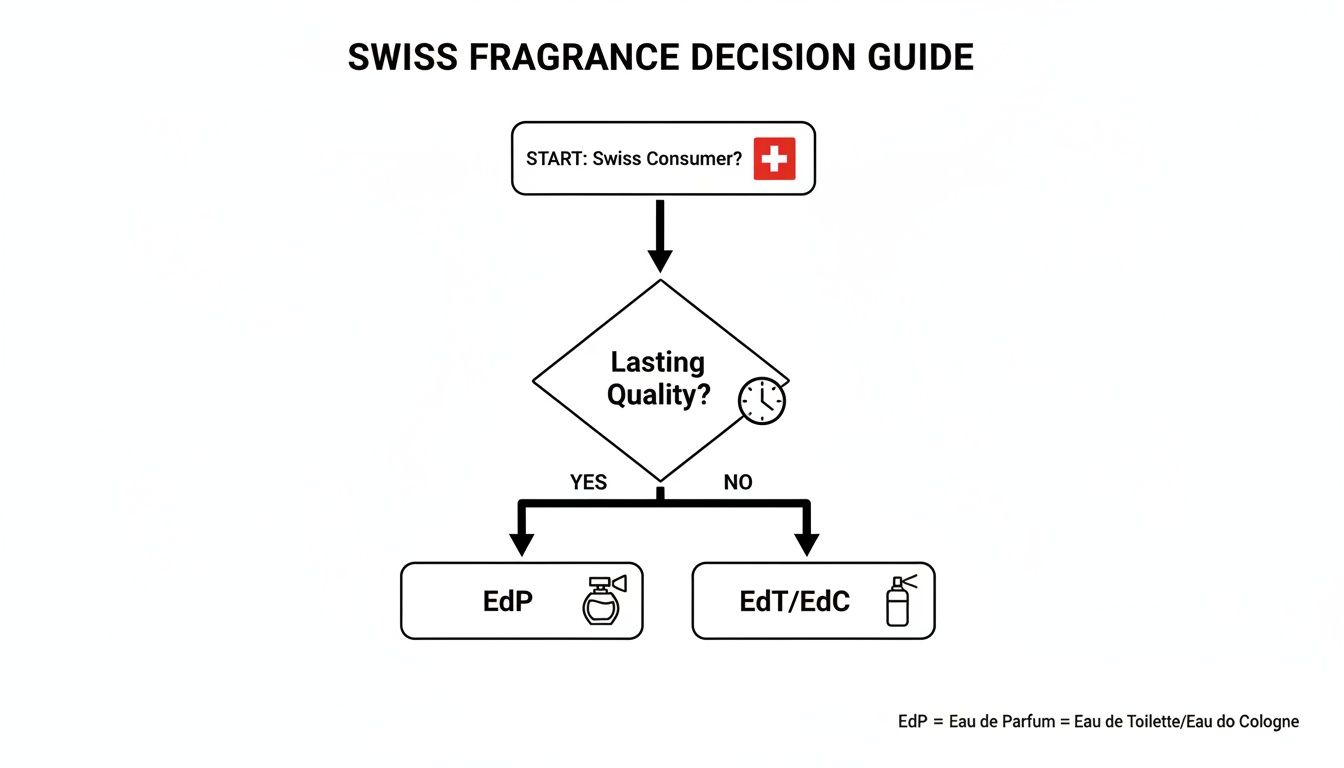
This visual guide reinforces a key point: for clients who value performance and a long-lasting scent—a very common preference in the Swiss market—the Eau de Parfum is almost always the better investment.
Use Sample Dialogue to Guide the Conversation
Having a few phrases in your back pocket helps make your consultations feel more confident and natural. Think of them as a flexible script you can adapt for each client.
If a client is on the fence:
"Let’s try one on each wrist. The Eau de Toilette will give you a bright, instant impression. The Eau de Parfum is a bit of a slower reveal, so let’s give it at least twenty minutes to see how its deeper notes settle on your skin."
When explaining the value of an EdP:
"I know the initial investment is higher, but you’ll find you need far less of the Eau de Parfum for all-day wear. Just one spray often lasts from morning until evening, so the bottle will end up lasting you a very long time."
When advising for skin type:
"Because your skin is a bit on the drier side, I think an Eau de Parfum will give you that beautiful, lasting experience you're after. Its richer base will cling to the scent much more effectively."
With this consultative approach, you're not just selling a fragrance anymore. You're offering an expert, personalised experience that helps the client make a confident choice between an eau de parfum or eau de toilette, ensuring they walk away with a scent they'll genuinely love.
How to Market and Merchandise Clean Fragrances
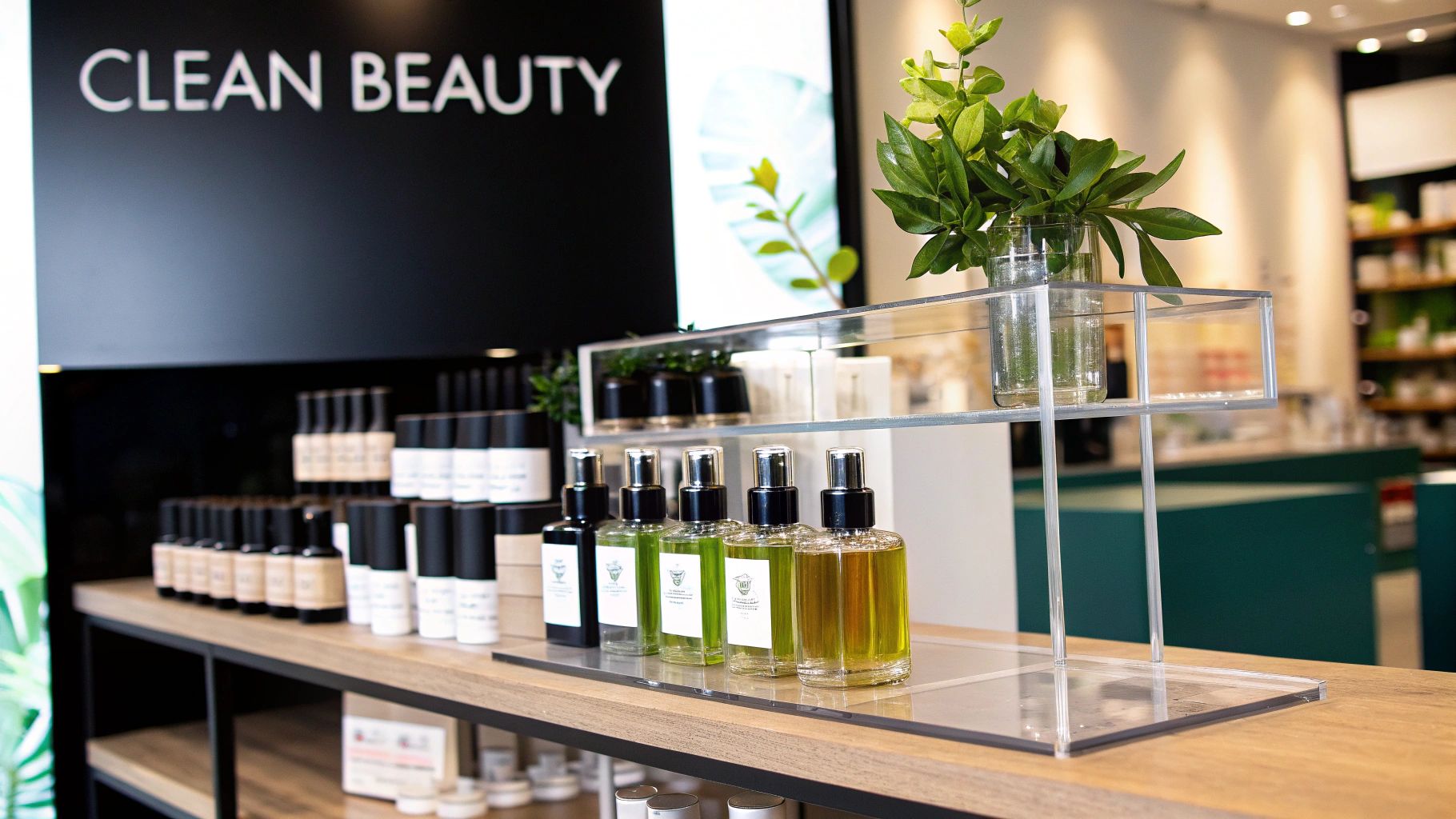
Presenting fragrances well, especially in the growing clean and natural space, is what turns a curious browser into a loyal customer. The way you display and explain the choice between an eau de parfum or eau de toilette can position your business as a trusted expert, particularly in a sophisticated market like Switzerland. Your goal should be to create an inviting, educational atmosphere where people feel confident about what they’re buying.
This goes far beyond just arranging bottles on a shelf. It’s about building a story around quality, performance, and transparency—the exact things that today's conscious shopper is looking for. For brick-and-mortar retailers, this story begins with smart, strategic visual merchandising.
Creating an In-Store Educational Experience
Your physical space—whether it's a pharmacy, spa, or a small boutique—is a golden opportunity for a hands-on, sensory experience. The trick is to make the differences between fragrance types instantly clear and compelling.
A simple but highly effective tactic is to create a dedicated 'Clean & Conscious Fragrance' section. This curated area immediately signals your commitment to ethical sourcing and quality, drawing in the very customers who prioritise these values. Think about using natural, warm materials like wood and stone, perhaps with some greenery, to create an atmosphere that mirrors the products' pure origins.
Within this space, good signage becomes your silent salesperson.
- Storytelling Signage: Ditch the basic price tags. Use small, elegant signs to explain the core difference. A simple card saying, “Eau de Parfum: A richer concentration for all-day wear,” placed next to the EdPs can guide a customer's choice perfectly.
- Ingredient Focus: Put the spotlight on key natural ingredients. A small, beautiful photo of the lavender fields where an essential oil was sourced adds a powerful layer of authenticity that people connect with.
- Interactive Displays: Organise your testers not just by brand, but by fragrance family (e.g., Floral, Woody, Citrus) and then by concentration. This lets customers directly compare the bright, fresh opening of an EdT with the deeper, more complex character of its EdP counterpart from the same line.
This kind of thoughtful approach transforms shopping from a simple transaction into a journey of discovery, and it frames your staff as the knowledgeable guides people want.
Optimising Your Digital Shelf Space
For your e-commerce channels, the product page is your most valuable real estate for education and persuasion. Getting this space right is absolutely critical for capturing online sales and building trust with customers who can’t physically try the scent.
Your digital strategy should be all about clarity and rich detail. Lead with the most vital information: state clearly whether the product is an Eau de Parfum or an Eau de Toilette right in the product title or the line directly below it. Then, follow up with a short, punchy explanation of what that means for the wearer in terms of intensity and longevity.
Online, transparency is your greatest asset. Highlighting the concentration, key natural ingredients, and any certifications (e.g., vegan, cruelty-free) builds immediate credibility and helps justify a premium price point.
The numbers back this up. Switzerland's perfume market imports shot up by 17.56% from 2023 to 2024, and Eau de Parfum was responsible for a massive 62% of that growth. At the same time, demand for sustainable fragrances grew by 25% year-over-year. Highlighting these exact qualities online caters directly to a proven, growing market preference. You can explore more data on the Swiss perfume market's growth on 6wresearch.com.
To really drive the point home, consider adding a simple comparison table directly on the product pages for scents that come in both EdP and EdT versions. This visual tool makes the choice crystal clear, empowering the customer to select the perfect fragrance for their needs. It cuts down on decision fatigue and can give your conversion rates a healthy boost.
To truly connect with your audience, you need to tailor your marketing message. Highlighting the unique strengths of each fragrance type helps different customer segments see the value proposition clearly.
Marketing Angles for EdP and EdT
| Marketing Angle | Eau de Parfum (EdP) Focus | Eau de Toilette (EdT) Focus |
|---|---|---|
| Investment & Value | "A long-lasting signature scent. One spray lasts all day, making it a worthy investment in your fragrance wardrobe." | "The perfect everyday luxury. An affordable way to explore new scents and build a versatile collection." |
| Occasion & Lifestyle | "For moments that matter. The ideal choice for special occasions, evening wear, and making a lasting impression." | "Your daily refresh. A light, uplifting scent perfect for the office, casual outings, and post-workout spritzes." |
| Performance & Quality | "Experience the full depth of the perfumer's art. A richer, more complex scent journey with superior longevity." | "Crisp, clean, and vibrant. Designed for a bright, refreshing experience that energises your day." |
| Gifting | "The ultimate luxury gift. A premium, long-lasting fragrance that shows you truly care." | "A thoughtful and versatile gift. Perfect for introducing someone to a new fragrance or for a lighter preference." |
Ultimately, whether you're positioning an EdP as a luxurious investment or an EdT as a daily essential, the key is to communicate the why behind the choice. This helps customers align their needs with the right product, building trust and encouraging repeat business.
Answering Common Questions About Fragrance Types
Stepping into the world of fragrance can feel a little overwhelming for customers, so having clear, confident answers to their questions is key. When someone is weighing an eau de parfum against an eau de toilette, their concerns often go deeper than just staying power. Think of this section as your quick guide to handling those common queries like a true professional.
When you can explain the nuances, you're not just making a sale; you're creating an educational moment that builds real trust with your clientele.
Can I Layer An Eau De Toilette With An Eau De Parfum?
Absolutely. In fact, it's a fantastic technique to recommend for creating a truly signature scent. Layering lets a client customise their fragrance, but there's a bit of an art to it to make sure the scents work together beautifully.
The golden rule is to apply the heavier, more potent fragrance first. That means starting with the Eau de Parfum. Its deeper base notes need a moment to settle on the skin and create a solid foundation. After a few minutes, the lighter, brighter Eau de Toilette can be spritzed on top or even on different pulse points.
For the best results, suggest fragrances that share a common note or come from complementary families. For instance, a woody EdP can be lifted with a spritz of a citrus EdT, or a delicate floral EdT can add a fresh twist to a warm, vanilla-based EdP. This helps the scents blend seamlessly instead of clashing. You can also suggest a matching scented body lotion, which is a great way to boost longevity and introduce clients to more products from the line.
Is Eau De Parfum A Better Value Than Eau De Toilette?
This is where you can really shine as an advisor, because "value" means different things to different people. While an Eau de Parfum nearly always has a higher price tag on the shelf, its performance can easily make it the more economical choice in the long run.
Because an EdP has such a high concentration of perfume oils (15-20%), a single spritz or two is often enough to last all day. This means the bottle gets used up much more slowly. An Eau de Toilette, on the other hand, is more affordable upfront but might need a top-up during the day to keep the scent going, so it's consumed faster.
For the discerning Swiss consumer who prioritises quality and long-lasting performance, the Eau de Parfum often represents superior long-term value. The key is to frame the discussion around cost-per-wear rather than just the initial price tag.
By helping your customer think about the initial investment versus the lasting power and number of uses in a bottle, you empower them to choose what truly offers the best value for them.
How Does Clean Beauty Influence This Choice?
The clean beauty movement has definitely shaped how people choose their fragrances, often leading them towards the quality and composition found in an Eau de Parfum. The whole ethos of clean beauty is about transparency, high-quality ingredients, and products that perform exceptionally well without compromise.
Eau de Parfums, especially from natural and mindfully crafted brands, are the perfect showcase for premium, sustainably sourced botanical oils. The higher concentration really allows the complexity of these natural ingredients to come alive, creating a rich and luxurious scent experience.
This resonates perfectly with the conscious consumer. They aren't just buying a pretty scent; they're investing in the story, the sourcing, and the formulation behind it. While clean Eau de Toilettes are great for lighter wear, the potent, enduring character of a natural EdP often aligns more closely with the core values of a clean beauty enthusiast. They want performance, transparency, and craftsmanship, all of which an EdP is perfectly positioned to deliver.
Why Do EdP And EdT Versions Of The Same Scent Smell Different?
This is a fantastic point to clarify, as so many people assume an EdT is just a watered-down version of the EdP. The truth is, perfumers often rework the entire formula to create two distinct, though related, scent experiences.
It’s not just about concentration; it’s about artistic direction. The perfumer might intentionally dial up different notes to better suit the character of each format.
- Eau de Toilette: The formula is often tweaked to feel brighter and more energetic. Perfumers might amplify the zesty, quick-to-evaporate top notes—like citrus or light florals—to create that immediate rush of freshness.
- Eau de Parfum: Here, the focus shifts to depth, richness, and how the scent evolves over hours. The perfumer will likely enhance the heart and base notes—think warm woods, smooth resins, or sensual musks—to create a more complex journey on the skin.
Because of these structural differences, it’s vital to encourage customers to try both versions on their skin. They aren't just choosing between weak and strong; they're choosing between two unique interpretations of the same creative vision. Explaining this nuance is what sets you apart as a true fragrance expert.
At beautysecrets.agency, we partner with exceptional brands that embody the principles of quality, transparency, and ethical sourcing. Explore our curated selection of clean and natural fragrances to find the perfect offerings for your discerning clientele. Discover our brands at https://beautysecrets.agency.