What if the biggest side-parting mistake isn't the side you choose, but the way you make the part behave on your hair? Side parts have stayed relevant for a long time, from ancient Greece and Rome to the mid-19th century and the interwar years, when the style became a clean, structured reference point in men's grooming (Manhattan Barbershop deep dive). In modern Swiss salons, that matters because a side part isn't just a trend, it's a dependable shape that can be adapted for fine hair, dense hair, polished workdays, and softer weekend styling.
The practical question in 2026 is not whether side parting hairstyles are “in” or “out.” It's whether the part stays put, whether it exposes too much scalp, and whether the finish fits the person wearing it. Part preference itself is mixed, with roughly 30-40% of people wearing a left part, less than 5% a right part, and about 50% no part at all, while appearance ratings for left and right parts were virtually identical in one social-psychology comparison (hair part statistics). For Swiss readers, that makes the side part a styling tool, not a rule.
It also has commercial weight. Switzerland's coiffure sector generates CHF 3.4 billion in annual turnover, with around 18,500 businesses and roughly 33,000 employees (Swiss coiffure sector data). So a good side part is not a minor detail. It's the kind of everyday service that salons, pharmacies, and premium beauty retailers can turn into a repeatable styling result.
1. Classic Deep Side Part
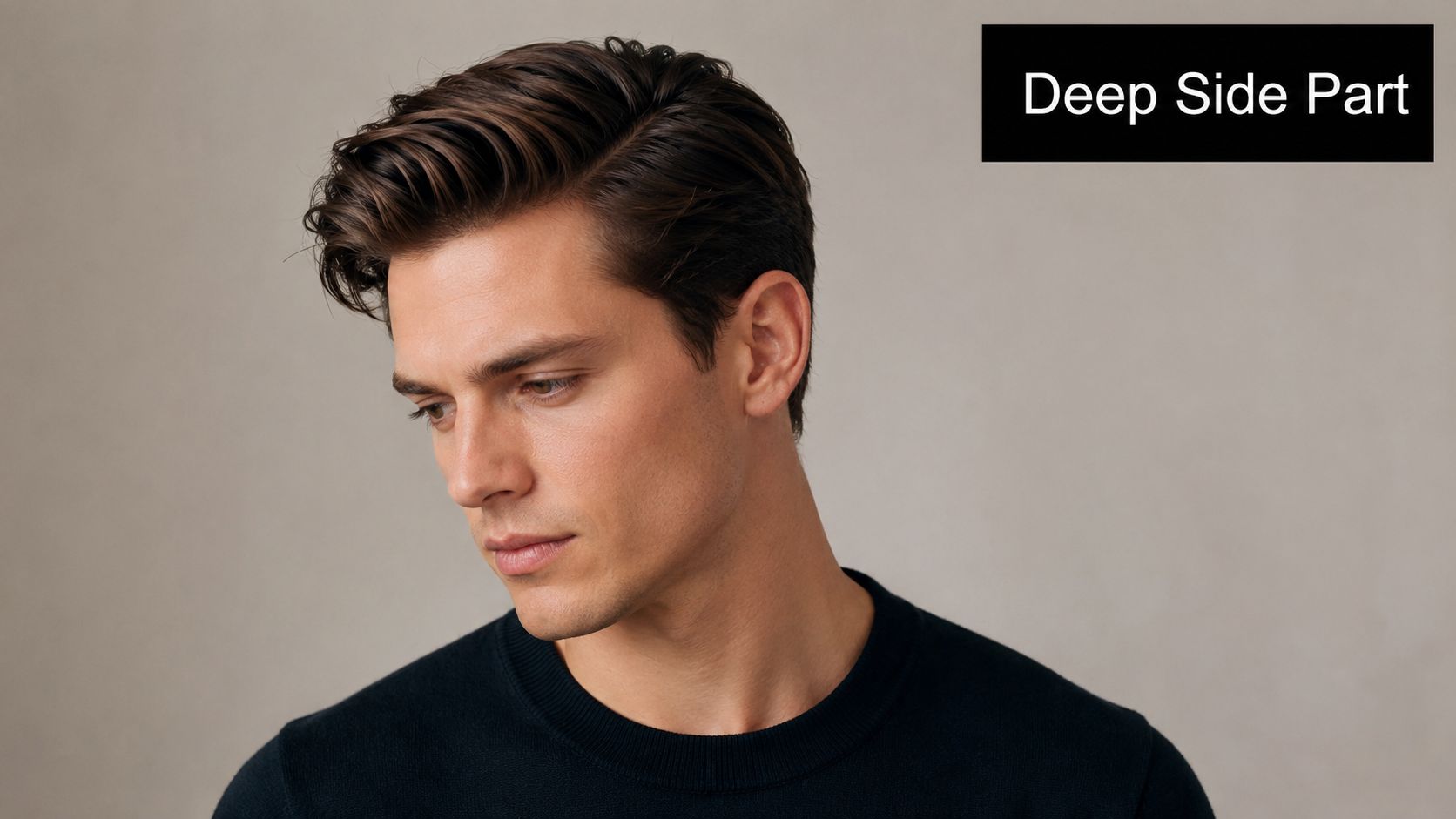
The classic deep side part is the most reliable place to start because it gives structure without looking overworked. Set the part line well off-centre, then keep the top fuller and the sides closer to the head so the shape reads clean rather than dated. That's why this version still works in boardrooms, at dinner, and on days when hair needs to look deliberate with minimal effort.
How to make it look expensive, not stiff
Use a fine-tooth comb on damp hair, then blow-dry in the direction of the part so the line sets cleanly. A lightweight mousse gives the top some memory, while a small amount of styling cream along the part helps define the separation without making it greasy. For a natural finish, I'd rather see a soft hold product than a hard shell of hairspray.
A deep side part suits most face shapes because it adds asymmetry and breaks up roundness or length. It's especially good for anyone who wants more crown lift without teasing. On very fine hair, keep the product light and focus on root direction rather than weight.
Practical rule: If the part looks sharp but the rest of the hair moves naturally, you've got the balance right.
For a more complete routine, pair the style with a gentle, scalp-friendly shampoo and a light conditioner that won't flatten the roots. A few drops of a natural oil from Fushi can also help tame dry ends if the hair is longer, but keep oils away from the root line so the part doesn't collapse. This style works best when the hair looks clean, touchable, and neatly controlled.
2. Sleek Side Sweep with Tucking
This is the side part for formal events, client-facing days, and polished photography. The longer side is swept back and tucked neatly behind the ear, which opens the face and makes cheekbones and jawline look more defined. It's also one of the easiest ways to move from daytime neatness to evening elegance without changing the cut.
Why the tuck matters
The tuck turns a simple side part into a framing tool. If the hair is too slippery, it falls forward again, so prep matters more than styling time. A light smoothing cream on the part and a flexible hairspray over the tucked section usually works better than a heavy gel that kills movement.
For this look, I like a small amount of Fushi organic oil on the ends only if the lengths are dry. That keeps the tucked side glossy without making the roots separate too much. If the hair has any natural wave, let that texture stay. The style reads more modern when it's controlled, not shellacked.
This is a strong choice for oval, heart, and angular face shapes because the tuck clears the cheek area and lets the structure show. On rounder faces, keep a little lift at the crown so the style doesn't sit too flat against the head. On long faces, avoid pulling the tuck too tight, because that can make the profile look longer.
The best tuck is invisible. If the pin work is obvious, the style loses its ease.
For skin care, this is the side-part style that benefits most from a well-prepped complexion. Hair off the face puts the skin on display, so a hydrating primer or light moisturiser helps the finish look intentional rather than exposed. That matters for beauty clients who want hair and skin to read as one polished look.
3. Textured Side Part with Waves
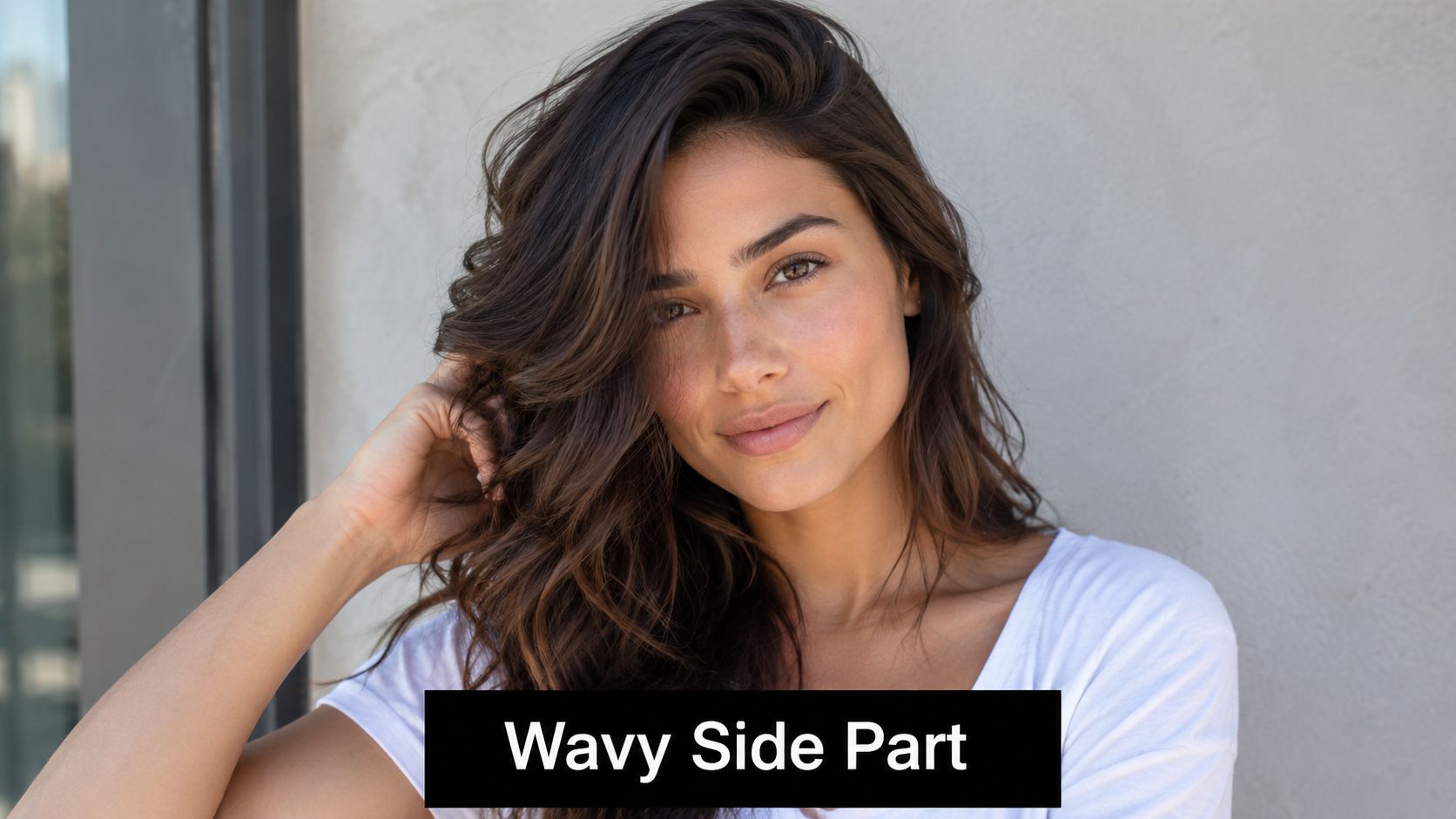
A textured side part with waves softens the structure and gives the hair more movement. It's the version I'd choose for bridal guests, weekend events, or anyone who wants side parting hairstyles that feel romantic rather than severe. The part still anchors the look, but the wave pattern keeps it from looking too formal.
Soft shape, not overdone curl
Wrap sections away from the face with a curling iron, then let the waves cool before you touch them. Finger-combing is better than brushing here, because a brush can pull the part open and make the finish too wide. If you want a heatless approach, loose overnight braids give a more lived-in pattern that still holds the side part.
Sea salt spray adds texture, but use it sparingly if the hair is already dry. On the ends, a natural oil serum keeps the wave pattern shiny and helps stop frizz from making the style look fuzzy rather than soft. That's where Fushi oils fit well, especially on medium to long hair that needs finish more than hold.
This style is especially flattering for square and angular face shapes, because the waves soften stronger lines. It also suits hair that naturally has some bend, since the wave works with the texture instead of fighting it. On very fine hair, keep the waves loose and the part shallow enough to preserve lift at the root.
A useful skin-care connection here is matching texture with glow. If the hair is soft and airy, the complexion should look similarly fresh, so a lightweight brightening moisturiser or a dewy base helps the overall styling read as balanced. Overly matte skin next to soft waves can make the hair feel disconnected from the face.
4. Side Part With Undercut or Shaved Sides
This is the most graphic option in the list. The side part stays visible on top, but the sides and back are cut very short or shaved, which creates strong contrast and sharpens the shape immediately. It works well for people who want edge without losing the recognisable structure of a side part.
Keep the contrast intentional
The key is control. If the longer top is too fluffy, the undercut can look disconnected in a messy way. Matte clay or a texturising paste gives the top enough separation to show the part while keeping the finish modern and wearable. On the short sides, scalp care matters more than shine, so use gentle, non-irritating products if the area is trimmed frequently.
This cut tends to flatter oval, heart, and strong jawline face shapes because it draws attention upward and frames the face cleanly. It can also work for people with denser hair who need bulk removed to make styling easier. If the hair grows fast at the sides, regular maintenance is essential, otherwise the shape loses its contrast quickly.
A slight side part helps this style avoid looking like a pure clipper cut. It gives the top a point of control and keeps the whole haircut from reading too aggressive. For a fashion-forward finish, add a little sea salt spray before drying, then leave some roughness in the top section so it doesn't become helmet-like.
If the haircut is bold, the styling should be disciplined. That's what keeps it editorial instead of unfinished.
For a skin-care link, think about the scalp first. Short sides and shaved sections make scalp condition more visible, so a clean, comfortable routine matters. Pairing the style with a gentle cleansing product and a lightweight scalp-friendly oil on non-wash days helps the look stay sharp without irritation.
5. Voluminous Side Part With Teasing
Want a side part that feels polished but still has presence? A voluminous side part with teasing does exactly that. The part sits far to one side, while the crown gets controlled lift so the style reads glamorous, structured, and current instead of slipping into costume territory.
Build height where it counts
Tease only the crown and the upper side sections. That keeps the lower lengths smooth and stops the whole style from turning tangled or fragile. A gentle teasing brush gives support without rough backcombing, which helps reduce breakage while still building a visible shape. After that, smooth the outer layer so the volume looks refined rather than messy.
This style works especially well for round and softly shaped faces, because the added height creates vertical balance and draws the eye upward. It also helps finer hair look fuller at the roots. On thicker hair, keep the teasing focused so the finished silhouette does not spread too wide through the sides.
Natural oils still have a place here, but only as prep or a light finish on the mid-lengths and ends, never on the teased root area. The aim is to protect the hair from friction while keeping the lift intact. That's where a small amount of Fushi organic oil can make sense before styling, especially if the ends need softness. For more on this, you can boost hair volume with natural oils.
The skin-care connection is about balance. Big hair and a fully bare face can look unfinished unless the skin has some dimension, so a softly radiant base usually works better than a heavy powder finish. Keep the complexion breathable, because the hair is already carrying much of the visual weight.
6. Side Part With Braided Detail
Braids change the side part from simple structure to detailed styling. A deep side part with a Dutch braid, French braid, or a few micro-braids adds texture and keeps the look from feeling flat. It's one of the easiest ways to make the style feel personal without losing elegance.
Best on slightly lived-in hair
Braiding works better when the hair isn't freshly washed and slippery. A bit of texture gives the braid grip, so a light sea salt spray or dry texture spray helps before you start. Use clear elastics if you want the braid to disappear into the style, and match bobby pins to the hair colour so the finish stays discreet.
This look suits bohemian, romantic, and creative face and style profiles, and it works across a wide range of hair textures. It's also practical for events, because the braid helps keep the hair in place longer than a loose side part alone. If the hair is very fine, tease the part line slightly before braiding so the sections don't slip apart.
A braid should look woven into the part, not attached to it as an afterthought.
For a skin-care tie-in, braided styles pair well with a fresh, natural complexion and minimal shine around the hairline. That keeps the face from competing with the detail in the hair. A light brow gel and softly tinted lip balm are often enough to finish the look cleanly.
If you want the style to survive a long day, sleep-prepping helps too. A slightly loose braid overnight can set gentle texture for the next morning, then you only need to refine the part and pin the front sections into place.
7. Side Part With Volume on Top, Smooth Below
This is one of the most wearable side parting hairstyles for professional settings. The crown and upper side sections carry the volume, while the lower lengths stay sleek and smooth, which gives the style structure without looking overworked. It's balanced, clean, and easy to adapt for different hair lengths.
The contrast makes it work
Blow-dry the crown with lift first, then smooth the lower sections with a round brush or a paddle brush depending on the length. A mousse at the roots supports the top, while a smoothing serum on the lower lengths keeps the silhouette tidy. The contrast between volume and polish is what makes the haircut feel modern.
This is a smart choice for square, oval, and heart-shaped faces because the volume softens the top while the sleek lower sections keep the profile neat. It's also useful for people who want movement without losing discipline. On hair that naturally falls flat, root direction matters more than product load, so focus on the blow-dry technique.
A side part with top volume can be a useful solution for clients who want discreet fullness without obvious teasing. That matters in premium beauty and pharmacy settings, where people often want hair to look refined rather than obviously styled. It's also one of the easier styles to refresh during the day, since the structure starts at the crown.
The skin-care connection here is straightforward. Because the lower hair sits smoother against the face, the skin and jawline become more visible, so a well-moisturised finish makes the whole style read better. A softly satin complexion works especially well with this shape.
8. Side Part With Gloss and Shine
Glossy side parting hairstyles are the easiest way to make hair look expensive without adding complexity. The part is still important, but the statement is the reflective finish. This style works especially well for editorial settings, social content, and evenings when you want the hair to look healthy and precise.
Shine needs discipline
Use fresh-pressed organic oils sparingly, especially on the mid-lengths and ends. A little goes a long way, and the wrong amount near the roots can make the part collapse. Blow-drying with an ionic dryer helps reduce frizz and keeps the surface smoother, which makes the shine more visible.
This style suits straight to softly wavy hair best, because the reflective surface is easier to maintain on a smoother cuticle. It can also work on thicker hair if the product load stays light and the finish is brushed into place carefully. On finer hair, keep gloss products away from the scalp and use them only where the light will catch the ends.
The product mix should stay simple. A shine serum on the lengths, a light conditioning mask during the week, and a natural oil from a line like Fushi can create that liquid finish without making the hair feel coated. Too many layers of gloss products make the style look oily rather than polished.
For skin care, glossy hair pairs best with skin that also looks hydrated and fresh. The reflection around the face is stronger here, so a well-rested complexion and a clean base help the style look intentional. This is the side part for people who want refinement with visible light play.
Top 8 Side Part Hairstyle Comparison
| Style | 🔄 Complexity | ⚡ Resources & Time | ⭐ Expected Outcome | 📊 Ideal Use Cases | 💡 Key Advantage / Tip |
|---|---|---|---|---|---|
| Classic Deep Side Part | 🔄 Low, simple parting, easy to recreate | ⚡ Low, comb, light styling product; minutes | ⭐⭐⭐⭐, timeless dimension, versatile look | Everyday, professional, casual, polished or textured | Universally flattering; 💡 use a fine-tooth comb and volumizing mousse at roots |
| Sleek Side Sweep with Tucking | 🔄 Moderate, precise part + secure tuck | ⚡ Moderate, smoothing cream, pins, light hairspray; moderate time | ⭐⭐⭐⭐, polished, face‑framing, elegant | Formal events, red carpet, professional photos | Highlights bone structure; 💡 apply smoothing cream + clear bobby pins for invisible hold |
| Textured Side Part with Waves | 🔄 Moderate, requires curling or braiding technique | ⚡ Moderate, curling iron or overnight braids, texturizer; longer styling time | ⭐⭐⭐⭐, romantic, voluminous, forgiving movement | Casual-to-semi‑formal, bridal, day‑to‑night looks | Adds movement and softness; 💡 curl away from face or braid overnight for heatless waves |
| Side Part with Undercut or Shaved Sides | 🔄 Moderate, precision cutting and blending | ⚡ Moderate, salon cut + frequent trims (3–4 weeks) | ⭐⭐⭐, bold, high‑contrast, modern statement | Fashion-forward, street style, creative industries | Distinctive and low‑maintenance sides; 💡 book regular upkeep and use matte texturizers on long section |
| Voluminous Side Part with Teasing | 🔄 High, careful backcombing and shaping required | ⚡ High, teasing brush, strong‑hold products; time‑consuming | ⭐⭐⭐⭐, dramatic, glamorous volume for photos | Red carpet, bridal, editorial, special events | Creates striking lift for photos; 💡 tease crown only, smooth outer layer, protect with pre‑treatment oils |
| Side Part with Braided Detail | 🔄 High, braiding skill or professional needed | ⚡ High, time, elastics, pins; careful removal | ⭐⭐⭐⭐, textured, artistic, structured appearance | Boho festivals, bridal parties, editorial shoots | Adds long‑lasting texture and interest; 💡 braid on slightly textured hair and use clear elastics |
| Side Part with Volume on Top, Smooth Below | 🔄 Moderate, blow‑dry lift + smoothing technique | ⚡ Moderate, blow dryer, round brush, mousse and smoothing serum; moderate time | ⭐⭐⭐⭐, balanced dimension with polished finish | Corporate, galas, refined editorial looks | Polished yet dimensional; 💡 blow‑dry upside‑down at crown and smooth lengths with serum |
| Side Part with Gloss and Shine | 🔄 Moderate, product application for high shine | ⚡ Moderate, gloss products, deep conditioning; ongoing maintenance | ⭐⭐⭐⭐, ultra‑glossy, high‑impact, photo‑ready finish | Social media, editorial, influencer content | Emphasizes hair health and luminosity; 💡 apply oils/serums to damp hair and use an ionic dryer, deep‑condition weekly |
Find Your Signature Side Part Style
The side part proves that a small shift can change the whole reading of a haircut. A deep part can look classic and disciplined, a tucked sweep can feel formal and elegant, and a textured wave can soften the face without losing shape. Skill isn't about copying a celebrity image; it's translating the idea into a version that works with your hair density, growth pattern, and daily routine.
That's why the best side parting hairstyles are the ones that respect the hair you have. If your roots fall flat, start with blow-dry direction and light root support. If your hair resists a precise part, stop fighting the cowlick and choose a slightly softer offset line instead. If thinning is a concern, use part geometry that creates the illusion of balance rather than exposing more scalp than you want.
The product choices matter just as much as the shape. Lightweight mousse, texture spray, smoothing cream, and carefully placed natural oils can do more for a side part than heavy styling layers ever will. For Swiss beauty retailers and salons, that's where curated, ethically sourced lines can add value, especially when clients want clean results with fewer residues. Brands in the beautysecrets.agency portfolio fit naturally into that kind of routine because they focus on natural, premium formulations that support both styling and care.
The other reason side parts endure is simple. They're adaptable across formal and casual settings, and they can be worn in ways that feel intentional rather than trendy. If you know how to direct the root, preserve movement, and control shine, the side part stops being a fallback and becomes a signature.
If you want help choosing the right products for a side part that looks polished and still feels natural, visit beautysecrets.agency and explore the brands they curate for Swiss retailers and beauty professionals. Their selection is a practical place to start if you want styling support that also fits a clean-beauty routine.