A new luxury spa owner in Switzerland often reaches the same point. The fit-out is nearly done. The treatment rooms look right. The menu has the expected facials, body rituals, and massage options. Then comes the harder question: what will make clients remember this place, book again, and talk about it to friends who expect more than a standard service?
A professional hot stone set often becomes that answer, but only when it's treated as a business system rather than a box of stones. In weak hands, it's a generic add-on. In a disciplined spa, it becomes a premium ritual with clear operational standards, strong therapist confidence, and a guest experience that feels grounded, warm, and unmistakably high-end.
Swiss clients are particularly sensitive to details that operators sometimes dismiss as minor. They notice whether heat feels stable or erratic. They notice whether the room feels thoughtfully prepared. They notice whether the oil, linen, and finish products feel aligned with a natural, ethical wellness philosophy. If you're refining your sensory layer, resources on essential oils for massage can help you think beyond mechanics and into atmosphere, pairing scent with heat in a way that feels coherent rather than overdesigned.
The spas that profit from hot stone therapy don't only add warmth. They build a treatment that is safe, beautifully paced, easy for therapists to deliver consistently, and strong enough to justify a premium position on the menu. That takes the right stones, the right heater, the right protocols, and a commercial plan that respects Swiss expectations around safety, quality, and provenance.
Introduction Elevating Your Practice with Hot Stone Therapy
A hot stone service earns its place when it solves several business problems at once. It lifts perceived value without forcing a complex room redesign. It gives therapists a treatment that feels ceremonial and memorable. It also creates a bridge between bodywork and retail, especially if your spa already works with natural oils, balms, or body care lines that deserve a more sensorial platform.
I've seen new spa owners make one costly mistake repeatedly. They buy a hot stone set as if they were buying décor. The stones look polished, the heater arrives, the service goes on the menu, and everyone assumes that's enough. It isn't. Guests don't pay premium prices for equipment. They pay for confidence, comfort, and finish.
A luxury treatment is built from small operational decisions that the client never sees, but always feels.
In the Swiss market, those decisions matter even more. Guests expect rigour. Hotel partners expect consistency. Therapists need procedures they can trust on a busy day. Once you start thinking that way, the hot stone category becomes less about massage technique alone and more about standards: sourcing, heating, handling, hygiene, merchandising, and service choreography.
That's why the strongest operators position hot stone therapy as a signature pillar rather than a seasonal novelty. The treatment can support longer stays, better upgrade paths, stronger package design, and a more distinctive natural wellness identity. When it's done properly, the stones don't just warm tissue. They anchor the room, slow the pace, and signal care.
Anatomy of a Professional Hot Stone Set
A professional hot stone set is a treatment tool, not a display item. In a Swiss luxury spa, the right set supports timing, therapist ergonomics, hygiene discipline, and a consistent guest experience across every room.
Why basalt remains the working standard
Basalt remains the standard for heated stone massage because it holds temperature well, carries enough weight to feel grounding on the body, and gives therapists predictable handling during treatment. That predictability matters in practice. If stones lose warmth too quickly, the therapist breaks rhythm. If they feel too light or too slick, pressure control suffers and the service starts to feel amateur.
Not all basalt is equal.
The better sets use well-finished, water-tumbled stones with smooth edges and balanced weight across the main body sizes. Poorly finished stones create friction points in the hand, drag unevenly with oil, and make a premium treatment feel careless. I advise owners to inspect finish quality, weight consistency, and surface integrity before they compare pack size or price.
For a luxury positioning built around natural and ethical sourcing, basalt also fits the story better than synthetic alternatives. Guests notice when the materials feel authentic. That matters even more if your spa already works with plant-based oils, mineral-rich body products, or ritual-led treatments that depend on sensory credibility.
The supporting role of marble and ceramic
A complete professional set may include more than heated basalt. Marble earns its place when you want cold applications, contrast therapy, or a sharper finishing sequence on legs, feet, or face. It is not necessary for every menu, but it gives your treatment design more range and gives your team options for summer rituals or recovery-focused services.
Ceramic appears in some commercial kits because manufacturers can control shape and finish precisely. That can be useful for niche protocols, yet it rarely delivers the same natural, high-end impression as real stone. For most Swiss premium spas, basalt for heat and marble for cooling creates a cleaner brand fit and a clearer retail story.
Table: Comparison of Hot Stone Materials
| Material | Primary Use | Heat Retention | Key Feature |
|---|---|---|---|
| Basalt | Heated massage and body placement | High | Iron-rich volcanic stone commonly used for thermal work |
| Marble | Cold stone work and contrast therapy | Low for heat, useful for cool applications | Naturally suited to cooling sensations |
| Ceramic | Specialist or alternative applications | Variable | Manufactured consistency in shape |
The shapes that make a set functional
Shape mix decides whether a set works efficiently in the room. A proper working set includes enough variation to cover placement, gliding, detailed work, and facial or finishing applications without forcing therapists to substitute the wrong stone.
- Large flat stones suit placement on the back, abdomen, or sacral area.
- Medium body stones handle most gliding work on limbs, shoulders, and broad muscle groups.
- Small stones help with hands, feet, neck transitions, and precise placement.
- Facial stones should be lighter, smoother, and kept separate from body stones in storage and sanitation.
- Trigger point stones or shaped stones support focused work where a smaller contact area improves control.
A set with poor shape balance slows treatment down. Therapists start searching instead of working. That costs time, weakens flow, and increases hand fatigue over a full day of bookings.
Buying rule: Choose for treatment choreography, not stone count alone.
Matching the set to your business model
Set size should match the service model you plan to run. A solo practitioner with one treatment room can work well with a disciplined core set and a few replacements. A hotel spa, medical wellness facility, or multi-room operation needs enough stock for rotation, breakage, cleaning turnaround, and parallel treatments.
Buy with replacement planning in mind. Stones chip, go missing, or become unusable if dropped. If the supplier cannot provide matching replacements by size and finish, your treatment quality drifts over time and your rooms stop feeling standardised.
Map the set to the menu before you place the order:
- Core ritual: Full-body hot stone massage.
- Add-on ritual: Back, neck, and shoulder thermal release.
- Retail-adjacent ritual: Hand or foot warm stone treatment paired with body care.
- Contrast option: Heat followed by cool marble accents.
This exercise exposes weak purchasing decisions early. Good operators buy for room flow, therapist comfort, sourcing integrity, and the expectations of a Swiss premium guest.
Choosing and Maintaining Your Heating System
A guest arrives for a 90-minute alpine recovery ritual in St. Moritz. The room is beautiful, the therapist is skilled, and the stones still lose heat halfway through the service because the heater was chosen like a household appliance instead of a treatment tool. That kind of failure feels small in the back office and expensive on the treatment bed.
Use only a professional water-based heater
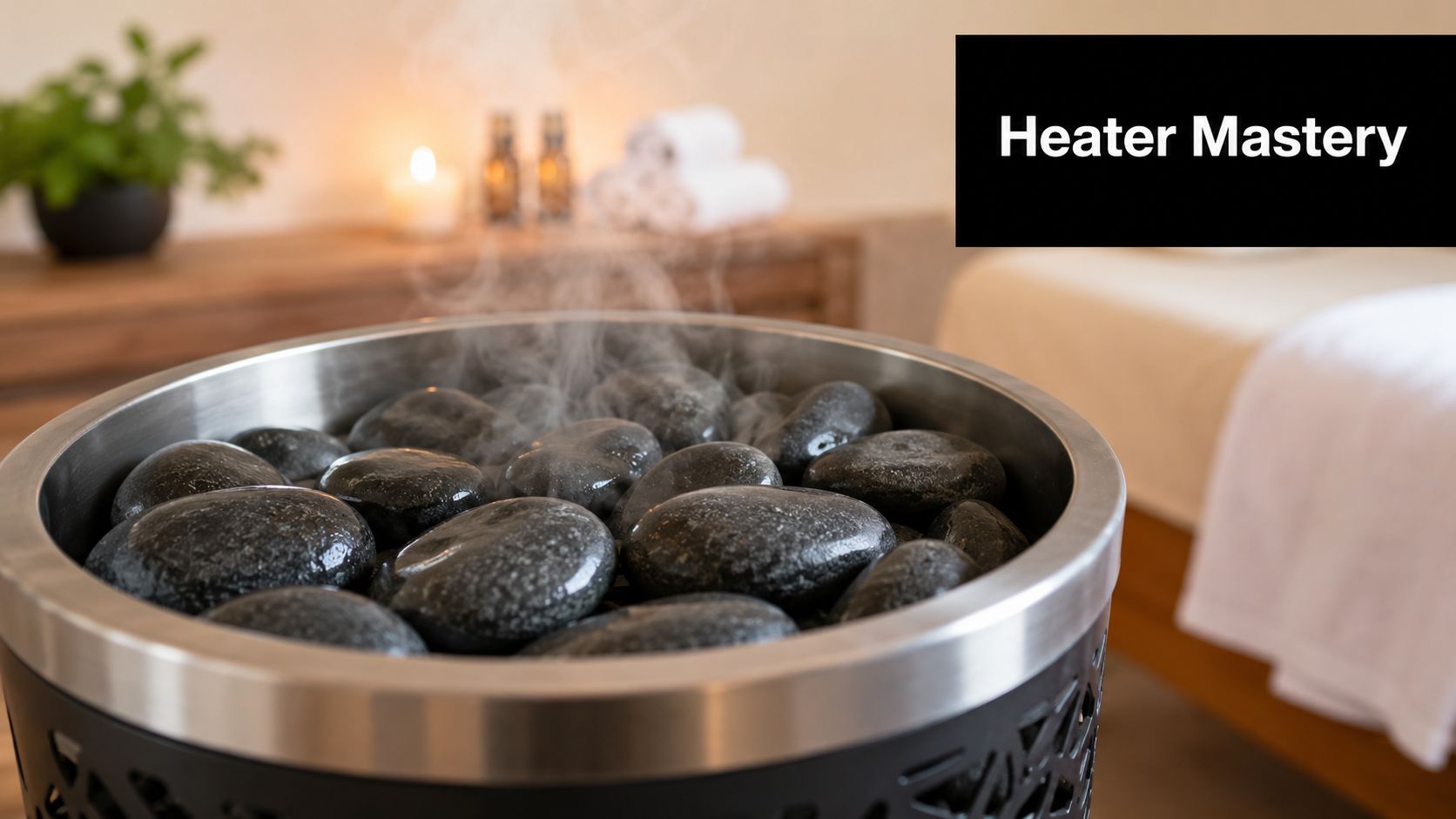
Professional hot stones belong in a water-based professional stone heater. The American Massage Therapy Association on hot stone massage states that microwaves, hot plates, and ovens are not appropriate because they can heat unevenly and increase the risk of fractures and burns.
For a Swiss luxury spa, this is also a brand standard. A proper heater gives therapists stable working temperatures, cleaner choreography during the service, and fewer avoidable client complaints. It also protects stone lifespan. Cheap heating methods often shorten the life of the set you just invested in.
Digital models usually earn their higher purchase price in multi-therapist operations. They are easier to standardise across rooms, easier to train on, and easier to audit. Analogue units can still serve a smaller practice well, but only if one person owns the temperature-checking routine and enforces it consistently.
Altitude changes your timing
Generic online guidance often assumes sea-level conditions. That is a poor fit for Swiss operators working in mountain destinations and high-altitude resort towns.
At higher altitude, water reaches its boiling point earlier, which can slow how fully stones heat through in a water bath. In practice, that means surface warmth can mislead a therapist. The stone feels ready in the hand, then drops temperature too quickly once treatment begins. Guests read that as inconsistency, and inconsistency is what weakens premium pricing.
Build extra heating time into your opening procedure if you operate in places such as Davos, Verbier, Crans-Montana, or St. Moritz. Test your actual setup in your actual location. Record how long your heater and stone mix need before the first booking of the day, then write that timing into SOPs instead of relying on generic training notes.
Buy for throughput, not only for temperature
New owners often compare heaters by maximum heat range. I look first at capacity, recovery time, lid fit, control accuracy, and how easily the unit supports your room turnover.
A heater that is too small creates treatment drag. Therapists spend time sorting stones, waiting on reheating, or compromising sequence. A heater that is too large for a single-room practice ties up capital and bench space without adding revenue. The right choice depends on service menu, booking density, and whether you plan to run parallel hot stone treatments during peak periods.
For most premium concepts, the better buying question is simple. Can this heater support your busiest day without forcing shortcuts?
A practical operating routine
Use a routine your team can repeat under pressure:
- Start heating early: Set opening times based on your location and your first-booking demand.
- Verify the heater, not just the display: Check actual water temperature with a calibrated thermometer and log exceptions.
- Stage stones by treatment role: Keep placement stones and active massage stones organised for faster service flow.
- Top up and change water on schedule: Mineral content, residue, and neglect all affect heater performance over time.
- Assign ownership: One manager or senior therapist should inspect the unit weekly and sign off on maintenance.
This visual demonstration is useful for staff who learn best by seeing stone handling and setup in context:
Maintenance protects margins and reputation
Heating equipment fails slowly before it fails obviously. Lids stop sealing well. Controls drift. Mineral buildup affects performance. Electrical wear becomes visible only after service quality has already dropped.
Write a maintenance schedule that covers descaling, surface checks, cord inspection, thermostat verification, and replacement criteria. In Swiss operations focused on natural and ethical positioning, equipment care matters for brand coherence too. A carefully sourced basalt set heated in a neglected unit sends the wrong message. The same discipline you would apply to granite cleaning for commercial facilities applies here. Correct materials, correct cleaning method, and documented standards.
Good maintenance protects more than the heater. It protects treatment quality, therapist confidence, review scores, and retail credibility when you pair the service with high-end natural body oils and aftercare products.
Upholding Impeccable Safety and Hygiene
A guest checks into your spa in St. Moritz after a day on the mountain. Her skin is cool, her circulation is slower, and she expects warmth that feels controlled, not aggressive. In that moment, safety is part of the luxury. If the stones are too hot, if the room setup looks careless, or if the therapist hesitates, the treatment loses credibility immediately.
Thermal control requires a repeatable room standard
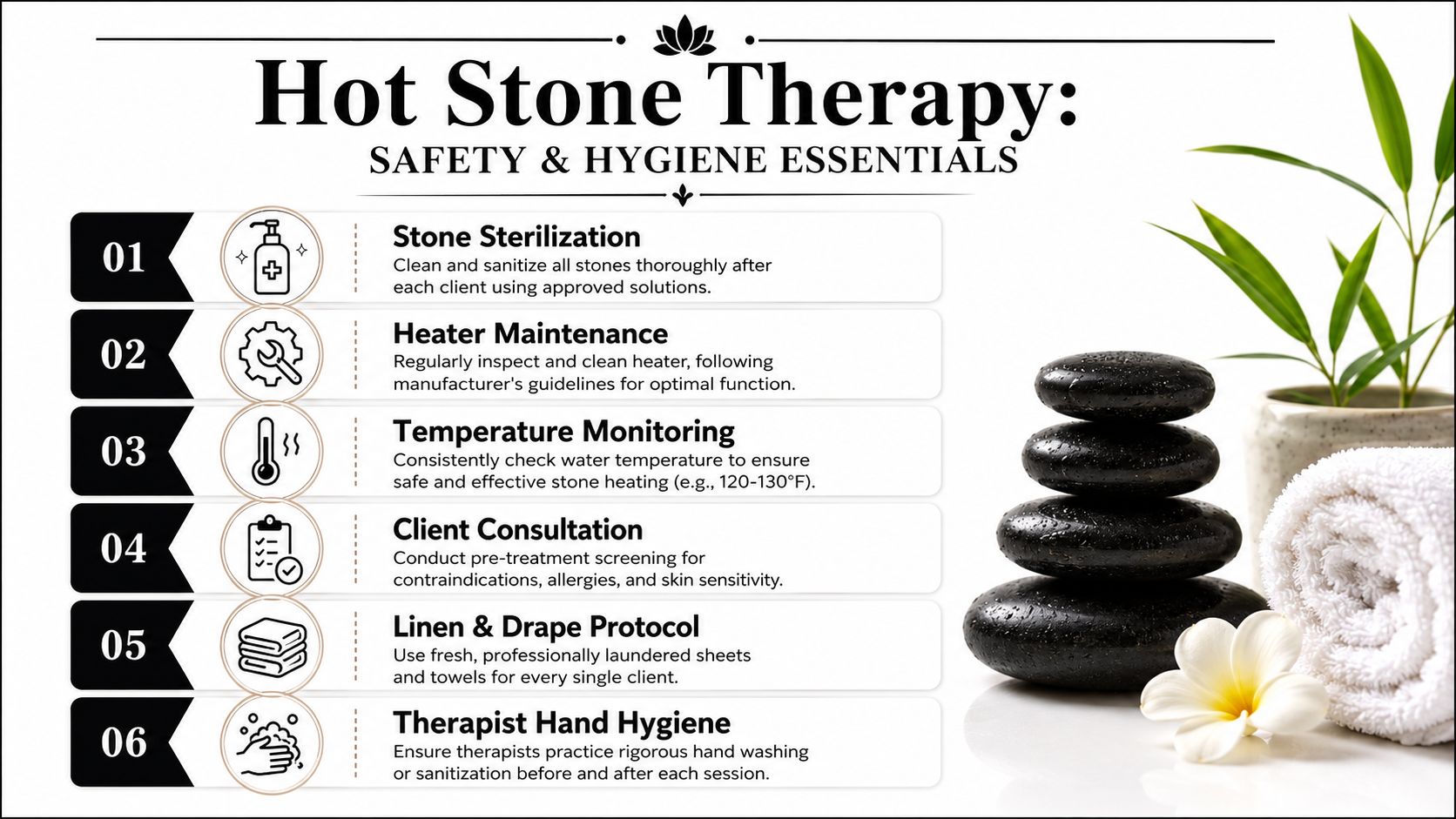
Set a written temperature range for service, then train every therapist to confirm comfort by hand before a stone touches the guest. The hand test matters because stone size, water volume, room temperature, and altitude can all affect how heat presents in practice. In Swiss alpine locations, I advise teams to test more often, not less. Heating can feel stable at the unit and still behave differently once the stone is dried and brought into a cooler room.
Skin contact also needs judgment, not autopilot. Use a towel, sheet, or another barrier whenever placement time is extended, the guest has sensitive skin, or the body area is more reactive. A therapist who knows when to buffer heat protects the guest and protects your brand.
Ban improvisation in heating methods
Microwaves have no place in a professional hot stone protocol. They heat unevenly, make temperature harder to judge, and create avoidable risk if a stone has internal flaws or mineral variation. New owners sometimes assume this only matters in home use. It matters even more in business, because one shortcut by one therapist can turn into an injury report, a refund, a poor review, and a compliance problem.
State the rule clearly in your SOPs: heat stones only in equipment approved for hot stone service. Do not rely on verbal training alone. Write it, post it in the back-of-house area, and review it during onboarding for employees, freelancers, and relief staff.
Hygiene should be visible to the guest and auditable to management
Clients read hygiene through small details. They notice whether the tray is organised, whether the heater rim is clean, whether the stones feel smooth rather than oily, and whether fresh linens are handled with care. In a luxury setting, visible order supports perceived value.
Your internal standard should be stricter than what the guest can see. I recommend a simple chain of custody for stones: used, cleaned, disinfected, dried, stored. No therapist should have to guess which set is ready for service. That single operational change reduces cross-contamination risk and speeds up room reset times.
A workable routine usually includes:
- Immediate separation after treatment: Keep used stones away from prepared stones.
- Cleaning and disinfection with the correct product: Follow manufacturer instructions and contact time for non-porous tools.
- Full drying before storage: Moisture trapped in bags, drawers, or covered containers leads to odour and residue.
- Heater basin sanitation: Clean on schedule so mineral film, oil traces, and standing water do not affect hygiene or presentation.
- Replacement checks: Remove chipped, rough, or unstable stones from service before they reach the treatment room.
If your spa uses natural stone on wet-room benches, retail shelving, or reception surfaces, the same discipline applies to housekeeping. This guide to granite cleaning for commercial facilities is useful for training teams to match the product to the surface instead of using a generic cleaner everywhere.
Consultation is part of risk control
Hot stone safety starts before the heater is switched on. Ask directly about heat sensitivity, neuropathy, circulation issues, recent inflammation, medication that alters temperature perception, and any history of strong skin reactions. Then explain how you will check comfort during the service. Guests relax more fully when they know caution is built into the treatment.
This also improves profitability. A well-briefed guest is less likely to interrupt from uncertainty, less likely to leave with mixed feelings, and more likely to rebook. In my experience, the safest spas are often the most commercially stable because their standards are clear, their teams are calm, and their client experience feels intentional from start to finish.
For Swiss operators working with a natural and ethical positioning, this discipline should show up in every choice. Clean tools, well-maintained stone sets, responsible product selection, and documented procedures all support the same promise. Care for the guest. Care for the materials. Care for the reputation you are building.
Designing and Scripting Signature Treatments
Once the operational foundation is secure, the hot stone set becomes a creative tool. Your spa then stops looking interchangeable. A signature treatment should feel specific to your environment, your service philosophy, and the kind of products you choose to put on skin.
Build the treatment around flow, not novelty
A weak hot stone service often feels fragmented. Stones are placed because the therapist learned a sequence, not because the sequence has a purpose. A strong service has an arc: arrival, grounding, release, integration, and finish.
For luxury Swiss settings, I prefer a treatment script that feels understated rather than theatrical. The guest should feel held by the rhythm of the service, not distracted by too many gestures. Natural oils help here because they support glide, skin comfort, and a more coherent clean-beauty story. If you're evaluating carrier options for bodywork, Ella & Eden's grapeseed massage oil guide is a useful reference point when comparing texture, slip, and practicality.
A 75-minute full-body signature structure
This format works well for a spa that wants a premium hero treatment without overcomplicating room operations.
Arrival and grounding
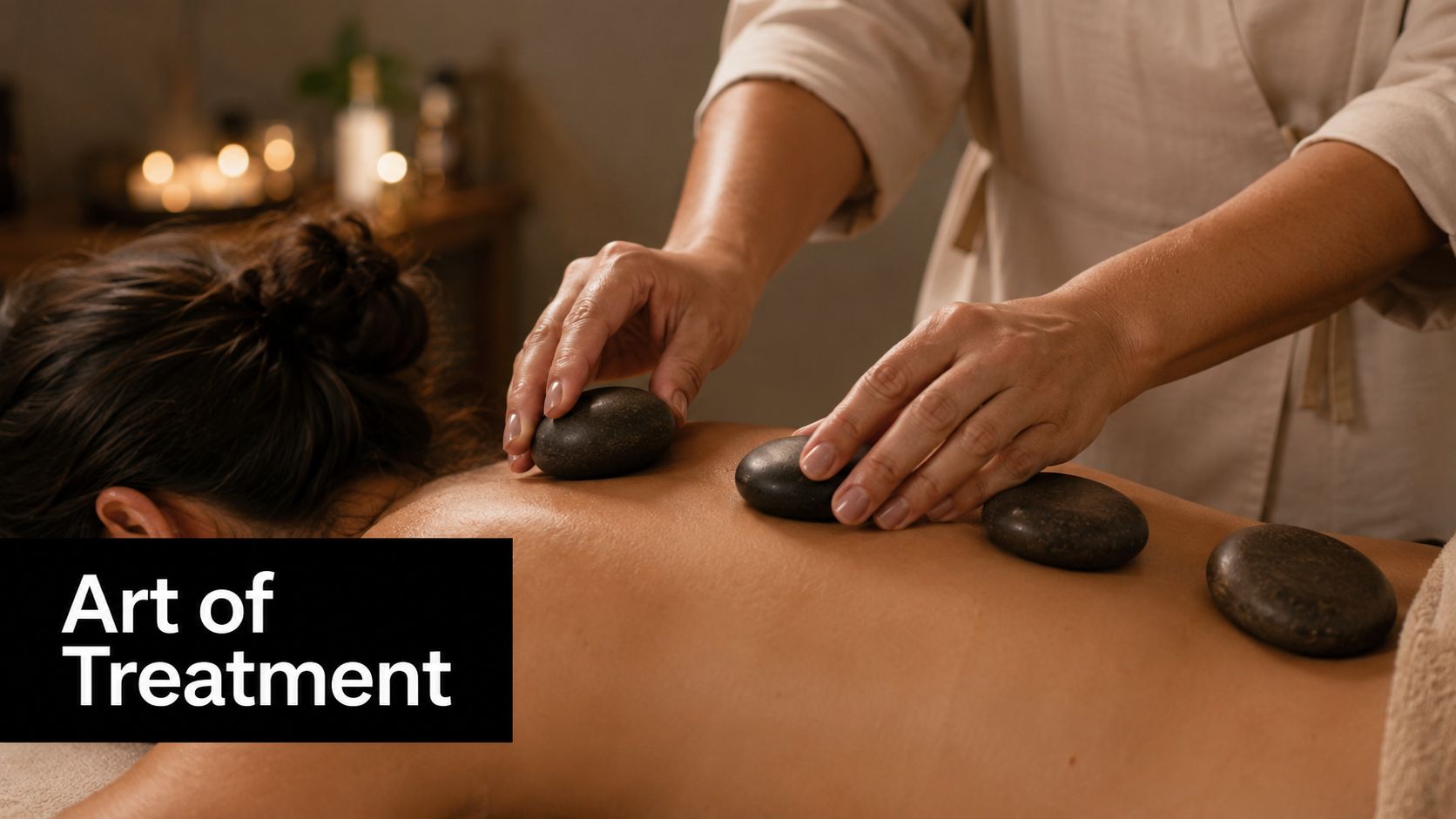
Begin with the guest prone. Place warmed stones over the towel at broad grounding points while you settle the breath and explain pressure and heat expectations. This opening should feel quiet and intentional.
Back of body
Remove the initial placement stones as you begin oil application. Use medium and large stones for broad gliding on the back, then alternate hand work and stone work so the treatment doesn't become mechanically repetitive. Save the deepest hand-led assessment for areas where the tissue response suggests it's useful.
Legs and feet
Use larger stones for calf and hamstring glides, then shift to smaller stones around the feet. The feet are often where clients fully surrender to the treatment, so don't rush this phase.
Turn and reset
After the guest turns supine, use the pause to refresh your pace. Reapply warmth gradually rather than placing several stones at once. This maintains comfort and helps more heat-sensitive guests stay relaxed.
Arms, décolleté, and scalp finish
Keep the front-of-body work lighter and more refined. Warm stones can support arm glides and hand release beautifully. Finish with hands-on scalp or neck work so the treatment ends with human contact rather than tool contact.
The stones should support the therapist's intelligence, not replace it.
A profitable express ritual
Not every menu needs a full-body thermal treatment as the only offer. A shorter service often performs better operationally because it fits between facials, body wraps, or seasonal rituals.
A simple option is a hand and foot warm stone ritual. It can stand alone or be added to another service. The format is commercially attractive because it uses fewer stones, less room turnaround, and less therapist fatigue. It also opens a natural path to retail recommendations such as hand cream, foot balm, bath products, or body oil.
Pairing stones with premium natural products
Many spas leave money on the table. The hot stone treatment should not feel disconnected from the rest of your assortment. If your room uses fresh-pressed organic oils, marine body care, or all-natural finishing balms, let the treatment tell that story.
A practical pairing model looks like this:
- Opening glide oil: Choose a natural carrier with clean slip and a finish that won't feel sticky under heat.
- Mid-treatment sensory note: Add a subtle aromatic cue that matches your spa identity rather than overpowering it.
- Post-treatment finish: Apply a body cream or balm with a distinct texture and retail potential.
Guests remember layered experiences. They also understand value more easily when they can connect the treatment they loved to products they can take home.
The Business Case Sourcing ROI and Merchandising
A hot stone set becomes profitable when you treat it as a service platform rather than a single treatment item. That means procurement choices, menu design, therapist deployment, retail integration, and visual presentation all need to support the same goal.
Ethical sourcing strengthens premium positioning
Swiss clients in the natural wellness segment increasingly care how products and tools enter the spa. They may not ask where every basalt stone came from, but they do respond to coherence. If your menu talks about ecological values, cruelty-free standards, and ingredient transparency, your equipment choices should feel equally considered.
That doesn't require performative storytelling. It requires discipline. Buy from suppliers who can explain what the stones are, how they're processed, and whether the finish is durable and suitable for repeated professional sanitation. Cheap anonymous kits often cost more over time because edges degrade, shapes are inconsistent, and replacement planning becomes chaotic.
Think in contribution, not just cost
Owners often ask whether a hot stone service “pays off”. That question is too narrow. The better question is how the service contributes across the business.
Consider the revenue levers:
- Premium menu tier: The treatment gives your spa a higher-value massage category.
- Package design: It fits easily into seasonal or hotel-led wellness bundles.
- Add-on opportunities: Warm stone hand or foot rituals attach naturally to facials and body services.
- Retail support: Oils, creams, bath products, and home ritual items become easier to sell after a memorable thermal treatment.
The cost side is straightforward in concept even if your figures vary: initial equipment, staff training time, laundry and consumables, product usage, and maintenance. Once you map those against treatment price, room occupancy, and therapist utilisation, the decision becomes clearer. You don't need invented spreadsheets full of heroic assumptions. You need a sober operating model.
Price for the room experience, not for the stones
Underpricing usually comes from one mistake. Owners compare hot stone therapy to a standard massage and add a small supplement because the stones seem like a minor extra. That framing is wrong.
You are charging for a different service architecture: setup time, heating discipline, specialist handling, enhanced sensory value, and stronger menu distinction. In a luxury Swiss context, the guest isn't buying warm rocks. They're buying certainty and atmosphere.
A useful pricing discipline is to ask three questions:
- Does the service occupy the room differently from a standard massage?
- Does it require extra therapist preparation or reset time?
- Does it visibly enhance the guest experience?
If the answer is yes, your price must reflect that.
Clients rarely object to a premium treatment fee when the ritual feels complete from consultation to finish.
Merchandising that feels elegant
The stones themselves can support marketing when they're presented with restraint. A visible heater in reception is rarely elegant. A curated display of stones, paired with a short service description and complementary body products, often works far better.
Use merchandising in three places:
- Reception or retail shelving: Display a few stones with oils or bath products to prompt questions.
- Treatment menu language: Describe the feeling and finish of the ritual, not just the mechanics.
- Post-treatment conversation: Recommend one or two home-care items that extend the warmth, nourishment, or sleep ritual.
For hotel spas, hot stone therapy also works well in shoulder seasons and colder months because the emotional appeal is immediate. Guests understand the comfort instinctively. Your task is to package that instinct into an experience that feels luxurious, natural, and worth repeating.
Conclusion Becoming a Hot Stone Authority
Many spa owners assume that offering a hot stone set is enough to enter the category. It isn't. Plenty of businesses can place heated stones on a treatment menu. Far fewer can deliver the service with the consistency, control, and refinement that build a real reputation.
Authority comes from synthesis. You choose a set that works in the hand, not just on a purchase order. You invest in a proper heater and adapt your process to Swiss operating realities. You train safety and hygiene until they become instinctive. You script treatments that feel elegant, not busy. You connect the room experience to retail and package design without making the guest feel sold to.
That's what clients remember. Not the stones alone. The confidence of the therapist. The steadiness of the heat. The quality of the oil. The sense that every detail was thought through.
If you want this category to perform, don't launch it as a trend item. Build it as a standard-bearing ritual inside your spa. The owner who treats hot stone therapy casually gets a service. The owner who masters it earns trust, loyalty, and a stronger premium position in the market.
If you're building a Swiss spa, pharmacy, wellness retail concept, or premium treatment menu around natural and ethically sourced beauty, beautysecrets.agency can help you shape an assortment that matches those standards. Their portfolio is designed for partners who want clean formulations, strong brand stories, and a more differentiated client experience across spa, retail, and professional wellness channels.