You're probably doing one of two things right now. You're either vetting a hotel for a premium wellness partnership, or you're trying to decide whether an “organic spa” claim is strong enough to sit next to certified clean-beauty brands without weakening your own standards.
That's the right question.
Most travel content treats Fair House Villas & Spa Koh Samui as a lifestyle property. For a Swiss pharmacy, spa operator, wellness retailer, or boutique travel curator, that's not enough. You need to know whether the resort's language around natural formulations, ecological design, and wellness hospitality stands up to professional scrutiny. You also need to know whether the operational side, from room quality to hygiene consistency, is solid enough for a selective clientele.
For teams that also study hospitality operations more broadly, this resource on effective luxury home management is useful context because it highlights the gap between beautiful positioning and repeatable standards. That gap matters here.
An Introduction for the Discerning Wellness Professional
Fair House Villas and Spa Koh Samui Thailand is best evaluated as a wellness-led boutique resort with a promising but incompletely documented clean-beauty proposition.
That distinction matters. The property appears to understand the language of modern wellness. It presents Thai-style villas in tropical gardens, positions its spa around an organic concept, and leans into low-impact design. For retail buyers and spa partners, that's the attractive part. The harder part is documentation. If you distribute or recommend brands that rely on ingredient transparency and recognised standards, you can't stop at marketing language.
My view is straightforward. This resort is potentially suitable for a discerning Swiss clientele, but only for partners willing to do proper pre-contract due diligence. It is not a blind recommendation.
Practical rule: Treat Fair House as a candidate for a curated wellness portfolio, not as a pre-approved clean-beauty flagship.
The upside is clear. It has the atmosphere, privacy profile, and wellness framing that many premium guests want. The caution is equally clear. The available public information supports the existence of an organic spa concept, but it does not publicly provide the kind of ingredient-level evidence, certification trail, or hygiene audit disclosure that Swiss trade buyers typically prefer before attaching their reputation.
If your standard is emotional luxury alone, the resort passes. If your standard is Swiss-grade transparency, it needs questions answered first.
A Tropical Sanctuary on Maenam Beach

Fair House Villas and Spa Koh Samui Thailand has a strong foundational story. It opened in 2006 and was last renovated in 2020, giving it long operating history plus a meaningful recent update. The property has 72 Thai-style villas, set within lush tropical gardens, and it holds an 8.5/10 customer satisfaction score from over 1,275 verified reviews according to Travel Weekly's hotel profile.
That combination matters more than many buyers realise. A resort that has been open long enough to learn operational discipline, then renovated recently enough to avoid looking tired, tends to sit in a valuable middle ground. It doesn't feel experimental. It doesn't feel obsolete either.
What the physical setting gets right
This isn't a tower hotel with a spa attached. It's a garden-based villa resort with a softer pace and more visual privacy. For wellness travellers, that makes a real difference. Guests who book a property like this usually want quiet movement between villa, pool, beach, treatment room, and restaurant. They don't want a loud, transactional environment.
The Thai-style design also helps. When a resort preserves local architectural character rather than flattening everything into generic international minimalism, the stay feels more restorative and more rooted. That matters for guests who associate wellness with place, ritual, and atmosphere.
A quick visual reference helps if you're assessing the layout and mood from a buyer's perspective.
What a portfolio curator should notice
The property's strongest non-spa asset is its boutique scale. With 72 accommodations, it can feel controlled rather than sprawling. That suits guests who want seclusion but don't want the isolation or service fragility that can come with tiny owner-managed villas.
Here's where I'd place it operationally:
- Best fit for guests who prioritise calm, well-tended surroundings, and a less crowded beachfront setting.
- Less ideal for clients who expect the polished systems of a major international luxury chain.
- Most persuasive feature for first-time Samui visitors is the balance of resort privacy and practical access.
The setting is credible. The atmosphere is credible. That gives the spa concept a stronger platform than it would have in a generic resort.
The resort also carries a 4.5-star rating on Trip.com, as noted in the broader property information cited earlier through the same hotel profile context. That doesn't prove excellence in every department, but it does support the view that Fair House has remained relevant rather than coasting on scenery alone.
Your Private Retreat Villa Types and Amenities
A Swiss pharmacy partner is not selling a generic beach holiday here. It is selling sleep quality, privacy, sensory calm, and confidence that the room product will not undermine the spa story. Fair House can support that brief, but only if you match the villa category to the client with discipline and stop relying on vague upgrade language.
The accommodation mix gives the resort useful commercial flexibility. Some categories suit a quiet-value wellness booking. Others justify a higher rate because they reduce noise, improve seclusion, and make longer in-room downtime more pleasant. That distinction matters for B2B buyers screening properties against clean-beauty expectations. If a resort promotes organic wellness, the room environment also has to feel low-friction, restorative, and credible.
How I would position the villa categories
Sell by function.
- Garden-oriented villas or entry categories fit guests who want greenery, privacy, and a calmer alternative to a standard hotel room without paying for top-tier frontage.
- Pool-access or upper-mid categories work best for guests who plan to spend real time on property and treat the room as part of the wellness experience, not just a base.
- Beachfront villas with private pool features are the strongest recommendation for high-expectation clients who want visible exclusivity and minimal compromise.
Many travel sellers often get room strategy wrong. They present all categories as versions of the same stay, then act surprised when guest satisfaction becomes inconsistent. At a villa resort, category choice shapes the entire perception of value.
What matters for Swiss wellness clients
For discerning Swiss guests, the buying criteria are usually practical, not theatrical.
| Priority | Why it matters here |
|---|---|
| Privacy | Villas reduce shared-corridor exposure and support a quieter personal routine |
| Outdoor living | A terrace or balcony gives guests space for tea, reading, recovery, and slow mornings |
| Sensory control | Lower density, greenery, and more distance between units support the calm expected from a wellness-led stay |
That profile aligns well with the property's softer positioning. Do not market these rooms as ultra-luxury hardware. Market them as boutique tropical villas with enough space, outdoor access, and separation to support a restorative stay. That is a stronger and more honest pitch.
For hospitality teams refining category messaging, this guide to Miami hotel marketing is a useful reference point. It shows how easily room inventories get packaged in aspirational language while practical differences stay unclear. Fair House needs sharper room-by-room recommendation logic if you want it to sit comfortably in a premium wellness portfolio.
My recommendation for partner sales teams
Use a simple screening rule before you quote.
- Check tolerance for tropical inconsistency. Guests who expect chain-level uniformity should be placed in the best-presented upper categories.
- Pay more for privacy, not labels. A beachfront or private-pool option has a clearer return than a vague premium name.
- Frame the resort accurately. This is a boutique villa property in a natural setting. Sell atmosphere, recovery, and personal space.
For Swiss clean-beauty retailers and wellness pharmacies, that final point matters most. The room product supports the organic spa narrative only when expectations are set properly. Done well, the villas feel calm and commercially credible. Done poorly, they read as attractive but loosely defined inventory, which is not good enough for a selective clientele.
The Heart of Wellness An Analysis of the Organic Spa Concept
The core question is simple. Does the spa deserve to be taken seriously by buyers and operators who work with clean beauty every day?
The answer is yes, but only up to a point.
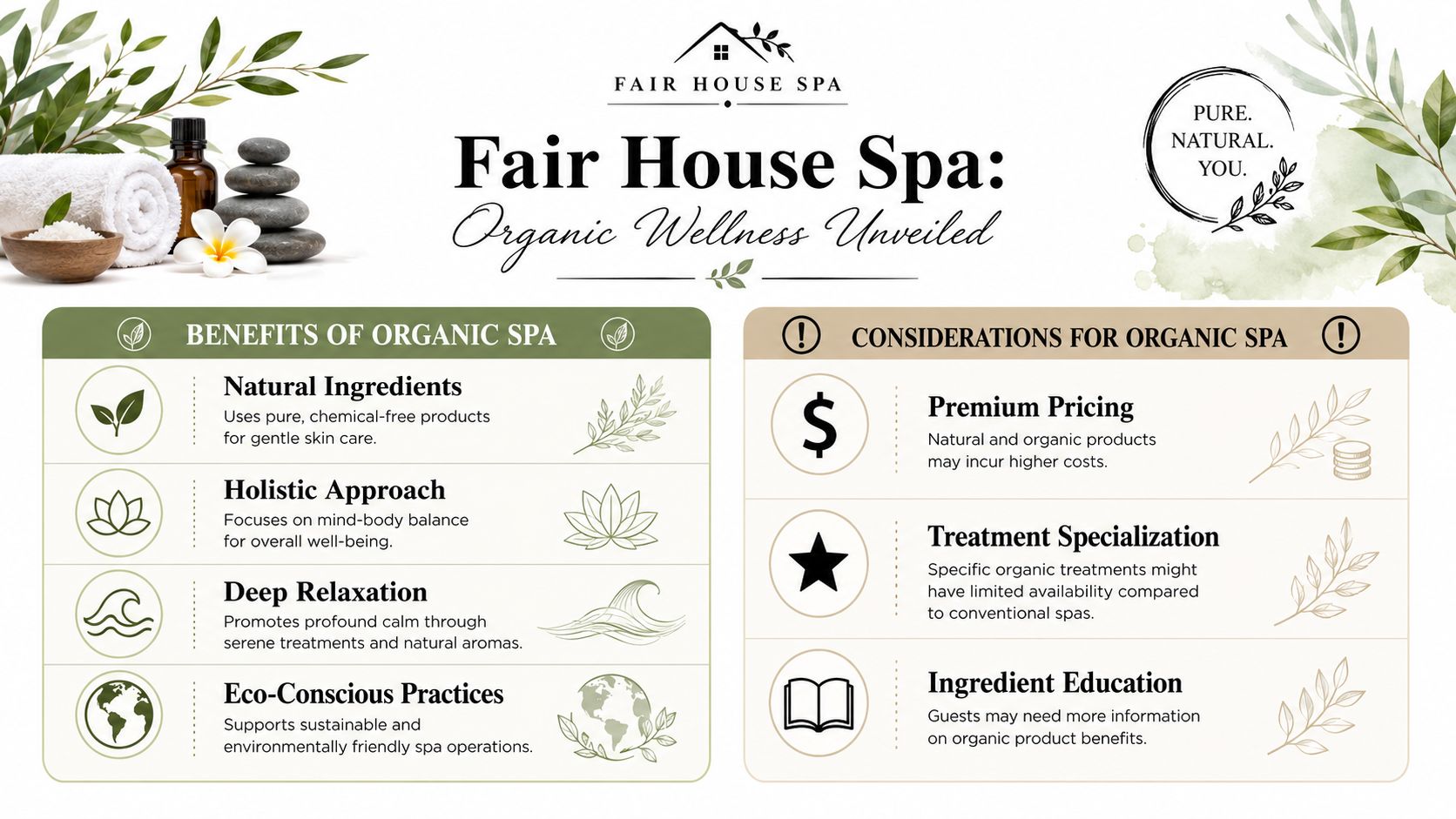
According to the public property description on Trip.com's hotel detail page, the spa uses an organic concept grounded in low-impact ecological design, with natural, plant-based formulations and biodegradable products. The same description emphasises ingredient purity and highlights cold-pressed oils and herbs as part of the therapeutic philosophy.
That is not meaningless language. In fact, it aligns with several principles that matter in Swiss clean-beauty evaluation.
Where the spa concept aligns well
From a consultant's perspective, these are the strongest points:
- Plant-based formulation language fits the expectations of guests who avoid heavily synthetic spa products.
- Biodegradable product use supports an ecologically responsible operating narrative.
- Low-impact design is relevant because sustainability isn't just about treatment oils. It's also about the way the wellness facility sits within the property.
- Cold-pressed oils and herbs suggest attention to ingredient handling, which matters if efficacy and sensorial quality are both priorities.
For Swiss pharmacies and wellness retailers, that last point is particularly resonant. Ingredient handling often separates credible natural wellness from decorative greenwashing. If a spa really prioritises fresh, carefully processed botanicals, that's a positive signal.
For broader context on aromatic raw materials and how users understand them, this primer to explore essential oils for home is useful. It isn't a certification document, but it helps frame why educated guests increasingly ask what oils are used, how they're processed, and what practical benefit they're meant to deliver.
Where the concept remains too vague for a premium clean-beauty portfolio
This is the part many reviewers avoid. I won't.
An “organic spa concept” is not the same as a verified clean-beauty standard. If you serve a Swiss trade audience, you should distinguish between:
| Marketing language | What a professional buyer wants |
|---|---|
| Organic concept | Ingredient lists |
| Natural formulations | Supplier disclosure |
| Biodegradable products | Product-level verification |
| Ecological design | Operational standards and audit trail |
That's where Fair House becomes a qualified recommendation rather than a full endorsement.
Consultant's view: The spa philosophy is attractive, but philosophy isn't documentation.
The public-facing information does not, at least in the material available here, show product names, ingredient decks, supplier certification, treatment protocol standards, or independent verification. For Swiss pharmacies, drugstores, and premium spa retailers, that absence matters. Clients in this segment often expect precision. They want to know whether a treatment oil is merely botanical in theme or whether it is traceable, certified, and suitable for a sensitive-skin positioning.
My professional verdict on the spa
I'd score the spa well on direction, moderately on credibility, and cautiously on evidence.
That means I would not reject the property. I would place it in a shortlist for partnership review, with conditions:
- request the spa brand list
- request ingredient and origin documentation
- ask whether any products hold recognised ecological or organic certification
- verify whether treatment menus can be adapted for sensitive-skin or fragrance-conscious guests
- inspect whether the treatment experience is consistent with the clean-beauty story
If those answers are strong, the resort could work nicely within a selective wellness offering. If those answers are soft or evasive, keep it out of any portfolio that trades heavily on trust and certified standards.
Beyond the Spa: Dining and Leisure
A Swiss pharmacy buyer arrives for a site review after a treatment block and asks a simple question. Does the rest of the property support a clean, restorative stay, or does the spa sit inside a standard beach resort with wellness language layered on top? At Fair House, the answer is reasonably favourable.
The non-spa offer is coherent. The property combines a double-tier swimming pool with a swim-up bar and a beachfront restaurant with lounge in a way that suits guests who want recovery, comfort, and light resort leisure in the same stay. For B2B partners, that matters. A resort does not need a clinical programme to earn a place in a premium wellness portfolio, but its food, pacing, and communal spaces must not contradict the wellness proposition.
Why the leisure offer is commercially useful
The pool layout does more than add visual appeal. It helps segment the guest experience. One zone can absorb the social energy of holiday travellers, while another remains calmer for guests who have booked treatments, reading time, or low-key recovery days. That separation is practical, especially for Swiss clients who value quiet order and dislike avoidable disturbance.
The swim-up bar needs a clear-eyed reading. It broadens the resort's appeal, but it also confirms the property is a hybrid product rather than a strict spa retreat. I would not treat that as a weakness. I would package it correctly. This works for guests who want wellness with freedom, not a controlled regimen.
The beachfront restaurant is equally important. Dining can strengthen or weaken an organic spa claim very quickly. If menus lean heavily on generic indulgence with no visible attention to ingredient quality, freshness, or lighter options, the clean-beauty story loses force. Here, the beachside format at least supports the right behavioural pattern. Guests can move from treatment to lunch to rest without transport friction or sensory overload.
What this means for Swiss clean-beauty positioning
For pharmacies, apothecary retailers, and wellness distributors assessing partner fit, dining is not secondary. It is part of brand congruence.
I would test three points before recommending this property in a Swiss-facing wellness package:
- whether ingredient sourcing and menu design show the same care implied by the spa's organic language
- whether lighter, simple, high-quality dishes are easy to order without special negotiation
- whether public areas stay calm enough for fragrance-sensitive, privacy-minded, and recovery-focused guests
That last point is easy to overlook. Swiss premium clientele often accept leisure amenities. They do not accept noise, sloppy service flow, or a resort atmosphere that feels operationally at odds with a clean-living promise.
My recommendation on dining and leisure fit
Fair House performs well enough here. The leisure infrastructure appears supportive, the restaurant setting is commercially usable, and the overall stay should feel easy rather than disjointed. I would not sell it as a destination for strict nutritional programming or medically oriented wellness. I would sell it as a polished resort base for rest, treatments, beach time, and uncomplicated recovery.
That is the right position. Overstate it, and partner trust drops. Present it accurately, and it suits a discerning Swiss audience that wants comfort, calm, and a credible wellness atmosphere without rigid rules.
Strategic Location Exploring Koh Samui
A Swiss client lands after a long-haul flight, wants a short transfer, a quiet room, and no confusion about where the island's useful amenities sit. Fair House works well on that test.
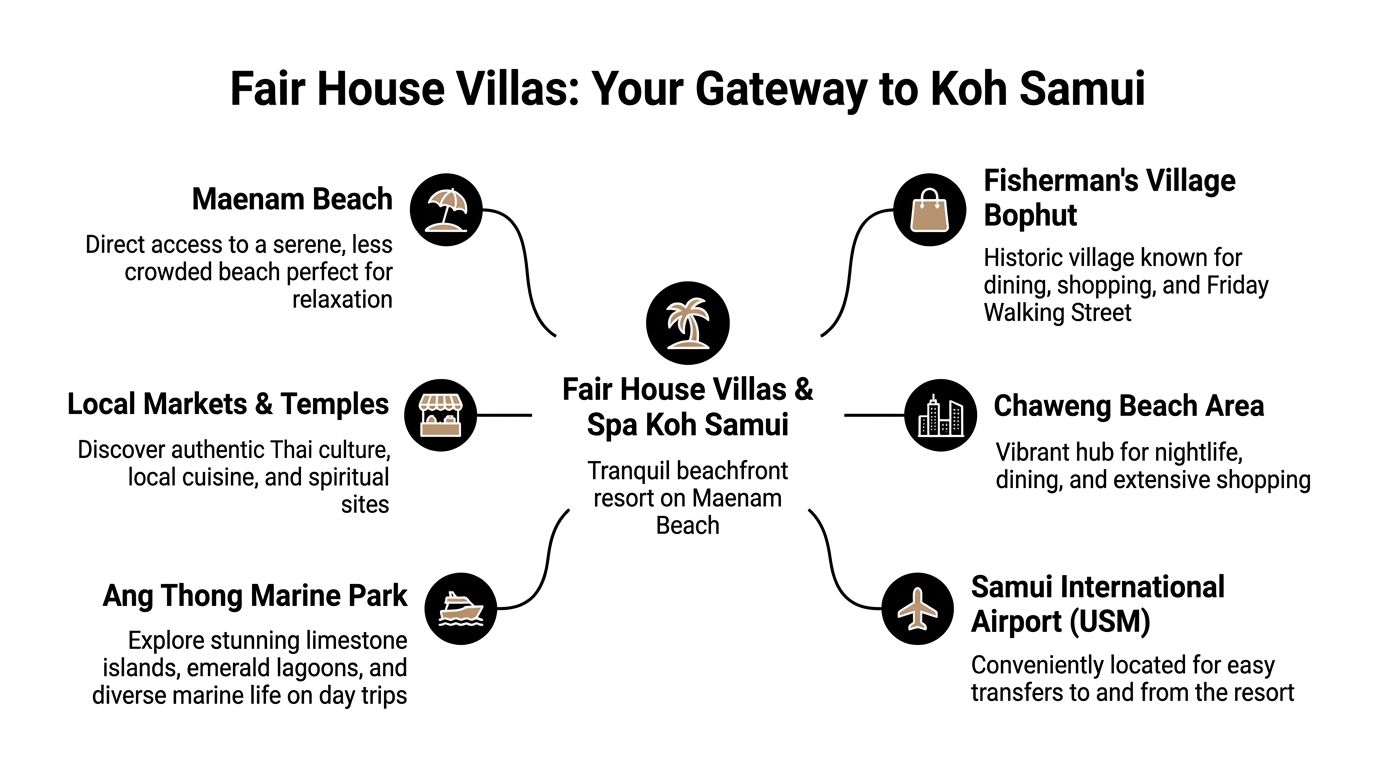
The property's Maenam address is one of its stronger commercial advantages. The setting gives guests a calmer base than Samui's louder entertainment pockets while keeping airport transfers, dinner outings, and light retail activity manageable. For pharmacies, wellness retailers, and travel advisors building a clean-beauty-aligned package, that matters. A resort can claim organic treatments all day long, but if the guest journey is noisy, slow, or logistically messy, the wellness promise weakens fast.
Why Maenam works for wellness travel
Maenam suits guests who want lower sensory load. That is the right environment for post-treatment recovery, sleep quality, and privacy. It also supports the kind of understated positioning Swiss premium buyers tend to prefer. They usually do not ask for isolation. They ask for calm, order, and easy access to what they may need.
The practical advantage is proximity to Bo Phut and Fisherman's Village. Guests can step out for a controlled change of scene, then return to a quieter beachfront base. That pattern is commercially useful. It gives couples and longer-stay guests enough variety without pushing the stay into a sightseeing-heavy format that clashes with a spa-led brief.
Operational view for Swiss-facing partners
From a B2B perspective, the location strengthens the resort's suitability more than the marketing language does. Shorter transfers reduce arrival fatigue. Simpler routing lowers the chance of service failure. Easier access to established dining and shopping areas helps advisors sell the stay with precision instead of vague promises about “island convenience.”
It also creates a better fit for clean-beauty partners evaluating brand congruence. If you are considering this resort for a pharmacy loyalty trip, a wellness retail campaign, or a supplier-hosted recovery package, the geography supports a disciplined program. Guests can stay mostly on property, protect rest time, and still have optional access to external venues if needed.
Recommended itinerary logic
I would package the location this way:
- Arrival day. Keep the schedule light and protect the first evening for rest, hydration, and an early treatment or quiet dinner.
- Core stay. Prioritise villa time, beach access, and spa appointments over island hopping.
- One or two external outings. Use Bo Phut or Fisherman's Village for dinner, casual shopping, or a short walk, then return before the area becomes busy.
- Departure day. Use the relatively easy airport access as a selling point for guests who value low-friction exits.
My recommendation is clear. The location is a real asset, especially for Swiss clientele who expect calm logistics to match wellness claims. It does not turn Fair House into a medical wellness destination. It does make the resort easier to endorse as a credible, premium recovery base with sensible access to the island's better-known amenities.
Booking Insights Price Analysis and Ideal Guest Profile
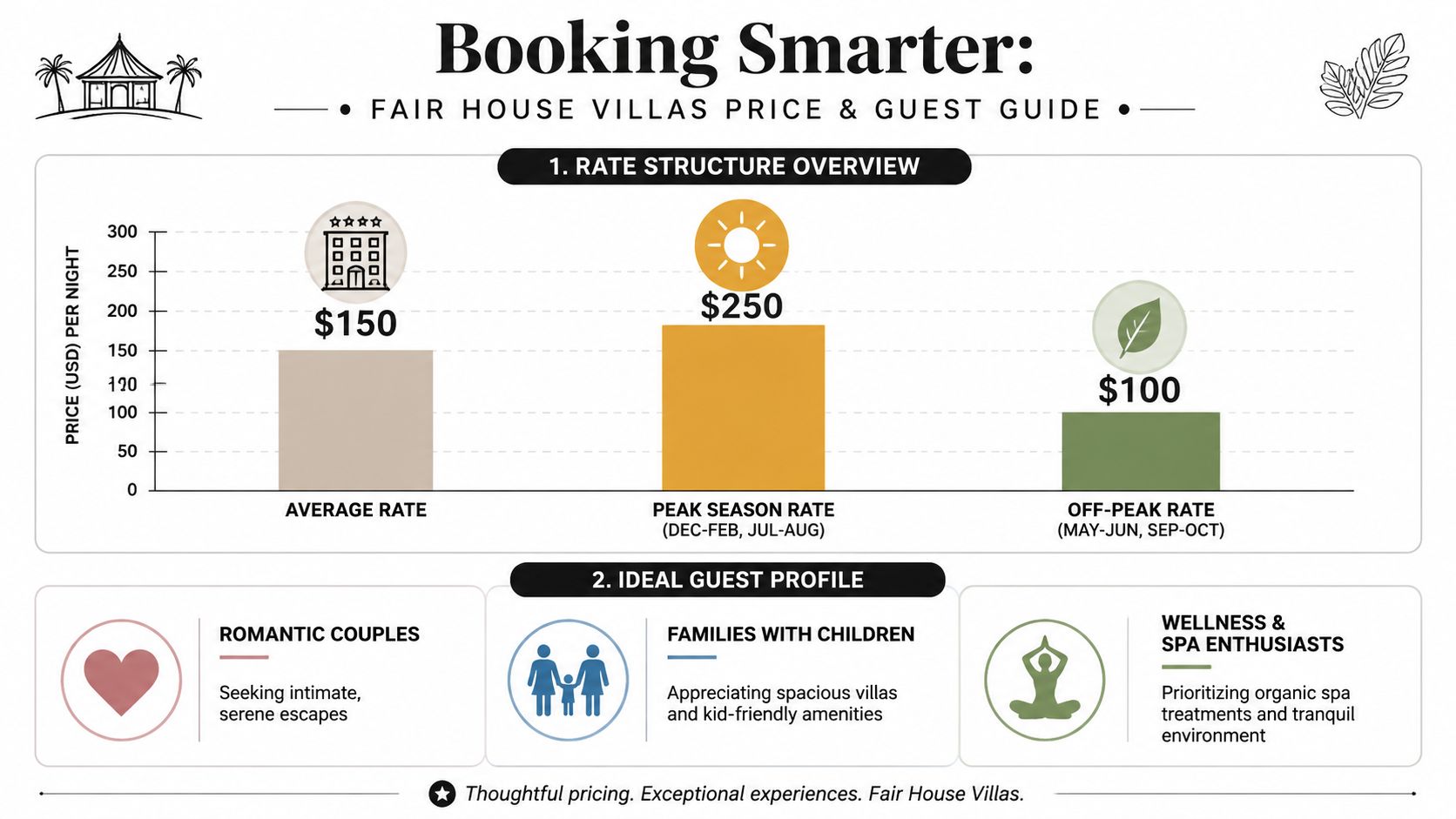
A Swiss pharmacy partner considering this resort for a loyalty trip or clean-beauty activation should not book on the spa story alone. Book on price discipline first, then on guest fit.
Fair House sits in an awkward but usable commercial tier. In stronger demand periods, it prices itself like a boutique wellness resort with beach access and villa privacy. In softer periods, it can drop into a value bracket that makes the proposition far more convincing. That gap matters because the hardware, service consistency, and spa documentation need to justify the rate, especially for a Swiss audience that reads “organic” as a claim that should be backed by supplier and formulation evidence.
What the rate structure means in practice
My view is simple. This property is easier to endorse when the rate leaves room for its imperfections.
At the higher end, you are selling atmosphere, villa-style privacy, garden-and-beach character, and a softer wellness mood. You are not selling audited Swiss-style clean-beauty compliance, medical wellness infrastructure, or tightly standardised luxury operations. For B2B buyers, that distinction is the whole decision.
Use this positioning framework:
| Booking scenario | How to position it |
|---|---|
| Peak or premium-rate dates | Boutique resort with privacy, tropical character, and spa appeal. Only suitable if the client accepts some variation and the spa claims have been checked in advance. |
| Promotional or shoulder-season dates | Good value for couples or wellness travellers who want a private villa setting without paying top-tier branded resort prices. |
| Trade or group contracting | Viable for selective programmes, especially if you negotiate added treatment value, breakfast inclusion, or room upgrades instead of paying a headline premium. |
This is not a property I would place on autopilot in a premium wellness portfolio.
Ideal guest profile
The best-fit guest is specific, not broad.
- Wellness-oriented couples are the strongest match. They are likely to use the villa, beach, treatment rooms, and slower resort rhythm in the way the property intends.
- Boutique-focused leisure travellers also fit well, especially clients who prefer texture and privacy over chain uniformity.
- Clean-beauty interested guests can be a fit only if your team verifies product provenance before arrival and frames the spa accurately.
The weaker fit is just as clear. Avoid placing highly exacting luxury travellers here if they benchmark every touchpoint against international five-star chains. Avoid using it for clients who interpret “organic spa” as evidence of ECOCERT-style alignment unless you have written product and supplier detail in hand. Avoid broad pharmacy or retailer campaigns that require clean, replicable standards across every guest stay.
My recommendation for Swiss partners
Sell Fair House selectively and negotiate hard.
Use it for:
- couples' wellness escapes
- lower-pressure loyalty rewards
- boutique tropical recovery stays where privacy matters more than formal certification depth
Do not use it for:
- clean-beauty campaigns that need documented standards comparable to Swiss pharmacy expectations
- high-stakes VIP placements with no tolerance for variation
- programmes built around proof-heavy organic positioning
The property becomes commercially sensible when the rate reflects its real strengths. Those strengths are privacy, mood, beach setting, and a marketable wellness atmosphere. If pricing moves too close to fully validated premium wellness resorts, I would pass.
Frequently Asked Questions for Partners
Is the resort suitable for a Swiss clean-beauty portfolio
Yes, conditionally.
The spa narrative is aligned with the right themes: natural formulations, biodegradability, and ecological design. But for a premium Swiss portfolio, I wouldn't approve it on narrative alone. Ask for treatment product details, supplier information, and any available certification evidence before using the property in a clean-beauty-led campaign.
Are the hygiene concerns serious enough to block a recommendation
They're serious enough to investigate. Public discussion around the property includes a recurring question about hygiene consistency across the resort's 72 villas, including some 2024 to 2025 reviews citing issues, while public-facing messaging emphasises personalised service. The same concern also notes a lack of public disclosure on third-party hygiene audits in the context of Swiss wellness expectations, as referenced in the video-based review material here.
That doesn't prove systemic failure. It does mean you shouldn't rely on reputation alone.
What due diligence should a trade partner complete before recommending it
Use a short but strict checklist:
- Request current housekeeping protocols. Don't accept generic assurances.
- Ask about room inspection routines. Especially if you're placing premium clients in higher categories.
- Clarify spa product provenance. Brand names and ingredient documents matter.
- Check how complaints are resolved on-site. A good recovery process can offset occasional inconsistency.
- If the partnership is material, conduct a site visit. Photos and OTA copy aren't enough.
Should mixed guest feedback outweigh the resort's stronger positioning
Not automatically.
Long-standing properties often generate mixed review patterns because they serve varied room categories, varied rate bands, and varied guest expectations. What matters is whether the inconsistency lands in cosmetic details or in core trust issues. Hygiene sits close to core trust. That's why I'd escalate it rather than dismiss it.
Would I recommend it to a discerning Swiss clientele
Yes, but only with controlled positioning.
I'd recommend Fair House to guests who want a boutique villa resort with a wellness orientation, and I'd do so only after setting expectations properly. I would not market it as a verified clean-beauty benchmark until the spa's product and certification story is documented more clearly. I would also not place highly demanding clients there without additional confirmation on housekeeping standards.
A good advisor doesn't sell the fantasy. A good advisor filters the fit.
That's the right way to handle Fair House Villas and Spa Koh Samui Thailand. It has genuine appeal. It also needs a professional layer of verification before it deserves a place in a high-trust Swiss wellness network.
If you're building a Swiss retail, spa, or hospitality offer around natural, certified, and ethically sourced beauty, beautysecrets.agency can help you evaluate product fit, portfolio positioning, and clean-beauty standards with the level of rigour premium partners expect.