A Swiss pharmacist usually sees the pattern before the sales data confirms it. A new parent comes in asking for something gentle enough for the first baths, natural enough to feel modern, and credible enough to trust on newborn skin. Then the second question arrives. Is it mild, or is it just packaged that way?
That's where mustela gel lavant earns its place. In a baby care aisle, this product doesn't work as a novelty line or a decorative add-on. It works as a dependable daily cleanser with the right mix of clinical reassurance, practical format options, and a formula that answers common Swiss concerns such as skin sensitivity and hard water exposure.
For pharmacy teams, that matters. Parents don't buy infant wash the way they buy impulse beauty. They look for proof, texture, tolerance, and ease of use. Retailers need a product staff can explain in one concise consultation and then confidently recommend again.
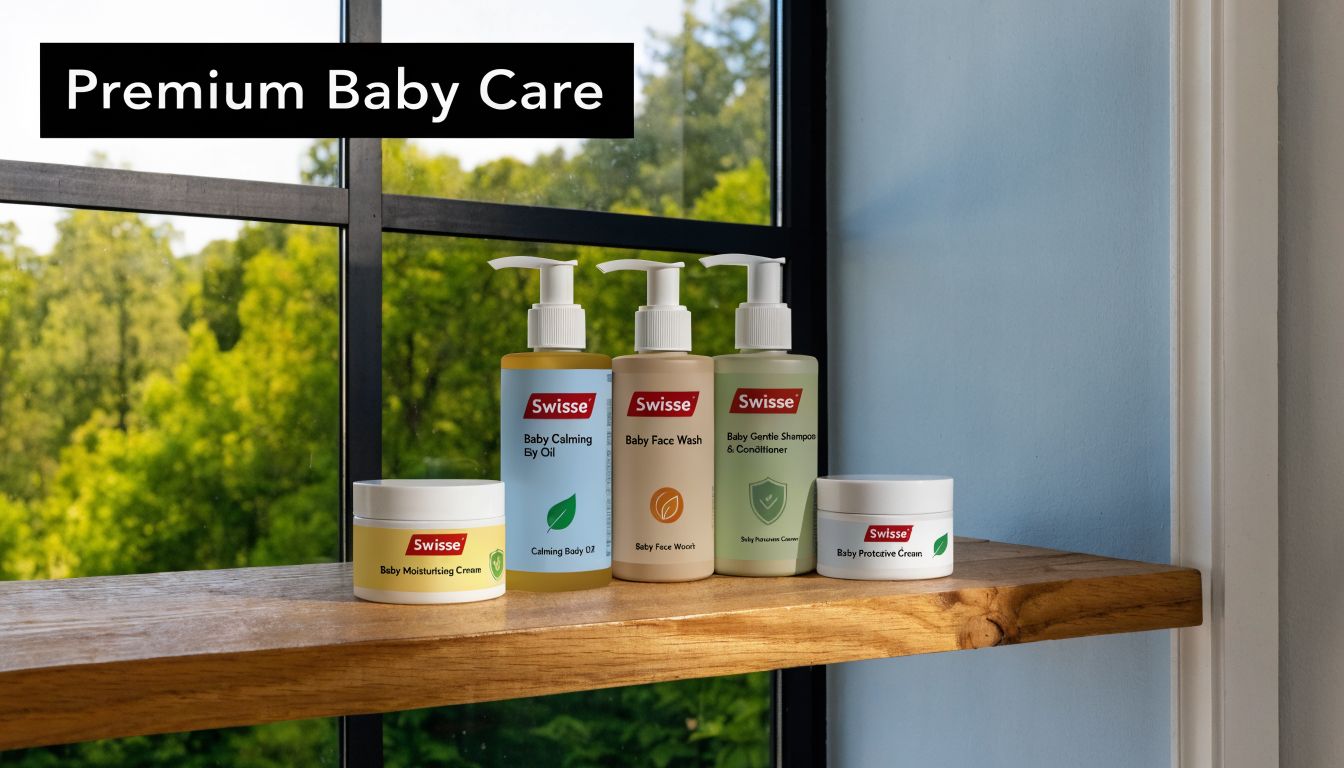
Meeting the Demand for Premium Baby Care in Switzerland
A typical pharmacy scenario looks like this. A parent arrives with a newborn, often sleep-deprived, often cautious, and usually comparing three things at once: ingredients, dermatological credibility, and whether the product feels worth the premium. If the answer is vague on any one of those points, the sale often shifts to a simpler, more familiar option.
Mustela Gel Lavant Doux solves that problem because it gives staff a clear story to tell. It's a gentle cleansing gel for skin and hair from birth, and it comes with the kind of validation Swiss retail teams can use in conversation. In pediatric and dermatological testing under Swiss healthcare protocols, 100% of users agreed it gently cleanses skin and hair, while 98% confirmed its soothing properties, according to Mustela Gel Lavant Doux product data. The same source notes over 75% repeat purchase rates among parents seeking natural, biodegradable cleansers, and states that by 2020 Mustela held approximately 22% of the Swiss baby care segment.
Why this matters at shelf level
Those figures matter because baby wash is rarely a one-off purchase. If a family likes the product after the first weeks of use, it tends to become part of the routine. That changes the role of the item in-store. It stops being just a cleanser and starts functioning as a repeat footfall driver.
For premium Swiss retail, that has three direct advantages:
- It supports trust-led selling. Staff can recommend it without relying on fluffy language.
- It fits natural positioning. Parents looking for plant-based, biodegradable options immediately understand the appeal.
- It protects margin. Products with repeat purchase behaviour are easier to justify than trend-driven items.
Practical rule: In baby care, the safest assortment choice is usually the one staff can defend in under thirty seconds.
Where it fits in a premium assortment
Mustela gel lavant sits comfortably between mass baby wash and niche organic lines. It gives pharmacies a recognised name with stronger scientific language than many lifestyle-led alternatives, while still meeting the expectations of parents who read labels closely.
That balance is useful in Switzerland, where the customer often wants both reassurance and refinement. They don't want a harsh cleanser. They also don't want a product that sounds pleasant but can't answer basic questions on tolerance, formulation quality, or why it performs well in daily use.
The Science Inside the Formula
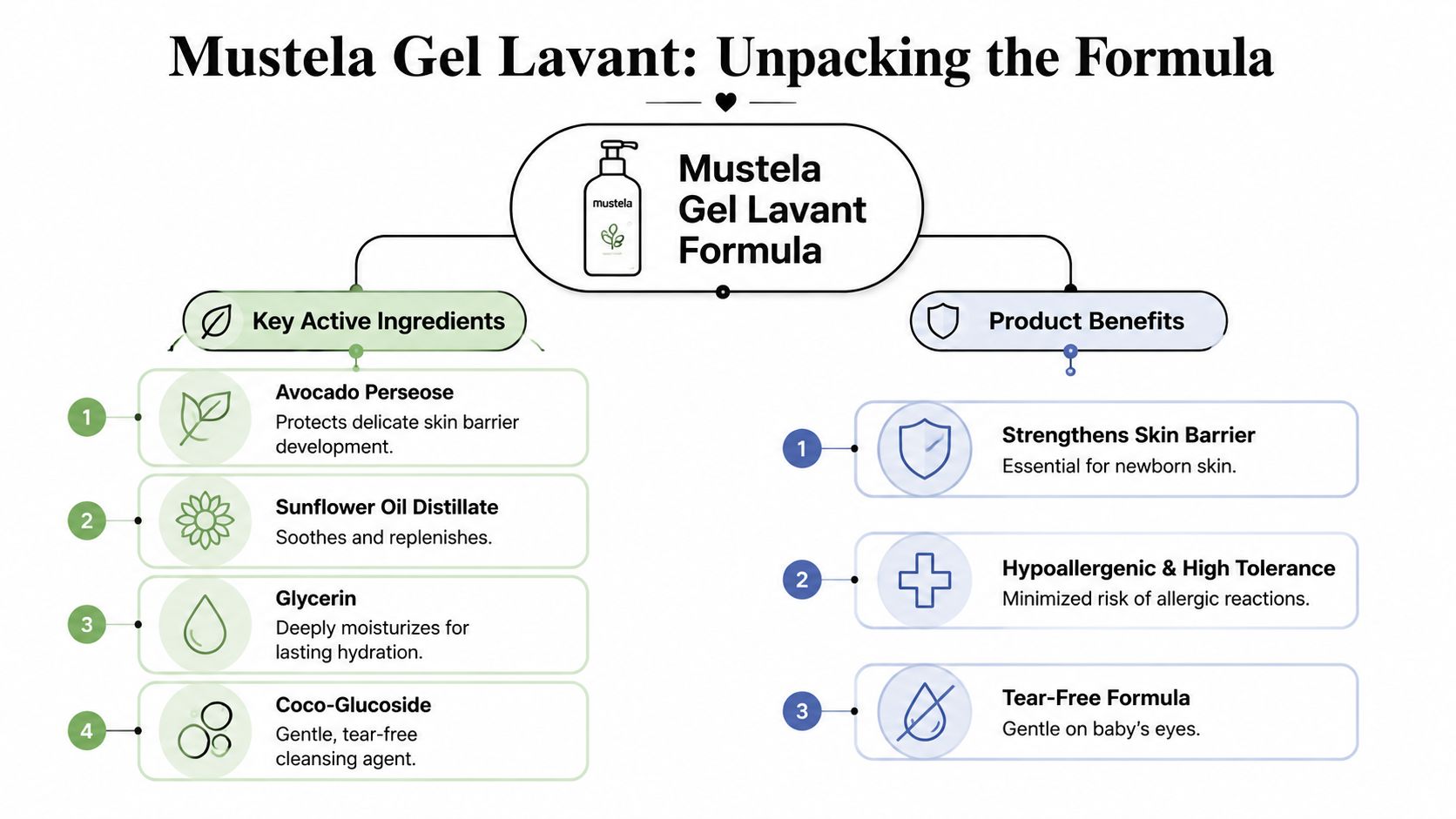
The formula is where mustela gel lavant becomes easier to recommend professionally. Retail teams don't need to memorise every ingredient, but they should understand the few technical points that explain why the product behaves gently on infant skin.
At the core is a mild surfactant system built for cleansing without aggressive stripping. According to technical product analysis for Mustela Gel Lavant, the gel's surfactant system has a zein number of 120-150, which is considered a low-irritancy benchmark. The same source states it minimises lipid disruption by 40% compared to standard syndet bars, reduces post-bath transepidermal water loss from 15 g/m²/h to 9 g/m²/h, and preserves 93% of the skin's natural oils.
What the surfactant system is doing
For a pharmacy conversation, this doesn't need to become a chemistry lecture. The useful translation is simple. The cleanser removes residue and sebum without taking too much of the protective lipid layer with it.
That matters because newborn skin has a less resilient barrier than adult skin. In practice, retailers often hear complaints that a baby wash leaves skin tight after bathing. This is usually the result of cleansing that's technically effective but poorly balanced for immature skin.
Three practical selling points come from the formula science:
- Low-irritancy cleansing: The surfactant blend is designed to clean while reducing the risk of barrier disruption.
- Better after-bath comfort: Lower post-bath water loss helps explain why parents describe the skin as less dry or less reactive after washing.
- Daily-use suitability: A cleanser can only become a routine item if it performs consistently without cumulative irritation.
Why Avocado Perseose matters
A second useful discussion point is Avocado Perseose, Mustela's patented ingredient associated with protecting the skin barrier. For retail staff, the benefit is not that the ingredient sounds premium. It's that it helps explain why the formula is positioned for delicate skin from birth.
When parents ask what makes this different from a standard baby wash, this is one of the best answers. It isn't just “gentle because it's baby-branded”. It is built around barrier respect.
Good infant cleansing doesn't only remove impurities. It needs to leave the skin in a condition where the next bath doesn't start from a weaker baseline.
How to explain it without overcomplicating the sale
The most effective explanation in-store is often the shortest one. Staff can say that mustela gel lavant uses a mild cleansing base plus barrier-supportive ingredients, so it washes skin and hair clean without behaving like a harsh soap.
For parents who want broader education on routine building, resources on newborn skin care essentials can help frame where a cleanser fits alongside emollients, towel habits, and bath frequency. That kind of context supports the recommendation because it shifts the discussion from “Which bottle is cheapest?” to “Which formula makes sense for newborn skin?”
Proven Efficacy and Swiss Safety Standards
Pharmacy staff don't need another baby cleanser with soft language and vague reassurance. They need claims they can stand behind when a parent asks, “Has this been tested?” Mustela gel lavant gives a stronger answer than many products in the aisle.
According to Swiss pharmacy sales analytics and CH-certified lab data on Mustela Gel Lavant Doux, 85% of dispensed units in Zurich, Bern, and Lausanne between 2022 and 2025 were the 200ml and 500ml variants. The same source states that, under dermatological control in CH-certified labs, the product achieved 100% gentleness agreement and 98% soothing efficacy in studies with over 150 participants.
The evidence that supports recommendation
Those numbers matter because they answer two different retail questions at once. First, is the formula accepted by users under controlled evaluation? Second, are the key commercial formats the ones people buy?
That distinction is important. Some products look strong in testing but sit still on the shelf because the format or positioning is awkward. Others move units because of price but create too many complaints after use. Mustela gel lavant performs better when both sides line up.
Here's the practical interpretation for staff:
- Clinical reassurance: The gentleness and soothing scores support recommendation for routine cleansing.
- Commercial clarity: The main sales formats are already the ones most Swiss retailers prefer to carry.
- Lower consultation friction: Staff can answer efficacy questions directly instead of relying on brand storytelling.
Safety language that matters in Switzerland
Swiss parents often ask a more precise question than “Is it safe?” They ask what the formula excludes. In that context, Mustela gel lavant benefits from being described as free from phenoxyethanol, parabens, and phthalates in the validated product information already tied to its positioning in this market.
That exclusion list won't close every sale on its own. But it does reduce hesitation among ingredient-conscious customers, especially those shopping in pharmacies instead of supermarkets because they expect tighter product scrutiny.
A short product demonstration can help here:
For counter teams: Lead with tolerance, then format, then ingredient exclusions. That order usually matches how concerned parents process risk.
What works and what doesn't in recommendation
What works is precise language. “Gentle cleansing gel for skin and hair from birth, evaluated under dermatological control, with strong soothing agreement” is useful.
What doesn't work is overclaiming. Staff shouldn't present it as a treatment product or as a substitute for a physician-led eczema protocol. It's a daily cleanser with strong tolerance credentials. That's exactly enough, and saying more than that weakens credibility.
Strategic Merchandising and Retail Positioning
A Swiss pharmacy team sees the same pattern every week. A new parent stands in front of the baby-care bay, compares a supermarket wash to a pharmacy cleanser, then asks the question that decides the sale. Why is this one worth more?
Mustela gel lavant earns that shelf space when the answer is commercial as well as dermatological. It gives pharmacies a premium daily cleanser with a clear role, a recognised European baby-care brand, and packaging that supports repeat purchase instead of one-off gifting. In Switzerland, that matters. Parents often buy baby wash in pharmacies because they expect stricter product screening, clearer advice, and products that perform well in routine use, including in regions with hard water where rinse comfort and mild surfactant systems affect satisfaction.
The retail argument should stay disciplined. Lead with daily-use relevance, then format logic, then basket-building potential. For stores that want staff education support on choosing gentle baby bath essentials, that conversation is easy to extend into a full newborn cleansing routine without sounding promotional.
Where to place it
Placement should support consultation, not just visibility. The best location is alongside first-bath essentials, infant cleansing, and post-bath moisturising products, where the parent is already making a routine decision rather than browsing for a gift.
Three placement rules work well in Swiss pharmacies and premium boutiques:
- Give the 500 ml pump the main facing. The pump format communicates daily family use and supports a stronger cost-per-use discussion at the counter.
- Keep a smaller format nearby if stocked. Trial and travel still matter, especially in urban pharmacies serving international families and gift purchasers.
- Place it next to barrier-support or hydration products. That increases attachment into a two-step bath-and-moisturise purchase.
Avoid placing it with general family shower gels. That weakens the reason for the premium and removes it from the advisory context that helps conversion.
What to say at the shelf edge
Shelf language should sound like a pharmacist wrote it. “Gentle cleansing gel for body and hair from birth” is clear. “Premium baby wash” is too vague and does not justify Swiss pharmacy pricing.
The stronger message is practical: daily cleanser, delicate skin, easy pump dosing, suitable for routine use. That gives staff a short script they can repeat consistently.
A good shelf-edge or counter card usually covers four points:
| Specification | Detail | Retailer Benefit |
|---|---|---|
| Product type | Gentle cleansing gel for body and hair from birth | Clear use case in the baby-care fixture |
| Formula profile | 93% natural-origin ingredients, as stated on the Mustela official product page | Supports premium positioning for ingredient-conscious Swiss parents |
| Regulatory fit | Cosmetic products placed on the Swiss market must comply with the Swiss Ordinance on Cosmetic Products, SR 817.023.31 | Helps teams frame the product within expected Swiss compliance standards |
| Key format | 500 ml pump bottle | Better dosing control and stronger repeat-purchase logic |
| Estimated yield | Up to 150 uses, according to the SweetCare Mustela Gentle Cleansing Gel 500 ml listing | Useful for cost-per-use discussions |
| Value argument | Larger formats can reduce the cost per wash by about 25% versus smaller sizes, based on the Atida retail price comparison for Mustela Gentle Cleansing Gel formats | Supports upsell from trial size to routine family size |
| Best retail position | First-bath essentials, infant cleansing, pharmacist-recommended baby care | Improves discovery and basket building |
The trade-off to manage
This product sells best with active recommendation. If the team gives no explanation, some parents will compare only shelf price and default to a cheaper wash.
That is the trade-off with premium baby care in Switzerland. Margin is stronger, but staff clarity has to be stronger too.
In practice, one sentence is enough: this is a daily hair-and-body cleanser from birth, in a pump format that suits family use and supports a more reassuring pharmacy recommendation. That line is specific, commercially useful, and credible.
Advising Customers on Proper Usage
Most usage questions at the counter sound simple, but they shape repurchase. If a parent uses too much product, applies it too often, or rinses poorly, they may blame the formula for a routine problem. Staff should keep the advice short and practical.
How to explain daily use
For newborns, the recommendation should focus on a light, efficient cleanse rather than a heavy lathering ritual. The gel is used on wet skin and hair, then rinsed thoroughly. The goal is clean skin with minimal fuss.
For toddlers, the explanation can be slightly more flexible because bath time often involves more movement, more hair, and more visible dirt. But even then, the product works best as a controlled-use cleanser, not as something that needs to be over-dispensed to feel effective.
A simple consultation script works well:
- Wet the skin and hair properly. This helps the gel spread more evenly.
- Use a small pump amount. Enough to cleanse, not enough to create excess foam.
- Massage gently, then rinse well. The product should leave skin comfortable, not coated.
Why the pump matters
The pump is more than packaging convenience. It helps parents control the amount they use, which makes the product easier to manage one-handed during infant bathing. In a pharmacy sale, that's a real benefit, not a decorative feature.
It also helps staff answer one of the most common value objections. When a parent sees a larger bottle at a premium price, precise dispensing helps explain why the product lasts.
- For first-time parents: Emphasise ease of use during quick newborn baths.
- For families with siblings: Emphasise routine efficiency and less mess at the bathside.
- For gift buyers: Emphasise that it's a practical item parents will finish using.
Helpful guidance to share
Some parents appreciate an outside reference when building a gentle routine from scratch. Content on choosing gentle baby bath essentials can support that discussion, especially when the shopper is comparing cleansers, washcloth habits, and post-bath moisturising steps rather than looking at a single product in isolation.
What doesn't help is giving rigid or over-medicalised instructions for ordinary bathing. Keep it straightforward. Gentle application, modest product use, and thorough rinsing are usually all the customer needs to hear.
Answering Advanced Customer and Regulatory Questions
A Swiss pharmacy team will hear two advanced questions sooner than later. Parents ask whether the wash is suitable for a baby with easily irritated skin. Buyers ask whether the brand and local distributor can support the product with clean documentation for the Swiss market. Both questions deserve a precise answer.

The compliance question buyers should ask
Swiss retailers should not confuse soft design codes with easy compliance. In baby care, the product story and the product file are separate matters.
For a pharmacy or boutique, the practical check is simple. Can the supplier provide the ingredient documentation, labelling support, and market-ready information needed for sale in Switzerland. That matters more than broad claims about being gentle, natural, or family friendly. In a regulated category, weak paperwork creates avoidable risk for the retailer, not just for the manufacturer.
That is also where Mustela has an advantage in trade conversations. The brand is established, the claims are familiar to healthcare-adjacent retail, and the product can be discussed in a disciplined way instead of relying on vague marketing language.
What to say when customers ask difficult questions
The safest sales language is accurate sales language.
If a parent asks whether mustela gel lavant is suitable for an infant with eczema-prone or very reactive skin, the right answer is measured. It is a gentle daily cleanser used by many families, but it is not a substitute for medical advice or a prescribed routine. If the child has persistent flare-ups, broken skin, or an active dermatology plan, the family should follow the paediatrician or pharmacist's recommendation.
If a buyer asks whether the product fits current Swiss expectations around formula transparency and environmental scrutiny, answer from the documentation side. Ingredient clarity, claim discipline, and support from the distributor matter more than aspirational packaging. That is how premium baby care is sold credibly in pharmacies.
Premium presentation helps initial interest. Verifiable documentation closes the sale and protects the account.
Turning objections into confidence
Technical questions are usually buying signals. A parent asking about rinse-off tolerance, fragrance sensitivity, or daily use is trying to reduce risk. A buyer asking about compliance is testing whether the assortment will hold up under scrutiny.
Use those questions to sharpen the recommendation. Explain where the product fits, where caution is appropriate, and what the retailer can stand behind with confidence. That approach works especially well in Switzerland, where trust is built through clarity, not exaggeration.
For teams that want a sense of how premium families browse adjacent infant products online, curated selections such as Curated Bath & Care Items are useful for understanding how lifestyle presentation and care-led product discovery often sit side by side. In-store, the stronger strategy is to pair that premium visual language with disciplined product support.
The primary strategic advantage
The primary strategic advantage of stocking mustela gel lavant in Switzerland is straightforward. It gives pharmacy teams a premium baby cleanser they can recommend with control, nuance, and credible support.
That matters at shelf level and at counter level. The product sits comfortably in a premium baby care assortment, yet it also stands up to the harder questions that Swiss parents and pharmacy staff tend to ask before repeat purchase. For a buyer, that makes the range easier to defend. For store staff, it makes the recommendation easier to give. For parents, it builds trust from the first bottle.
Swiss retailers that want compliant, premium baby care assortments can explore partnership opportunities with beautysecrets.agency. The agency supports pharmacies, boutiques, spas, and e-commerce partners with curated natural and ethically sourced cosmetic brands suited to the Swiss market.