
In the world of natural skincare, some ingredients are just hype, while others are true workhorses. Rose hip seed oil firmly belongs in the second camp. It's often called 'liquid gold,' and for good reason—it’s packed with a potent blend of essential fatty acids, vitamins, and antioxidants that deliver real, visible results. For anyone serious about effective, natural formulations, this oil is a non-negotiable cornerstone.
Why Rose Hip Seed Oil Is a Skincare Bestseller
There’s a reason why rose hip seed oil has earned so much respect from formulators and consumers alike. It isn't just a fleeting trend; it's a foundational ingredient for brands that want to build a reputation on clean, plant-based science that actually works. It perfectly captures that sweet spot between nature and efficacy, meeting the modern shopper's demand for products that are both gentle and powerful.
For retailers and spa professionals here in Switzerland, getting to grips with what makes this oil special is key to curating a lineup that sells. Its appeal is rooted in its versatility and its well-documented ability to tackle common skin concerns head-on—think ageing, dehydration, and uneven pigmentation. This creates a compelling story that resonates with clients who care deeply about ingredient transparency and proven benefits.
A Strategic Addition to Premium Collections
Adding rose hip seed oil to your product line is more than just a simple formulation choice; it’s a strategic move. It instantly aligns your brand with the growing desire for minimalist, high-performance skincare. In Switzerland’s booming natural cosmetics scene, it stands out. Consider the numbers: the European market for natural beauty products is growing at 2.1% annually through 2027, and Switzerland leads the world with 3,932 NATRUE-certified products. This positions rose hip seed oil as a star ingredient for premium spas and dermatology clinics. You can discover more insights about the market potential for rosehip oil.
For the Swiss market, an ingredient's story is as important as its performance. Rose hip seed oil delivers on both fronts, offering a narrative of wild-harvested purity and scientifically validated results that sophisticated consumers appreciate.
This powerful combination makes it an invaluable asset for building trust and a loyal customer base.
Quick Reference for Trade Partners
To help you quickly grasp its commercial potential, the table below offers a scannable overview of the oil's primary attributes and why they matter for our market. It’s a handy summary for busy professionals to see exactly why rose hip seed oil is a must-have in any premium beauty offering.
Rose Hip Seed Oil At a Glance
| Attribute | Description | Relevance for Swiss Market |
|---|---|---|
| Rich Nutrient Profile | High in essential fatty acids (Omega 3 & 6), Vitamin A (trans-retinoic acid), and Vitamin C. | Meets demand for multi-benefit, nutrient-dense ingredients that support skin health from the outside in. |
| Proven Skin Benefits | Addresses anti-ageing, barrier repair, and hyperpigmentation with visible results. | Aligns with top consumer concerns, providing marketable solutions for fine lines, sensitivity, and dark spots. |
| Natural & Clean Origin | Sourced from the seeds of wild rose bushes, often through sustainable, cold-pressed methods. | Appeals directly to the eco-conscious Swiss consumer who values ethical sourcing and ingredient purity. |
In short, this oil isn't just an ingredient; it's a complete package that offers performance, purity, and a compelling story that today's discerning clients are looking for.
Understanding the Science Behind the Oil
To really get to grips with rose hip seed oil, we need to look past its beautiful amber colour and understand what's going on at a molecular level. Its power isn’t a mystery; it comes from a rich, synergistic blend of bioactive compounds that support the skin from the inside out. Think of it as nature's own high-performance serum for skin renewal and protection.
This unique cocktail of components is why the oil can tackle so many different skin concerns at once, from dehydration and a weak barrier to the first signs of ageing. For anyone in the trade, understanding these scientific cornerstones is key to talking about the product with genuine confidence. It shifts the conversation from a simple sale to an empowering, educational moment for your client.
This infographic gives a great overview of the core components, breaking down the key fatty acids, vitamins, and antioxidants that make it so effective.
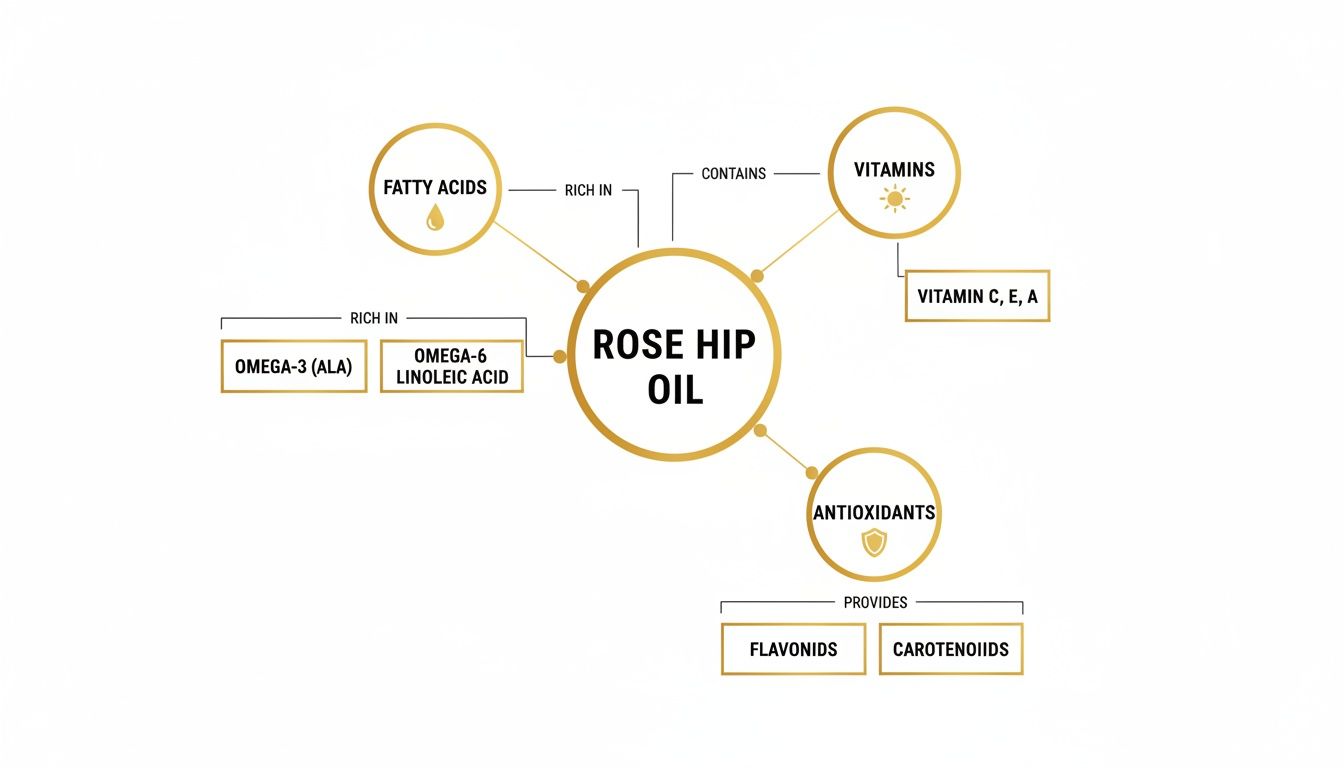
As you can see, the real magic happens in the interplay between these active groups. Each one has a specific job to do, but they all work together to keep the skin healthy and vibrant.
The Foundation: Essential Fatty Acids
The backbone of rose hip seed oil's strength is its incredible essential fatty acid (EFA) profile, especially its high levels of linoleic acid (Omega-6) and alpha-linolenic acid (Omega-3). These aren't just simple moisturisers; they are the literal building blocks of our skin's barrier function. Our bodies can't make them, so applying them directly to the skin is the most efficient way to deliver them where they're needed most.
Picture your skin cells as bricks in a wall. EFAs are the mortar holding it all together, sealing moisture in and keeping pollution and irritants out. When that mortar is weak, the wall becomes compromised, leading to skin that feels dry, tight, and sensitised.
Rose hip seed oil delivers a potent dose of this "mortar," directly reinforcing the skin's protective barrier. This makes the skin more resilient, reduces water loss (a process known as TEWL), and helps soothe inflammation, which is why it's so fantastic for compromised or chronically dehydrated skin.
The Rejuvenators: Vitamins A and C
Beyond just repairing the barrier, rose hip seed oil is packed with naturally occurring vitamins that kick-start cell renewal and brighten the complexion. It's especially prized for its trans-retinoic acid, a natural form of Vitamin A that the skin recognises and can use immediately.
Unlike synthetic retinoids, which can often be harsh and irritating, the Vitamin A in rose hip seed oil is delivered within a comforting lipid matrix. This means it offers all the regenerative benefits with a much gentler touch, making it a brilliant 'natural retinol alternative' for clients looking for anti-ageing results without the downtime.
This smart component helps speed up cell turnover, which is what helps to soften the appearance of fine lines, post-acne marks, and uneven texture. On top of that, the presence of Vitamin C—a powerhouse antioxidant—works to brighten dull skin and fade areas of hyperpigmentation.
- Vitamin A (Trans-retinoic acid): Promotes cell regeneration to smooth texture and reduce the visible signs of ageing.
- Vitamin C (Ascorbic Acid): Fights off free radicals, supports collagen production, and helps even out the skin tone.
Working in tandem, these vitamins deliver a one-two punch against the visible effects of skin ageing and daily environmental stress.
The Protectors: Carotenoids and Antioxidants
That signature deep, golden-red hue of a quality rose hip seed oil? That's your visual cue for a rich concentration of carotenoids, particularly beta-carotene and lycopene. Think of these compounds as the skin's personal security detail.
Every single day, our skin is under attack from environmental aggressors like UV rays and pollution. These create highly unstable molecules called free radicals that damage our skin cells and accelerate the ageing process—something we call oxidative stress.
Carotenoids are brilliant at neutralising these free radicals before they can wreak havoc. This protective action helps to preserve precious collagen, maintain skin elasticity, and prevent premature lines from forming. This antioxidant shield is a non-negotiable part of any serious anti-ageing and skin health strategy, cementing rose hip seed oil's status as a truly comprehensive, multi-tasking ingredient.
Turning Science Into a Story Your Customers Will Love
Knowing what's inside rose hip seed oil is important, but what really matters is how you tell its story. Your customers aren't coming to you asking for linoleic acid or beta-carotene; they're looking for answers to their skin concerns. Our job is to bridge that gap and connect the oil’s incredible components to the tangible results they want to see in the mirror.
For anyone on the shop floor or in the treatment room, this means shifting the conversation from ingredients to benefits. Instead of just listing what's in the bottle, we need to explain how those ingredients work together to give someone smoother, brighter, and healthier-looking skin. This isn't just selling a product; it's building trust and showing them how this oil can become a cornerstone of their daily ritual. Let's break it down into the three core benefits that really resonate with clients.
A Natural Ally Against Ageing
One of the strongest stories we can tell about rose hip seed oil is its gentle but effective approach to the visible signs of ageing. This isn't marketing fluff—it’s directly tied to its high concentration of trans-retinoic acid, a natural form of Vitamin A. You can think of it as nature’s answer to synthetic retinoids, but without the harshness.
It works by giving a gentle nudge to our skin's cellular turnover, a process that gets a bit sluggish as we get older. By helping to speed things up, the oil visibly softens fine lines and refines the skin's texture for a smoother finish. At the same time, the oil’s Vitamin C content helps support the skin’s own collagen production, which is what gives our skin its firmness and bounce. When you're talking to a client, you can position rose hip seed oil as a smart, supportive player in their age-management routine.
Focus on skin renewal and collagen support. This frames rose hip seed oil not as an overnight miracle, but as a reliable, science-backed ingredient that helps skin age beautifully. That’s a message that really connects with today's savvy consumer.
This narrative is particularly powerful for clients who are curious about anti-ageing but might be wary of more aggressive synthetic ingredients that can cause irritation.
The Ultimate Barrier Repair Hero
So many common skin issues—from persistent dryness and sensitivity to redness—can be traced back to a single culprit: a compromised skin barrier. This is where rose hip seed oil truly shines, thanks to its exceptional fatty acid profile. The high levels of linoleic (Omega-6) and alpha-linolenic (Omega-3) acids are exactly what a stressed-out barrier is crying out for.
I like to use the analogy of a brick wall. Your skin cells are the bricks, and the essential fatty acids are the mortar holding it all together. This mortar is what keeps moisture locked in and irritants locked out. When it starts to crumble, the wall weakens and your skin becomes vulnerable. Rose hip seed oil essentially comes in and re-points the mortar, reinforcing the entire structure.
What does this mean for your customer?
- Lasting Hydration: It helps put a lid on transepidermal water loss (TEWL), so the skin stays hydrated and comfortable for longer.
- Calmer Skin: A stronger barrier is better at fending off environmental triggers, which means less reactivity and redness.
- Greater Resilience: The skin simply becomes more balanced and better equipped to look after itself.
For any client who complains about their skin feeling tight, reactive, or constantly thirsty, explaining this barrier-repair function gives them a clear, logical reason why rose hip seed oil is the perfect solution.
A Brighter, More Even Complexion
Uneven skin tone and stubborn dark spots are a huge concern for many people. Rose hip seed oil offers a brilliant multi-action approach to tackling hyperpigmentation, making it a star player in any brightening routine. Its power comes from a synergy of its active components.
First, the natural Vitamin A (trans-retinoic acid) gets to work speeding up cell turnover. This helps shed those discoloured surface cells more efficiently, revealing the fresher, more even-toned skin underneath. It’s a process that works wonders on fading the memory of old breakouts (post-inflammatory hyperpigmentation) and softening sun spots.
At the same time, the Vitamin C and carotenoids act as powerful antioxidants. Think of them as bodyguards for your skin cells, neutralising the free radical damage that can trigger an overproduction of melanin. By protecting the skin, the oil helps prevent new dark spots from even forming. This dual action—correcting what’s there while preventing what’s to come—makes rose hip seed oil a complete solution for anyone chasing that clear, luminous glow.
Sourcing Premium Quality Rose Hip Seed Oil
For any high-end skincare collection, the story behind an ingredient is just as important as what it does. When it comes to rose hip seed oil, its origin—where it comes from and how it's made—directly shapes its power and its appeal to the savvy Swiss consumer. Let's be clear: not all oils are created equal. Understanding the real markers of quality is fundamental to building a product line that truly stands out.
The journey from a wild rose bush to a bottle of luxurious facial oil is full of critical choices. These decisions dictate the final concentration of beneficial fatty acids, vitamins, and antioxidants. For retailers and spa professionals, being able to explain this journey is a powerful way to build trust and show the genuine value of a product to clients who care deeply about authenticity.
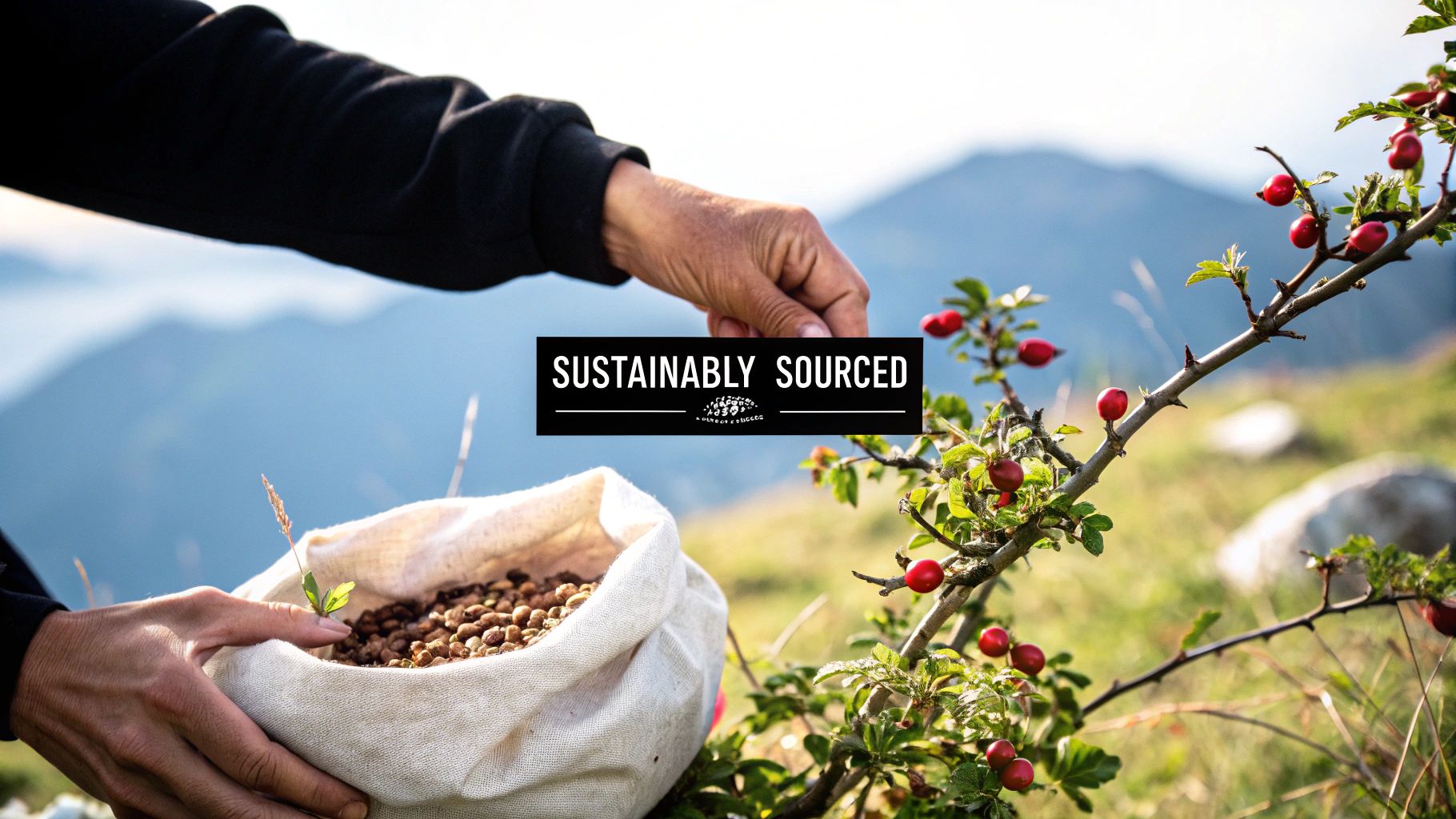
Wild Harvested Versus Cultivated Sources
The first major point of difference is where the rose hips come from. Each approach tells a unique story and offers specific attributes that align with different brand philosophies.
Wild-Harvested: This is the classic method, involving gathering rose hips from plants growing in their natural, wild habitat, often in rugged places like the Andes mountains. The narrative here is one of purity and resilience, a story that really connects with consumers looking for ingredients in their most untamed form.
Cultivated: This means growing rose hip bushes on dedicated farms, which gives producers far more control over the entire process. Cultivation can guarantee a more consistent supply and often makes it easier to achieve organic certification, offering a clear, traceable path from the field right to the bottle.
While wild-harvesting has a certain romantic charm, sustainable cultivation is becoming the preferred choice for its reliability and quality control. In fact, Switzerland’s own rose hip seed oil sector has carved out a niche in the premium natural cosmetics market. Some producers are leading the way by creating cold-pressed oil from sustainably grown plants right here in the CH region. This Swiss-made approach demonstrates a deep commitment to high-quality, ecologically sound ingredients, which is exactly what pharmacies and spas are looking for in their certified clean beauty offerings. You can learn more about Swiss-made rose hip oil and its unique profile.
The Critical Role of Cold-Pressed Extraction
How the oil is actually pulled from the seeds is arguably the single most important factor in determining its quality. The absolute gold standard is cold-pressed extraction. This is a purely mechanical process that avoids using any heat or chemical solvents.
Think of it like making the finest extra virgin olive oil. Gentle pressure is used to squeeze the oil out, which preserves its delicate molecular structure. This keeps the full array of vitamins, carotenoids, and essential fatty acids intact and ready for the skin to use. By contrast, extraction methods that use high heat can destroy these sensitive compounds, seriously weakening the oil’s benefits and creating a far less effective product.
For a trade partner, insisting on "cold-pressed" is a non-negotiable checkpoint for quality. It is the clearest and most direct signal that a supplier is serious about preserving the full potency of their rose hip seed oil.
Navigating Certifications for Trust
In a market flooded with "natural" claims, third-party certifications are the proof that discerning buyers need. They serve as a reliable shorthand for quality, purity, and ethical production.
For the Swiss market, a key certification to look for is ECOCERT. This globally respected standard guarantees that a product meets strict rules for organic farming, environmentally friendly processing, and the complete absence of synthetic ingredients. Seeing this certification on a product’s packaging instantly signals a commitment to sustainability and integrity. It helps you tell a compelling story that resonates deeply with conscious consumers.
To help you navigate these details, here’s a quick guide to what separates a premium oil from a lower-grade one.
Quality Indicators for Rose Hip Seed Oil
| Quality Factor | Premium Standard | Lower-Grade Standard |
|---|---|---|
| Sourcing | Wild-harvested from pristine regions or certified organic cultivated farms. Full traceability. | Sourced from conventional, non-organic farms. Limited or no traceability. |
| Extraction Method | Cold-pressed, no heat or chemicals used to preserve the full nutrient profile. | Solvent-extracted or refined using heat, which degrades vitamins and fatty acids. |
| Colour & Scent | Deep amber or reddish-orange colour. A subtle, earthy, or nutty aroma. | Pale yellow or almost colourless. Often deodorised or has a faint chemical scent. |
| Certifications | Certified organic (e.g., ECOCERT), cruelty-free, and ideally Fair Trade. | Lacks credible third-party certifications. May use vague "natural" marketing terms. |
This table serves as a practical checklist. When sourcing rose hip seed oil for your brand or retail space, always ask your supplier these questions. The answers will tell you everything you need to know about the quality you're getting.
Working with Rose Hip Seed Oil: A Formulator’s Guide
Bringing rose hip seed oil into your product line is more than just adding another ingredient to the list. To really do it justice—and to create products that get results—you need to understand how to handle it, from the lab bench right through to the treatment room. It’s a delicate, powerful oil, and respecting its chemistry is the key to unlocking its full potential.
This is your practical guide. We’ll get into the nitty-gritty of concentrations, smart pairings that elevate its benefits, and how to protect its potency. Think of this as a roadmap for formulators, brand buyers, and spa professionals who want to make this ingredient shine.
Finding the Sweet Spot: Recommended Concentrations
One of the best things about rose hip seed oil is its versatility. You can use it in almost any format, but the concentration you choose has a huge impact on the final product's purpose and feel. It’s a balancing act; you want enough to be effective without overpowering the entire formulation.
Here are some tried-and-true starting points for different product types:
- Intensive Serums & Facial Oils: For heavy-hitting treatments targeting ageing or pigmentation, don't be shy. A concentration of 10% to 100% works wonders. You can market a pure oil as a hero product or use a 10-20% blend to make room for other active ingredients.
- Daily Moisturisers & Creams: To weave its benefits into a daily routine, 5% to 10% is the sweet spot. This is enough to provide significant barrier support and antioxidant protection without ruining the texture of a beautiful emulsion.
- Body Lotions & Butters: When working with larger surface areas, a little goes a long way. A 2% to 7% concentration delivers noticeable hydrating and skin-smoothing properties for the body.
- Eye Creams: The skin around the eyes is incredibly delicate. A gentle but potent dose between 1% and 5% offers regenerative benefits without feeling heavy or greasy.
Protecting Your Investment: Stability and Preventing Oxidation
The very things that make rose hip seed oil so effective—its rich profile of unsaturated fatty acids and vitamins—are also its Achilles' heel. These compounds are incredibly sensitive to light, heat, and air. Exposure causes the oil to oxidise, quickly losing its potency and developing an unpleasant, rancid smell.
Think of a high-quality rose hip seed oil like a fine wine. It must be protected from the elements to preserve its character and efficacy. Proper packaging and antioxidant support are your cellar and cork.
A two-pronged defence is your best strategy: combine smart formulation with protective packaging.
Packaging and Storage Solutions:
- Shield it from Light: Always use dark, opaque glass. Amber is good, but Miron violet glass is even better at blocking the damaging UV light that accelerates oxidation.
- Minimise Air Exposure: For lotions and serums, airless pumps are far superior to open jars or even droppers. Every pump minimises contact with oxygen, dramatically extending the product's active life.
- Keep it Cool: This is crucial advice for your customers. Products with rose hip seed oil should be stored in a cool, dark place—away from sunny windowsills or steamy bathrooms.
And don't forget logistics. Once the product is made, knowing how to safely ship beauty products is essential to ensure that this delicate oil arrives at its destination in perfect condition.
Smart Pairings: Synergistic Carrier Oil Combinations
Rose hip seed oil is fantastic on its own, but it truly excels when paired with other carrier oils that complement its strengths. Blending allows you to create highly targeted formulations for specific skin concerns, offering a far more sophisticated and effective solution.
- For Acne-Prone or Oily Skin: Combine it with Jojoba Oil. Jojoba's structure is a dead ringer for our skin's own sebum, which helps to regulate oil production. This duo delivers rose hip's regenerative power without any greasy feel.
- For Intense Hydration & Dry Skin: Pair it with Squalane. This olive-derived emollient is incredibly lightweight and non-comedogenic, providing a huge moisture boost. It acts like a seal, locking in all the goodness from the rose hip oil.
- For Mature or Sun-Damaged Skin: Blend it with Pomegranate Seed Oil. Pomegranate is packed with rare punicic acid, a phenomenal anti-inflammatory and antioxidant. Together, they create a formidable defence against free radical damage and boost skin renewal.
Marketing Rose Hip Seed Oil in Switzerland
Selling rose hip seed oil in Switzerland isn't just about listing benefits on a bottle. It’s about telling a story that resonates with a very discerning customer base—one that values natural purity, scientific proof, and ethical practices above all else. The narrative you build, whether on the product itself, in a spa treatment, or through your retail team, needs to hit all three notes.
To get this right, you first have to get inside the mind of the Swiss consumer. They expect transparency. They demand quality. And they have a deep-seated appreciation for nature. This makes the story of the oil’s journey—from a wild-harvested seed in a remote location to a potent skin elixir—incredibly powerful. When you train your team to tell this story, a simple sale becomes a genuine connection.
Weaving a Compelling Brand Story
To really stand out, you need to go beyond vague "natural" claims. It's about creating specific, memorable marketing themes that become the backbone of your brand identity, staff training, and customer conversations.
Here are a couple of angles that work well in this market:
- Alpine Radiance: This theme beautifully connects the oil's restorative qualities with the purity and resilience of the Swiss alpine environment. You’re not just selling an oil; you're offering a way to achieve that fresh, healthy glow that mirrors the vitality of the mountains.
- Nature's Retinol Alternative: This is your science-backed narrative, aimed squarely at the anti-ageing demographic. It positions rose hip seed oil as a gentle but effective powerhouse for skin renewal, which is a huge draw for clients seeking real results without the harshness of synthetic retinoids.
Navigating Swiss Claim Regulations
While a great story is key, it absolutely must be grounded in reality and compliance. Swiss regulations around cosmetic claims are notoriously strict. You have to frame the benefits in a way that’s both compelling and legally sound, carefully avoiding any language that could get your product classified as a pharmaceutical.
The trick is to stick to cosmetic effects. For instance, instead of saying the oil "heals" scars, you’d say it "improves the appearance of" scars. It’s a subtle shift in wording, but it's what keeps your marketing compliant while still getting the message across.
When bringing your product to market, high-quality and informative custom labels are non-negotiable. They are a direct reflection of your brand's integrity and must clearly list ingredients while presenting claims responsibly.
Showcasing a Value-Driven Supply Chain
The way rose hip seed oil moves out of Switzerland tells a story in itself. It's not about shipping massive quantities; it’s about a premium, traceable, and quality-obsessed industry that aligns perfectly with what Swiss retailers and their customers want. We see this reflected in the numbers, with Swiss exports of essential oils showing steady growth, mirroring Europe's 2.1% annual expansion in the natural ingredients sector. For a deeper dive, you can explore the comprehensive export intelligence on rose hip oil from Switzerland.
This data isn't just for market analysts—it's a powerful marketing tool. It proves that rose hip seed oil distributed from Switzerland is part of a sophisticated, quality-first ecosystem. Highlighting this fact reinforces your product’s premium status and speaks directly to consumers who are happy to pay for superior, ethically sourced skincare. In a crowded market, this narrative of quality and integrity is your biggest advantage.
Your Top Questions Answered
When you're considering bringing a powerhouse ingredient like rose hip seed oil into your range, questions are a good thing. They show you're thinking critically about what's best for your clients. We get these questions all the time from our partners in the Swiss market, and answering them clearly is the first step to empowering your team and educating your customers.
Think of this as your go-to cheat sheet. It’s here to help your team speak confidently about this incredible oil and turn curiosity into a sale.
But Isn't It Bad for Acne-Prone Skin?
This is easily the most common concern we hear, and it’s a fair question. The old-school thinking was that all oils clog pores and cause breakouts, but we now know that’s not the whole story, especially when it comes to rose hip seed oil. The secret is in its unique chemical makeup.
Genuine, cold-pressed rose hip seed oil is packed with linoleic acid, an omega-6 fatty acid. Here’s the interesting part: studies have shown that the sebum (our skin's natural oil) in acne-prone individuals is often low in this specific fatty acid. This deficiency makes their sebum thick, sticky, and far more likely to clog pores. By applying rose hip seed oil, you're topically rebalancing the skin, helping to make its own sebum more fluid and less likely to cause congestion.
So, far from being an enemy, rose hip seed oil can actually be a game-changer for oily and acne-prone skin. It delivers the hydration and repair they need without feeding the cycle of breakouts.
What's the Difference Between Rose Hip Seed Oil and Rose Oil?
This is a crucial point to get right. Confusing the two can lead to disappointed customers and mismanaged expectations. While they both originate from the rose plant, they are worlds apart in terms of what they are, what they do, and how they're made.
Let's break it down simply:
Rose Hip Seed Oil: This is a carrier oil. It's pressed from the seeds of the little fruit (the "hip") that's left after a rose has bloomed and the petals have fallen off. It's treasured for its skin-repairing fatty acids and vitamins (A & C) and has a mild, earthy, slightly nutty scent. Its job is pure skincare.
Rose Oil (or Rose Otto): This is an essential oil. It’s extracted from the fragrant petals of the flower itself, usually through a complex distillation process. Its purpose is almost entirely about its beautiful, intense floral scent for use in perfumery and aromatherapy. It’s incredibly concentrated and can't be used neat on the skin.
Making this distinction clear for your customers is key. They need to know they're investing in a high-performance skin treatment, not just a nice-smelling fragrance.
How Should We Tell Customers to Store It?
Great question. Proper storage is non-negotiable for preserving the power of a high-quality rose hip seed oil. Because it’s so rich in delicate, unsaturated fatty acids, the oil is vulnerable to breaking down when it meets its three biggest enemies: light, heat, and air.
Pass on these simple rules to your customers to ensure their product stays fresh and effective:
- Find a cool, dark home for it. A bathroom cabinet or bedroom drawer is perfect. A sunny windowsill is the worst place it could live.
- Always tighten the cap. This keeps oxygen out, which is the main culprit behind the oil going rancid.
- Use it up! Advise them to use the product within six months to a year after opening to get the best results.
This practical advice helps your customers get the full value from their purchase, which means happier skin and a much higher chance they'll be back for more.
At beautysecrets.agency, we seek out brands that share our obsession with quality and efficacy, especially when it comes to hero ingredients like premium rose hip seed oil. Explore our brand collections to discover exceptional clean-beauty products for your discerning Swiss clientele.