For Swiss buyers, tea tree shampoo is a targeted scalp solution that harnesses the natural power of Melaleuca alternifolia oil to tackle common scalp problems head-on. It’s not just another shampoo; it's a specific remedy for a growing base of customers who want effective, clean, and ethically made beauty products. This guide will give you the practical insights needed to successfully merchandise this in-demand category.
Why Tea Tree Shampoo is a Smart Bet for the Swiss Market
For Swiss retailers, pharmacies, and spas, tea tree shampoo is much more than a simple cleansing product. It hits that sweet spot where consumer wellness meets the powerful trend of natural beauty. The best way to think of it is as a specialised scalp treatment, one that uses a proven, natural active ingredient to resolve persistent issues like dandruff, oily scalp, and general irritation.
The potential here is tied directly to a major shift in how people shop. Today's customers read labels carefully, preferring clear ingredient lists and real, tangible benefits. Vague promises just don't cut it anymore. They're looking for products backed by solid evidence and in line with their values, whether that's sustainability or ethical sourcing.
Understanding Your Customer's Mindset
The Swiss consumer is known for being selective, which makes the market ripe for high-quality, targeted solutions like tea tree shampoo. A few key trends are fuelling its rise in popularity:
- The Scalp is the New Skin: There's a growing understanding that healthy hair starts with a healthy scalp. People are now actively looking for ways to treat discomfort at the source, moving beyond cosmetic cover-ups to genuine therapeutic care.
- A Hunger for Natural Ingredients: The "clean beauty" movement is as strong as ever. Shoppers are consciously avoiding harsh chemicals like sulphates and parabens, turning instead to effective, plant-based alternatives.
- Values Drive Purchases: Certifications matter. An ECOCERT label or a cruelty-free guarantee can be the deciding factor for many, as it signals a brand's commitment to quality and responsible practices.
This all creates a clear and present opportunity. In a market like Switzerland, where quality and purity are paramount, tea tree shampoo has found its perfect niche. The numbers back this up: Switzerland's hair care market is on track to hit US$376.49 million in revenue, with natural products already claiming a significant 28% share of that. This growth fits neatly into the broader Swiss beauty sector, currently valued at USD 1.1 billion and projected to reach USD 1.5 billion by 2033, spurred by the demand for transparent, certified products. You can dive deeper into these Swiss hair care market trends on Statista.com.
When you bring a well-chosen range of tea tree shampoo into your store, you're doing more than just filling shelf space. You are offering a direct answer to a specific customer problem and establishing your business as a go-to expert for effective, natural scalp care.
To simplify, here’s a quick-reference summary of the core benefits and market drivers for tea tree shampoo in the Swiss retail environment.
Tea Tree Shampoo at a Glance Key Selling Points for Retailers
| Feature | Consumer Benefit | Retail Advantage |
|---|---|---|
| Natural Antimicrobial | Effectively tackles dandruff, itchiness, and excess oil without harsh chemicals. | Meets the strong demand for "clean" and plant-based beauty solutions. |
| Targeted Scalp Care | Addresses the root cause of common scalp issues, promoting long-term health. | Positions you as a knowledgeable provider of therapeutic, problem-solving products. |
| Soothing Properties | Calms scalp irritation and inflammation, providing immediate comfort. | Attracts customers actively seeking relief from uncomfortable conditions. |
| Ethical Certifications | Aligns with consumer values for cruelty-free and sustainable products. | Builds trust and loyalty with ethically-minded shoppers. |
In short, tea tree shampoo isn't just a trend; it's a category that directly responds to the modern Swiss consumer's needs for effective, natural, and conscientious personal care.
What Makes Tea Tree Oil Actually Work? The Science Explained
To really grasp why a good tea tree shampoo is so effective, we need to look past its distinctive, fresh scent and get into the science. This isn't folklore; it's biochemistry. The power is packed into the essential oil from the Australian Melaleuca alternifolia tree, which is a complex blend of over 100 different compounds.
But one of these compounds is the undisputed star of the show: terpinen-4-ol. This is the primary active ingredient, typically making up 30% to 48% of the oil. You can think of terpinen-4-ol as the scalp's personal security detail, actively seeking out and neutralising the microbes that cause so many common scalp problems.
This isn't some vague "natural goodness." The action of terpinen-4-ol is specific and well-documented, giving your team the power to explain precisely how the product works, not just that it works.
A Triple-Action Approach to Scalp Health
Scientific research has zeroed in on three core properties that make tea tree oil—and specifically terpinen-4-ol—such a powerhouse for scalp care. Knowing these lets you speak with real authority, moving beyond marketing fluff to offer genuine, educational advice to your clients.
Here’s what it does:
-
It’s a Potent Antimicrobial: Tea tree oil is effective against a wide spectrum of bacteria and fungi. This is vital for the scalp, where an overgrowth of certain microbes is a direct cause of irritation and imbalance. For instance, it helps get the bacteria that thrive in oily conditions under control, which can lead to blocked follicles.
-
It’s a Proven Antifungal: This is probably its most famous talent. Tea tree oil is exceptionally good at tackling Malassezia furfur, the yeast-like fungus that is the main culprit behind dandruff and seborrhoeic dermatitis. It works by breaking down the fungus's cell membrane, stopping it from spreading.
-
It’s a Targeted Anti-inflammatory: It doesn't just fight germs. Terpinen-4-ol also helps to dial down the body's inflammatory response. An irritated scalp often becomes red and itchy, and tea tree oil helps soothe that reaction right at the cellular level, bringing real relief from the discomfort.
This three-pronged attack is what makes a properly formulated tea tree shampoo such a versatile and reliable solution for so many common scalp issues.
Turning Science into Client Solutions
It's one thing to know the science, but the real skill is applying it to a client's problems. This knowledge gives you a direct line from their complaint to a credible solution. When a customer mentions a flaky, itchy scalp, you can confidently explain the likely cause and how this specific ingredient offers a targeted fix.
Think of it this way: Dandruff isn't just dry skin. It's often the result of the scalp's ecosystem being thrown out of balance by a fungus. A good tea tree shampoo doesn't just wash away the flakes for a day; it acts like a rebalancing treatment, getting to the root of the fungal problem.
This kind of informed advice builds incredible trust. You're no longer just a salesperson; you're a knowledgeable advisor offering a recommendation based on proven, active principles.
How This Applies to Specific Scalp Conditions
Let's connect the dots between these properties and the issues your clients walk in with:
- For Dandruff: The strong antifungal action goes straight after the Malassezia fungus. Using it regularly helps bring the scalp’s microbiome back into balance, which means less flaking and itching over time.
- For an Oily Scalp: Its antimicrobial properties help manage the bacteria that can contribute to overactive oil glands and clogged pores. The result is a cleaner, less greasy, and more balanced scalp.
- For Seborrhoeic Dermatitis: The one-two punch of anti-inflammatory and antifungal action is perfect for this. It simultaneously calms the redness and irritation while controlling the fungal overgrowth that triggers the flare-ups.
By understanding this science, you equip your team to guide customers toward the right solution with clarity and authority, ensuring they walk away with a product that delivers real, noticeable results.
What Makes a High-Performance Tea Tree Shampoo
It’s one thing to have a tea tree shampoo on your shelves; it’s another to stock one that genuinely impresses. In the discerning Swiss market, excellence is expected. Understanding the subtle but critical differences between a standard product and a high-performance formulation is key to curating a selection that not only works but also justifies a premium price point and builds lasting customer loyalty.
The heart of any tea tree shampoo is, of course, the tea tree oil. But getting the concentration right is a delicate balancing act. Too little, and the formula is all promise with no therapeutic punch. Too much, and you risk irritating the very scalp you’re trying to soothe. The sweet spot for both efficacy and safety is generally between 1% and 5%. This range is potent enough to deliver real antimicrobial and anti-inflammatory benefits without being overly aggressive.
This demand for quality is a powerful driver in the broader market. The European hair care sector, currently valued at USD 29.57 billion, is set for strong growth with a projected 7.52% CAGR. Switzerland is a significant part of this story, with an impressive 85% of consumers actively preferring organic ingredients. In this space, tea tree shampoos hold a solid 12% share of the natural medicated category, backed by data showing a 68% efficacy rate in reducing scalp itchiness. You can dive deeper into these trends by exploring the full European hair care market report.
The Power of Synergistic Ingredients
A truly exceptional tea tree shampoo rarely flies solo. The best formulas pair tea tree oil with complementary botanicals and actives that work in synergy, amplifying its benefits to create a more complete scalp treatment. Think of it as a well-coordinated team, where each player enhances the others’ strengths.
When you’re evaluating a product’s ingredient list, look for these intelligent pairings:
- Soothing Agents: Look for ingredients like aloe vera or chamomile. These are fantastic partners, offering an immediate calming and hydrating effect that balances any potential drying from the tea tree oil, making the formula gentle enough for frequent use.
- Cooling and Invigorating Botanicals: Peppermint and eucalyptus oil are customer favourites for the refreshing tingle they provide. Beyond the sensory appeal, they also help to stimulate scalp circulation, which is crucial for fostering a healthy environment for hair growth.
- Gentle Exfoliants: For stubborn flakiness, a mild exfoliant like salicylic acid (often derived from willow bark in natural formulas) is incredibly effective. It works by gently lifting away dead skin cells, clearing the way for the tea tree oil to get to work where it's needed most.
- Nourishing Extracts: Additions like marine extracts (sea kelp, for instance) or green tea infuse the formula with antioxidants and minerals. These ingredients help protect the scalp from environmental damage and fortify the hair follicles from the root.
A high-performance tea tree shampoo is more than just an active ingredient in a bottle. It is a thoughtfully crafted ecosystem of ingredients designed to cleanse, treat, and soothe the scalp simultaneously.
The Importance of a Clean Base Formula
What’s not in the bottle is just as important as what is. For the Swiss ‘clean beauty’ shopper, a sulphate-free base isn't just a preference; it’s a prerequisite. Sulphates such as Sodium Lauryl Sulphate (SLS) are powerful detergents, but they’re often too harsh, stripping the scalp of the natural oils that form its protective barrier. This can ironically lead to more dryness and irritation, completely undermining the benefits of the tea tree oil.
Instead, premium formulas are built on gentler, plant-derived surfactants—think cleansers derived from coconut oil or fruit sugars. These get the job done effectively without disrupting the scalp’s delicate microbiome. This commitment to a clean, non-irritating base is a hallmark of a quality product and shows a brand is in tune with what modern consumers expect from their personal care.
Navigating Swiss Regulations and Ethical Certifications
Bringing a new tea tree shampoo into Switzerland isn't just about finding a great formula. To succeed here, you need to navigate a complex landscape of local regulations and meet the high ethical standards Swiss shoppers demand. For retailers and spa buyers, this means looking past the marketing claims on the bottle to the hard proof of compliance and certification. It's about building a selection that's not only legally sound but also genuinely resonates with your customers' values.
Let's start with a crucial point: product safety. While tea tree oil is fantastic for its therapeutic properties, it can be a sensitiser for some people, particularly at higher concentrations. Any responsible brand will have clear advice on patch testing—asking customers to try a small amount of the shampoo on their skin first. This isn't just good practice; for pharmacy staff advising clients with sensitive skin, it's a critical piece of guidance that builds trust.
Meeting Swiss Cosmetic Standards
In Switzerland, the rules for cosmetics are strict and closely mirror EU standards. Compliance isn't optional. These regulations cover everything from which ingredients are allowed and how they must be labelled, to the specific claims you can make about a product.
When it comes to a product like tea tree shampoo, this is incredibly important. If a brand claims it treats dandruff or helps with seborrhoeic dermatitis, they need solid evidence to back it up. Vague marketing fluff just won't cut it. Both the Swiss authorities and the consumers themselves expect transparency and proof that the product actually works as advertised.
This rigorous environment is also shaping the market. Natural, effective ingredients are driving a renaissance in premium hair care, and tea tree is at the heart of it. The numbers tell a compelling story: Europe's hair care market is projected to grow from USD 2.78 billion to USD 3.76 billion at a 4.41% CAGR. Swiss consumers are leading the charge, spending an average of CHF 45 each year on organic hair care.
Tea tree shampoos have carved out a significant 18% share of this natural segment. This demand is backed by import data showing Switzerland brings in 15,000 tons of these active ingredients annually, with tea tree imports alone jumping 28% in recent years. You can dive deeper into the European hair care market's growth on fortunebusinessinsights.com.
The Certifications That Build Trust
In the Swiss market, certifications are more than just logos; they're a powerful, silent endorsement of a brand's integrity. For busy shoppers, they’re a trusted shortcut to identifying products that are safe, ethical, and high-quality.
For the Swiss consumer, a certification isn't just a logo on a bottle. It is a promise—a guarantee that the product they are purchasing aligns with their personal commitment to health, animal welfare, and environmental stewardship.
When you're evaluating tea tree shampoos for your shelves, keep an eye out for these key certifications. They can often be the deciding factor for a customer.
- ECOCERT: As one of Europe's most recognised labels for natural and organic cosmetics, ECOCERT is a name you can trust. It guarantees that a product is made with a high percentage of natural-origin ingredients and, for the organic seal, that a significant portion comes from organic farming.
- Cruelty-Free International (Leaping Bunny): The Leaping Bunny is the undisputed global gold standard for cruelty-free products. It gives customers complete confidence that no animal testing occurred at any point in the product's development, a value that resonates deeply here.
- PETA's Beauty Without Bunnies: Another highly visible and respected cruelty-free certification, PETA's program is an easy way for shoppers to spot companies that have committed to not testing their products on animals.
By choosing brands that have invested in these certifications, you’re doing more than just stocking compliant products. You’re curating an assortment that is safe, effective, and ethically sound—building the kind of deep trust that turns a one-time buyer into a loyal customer.
Effective Merchandising and Marketing Strategies
Having a fantastic, well-formulated tea tree shampoo is one thing. Actually selling it is another challenge entirely. To make a real impact on the Swiss market, you need to translate that product quality into a retail strategy that grabs customers' attention and convinces them to buy.
This means thinking beyond just placing it on a shelf. We need to position tea tree shampoo as a targeted, high-value solution. The trick is to identify the specific problems your customers are facing and then show them—clearly and convincingly—how your product is the answer.
Identifying Your Core Customer Segments
While tea tree shampoo can appeal to a wide audience, you’ll find the most success by focusing on three key groups who are actively looking for what it offers.
-
The Scalp-Concerned Customer: This is your primary target. These individuals are desperately searching for relief from ongoing issues like dandruff, seborrhoeic dermatitis, an oily scalp, or persistent itchiness. For them, performance is everything, and they are more than willing to pay a premium for a product that delivers real, noticeable results.
-
The Natural Beauty Enthusiast: This customer is all about clean formulas and ethical sourcing. They are label-readers who actively avoid synthetic chemicals and are drawn to powerful, plant-based alternatives. Certifications like ECOCERT or a cruelty-free logo are huge selling points for this group.
-
The Modern Male Groomer: This is a rapidly expanding and valuable segment. Men are looking for straightforward, effective products that solve common problems without any fuss. The fresh, tingling sensation and proven ability of tea tree oil to tackle oiliness and flakes make it a perfect fit for their grooming routine. They want clear benefits and a clean, refreshing feel.
Crafting Compelling and Compliant Product Claims
The language you use on your packaging, in-store displays, and online listings is critical. It needs to be precise, benefit-focused, and fully compliant with Swiss regulations. Vague promises fall flat; you have to connect the dots between the product's features and the customer's needs.
This table breaks down how to tailor your message to resonate with each of your core audiences.
Effective Merchandising Claims for Target Segments
| Target Segment | Primary Pain Point | Effective Marketing Claim |
|---|---|---|
| The Scalp-Concerned Customer | "Nothing I try seems to stop the flakes and itching." | "Soothe your irritated scalp and control dandruff with our targeted tea tree shampoo. Formulated to rebalance the scalp’s microbiome for lasting relief." |
| The Natural Beauty Enthusiast | "I want an effective scalp treatment without harsh chemicals." | "Discover the power of nature with our ECOCERT-certified tea tree shampoo. A clean, sulphate-free formula to clarify your scalp, naturally." |
| The Modern Male Groomer | "My scalp gets oily and flaky by the end of the day." | "Achieve a deeply clean and refreshed scalp. Our invigorating tea tree shampoo effectively removes excess oil and buildup for healthier-looking hair." |
The key takeaway? A great marketing claim doesn’t just list ingredients; it offers a solution. Frame your tea tree shampoo as the direct answer to your customer's specific scalp and hair challenges.
Optimising for Online Discovery with SEO
For your e-commerce site or online retail partners, your product descriptions need to pull double duty. They must engage the human reader while also containing the right keywords to be found by search engines like Google.
The goal is to weave these search terms in naturally, so the text remains helpful and readable.
Example SEO-Optimised Product Description:
Find lasting relief for an itchy, flaky scalp with our purifying tea tree shampoo. This therapeutic formula, ideal for oily hair and dandruff-prone scalps, harnesses the natural antimicrobial power of pure tea tree oil to gently cleanse and rebalance. Free from sulphates and harsh chemicals, our Swiss-compliant shampoo soothes irritation and promotes a healthy scalp environment. Perfect for anyone seeking a natural solution to scalp concerns. Shop our certified organic hair care today.
Notice how that description seamlessly includes terms people are likely to search for, like "tea tree shampoo," "itchy, flaky scalp," "oily hair," and "natural solution." By adopting these smarter merchandising and marketing tactics, you can position your product as the premium, problem-solving shampoo that discerning Swiss consumers are looking for.
Training Your Team to Sell with Confidence
Your team on the pharmacy or spa floor is your front line. When they’re equipped with the right knowledge, they stop being simple cashiers and become trusted consultants, building the kind of customer loyalty that really lasts. Good training means they can confidently recommend tea tree shampoo not just as another product, but as a genuine solution to a customer's problem.
The real key is teaching staff to listen for specific cues. When a customer mentions a persistent itchy scalp, stubborn flakes, or hair that feels greasy just a day after washing, those are clear signals. Instead of just pointing to the dandruff section, your team can pivot to a targeted conversation about scalp health.
They need to be able to explain why tea tree oil works, in simple terms. Something like this works wonders: "Unlike many shampoos that just wash away flakes for a day, the tea tree oil in this formula has natural properties that help rebalance your scalp. It gets to the root cause of the irritation, rather than just masking it." This one sentence instantly elevates their expertise.
Empowering Staff with Core Knowledge
To speak with authority, your team just needs a few key talking points at their fingertips. We can boil it down to three core skills: spotting the problem, explaining the benefit, and justifying the value. A well-informed recommendation always lands better than a generic sales pitch.
This simple decision tree is a great tool to help your team quickly pinpoint the ideal customer for a tea tree shampoo.
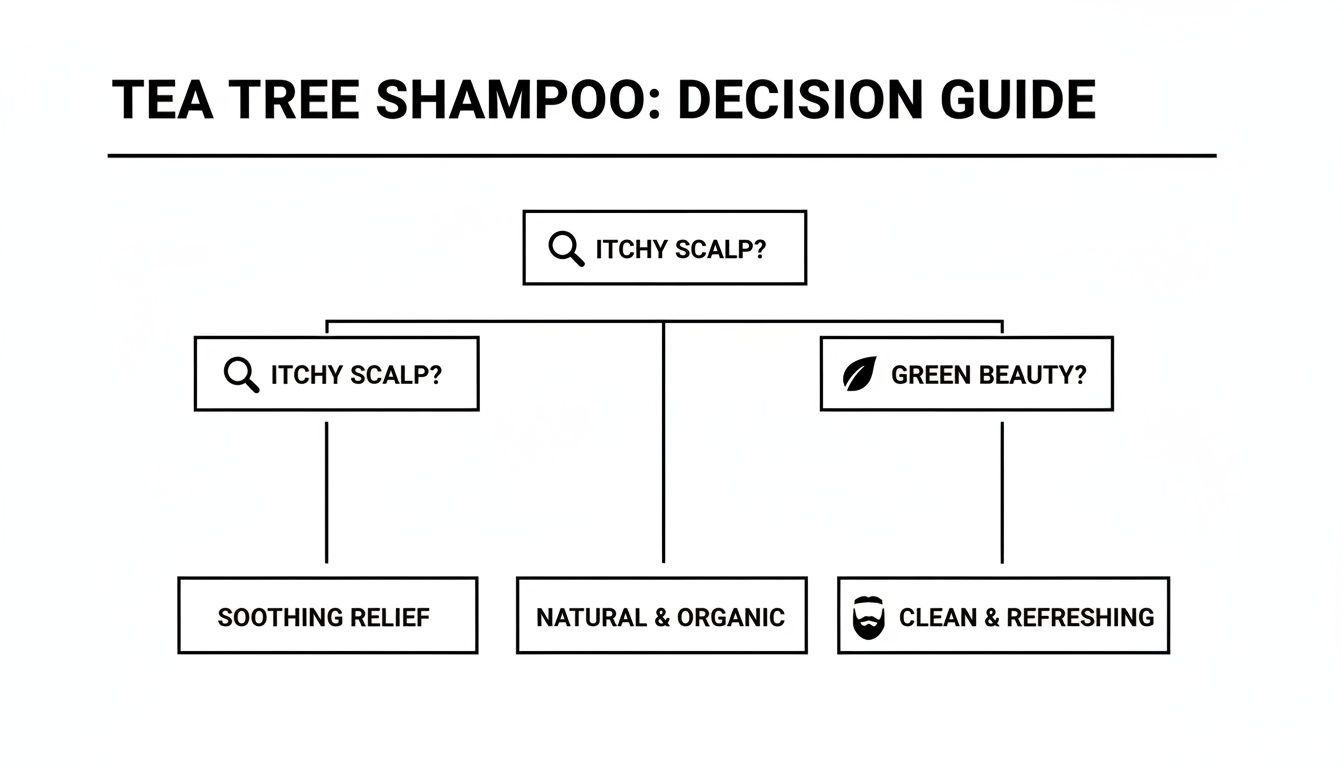
As the graphic shows, different customer needs—from needing serious scalp therapy to simply wanting a natural, refreshing shampoo—can all lead straight to tea tree oil as the perfect answer.
The best sales approach is an educational one. When your staff can clearly explain the value of an ECOCERT label or the benefits of a sulphate-free formula, they build instant credibility. This is how you justify a product's premium price point.
Your training should also cover the "how-to." Remind staff to tell customers to massage the shampoo right into the scalp and leave it on for a minute or two before rinsing. This small detail gives the active ingredients time to actually work, ensuring the customer gets the results they paid for.
Upselling Through Expert Recommendations
Confidence also means knowing how to enhance a customer's results. A single shampoo sale is good, but offering a complete solution is far better—for both the customer's scalp and your bottom line. Train your team to think in terms of a full scalp care routine.
Here are a few easy ways to suggest complementary products:
- For Dryness or Tangling: "Since this tea tree shampoo is all about purifying the scalp, I’d suggest pairing it with a really hydrating conditioner. That way, your lengths and ends will stay beautifully soft and nourished."
- For Intense Itchiness: "For some extra relief between washes, you could also try a calming scalp serum. It works alongside the shampoo to keep your scalp comfortable all day long."
- For Overall Scalp Health: "To really maintain a balanced scalp, think about using a gentle scalp scrub once a week before you shampoo. It’s great for clearing away any product buildup and helps the shampoo work even better."
This isn't just about increasing the average sale. It positions your staff as genuine advisors who are invested in solving the customer’s problem, reinforcing your pharmacy or spa’s reputation for expert, personalised care.
Answering Common Questions About Tea Tree Shampoo
Even with all the science, customers and staff will have straightforward, practical questions. Being ready with clear, confident answers is what sets a retailer apart and builds real trust.
Think of this section as your pocket guide for the shop floor. These are the most common queries we hear, with simple answers that help a customer feel good about their purchase.
Is Tea Tree Shampoo Safe for All Hair Types?
Generally, yes. A well-made tea tree shampoo is fine for anyone, but it really shines for specific concerns. It's an absolute game-changer for people with oily hair because it cuts through grease and helps get sebum production under control. It's also the go-to for anyone struggling with dandruff or an itchy, irritated scalp.
What about very dry or colour-treated hair? Simple. Just recommend they follow up with a rich, hydrating conditioner. That way, their scalp gets all the purifying benefits without stripping moisture from the lengths and ends.
How Often Should I Use It?
This really comes down to what the customer is trying to achieve. If they're tackling active dandruff or a really oily scalp, using it 2-3 times per week is the sweet spot for seeing real improvement.
Once their scalp starts to calm down and feel more balanced, they can dial it back to once a week just to maintain that healthy state.
The aim here is to restore balance, not to strip the scalp bare. Always advise customers to listen to their scalp. Over-washing can sometimes make things worse, so adjusting the routine is key.
For someone who just loves that fresh, clean feeling and doesn't have a specific issue, using it once or twice a week in their normal shampoo rotation is perfect.
Will It Ruin My Salon Colour?
This is a crucial question, and the answer is all in the formula. A high-quality, sulphate-free tea tree shampoo is completely safe for coloured hair. The real culprits for fading colour are harsh detergents like sulphates, which strip away pigment.
Train your staff to point out "sulphate-free," "SLS-free," or "colour-safe" on the label. When the shampoo uses gentle, plant-based cleansers, it can deep-clean the scalp without touching that expensive salon colour.
Is It Safe to Use During Pregnancy?
Essential oils are potent, so this is a question to handle with care. Our firm recommendation is that anyone who is pregnant or breastfeeding should have a quick chat with their doctor before using products with active levels of tea tree oil.
While the risk from a rinse-off product is generally very low, professional medical advice is non-negotiable. It’s about ensuring total peace of mind for both mother and baby.
At beautysecrets.agency, we specialise in connecting Swiss retailers with exceptional, certified natural cosmetic lines that deliver on their promises. If you're looking for clean beauty brands that meet the highest standards, explore our portfolio. Find out more and partner with us at https://beautysecrets.agency.