When you get down to it, the real difference between spirulina and chlorella comes from their basic biology—their cell structure and the unique compounds they produce. Spirulina is technically a bacterium, which means its protein and the powerful antioxidant phycocyanin are incredibly easy for the body to access. On the other hand, chlorella is a true alga, packed with chlorophyll for detoxification and the unique Chlorella Growth Factor, which supports cellular repair.
So, the choice isn't about which is "better," but what you're trying to achieve. Are you formulating for antioxidant defense or for deep, cellular-level purification?
The Rise of Microalgae in Swiss Clean Beauty
Here in Switzerland, where the beauty market is particularly discerning, spirulina and chlorella have made the leap from health food supplement to foundational ingredients in high-performance, clean skincare. This isn't just a fleeting trend. Their popularity is rooted in how perfectly they align with core Swiss values: proven effectiveness, ecological responsibility, and absolute purity. For any retailer, spa, or pharmacy looking to stay ahead, a solid grasp of these microalgae is no longer optional—it's essential for smart product development and credible client advice.
These aren't just trendy additives; they represent a fundamental shift towards nutrient-dense, sustainable formulas that genuinely work. You'll find them at the heart of brands that build their reputation on certified, ethically sourced ingredients that deliver visible results.
A Tale of Two Algae
Though they’re often mentioned in the same breath, spirulina and chlorella bring very different strengths to the table for formulators and clinicians. Their unique biochemical profiles are what determine their best use in professional treatments and retail products.
| Attribute | Spirulina (Arthrospira platensis) | Chlorella (Chlorella vulgaris) |
|---|---|---|
| Organism Type | Cyanobacterium (Prokaryote) | Green Microalga (Eukaryote) |
| Key Pigment | Phycocyanin (Blue-Green) | Chlorophyll (Vibrant Green) |
| Cell Wall | Soft, digestible mucopolysaccharide | Tough, indigestible cellulose |
| Unique Compound | Phycocyanin (Potent Antioxidant) | Chlorella Growth Factor (CGF) |
This table gets to the heart of why you'd pick one over the other. Spirulina's soft cell wall means its nutrients are immediately bioavailable for topical use. In contrast, chlorella’s tough cellular structure is precisely what makes it a detoxification champion.
Sustainable Sourcing for a Conscious Market
A huge part of the appeal for spirulina & chlorella in Switzerland is their sustainable backstory. For a country that places such a high value on environmental stewardship, the low-impact way these microalgae are grown resonates deeply with brands and consumers alike.
When grown in controlled environments, microalgae cultivation uses astonishingly few resources. In fact, it's estimated to be 99% more land-efficient than traditional beef production—a powerful selling point for any eco-conscious Swiss brand.
This efficiency isn't just a talking point; it's a compelling story for today's consumer. Data from the Swiss Federal Office for the Environment (FOEN) shows that cultivating microalgae in closed systems requires just 0.0378 m² of non-arable land and 8.36 m³ of fresh water per kg of wet biomass. You can explore more insights about this sustainable cultivation research. This incredible resource efficiency allows brands to develop high-performance products that satisfy the strictest standards for both efficacy and ecological integrity, giving partners a clear way to stand out in a crowded market.
Spirulina vs. Chlorella: A Deep Dive into Their Profiles
At first glance, spirulina and chlorella seem like two sides of the same coin. They’re both microscopic powerhouses of nutrition. But for a formulator, their differences are where the real magic lies. It all starts at the cellular level—the very structure that dictates how their nutrients get to work on the skin. Getting this right is the key to creating a product that truly performs, whether you’re aiming for antioxidant defence or a deep, purifying cleanse.
Spirulina, technically a cyanobacterium, has a soft cell wall made of mucopolysaccharides. Think of it as having no barrier to entry. This means its incredible reserves of proteins, vitamins, and the star antioxidant phycocyanin are immediately available once applied. For formulas needing a quick hit of nourishment, like a revitalising serum or a protective day cream, spirulina is the obvious and efficient choice.
Chlorella, on the other hand, is a true microalga with a tough, fibrous cell wall made of cellulose. This tough exterior makes its nutrients a bit harder to access, but that wall is also its greatest strength. It’s what gives chlorella its famous detoxifying ability, binding to pollutants and impurities like a magnet. This makes it the go-to ingredient for purifying masks or any anti-pollution skincare designed to combat the effects of city living.
Pigment Power and What It Means for Skin
The most obvious difference between them—spirulina's blue-green hue versus chlorella's deep, vibrant green—is a dead giveaway to their most potent bioactives.
- Spirulina’s Phycocyanin: This is what gives spirulina its unique colour. More importantly, it's a brilliant antioxidant. It excels at neutralising free radicals and calming oxidative stress, making spirulina a top-tier ingredient for anti-ageing products and formulas that protect against environmental damage.
- Chlorella’s Chlorophyll: Chlorella is packed with one of the highest concentrations of chlorophyll found anywhere in nature. This compound is a master purifier. It helps to soothe irritated skin, visibly reduce redness, and bring the complexion back into a state of clear, calm balance.
This decision tree helps to visualise the choice, guiding you toward the right alga based on your clean beauty goals.
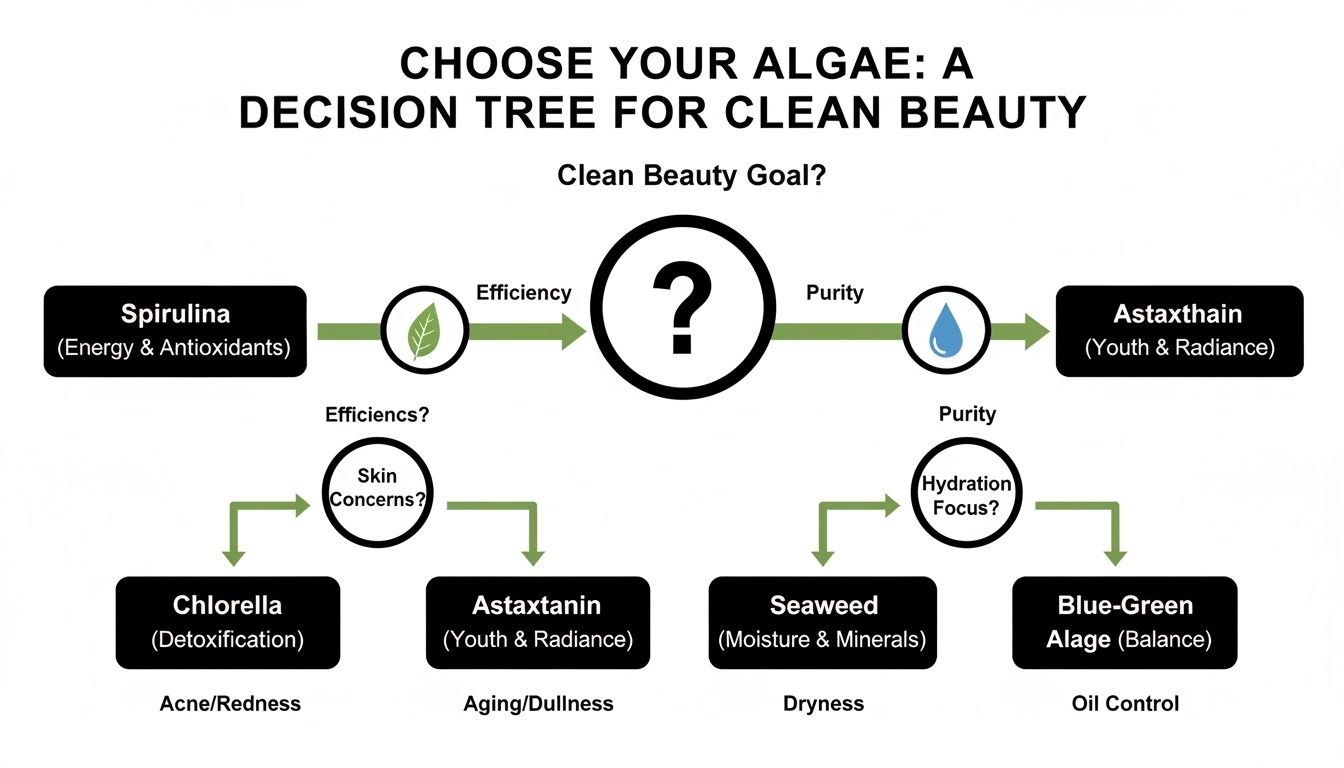
As you can see, the path is pretty clear. If you need fast, nutrient-dense results, spirulina delivers. If deep purification is the goal, chlorella is your hero.
The Unique Bioactives That Set Them Apart
Beyond their signature pigments, each microalga has another ace up its sleeve. For spirulina, it’s all about its complete amino acid profile. These are the fundamental building blocks for strong, resilient skin. By delivering these essential proteins straight to the epidermis, it directly supports the skin’s structure, helping to keep it firm and supple.
Chlorella’s unique selling point is the Chlorella Growth Factor (CGF). It’s a powerful complex rich in nucleic acids, peptides, and polysaccharides that is known to support cellular regeneration. CGF essentially gives the skin’s natural renewal process a helping hand, which is why it’s so prized in formulas focused on restoring skin density and vitality.
The Swiss beauty market, a leader in high-performance, sustainable cosmeceuticals, has certainly taken notice. A pivotal 2019 trial at the University of Geneva involving 150 women found that spirulina reduced UV-induced wrinkles by 28% over 12 weeks—outperforming standard vitamin C serums by 15%. Not to be outdone, a 2022 study in the Swiss Journal of Cosmetics highlighted that chlorella's chlorophyll content detoxifies skin at rates 50% higher than green tea extracts. You can discover more insights about these market trends and what they mean for the industry.
For formulators, the choice boils down to this: Spirulina offers immediate nourishment and superior antioxidant defence because its nutrients are so easy to access. Chlorella brings powerful detoxification and cellular regeneration to the table, thanks to its tough cell wall and unique CGF.
Biochemical Profile Comparison Spirulina vs Chlorella
To make the choice even clearer, this table lays out the core biochemical and structural differences. It’s a quick-reference guide designed to help you align each microalga with specific product goals, especially within the discerning Swiss clean beauty market.
| Attribute | Spirulina (Arthrospira platensis) | Chlorella (Chlorella vulgaris) | Implication for Swiss Formulators |
|---|---|---|---|
| Cellular Structure | Prokaryotic; soft mucopolysaccharide wall | Eukaryotic; tough cellulose wall | Spirulina offers immediate nutrient bioavailability. Chlorella provides superior binding for detoxification. |
| Primary Pigment | Phycocyanin (blue-green antioxidant) | Chlorophyll (rich green purifier) | Select Spirulina for potent anti-ageing. Choose Chlorella for clarifying and anti-pollution formulas. |
| Key Bioactive | High protein (amino acids) | Chlorella Growth Factor (CGF) | Spirulina is ideal for skin firming. CGF in Chlorella is excellent for cellular repair and renewal. |
| Nutritional Profile | Higher in protein and iron | Richer in chlorophyll and zinc | Protein content supports skin structure. Zinc helps balance sebum production and soothe skin. |
| Topical Action | Nourishing, firming, antioxidant | Purifying, regenerating, detoxifying | Match the action to the desired outcome: Spirulina for revitalisation, Chlorella for deep cleansing. |
Ultimately, a real understanding of the nuances between spirulina & chlorella is what allows formulators to create sophisticated, highly effective products that truly resonate with the modern Swiss consumer.
Evidence-Backed Benefits in Cosmetics and Wellness
For professionals, the real value lies in translating the biochemical makeup of spirulina and chlorella into real-world benefits. It's about moving past marketing buzz and into evidence-backed results that resonate with savvy Swiss clients. The science gives us the authority to recommend products with confidence. While both are powerful, each alga offers a distinct path to healthier, more resilient skin.
Spirulina’s key strength is its incredible antioxidant and anti-inflammatory power. This is mostly thanks to phycocyanin, the unique blue-green pigment that acts as a potent shield against oxidative stress—one of the main culprits behind visible ageing.
By neutralising free radicals kicked up by UV rays and city pollutants, spirulina helps protect crucial skin structures like collagen and elastin. This defensive action is fundamental for keeping skin firm and staving off the premature appearance of fine lines.
Spirulina for Revitalisation and Firmness
But spirulina’s benefits go well beyond just protection. Its complete protein profile, packed with essential amino acids, provides the very building blocks skin needs to maintain its structural integrity. This direct nourishment helps create a complexion that looks and feels firmer and more toned.
When you see spirulina in a serum or cream, think revitalisation. It helps improve skin's elasticity and overall vitality. Its anti-inflammatory nature also helps to calm redness and soothe irritation, which contributes to a more balanced, even skin tone. This makes it a fantastic ingredient for products targeting mature or environmentally stressed skin.
For cosmetic applications, spirulina is a multitasking powerhouse. Studies show its components can encourage skin cell proliferation and collagen production, fostering an optimal environment for skin health and effective anti-ageing results.
This double act of potent protection and deep nourishment is precisely why spirulina & chlorella are so often paired together. While spirulina fortifies and defends, chlorella steps in to purify and drive deep cellular repair.
Chlorella for Detoxification and Collagen Synthesis
Chlorella has built its reputation on detoxification. This benefit is directly tied to its unusually high chlorophyll content and its unique, fibrous cell wall, which is brilliant at binding to impurities and pollutants that settle on the skin's surface.
In an urban setting, this makes chlorella a go-to active for anti-pollution formulas, purifying masks, and daily cleansers. It effectively clears away the microscopic grime that leads to dullness, congestion, and irritation, leaving the skin looking clear and refreshed.
Beyond its purifying talent, chlorella delivers some serious regenerative benefits. It’s known to stimulate collagen synthesis in the skin—a critical function for maintaining dermal density and that youthful plumpness.
This action is largely credited to the Chlorella Growth Factor (CGF), a one-of-a-kind complex of nucleic acids that supports the skin's own repair and renewal cycles. By nudging fibroblasts into action, chlorella helps rebuild the skin’s structural matrix from the inside out. Over time, this can lead to a measurable improvement in firmness and a softening of wrinkles.
For Swiss pharmacies and clinics, being able to explain these distinct, science-backed benefits is a huge advantage. Positioning spirulina & chlorella based on their specific actions allows for much more precise and effective client recommendations.
- Recommend Spirulina-based products for: Clients concerned with a loss of firmness, environmental protection, and overall skin revitalisation. It's a natural fit for anti-ageing lines and protective day creams.
- Recommend Chlorella-based products for: Clients living in urban areas, those with congested or dull skin, or anyone looking to improve skin density and support collagen. It truly shines in detoxifying masks and restorative night treatments.
Ultimately, a solid grasp of the science behind these microalgae empowers professionals to shift the conversation from vague "superfood" claims to specific, targeted solutions. Spirulina defends and firms, while chlorella purifies and rebuilds—giving you a comprehensive toolkit for meeting the modern skincare needs of the Swiss market.
Formulation and Sourcing: From Lab Bench to Luxury Shelf
Getting spirulina and chlorella into a cosmetic formula is more than just mixing them in. For formulators and brand buyers, the real work lies in navigating the practical challenges. You have to think about colour stability, odour, and getting the concentration just right to create a product that not only works but also feels luxurious to the discerning Swiss consumer. Sourcing these powerful microalgae demands the same level of care, with a sharp focus on purity, sustainability, and the certifications to back it all up.
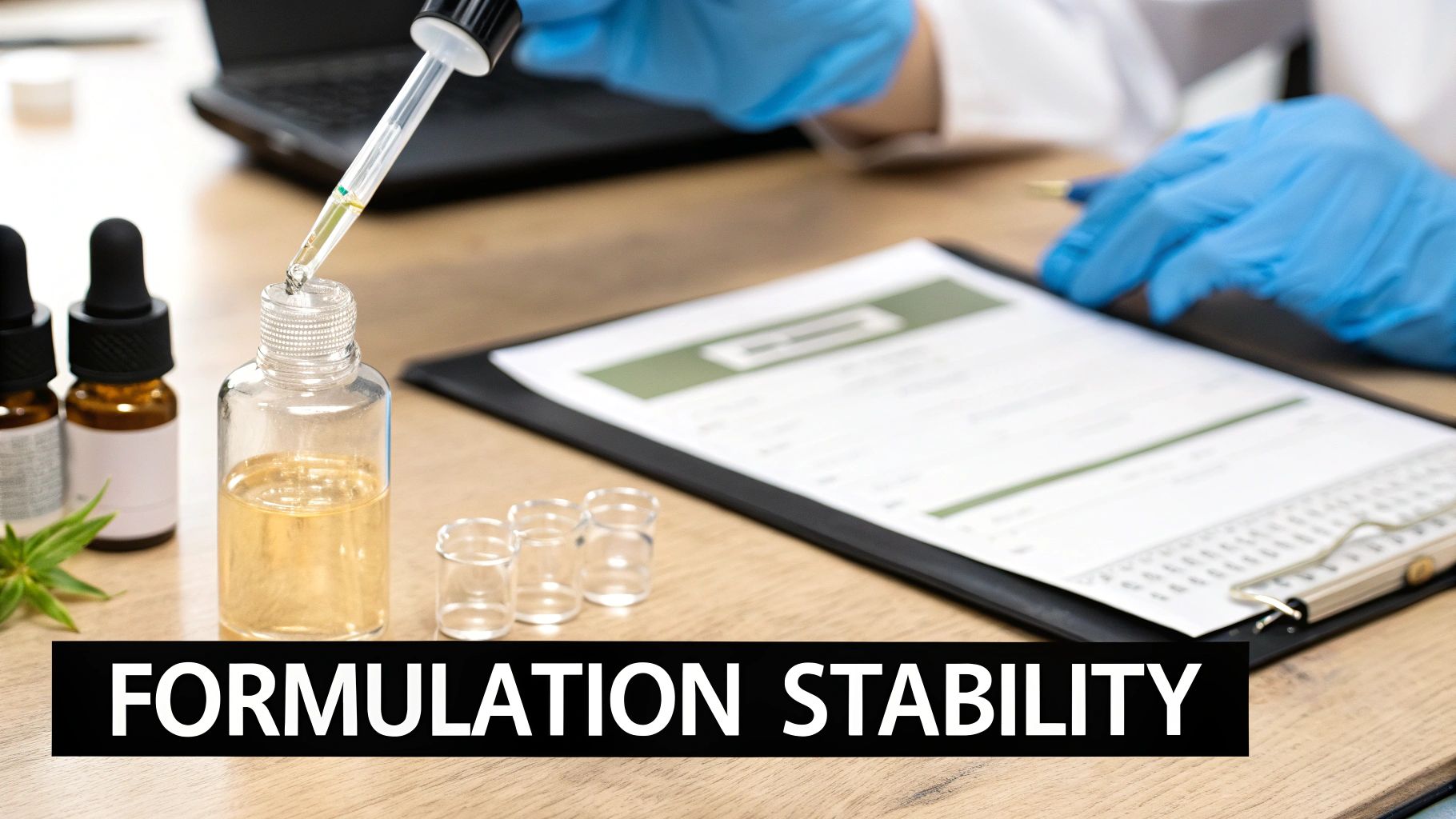
The very things that make these algae so potent—the intense phycocyanin pigment in spirulina and the rich chlorophyll in chlorella—are also quite delicate. They're sensitive to light and heat, which can degrade their colour and effectiveness over time. This means formulation needs to be smart. We're talking about protective packaging like opaque glass or airless pumps, and often adding stabilising antioxidants to preserve the integrity of the finished product.
Then there's the scent. Both have a natural, earthy aroma that, while a sign of purity for some, can be a deal-breaker for others. A skilled formulator won't just mask it. They might use techniques like microencapsulation or pair the algae with complementary essential oils that balance the scent without cluttering the formula's clean profile.
Getting the Concentration Right
Finding the sweet spot for concentration is a balancing act. Too little, and you won’t see the benefits. Too much, and you risk ruining the texture and stability of your formula. It’s not just about cramming in as much as possible.
- For Spirulina: In daily-use serums and creams, concentrations as low as 0.5% to 2% are often enough to deliver excellent antioxidant and firming results.
- For Chlorella: When it comes to purifying masks or targeted detox treatments, you might push the concentration to 1% to 5% to fully tap into its binding and regenerative power.
The secret is working with a supplier who provides clear, transparent data on their extracts' potency. This allows for precise, effective dosing and ensures every product is truly optimised for performance.
When formulating with spirulina & chlorella, the goal is to protect their potent bioactives from degradation. This involves not only stabilising the formula itself but also choosing packaging that shields the product from light and air, ensuring it remains effective from the first use to the last.
This meticulous attention to detail is what separates a good product from a great one, especially in the high-stakes Swiss market. But the quality journey doesn't start in the lab—it begins with sourcing.
The Critical Role of Certified and Sustainable Sourcing
In Switzerland, product quality and ethical, sustainable sourcing are two sides of the same coin. Consumers here expect transparency and demand proof of purity. Certifications aren't a "nice-to-have"; they're a necessity. The gold standard is controlled cultivation in closed-loop systems, which completely eliminates the risk of contamination from heavy metals, pesticides, or other pollutants common in wild-harvested algae.
This controlled environment also guarantees a consistent, potent biochemical profile from one batch to the next. For retailers and spas, that consistency is everything. It’s how you build client trust and ensure reliable performance.
Diving into Switzerland's own eco-innovation, we're seeing spirulina and chlorella production become a prime example of carbon-neutral beauty sourcing. A key moment was in 2020, when the Federal Research Station Agroscope began chlorella trials in Ticino, achieving a remarkable yield of 25 tons per hectare annually—that’s over 300% above global averages. Projections show the Swiss demand for microalgae in clean beauty growing by 8.5% CAGR to 2032. This empowers retailers with high-performance, ethically sourced ingredients that align with standards like PETA commitments and Bio Suisse certifications. You can read more about the chlorella market's impressive growth.
Navigating Key Certifications
When you're vetting a supplier, a few key certifications act as a clear guarantee of quality and ethical practices. These logos are powerful trust signals for Swiss consumers.
- ECOCERT: This globally respected certification verifies that ingredients are sourced responsibly and processed in an environmentally friendly way. It's a true hallmark of natural and organic integrity.
- Bio Suisse: This label holds products to standards even stricter than EU organic regulations. It’s a powerful statement of exceptional quality and a deep commitment to holistic sustainability.
- Cruelty-Free (PETA/Leaping Bunny): These certifications are non-negotiable for a huge segment of the market, confirming that no animal testing occurred at any point in development.
Partnering with suppliers who carry these certifications ensures the spirulina & chlorella in your products are not only pure and effective but also perfectly aligned with the values of transparency and ecological responsibility that define the Swiss clean beauty movement.
Navigating Swiss Market Regulations and Claims
Bringing spirulina and chlorella products into the discerning Swiss market is less about navigating a minefield and more about understanding the lay of the land. For retailers, spas, and pharmacies, getting the regulations right isn't just a box-ticking exercise; it's the foundation of consumer trust. The key player here is the Swiss Federal Food Safety and Veterinary Office (FSVO), which draws a firm line between cosmetic claims and supplement claims. Respecting that boundary is everything.
The first step is deciding which side of the line your product falls on. Is it a topical cosmetic? The claims have to stick to what it does for the skin's appearance. Is it a supplement? Then you're in a different ballpark, with rules allowing for health-related claims, but only if they're properly backed up and approved.
Permissible Cosmetic Claims
When you're talking about skincare with spirulina & chlorella, your language has to stay focused on cosmetic functions. Swiss rules are clear: you can talk about the aesthetic benefits, but you absolutely cannot suggest you're treating or preventing a medical issue.
It’s actually quite straightforward to communicate the benefits effectively while staying compliant. Think along these lines:
- Purifying: You can absolutely highlight chlorella's knack for cleansing the skin's surface and lifting away impurities.
- Revitalising: Describing spirulina's nourishing properties is perfect. It helps the skin look more energised and feel refreshed.
- Antioxidant Protection: It's fine to reference how both algae help shield the skin from everyday environmental stressors.
- Soothing: You can point to chlorophyll's ability to calm the look of redness and minor irritation.
These claims are honest, effective, and well within the cosmetic framework. They let you showcase the real value of your product without straying into forbidden territory.
A core principle for the Swiss market is the distinction between cosmetic enhancement and therapeutic action. A chlorella face mask can be marketed as ‘deeply purifying for a clearer complexion,’ but you can’t call it a ‘treatment for acne.’ Getting this right is crucial for your credibility and compliance.
Health Claims for Supplements
Things shift gear completely when spirulina and chlorella are sold as something to be ingested. In the supplement aisle, specific health claims are possible, but only if they are on the FSVO's approved list or you have a robust scientific dossier to back them up. The wording needs to be precise and tied directly to nutritional science.
For instance, a supplement with chlorella might claim it "contributes to the normal function of the immune system," but only if the product contains enough zinc to meet the official requirements for that claim. Broad, vague statements like 'detoxifying the body' are viewed with a great deal of scepticism and usually aren't allowed on packaging. It all comes back to precise, evidence-based marketing.
Crucial Labelling Requirements
In Switzerland, what's on the label is non-negotiable. Every cosmetic product must list its ingredients clearly, following the International Nomenclature of Cosmetic Ingredients (INCI) system.
This transparency ensures everyone, from estheticians to end-users, knows exactly what's in the bottle. For these two algae, the correct INCI names are:
- Spirulina: Spirulina Platensis Extract
- Chlorella: Chlorella Vulgaris Extract
Furthermore, if your product has earned an organic certification like ECOCERT or the highly respected Bio Suisse, make sure that logo is displayed prominently. For Swiss shoppers, these symbols are powerful shortcuts to trust, signalling a real commitment to quality and sustainability. Stick to these labelling standards, and you'll be marketing your spirulina & chlorella products not just legally, but effectively, building a solid relationship with a very savvy clientele.
From Science to Shelf: Product and Supplier Strategies
Knowing the science behind spirulina and chlorella is one thing; turning that knowledge into a product that resonates with Swiss customers is another. For spas and retailers, this is where the real work begins. The key is to craft concepts that meet specific client needs, playing to the unique strengths of each microalga to create targeted, high-performance solutions that truly stand out.
Think about a boutique city spa launching a signature ‘Chlorella Urban Detox Facial.’ The marketing story writes itself. This treatment would be positioned as a premium service, leaning on chlorella's well-documented ability to bind with environmental pollutants. It’s an easy sell for professionals looking to cleanse their skin after a long, stressful week in the city.

On the retail side, a ‘Spirulina Age-Defence Serum’ for pharmacies or high-end beauty stores would address a completely different, yet equally important, concern. Here, the focus is on spirulina’s impressive antioxidant, phycocyanin, and its dense amino acid profile. This creates a compelling product story centred on firming the skin and guarding against oxidative stress—perfect for mature clients searching for potent, clean-beauty alternatives.
How to Choose the Right Supplier: A Checklist
Of course, these product ideas are only as good as the raw materials you use. Sourcing high-quality ingredients is non-negotiable, which means finding the right supplier partner is critical. This checklist will help you ask the right questions and vet potential partners properly, making sure their standards align with what’s expected in Switzerland.
Choosing a supplier is more than a transaction; it's a partnership. A great partner provides not just premium ingredients but also the transparency and documentation needed to build trust with your discerning clientele.
Use this framework to dig deep and ensure any supplier can live up to your brand’s promise of excellence.
-
Cultivation and Purity
- Do they cultivate in controlled, closed-loop systems? This is crucial for preventing contamination.
- Can they provide batch-specific, third-party lab tests (Certificates of Analysis) showing results for heavy metals, pesticides, and microbial counts?
-
Certifications and Ethics
- Are the ingredients certified by reputable organisations like ECOCERT or Bio Suisse?
- Do they have cruelty-free certifications, such as PETA or Leaping Bunny? This demonstrates a real commitment to ethical practices.
-
Transparency and Expertise
- Is their supply chain completely transparent, from the moment of cultivation right through to extraction?
- Can they provide formulation support or share data on the optimal concentrations needed for cosmetic efficacy?
Asking these tough questions upfront will help you select a supplier you can count on for pure, potent, and ethically sourced spirulina & chlorella. This level of diligence ensures your final products are not just effective, but are also backed by a story of quality and integrity. It’s that story that will connect with the Swiss consumer and reinforces the value a trusted distributor like beautysecrets.agency can bring to your business.
Frequently Asked Questions
As you start exploring how to bring spirulina and chlorella into your professional offerings, some practical questions are bound to pop up. Here, I'll answer some of the most common queries we hear from our Swiss partners, helping you integrate these powerful microalgae with confidence.
Which Is Better for Anti-Ageing Formulations: Spirulina or Chlorella?
Both are fantastic for anti-ageing, but they work in different ways. Think of spirulina as the protector and firmer; its high concentration of antioxidants like phycocyanin is brilliant for fighting the oxidative stress that ages skin. It helps keep the skin's structure strong.
Chlorella, on the other hand, is more of a rebuilder. Its unique Chlorella Growth Factor (CGF) is incredible for encouraging cellular repair and boosting collagen synthesis. This makes it a go-to for improving skin density and smoothing texture. For a truly powerful anti-ageing product, using both is the ultimate strategy.
Are There Allergenic Concerns with Topical Microalgae Products?
Topical reactions to high-quality, pure spirulina and chlorella extracts are very uncommon. The real issue isn't the algae itself but potential contaminants. If microalgae are sourced from open, uncontrolled ponds, they can pick up impurities that might irritate the skin.
This is why sourcing is everything. You must work with suppliers who use controlled cultivation systems and can provide third-party purity tests. For the Swiss market, this isn't just a recommendation—it's a requirement for guaranteeing safety and integrity.
How Can I Effectively Market These Ingredients to Swiss Clients?
When speaking to a Swiss audience, your message needs to hit three core values: efficacy, sustainability, and purity.
- Efficacy: Talk about the science. Use phrases like ‘clinically studied collagen support’ when describing chlorella's benefits.
- Sustainability: Highlight the low-impact cultivation methods. These microalgae require very little land and water compared to traditional botanicals, which is a powerful story.
- Purity: Build trust by showcasing certifications. Having a label like ECOCERT or Bio Suisse on your packaging and marketing speaks volumes.
Combining proven results with an ethical, transparent backstory creates a narrative that truly connects.
What Is the Main Difference in Texture and Colour in Formulations?
The look and feel these algae bring to a product is a major formulation consideration. Spirulina gives a distinctive, deep blue-green colour because of its phycocyanin. Its powder is usually very fine and dissolves easily, making it quite versatile.
Chlorella offers a vibrant, rich green from its high chlorophyll content. Its texture can be a bit denser in a formula, depending on how its tough cell wall has been processed.
At beautysecrets.agency, we've done the work of sourcing exceptional brands that feature ingredients like spirulina and chlorella. Every product is backed by the certifications and transparency your clients expect. Discover our portfolio of clean, effective, and ethically sourced cosmetic lines at https://beautysecrets.agency.