When a customer walks into your pharmacy asking for "SkinCeuticals vitamin C," they're not just naming a product. They're asking for a result.
The brand has become so synonymous with top-tier antioxidant protection that it’s what people think of first. It commands a level of trust that brings in shoppers who have already done their homework and know exactly what they want.
Understanding The Hype Behind SkinCeuticals Vitamin C
To really help these customers, you need to understand why SkinCeuticals sits on such a pedestal. This isn't just slick marketing; it's a reputation built on a solid foundation of clinical research, glowing dermatologist endorsements, and years of visible results that generate powerful word-of-mouth.
The name itself has become a benchmark. Other antioxidant serums are constantly being measured against it.
For your pharmacy team, getting this context is crucial. When someone requests SkinCeuticals, they're signalling that they want something effective, safe, and premium. They've likely been influenced by one of three things:
- A Professional Recommendation: Many dermatologists and aestheticians point to SkinCeuticals C E Ferulic as the go-to for protecting skin and fighting signs of ageing.
- Media and Influencer Praise: The serum is a constant feature in beauty magazines and is often hailed as a "holy grail" product by influencers, which cements its top-tier status.
- Solid Clinical Data: SkinCeuticals makes a point of publicising its peer-reviewed research, proving the formula’s ability to neutralise oxidative damage and visibly improve the skin.
The Power of a Market Leader
The brand loyalty SkinCeuticals has built translates into serious market power. This isn't just talk; the numbers tell the story. For example, SkinCeuticals' annual sales hit a staggering US$236 million, with its main online store pulling in US$214 million of that. This represents a strong growth of 10-15% over the previous year. This kind of demand creates a fantastic opportunity right in your pharmacy.
When you understand the 'why' behind the request for SkinCeuticals, you can transform a simple sale into a genuine consultation. You’re no longer just a stockist; you’re an expert guide who can affirm the customer's goals and introduce them to alternatives that meet those same high standards.
To fully appreciate the acclaim, you have to realise why it's considered the gold standard for glowing, age-defying skin. This deep trust is why people are willing to pay the premium price.
Your role is to honour that search for quality. You can do this by providing the exact product they came for, or by expertly introducing them to high-performance, natural alternatives from your own portfolio that are built on the very same scientific principles.
The Science Of Vitamin C Serums Made Simple
To really get why a product like SkinCeuticals vitamin C is so sought-after, you don't need a chemistry degree. All you need is a simple, everyday analogy.
Picture a freshly sliced apple left on the kitchen counter. In just a few minutes, its crisp, white flesh starts to turn a sad, unappetising brown. That browning is oxidation, a chemical reaction that happens when it's exposed to the air.
The exact same thing happens to our skin, just much, much slower. It's sped up by things we face every day, like UV rays and pollution, and this damage shows up as premature ageing, fine lines, and a dull-looking complexion. A great vitamin C serum is like spritzing lemon juice on that apple slice—it stops the browning process dead in its tracks.
In skincare terms, vitamin C is a powerful antioxidant. Its main job is to neutralise the unstable molecules, known as free radicals, that cause all that oxidative damage. This is the fundamental benefit your customers are looking for when they ask for a vitamin C serum.
This concept map helps visualise how solid scientific data builds trust, which in turn creates the 'hype' and demand for premium brands in the market.
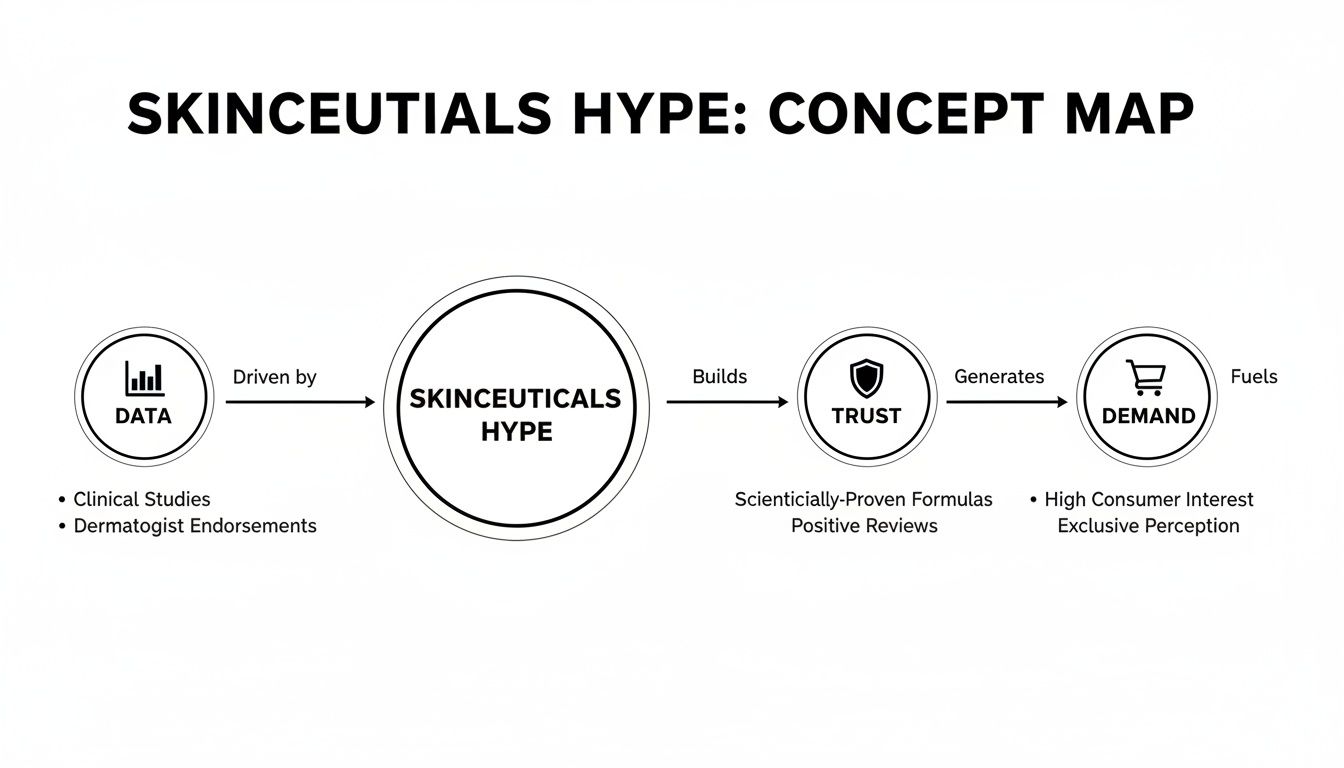
As you can see, there’s a direct line from strong clinical data to earning consumer trust, which is what fuels the market demand for respected brands like SkinCeuticals.
The Gold Standard: L-Ascorbic Acid
Let's be clear: not all vitamin C is created equal. The form with the most research behind it—the one that’s proven its worth time and again—is L-ascorbic acid. This is the pure, active form of the vitamin, and it’s the star ingredient in many of the most iconic formulas, including the famous SkinCeuticals C E Ferulic.
When a customer sees L-ascorbic acid on an ingredients list, they’re looking at the industry's gold standard. It’s legendary for its ability to deliver real, visible results, from kick-starting collagen production for firmer skin to fading stubborn dark spots for a more even, brighter complexion.
But all that power comes with a catch: it's incredibly unstable. L-ascorbic acid is notoriously fragile and breaks down fast when it's exposed to light, air, or heat. Once it degrades, its antioxidant magic is gone. This is exactly why the formulation is everything.
Getting To Know Vitamin C Derivatives
Because pure L-ascorbic acid can be so finicky—and sometimes irritating for sensitive skin—cosmetic chemists have come up with clever, more stable alternatives. These are known as derivatives, and you can think of them as the gentler, more reliable cousins of L-ascorbic acid.
They start out inactive but cleverly convert into L-ascorbic acid once they're absorbed into the skin. Now, this extra conversion step can make them a touch less potent than the pure stuff, but their stability and gentler nature make them fantastic options for a lot of people.
To help you and your customers navigate the options, here’s a quick-reference guide to the most common forms of Vitamin C you’ll find on an ingredients list.
Vitamin C Forms At A Glance
| Vitamin C Type | Key Benefit | Best For | Consideration |
|---|---|---|---|
| L-Ascorbic Acid | Pure, most potent, and heavily researched. | Resilient skin, targeting significant signs of ageing. | Can be unstable and potentially irritating. |
| Sodium Ascorbyl Phosphate | Very stable and gentle, with anti-inflammatory properties. | Sensitive or acne-prone skin types. | Less potent than L-Ascorbic Acid. |
| Magnesium Ascorbyl Phosphate | Stable, hydrating, and known for brightening effects. | Dry or sensitive skin looking for radiance. | Requires conversion in the skin to become active. |
| Tetrahexyldecyl Ascorbate (THDA) | Oil-soluble, penetrates deeply into the skin. | All skin types, especially for potent antioxidant protection. | Often found in pricier, more elegant formulas. |
Understanding these key differences is your superpower when advising customers. Someone with resilient skin chasing maximum results might be a perfect match for an L-ascorbic acid formula. But for another person with sensitive skin, a serum with Sodium Ascorbyl Phosphate could deliver brilliant results without any irritation.
Why Concentration And pH Are The Real Game-Changers
The final—and arguably most critical—pieces of the puzzle are concentration and pH. For an L-ascorbic acid serum to actually work, it has to be formulated within a very specific, scientifically proven range.
Here's what the science says: the most effective concentration for L-ascorbic acid in a daily-use serum is between 10% and 20%. Anything lower probably won't give you noticeable benefits, while going over 20% doesn't actually make it work better—it just ramps up the risk of irritation.
Just as important is the formula's pH level. Think of it as the key that unlocks the door to your skin. For L-ascorbic acid to get past the skin's protective barrier, the serum needs a low, acidic pH, ideally below 3.5.
This acidic environment is what keeps the molecule stable and ensures it gets absorbed properly to do its incredible work. A serum with a higher pH simply won't deliver the results it promises, no matter how high the vitamin C concentration is. It's a non-negotiable factor in any truly effective formula.
Why Formulation And Packaging Matter Most
You can have the highest concentration of L-ascorbic acid at the perfect pH, but if the rest of the formula and the bottle itself aren't right, you’ve got nothing. We've talked about how L-ascorbic acid is a powerhouse, but it's also incredibly diva-like. It's notoriously unstable. Any exposure to light, air, or heat can cause it to break down rapidly, turning a potent antioxidant into little more than expensive, coloured water.
This is where the real genius of a brand like SkinCeuticals comes into play. Their formulas aren't just about one hero ingredient; they're about creating a stable, synergistic team where every component works together to protect and boost the vitamin C.
This insight is absolutely key when you're evaluating any vitamin C serum, whether it's a household name or one of the fantastic natural alternatives you have on your shelves.
The Power Trio: Vitamin C, Vitamin E, And Ferulic Acid
One of the biggest breakthroughs in antioxidant skincare is what many experts call the "gold standard trio." This specific combination of 15% L-ascorbic acid, 1% vitamin E (alpha-tocopherol), and 0.5% ferulic acid was popularised by SkinCeuticals and is backed by their foundational patent. It's a formula that many brands now look to for a very good reason: it just works.
Think of these ingredients as a high-performance team of bodyguards for the skin. L-ascorbic acid is the main defender, but vitamin E and ferulic acid are its essential backup.
Here’s how this powerful team works together:
- Enhanced Stability: Ferulic acid and vitamin E act as stabilisers for the very fragile L-ascorbic acid. They basically run interference, slowing down the oxidation process inside the bottle and keeping the serum effective for much longer.
- Boosted Antioxidant Power: This isn't just about self-preservation. The trio provides a much higher level of protection for the skin. In fact, research shows this combination can double the photoprotection offered by vitamin C alone, creating a far more robust shield against environmental damage.
- Synergistic Action: Vitamin E is a potent antioxidant on its own. When L-ascorbic acid is in the mix, it helps to regenerate vitamin E, essentially "recharging" it so it can keep fighting off free radicals.
When you spot this trio on an ingredient list, it’s a huge clue that you're looking at a well-researched, high-performance formula designed for maximum impact.
Decoding The Packaging: A Non-Negotiable For Quality
Even the most perfect serum is completely useless if its packaging can't protect it. When advising customers, explaining the importance of the bottle is just as vital as discussing the ingredients. A premium price tag should always come with premium, protective packaging—period.
The moment L-ascorbic acid begins to oxidise, its colour shifts from clear or champagne to yellow, then orange, and finally to a deep brown. A dark orange or brown serum is a clear sign that the vitamin C has degraded and will no longer be effective. It should be discarded.
To stop this from happening, the packaging needs to shield the formula from its two biggest enemies: light and air.
Essential Packaging Features To Look For
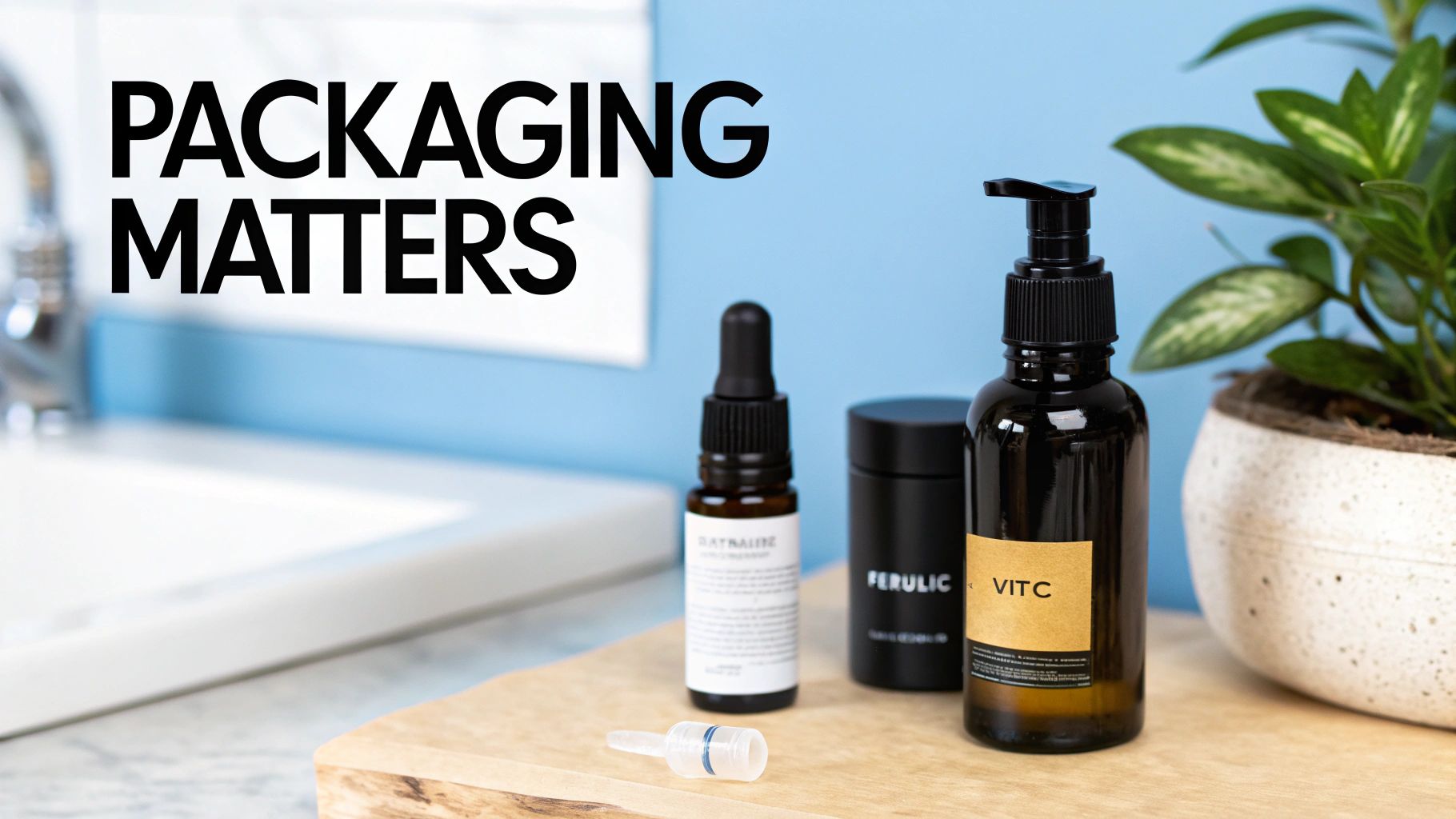
- Opaque or Dark Glass Bottles: The best defence against light is an opaque container or one made of dark, UV-resistant glass, like amber or cobalt blue. Clear glass is a major red flag for any serious vitamin C serum.
- Air-Restrictive Dispensers: Every time a formula hits the air, it starts to break down. That's why the dispenser is so important.
- Airless Pumps: These are the gold standard. They prevent any air from getting into the bottle, preserving the serum's potency down to the very last drop.
- Droppers: While very common, droppers introduce a puff of air with every single use. When paired with a dark glass bottle and a very stable formula, they can work. Just advise customers to close them tightly and quickly.
Teaching your customers about these packaging details empowers them to become smarter shoppers. It helps them understand that these features aren't just for looks; they are a non-negotiable requirement for any skinceuticals vitamin c product or alternative that promises real, science-backed results. This is what justifies the investment and ensures they get the benefits they’re paying for.
Advising Customers On Benefits And Safe Usage
When a customer walks in asking about a high-end product like a SkinCeuticals vitamin C serum, they’re not just buying a product; they're looking for real, visible results. This is your moment to shine. By translating the complex science into a simple, clear promise, you build incredible trust and show them you’re an expert they can rely on.
The conversation should really boil down to the three main things a well-formulated, stable vitamin C serum will do for their skin. These are the results that make the investment worthwhile and turn a one-time purchase into a loyal customer.
First, let's talk about its power as an antioxidant. The easiest way to explain this is to call it a "daily shield for your skin." It works around the clock to fight off environmental damage from things like UV rays and pollution—the very things that cause most premature ageing. This protective role is the bedrock of maintaining healthy skin for the long haul.
The Three Core Customer Benefits
To really drive home the value, focus your advice on these proven outcomes. Each one tackles a common skin concern, making the benefits instantly relatable.
1. Stimulates Collagen for Firmer Skin
You can explain that as we get older, our body’s natural collagen factory slows down, which is why we start seeing fine lines and sagging. Vitamin C is one of the very few ingredients that’s been scientifically proven to kick that factory back into gear. With consistent use, they'll start to notice their skin feels bouncier, looks plumper, and has a more youthful firmness.
2. Brightens Complexion and Fades Dark Spots
This is a huge selling point for so many people. Vitamin C gets in the way of the enzyme that creates melanin, the pigment responsible for dark spots. So, you can confidently tell customers, "If you're dealing with sun spots, marks left over from old breakouts, or just a dull-looking complexion, this is what you need." It's also a great opportunity to help them find the best vitamin C for acne scars, which is a very common and specific concern.
3. Provides Powerful Antioxidant Protection
Bring back that "shield" analogy. While their daily sunscreen is non-negotiable, a vitamin C serum is its ultimate partner. It creates a second line of defence, neutralising the damaging free radicals that sunscreen might miss. They’re essentially doubling down on their anti-ageing efforts.
Guiding Safe And Effective Application
Explaining the benefits is only half the job. Just as important is managing their expectations and guiding them on how to use it safely and effectively. This is the kind of responsible advice that truly sets a pharmacy consultation apart. A few simple instructions can prevent irritation, maximise results, and ensure they have a great experience.
Always start by asking about skin sensitivity. For anyone with reactive skin, rosacea, or who is new to a potent L-ascorbic acid formula, a patch test is a must. Just suggest they dab a small amount on their inner arm for a couple of days to see how their skin feels.
It's also wise to advise them to start slow. Using a powerful serum every other morning for the first week or two lets the skin get used to it, which dramatically lowers the chance of any redness or tingling. Once their skin is happy, they can move to daily morning use to get the best protective benefits.
The single most important piece of advice you can give any vitamin C user is this: It must be followed by a broad-spectrum sunscreen every single morning, without exception.
This isn't just a suggestion; it's a rule. While vitamin C helps protect the skin from sun damage, it can also make it a bit more sensitive to sunlight. Using it without sunscreen is completely counterproductive and can leave their skin worse off. Frame it as the ultimate power couple: the vitamin C serum protects from the inside out, while the sunscreen guards from the outside in. Using them together gives their skin the best possible defence against ageing. This one simple tip protects your customer and cements your status as a trusted expert.
Turning a "SkinCeuticals" Request into an Opportunity
When a customer walks in asking for SkinCeuticals vitamin C, what are they really asking for? They're signalling they want something that works—something potent, proven, and high-performance. This is your cue, your perfect opening to introduce them to brilliant natural alternatives that deliver those same results but with a clean, conscious philosophy.
Your job isn't to offer a "cheaper" option. It's to offer a different, and for many, a better kind of value. You're bridging the gap between clinical-grade efficacy and the clean, mindful beauty movement. You're showing them they don't have to choose between results and their values, like certified-organic or cruelty-free ingredients.
And the appetite for these powerful antioxidant serums is huge. Just look at the premium brands. SkinCeuticals, for example, became a giant in the high-end skincare world. Its launch in China saw sales jump an incredible 84% in 2017 alone. Within two years, that market had tripled, becoming the brand's second largest worldwide. If you're curious about this kind of growth, you can dig into the full story in this report on SkinCeuticals' expansion in China.
This proves one thing: customers are ready and willing to invest in powerful antioxidant serums.
How Natural Formulations Meet Clinical Standards
Here's the secret: high-performance natural brands aren't ignoring the science that clinical leaders established. They’re embracing it, just with a different set of tools. Instead of relying only on pure L-ascorbic acid, which can be unstable and irritating, they use sophisticated, stabilised vitamin C derivatives and powerful botanical extracts loaded with antioxidants.
Think of it this way. A classic sports car might use a big, powerful V8 engine—that's your L-ascorbic acid. It’s effective, but a bit old-school. A modern performance car, however, might use an advanced hybrid system. It’s just as fast and powerful, but achieves it through smarter, more efficient engineering. That's the approach of these natural formulations.
This lets you recommend products that are not only powerful but also better suited for certain customers, especially those with sensitive skin who find pure L-ascorbic acid too harsh.
The goal is to focus the conversation on the principles that matter: stability, effective concentration, and smart, synergistic ingredients. When you do that, you can confidently position natural alternatives as equals in performance, not just substitutes.
Many of the brands in the beautysecrets.agency portfolio are built on this exact philosophy. They show a real dedication to creating formulas that are both scientifically robust and ethically made.
Highlighting What Makes Them Work: Key Ingredients
When you're talking about a natural alternative, the conversation needs to be about the intelligence of the formula. Your job is to connect the dots for the customer, showing them how these products deliver the three things they want from a top-tier vitamin C serum: antioxidant defence, boosted collagen, and a brighter complexion.
Here’s how you can steer the conversation:
- Talk about Stabilised Vitamin C Derivatives: Explain how a brand like Fushi uses fresh-pressed oils that naturally contain stable forms of vitamins. These are gentler on the skin and stay potent for much longer. This means the customer gets reliable antioxidant protection in every drop, without the risk of irritation.
- Showcase Antioxidant-Rich Botanicals: Point to products that use nature's own powerhouses. Ingredients like Sea Buckthorn or Rosehip oil are fantastic natural sources of vitamins C and E. Plus, they come with extra benefits like essential fatty acids that nourish the skin barrier, offering a more complete, holistic treatment.
- Explain Synergistic Blends: Many natural formulas echo the famous "power trio" of C, E, and Ferulic acid, but with plant-based ingredients. You might see a serum that pairs a stable vitamin C derivative with Ferulic Acid sourced from rice bran and Vitamin E from fresh-pressed sunflower oil. It’s the same scientific principle, just executed with a natural-first mindset.
By taking this approach, you shift the focus from a single, hyped-up ingredient to the cleverness and quality of the entire formula. It gives you the power to meet the demand created by products like SkinCeuticals vitamin C with compelling, clean, and equally effective solutions from your own shelves. You'll be able to satisfy even the most knowledgeable, ingredient-savvy customers.
In-Store Strategies and Expert Talking Points
Now that you've got a solid grasp of the science behind vitamin C, it's time to put that knowledge to work on the shop floor. This is where the magic happens—where you connect what a customer is looking for with your carefully chosen products, turning a simple question into a genuinely helpful, expert-led conversation.
The trick is to build an experience that educates and excites people. Don't just line products up on a shelf; tell a powerful story about skin health, protection, and the incredible benefits of antioxidants. When you take this approach, you build serious trust and establish your pharmacy as the go-to place for high-performance skincare.
Creating an Antioxidant Destination
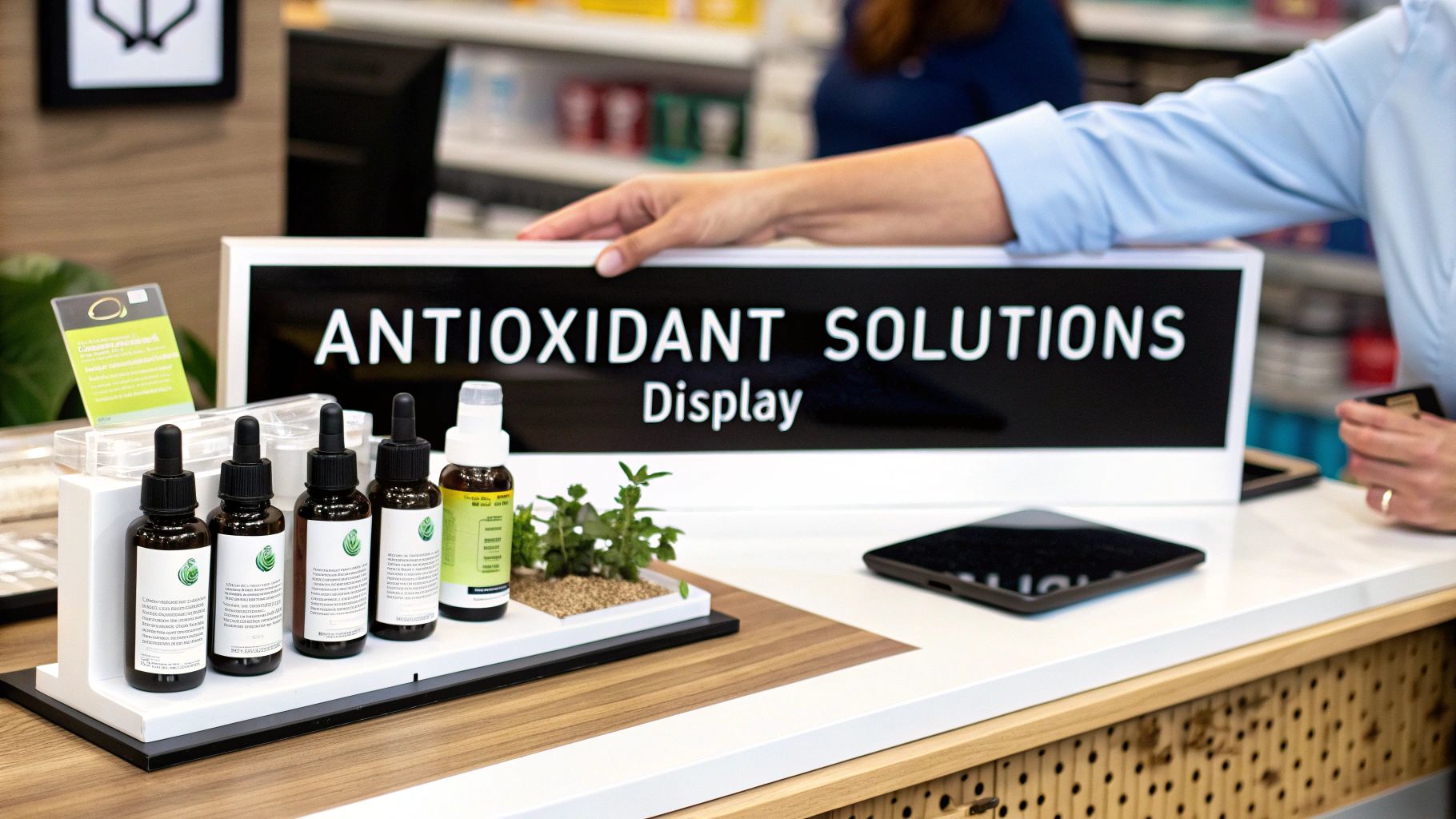
First things first, take a look at your displays. Instead of having vitamin C serums dotted around with their respective brands, why not create a dedicated ‘Antioxidant Solutions’ hub? This kind of focused display instantly grabs the attention of anyone looking for brightening, anti-ageing, and protection, no matter which brand name they came in with.
Use clear, simple signage that gets right to the point:
- "Your Daily Shield Against Ageing": This speaks directly to the protective power of antioxidants.
- "Brighten & Restore Your Natural Glow": It’s all about the visible results they're hoping for.
- "Clinically Proven Principles, Naturally Sourced Ingredients": This line perfectly connects the dots for someone moving from a clinical brand to your natural selection.
Grouping your recommended natural brands this way presents them as a strong, unified category. It proves you’ve hand-picked a range of fantastic options that absolutely hold their own, ready to impress even the most knowledgeable customer.
Mastering the Conversation Pivot
When a customer walks in asking for a SkinCeuticals vitamin C serum by name, think of it as the start of a great conversation, not just a sale. Your first move should be to acknowledge their choice. This builds instant rapport and shows you're on their side.
Expert Talking Point: "That's an excellent choice. You're clearly looking for a powerful, clinically proven antioxidant to protect and brighten your skin. If you love the science and results behind formulas like that, I have a fantastic certified-organic option I think you’ll be very impressed by. It follows the same core principles of stability and efficacy but uses beautiful, plant-derived ingredients."
This approach works wonders. You're validating their research while confidently introducing an alternative. You aren’t shooting down their request; you're elevating the discussion by providing an expert recommendation that ticks all their boxes and adds the unique value of a clean formula. It’s a smooth transition from a product query to a proper consultation.
From there, you can walk them over to your antioxidant display, making the whole shopping experience more engaging. By showing them how a potent vitamin C alternative pairs perfectly with a hydrating moisturiser or a high-SPF sunscreen, you offer a complete solution that boosts their results and naturally increases their basket size. It’s this kind of guidance that reinforces your expertise and keeps customers coming back.
Answering Your Customers' Top Questions
Even with a solid grasp of the science, you're bound to get a few recurring questions from customers at the counter. Here are some straightforward, expert answers to help your team advise with confidence.
"Can I Use a Vitamin C Serum Every Day?"
Absolutely. In fact, they should! For vitamin C to really work its magic, it needs to be applied every single morning. This daily habit builds up a powerful shield against environmental aggressors like UV rays and pollution.
Just remind them of the proper order: apply it right after cleansing, but before their moisturiser and—this is non-negotiable—sunscreen. If a customer has very sensitive skin, you can suggest they start with an every-other-day approach. This gives their skin a chance to get used to the active ingredients without causing irritation.
"How Do I Explain Why a Natural Alternative is Just as Good?"
This is a great opportunity to build trust. Frame the conversation around shared goals and added benefits.
You could say something like: "You're right to look for a powerful antioxidant serum like the one you mentioned. This one is designed with the exact same goals in mind—it's highly stable, effective, and gives you that brilliant antioxidant protection. What makes this one special is its certified-organic formula. It’s perfect if you're looking for those same high-performance results but prefer to get them from potent, clean botanicals instead of certain synthetic ingredients."
"What's the Most Important Thing to Tell a New Vitamin C User?"
There are two points that are equally crucial, and you should always mention them together: consistency and sun protection.
First, let them know that seeing real changes—like brighter, firmer skin—takes time and consistent daily use. Then, you absolutely must stress that a vitamin C serum is not a replacement for sunscreen. It boosts the power of their SPF, but it's completely wasted effort if they don't follow it up with a good broad-spectrum sunscreen every single day.
This simple piece of advice shows you're not just selling a product; you're offering responsible, expert skincare guidance.
At beautysecrets.agency, we equip pharmacies with exceptional natural skincare lines that deliver on performance and purity. If you're ready to offer your customers compelling, high-performance alternatives from certified-organic and ethically sourced brands, we're here to help. Find out more about partnering with beautysecrets.agency.