When you get down to it, the main things separating powder brows and microblading are the final look and how well each technique works with a client's specific skin type. Microblading aims to create distinct, hair-like strokes, giving a really natural finish that works beautifully on normal to dry skin. On the other hand, powder brows provide a soft, filled-in 'makeup' look, which is often a much better option for those with oily or mature skin.
The Professional Verdict: Powder Brows vs. Microblading
As an experienced artist, I can tell you the debate isn't about which technique is "better." It's about knowing which procedure is the right fit for the person sitting in your chair. The best choice is never the same for everyone; it always comes down to a proper analysis of the client's skin, their aesthetic goals, and even their lifestyle.
I always advise artists to think of these services as specialised tools in their kit, not as competitors. One gives you that hyper-realistic, 'I woke up like this' effect, while the other creates a more polished, defined brow. Truly understanding when to use each one is what sets a good artist apart and is essential for guiding your clients toward a result they'll love.
Key Factors for Your Recommendation
During a consultation, your recommendation needs to be built around a few crucial points. Getting these across clearly from the start helps manage your client's expectations and is the key to ensuring they're thrilled with their healed brows.
Here’s a straightforward breakdown of the core differences you’ll want to explain:
| Feature | Powder Brows (Ombré Brows) | Microblading |
|---|---|---|
| Best For | Oily, combination, or mature skin types; clients who want a defined 'makeup' look. | Normal to dry skin types; clients looking for a very natural, hair-like appearance. |
| Aesthetic | A soft, powdered finish that looks like you’ve expertly filled in your brows. It can also be done with a gradient (ombré) effect. | Crisp, fine, individual strokes designed to blend in seamlessly with natural brow hairs. |
| Technique | A digital machine is used to deposit pigment in tiny pixels, which is generally less traumatic for the skin. | A manual hand-held tool is used to etch pigment into the skin, creating fine lines that look like hairs. |
| Longevity | Tends to last 1-3 years before needing a colour boost. | Typically lasts 1-2 years, but the strokes can fade and blur much faster on oily skin. |
By breaking down the powder brows vs. microblading comparison this way, you can offer a clear, confident recommendation. This not only positions you as a trusted expert but also ensures your clients walk away with beautiful, lasting results that were genuinely tailored to them.
Understanding The Application Techniques
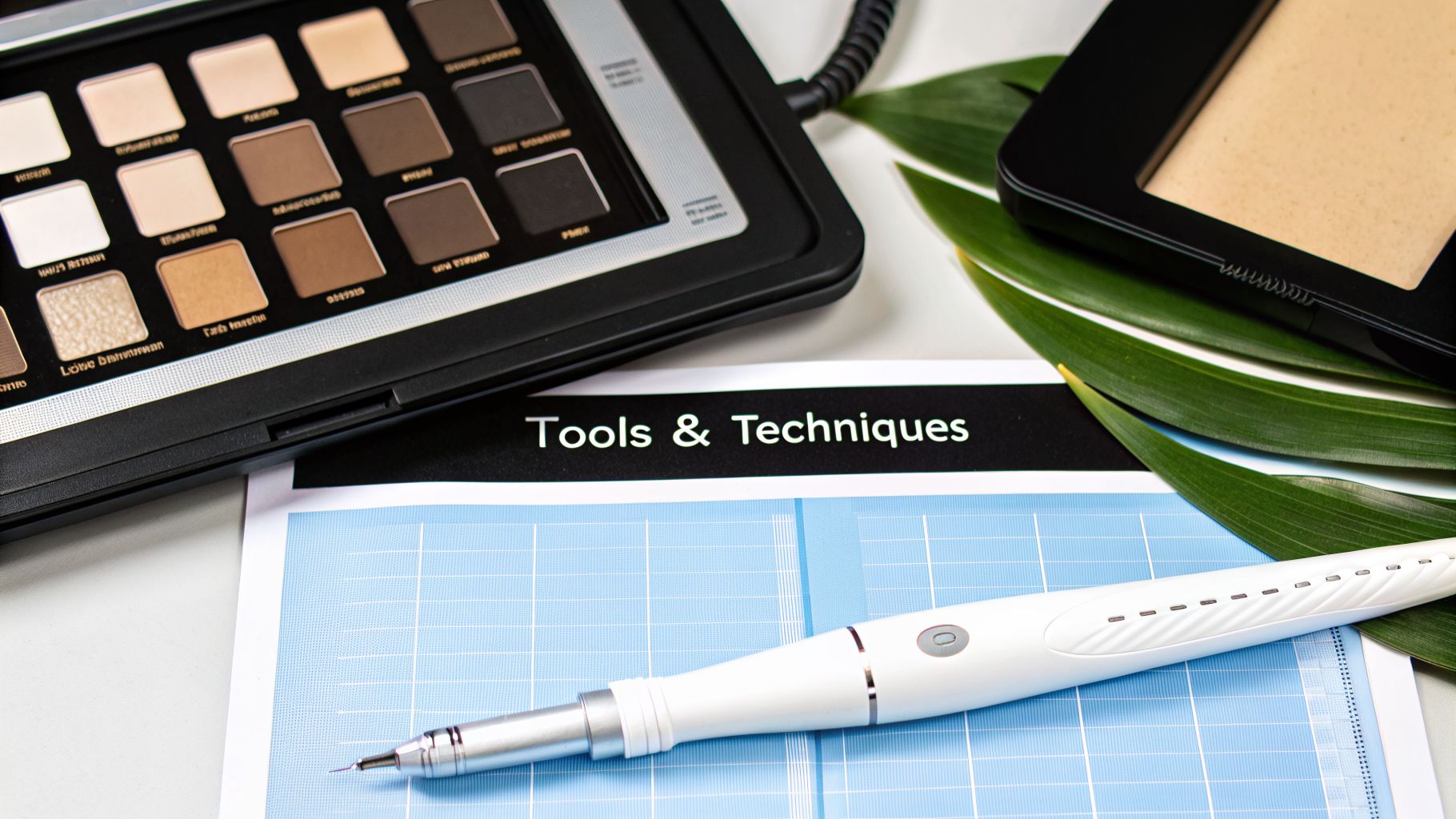
Before you can guide a client to their perfect brows, you need to speak the language. The real difference in the powder brows vs microblading debate comes down to the tools we use and how we deposit pigment. Each approach creates a completely different finish, and knowing this inside out is key to managing expectations and getting fantastic results.
Think of it this way: microblading is like drawing with a fine-tipped calligraphy pen, while powder brows are more like airbrushing. Both create beauty, but the feel and final look are worlds apart.
The Artistry Of Microblading
Microblading is a true hands-on craft. The artist uses a manual, pen-like tool that holds a sterile, single-use microblade. Now, this 'blade' isn't a scalpel; it's actually a tiny row of needles that act as a brush.
We dip the microblade into a custom-mixed pigment and then carefully etch fine, hair-like strokes into the top layers of the skin. Each stroke is deliberately placed to mimic the natural growth and flow of real brow hairs.
- Tool: A manual hand tool with a sterile microblade (a row of needles).
- Method: Creating crisp, individual incisions that look like hairs.
- Analogy: It’s like being a calligrapher for the face. Every single line is an intentional, artistic stroke meant to build a realistic brow from the ground up.
This technique is all about precision and a steady, confident hand. The goal is to make the strokes completely indistinguishable from the client's own hair, creating a beautifully textured and hyper-realistic look.
The Mechanics Of Powder Brows
Powder brows, on the other hand, embrace modern technology. This technique, also known as ombré brows, uses a digital cosmetic tattoo machine. While it might look like a traditional tattoo artist's gun, it's specially designed for cosmetic work with an ultra-fine needle.
Instead of etching lines, the machine deposits pigment as thousands of tiny dots, almost like pixels. The artist gently builds up layers of these dots to create a soft, shaded, and filled-in effect.
Key Differentiator: The machine application for powder brows is often considered less traumatic to the skin than the manual incisions of microblading. This stippling or pixelating motion creates a soft wash of colour rather than cutting fine lines, which can be much gentler, especially for clients with delicate or oily skin.
The result is a soft-focus finish that looks just like beautifully applied brow powder. It's perfect for creating that signature ombré look—lighter and softer at the front of the brow, gradually getting deeper and more defined towards the tail.
Interestingly, while the application is very different, the healing journey is quite similar. Both techniques follow a predictable path: brows appear dark and sharp initially, then enter a scabbing and flaking phase around days 5-10, before the true, softened colour emerges at the 4-6 week mark. You can read more about what to expect during healing from other cosmetic tattoo experts. Understanding these two distinct methods is the first step toward making a truly expert recommendation.
Choosing the right brow technique for a client isn't just about personal preference; it's about making an expert recommendation based on what will genuinely work best for them long-term. When we get into the nitty-gritty of powder brows vs microblading, the best choice often comes down to the client's skin, lifestyle, and desired final look.
As artists, our job is to steer clients towards the service that will heal beautifully, age gracefully, and meet their expectations. Let's break down the key differences I always discuss during a consultation: the aesthetic finish, how the techniques hold up on different skin types, their longevity, and what the client can expect to feel during the appointment.
Aesthetic Finish: Hyper-Realism vs. Soft Definition
The most obvious difference between the two is the finished look, and this is where a client's aesthetic goals come into play. Microblading is all about creating the illusion of real, individual hairs.
Microblading: We use a manual tool to create incredibly fine, crisp strokes that mimic natural brow hair. This is the perfect solution for someone wanting to fill in sparse areas or add density while keeping a completely natural, textured appearance. It's for the client who wants an enhancement so subtle that no one can tell it isn't their real hair.
Powder Brows: This technique creates a soft, pixelated shade, much like you'd get with a high-quality brow powder. The result is a more defined, "filled-in" brow that looks perfectly groomed 24/7. This is my go-to recommendation for clients who already fill their brows in daily and love that polished, makeup look.
Ultimately, the question I ask is: do you want brows that look naturally hairy and full, or do you prefer a soft, beautifully shaded shape that always looks 'done'?
Skin Type Performance: The Make-or-Break Factor
This is, without a doubt, the most important consideration. The success and lifespan of any semi-permanent brow procedure are directly linked to the client's skin.
For clients with oily, combination, or mature skin, I almost always recommend powder brows. The machine application deposits pigment in a way that heals and ages far more predictably on these skin types. In my experience, microblading strokes on oily skin often blur and fade unevenly, losing that crisp, hair-like definition and sometimes healing into a soft, blocky look.
On the other hand, clients with normal to dry skin are great candidates for either technique. Dry skin is the ideal canvas for microblading; it holds the fine incisions perfectly, allowing the strokes to heal with incredible sharpness and clarity. While powder brows also look fantastic on dry skin, it's this skin type that really lets the artistry of microblading shine.
To help you see the core differences at a glance, here’s a quick summary.
Quick Comparison: Powder Brows Vs. Microblading
This table breaks down the essential distinctions between the two most popular brow techniques.
| Feature | Microblading | Powder Brows |
|---|---|---|
| Best For | Creating fine, realistic hair strokes; filling in sparse areas. | A soft, "makeup" look; defining a full brow shape. |
| Ideal Skin Type | Normal to dry skin. | All skin types, especially oily, combination, and mature skin. |
| Technique | Manual blade creates small incisions that mimic hair. | Digital machine deposits tiny pixels of pigment. |
| Longevity | 1-2 years before a touch-up is needed. | 1-3 years before a colour boost is needed. |
| Pain/Sensation | A light scratching or scraping feeling. | A mild buzzing or vibrating sensation. |
Understanding these key points is crucial for guiding a client to the result they'll love for years to come.
Durability And Required Maintenance
Clients are making an investment, so how long it will last is a major question. While both procedures will need touch-ups, their lifespans can differ quite a bit, mostly because of skin type and the application method itself.
Powder Brows (1-3 Years):
Thanks to the shading technique, powder brows typically last longer. The layered pixels of pigment tend to fade more slowly and evenly, often looking great for up to three years before needing a colour boost. This makes it a lower-maintenance choice in the long run.
Microblading (1-2 Years):
Microblading generally has a shorter lifespan. Those beautiful, delicate strokes are more vulnerable to factors like sun exposure, skin cell turnover, and especially oil production. Clients, particularly those with oilier skin, should expect to come in for an annual touch-up to keep the strokes looking crisp.
This difference in durability is a vital point to discuss during a consultation, as it sets realistic expectations for the client's long-term commitment and budget.
The Client Experience: Sensation And Healing
Walking a client through what to expect during the procedure helps ease any nerves. While we use excellent topical anaesthetics to make both services very comfortable, the sensations are quite different.
I often describe microblading as feeling like a light, repetitive scratching across the skin. You can sometimes hear a quiet, crisp sound as the blade works.
Powder brows, on the other hand, feels more like a fast vibration or a buzzing, almost like an electric toothbrush held against the skin. The sound is a low, steady hum from the digital machine.
Generally, the powder brow technique is considered a bit less traumatic to the skin, as the needle simply taps the pigment in. This can sometimes lead to a slightly faster and easier healing process for some clients, though the initial healing timeline of 5-10 days for scabbing is similar for both. By clearly explaining these key areas—the final look, skin suitability, longevity, and the process itself—you can confidently guide every client to their perfect brow solution.
Matching the Client to the Correct Procedure
Knowing the technical difference between powder brows and microblading is one thing. Being able to look at a client and confidently recommend the right path for them? That’s what separates a good artist from a great one. This is less about reciting facts and more about becoming a brow detective during the consultation.
Think of the consultation as your diagnostic phase. You're not just looking at their brows; you're assessing their skin—the canvas—along with their lifestyle and what they hope to see in the mirror. Nailing this match is the single most important step for a beautiful result and a client who trusts you for years to come.
Profiling the Perfect Powder Brow Client
The ideal candidate for powder brows usually walks in with a specific look in mind. They’re after that soft yet defined, "filled-in" finish, almost like they’ve just perfected their brows with a high-end powder.
You’ve likely found a perfect match for powder brows if your client:
- Has oily or combination skin. For these clients, microblading strokes can blur and fade disappointingly fast. The stippling effect of a powder brow holds up beautifully.
- Has mature skin. As skin ages, it becomes thinner and more delicate. Machine shading is often a much gentler and more effective option than creating manual strokes.
- Wants to correct old, faded work. If they have residual pigment from a past procedure, powder brows are fantastic for covering it up and creating a fresh, new shape.
- Has very sparse or non-existent brows. When you need to build a complete brow from scratch, shading gives a much more complete and realistic result than just adding hair strokes.
This simple decision tree really zeroes in on skin type as the first, and most crucial, deciding factor.
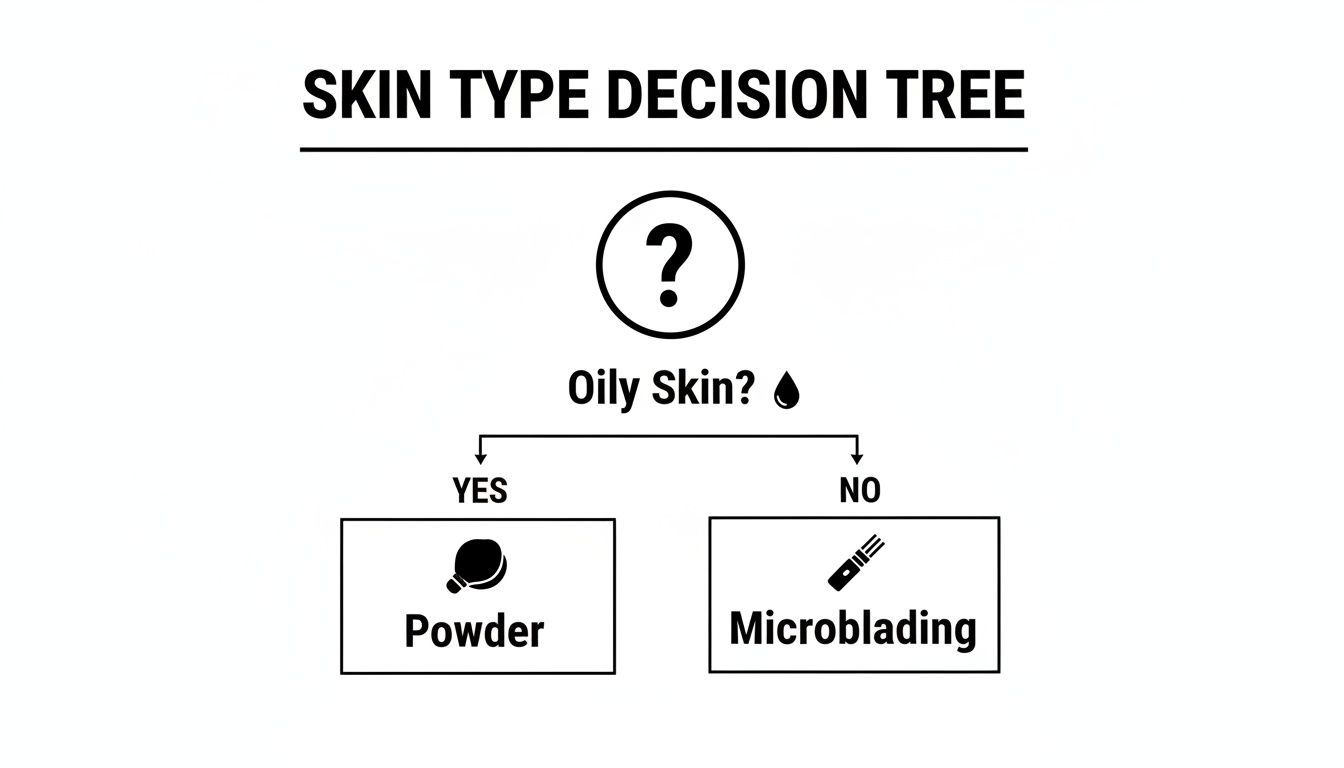
As you can see, for anyone with oily skin, powder brows are almost always the recommended route. It’s all about ensuring the work lasts and looks great.
Identifying the Ideal Microblading Candidate
On the flip side, the perfect microblading client has a completely different profile. This technique is all about achieving the most natural look possible by creating tiny, individual hair strokes where they’re missing.
Your ideal microblading client is someone who:
- Has normal to dry skin. This skin type is the dream canvas for microblading because it allows those fine lines to heal into crisp, distinct hair strokes.
- Already has a good amount of natural brow hair but just wants to fill in a few sparse areas or add a bit of subtle fullness.
- Is aiming for that ultra-natural, "I woke up like this" vibe. They aren't looking for a bold, makeup-style brow at all.
- Is aware and okay with the fact that they'll likely need more frequent touch-ups (usually annually) to keep the strokes looking sharp.
Key Insight: Microblading’s success is almost entirely dependent on skin that can hold a crisp line. When you have a client with normal-to-dry skin, the healed results can be breathtakingly realistic. But promising that same outcome to someone with oily skin is just setting them—and you—up for disappointment.
The Best of Both Worlds: The Combination Brow
So, what about the client who wants it all? Many people love the fluffy, natural look of hair strokes at the front of the brow but crave more definition and shape through the arch and tail. For them, the combination brow is the perfect solution.
This hybrid technique truly offers the best of both worlds. We start with microbladed hair strokes at the head of the brow for that soft, natural entry, then blend it seamlessly into machine shading through the body and tail. This gives the brow structure, definition, and longevity where it’s needed most.
A combination brow is an excellent choice for:
- Clients with normal to slightly oily skin who want a balance of natural texture and polished definition.
- Anyone with very sparse brow tails that need more coverage than strokes alone can offer.
- Those looking for a "perfectly imperfect" brow—one that looks natural but still has great structure.
Guiding a client's choice is a huge responsibility. A great way to help them visualise the outcome is to show them real-world examples. Directing them to a professional portfolio like browsbyainsley's gallery of work can be a game-changer. When they can see healed examples of each technique on different people, your expert recommendation clicks into place.
Pricing Strategy and Market Demographics
As an artist, turning your skill into a successful business means getting real about the numbers. When you're setting prices for powder brows and microblading, you need to look at what's happening in your local market. In places like Switzerland, for instance, it's common to see both services priced almost identically.
That might seem strange at first. After all, microblading can sometimes be a faster appointment, whereas powder brows last longer. But your price isn't just about how long the client is in your chair. It’s a reflection of your expertise, the premium pigments and tools you invest in, and the perceived value of the look you create. Many top artists actually price them the same to keep their service menu simple, allowing the consultation to be about what’s best for the client’s face, not their wallet.
Targeting Your Ideal Clientele
Beyond the price tag, you need to know who you're talking to. Your marketing becomes so much more effective when you understand the different groups of people drawn to each technique. This insight should shape everything from the portfolio photos you showcase to the stories you tell on social media.
We're seeing some clear demographic trends in the permanent makeup industry. While both treatments appeal across the board, microblading definitely has a younger fan base looking for those subtle, hair-by-hair enhancements.
Research has found that microblading is especially popular with younger adults. 25.9% of those aged 25-34 have had the treatment, which is quite a jump from the 17.8% of those aged 18-24 and 12.1% in the 35+ age group. You can read more about these consumer habits in the full study on cosmetic procedure trends.
This data points to a massive market opportunity. The 25-34 demographic, who live and breathe on platforms like Instagram, are fuelling the demand for hyper-realistic brows. On the other hand, clients asking for powder brows tend to be a bit older, or they're people with oily skin or old cosmetic tattoos. For them, the priority is a defined, makeup-like finish that lasts.
When you align your marketing with these profiles, you start attracting the right people for the right services. A campaign for microblading could focus on a fresh, "I woke up like this" look. For powder brows, you'd want to highlight the sheer convenience of a perfectly polished brow, day in and day out. This isn't just about selling a procedure; it's about offering a solution that truly connects with what a specific client wants, which ultimately leads to happier clients and a much stronger business.
Aftercare Protocols For Lasting Results
The moment your client leaves the chair isn't the end of the process; it's the beginning of the healing journey. The aftercare you prescribe is just as crucial as the work itself. Getting it right ensures your artistry heals perfectly, lasts longer, and builds your reputation as a professional who truly cares about the final outcome.
For both powder brows and microblading, the advice is quite similar, especially right at the start when the skin is most delicate and the pigment is settling. I find it helps to break down aftercare instructions into two distinct stages: the immediate healing phase and long-term care.
The Critical First 10-14 Days
This is the make-or-break period. What a client does (or doesn’t do) over these first two weeks directly shapes how well the pigment holds and how crisp the final result will be. The main objective here is simple: keep the brow area clean, dry, and completely undisturbed.
Here are the non-negotiables I give every client for this initial phase:
- Stay Dry: Outside of the gentle cleansing routine you provide, the brows must stay dry. That means no splashing water on the face, taking extra care in the shower, and definitely no swimming pools, hot tubs, or saunas.
- No Sweating: Any workout that causes you to break a sweat is off-limits. The salt in sweat is notorious for pushing pigment out of the skin, leading to patchy results.
- Avoid the Sun: Direct sunlight and tanning beds are the enemy of fresh pigment. UV rays can fade the colour almost immediately and even alter its tone.
- Hands Off (and Makeup Off): The brow area must be a "no-product zone." No makeup, moisturisers, serums, or anything else besides the recommended aftercare ointment. This prevents irritation and infection.
It's completely normal for the area to scab and flake a little as it heals. The most important rule you can give your clients is to never, ever pick or scratch at the scabs. Pulling them off prematurely will rip the pigment right out of the skin and can even cause scarring. Let them fall off naturally.
Long-Term Maintenance For Pigment Longevity
After about 4-6 weeks, the brows are typically fully healed, and the focus shifts to preservation. This is how clients protect their investment. Given that both the average cost of powder brows and microblading represent a significant commitment, a little long-term care goes a long way.
A couple of simple daily habits can dramatically slow down the fading process and keep the brows looking fresh.
- Daily Sunscreen is a Must: UV exposure is the number one cause of premature fading. I tell my clients to get into the habit of applying a broad-spectrum SPF of 30 or higher over their brows every single day, rain or shine.
- Beware of Harsh Skincare: Many active ingredients in skincare can degrade cosmetic tattoos. Instruct clients to avoid applying products with Retinoids, Glycolic Acid, and other AHAs/BHAs directly on their brows, as these chemical exfoliants will fade the pigment much faster.
Walking your clients through a clear aftercare plan like this also opens the door to retailing high-quality aftercare products. It ensures they're using formulas you trust while adding another revenue stream to your business.
Answering Common Questions From Clients and Artists
Even after a detailed consultation, there are always a few lingering questions on the minds of both clients and new technicians. Let's clear up some of the most common ones that pop up when comparing powder brows and microblading.
Can Powder Brows Correct Old Faded Microblading?
Yes, they can, and this is actually one of the biggest advantages of the powder brow technique. It's an absolutely brilliant solution for covering up old microblading that has faded, blurred, or shifted in colour.
The machine shading process is perfect for neutralising any residual tones—like those pesky red, grey, or blue hues left behind—and building a completely new, polished shape. It essentially gives the brows a fresh start.
Which Procedure Is More Damaging To The Skin?
When done correctly by a well-trained artist, neither technique should cause long-term skin damage. That said, many experts in the field agree that powder brows are generally gentler on the skin.
This comes down to the application method. Powder brows use a tiny, single needle that lightly taps or "pixels" pigment into the skin, causing minimal irritation. Microblading, on the other hand, involves creating small incisions with a manual blade.
The gentler nature of machine work really shines during touch-ups. Going over the same microbladed strokes repeatedly can, over many years, increase the risk of building scar tissue. With powder brows, you can layer new pigment during colour boosts without compromising the skin's integrity.
Ultimately, the artist's hand is more important than the tool. Skill, experience, and strict hygiene are what truly protect your skin.
How Do You Choose A Reputable Artist?
Finding the right artist is, without a doubt, the single most important decision you'll make. It's the difference between brows you love and a costly, stressful correction process. Be meticulous and vet them on these three non-negotiables:
- Check Their Certifications: They must have up-to-date, legitimate certifications for cosmetic tattooing and, crucially, bloodborne pathogen control.
- Insist on Seeing HEALED Work: Anyone can make brows look good right after the procedure. The true mark of skill is how they look once healed. A great artist will be proud to show you a portfolio packed with healed results.
- Assess Their Hygiene Standards: The studio must be pristine. Look for evidence of single-use, sterilised needles and a clean, organised workspace. If anything feels off, walk away.
Proper aftercare is just as important as choosing the right artist. For a detailed breakdown of how to care for your new brows, have a look at this comprehensive guide on Microblading Aftercare.
At beautysecrets.agency, we partner with premium retailers and spas to provide discerning Swiss consumers with ethically sourced, high-performance beauty lines. Explore our curated collections and discover how our natural formulations can elevate your offerings at https://beautysecrets.agency.