Natural make up is less about a specific product and more about a mindset. It’s about choosing products made with plant-derived, ethically-sourced, and non-toxic ingredients to subtly enhance your features. The goal is a healthy, radiant look that seems effortless, all while feeding your skin with formulas built on transparency and sustainability.
What Exactly Is Natural Make Up Today
Let's cut through the noise and get to the heart of what 'natural make up' really means for today's Swiss consumer. This goes far beyond just slapping a "plant-based" label on a product; it’s a whole philosophy that redefines beauty from the inside out.
Think of it like the difference between a farm-to-table meal and a highly processed one. The first is all about transparency, quality sourcing, and nourishing ingredients. The other? Not so much. The core idea is simple: what you put on your body is just as important as what you put in it. Natural make up is all about formulas that work with your skin, not against it. Instead of relying on synthetic fillers, artificial fragrances, and harsh chemicals, these products tap into the power of nature.
The Core Principles of Natural Beauty
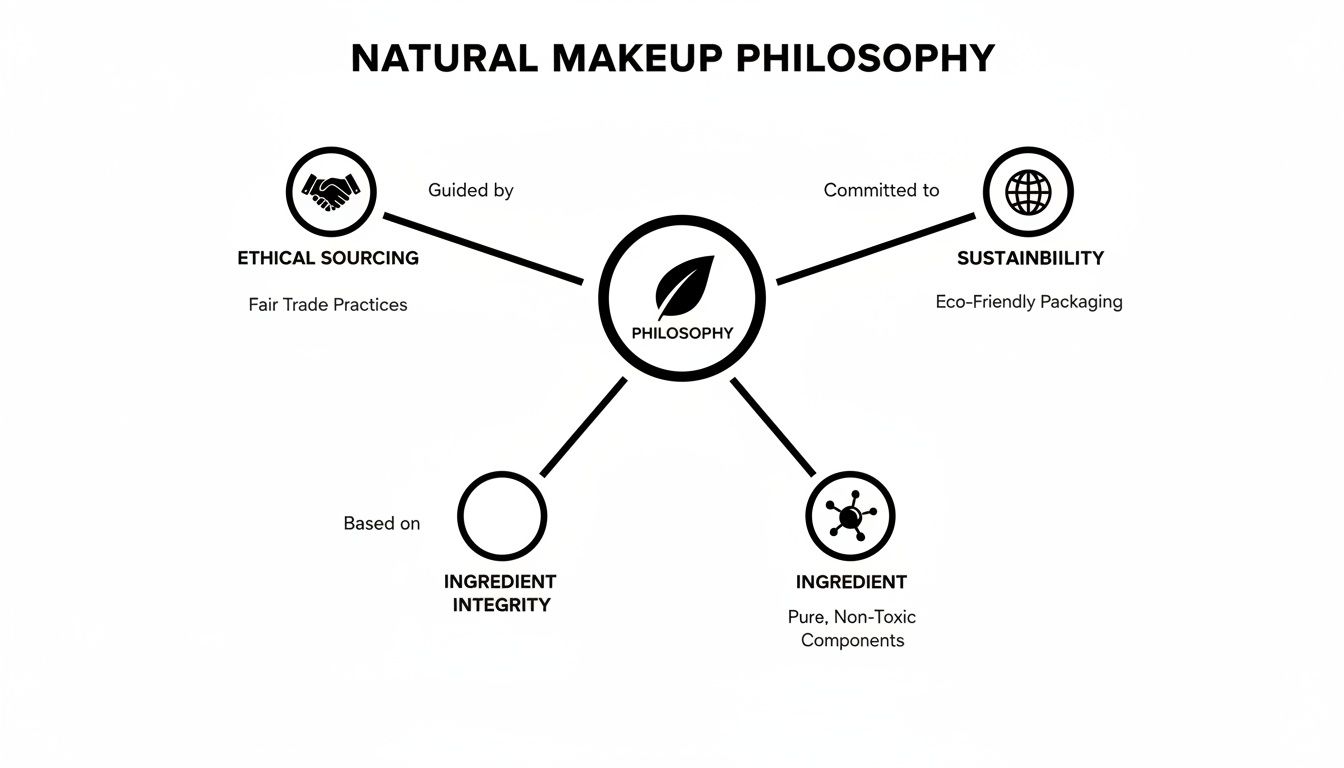
This modern take on cosmetics stands on three key pillars that really connect with discerning Swiss shoppers. Grasping these is crucial for any retailer looking to stay ahead of the curve.
- Ingredient Integrity: This is the bedrock. It’s about using high-quality, recognisable ingredients you might actually find in nature—things like botanical extracts, cold-pressed oils, and pure minerals. The aim is to create products that are not only effective but also genuinely gentle and good for the skin.
- Ethical Sourcing: A truly natural brand looks at the entire journey of its ingredients. They make a point of using raw materials that are harvested sustainably and sourced from partners who guarantee fair wages and safe working conditions. That commitment follows the ingredient from the farm right to the finished product.
- Sustainability: From recyclable packaging to biodegradable formulas, sustainability is part of the DNA of natural beauty. Brands in this space are constantly looking for ways to shrink their environmental footprint, whether through responsible manufacturing or smarter material choices.
The real shift with natural make up is from concealment to enhancement. It uses pure, potent botanicals and minerals to celebrate your skin's own beauty, not just cover it up with synthetics. This approach actually improves your skin's health over time.
Natural Formulations Versus Their Synthetic Counterparts
To really get it, it helps to put natural formulas side-by-side with conventional ones. A standard foundation might rely on silicones for that smooth-glide feeling, synthetic dyes for its colour, and parabens to keep it from spoiling. These get the job done, but they can also irritate sensitive skin or clog pores.
A natural foundation, on the other hand, might get that same beautiful finish by using jojoba oil for moisture, iron oxides for pigment, and vitamin E as a natural preservative. You end up with a product that doesn’t just provide coverage but also offers real skincare benefits.
For retailers, this difference is a huge selling point. You’re not just selling cosmetics; you’re offering skin-loving treatments that fit perfectly with a healthier, more conscious lifestyle. This focus on ingredients you can trust is exactly why the natural make up movement is gathering so much steam across Switzerland and beyond.
Understanding the Labels: Your Guide to Clean Beauty Certifications
For any Swiss retailer, those little logos on a product’s packaging are far more than just decoration. They're a direct line of communication with your customer, a stamp of approval that guarantees quality and authenticity. The world of clean beauty standards can seem like a maze at first, but once you know what to look for, you can confidently build a product line that earns genuine customer trust.
Think of certifications as the beauty world's equivalent of an organic seal on fresh produce. They instantly tell a story of transparency—from how an ingredient was grown and sourced to how it was processed and formulated. When a customer spots a familiar logo, they don't have to simply trust the brand's marketing claims. A respected, independent organisation has already done the hard work and verified everything for them. This makes their decision easier and boosts your credibility as a trusted retailer.
Key Natural and Organic Certification Standards
Several major organisations set the benchmark for what truly qualifies as "natural" or "organic" in cosmetics. Getting to know them is the first step in curating an authentic clean beauty collection.
This table breaks down the main certifications you'll encounter, highlighting what they stand for and what they guarantee for your customers.
| Certification | Core Focus | Key Requirements |
|---|---|---|
| ECOCERT | Environmentally friendly production and processing of natural and organic ingredients. | A minimum percentage of ingredients must be from natural origin and organic farming. Prohibits most synthetic ingredients and GMOs. |
| Cosmos | A unified European standard for organic and natural cosmetics. | Offers two levels: Cosmos Organic and Cosmos Natural. Both have strict rules on ingredient origin, processing, and biodegradability. |
| NaTrue | Promoting and protecting authentic natural and organic cosmetics with a high degree of transparency. | Features three levels of certification (Natural, Natural with Organic Portion, Organic) with precise, publicly available criteria for each. |
Each of these seals confirms a brand's dedication to a philosophy that prioritises health and sustainability over synthetic shortcuts.
This philosophy is built on three core pillars: ingredient integrity, ethical sourcing, and a deep commitment to sustainability. They all work together to define what natural beauty is all about.
This growing demand for certified products isn't just a niche trend; it's a powerful market shift. In Switzerland, sales of natural and organic cosmetics have been growing by an impressive 10-20% each year, dwarfing the 5% growth seen in the conventional cosmetics market. This aligns with the wider clean beauty movement, where top-tier formulations contain up to 50% active natural ingredients and meet standards like Cosmos or NaTrue, guaranteeing at least 80-85% naturalness. You can explore more about the Swiss organic cosmetics market and its rapid growth to see the opportunity.
Don't Forget Cruelty-Free Labels
Beyond what’s in the bottle, how it was made is a deal-breaker for a huge number of shoppers. Cruelty-free certifications are absolutely essential for any brand hoping to connect with this conscientious audience. They provide clear, verified proof that no animal testing happened at any point.
A cruelty-free certification sends a powerful message. It tells your customers that a brand's ethics go beyond just ingredients, resonating with a deeper value system that champions compassion.
Two of the most trusted cruelty-free labels to look for are:
- PETA's Beauty Without Bunnies: A globally recognised programme that certifies brands as either "vegan" or "animal test-free." It confirms a commitment to avoiding both animal testing and animal-derived ingredients.
- Cruelty Free International (Leaping Bunny Programme): Often seen as the gold standard, this certification requires brands to implement a strict cut-off date for animal testing and agree to ongoing independent audits to ensure compliance.
By stocking products that carry these trusted seals, you make shopping simpler and more meaningful for your customers. You build a reputation as a retailer who stands for quality, transparency, and ethics—a powerful combination in the premium Swiss market. In essence, these logos become your silent salespeople, communicating trust and integrity in a single glance.
Exploring High-Performance Natural Ingredients
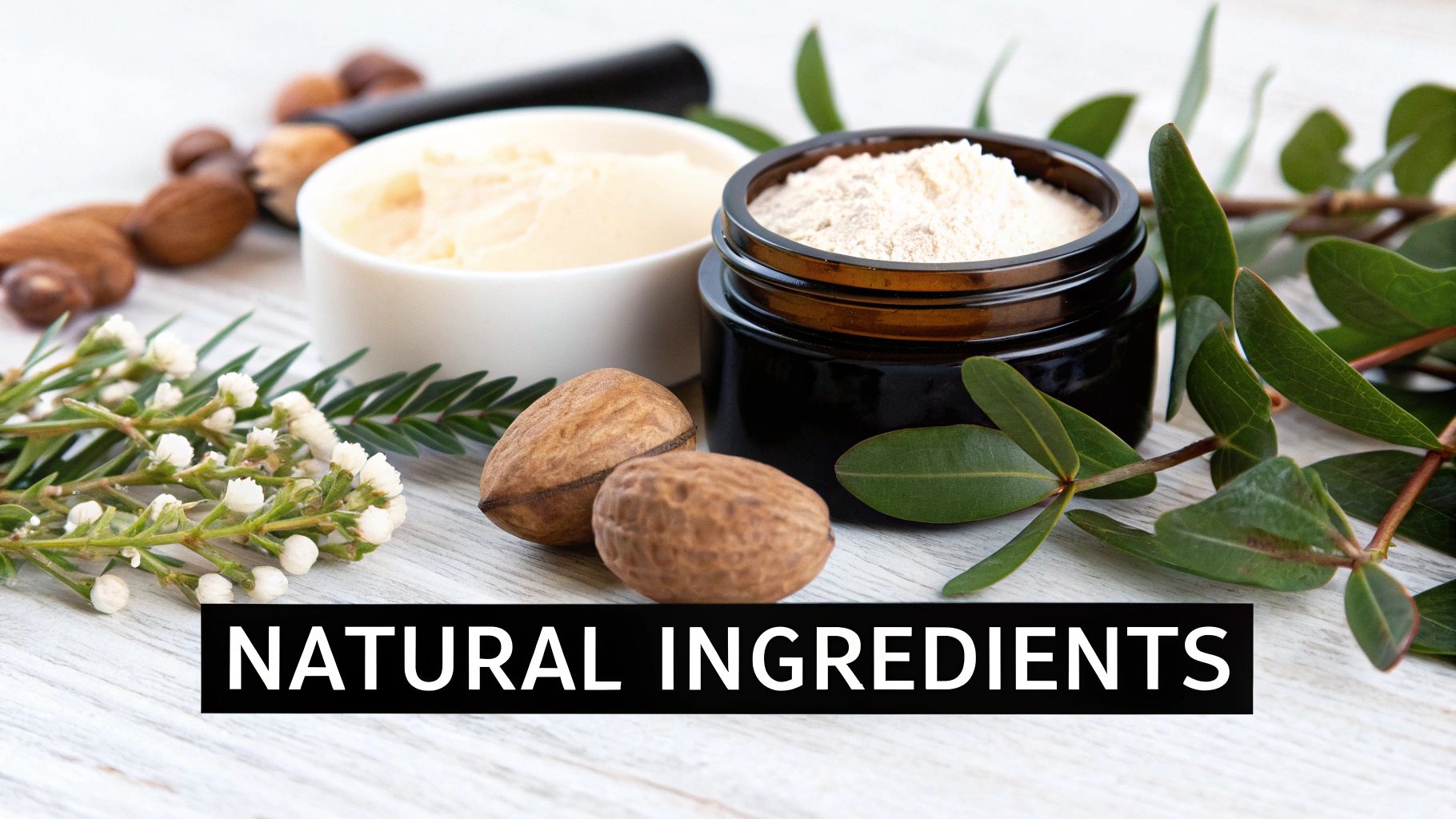
To really get what makes natural make up so effective, we need to look past the packaging and get right into the ingredients list. These aren’t just gentle substitutes for synthetic chemicals; they are potent, skin-loving powerhouses that deliver results you can see and feel. Knowing what they are and what they do is key to showing customers that choosing natural isn't a compromise—it's a genuine upgrade for their skin.
Think of it like this: a great chef wouldn't build a Michelin-starred dish with mediocre produce. In the same way, a natural formulator carefully selects specific botanicals, oils, and minerals for what they bring to the table. The final product does more than just cover up—it actively nourishes, protects, and beautifies.
Let’s dive into some of the star players that make these cosmetics so special.
Foundational Butters and Oils
At the heart of many natural formulas, you'll find rich butters and oils. They provide deep hydration and a silky texture, stepping in for the silicones often used in conventional make up. This creates a flawless canvas for colour while feeding the skin with essential fatty acids and vitamins.
- Shea Butter: Harvested from the nut of the African shea tree, this butter is an absolute master of moisture. It locks in hydration, calms irritation, and forms a protective barrier without blocking pores. You'll often find it in foundations and lip products for this very reason.
- Jojoba Oil: This one is a clever mimic. Its structure is incredibly similar to our skin's natural sebum, which allows it to bring a sense of balance. It helps control oiliness where needed and moisturises dry patches, providing a smooth, non-greasy finish for all skin types.
- Fresh-Pressed Organic Oils: Think of brands like Fushi, who specialise in oils like rosehip or argan. They are minimally processed to keep all their goodness intact. These oils are packed with antioxidants that help repair the skin, essentially building anti-ageing benefits right into your make up.
The secret to a flawless natural look lies in its foundation—both literally and figuratively. When make up is built on a base of nourishing oils and butters, it melts into the skin, becoming one with it rather than sitting on top like a mask.
Potent Botanical and Marine Extracts
Beyond the base ingredients, powerful extracts are what take a product from simply cosmetic to advanced skincare. These are the actives that provide targeted benefits, from fighting off environmental damage to soothing inflammation.
Some of the most incredible extracts come from plants that have learned to survive in tough conditions. Take alpine botanicals, for example. Edelweiss, which thrives in the harsh Swiss Alps, has developed powerful antioxidant properties to protect itself from extreme UV radiation. When you put that in a cosmetic, it offers the very same robust protection to your skin.
It's a similar story with ingredients from the sea. Brands like Les Thermes Marins de Saint-Malo harness the power of marine extracts, which are loaded with minerals and trace elements. These are known to hydrate, firm, and revitalise the skin, giving their formulas a spa-quality feel.
Gentle Mineral Pigments
So, where do all the beautiful, rich colours in natural make up come from, if not synthetic dyes? The answer is literally from the earth. Finely milled minerals provide vibrant, long-lasting pigment that’s gentle enough for even the most sensitive skin.
- Iron Oxides: These naturally occurring minerals are the artists behind a whole spectrum of earthy tones—from deep reds and browns to warm yellows. They are incredibly stable, non-toxic, and offer excellent, buildable coverage.
- Mica: If you see a product with a subtle shimmer or glow, that’s probably mica. This mineral reflects light, which helps blur the appearance of fine lines and gives the skin a radiant, soft-focus finish.
- Zinc Oxide: This is a true multi-tasker. Not only does zinc oxide provide a clean white pigment for creating lighter shades, but it also offers natural sun protection and has wonderful soothing, anti-inflammatory properties.
When you understand these powerhouse ingredients, you can guide customers with real confidence, helping them choose products that deliver both the look they want and genuine benefits for their skin.
Why Going Natural Makes Good Business Sense
Adopting a "natural makeup" philosophy isn't just about following a trend. It's a smart, strategic move that can fundamentally strengthen your retail business. For your customers, it means healthier skin and buying products that genuinely align with their values. For you, it’s a direct path to standing out from the crowd, attracting a deeply loyal customer base, and securing your business for the future.
This shift goes beyond simply adding a few new products to your shelves. It's about carving out a reputation as a trusted source for quality, transparency, and wellness. In a sophisticated market like Switzerland, where consumers are knowledgeable and expect the best, that kind of reputation is priceless. They aren’t just buying a lipstick; they're investing in a brand and a retailer that mirrors their own commitment to integrity.
Tapping into a Growing Market
The Swiss beauty scene is changing, and it's being driven by a powerful consumer demand for cleaner, more conscious products. This isn't a fringe movement—it's a major economic shift that's redefining the entire industry. By stocking certified natural brands, you can tap directly into this expanding market.
The numbers really paint the picture. The Swiss cosmetics sector is on track to hit CHF 2.5 billion by 2025, and its trajectory is being shaped by the incredible rise of natural and organic products. While the overall market is growing, the nature-derived segment is leaping ahead. Forecasts show a 9.21% compound annual growth rate from 2026-2031, fueled by shoppers actively seeking out sustainably sourced and cruelty-free beauty. You can dig deeper into the growth of the Swiss cosmetics market on marketreportanalytics.com.
By curating a selection of authentic natural brands, you're not just keeping up with demand—you're placing your business at the very forefront of where the market is heading.
This simple act transforms your store from just another place to buy cosmetics into a destination for people on a mission for high-performance, ethical beauty.
Building Trust Through Transparency
In an industry that’s often been murky about its ingredients and big on promises, transparency has become the new benchmark for trust. Certified natural makeup comes with a clear, verifiable promise of quality that many conventional products simply can't offer.
Here’s how that translates into a stronger business:
- Boosts Your Reputation: When you carry brands with well-respected certifications like ECOCERT or NaTrue, their credibility becomes your credibility. Customers see you’ve done the homework for them, which positions your store as an authority they can rely on.
- Creates Fierce Loyalty: Clean beauty shoppers are among the most loyal customers out there. Once they find a retailer that truly gets their needs, they stick around. They become repeat buyers and, even better, vocal supporters of your business.
- Makes Selling Easier: Clear ingredient lists and strong brand ethics give your staff confidence. Instead of getting tangled up in complex chemical names, they can talk about the real benefits of plant-based ingredients and the values behind the brands you stock.
At the end of the day, embracing a natural makeup philosophy is a strategic investment in your brand. It elevates your image, connects you with a valuable and growing customer segment, and gives you a compelling story to tell about quality and integrity. It’s not just good for the planet—it’s exceptionally good for your bottom line.
Mastering the Art of Natural Make Up Application
Getting that flawless, radiant look with natural make up isn't about complicated techniques or piling on product. It's really about letting the goodness of the ingredients shine through with an application that enhances your client's skin, rather than masking it. The secret is learning how to work with these unique, skin-loving textures to create a look that feels just as incredible as it looks.
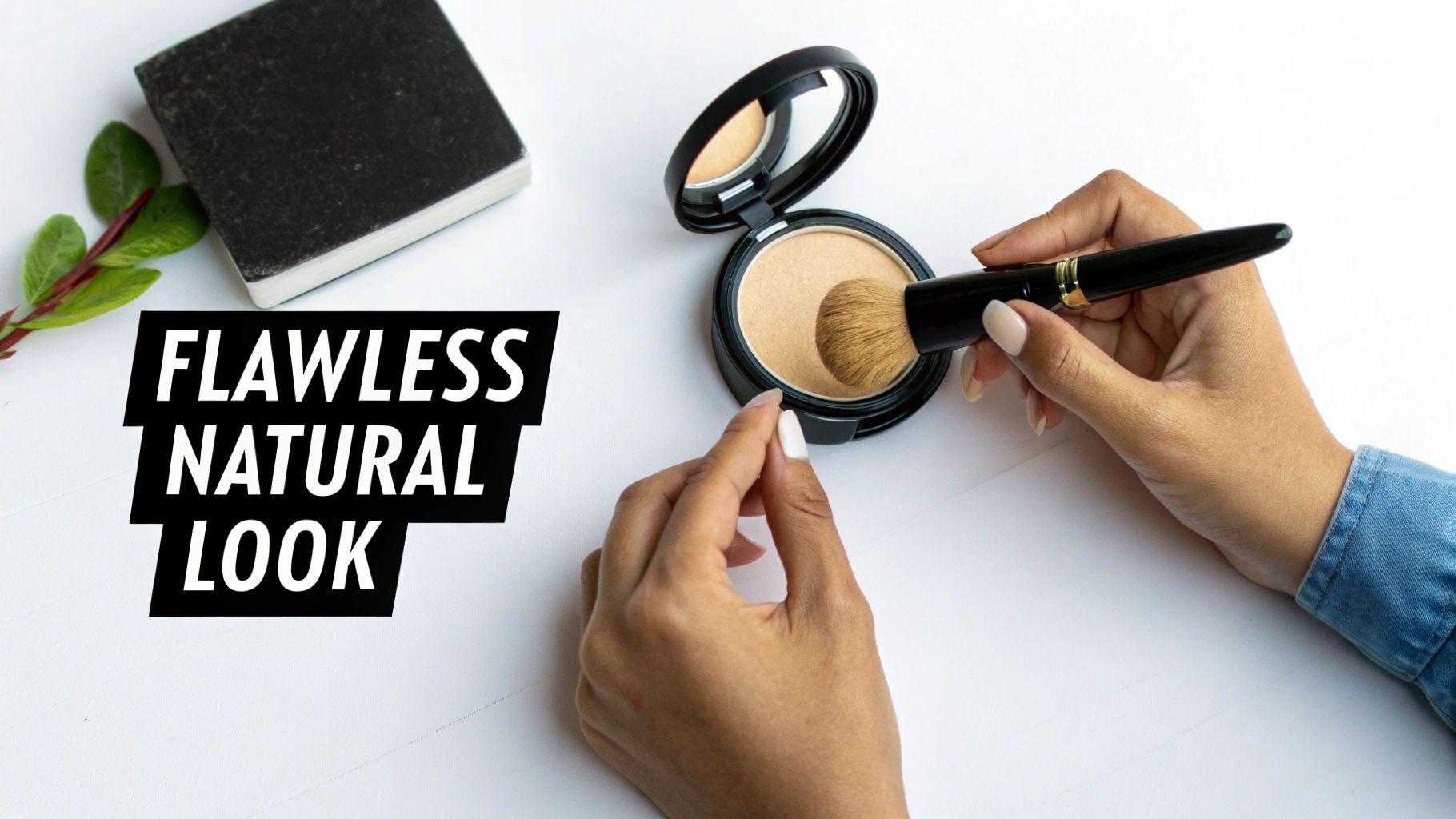
Believe it or not, the journey to a perfect natural finish starts way before a brush even touches the skin. It all begins with a hydrated, happy canvas. This first step is absolutely non-negotiable because natural cosmetics truly come alive on skin that’s well-moisturised and balanced.
Preparing the Perfect Canvas
Think of prepping the skin like priming a wall before you paint. A smooth, hydrated surface ensures that whatever you put on top glides on evenly and actually lasts. With natural make up, this means focusing on moisture above all else. Proper hydration stops products from looking patchy or sinking into fine lines.
- Start with Hydration: Always begin with a clean face. Follow up with a hydrating serum or a moisturiser tailored to the client’s skin type. A great option like Weleda Skin Food Light works wonders for normal to dry skin, creating a beautifully nourished base.
- Prime for Success: A good natural primer can blur the appearance of pores and create a seamless canvas for foundation. This helps the make up grip beautifully and look fresh all day long.
Getting this initial stage right is crucial. It helps the make up melt into the skin and become one with it, rather than just sitting on top.
Applying Foundation and Concealer
Remember, the goal of a natural look is to even out skin tone, not to create a mask. Natural foundations are often rich in oils and minerals, which means they behave a little differently from their synthetic cousins. The mantra here is simple: less is more. You can always build up, but it’s much trickier to take product away.
When working with natural formulas, your fingers are often your best tools. The warmth from your fingertips helps melt buttery textures, like a multipurpose cream from Egyptian Magic, allowing them to blend seamlessly into the skin for a truly undetectable finish.
To build coverage without overdoing it, follow these steps:
- Start Small: Begin with just a tiny amount of product. Dot the foundation onto the centre of the face—forehead, nose, and chin—and blend it outwards.
- Blend, Don't Rub: Use a damp sponge or a dense brush to gently press and stipple the product into the skin. This technique builds coverage beautifully without leaving streaks.
- Conceal with Precision: For spots that need a little extra help, like under the eyes or around the nose, use a small brush to apply concealer. Then, gently pat it in with your ring finger to melt the edges.
This method results in a complexion that looks polished yet completely authentic.
Embracing Cream and Balm Textures
One of the best things about natural make up is the widespread use of cream-based products for colour. Cream blushers, bronzers, and highlighters are fantastic because their hydrating formulas are a dream for drier or mature skin types. They melt into the skin effortlessly, dodging that cakey look that powders can sometimes cause.
For instance, a cream blush should be applied to the apples of the cheeks and blended up towards the temples for a healthy, natural-looking flush. Similarly, you can tap a balm-like highlighter onto the high points of the face—cheekbones, brow bone, and the bridge of the nose—to create a subtle glow that looks like it’s coming from within.
These products bring dimension and life back to the face while keeping that fresh, dewy finish that defines natural beauty. Mastering this skill will empower your team to give consultations that lead to happier customers and keep them coming back.
Showcasing Natural Make Up in Your Retail Space
Getting natural make up to fly off the shelves takes more than just good lighting and a tidy display. It's about creating a destination for your customers—a place where they can explore, learn, and feel confident in their choices.
Think about carving out a dedicated 'Clean Beauty' corner in your store. This simple move tells shoppers you're serious about natural products and that you’ve done the homework for them. It creates a boutique-like feel right inside your business.
Use natural materials like wood or slate to style this section. The goal is to create an atmosphere that mirrors the purity and authenticity of the cosmetics themselves. This makes the whole shopping experience feel right from the moment a customer steps into that space. It’s where you can really tell the story behind each brand, guiding shoppers from curiosity to purchase.
Educate and Inspire with Strategic Signage
In the world of natural beauty, your signs are your silent experts. They need to do more than just show a price; they have to build trust and answer questions before they're even asked. After all, certifications and ingredient stories are a huge part of what makes these products special.
Effective signage can be a game-changer. Use it to point out the details that truly matter:
- Certification Logos: Placing well-known seals like ECOCERT, Cosmos, or the Leaping Bunny right on the shelf gives instant credibility. It’s a visual shortcut to quality and ethical sourcing.
- Ingredient Spotlights: Small, elegant signs can bring a key ingredient to life. Imagine something like, "Powered by Alpine Edelweiss for potent antioxidant protection." It’s intriguing and informative.
- Brand Stories: A short, punchy card can introduce a brand's philosophy. For example, telling customers that Fushi is built on "fresh-pressed organic oils blended in London" creates an immediate, personal connection.
This isn’t just about selling; it’s about empowering your customers to understand what they’re buying and feel great about it.
Empower Your Team to Become Advocates
Ultimately, your staff are the bridge between your products and your customers. A well-informed team member can turn a quick question into a loyal customer for life. The key is to train them on the why, not just the what.
The best way to sell natural make up isn't really "selling" at all—it's sharing. When your staff can genuinely share the heritage behind a brand like Les Thermes Marins de Saint-Malo, customers connect with its story and effectiveness on a much deeper level.
Make sure your team is equipped to talk confidently about what sets these products apart. They should understand the ingredient sourcing, the unique formulations, and the strict Swiss regulations your products meet. This expertise turns your store into a trusted hub for genuine advice, encouraging people to come back again and again.
Your Questions About Natural Makeup, Answered
Stepping into the world of natural makeup can feel a bit like learning a new language. Both you and your customers will likely have questions, especially when comparing it to the conventional cosmetics you've known for years. That's perfectly normal. Let's tackle some of the most common queries to help build confidence and clarity.
A big one is performance. Can natural makeup really stand up to its synthetic counterparts? The answer today is a definite yes. Forget the chalky, weak formulas of the past. Modern natural makeup is packed with high-performance botanicals and finely-milled minerals that deliver rich pigments, long-lasting wear, and luxurious textures.
Is Natural Makeup Better for Sensitive Skin?
For anyone with reactive or easily irritated skin, natural makeup can be a total game-changer. Think about what usually causes flare-ups: artificial fragrances, harsh preservatives, synthetic dyes. Natural formulations purposefully leave these common troublemakers out.
Instead, they lean on gentle, skin-loving ingredients like calming jojoba oil or pure mineral pigments. By focusing on what's not in the tube, these products are far less likely to trigger redness, itchiness, or breakouts. It's an easy choice for keeping sensitive skin happy and calm.
How Long Does Natural Makeup Last?
Shelf life is another hot topic. It's fair to ask how these products stay fresh without heavy-duty synthetic preservatives like parabens. The answer lies in smart, nature-derived preservation systems.
Natural brands have gotten very good at this, using a multi-pronged approach:
- Antioxidants like Vitamin E (tocopherol) and rosemary extract do a brilliant job of stopping oils from going rancid.
- Essential Oils aren't just for scent; many, like tea tree and lavender, have natural antimicrobial powers.
- Smart Packaging is key. Airless pumps are a popular choice because they keep oxygen and bacteria away from the product inside.
Thanks to these clever techniques, most unopened natural products are good for two to three years. Once opened, you'll want to use them within six to twelve months—pretty much the same standard as conventional makeup.
The philosophy is simple: natural makeup should be as safe as it is beautiful. That means finding preservatives that protect the product without compromising your skin's health.
Does It Offer Good Coverage?
Absolutely. The old myth that natural foundation means sheer, barely-there coverage is long gone. The secret is in the pigments. Using finely milled minerals like iron oxides and zinc oxide, natural foundations and concealers can provide any finish you want, from a light, dewy glow to full, buildable coverage.
It's all about how you apply it. Start with a small amount and layer it where you need more. This technique lets you achieve a flawless look that never feels heavy or cakey. You get a perfect finish that still looks like real skin—which is really the whole point of a great natural makeup look.
At beautysecrets.agency, we connect Swiss retailers with top-tier certified natural and organic brands known for exceptional performance. We've done the work to find products that deliver quality you can stand behind. Explore our portfolio and give your customers clean beauty options they'll truly love.