A customer walks into your pharmacy or spa and asks a familiar question. They’ve tried pumice stones, rich creams, and salon pedicures, yet their heels still feel rough after a few days. They want something that works, but they also want it to feel safe, refined, and aligned with clean beauty values.
That request points to a category many Swiss retailers still underuse. The foot peel mask sits at the intersection of self-care, visible results, and premium at-home treatment. It isn’t just a novelty product for social media. Used well, it can become a smart add-on for pharmacies, wellness centres, hotels, and spas that want to offer a more complete body-care proposition.
The commercial case is real. The global foot mask market, including peels, reached USD 445.5 million in 2020 and is projected to grow at a 5.5% CAGR through 2028, according to Grand View Research on the foot mask market. In Swiss retail settings, the category is often positioned as a premium treatment with a CHF 15-30 retail price point, which suits a quality-led market.
What matters, though, is more than listing a peel on the shelf. Success comes from choosing the right formula profile, explaining the peeling timeline clearly, screening clients properly, and positioning the product as an ethical, high-trust treatment rather than a gimmick. That’s where many retailers can separate themselves from low-cost online offers.
Introduction The Untapped Potential in Premium Foot Care
A client comes in before a ski holiday or the first warm week of spring. Their complaint sounds simple. Rough heels, thickened skin, and dryness that returns soon after filing or cream. What they are really asking for is a treatment that feels more precise, safer, and more credible than another tool for abrasion.
A foot peel mask gives pharmacies, spas, and wellness operators a different way to answer that request. It addresses the buildup first, then creates a logical path into aftercare, maintenance, and repeat purchase. For a Swiss pharmacy, that strengthens the advisory role. For a spa or hotel wellness concept, it turns basic foot care into a structured premium ritual with clear retail value.
The opportunity is often underestimated because foot care is filed under maintenance rather than transformation. That is a strategic mistake. Clients can see the problem, feel the discomfort, and notice the improvement. Categories with visible outcomes are easier to explain, easier to merchandise, and easier to justify at a premium price point, especially in settings built on trust.
Why this category fits the Swiss premium market
Swiss customers usually buy with a high filter for credibility. They look for clear instructions, careful formulation, and claims that can withstand scrutiny. In practice, that means a strong foot peel offer is rarely the lowest-priced sock mask on a marketplace. It is the product with a defensible formula profile, consistent user guidance, and a clear explanation of who should use it and who should not.
Clean beauty expectations sharpen that filter further. For many buyers, terms such as natural origin, cruelty-free, and ECOCERT-aligned standards only carry weight when the full brand behaviour supports them, from ingredient selection to packaging choices and retailer education. As a result, premium foot peels are especially relevant in curated pharmacy and spa environments, where staff explanation and ethical positioning shape the sale as much as the product itself.
A foot peel performs best as a guided treatment with professional context, not as a novelty item on a crowded shelf.
Where the opportunity sits
Commercially, the appeal is straightforward. Rough foot skin affects comfort, confidence, and the impression of personal care. A treatment that leads to visible shedding and smoother skin in the following days gives retailers a natural reason to start a broader conversation about maintenance, barrier support, and seasonal care.
That makes the category adaptable across several Swiss channels:
- Pharmacies can recommend a peel for suitable clients with non-compromised thickened skin, then pair it with a replenishing foot balm.
- Spas can present it as the home phase of a professional foot ritual, extending the relationship beyond the treatment room.
- Hotels and wellness centres can include it in premium gifting, minibar retail, or room-based self-care concepts.
- Dermatology and aesthetic practices can place it within a carefully screened cosmetic retail assortment for appropriate clients.
The product itself is simple to use. The commercial value comes from how well it is selected, explained, and positioned within Swiss expectations for safety, clean formulation, and premium service.
The Science of Skin Renewal How Foot Peels Work
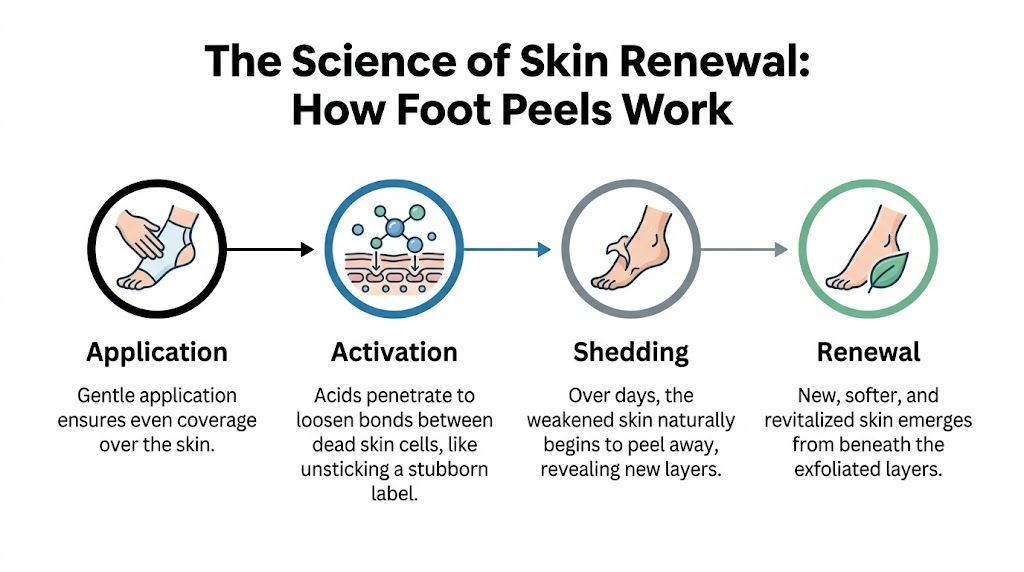
A client in a Swiss pharmacy often asks the same question in different words. Why does a foot peel work when pumice, files, and scrubs give only brief relief? The answer starts with skin biology. A foot peel mask uses chemical exfoliation to loosen the connections between compacted dead cells on the surface, rather than shaving them down by friction. Acids commonly used for this purpose include glycolic acid, lactic acid, and salicylic acid, as explained in The Chic Chemist’s overview of foot peel mask science.
The process is easier to understand with a simple comparison. Thick sole skin behaves like many thin sheets pressed tightly together. Scrubbing roughens the top sheet. A peel gradually loosens the bonds between several upper layers, so shedding happens in a broader and more even way over the following days.
Why soles respond differently from facial skin
Sole skin is built for pressure, friction, and repeated load. It is thicker and more heavily keratinised than facial skin, especially at the heel, forefoot, and outer edges. That is why a formula that would be too strong for the face may still be appropriate for the foot when designed and used correctly.
This also explains a common retail misunderstanding. Customers sometimes compare a foot peel to a body scrub or facial exfoliant. The comparison is misleading. The foot usually needs longer contact time and a formula suited to dense, compacted build-up.
Sock-style masks solve that practical problem. The liquid stays in close contact with the skin for a set period, which gives the exfoliating system time to penetrate the uppermost dead layers more evenly than a quick rinse-off product.
The renewal cycle clients should expect
The visible result is delayed, and that delay should be explained before purchase. Clear expectation-setting protects trust, reduces unnecessary complaints, and positions the product as a measured treatment rather than a gimmick.
Application stage
The client wears the booties for roughly one hour, depending on the product directions, so the solution can saturate the outer dead skin.Quiet stage
For the first few days, feet may look almost the same. The treatment is still working beneath the surface by weakening how tightly old cells are attached.Peeling stage
Shedding often starts several days later, commonly around the toes, ball of the foot, and heel where build-up is thickest.Smoother-skin stage
As the loosened layers separate and release, the surface gradually feels softer and looks more uniform.
That sequence matters commercially. If staff describe only the first step and not the waiting period, clients may assume the product failed and lose confidence in the brand and the retailer.
Why peeling happens later, not immediately
A foot peel does not strip skin off on the day of use. It starts a controlled desquamation process. In plain terms, the treatment weakens the glue that holds excess dead cells together, and the body then sheds those cells through its normal renewal rhythm.
That timing is often misunderstood. A delayed peel is usually consistent with how the treatment is meant to work. For pharmacies and spas, this is a useful educational point because it reframes the waiting period as part of the mechanism, not a sign of weak performance.
Why the mechanism matters for Swiss premium positioning
For a Swiss buyer, especially one already attentive to formulation ethics and product quality, the value of a foot peel is not novelty. It is precision. A well-chosen peel offers a targeted way to deal with non-compromised thickened skin while avoiding the aggressive abrasion that can come from over-filing at home.
That creates a stronger sales story for certified, naturally positioned, and ethically formulated options. The product can be presented as a planned skin-renewal treatment within a broader care protocol, with screening, aftercare, and realistic timing clearly explained. In other words, the science supports both safer client guidance and a more credible premium offer.
A file abrades the surface. A peel changes how excess dead skin detaches. That difference is the foundation for better education, better product matching, and better margins in professional Swiss retail channels.
Decoding the Formula Key Active Ingredients
A strong foot peel formula works like a well-planned team. One group of ingredients loosens the excess dead skin. Another group reduces the rough, tight feel that can follow exfoliation. For Swiss pharmacies and spas, that distinction matters because clients are not buying "peeling" alone. They are buying a controlled treatment with a safety story, a clean-beauty position, and a credible reason to return for aftercare.

The workhorses called AHAs
Alpha hydroxy acids, especially glycolic acid and lactic acid, usually form the exfoliating core of a foot peel mask. Their job is simple to explain. They loosen the compacted layers of old cells sitting on the surface of the sole and heel.
A useful staff analogy is mortar between bricks. The dead cells are the bricks. The acids help weaken the mortar so those cells can detach over time through normal shedding.
Glycolic acid is often chosen for its small molecular size and strong keratolytic action. Lactic acid usually supports a softer product story because it is familiar to consumers and is often associated with smoother-feeling exfoliation. In practice, many formulas use both. One gives efficiency. The other helps round out the sensory and positioning profile.
That matters commercially. A pharmacy can explain why a certified natural peel still performs. A spa can explain why a premium peel is more than a scented sock treatment.
Where BHAs fit
Beta hydroxy acids, especially salicylic acid, bring a different type of exfoliating support. If AHAs work mainly on the surface, BHAs help address denser build-up in friction-heavy zones such as the heel edge or ball of the foot.
The practical message for staff is clear. Thickened foot skin is not uniform. Some areas are dry and layered. Some are compact and stubborn. A formula that combines more than one exfoliating pathway often gives a more even result across the whole foot.
This is one reason ingredient lists matter more than front-label claims. "Fruit acids" may sound appealing, but the commercial question is whether the formula has a clear exfoliating system and whether that system is balanced well enough for retail use in a regulated Swiss setting.
Why the whole formula matters
A premium foot peel is defined less by how many acids it names and more by how intelligently the formula is built. Acid choice, acid strength, pH control, solvent system, and skin-conditioning support all shape the user experience.
For buyers and treatment managers, a good evaluation framework includes:
- A clear exfoliating core such as glycolic acid, lactic acid, salicylic acid, or a considered blend
- Good formula balance, so the peel is active without feeling unnecessarily harsh
- Skin-conditioning support from humectants, emollients, or soothing co-ingredients
- Transparent positioning around natural origin, certification status, and intended user
- A logical aftercare match, which helps turn one treatment into a repeat purchase pathway
Cheap copycat products often fail on that last point. They may promise dramatic peeling but say very little about ingredient transparency, ethical formulation, or what the client should use once the peeling starts.
A short visual overview can help teams explain ingredient roles to customers:
The role of natural supporters
Natural ingredients should support performance, not distract from it. That is a useful rule for premium Swiss retail.
Botanicals, fruit-derived components, plant oils, and marine-derived ingredients can improve the formula in several ways. They can soften the post-peel feel, improve slip and comfort during wear time, and strengthen the clean-beauty narrative that many Swiss consumers now expect. They do not replace the exfoliating system. They make the system easier to position ethically and easier to build into a ritual.
That distinction protects credibility. If a product is marketed as natural, staff should still be able to explain exactly what causes exfoliation and what supports recovery.
Marine actives and premium spa positioning
Marine actives are especially useful in spa and wellness channels because they connect efficacy with ritual. Algae extracts, mineral-rich marine waters, and sea-derived conditioning agents help create a more sophisticated narrative than "acid socks."
For Swiss hospitality and spa owners, that framing has real value. It lets the treatment sit comfortably beside body rituals, natural recovery concepts, and premium aftercare products. The service feels considered rather than purely functional.
This also creates a cleaner merchandising path. A peel can lead naturally into a replenishing foot cream, a botanical balm, or an organic oil blend. The formula story then supports both client trust and basket size.
The strongest formula story is easy to teach. Exfoliating ingredients loosen excess dead skin. Supportive ingredients help the feet feel comfortable, cared for, and worth treating again.
The Complete Process A Timeline from Application to Renewal
Many complaints about a foot peel mask have little to do with formula quality. They come from poor expectation-setting. If customers think the treatment should act like an instant pedicure, they’ll either panic during the peeling phase or assume it hasn’t worked before the process has even begun.
A clear day-by-day explanation solves much of that. Staff don’t need to memorise chemistry. They need to describe the journey accurately.
What happens first
The client applies the booties and leaves them on for 1 hour. During that time, the exfoliating liquid contacts the sole, heel, sides of the foot, and toes. Little is typically felt beyond dampness, mild coolness, or light tingling.
After removal, the feet may look completely ordinary. This is the first point where reassurance matters. The treatment has started, but the visible result is delayed.
What usually happens over the next days
The first few days are quiet. Then the process becomes obvious. Sheets or flakes of old skin begin lifting, often first around friction-heavy zones.
| Phase | Timeline (Approx.) | What to Expect | Retailer Advice |
|---|---|---|---|
| Application | 1 hour | Booties are worn while exfoliating solution sits on the skin | Tell clients to follow the timing exactly and rinse afterwards if directed by the product |
| Early post-application | Days 1-3 | Skin may feel slightly tight or unchanged | Explain that no visible peeling yet is normal |
| Main peeling | Days 3-7 | Noticeable peeling starts, often around toes and heels | Advise socks, patience, and no pulling at loose skin |
| Renewal | Days 9-14 | Most shedding finishes and softer skin is revealed | Recommend hydration and barrier-supportive aftercare |
The stage that worries customers most
The visible peeling phase is where retailers either earn trust or lose it. The effect can look dramatic. That’s normal. In fact, for many customers, it’s the first sign that the treatment is doing what they hoped it would do.
What they should not do is accelerate the process by picking, tearing, or scraping aggressively. That can create irritation and turn a controlled exfoliation into an avoidable problem.
A useful consultation script is short and practical:
- Wear socks to keep flakes contained and reduce friction in shoes.
- Let the skin detach naturally rather than pulling it.
- Avoid booking a beach holiday or open-shoe event immediately after use if visible peeling would bother them.
- Wait until the main shedding has finished before focusing heavily on rich aftercare, unless the specific product instructions suggest otherwise.
The final reveal
By roughly day 9-14, most clients see the treatment outcome clearly. The foot feels smoother, the surface looks more even, and the heel often appears less chalky and less built up. Thick skin doesn’t vanish forever, of course. Feet continue to bear pressure, friction, and climate stress. That’s why aftercare and sensible repeat timing matter.
Clients accept the peeling phase far more easily when you present it as a normal renewal window, not as a side effect.
How this helps in-store selling
This timeline is more than user guidance. It’s a sales tool. A customer who understands the process is less likely to return with concern and more likely to return for maintenance products afterwards.
It also helps your team steer the right person to the right format. Someone wanting immediate cosmetic softness before an event may be better suited to a hydrating mask or intensive cream. Someone prepared for a delayed but more thorough result is the right candidate for a foot peel mask.
Safety Compliance and Client Consultation
A customer steps up to the pharmacy counter in Lausanne on Thursday afternoon. She wants softer heels before the weekend, points to a peel mask, and says her skin is “a bit sensitive.” That is the moment where premium retailing is tested. The right response protects the client, protects your reputation, and often leads to a better sale.
A foot peel mask works by loosening built-up surface cells with exfoliating acids. That mechanism is useful, but it also means product selection starts with skin status, not with dryness alone. In practice, the consultation should answer one question first: is this person a suitable candidate for accelerated exfoliation?

Who needs caution or exclusion
Standard acid-based foot peels are a poor fit for clients with broken skin, fissures, active fungal infection, significant irritation, or an already-inflamed barrier. Extra caution is also appropriate for people with diabetes, eczema, psoriasis, and for pregnant clients who prefer to review cosmetic acid use with a healthcare professional first.
For a Swiss pharmacy or spa, the practical point is simple. “Dry feet” is a cosmetic concern. “Compromised feet” is a different category. Staff should be trained to spot that distinction quickly, in the same way a pharmacist distinguishes between a mild tension headache and a symptom that needs referral.
Why “sensitive skin” needs decoding
“Sensitivity” is not a diagnosis. It is a vague label customers use for very different situations, and those situations do not carry the same level of risk.
One person means fragrance stings. Another means they have medically diagnosed atopic skin. A third person means they dislike the tingling sensation of active products. Those three clients should not receive the same recommendation.
That is where many consultations go wrong. If the team hears “sensitive” and replies with “this one is gentle,” they may unintentionally blur the line between mild discomfort and true barrier vulnerability. In premium foot care, precise language matters.
A consultation model staff can repeat with confidence
A good screen should be brief enough for daily retail use and clear enough to support Swiss expectations around professional advice. Four checks usually cover the decision well.
Look at skin integrity
Ask whether there are cuts, cracks, blisters, peeling from another cause, infection, or active irritation. If yes, postpone the peel.Ask about relevant conditions
Diabetes, eczema, psoriasis, neuropathy, circulatory concerns, and recent reactions to cosmetics all affect suitability.Clarify the timing goal
A client preparing for an event in the next few days usually needs hydration and surface smoothing, not a peel with delayed visible shedding.Set aftercare expectations
Explain what to use after the peel period and when to stop and seek advice if the reaction seems stronger than expected.
This framework works like triage in miniature. It does not turn the sales team into clinicians. It helps them sort cosmetic candidates from referral cases quickly and responsibly.
Patch testing is a trust signal
Patch testing is often treated as a hurdle. In reality, it is one of the clearest markers of professional standards, especially for natural and ethically positioned products.
That point matters commercially. Clean beauty customers in Switzerland often read “natural” as “safer,” while skin science tells a more careful story. Botanical extracts, fragrance components, and essential oils can still irritate reactive skin. A patch test helps align the brand promise with real-world tolerance.
Used properly, patch testing also protects margin. It reduces avoidable complaints, lowers refund pressure, and gives staff a reasoned basis for recommending either the peel or a gentler alternative.
Premium positioning comes from good judgement in front of the shelf, not from selling the strongest treatment to the largest number of people.
Referral and substitution are part of the sale
Some of the most profitable consultations end without a peel mask. If the client has fissures, inflammation, athlete's foot, or a likely barrier disorder, the correct recommendation may be a rich repair balm, a urea-based maintenance cream, or referral to a podiatry or medical professional.
That is not a lost transaction. It is category building. Customers remember when a pharmacy or spa protects them from the wrong product, and that memory supports repeat purchasing far better than a short-term sale followed by irritation.
For suitable users, the advice should stay specific and calm. Confirm who the peel is for, who should avoid it, how to test tolerance, and what aftercare will maintain results. In Swiss retail, that level of discipline supports two goals at once. Safer client outcomes and a stronger, more defensible premium foot-care business.
Merchandising and Positioning Natural Foot Peels in Switzerland
A client walks into a Swiss pharmacy in late autumn with two things in mind. Dry, thickened heels, and a preference for cleaner products she feels comfortable using at home. If the shelf shows only anonymous foot care items grouped by format, the sale becomes price-led. If the display explains treatment timing, ingredient standards, and aftercare, the same category starts to behave like premium skincare.
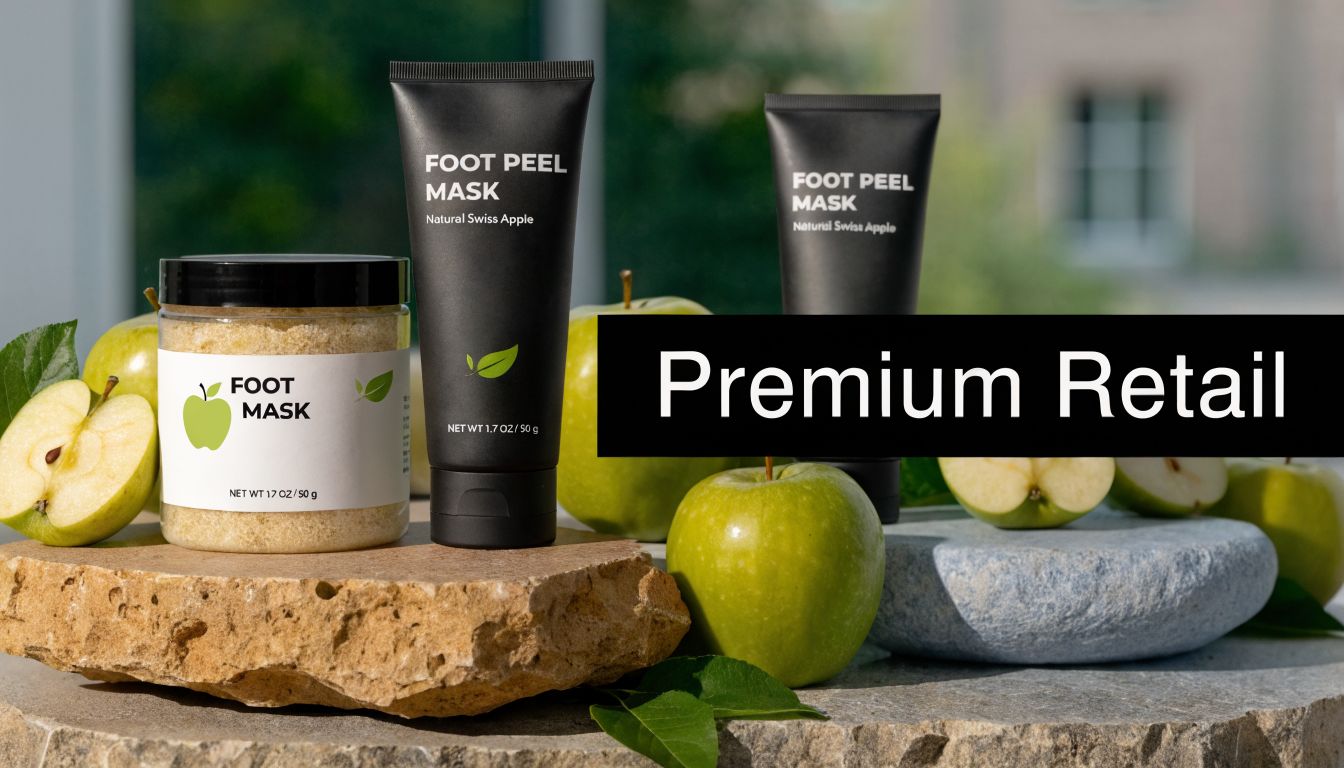
That shift matters for pharmacies, spas, and wellness hotels that want more than occasional impulse purchases. Natural foot peels can sit at the intersection of clean beauty demand, professional guidance, and higher-margin routine building. The commercial opportunity comes from positioning them as a managed treatment category with clear ethical standards, not as a novelty mask.
Why the clean beauty angle supports premium sell-through
Swiss consumers often read packaging carefully. In foot care, that means the product story can influence conversion almost as much as the treatment claim itself. A peel framed around certified ingredients, transparent formulation choices, and responsible sourcing gives staff a stronger reason for recommendation than vague language about softness or spa-like results.
The category also benefits from a real gap in presentation. Many retailers still merchandise foot peels beside low-involvement maintenance items, even though the product behaves more like a scheduled resurfacing treatment. That is similar to placing a facial exfoliating treatment next to cotton pads and expecting the same perceived value. The function is different, so the retail logic should be different too.
For Swiss operators, the strategic advantage is credibility. A well-chosen natural peel helps answer three client concerns at once. Does it work, does it fit clean beauty expectations, and does the retailer know how to advise responsibly?
Build a shelf story before you build a display
Premium positioning starts with a simple retail discipline. The client should understand the treatment in under ten seconds.
A good display answers four practical questions:
What result should I expect?
Smoother feet through the shedding of built-up dead skin over several days.Why does it cost more than a basic cream?
It is a treatment product with a defined process, a more distinctive formula story, and a stronger guidance requirement.Why does this version fit a natural or ethical preference?
The answer should be specific. Certified claims, vegan status, cruelty-free positioning, and clear formulation choices carry more weight than soft marketing language.What should I buy with it?
A post-peel moisturiser, barrier-supporting balm, or maintenance cream turns a single sale into a routine.
That last point matters commercially. A foot peel is best merchandised like a starter treatment that leads naturally into maintenance. In category terms, the mask creates the event, and aftercare captures the repeat revenue.
Practical merchandising choices that improve conversion
The most effective setups are usually the simplest to maintain.
Create a two-step or three-step block
Place the peel with one lighter hydrator and one richer repair product. This gives staff a clear consultation path and increases basket size without overwhelming the shopper.State the delayed timeline clearly
Shelf cards such as “peeling usually starts after a few days” reduce confusion, disappointment, and unnecessary returns.Merchandise by need state
“Dry, rough heels,” “seasonal foot reset,” or “at-home intensive care” is easier for clients to shop than product formats alone.Use certification and ethics as decision aids
If the formula is natural, vegan, or aligned with recognised standards, show that information where the client makes the choice, not only on the back of pack.
Small wording changes can reshape value perception. “Exfoliating mask” sounds optional. “Intensive renewal treatment for rough feet” sounds considered, purposeful, and easier to justify at a premium price point.
Pharmacies and spas need different sales scripts
The same product can serve two retail environments, but the framing should change.
In pharmacies, the winning message is controlled efficacy with guidance. Staff should explain the timeline, the expected peeling phase, and the reason the formula may appeal to clients looking for cleaner beauty standards. The pharmacist or advisor becomes the quality filter. That role is especially valuable in Switzerland, where trust and product legitimacy strongly influence premium purchases.
In spas and wellness hotels, the message shifts toward ritual continuity. The peel works well as a retail extension of a pedicure, body treatment, or seasonal repair programme. It gives the guest a way to continue the result at home while keeping the spa associated with disciplined, professional care rather than one-off pampering.
This difference is subtle but commercially important. Pharmacies sell reassurance first. Spas sell continuation first.
Ethical positioning needs proof, not mood
Sustainability language often fails because it stays too broad. Clients and buyers ask sharper questions now. Is the formula free from animal testing? Are the natural claims backed by recognised certification? Does the packaging reflect a more considered material choice? Is the sourcing story coherent, or is it decorative branding?
Retailers who can answer those questions clearly gain more than a sale. They build a category identity that fits Swiss expectations around quality, transparency, and restraint. In practice, that means fewer exaggerated claims, better staff training, and cleaner product selection.
Premium foot care works the same way premium pharmacy skincare works. The formula matters, but the confidence around the formula matters just as much.
Frequently Asked Questions for Swiss Retail Partners
A client leaves a pedicure room pleased with the immediate result, then asks the question that decides whether the category grows or stalls. “Should I buy this now, or is it just another trend product?” Retail teams need a clear answer that combines skin science, safety, and commercial logic.
How often do clients typically repurchase a foot peel mask
For suitable users, repurchase usually follows the skin renewal cycle rather than an impulse pattern. A foot peel mask is generally not a weekly treatment. It is used occasionally, with timing guided by visible build-up, friction from footwear, season, and the condition of the heel skin.
For Swiss retailers, the stronger business point is basket design. The peel creates a treatment moment, but the margin often improves through the products around it, especially barrier-supporting creams and gentle maintenance care. In other words, the mask starts the cycle, and aftercare completes the value.
Is this category large enough to matter for a Swiss retailer
Yes, particularly for retailers that treat it as a premium care problem rather than a novelty accessory. Analysts at Grand View Research describe a growing global foot mask category, which supports the case for a curated assortment in pharmacies, spas, and wellness retail.
The Swiss opportunity is narrower and more attractive than a mass-market model. Clients here often pay for reassurance, certified claims, and disciplined product selection. That makes foot peel masks a useful niche line for retailers who can explain formulation quality, consultation rules, and ethical standards with precision.
How does a foot peel fit into a spa or hotel service model
It fits best as a retail continuation product linked to a professional service. A therapist identifies thickened, rough foot skin during a pedicure or body treatment, then recommends the peel for home use after the visit. The guest gets a structured follow-up step. The spa keeps ownership of the care plan.
That model works well because a peel is delayed by nature. The visible shedding phase comes later, so the product performs better as guided home care than as an instant cabin result.
How do we differentiate a premium natural foot peel from cheaper online alternatives
Start with the same logic a pharmacist uses when comparing two cough syrups. The label may look similar, but the decision depends on dose, suitability, instructions, and trust in the manufacturer.
The same applies here. A premium foot peel should be presented through four filters:
Formula design
Explain which exfoliating acids are used and why balanced formulation matters for controlled desquamation rather than unnecessary irritation.Consultation quality
Staff should be able to identify who should avoid the product or ask a healthcare professional first. Cheap marketplace listings often skip that discipline.Proof behind natural and ethical claims
Swiss buyers increasingly expect certification, cruelty-free clarity, and ingredient transparency. Vague “clean” language is weak retail language.Full regimen value
The peel should sit inside a care system that includes recovery and maintenance, not as a one-off event sold in isolation.
Are there seasonal selling opportunities
Yes. Summer is obvious because open footwear makes rough heels more visible. Winter is commercially useful too, especially in Switzerland, where enclosed shoes, cold air, and alpine conditions often increase dryness and surface build-up.
This gives retailers two different sales stories. Summer is appearance-led. Winter is repair-led.
What should staff say in one sentence
Use a sentence like this: a foot peel mask is a home exfoliation treatment for built-up dead skin on suitable feet, and it should be followed with moisturising aftercare.
That line does several jobs at once. It sets realistic timing. It signals that suitability matters. It also gives the advisor a natural path to recommend the second product in the regimen.
If you’re building a premium foot-care assortment for Swiss pharmacies, spas, hotels, or clean-beauty e-commerce, beautysecrets.agency can help you source natural, ethically formulated brands that fit Swiss expectations for quality, compliance, and refined retail storytelling.