Make-up brushes are the unsung heroes of any beauty routine. They're the critical link between a fantastic cosmetic product and a truly flawless finish. Think of them less as accessories and more as an artist's most trusted instruments, specifically designed to bring out the very best in a product for a perfect application, every single time.
Why High-Quality Make Up Brushes Matter
Imagine a master painter trying to create a work of art with a set of cheap, frayed brushes. The final piece would never live up to their vision; it would lack the sharpness, detail, and vibrancy they intended. The exact same is true for make-up. Even the most beautifully formulated foundation or silky, finely milled powder can't perform at its peak without the right tool for the job.
This is why high-quality make up brushes aren't a luxury—they are absolutely fundamental to achieving a professional-looking result. The right brush transforms the entire experience, turning a simple daily routine into a genuine moment of artistry. For our Swiss retail partners, grasping this crucial relationship is the first step in truly empowering your customers and cementing your reputation as a go-to beauty expert.
Enhancing Product Performance
A thoughtfully designed brush is engineered to work in harmony with specific cosmetic textures. Everything from the shape and density of the bristles to the material itself is chosen to pick up just the right amount of product and lay it down evenly on the skin. This synergy is key—it prevents product waste and ensures the cosmetic behaves exactly as it was meant to.
- For Powder Products: You'll want natural or fluffy synthetic brushes. Their greater surface area is perfect for grabbing and diffusing powders, creating that soft, beautifully blended finish.
- For Liquid & Cream Products: Look for densely packed, smooth synthetic brushes. They apply liquids and creams seamlessly without soaking up all the product, preventing streaks and delivering even coverage.
When a customer spends money on a premium cosmetic, they're expecting a premium result. By guiding them to the right tools, you ensure their investment pays off, which leads to much happier customers who trust your advice.
The Key to Flawless Application
A polished, sophisticated look all comes down to precision and blending. We've all seen what happens with inferior brushes—their poorly cut, coarse bristles often leave behind a patchy, streaky mess. Professional-grade brushes, on the other hand, are crafted for complete control.
A high-quality make up brush does so much more than just apply product. It blends, buffs, and diffuses, creating seamless transitions for an airbrushed effect that’s simply impossible to get with your fingers or a low-quality tool.
This level of control is what allows someone to build coverage carefully, going from a light, sheer wash of colour to a more dramatic look without caking or disturbing the layers beneath. When you explain this benefit, you help customers understand that brushes are an investment in the final look they're trying to achieve. That knowledge doesn't just boost sales; it reinforces your expert status.
Understanding Core Brush Shapes and Their Purpose
Think of professional make-up brushes not just as tools, but as an artist’s specialised toolkit. A painter wouldn't use a roller for fine portrait details, and in the same way, a make-up artist selects a very specific brush shape for a particular job. The design of a brush is never a random choice; its shape, bristle density, and even the angle of the head are all engineered to work with a cosmetic in a very specific way. This dictates how a product is picked up from the pan, laid down on the skin, and blended out.
Understanding the "why" behind each design is what unlocks beautiful, professional-looking results. For instance, a dense, flat-topped brush is perfect for stippling liquid foundation, as it presses the product into the skin for a seamless, almost airbrushed finish. On the other hand, a long, fluffy, tapered brush is built to diffuse powder eyeshadow, effortlessly melting colours together in the crease. Once you grasp these core functions, it completely changes how you choose and use your brushes.
This diagram perfectly illustrates how the right brush acts as the essential bridge between a high-quality cosmetic and the flawless result your customer is looking for.
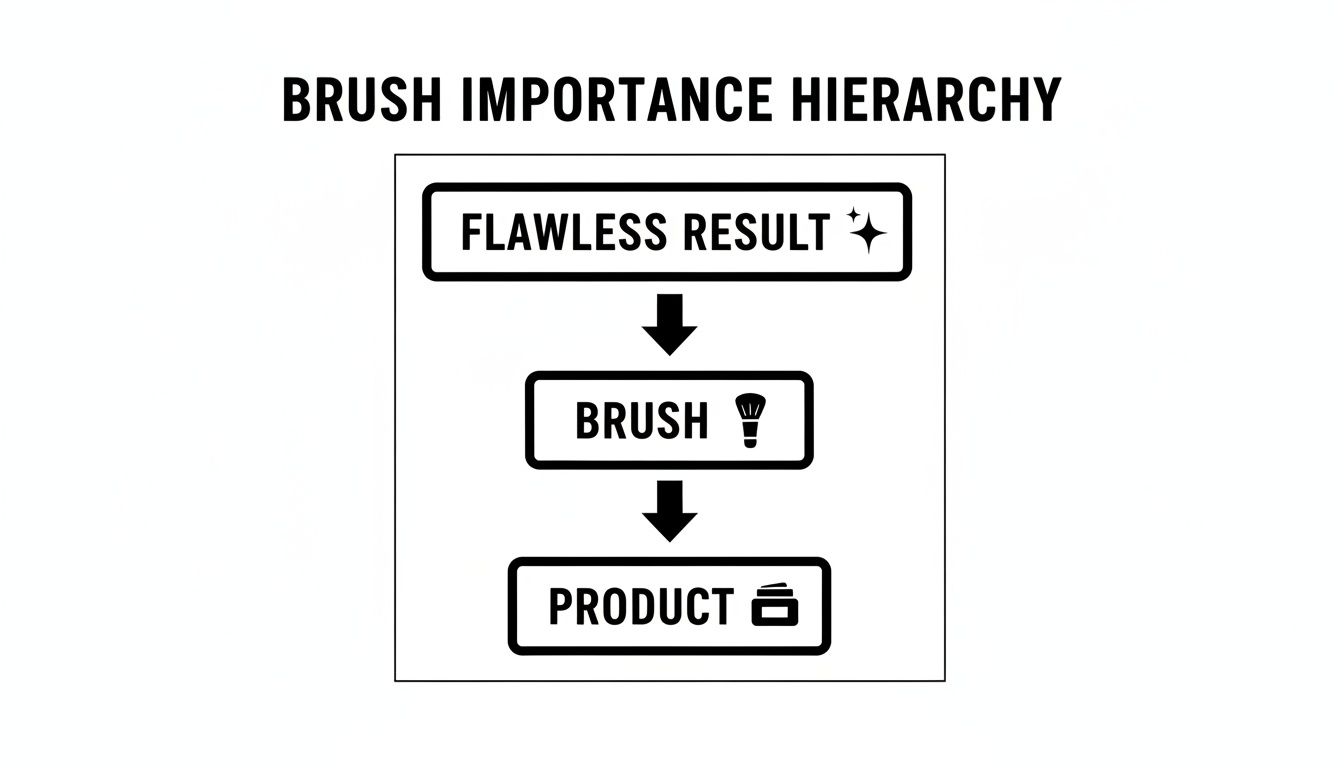
It’s a simple but powerful concept: even the most luxurious product can't perform at its peak without the right tool to apply it.
Essential Face Brushes
When working on the face, the primary goal is usually to create an even, flawless canvas. The brushes designed for this are incredibly varied, with each one offering a different level of coverage and a unique finish. Getting to know these shapes gives you total control over the final look.
-
Foundation Brush: The traditional version is flat and paddle-shaped, designed to almost "paint" liquid or cream foundation onto the skin. More modern takes include dense, domed kabuki brushes or flat-top buffers, which are used in circular or stippling motions to really buff the product in for a high-coverage, streak-free look.
-
Powder Brush: This is typically the biggest, fluffiest brush in any collection. Its job is to pick up a very fine layer of setting powder or bronzer and dust it lightly across the face, setting everything in place without disturbing the foundation underneath.
-
Blusher and Contour Brushes: These are usually a bit smaller and can be either angled or tapered. An angled brush is brilliant for contouring because it hugs the natural curve of the cheekbones for precise application. A softer, more rounded blusher brush is made to deposit a gentle wash of colour right onto the apples of the cheeks.
Pay close attention to the density of the bristles. Densely packed brushes will always give you fuller coverage, while fluffier, less dense brushes are perfect for a sheer, more natural-looking finish.
Precision Eye and Lip Brushes
When you move to the eyes and lips, it’s all about precision. The brushes for these areas are smaller and more intricately shaped for detailed work—everything from carving out a sharp line to perfectly blending multiple shades together.
-
Eyeshadow Blending Brush: Many artists would say this is the single most important eye tool. With its soft, fluffy, and slightly tapered bristles, its purpose is to soften harsh lines and seamlessly blend different eyeshadow colours in the crease for that professional, gradient effect.
-
Shader Brush: This one is flat, dense, and usually quite small. It’s designed to pack eyeshadow onto the eyelid. The firm bristles pick up a lot of pigment and apply it with real intensity, making colours pop just like they do in the pan.
-
Detailer and Eyeliner Brushes: These are the finest, most delicate tools in the kit. A tiny, pointed pencil brush is perfect for smudging shadow along the lower lash line or adding a pinpoint highlight to the inner corner. A thin, angled brush or an ultra-fine liner brush gives you the control needed to create a sharp, clean winged liner with gel or powder.
The right selection of eye make-up brushes can be the difference between a muddy, undefined look and a sharp, beautifully blended masterpiece. The purpose-driven shapes allow for layering and detailing that is simply not achievable with one all-purpose tool.
Finally, a lip brush brings that same level of precision to lipstick application. Its firm, small, and tapered tip allows you to draw crisp edges and distribute colour evenly, ensuring your lipstick stays perfectly within the natural lip line for a polished, long-lasting finish. Understanding these fundamental shapes is the first step in choosing the perfect tool for any product or desired effect.
Natural Versus Synthetic Fibres Explained
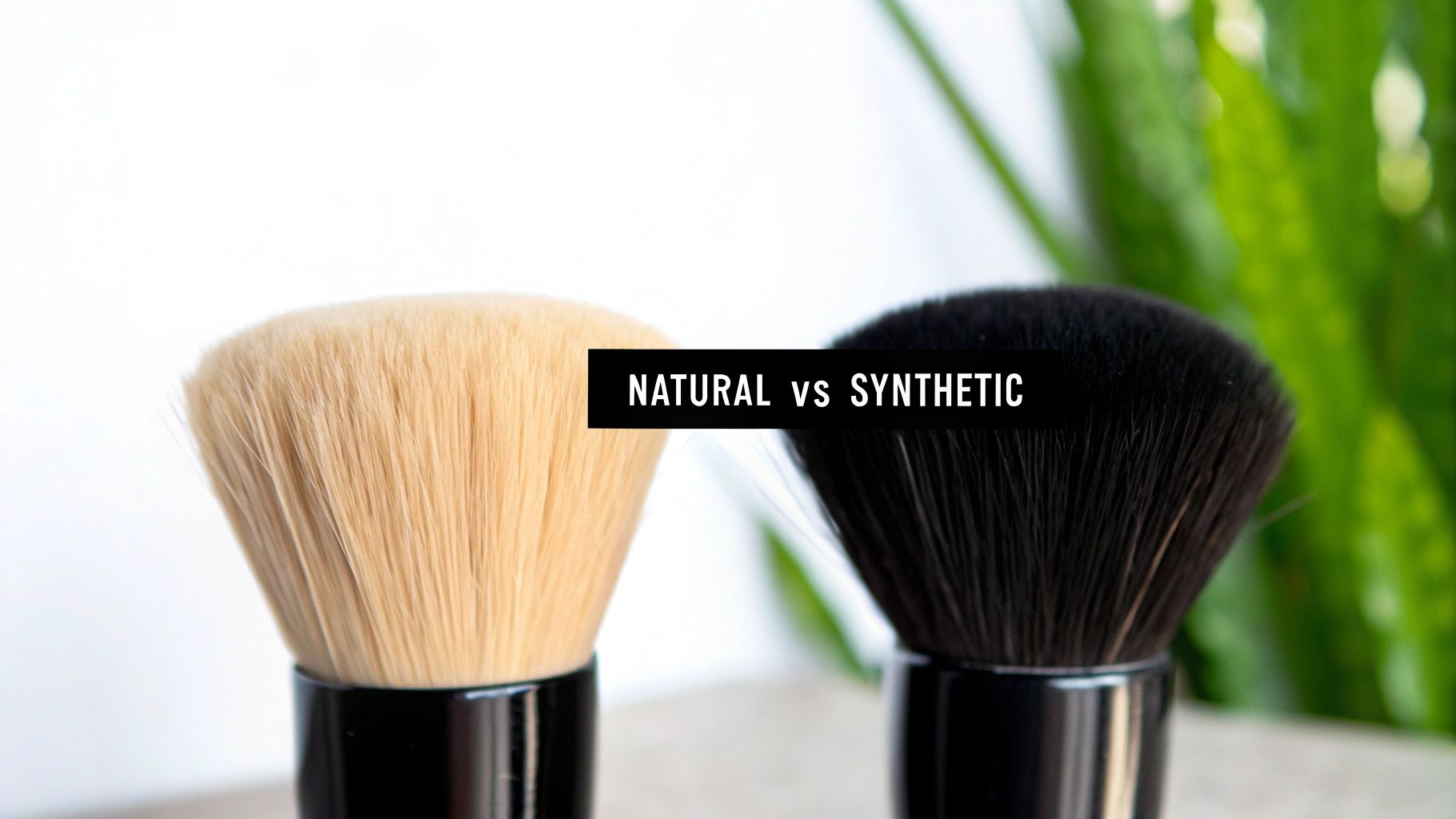
When it comes to make up brushes, the debate between natural and synthetic fibres is always front and centre. But it’s not simply a matter of preference. The choice you make directly impacts performance, hygiene, and even ethical alignment. Understanding what sets them apart is the key to helping your customers find the perfect tool for their needs and values.
Think of a natural brush bristle as being very similar to a single strand of your own hair. It has a cuticle layer, a slightly textured surface that’s fantastic at grabbing and holding onto fine, loose particles. This is precisely why natural brushes have long been the go-to for applying powder products—think eyeshadows, blushers, and setting powders.
They’re masters at diffusing and blending powders for that soft-focus, seamless finish. The downside? That same porous quality means they also love to soak up moisture. This makes them less than ideal for liquids or creams, as they can drink up the product, leading to a streaky application and wasted makeup.
The Rise of High-Performance Synthetics
Synthetic brushes are a different beast altogether. They’re engineered specifically for today’s sophisticated cosmetic formulas. Made from materials like Taklon or nylon, their fibres are perfectly smooth and non-porous. This is their superpower when you’re working with liquids, creams, and gels.
Instead of absorbing foundation or concealer, synthetic bristles glide the product across the skin. The result is a flawless, even application with minimal waste. For streak-free foundation, perfectly placed concealer, or beautifully blended cream blusher, synthetics are the undisputed champions.
It's worth noting that today's advanced synthetic fibres can now rival the performance of natural hair, even with powders. They've been engineered to offer incredible softness and blending power, making a high-quality synthetic brush set a truly versatile and effective choice for any makeup bag.
This innovation has really closed the performance gap, offering the best of both worlds in a single tool.
To make the choice clearer, here’s a quick comparison of how these two brush types stack up.
Natural vs Synthetic Brush Fibres At a Glance
| Attribute | Natural Hair Brushes | Synthetic Fibre Brushes |
|---|---|---|
| Best For | Powder products (eyeshadow, blusher, setting powder) for soft, diffused blending. | Liquid, cream, and gel formulas (foundation, concealer, cream blusher) for streak-free coverage. |
| Fibre Structure | Porous with a natural cuticle layer. | Smooth and non-porous. |
| Product Pickup | Excellent for picking up and holding fine powders. | Pushes product onto the skin rather than absorbing it, minimising waste. |
| Hygiene | More difficult to clean thoroughly; can trap bacteria and product. | Easy to clean and quick-drying; more hygienic for sensitive or acne-prone skin. |
| Durability | Can be delicate, prone to shedding, and may lose shape over time. | Highly resilient, holds shape well after washing, and is less prone to shedding. |
| Ethical Sourcing | Traditionally made from animal hair (e.g., squirrel, goat), raising ethical concerns. | 100% cruelty-free and vegan. |
Ultimately, having a solid set of synthetic brushes is a smart, modern move for any beauty enthusiast or professional.
Aligning with Conscious Consumer Values
Beyond pure performance, the conversation around brush materials is now heavily influenced by ethics and hygiene. The growing demand for cruelty-free and vegan beauty is a powerful market force, and make up brushes are right at the heart of this movement.
- Ethical Sourcing: Modern synthetic brushes are 100% cruelty-free, providing a clear ethical advantage that resonates deeply with today's conscious shopper.
- Superior Hygiene: Their non-porous fibres are simply easier to clean. They don’t trap bacteria, skin cells, or old makeup as readily as natural hair, making them a healthier choice, particularly for sensitive or acne-prone skin.
- Durability: Well-made synthetics are built to last. They maintain their shape after countless washes and are far less prone to shedding, offering better long-term value for money.
This isn’t just a passing trend; it’s a fundamental market shift. In Switzerland, the pivot towards synthetic and sustainable materials is clear. The synthetic segment has already captured 48.5% market share in Europe—a figure closely reflected in the CH region, thanks to a high awareness of animal welfare and hygiene.
Market forecasts predict the Swiss makeup brushes market volume will grow by 12% annually through 2031. This growth is largely driven by the boom in organic cosmetics, where specialised brushes are essential for maintaining product purity. You can find more details in the Swiss makeup brush market report on futuremarketreport.com.
For Swiss retailers, stocking high-performance, ethically sourced vegan synthetics isn’t just an option—it’s a strategic necessity. It positions your business as a partner for conscious beauty brands and a trusted source for the modern, eco-aware consumer who refuses to compromise on quality or their values.
How to Pair the Right Brush with Every Product
This is where the theory clicks into place and you become a true expert for your clients. When you master the art of pairing the right make up brushes with specific cosmetic formulas, you can offer genuinely personal advice that delivers beautiful, consistent results. It’s all about understanding the dance between the tool and the texture.
Think of it like being a chef. You wouldn't use a whisk to chop vegetables, would you? And you definitely wouldn't use a meat cleaver to fold delicate egg whites. Every tool has its job. In the same way, pairing a duo-fibre stippling brush with a tinted moisturiser creates a gorgeous, sheer finish because its layered bristles apply just a light, diffused layer of product. On the other hand, using a dense kabuki brush with a mineral foundation gives you full, even coverage because its tightly packed fibres buff the powder perfectly into the skin.
This is the kind of knowledge that turns a simple product sale into a complete beauty solution, building trust and keeping customers coming back.
Mastering Liquid and Cream Applications
Liquid and cream formulas need brushes that can glide the product on smoothly without soaking it all up. This is where high-quality synthetic fibres really shine. Because they aren't porous, they deposit makeup onto the skin, not into the bristles themselves. That means no streaks and no wasted product.
Here are a few classic pairings for a flawless finish with liquids and creams:
-
For Liquid Foundation: A dense, flat-top kabuki brush is your go-to for achieving full coverage. Use a gentle stippling or buffing motion to press the product into the skin for an almost airbrushed effect. For a lighter, more natural finish, a classic flat paddle foundation brush works beautifully, letting you "paint" the foundation on in smooth, even strokes.
-
For Concealer: A small, firm, and slightly tapered synthetic brush gives you the precision you need for targeted application. It's perfect for covering blemishes or blending concealer under the eyes without tugging on that delicate skin.
-
For Cream Blusher and Contour: A duo-fibre stippling brush is fantastic for creating a sheer, natural flush of colour. If you're going for a more defined look with contour, an angled synthetic brush provides the structure needed to carve out those cheekbones with precision.
The trick with these formulas is to pick a brush that moves the product across the skin, rather than drinking it up.
Perfecting Powder Product Pairings
Powders—like setting powders, eyeshadows, and bronzers—behave completely differently from liquids. They need brushes that can pick up those fine particles and dust them on evenly and softly. Here, the bristle density and the shape of the brush make all the difference.
It's a simple rule: fluffier brushes with more space between the bristles will always give you a sheerer, more diffused look. Denser brushes will pack on more pigment for a bolder result.
Understanding the relationship between brush density and powder payoff is fundamental. A customer struggling with patchy blusher might not need a new product—they might just need a fluffier brush to achieve the soft blend they desire.
Consider these essential pairings for powders:
-
For Loose Setting Powder: A large, soft, and fluffy powder brush is the best tool for the job. It picks up just a tiny bit of product and dusts it lightly over the face to set makeup without ever looking heavy or cakey.
-
For Powder Blusher and Bronzer: An angled, medium-density brush is perfect for sweeping bronzer along the contours of the face. For blusher, a medium-sized, rounded, and fluffy brush will deposit a beautiful wash of colour right on the apples of the cheeks.
-
For Eyeshadow Application: Start with a flat shader brush to pack colour onto the eyelid for maximum intensity. Then, grab a fluffy blending brush—an absolute must-have—to soften the edges and create seamless transitions in the crease.
Considering Different Skin Types
Finally, the right brush choice often comes down to your client's skin type. Taking this into account can completely change their makeup experience and even their skin's health. For clients with sensitive or acne-prone skin, the choice is clear: ultra-soft, high-quality synthetic brushes are the only way to go.
Natural bristles, with their porous texture, can sometimes feel a bit scratchy. More importantly, they can trap bacteria more easily, which could lead to irritation or breakouts. Premium synthetic fibres, in contrast, are hypoallergenic and much easier to sanitise properly, making them a gentler and more hygienic choice. Recommending these brushes shows you genuinely care about your client's well-being, cementing your status as a trusted expert.
Mastering Brush Care for Longevity and Hygiene
Think of your make up brushes as an investment. Proper care isn't just about keeping them pristine; it's a non-negotiable part of ensuring they perform beautifully and, most importantly, protecting your skin's health. It’s the essential maintenance that keeps your most valuable tools in top shape. Just like a chef wouldn't work with dull knives, a beauty professional can't get a flawless finish with dirty brushes.
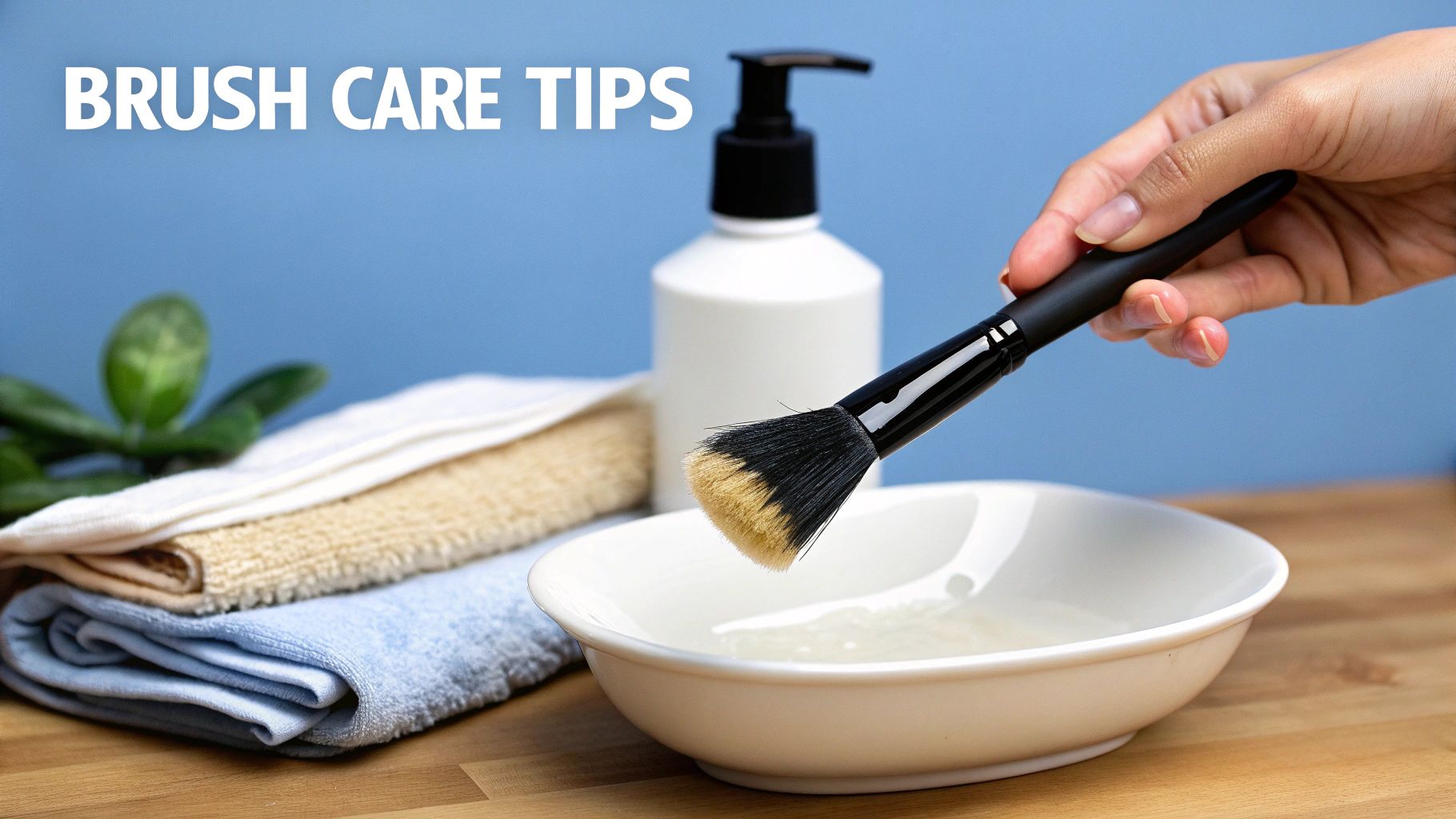
When you skip cleaning, brushes quickly become a breeding ground for bacteria, getting clogged with a nasty mix of old product, oil, and dead skin cells. This build-up doesn't just result in streaky, patchy makeup—it can directly cause skin irritation, clogged pores, and frustrating breakouts. By discussing brush sanitation as a part of overall skin health, you show a genuine commitment to your clients' well-being.
Spot Cleaning Versus Deep Cleaning
A solid brush care routine has two key parts: quick spot cleans and regular deep cleans. Knowing when to do each is the secret to preserving your brushes and keeping skin happy.
-
Daily Spot Cleaning: This is your quick wipe-down right after use. It’s perfect for removing surface pigment, especially when you’re switching between eyeshadow colours. A few spritzes of a spray-on brush cleanser onto a paper towel, a quick swirl, and you're good to go.
-
Weekly Deep Cleaning: This is the full, restorative bath that gets rid of everything. For foundation and concealer brushes that mix with skin oils and liquid formulas, this is absolutely essential. Aim to give these brushes a deep clean at least once a week.
A study on cosmetic hygiene found that a shocking percentage of used makeup tools harbour harmful bacteria, including E. coli and Staphylococci. This makes it crystal clear: consistent deep cleaning isn’t just a beauty tip, it’s a critical health measure.
Making this distinction helps people maintain their tools properly without feeling like it's a huge chore.
The Correct Deep Cleaning Method
Washing your make up brushes the right way is crucial. The goal is to protect not only the bristles but also the ferrule—that's the metal bit holding it all together. If water gets in there, it can loosen the glue, causing the bristles to shed and ultimately ruining your brush.
Here’s a simple, step-by-step process for a safe and thorough clean:
- Wet the Bristles: Use lukewarm water and always point the bristles downwards. This simple trick prevents water from running back into the ferrule.
- Add a Gentle Cleanser: A drop of gentle soap—like baby shampoo or a dedicated brush cleanser—in the palm of your hand is all you need.
- Lather and Rinse: Gently swirl the brush tip in the soap. You’ll see the old makeup instantly start to wash away. Keep rinsing under the tap (bristles still pointing down!) until the water runs perfectly clear.
- Reshape and Dry: Gently squeeze the excess water out with a clean towel. Delicately reshape the brush head back to its original form. Then, lay the brush flat on the edge of a counter or table so air can circulate all around the bristles. Never dry your brushes standing upright in a cup—this is the fastest way to get water into the ferrule and wreck your brush.
Adopting these habits will keep your brushes in prime condition for years, ensuring every application is flawless and your skin stays clear and healthy. This level of care truly demonstrates the value of investing in high-quality tools and builds incredible trust with your clients.
Merchandising Tips for Swiss Beauty Retailers
Having deep product knowledge is one thing, but turning it into strong sales requires smart presentation—especially in the discerning Swiss retail environment. When it comes to make up brushes, effective merchandising isn't just about placing them on a shelf. It’s about telling a story, educating your customer, and making their decision feel simple and confident. A clear, appealing display will naturally guide clients to the perfect tools for them.
One of the most powerful shifts you can make is moving beyond selling just single brushes. Start thinking in terms of curated kits. When you group tools by function, you take the guesswork out of the equation for your customer and, in turn, increase your average sale. This simple strategy transforms what can be a confusing wall of options into a set of clear, elegant solutions.
Curate Purpose-Driven Brush Sets
Think of your brush sets as complete beauty solutions. A customer isn't just buying a brush; they're looking for an outcome, like flawless skin or perfectly blended eyes. They're far more likely to invest in a complete set that promises that exact result. This approach doesn't just make their choice easier; it positions you as a trusted expert who truly understands their needs.
Consider building themed collections that solve a specific problem:
- The Flawless Base Set: Group a foundation brush, a concealer brush, and a powder brush. The real magic happens when you place this kit right next to your best-selling foundations.
- The Expert Eye Kit: Bundle a classic eyeshadow shader, a fluffy blending brush, and a fine liner brush. Display this set alongside new eyeshadow palettes to create an irresistible pairing.
- The Sculpt and Glow Duo: Pair an angled contour brush with a delicate fan or tapered highlighter brush. It’s the perfect partner for your contour palettes and illuminating powders.
By placing these kits and products together, you create an intuitive visual link, showing customers exactly how to achieve the look they want.
Educate and Empower at the Point of Sale
Don't underestimate the power of in-store education. Many customers feel overwhelmed by the sheer variety of make up brushes available and might be too hesitant to ask for help. Simple, elegant educational touches at the display can bridge that gap, offering clarity and building their confidence to buy.
Small, beautifully designed cards placed with each brush or kit can explain its primary function in a sentence. Imagine a card next to a stippling brush that reads: "For an airbrushed, sheer finish with liquid foundations or cream blushers." It’s a small detail that demystifies the tool and empowers the customer to choose wisely.
The most successful retail strategy is one that educates. When you teach a customer why a specific brush is the right choice, you're not just selling a product. You're giving them the skill and confidence to create the look they've always wanted.
Highlight Ethical and Sustainable Choices
The Swiss beauty market is increasingly driven by consumers who care deeply about sustainability and ethical sourcing. This isn't just a passing trend; it's a core value that influences their purchasing decisions, including their tools. Your merchandising needs to speak this language.
Make sure the ethical credentials of your brush collections, especially those that are vegan and cruelty-free, are front and centre. Use clear signage and highlight certifications to appeal directly to the conscious Swiss shopper. This isn't just good ethics; it's good business. The Switzerland Makeup Brushes Market is projected to grow by 8-10% annually through 2031, with a significant push from ethically-minded consumers. Online channels have boomed, now making up over 35% of revenues. To understand this shift better, you can explore the full research on the Swiss makeup brushes market. By clearly showcasing your commitment to ethical sourcing, you align your business with modern values and set yourself apart from the competition.
Common Questions About Make Up Brushes
Even the most seasoned make-up artist or beauty enthusiast runs into brush trouble now and then. This is your troubleshooting guide for those common, nagging questions that pop up for you or your customers. Let's get them answered so you can handle any brush-related problem with confidence.
Solving these little issues on the spot is what sets a true expert apart. It's about more than just selling a product; it’s about sharing genuine knowledge and building that all-important trust with your clients.
Why Is My Foundation Streaky?
This is probably the number one frustration we hear about, but thankfully, the fix is usually simple. A streaky finish almost always points to either the wrong brush for the job or a less-than-ideal application technique. Of course, an old, frayed brush will never give you a smooth result.
More often than not, the brush just isn't dense enough for the foundation. Liquid and cream formulas need a brush with tightly packed bristles—think kabuki or a flat-top buffer—to really press and blend the product into the skin. If you grab a brush that's too flimsy or fluffy, it ends up just dragging the foundation across your face, leaving those annoying streaks behind.
The secret to a flawless base is all in the movement. Ditch the long, "painting" strokes and switch to gentle, circular buffing motions or a light stippling (patting) action. This helps the product melt into the skin for an airbrushed look, instead of just sitting on top.
Why Are My Make Up Brushes Shedding?
Finding loose bristles on your face is a dead giveaway that a brush is on its last legs. Shedding happens when the glue inside the ferrule (that metal bit holding the bristles) starts to weaken and break down. This is usually caused by age, using harsh cleansers, or just not washing them quite right.
To keep your brushes from shedding before their time, a few care habits make all the difference:
- Wash bristles down: The golden rule! Never let water seep into the ferrule, as it’s the quickest way to dissolve the glue holding everything together.
- Use a gentle soap: Harsh cleaners can make both natural and synthetic bristles brittle and damage the adhesive.
- Dry them properly: Always lay brushes flat to dry, perhaps with the bristles hanging over the edge of a counter to let air circulate. Never, ever dry them standing up in a cup.
If a brush starts shedding consistently, it's telling you its time is up. A brush that’s falling apart can't give you a clean, professional application, so it’s best to replace it.
How Often Should I Replace My Brushes?
There’s no hard-and-fast expiry date for make up brushes; it all comes down to their quality and how you treat them. A well-made, well-cared-for brush can be a friend for years, while a cheaper one might only last a few months.
Instead of watching the calendar, watch for these signs that a brush is ready for retirement:
- Constant Shedding: If it's shedding more than a hair or two, it’s a clear sign the structure is failing.
- Losing its Shape: When bristles start to splay out, look frayed, or won’t fluff back up after a wash, the brush has lost its ability to do its job well.
- Feeling Rough or Stiff: Bristles should feel soft against the skin. If they’ve become scratchy, they can cause irritation and apply product poorly.
- Permanent Stains: A brush that stays discoloured after a deep clean is likely holding onto old make-up and bacteria—something you definitely don't want on your skin.
Ultimately, investing in quality tools from the beginning always pays off in performance and longevity.
At beautysecrets.agency, we partner with premium brands that understand quality is key, from their formulas right down to the tools you use. Discover our curated selection of natural, ethical, and high-performance beauty lines by visiting https://beautysecrets.agency.