A TCA chemical peel is a professional-grade skin resurfacing treatment that uses Trichloroacetic Acid to meticulously remove the damaged outer layers of skin. It’s a go-to for tackling fine lines, sun damage, and even stubborn acne scars by kicking collagen production into high gear, revealing a much smoother and more evenly toned complexion. Think of it as a controlled, powerful reset for achieving significant skin rejuvenation.
A Professional Introduction to TCA Chemical Peels
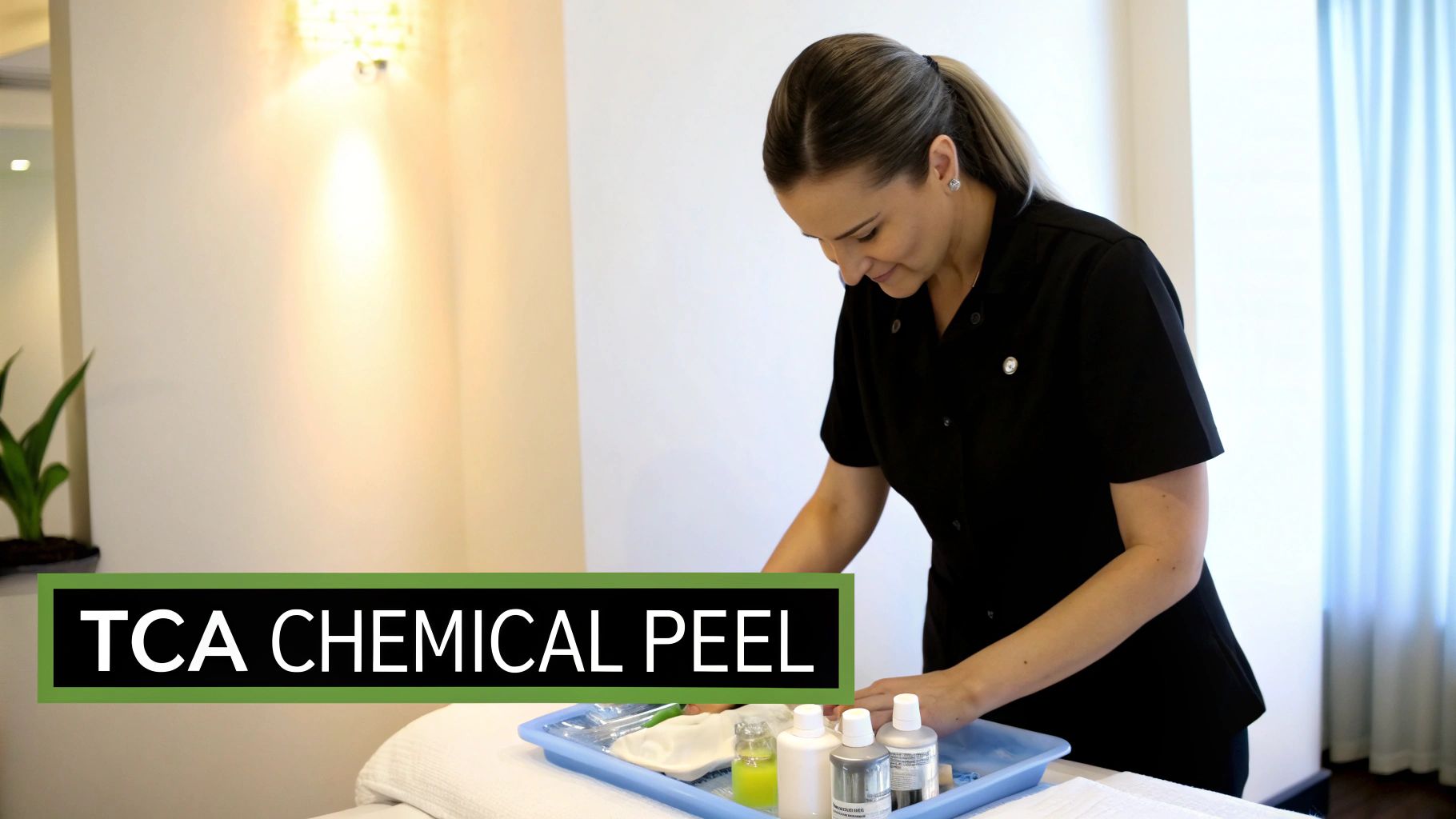
In the world of advanced aesthetics, the TCA peel stands out as a true workhorse. It’s prized by professionals for its incredible versatility and the dramatic results it can deliver. This isn't just a simple surface exfoliation. Unlike lighter peels that just buff the top layer of the epidermis, TCA works by creating a controlled injury deep within the skin, which triggers a powerful, natural healing and regeneration process.
Imagine carefully restoring an old painting. The acid is applied with precision, where it begins to break down old proteins in the epidermis and—depending on the strength—the upper dermis. This process essentially sheds the accumulated damage from years of sun exposure, pollution, and ageing, making way for fresh, new skin to come to the surface.
Establishing Expertise and Client Confidence
For any aesthetic professional, mastering the TCA peel is a game-changer. It means you can offer a truly effective service that addresses some of the most persistent skin concerns people have. The key to success, however, lies in how you communicate. Your ability to explain the process with confidence is what builds trust and sets realistic expectations for your clients.
When discussing the treatment, focus on its core benefits:
- Targeted Skin Resurfacing: It dramatically improves skin texture, leaving it noticeably smoother and softer.
- Pigmentation Correction: It's fantastic for fading sun spots, age spots, and other forms of hyperpigmentation.
- Wrinkle and Fine Line Reduction: By firing up collagen production, it helps plump the skin from within, softening the appearance of lines and wrinkles.
- Scar Improvement: It can make a real difference in the appearance of certain acne scars, creating a more uniform surface.
A successful TCA chemical peel starts with a solid understanding of how it works. It’s not just an exfoliant; it’s a catalyst for deep cellular renewal that revitalises the skin from the inside out.
The Role of Concentration Levels
One of the most critical factors in any TCA peel is the concentration of the acid. This is what determines the depth of the peel and, ultimately, the results. Lower concentrations, usually around 10-20%, provide a light peel. These are perfect for tackling superficial issues with very little downtime.
Once you move up to 25-35%, you're in the realm of medium-depth peels. These are designed to address more significant concerns like deeper wrinkles and moderate sun damage. While they deliver more profound improvements, they also demand greater expertise and a longer recovery period. Understanding this spectrum is essential for tailoring treatments to each client's unique needs, ensuring you get the best possible results safely and effectively. This guide will give you the foundational knowledge you need to bring this powerful treatment into your practice with skill and confidence.
How TCA Peels Kickstart a Cellular Reset
To really get what a TCA chemical peel does, you have to look past the surface-level shedding and see the sophisticated process happening underneath. Unlike a simple exfoliant that just loosens up dead cells, TCA works through a process called keratocoagulation. It’s a deliberate, controlled chemical reaction designed to fundamentally restructure the skin and trigger a deep renewal from within.
I often explain it like this: think of a controlled burn in a forest. A well-managed fire clears away all the old, dead undergrowth. This doesn't just tidy things up; it enriches the soil and creates the perfect conditions for new, healthy life to spring up. A TCA peel does something similar. It denatures the proteins in the epidermis, causing them to coagulate and solidify. This creates a predictable, controlled injury that signals the body’s powerful healing mechanisms to get to work.
That word, "injury," might sound alarming, but in this context, it's the very thing that sparks rejuvenation. The body immediately starts its wound-healing process, clearing away the coagulated tissue and methodically rebuilding the area with fresh, new cells. This is the engine that drives the powerful resurfacing results of a TCA peel.
The Art of Reading the "Frost"
During a professional TCA peel, you’ll see something called frosting—the skin turns a temporary whitish colour right after the acid is applied. This isn't just a random reaction; it's the visible proof of keratocoagulation in action as the skin's proteins are being denatured.
For any practitioner, understanding frosting is non-negotiable. It’s your real-time map of the peel's depth and evenness. The intensity of the frost and how quickly it appears tells you exactly how deeply the acid is penetrating, which is what allows you to deliver a truly customised and controlled treatment.
Frosting happens in distinct stages, each corresponding to a specific depth:
- Level 1 (Light Frost): You'll see a faint, patchy white haze over a pink background. This signals a very superficial peel, working only on the outermost layer of the epidermis.
- Level 2 (Solid Frost): The white becomes much more uniform and solid. This indicates a medium-depth peel that has reached through the epidermis and is just starting to touch the papillary dermis.
- Level 3 (Enamel-White Frost): The skin looks opaque and starkly white, with no pink showing through. This is a deep peel that has penetrated into the upper reticular dermis—a level of treatment reserved for medical professionals tackling severe issues like deep scars.
"Frosting isn’t a side effect; it's a critical diagnostic tool. It lets a trained professional see exactly where and how deeply the peel is working, ensuring the outcome is both safe and effective for the client."
Waking Up Your Collagen and Elastin Factories
The controlled injury from a TCA peel does more than just slough off old skin. It sends a powerful wake-up call to the deeper dermal layers. The most important response it triggers is the stimulation of fibroblasts—the tiny cellular factories responsible for producing collagen and elastin.
As the skin goes through its healing phase post-peel, these fibroblasts are switched on, and they begin producing brand new, healthy collagen fibres. This process, known as neocollagenesis, is behind the incredible improvements you see in skin firmness and elasticity, and the softening of fine lines and wrinkles. The fresh collagen matrix gives the skin new structural support, making it look and feel plumper, smoother, and genuinely more youthful.
This is why the results from a TCA peel are more than just a temporary fix. The treatment fundamentally reorganises and rebuilds the skin’s very architecture from the inside out. When you master this process, you can offer clients a truly powerful path to long-term skin health, confidently explaining how the science translates into the visible, lasting results they're looking for.
Choosing the Right TCA Concentration and Depth
Deciding on the right concentration for a TCA chemical peel isn’t like picking a product off a shelf. It’s more akin to a tailor fitting a bespoke suit—it demands a precise understanding of the client’s skin, their specific concerns, and how much downtime they can handle. The percentage of Trichloroacetic Acid directly controls the peel's depth, which in turn dictates the intensity of the results and the length of recovery.
Getting this right is the single most important step for a safe and successful treatment. Go too low, and the client might not see the improvements they were hoping for. Go too high, and you risk unnecessary complications. That's why a thorough consultation and skin analysis are absolutely non-negotiable.
Matching Concentration to Skin Concerns
TCA peel strengths generally fall into three tiers, each designed to target different skin layers and solve specific problems. Think of them as different tools for different jobs, from a light polish to a deep restoration.
-
Light Peels (10-20% TCA): These are superficial peels, working mainly on the epidermis. They’re fantastic for refreshing dull skin, smoothing out minor texture issues, and tackling very fine lines or faint discolouration. Downtime is minimal, usually just a few days of light flaking.
-
Medium-Depth Peels (25-35% TCA): This is the sweet spot for serious skin rejuvenation and the most common range used in clinics. A medium peel reaches the upper dermis, making it highly effective for treating visible sun damage, deeper wrinkles, and certain types of acne scars. Recovery is more involved, typically requiring 5-7 days of proper downtime as the skin peels quite significantly.
-
Deep Peels (40%+ TCA): These potent concentrations are strictly for medical professionals treating severe photoageing or deep, pitted scars. They penetrate all the way to the reticular dermis, carrying a much higher risk profile and requiring a longer, more intensive recovery period.
Here in Switzerland, medium-depth peels are especially relevant. With around 19.1% of our residents aged 65 or older, the demand for effective non-surgical anti-ageing procedures is strong. It's not just anecdotal, either. Clinical data shows that 35% TCA peels can markedly reduce wrinkle depth and improve skin elasticity, hydration, and pigmentation over 20 weeks. In fact, one study found it delivered superior wrinkle reduction compared to some combination acid protocols. You can dig into the full research on TCA efficacy to see the data for yourself.
To help practitioners navigate these choices, here's a quick reference guide.
TCA Peel Concentration Guide for Professionals
This table provides a summary of TCA concentrations, their corresponding peel depth, primary indications, and typical downtime.
| TCA Concentration | Peel Depth | Primary Indications | Expected Downtime |
|---|---|---|---|
| 10-20% | Superficial (Epidermis) | Fine lines, dullness, mild discolouration, uneven texture | 2-4 days (light flaking) |
| 25-35% | Medium (Upper Dermis) | Moderate wrinkles, sun damage, acne scars, hyperpigmentation | 5-7 days (significant peeling) |
| 40%+ | Deep (Reticular Dermis) | Severe photoaging, deep scars, precancerous lesions | 7-14+ days (intensive recovery) |
This guide underscores why a professional assessment is crucial; the right choice balances the client's goals with what's safe and appropriate for their skin.
The Critical Role of the Fitzpatrick Scale
While matching the concentration to the concern is vital, you also have to factor in the client's inherent skin type. For this, the Fitzpatrick scale is an indispensable tool. It classifies skin based on its reaction to UV light and helps us assess the risk of a major complication: post-inflammatory hyperpigmentation (PIH).
PIH is what happens when the skin overproduces melanin after an injury—and a chemical peel is a controlled injury. This results in dark spots, and the risk is significantly higher in darker skin tones.
A client's Fitzpatrick type is a primary factor in determining their candidacy for a TCA peel. Lighter skin types (I-III) generally have a lower risk of pigmentation issues and are ideal candidates for a range of concentrations. Conversely, extreme caution is required for darker skin types (IV-VI).
This decision-making process is not just a suggestion; it's a cornerstone of responsible practice.
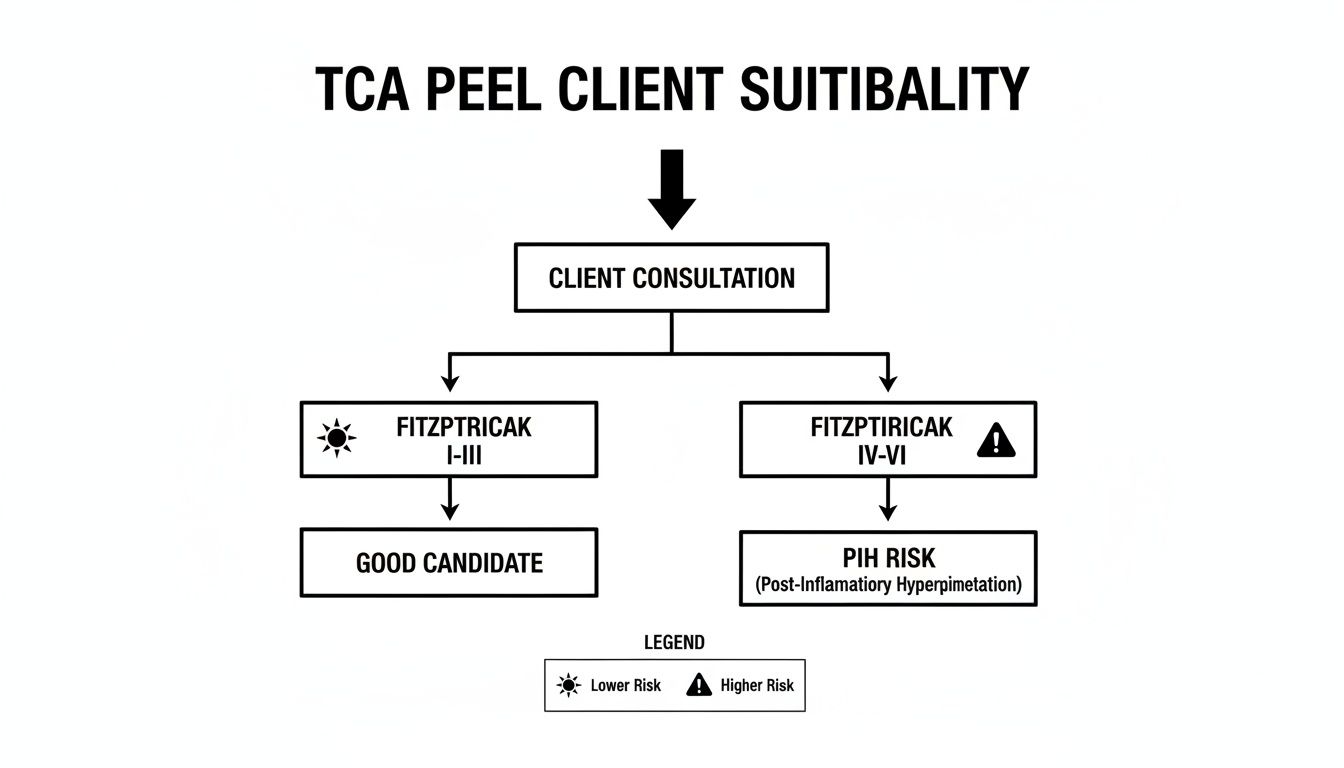
As the flowchart shows, individuals with Fitzpatrick types I-III are generally great candidates. Those with types IV-VI, however, fall into a higher-risk category. For these clients, the potential for PIH must be front and centre in the consultation. It often means opting for a lower concentration, a series of lighter peels, or even an alternative treatment altogether to safely achieve their goals without unintended consequences.
Mastering TCA Peel Aftercare and Recovery
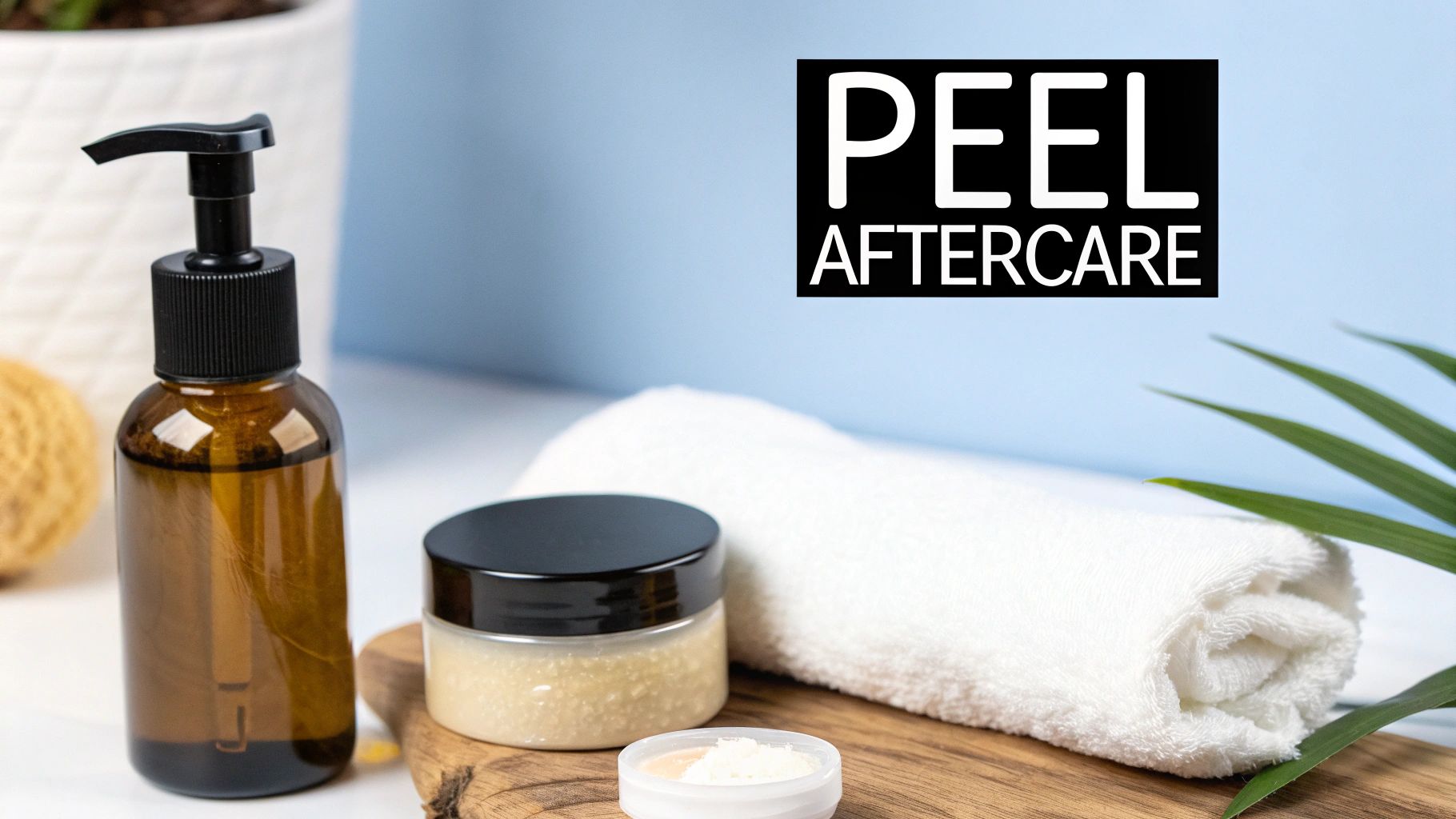
A fantastic result from a TCA chemical peel is a true partnership. It’s one part the practitioner’s skilled application, and one part the client's dedicated aftercare. The recovery period is where the magic really happens, as the old, damaged skin makes way for the fresh, renewed layers underneath.
Guiding your clients through this process isn’t just good practice; it's essential for getting the best results while keeping them safe and comfortable.
The healing journey is pretty predictable. Right after the treatment, the skin will feel tight and might look a bit darker or bronzed. This is totally normal—it’s just the top layers of skin getting ready to shed. The main peeling phase usually kicks in around day three and can last up to day seven, all depending on the peel's depth.
The Pillars of Post-Peel Healing
Proper aftercare for a TCA peel really boils down to three non-negotiable principles: gentle cleansing, intense hydration, and strict sun protection. Think of these as the legs of a stool—if one is weak, the whole thing becomes unstable. These pillars support the skin's natural healing, keep discomfort to a minimum, and shield vulnerable new cells from harm.
Great aftercare often starts with what clients don't do. For the first few hours after the peel, the skin should be left completely alone to settle. Later, they can use a gentle, soap-free cleanser with lukewarm water, patting the skin dry. No rubbing! The aim is simply to keep the area clean without causing any irritation.
During this sensitive time, high-quality, soothing products are your best friends. Formulations that create a protective barrier are fantastic because they don't just hydrate; they also shield the skin from environmental stressors.
Soothing, natural skincare isn't just a nice-to-have; it's a critical part of the TCA peel recovery. Formulations packed with healing ingredients help calm inflammation, support cellular repair, and protect the delicate new skin as it emerges.
An all-purpose balm like Egyptian Magic, for example, is a great choice. Its simple, natural ingredients create an occlusive layer that locks in moisture and soothes irritation. Once the initial peeling has calmed down, nourishing oils and serums from brands like Fushi or JULISIS can be introduced to supply the new skin with vital antioxidants and lipids, helping it rebuild strength and resilience.
A Roadmap for Recovery: What to Do and What to Avoid
To make the aftercare process as simple as possible for your clients, a straightforward list of 'do's and don'ts' is the most effective tool you can provide. It removes the guesswork and empowers them to play an active role in their own healing.
Key Aftercare Instructions:
- DO cleanse gently twice a day with a mild, non-abrasive cleanser.
- DO apply a thick, soothing moisturiser or ointment often to keep the skin hydrated and comfortable.
- DO wear a broad-spectrum sunscreen with an SPF of 30 or higher every single day—no excuses, even if you're indoors.
- DO stay hydrated by drinking plenty of water. Healing starts from the inside out.
On the flip side, there are a few things that can seriously sabotage the healing process. These must be avoided to prevent complications like scarring or hyperpigmentation.
Crucial Recovery Don'ts:
- DON'T pick, pull, or scratch at peeling skin. Let it shed on its own timeline. Forcibly removing it can cause real damage.
- DON'T use any harsh exfoliants, scrubs, retinoids, or acid-based products until the skin is completely healed.
- DON'T expose your skin to direct sun, tanning beds, saunas, or extreme heat.
- DON'T apply makeup until at least day three, and when you do, make sure it’s non-comedogenic.
By providing this clear guidance, you’re not just helping your client achieve a beautiful result from their TCA chemical peel. You’re also cementing your reputation as a trusted, knowledgeable professional who is genuinely invested in their skin health.
Treating Pigmentation and Acne Scars with TCA Peels
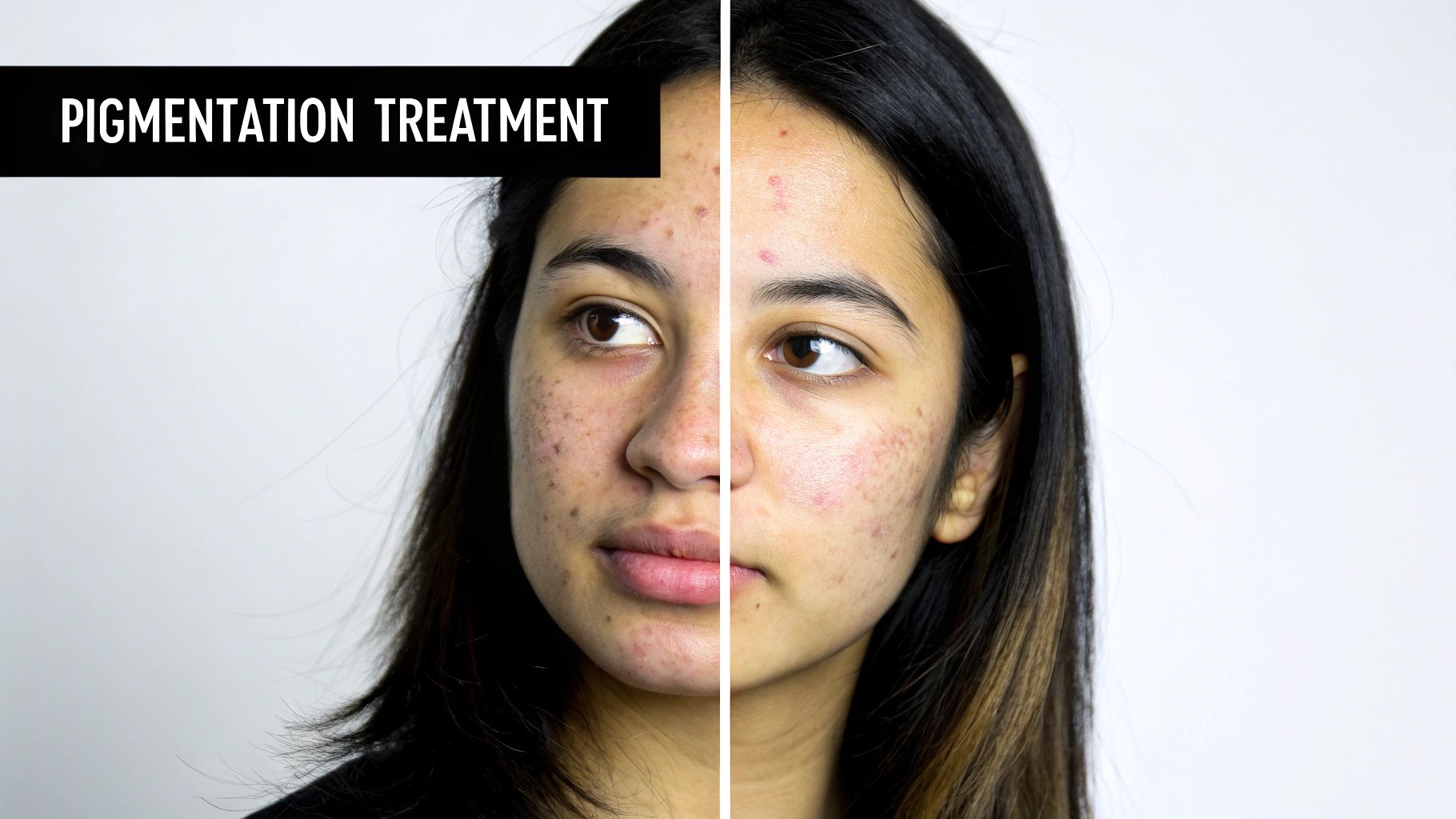
Beyond general rejuvenation, a TCA chemical peel really shines when tackling two of the most stubborn skin concerns out there: hyperpigmentation and acne scarring. For clients who feel stuck with these issues, understanding how TCA works on a deeper level is key. It allows you to set realistic expectations and craft a treatment plan that actually delivers.
Think of a TCA peel as a strategic reset for skin with pigmentation issues like sun spots, age spots, or melasma. These dark patches are just clusters of overproduced melanin. The peel simply lifts and sheds the layers of skin holding onto this excess pigment, revealing a much clearer, more evenly toned complexion underneath.
Fading Hyperpigmentation and Melasma
When you're dealing with something as tricky as melasma, a low- to medium-strength TCA peel is often the smartest approach. The goal here is to carefully break up the pigment without causing the kind of inflammation that can actually make the condition worse, a real risk for certain skin types.
This isn't just theory; it's backed by solid clinical evidence. Studies focusing on melasma have shown that TCA in the 10–20% range can significantly reduce unwanted pigment. One trial, for instance, found that a 20% TCA peel worked even better when paired with topical ascorbic acid. Another study involving 100 patients demonstrated that 10–15% TCA delivered faster, more noticeable results than a higher-strength glycolic acid, though it's worth noting the relapse rate was also higher.
For Swiss professionals, these insights underscore TCA's power but also highlight the absolute necessity of a long-term maintenance plan. This means rigorous sun protection and dedicated pigment-inhibiting skincare. You can explore the full analysis of chemical peels for skin disorders to get a better handle on these clinical outcomes.
TCA peels effectively target unwanted pigmentation by removing the discoloured superficial skin layers. However, success hinges on a strict post-peel regimen to prevent pigment from returning.
This really drives home the point that the peel is only half the battle. Your client’s commitment to diligent sun care is what will preserve their results and stop the pigment from coming back.
Remodelling and Repairing Acne Scars
When it comes to acne scars—specifically atrophic or indented scars—a medium-depth TCA peel can be a game-changer. These scars are essentially little divots left behind where collagen was destroyed during the acne inflammation. A light, superficial treatment just isn't going to cut it.
This is where TCA's ability to trigger deep dermal remodelling is so valuable. A controlled application of 25-35% TCA penetrates down to the upper dermis, setting off a powerful wound-healing response. This process kickstarts fibroblast activity, which in turn leads to the production of fresh, healthy collagen.
This new collagen matrix works from the bottom up, rebuilding the skin's underlying structure. As it forms, it effectively "fills in" the indented scars, raising the floor of the scar to be more level with the surrounding skin. The final result is a dramatically smoother and more even skin surface.
It's crucial to explain this to clients with acne scarring. A TCA peel isn’t just stripping away a layer of skin; it’s actively rebuilding it from within. That deep remodelling is precisely what makes it such a potent tool for creating lasting textural improvements that clients can both see and feel.
Navigating Swiss Regulations for Chemical Peels
If you're an aesthetics professional in Switzerland, getting to grips with the local regulations for treatments like TCA chemical peels isn't just a good idea—it's essential. The legal framework here is built to protect clients by drawing a clear line between what an aesthetician can do and what requires a medical doctor. Think of it less as a barrier and more as a roadmap for running a safe, successful practice.
The main distinction really boils down to how deep the peel goes, which is all about the acid concentration. Superficial to light-medium peels? Those are generally considered cosmetic. They work on the upper layers of the skin—the epidermis and the papillary dermis—to tackle things like skin rejuvenation, uneven texture, and minor pigmentation.
On the other hand, any deep peel that reaches down into the reticular dermis is strictly a medical procedure. This isn't just semantics; it determines who is legally allowed to pick up the applicator.
The Professional Scope of Practice
For Swiss aestheticians and spa professionals, knowing your scope of practice is everything. It's about working confidently and legally within that cosmetic classification.
- Aesthetician's Role: Properly trained and certified aestheticians are generally cleared to perform superficial TCA peels, which usually means working with concentrations up to 15-20%. These are fantastic for tackling dullness and fine lines with minimal downtime and risk.
- Medical Oversight: When you get into medium-depth peels, often in the 25-35% range, things get a bit more complex. Depending on the specific cantonal rules and your own qualifications, these might need to be done under the direct supervision of a doctor. Anything involving 40% TCA or more is firmly in the medical camp and can only be performed by a physician.
In Switzerland, the line between a cosmetic treatment and a medical procedure is drawn by the peel's intended depth. A thorough grasp of these regulations protects not only your client but also your professional practice and reputation.
Sticking to these guidelines is non-negotiable. It proves you're offering services that are both legally sound and perfectly matched to your training, which is the cornerstone of building trust with your clients.
Foundational Protocols for Client Safety
Beyond just the concentration levels, best practice in Switzerland calls for rock-solid safety protocols before any peel. These steps aren't just red tape; they are the difference between a great result and a potential problem.
First up, a thorough client consultation is absolutely crucial. This is where you dig in—you’ll assess their skin type with the Fitzpatrick scale, talk through their goals, and review their medical history for any red flags, like a tendency for keloid scarring or recent use of certain medications.
Next, you need informed consent. Your client has to understand exactly what the procedure involves, what the recovery will look like, the potential risks, and why aftercare is so important. A signed consent form is standard practice, providing a clear record that you’ve had this vital conversation.
Finally, patch testing is always a smart move, particularly for new clients or anyone with sensitive skin. By applying a tiny amount of the TCA solution to a hidden spot, you can watch how the skin reacts and head off any major adverse reactions before they happen.
By making these safety steps a non-negotiable part of your routine, you’re operating at the highest professional standard. This approach does more than just keep you compliant with Swiss regulations; it positions your clinic as a trusted centre of excellence in a very competitive market.
Your Top TCA Peel Questions, Answered
Even when clients and professionals grasp the basics, there are always a few specific questions that come up about TCA chemical peels. Handling these with confidence is key to setting the right expectations and making sure the entire experience is a positive one. Let's dive into some of the most common queries.
Think of this as a practical reinforcement of what we've already covered, helping you build a complete picture of what makes this treatment so effective and how to approach it like a seasoned expert.
How Is a TCA Peel Different from Glycolic or Salicylic Acid Peels?
The biggest difference comes down to how they work and how deep they can go. Think of glycolic and salicylic acids as keratolytic. They essentially dissolve the "glue" between dead skin cells, helping them slough off more easily. This makes them fantastic for surface-level brightening and keeping oily, acne-prone skin in check.
TCA, on the other hand, is a keratocoagulant. Instead of just loosening cells, it actually denatures the proteins within the cells themselves. This causes them to coagulate and peel away in a more uniform sheet. This mechanism allows TCA to penetrate more deeply and with greater control, which is why it's the go-to for tackling more stubborn issues like sun damage, deeper wrinkles, and atrophic acne scars.
Who Is the Ideal Candidate for a TCA Peel?
The perfect candidate is usually someone with a lighter skin tone—typically a Fitzpatrick type I, II, or III—who wants to correct signs of photoageing, uneven texture, or specific types of scars. The most crucial factor, though, is their absolute commitment to the aftercare routine, especially strict, daily sun protection.
That said, TCA peels aren't for everyone. For darker skin tones (Fitzpatrick IV-VI), there's a much higher risk of post-inflammatory hyperpigmentation (PIH). It’s also not an option for anyone with an active skin infection, a history of keloid scarring, or who has recently been on medications like isotretinoin.
An ideal candidate understands that the success of a TCA peel is a partnership. Their dedication to pre-peel preparation and post-peel care is just as important as the practitioner's skill during the application.
How Can We Weave Natural Skincare into a TCA Protocol?
Natural skincare isn’t just an add-on; it's a vital part of the process, both for prepping the skin and for supporting its recovery. Before the peel, using high-quality, nourishing oils can help fortify the skin's natural barrier, making sure it’s strong and ready for the treatment.
After the peel, the strategy shifts completely to healing and protection. This is when gentle, occlusive products become absolutely indispensable.
- During the Peeling Phase: A rich balm like Egyptian Magic is perfect. It creates a protective layer that locks in moisture, calms irritation, and shields the delicate new skin from the environment.
- After the Skin Has Healed: Once the peeling is complete, you can introduce antioxidant-rich serums from premium brands like JULISIS to help protect the new cells from free radical damage. Pure, organic oils from Fushi are also excellent for replenishing the skin’s essential lipids.
Marrying a clinical procedure with high-performance natural aftercare creates the kind of holistic, results-focused experience that sophisticated Swiss clients are looking for. It shows you're committed not just to treating the skin, but to truly nurturing it back to its healthiest state.
Ready to offer your clients the pinnacle of natural, effective skincare to complement your treatments? Explore the curated collections from beautysecrets.agency, featuring premium brands like Egyptian Magic, JULISIS, and Fushi, perfect for TCA peel aftercare. Discover our professional offerings.